


Military Quatrains,
or the Modern Archilochus
εἰμὶ δ’ἐγὼ θεράπων μὲν Ἐνυαλίοιο ἄνακτος,
καὶ Μουσέων ἐρατὸν δῶρον ἐπιστάμενος.
“I am a servant of the Lord of War,
And I also know the lovely gift of the Muses.” —Archilochus
I rammed a loaded magazine
In my empty M-16.
Luckily I fired first
And gave him a full-auto burst.
The ring pin in a live grenade
Deserves respect. I’d be afraid
To hang one from my harness hooks—
Leave that stuff to macho schnooks.
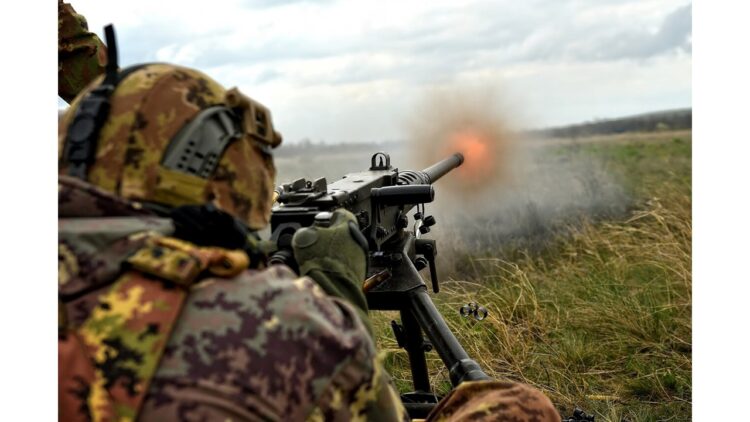
The Ma Deuce is a heavy gun—
Toting it is not much fun.
But in a firefight, it’s true:
You’re glad to have a good M-2.
A bayonet’s an antique thing—
A pike upon a muzzle ring.
It’s clunky and old-fashioned, yet
You sometimes need your bayonet.
A rocket launcher, called a LAW
Improves one’s chances, as I saw
When called-in airstrikes didn’t come
And arty seemed both deaf and dumb.
Willie Peter, when it hits
Turns a man to char-broiled bits.
Take this tip, for what it’s worth:
Give the stuff a damned wide berth.
A claymore is an upright mine
Pointing towards the battle line.
Make sure to set it straight and true—
You don’t want it facing you.
Notes
Archilochus: an early Greek iambic and lyric poet (c. 680-645 B.C.) who
also served as a combat soldier. He was killed in battle, but his poetic
reputation was so great that a cult of hero-worship grew up around him
after his death.
M-16: the standard U.S. service rifle in 1975, when this poem was
written.
Ma Deuce: nickname for the Browning M-2 heavy machine gun that
fires .50-caliber rounds.
LAW: the M72 Light Anti-Tank Weapon, a one-man disposable rocket.
Arty: artillery or other long-range fire.
Willie Peter: nickname for white phosphorus, a highly flammable chemical agent in anti-personnel explosives.
Claymore: a curved above-ground mine set facing the enemy.
Joseph S. Salemi has published five books of poetry, and his poems, translations and scholarly articles have appeared in over one hundred publications world-wide. He is the editor of the literary magazine TRINACRIA and writes for Expansive Poetry On-line. He teaches in the Department of Humanities at New York University and in the Department of Classical Languages at Hunter College.















Joseph, you cannot imagine how much I love this military poem. I was familiar with everything and remembered what “Willie Peter” stood for, before I read your notes at the bottom. I have fired every one of those weapons mentioned. My first training was as a Tank Officer at Fort Knox before I went into Military Intelligence. Back then and maybe even now a Military Intelligence Officer had to have training in a ground combat school (Armor, Artillery. or Infantry). Your verses took me back to training and to my stint in Vietnam. My first night in Saigon before being assigned to a military district, I was greeted that evening with Willie Peter and other incendiary fireworks maybe 10-20 miles away with the sky lit up for hours.