• Submit Poetry
  • Support SCP
  • About Us
  • Members
  • Join
Friday, July 31, 2026
Society of Classical Poets
  • Poems
    • Beauty
    • Culture
    • Satire
    • Humor
    • Children’s
    • Art
    • Ekphrastic
    • Epic
    • Epigrams and Proverbs
    • Human Rights in China
    • Music
    • Performing Arts
    • Riddles
    • Science
    • Song Lyrics
    • The Environment
    • The Raven
    • Found Poems
    • High School Poets
    • Terrorism
    • Covid-19
  • Poetry Forms
    • Sonnet
    • Haiku
    • Limerick
    • Villanelle
    • Rondeau
    • Pantoum
    • Sestina
    • Triolet
    • Acrostic
    • Alexandroid
    • Alliterative
    • Blank Verse
    • Chant Royal
    • Clerihew
    • Rhupunt
    • Rondeau Redoublé
    • Rondel
    • Rubaiyat
    • Sapphic Verse
    • Shape Poems
    • Terza Rima
  • Great Poets
    • Geoffrey Chaucer
    • Emily Dickinson
    • Homer
    • Henry Wadsworth Longfellow
    • Dante Alighieri
    • John Keats
    • John Milton
    • Edgar Allan Poe
    • William Shakespeare
    • William Wordsworth
    • William Blake
    • Robert Frost
  • Love Poems
  • Contests
  • SCP Academy
    • Educational
    • Teaching Classical Poetry—A Guide for Educators
    • Poetry Forms
    • The SCP Journal
    • Books
No Result
View All Result
Society of Classical Poets
  • Poems
    • Beauty
    • Culture
    • Satire
    • Humor
    • Children’s
    • Art
    • Ekphrastic
    • Epic
    • Epigrams and Proverbs
    • Human Rights in China
    • Music
    • Performing Arts
    • Riddles
    • Science
    • Song Lyrics
    • The Environment
    • The Raven
    • Found Poems
    • High School Poets
    • Terrorism
    • Covid-19
  • Poetry Forms
    • Sonnet
    • Haiku
    • Limerick
    • Villanelle
    • Rondeau
    • Pantoum
    • Sestina
    • Triolet
    • Acrostic
    • Alexandroid
    • Alliterative
    • Blank Verse
    • Chant Royal
    • Clerihew
    • Rhupunt
    • Rondeau Redoublé
    • Rondel
    • Rubaiyat
    • Sapphic Verse
    • Shape Poems
    • Terza Rima
  • Great Poets
    • Geoffrey Chaucer
    • Emily Dickinson
    • Homer
    • Henry Wadsworth Longfellow
    • Dante Alighieri
    • John Keats
    • John Milton
    • Edgar Allan Poe
    • William Shakespeare
    • William Wordsworth
    • William Blake
    • Robert Frost
  • Love Poems
  • Contests
  • SCP Academy
    • Educational
    • Teaching Classical Poetry—A Guide for Educators
    • Poetry Forms
    • The SCP Journal
    • Books
No Result
View All Result
Society of Classical Poets
No Result
View All Result
Home Poetry Beauty

‘The Wreath’ and Other Poetry by Cheryl Corey

December 17, 2024
in Beauty, Culture, Poetry
A A
15
poems 'The Wreath' and Other Poetry by Cheryl Corey

.

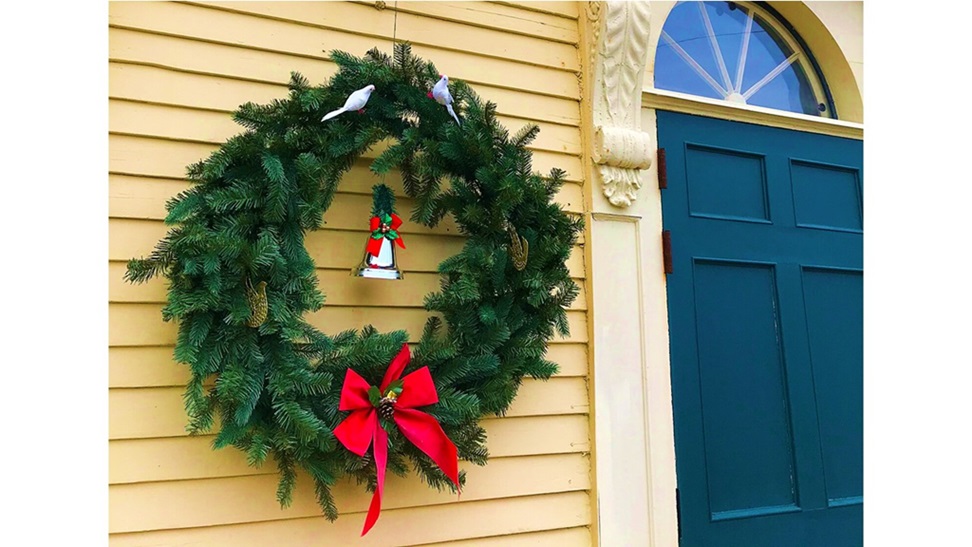
The Wreath

Circle of green—
What does it mean?
Never ending,
Ever bending.

It’s hope that’s vernal
And faith that’s welling
For God in-dwelling
And life eternal.

.

Pruning Trees  

Now that all the fruit has dropped
__And all the leaves have fallen,
It’s time to get those branches lopped
__‘fore winter comes a-callin’.

Time was when you had nothing but,
__And all your shoots grew wild,
But now it’s time to make the cut,
__And back, and back, be dialed.

To simplify, to simplify,
__As Thoreau once said;
Get rid of “stuff”, plus say goodbye
__To junk inside your head!

.

.

Cheryl Corey is a poet who lives in Connecticut. “Three Sisters,” her trio of poems about the sisters of Fate which were first published by the Society of Classical Poets, are featured in “Gods and Monsters,” an anthology of mythological poems (MacMillan Children’s Books, 2023).

ShareTweetPin
The Society of Classical Poets does not endorse any views expressed in individual poems or commentary.
Read Our Comments Policy Here

RandomPoems

‘A Love Sonnet’ by Jan Darling
Beauty

‘Anyone But You’ and Other Poetry by Anna J. Arredondo

December 26, 2021

. Anyone But You The phone may ring; The call will bring __Anyone but you. The mail will come; It...

poetry/benson brown/readings
Classical Poets Live

CPL: ChatGPT Poetry Quiz, Lillian-Yvonne Betram, Interview with James A. Tweedie, and More

June 11, 2023

. Classical Poets Live with Andrew Benson Brown Episode 4: Poetry in the Age of AI If you enjoy this video,...

Next Post
‘Coats’ by Stephen Ramsek

'Come, Spring': A Poem by Janice Canerdy

‘The Traveler’ and Other Poetry by Shindy Cai

A’sailin’: A Poem by Cynthia Bernard

‘The Lonely Sailor’: A Poem by Thor Kangas

'The Lonely Sailor': A Poem by Thor Kangas

Comments 15

  1. Russel Winick says:
    2 years ago

    Great stuff Cheryl – very readable and clever. Of course, I don’t know how much would be left if I could really get rid of all the junk inside my head! Thanks for sharing these delightful morsels with us.

    Reply
    • Cheryl A Corey says:
      2 years ago

      The junk inside my head is the hardest to get rid of.

      Reply
  2. Roy Eugene Peterson says:
    2 years ago

    Cheryl, as always, your poems are beautifully rhymed, witty, and have a great message. I especially enjoyed the rhyming of “vernal” and “eternal.” Getting rid of the junk in the head as one prunes the trees late in the year is wonderfully and creatively thought out.

    Reply
    • Cheryl A Corey says:
      2 years ago

      Thank you, Roy. I had, at one point in the past, consulted a Bible dictionary regarding the symbolism of the wreath. Perhaps others with more knowledge can elaborate.

      Reply
  3. Joseph S. Salemi says:
    2 years ago

    The Greek word for wreath is “stephanos,” and in the ancient world this term was used to refer to a garland of victory (usually of laurel or ivy or myrtle) awarded to someone who has achieved some kind of triumph. In Christian writing it often refers to the symbolic spiritual victory of a martyr who has died for the faith. The person is said to have received “the crown of martyrdom.” The name of the first recorded martyr, Saint Stephen, is very likely connected with this idea.

    Reply
    • Russel Winick says:
      2 years ago

      I would have loved to have taken one of your classes. Any of them!

      Reply
      • Joseph S. Salemi says:
        2 years ago

        I’d love to have you in one!

        Reply
    • Bob Elkins says:
      2 years ago

      Isn’t the wreath just a variation of ouroboros?

      Reply
      • Joseph S. Salemi says:
        2 years ago

        No, I don’t think so. The ouroboros (a snake eating itself) is a magical symbol, usually connected with alchemy though sometimes also with the idea of eternity or endless cycles of death and rebirth. The Western wreath is closely connected with victory, achievement, and triumph. It can also symbolize unity, as in the German idea of the “Bund” (closely related to our words “bind” and “bound”), where many different things or persons are “bound up together” in a wreath-like union.

        Reply
      • Cheryl A Corey says:
        2 years ago

        Bob, per Wikipedia, in 1839 Lutheran priest Johann Hinrich Wichern used a wreath made from a cartwheel to educate children about the meaning and purpose of Christmas, as well as to help them count its approach, thus giving rise to the modern version of the Advent wreath.

        Reply
      • Bob Elkins says:
        2 years ago

        OK Cheryl and Joseph, apparently I stand corrected, but I still think that both ouroboros and wreaths are rooted in the same ancient concept of the cycle of life. That is what the closed circle is about, eh?

        Reply
  4. Paul A. Freeman says:
    2 years ago

    I love the phrase ‘back, and back, be dialed’ (very Shakespearean), with the image of telling a fruit tree (or perhaps, metaphorically, a person) what’s what, and then taking the analogy further to advising us to remove the ‘junk’ from our heads.

    Thanks for the reads, Cheryl.

    Reply
  5. Margaret Coats says:
    2 years ago

    Cheryl, you could have written several pages about the rich symbolism of a wreath, but in pruning your poem down to 25 words, you’ve created a definitive description of its essence. Memorable, too!

    As I read the second poem, pruning seems the right thing to do at the end of the fruit-bearing year–to ensure a healthy tree come spring. But the season also calls for ingathering and preserving, leaving the would-be simplified fruit grower with more “stuff” than ever. Not “junk,” perhaps, if one can make good use of it, but it does pile up.

    Reply
    • Cheryl A Corey says:
      2 years ago

      What I had in mind with the second poem, Margaret, was how we accumulate so many material things in our life, but there comes a point when perhaps you say to yourself, what am I doing with all of this? So it becomes a matter of preserving what has the most meaning and importance for wherever we are in life, and jettisoning what no longer works. On a personal level, that’s what I’m trying to do right now. As always, thank you for the read and input.

      Reply
  6. Warren Bonham says:
    2 years ago

    Both of these are excellent. I never once thought about where wreaths came from or what they symbolized. I am however in the midst of a de-cluttering process (moving houses). We’re simplifying getting rid of a lot of physical junk. I haven’t yet had the courage to touch the mental junk but I know there is plenty of that that needs to be addressed as well.

    Reply

Leave a Reply Cancel reply

Your email address will not be published. Required fields are marked *


  1. Adam Sedia on ‘The Lessons of Lot’: A Poem by Adam WasemJuly 31, 2026

    This is a wonderful piece, a retelling of one of the most familiar Genesis episodes in a fresh and compelling…

  2. Margaret Brinton on ‘Of Webs and Whispers’: A Poem by Susan Jarvis BryantJuly 31, 2026

    Susan, your spinning together of references to politics, society, state of the world, etc. brings to mind a phrase by…

  3. Carole Stevens on ‘The Passing’: A Poem by Margaret BrintonJuly 31, 2026

    Another classic Margaret. Lovely. Having been born raised and educated near the ocean so it must be my wish to…

  4. Joseph S. Salemi on Four Love Sonnets by Adam SediaJuly 31, 2026

    The enumeration indicates that these are part of a longer sequence -- surely a very intense and passionate one, in…

  5. Theresa Werba on Four Love Sonnets by Adam SediaJuly 31, 2026

    Adam, I could not love these sonnets more. Absolutely beautiful, perfect, superb, superior, exactly what a sonnet should be. Four…

Subscribe to Daily Poems

Enter your email address to subscribe to this blog and receive notifications of new posts by email.

Join 1,593 other subscribers

Recent Poems

  • Four Love Sonnets by Adam Sedia
  • ‘Rasputina Confers with Her Cohorts’: A Poem by Joseph S. Salemi
  • ‘Warfare by Remote Control’: A Poem by Paul A. Freeman
  • ‘The Passing’: A Poem by Margaret Brinton
  • ‘Of Webs and Whispers’: A Poem by Susan Jarvis Bryant
  • Poetry Book Review: Petrarch’s Canzoniere, Translated by A.M. Juster
  • ‘What Folly Dares’ and Other Love Poems by James A. Tweedie
  • ‘Allegrezza’ and Other Poetry by Rob Griffith
  • ‘The Lessons of Lot’: A Poem by Adam Wasem
  • ‘Prophecy and Divine Intervention in Virgil’s Aeneid’: An Essay by Kaitlyn Brown
  • ‘The Last Voyage of Barnaby Bear’: A Poem by Tashvi Reddy
  • ‘Impressions’ and Other Poems by Russel Winick
  • ‘The Reveal of the Rocks’: A Poem by Kyle Fiske
  • ‘Art Work’: A Poem by T.M. Moore
  • ‘A Strange Sun’: A Poem by Patricia Rogers Crozier
  • ‘Shave Off Those Whiskers’: A Poem by Roy E. Peterson
  • ‘The Man from China’: A Poem by Evan Mantyk
  • ‘The Ballad of the Ghost Mountain Boys’: A Poem by Rachel Lott
  • ‘The Threat of Virtue’: A Poem by Zumwalt
  • ‘A Poet at the Tower’ and Other Poetry by Michael C. Paul
  • ‘Florence Foster Jenkins’ and Other Poetry by Brian Yapko
  • Winners and Rankings of The Great American Poetry Competition
  • ‘The Gold Star Mother’: A Poem by Gerard Maritato
  • ‘An American Dash’: A Poem by Linda Ellis
  • ‘The Anonymous Soldier’: A Poem by Lucy Lind
  • ‘For Those We Never Meet’: A Poem by Aneesh Agarwal
  • ‘Ben Franklin’s Copper Fugio Cent’: A Poem by Geoffrey Smagacz
  • Three Brief Poems by Luxorius, Translated by Joseph S. Salemi
  • ‘The American Spirit’: A Poem by Dusty Grein
  • ‘The Ballad of Zebulon Pike’: A Poem by M.D. Skeen

Categories

  • Acrostic
  • Alexandroid
  • Alliterative
  • Art
  • Best Poems
  • Blank Verse
  • Chant Royal
  • Classical Poets Live
  • Clerihew
  • Covid-19
  • Deconstructing Communism
  • Educational
  • Epic
  • Epigrams and Proverbs
  • Essays
    • Interviews with Poets
    • Poetry Reviews
  • Featured
  • From the Society
  • Great Poets
    • Dante Alighieri
    • Edgar Allan Poe
    • Emily Dickinson
    • Geoffrey Chaucer
    • Henry Wadsworth Longfellow
    • Homer
    • John Keats
    • John Milton
    • Robert Frost
    • William Blake
    • William Shakespeare
    • William Wordsworth
  • Human Rights in China
  • Limerick
  • Love Poems
  • Music
  • Pantoum
  • Performing Arts
  • Poetry
    • Beauty
    • Children's Poems
    • Culture
    • Ekphrastic
    • Found Poems
    • High School Poets
    • Humor
    • Riddles
  • Poetry Challenge
  • Poetry Contests
  • Poetry Forms
    • Curtal Sonnet
    • Haiku
  • Poetry Readings
  • Rhupunt
  • Rondeau
  • Rondeau Redoublé
  • Rondel
  • Rubaiyat
  • Sapphic Verse
  • Satire
  • Science
  • Sestina
  • Shape Poems
  • Short Stories
  • Song Lyrics
  • Sonnet
  • Symposium
  • Terrorism
  • Terza Rima
  • The Environment
  • Translation
  • Triolet
  • Video
  • Villanelle

Quick Links

  • About Us
  • Submit Poetry
  • Become a Member
  • Members List
  • Support the Society
  • Advertisement Placement
  • Comments Policy
  • Terms of Use

Welcome Back!

Login to your account below

Forgotten Password?

Retrieve your password

Please enter your username or email address to reset your password.

Log In
No Result
View All Result
  • Poems
    • Beauty
    • Culture
    • Satire
    • Humor
    • Children’s
    • Art
    • Ekphrastic
    • Epic
    • Epigrams and Proverbs
    • Human Rights in China
    • Music
    • Performing Arts
    • Riddles
    • Science
    • Song Lyrics
    • The Environment
    • The Raven
    • Found Poems
    • High School Poets
    • Terrorism
    • Covid-19
  • Poetry Forms
    • Sonnet
    • Haiku
    • Limerick
    • Villanelle
    • Rondeau
    • Pantoum
    • Sestina
    • Triolet
    • Acrostic
    • Alexandroid
    • Alliterative
    • Blank Verse
    • Chant Royal
    • Clerihew
    • Rhupunt
    • Rondeau Redoublé
    • Rondel
    • Rubaiyat
    • Sapphic Verse
    • Shape Poems
    • Terza Rima
  • Great Poets
    • Geoffrey Chaucer
    • Emily Dickinson
    • Homer
    • Henry Wadsworth Longfellow
    • Dante Alighieri
    • John Keats
    • John Milton
    • Edgar Allan Poe
    • William Shakespeare
    • William Wordsworth
    • William Blake
    • Robert Frost
  • Love Poems
  • Contests
  • SCP Academy
    • Educational
    • Teaching Classical Poetry—A Guide for Educators
    • Poetry Forms
    • The SCP Journal
    • Books

© 2025 SCP. WebDesign by CODEC Prime.