


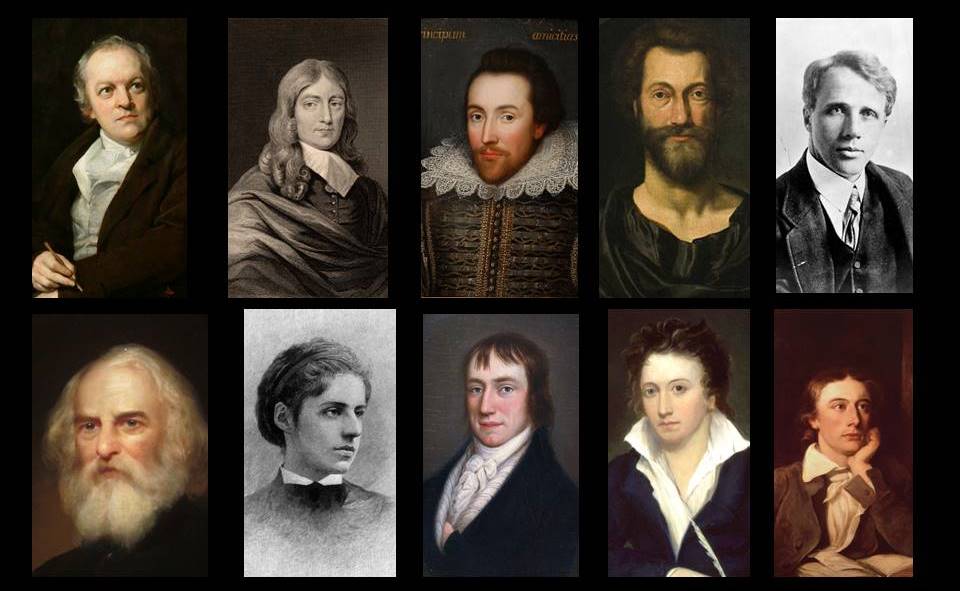
Updated: April 26, 2024
10 Greatest Poems Ever Written
An Ambitious “Best Poems” List Limited to Poems Originally
Written in English and of 50 Lines or Less
by Evan Mantyk
What is poetry? What is great poetry? The poems below answer these questions. From least greatest (10) to greatest greatest (1), the poems in this list are limited to ones originally written in the English language and which are 50 lines or less, excluding poems like Homer’s Iliad, Edgar Allan Poe’s “Raven,” Dante Alighieri’s Divine Comedy, and Lord Byron’s mock epic Don Juan. Each poem is followed by some brief analysis. Many good poems and poets had to be left off of this list. In the comments section below, feel free to make additions or construct your own lists. You can also submit analyses of classic poetry to [email protected]. They will be considered for publication on this website.
Related Content
10 Greatest Love Poems Ever Written
10 Greatest Sonnets Concerning Other Poets
The Earliest English Poems Ever Written
10 Greatest Novels Ever Written
10 Greatest Poems about Death: A Grim Reader
.
10. “The Road Not Taken” by Robert Frost (1874-1963)
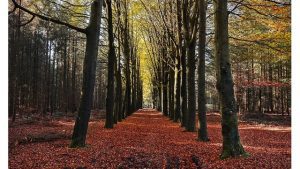
Two roads diverged in a yellow wood,
 And sorry I could not travel both
And be one traveler, long I stood
And looked down one as far as I could
To where it bent in the undergrowth;
Then took the other, as just as fair,
And having perhaps the better claim,
Because it was grassy and wanted wear;
Though as for that the passing there
Had worn them really about the same,
And both that morning equally lay
In leaves no step had trodden black.
Oh, I kept the first for another day!
Yet knowing how way leads on to way,
I doubted if I should ever come back.
I shall be telling this with a sigh
Somewhere ages and ages hence:
Two roads diverged in a wood, and I—
I took the one less traveled by,
And that has made all the difference.
.
Analysis of the Poem
This poem deals with that big noble question of “How to make a difference in the world?” On first reading, it tells us that the choice one makes really does matter, ending: “I took the one less traveled by, / And that has made all the difference.”
A closer reading reveals that the lonely choice that was made earlier by our traveling narrator maybe wasn’t all that significant since both roads were pretty much the same anyway (“Had warn them really about the same”) and it is only in the remembering and retelling that it made a difference. We are left to ponder if the narrator had instead traveled down “The Road Not Taken” might it have also made a difference as well. In a sense, “The Road Not Taken” tears apart the traditional view of individualism, which hinges on the importance of choice, as in the case of democracy in general (choosing a candidate), as well as various constitutional freedoms: choice of religion, choice of words (freedom of speech), choice of group (freedom of assembly), and choice of source of information (freedom of press). For example, we might imagine a young man choosing between being a carpenter or a banker later seeing great significance in his choice to be a banker, but in fact there was not much in his original decision at all other than a passing fancy. In this, we see the universality of human beings: the roads leading to carpenter and banker being basically the same and the carpenters and bankers at the end of them—seeming like individuals who made significant choices—really being just part of the collective of the human race.
Then is this poem not about the question “How to make a difference in the world?” after all? No. It is still about this question. The ending is the most clear and striking part. If nothing else, readers are left with the impression that our narrator, who commands beautiful verse, profound imagery, and time itself (“ages and ages hence”) puts value on striving to make a difference. The striving is reconstituted and complicated here in reflection, but our hero wants to make a difference and so should we. That is why this is a great poem, from a basic or close reading perspective.
.
.
.

9. “The New Colossus” by Emma Lazarus (1849-1887)
Not like the brazen giant of Greek fame,
With conquering limbs astride from land to land;
Here at our sea-washed, sunset gates shall stand
A mighty woman with a torch, whose flame
Is the imprisoned lightning, and her name
Mother of Exiles. From her beacon-hand
Glows world-wide welcome; her mild eyes command
The air-bridged harbor that twin cities frame.
“Keep, ancient lands, your storied pomp!” cries she
With silent lips. “Give me your tired, your poor,
Your huddled masses yearning to breathe free,
The wretched refuse of your teeming shore.
Send these, the homeless, tempest-tossed to me,
I lift my lamp beside the golden door!”
.
Analysis of the Poem
Inscribed on the Statue of Liberty in New York harbor, this sonnet may have the greatest placement of any English poem. It also has one of the greatest placements in history. Lazarus compares the Statue of Liberty to the Colossus of Rhodes, one of the Seven Wonders of the Ancient World. Like the Statue of Liberty, the Colossus of Rhodes was an enormous god-like statue positioned in a harbor. Although the Colossus of Rhodes no longer stands, it symbolizes the ancient Greek world and the greatness of the ancient Greek and Roman civilization, which was lost for a thousand years to the West, and only fully recovered again during the Renaissance. “The New Colossus” succinctly crystallizes the connection between the ancient world and America, a modern nation. It’s a connection that can be seen in the White House and other state and judicial buildings across America that architecturally mirror ancient Greek and Roman buildings; and in the American political system that mirrors Athenian Democracy and Roman Republicanism.
In the midst of this vast comparison of the ancient and the American, Lazarus still manages to clearly render America’s distinct character. It is the can-do spirit of taking those persecuted and poor from around the world and giving them a new opportunity and hope for the future, what she calls “the golden door.” It is a uniquely scrappy and compassionate quality that sets Americans apart from the ancients. The relevance of this poem stretches all the way back to the pilgrims fleeing religious persecution in Europe to the controversies surrounding modern immigrants from Mexico and the Middle East. While circumstances today have changed drastically, there is no denying that this open door was part of what made America great once upon a time. It’s the perfect depiction of this quintessential Americanness that makes “The New Colossus” also outstanding.
.
.
.
8. “Ozymandias” by Percy Bysshe Shelley (1792-1822)
I met a traveler from an antique land
Who said: “Two vast and trunkless legs of stone
Stand in the desert . . . Near them, on the sand,
Half sunk, a shattered visage lies, whose frown,
And wrinkled lip, and sneer of cold command,
Tell that its sculptor well those passions read
Which yet survive, stamped on these lifeless things,
The hand that mocked them, and the heart that fed:
And on the pedestal these words appear:
‘My name is Ozymandias, king of kings:
Look on my works, ye Mighty, and despair!’
Nothing beside remains. Round the decay
Of that colossal wreck, boundless and bare
The lone and level sands stretch far away.”
.
Analysis of the Poem
In this winding story within a story within a poem, Shelley paints for us the image of the ruins of a statue of ancient Egyptian king Ozymandias, who is today commonly known as Ramesses II. This king is still regarded as the greatest and most powerful Egyptian pharaoh. Yet, all that’s left of the statue are his legs, which tell us it was huge and impressive; the shattered head and snarling face, which tell us how tyrannical he was; and his inscribed quote hailing the magnificent structures that he built and that have been reduced to dust, which tells us they might not have been quite as magnificent as Ozymandias imagined. The image of a dictator-like king whose kingdom is no more creates a palpable irony. But, beyond that there is a perennial lesson about the inescapable and destructive forces of time, history, and nature. Success, fame, power, money, health, and prosperity can only last so long before fading into “lone and level sands.”

There are yet more layers of meaning here that elevate this into one of the greatest poems. In terms of lost civilizations that show the ephemeralness of human pursuits, there is no better example than the Egyptians—who we associate with such dazzling monuments as the Sphinx and the Great Pyramid at Giza (that stands far taller than the Statue of Liberty)—yet who completely lost their spectacular language, culture, and civilization. If the forces of time, history, and nature can take down the Egyptian civilization, it begs the question, “Who’s next?” Additionally, Ozymandias is believed to have been the villainous pharaoh who enslaved the ancient Hebrews and who Moses led the exodus from. If all ordinary pursuits, such as power and fame, are but dust, what remains, the poem suggests, are spirituality and morality—embodied by the ancient Hebrew faith. If you don’t have those then in the long run you are a “colossal wreck.” Thus, the perfectly composed scene itself, the Egyptian imagery, and the Biblical backstory convey a perennial message and make this a great poem.
.
.
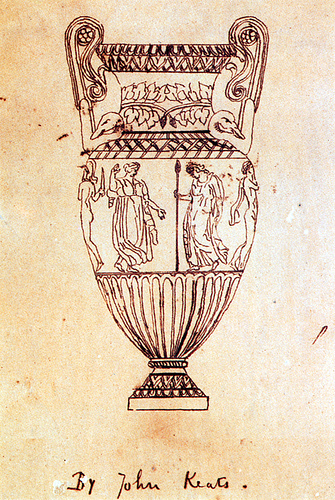
 7. “Ode on a Grecian Urn” by John Keats (1795-1821)
Thou still unravish’d bride of quietness,
Thou foster-child of silence and slow time,
Sylvan historian, who canst thus express
A flowery tale more sweetly than our rhyme:
What leaf-fring’d legend haunts about thy shape
Of deities or mortals, or of both,
In Tempe or the dales of Arcady?
What men or gods are these? What maidens loth?
What mad pursuit? What struggle to escape?
What pipes and timbrels? What wild ecstasy?
Heard melodies are sweet, but those unheard
Are sweeter; therefore, ye soft pipes, play on;
Not to the sensual ear, but, more endear’d,
Pipe to the spirit ditties of no tone:
Fair youth, beneath the trees, thou canst not leave
Thy song, nor ever can those trees be bare;
Bold Lover, never, never canst thou kiss,
Though winning near the goal yet, do not grieve;
She cannot fade, though thou hast not thy bliss,
For ever wilt thou love, and she be fair!
Ah, happy, happy boughs! that cannot shed
Your leaves, nor ever bid the Spring adieu;
And, happy melodist, unwearied,
For ever piping songs for ever new;
More happy love! more happy, happy love!
For ever warm and still to be enjoy’d,
For ever panting, and for ever young;
All breathing human passion far above,
That leaves a heart high-sorrowful and cloy’d,
A burning forehead, and a parching tongue.
Who are these coming to the sacrifice?
To what green altar, O mysterious priest,
Lead’st thou that heifer lowing at the skies,
And all her silken flanks with garlands drest?
What little town by river or sea shore,
Or mountain-built with peaceful citadel,
Is emptied of this folk, this pious morn?
And, little town, thy streets for evermore
Will silent be; and not a soul to tell
Why thou art desolate, can e’er return.
O Attic shape! Fair attitude! with brede
Of marble men and maidens overwrought,
With forest branches and the trodden weed;
Thou, silent form, dost tease us out of thought
As doth eternity: Cold Pastoral!
When old age shall this generation waste,
Thou shalt remain, in midst of other woe
Than ours, a friend to man, to whom thou say’st,
“Beauty is truth, truth beauty,—that is all
Ye know on earth, and all ye need to know.”
.
Analysis of the Poem
As if in response to Shelley’s “Ozymandias,” Keats’s “Ode on a Grecian Urn” offers a sort of antidote to the inescapable and destructive force of time. Indeed, “Ode on a Grecian Urn” was published in 1819 just a year or so after “Ozymandias.” The antidote is simple: art. The art on the Grecian urn—which is basically a decorative pot from ancient Greece—has survived for thousands of years. While empires rose and fell, the Grecian urn survived. Musicians, trees, lovers, heifers, and priests all continue dying decade after decade and century after century, but their artistic depictions on the Grecian urn live on for what seems eternity.
This realization about the timeless nature of art is not new now nor was it in the 1800s, but Keats has chosen a perfect example since ancient Greek civilization so famously disappeared into the ages, being subsumed by the Romans, and mostly lost until the Renaissance a thousand years later. Now, the ancient Greeks are all certainly dead (like the king Ozymandias in Shelley’s poem) but the Greek art and culture live on through Renaissance painters, the Olympic Games, endemic Neoclassical architecture, and, of course, the Grecian urn.
Further, what is depicted on the Grecian urn is a variety of life that makes the otherwise cold urn feel alive and vibrant. This aliveness is accentuated by Keats’s barrage of questions and blaring exclamations: “More happy love! more happy, happy love!” Art, he seems to suggest, is more alive and real than we might imagine. Indeed, the last two lines can be read as the urn itself talking: “Beauty is truth, truth beauty,—that is all / Ye know on earth, and all ye need to know.” In these profound lines, Keats places us within ignorance, suggesting that what we know on earth is limited, but that artistic beauty, which he has now established is alive, is connected with truth. Thus, we can escape ignorance, humanness, and certain death and approach another form of life and truth through the beauty of art. This effectively completes the thought that began in Ozymandias and makes this a great poem one notch up from its predecessor.
.
.
 6. “The Tiger” by William Blake (1757-1827)
Tiger Tiger, burning bright,
In the forests of the night;
What immortal hand or eye,
Could frame thy fearful symmetry?
In what distant deeps or skies.
Burnt the fire of thine eyes?
On what wings dare he aspire?
What the hand, dare seize the fire?
And what shoulder, and what art,
Could twist the sinews of thy heart?
And when thy heart began to beat,
What dread hand? and what dread feet?
What the hammer? what the chain,
In what furnace was thy brain?
What the anvil? what dread grasp,
Dare its deadly terrors clasp!
When the stars threw down their spears
And water’d heaven with their tears:
Did he smile his work to see?
Did he who made the Lamb make thee?
Tiger Tiger burning bright,
In the forests of the night:
What immortal hand or eye,
Dare frame thy fearful symmetry?
.
Analysis of the Poem
This poem contemplates a question arising from the idea of creation by an intelligent creator. The question is this: If there is a loving, compassionate God or gods who created human beings and whose great powers exceed the comprehension of human beings, as many major religions hold, then why would such a powerful being allow evil into the world. Evil here is represented by a tiger that might, should you be strolling in the Indian or Chinese wild in the 1700s, have leapt out and killed you. What would have created such a dangerous and evil creature? How could it possibly be the same divine blacksmith who created a cute harmless fluffy lamb or who created Jesus, also known as the “Lamb of God” (which the devoutly Christian Blake was probably also referring to here). To put it another way, why would such a divine blacksmith create beautiful innocent children and then also allow such children to be slaughtered. The battery of questions brings this mystery to life with lavish intensity.
Does Blake offer an answer to this question of evil from a good God? It would seem not on the surface. But, this wouldn’t be a great poem if it were really that open ended. The answer comes in the way that Blake explains the question. Blake’s language peels away the mundane world and offers a look at the super-reality to which poets are privy. We fly about in “forests of the night” through “distant deeps or skies” looking for where the fire in the tiger’s eye was taken from by the Creator. This is the reality of expanded time, space, and perception that Blake so clearly elucidates elsewhere with the lines “To see a world in a grain of sand / And a heaven in a wild flower, / Hold infinity in the palm of your hand, / And eternity in an hour” (“Auguries of Innocence”). This indirectly tells us that the reality that we ordinarily know and perceive is really insufficient, shallow, and deceptive. Where we perceive the injustice of the wild tiger something else entirely may be transpiring. What we ordinarily take for truth may really be far from it: a thought that is scary, yet also sublime or beautiful—like the beautiful and fearsome tiger. Thus, this poem is great because it concisely and compellingly presents a question that still plagues humanity today, as well as a key clue to the answer.
.
.
 5. “On His Blindness” by John Milton (1608-1674)
When I consider how my light is spent
Ere half my days in this dark world and wide,
And that one talent which is death to hide
Lodg’d with me useless, though my soul more bent
To serve therewith my Maker, and present
My true account, lest he returning chide,
“Doth God exact day-labour, light denied?”
I fondly ask. But Patience, to prevent
That murmur, soon replies: “God doth not need
Either man’s work or his own gifts: who best
Bear his mild yoke, they serve him best. His state
Is kingly; thousands at his bidding speed
And post o’er land and ocean without rest:
They also serve who only stand and wait.”
.
Analysis of the Poem
This poem deals with one’s limitations and shortcomings in life. Everyone has them and Milton’s blindness is a perfect example of this. His eyesight gradually worsened and he became totally blind at the age of 42. This happened after he served in an eminent position under Oliver Cromwell’s revolutionary Puritan government in England. To put it simply, Milton rose to the highest position an English writer might at the time and then sank all the way down to a state of being unable read or write on his own. How pathetic!
The genius of this poem comes in the way that Milton transcends the misery he feels. First, he frames himself, not as an individual suffering or lonely, but as a failed servant to the Creator: God. While Milton is disabled, God here is enabled through imagery of a king commanding thousands. This celestial monarch, his ministers and troops, and his kingdom itself are invisible to human eyes anyway, so already Milton has subtly undone much of his failing by subverting the necessity for human vision. More straightforwardly, through the voice of Patience, Milton explains that serving the celestial monarch only requires bearing those hardships, which really aren’t that bad (he calls them “mild”) that life has burdened you with (like a “yoke” put on an ox). This grand mission from heaven may be as simple as standing and waiting, having patience, and understanding the order of the universe. Thus, this is a great poem because Milton has not only dispelled sadness over a major shortcoming in life but also shown how the shortcoming is itself imbued with an extraordinary and uplifting purpose.
.
.
 4. “A Psalm of Life” by Henry Wadsworth Longfellow (1807-1882)
What the heart of the young man said to the Psalmist
Tell me not, in mournful numbers,
Life is but an empty dream!
For the soul is dead that slumbers,
And things are not what they seem.
Life is real! Life is earnest!
And the grave is not its goal;
Dust thou art, to dust returnest,
Was not spoken of the soul.
Not enjoyment, and not sorrow,
Is our destined end or way;
But to act, that each tomorrow
Find us farther than today.
Art is long, and Time is fleeting,
And our hearts, though stout and brave,
Still, like muffled drums, are beating
Funeral marches to the grave.
In the world’s broad field of battle,
In the bivouac of Life,
Be not like dumb, driven cattle!
Be a hero in the strife!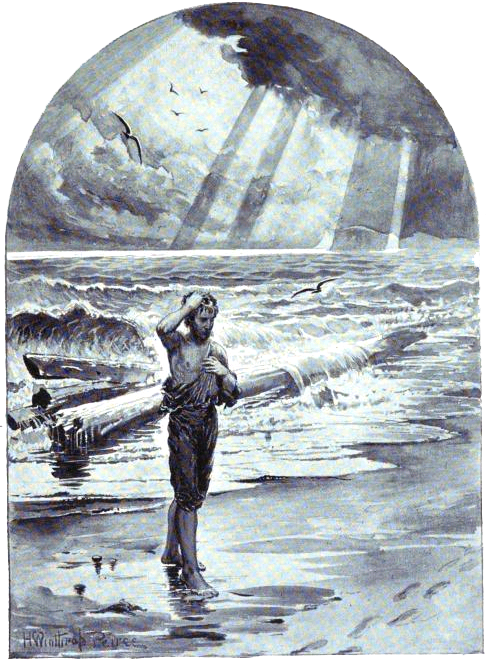
Trust no Future, howe’er pleasant!
Let the dead Past bury its dead!
Act,—act in the living Present!
Heart within, and God o’erhead!
Lives of great men all remind us
We can make our lives sublime,
And, departing, leave behind us
Footprints on the sands of time;—
Footprints, that perhaps another,
Sailing o’er life’s solemn main,
A forlorn and shipwrecked brother,
Seeing, shall take heart again.
Let us, then, be up and doing,
With a heart for any fate;
Still achieving, still pursuing,
Learn to labor and to wait.
Analysis of the Poem
In this nine-stanza poem, the first six stanzas are rather vague since each stanza seems to begin a new thought. Instead, the emphasis here is on a feeling rather than a rational train of thought. What feeling? It seems to be a reaction against science, which is focused on calculations (“mournful numbers”) and empirical evidence, of which there is no, or very little, to prove the existence of the soul. Longfellow lived when the Industrial Revolution was in high gear and the ideals of science, rationality, and reason flourished. From this perspective, the fact that the first six stanzas do not follow a rational train of thought makes perfect sense.
According to the poem, the force of science seems to restrain one’s spirit or soul (“for the soul is dead that slumbers”), lead to inaction and complacency from which we must break free (“Act,—act in the living Present! / Heart within, and God o’erhead!”) for lofty purposes such as Art, Heart, and God before time runs out (“Art is long, and Time is fleeting”). The last three stanzas—which, having broken free from science by this point in the poem, read more smoothly—suggest that this acting for lofty purposes can lead to greatness and can help our fellow man.
We might think of the entire poem as a clarion call to do great things, however insignificant they may seem in the present and on the empirically observable surface. That may mean writing a poem and entering it into a poetry contest, when you know the chances of your poem winning are very small; risking your life for something you believe in when you know it is not popular or it is misunderstood; or volunteering for a cause that, although it may seem hopeless, you feel is truly important. Thus, the greatness of this poem lies in its ability to so clearly prescribe a method for greatness in our modern world.
.
.

3. “Daffodils” by William Wordsworth (1770-1850)
I wandered lonely as a cloud
That floats on high o’er vales and hills,
When all at once I saw a crowd,
A host, of golden daffodils;
Beside the lake, beneath the trees,
Fluttering and dancing in the breeze.
Continuous as the stars that shine
And twinkle on the milky way,
They stretched in never-ending line
Along the margin of a bay:
Ten thousand saw I at a glance,
Tossing their heads in sprightly dance.
The waves beside them danced; but they
Out-did the sparkling waves in glee:
A poet could not but be gay,
In such a jocund company:
I gazed—and gazed—but little thought
What wealth the show to me had brought:
For oft, when on my couch I lie
In vacant or in pensive mood,
They flash upon that inward eye
Which is the bliss of solitude;
And then my heart with pleasure fills,
And dances with the daffodils.
.
Analysis of the Poem
Through the narrator’s chance encounter with a field of daffodils by the water, we are presented with the power and beauty of the natural world. It sounds simple enough, but there are several factors that contribute to this poem’s greatness. First, the poem comes at a time when the Western world is industrializing and man feels spiritually lonely in the face of an increasingly godless worldview. This feeling is perfectly harnessed by the depiction of wandering through the wilderness “lonely as a cloud” and by the ending scene of the narrator sadly lying on his couch “in vacant or in pensive mood” and finding happiness in solitude. The daffodils then become more than nature; they become a companion and a source of personal joy. Second, the very simplicity itself of enjoying nature—flowers, trees, the sea, the sky, the mountains etc.—is perfectly manifested by the simplicity of the poem: the four stanzas simply begin with daffodils, describe daffodils, compare daffodils to something else, and end on daffodils, respectively. Any common reader can easily get this poem, as easily as her or she might enjoy a walk around a lake.
Third, Wordsworth has subtly put forward more than just an ode to nature here. Every stanza mentions dancing and the third stanza even calls the daffodils “a show.” At this time in England, one might have paid money to see an opera or other performance of high artistic quality. Here, Wordsworth is putting forward the idea that nature can offer similar joys and even give you “wealth” instead of taking it from you, undoing the idea that beauty is attached to earthly money and social status. This, coupled with the language and topic of the poem, which are both relatively accessible to the common man, make for a great poem that demonstrates the all-encompassing and accessible nature of beauty and its associates, truth and bliss.
.
.
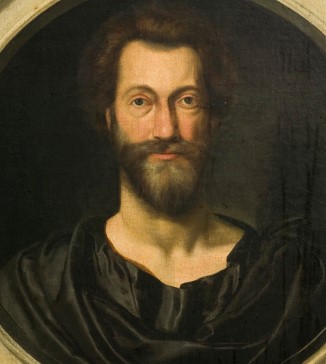
2. “Holy Sonnet 10: Death, Be Not Proud” by John Donne (1572-1631)
Death, be not proud, though some have called thee
Mighty and dreadful, for thou art not so;
For those whom thou think’st thou dost overthrow
Die not, poor Death, nor yet canst thou kill me.
From rest and sleep, which but thy pictures be,
Much pleasure; then from thee much more must flow,
And soonest our best men with thee do go,
Rest of their bones, and soul’s delivery.
Thou art slave to fate, chance, kings, and desperate men,
And dost with poison, war, and sickness dwell,
And poppy or charms can make us sleep as well
And better than thy stroke; why swell’st thou then?
One short sleep past, we wake eternally
And death shall be no more; Death, thou shalt die.
.
Analysis of the Poem
Death is a perennial subject of fear and despair. But, this sonnet seems to say that it need not be this way. The highly focused attack on Death’s sense of pride uses a grocery list of rhetorical attacks: First, sleep, which is the closest human experience to death, is actually quite nice. Second, all great people die sooner or later and the process of death could be viewed as joining them. Third, Death is under the command of higher authorities such as fate, which controls accidents, and kings, who wage wars; from this perspective, Death seems no more than a pawn in a larger chess game within the universe. Fourth, Death must associate with some unsavory characters: “poison, wars, and sickness.” Yikes! They must make unpleasant coworkers! (You can almost see Donne laughing as he wrote this.) Fifth, “poppy and charms” (drugs) can do the sleep job as well as Death or better. Death, you’re fired!
The sixth, most compelling, and most serious reason is that if one truly believes in a soul then Death is really nothing to worry about. The soul lives eternally and this explains line 4, when Donne says that Death can’t kill him. If you recognize the subordinate position of the body in the universe and identify more fully with your soul, then you can’t be killed in an ordinary sense. Further, this poem is so great because of its universal application. Fear of death is so natural an instinct and Death itself so all-encompassing and inescapable for people, that the spirit of this poem and applicability of it extends to almost any fear or weakness of character that one might have. Confronting, head on, such a fear or weakness, as Donne has done here, allows human beings to transcend their condition and their perception of Death, more fully perhaps than one might through art by itself—as many poets from this top ten list seem to say—since the art may or may not survive may or may not be any good, but the intrinsic quality of one’s soul lives eternally. Thus, Donne leaves a powerful lesson to learn from: confront what you fear head on and remember that there is nothing to fear on earth if you believe in a soul.
.
.
 1. “Sonnet 18” by William Shakespeare (1564-1616)
Shall I compare thee to a summer’s day?
Thou art more lovely and more temperate:
Rough winds do shake the darling buds of May,
And summer’s lease hath all too short a date:
Sometime too hot the eye of heaven shines,
And often is his gold complexion dimm’d;
And every fair from fair sometime declines,
By chance, or nature’s changing course, untrimm’d;
But thy eternal summer shall not fade
Nor lose possession of that fair thou ow’st;
Nor shall Death brag thou wander’st in his shade,
When in eternal lines to time thou grow’st;
So long as men can breathe or eyes can see,
So long lives this, and this gives life to thee.
.
Analysis of the Poem
Basically, the narrator tells someone he esteems highly that this person is better than a summer’s day because a summer’s day is often too hot and too windy, and especially because a summer’s day doesn’t last; it must fade away just as people, plants, and animals die. But, this esteemed person does not lose beauty or fade away like a summer’s day because he or she is eternally preserved in the narrator’s own poetry. “So long lives this, and this gives life to thee” means “This poetry lives long, and this poetry gives life to you.”
From a modern perspective this poem might come off as pompous (assuming the greatness of one’s own poetry), arbitrary (criticizing a summer’s day upon what seems a whim), and sycophantic (praising someone without substantial evidence). How then could this possibly be number one? After the bad taste of an old flavor to a modern tongue wears off, we realize that this is the very best of poetry. This is not pompous because Shakespeare actually achieves greatness and creates an eternal poem. It is okay to recognize poetry as great if it is great and it is okay to recognize an artistic hierarchy. In fact, it is absolutely necessary in educating, guiding, and leading others. The attack on a summer’s day is not arbitrary. Woven throughout the language is an implicit connection between human beings, the natural world (“a summer’s day”), and heaven (the sun is “the eye of heaven”). A comparison of a human being to a summer’s day immediately opens the mind to unconventional possibilities; to spiritual perspectives; to the ethereal realm of poetry and beauty. The unabashed praise for someone without a hint as to even the gender or accomplishments of the person is not irrational or sycophantic. It is a pure and simple way of approaching our relationships with other people, assuming the best. It is a happier way to live—immediately free from the depression, stress, and cynicism that creeps into our hearts. Thus, this poem is strikingly and refreshingly bold, profound, and uplifting.
Finally, as to the question of overcoming death, fear, and the decay of time, an overarching question in these great poems, Shakespeare adroitly answers them all by skipping the question, suggesting it is of no consequence. He wields such sublime power that he is unmoved and can instead offer remedy, his verse, at will to those he sees befitting. How marvelous!
.
.






It was excellent and useful. Thank you very much from the members of your website.
odjiofugb
Genial me encantan los poemas cortos en ingles, me gustaria que uno de ustedes me ayude a escribir algunos poemas cortos cuánto me cobran?
I enjoyed your list and your commentary on each poem. I ran into it looking for a poem that I memorized at least 60 years ago. I do not know who wrote it, do you?
This is my memory of it.
“Some look behind and say, Alas, alack!
If only I could go back.
Some look ahead and say , Ah then
I will be happy then.
But I, I look out on today,
I clasp it close and kiss it’s radiant brow.
Here in the perfect present let me stay
For I am happy now. “
I believe that this is the poem you are looking for:
Now
by Ella Wheeler Wilcox
One looks behind him to some vanished time
And says, Ah, I was happy then, alack!
I did not know it was my life’s best prime —
Oh, if I could go back!
Another looks, with eager eyes aglow,
To some glad day of joy that yet will dawn,
And sighs, I shall be happy then, I know.
Oh, let me hurry on.
But I – I look out on my fair To-day;
I clasp it close and kiss its radiant brow,
Here with the perfect present let me stay,
For I am happy now!
How much more enriched we all are after such contributions!
Excellent.
This is definitely an amazing collection but I believe that everyone has a different perspective of analyzing a piece of poetry. So, coming up with a single meaning is not just and it often hinders the feelings with which a poets writes his poetry. Poems are worth feeling than understanding and no poem is great or the greatest its just the reader’s connection with it that makes it great.
Moreover, I loved the collection as it was more about the truth of the world rather than some orthodox philosophy.
How many different ways to describe just one fleeting facet ofGod’s Creation – life. And obversely Death. These significantly beautiful Poems and the import latent in them takes my mind right to the meaning imparted by the sculptures created on the walls of The Holy Temples of Angkor. Each Pilgrim visiting Angkor carries back as varied meanings from the Temples as any reader shall after making a serious endeavor of understanding these lovely pieces of literary art.
Though these Poems and those Temples belong to entirely different time-frames in our Historical past, both underscore the beauty of God’s Creativity and its understanding by the human being, perhaps as He might have willed.
My mind also goes to yet another time slot when visionaries such as Aristotle, Socrates, and Plato also threw light on virtues related to inner-bliss and well-being of humanity and creativity of our maker in order to facilitate a better understanding of the ethereal facets of our existence. And after that.
Hope that we all individually as also collectively are able to make some tiny difference to the times that we all live in.
Re: Frost’s “The Road Not Taken” commentary:
Sometimes commentaries reflect the personal obsessions of the individual writing them far more than they do the poem itself. I believe that is what’s going on here. Robert Frost’s short, profound poem is about many different things and can have many different interpretations. But the last thing I see it as being about is the simple heroic narrative: making a difference in the world because the Hero Knows which is the Right Path to take.
To me it’s a commentary on tremendous unknown complexity of the world around us and how an almost random minor decision or event leads one, over time to a vastly different and completely unpredictable future than one ever imagined for oneself.
The individual at the crossroads is jejune, a immature youth or an innocent mind, inexperienced with life, who believes his clear choices, even ones make for shallow, almost random reasons, are always for the good or are always right, reflect deep intelligence and thought, and always have a strong impact on the world.
The individual looking back on that early decision point in time is a more experienced and wiser man and understands the effect of randomness on human beings, creatures who always falsely try to force order and “narrative” (to use that self-important and egregious popular term in the way that is a bit more accurate), a soothing coherent self-lullaby onto ones’ life. As one ages and one learns, however, you start to see how really random and chaotic the world (and your own personal “life story”) is. One starts to get a bit more honest and clear-sighted. One starts to grasp that one’s neat little life story (I did *this* very clearly and consciously because of *that*) isn’t actually how things actually transpired: happenstance and random chance played a far greater role in one’s life than one’s personal (and, to be honest, immature) meaningful heroic narrative allowed one to admit. With experience and age, the ego starts to get over itself, and other, more relevant information than that allowed by one’s youthful personal self-absorbed heroic fairy tale, starts to seep in. Or, at least, that’s what happens if one is lucky and one’s mental maturity progresses in pace with one’s physical aging.
The Road Less Traveled looks at a youthful decision-point, one of many, and sees how this rather light and ego-driven (I’ll be cool and do what others _don’t_ do) decision had echoing repercussions down the halls of time and made a tremendous difference on the narrator’s life. We aren’t told if the repercussions were good or bad (it’s the egotistic desire to believe one always chooses rightly, even when one is young and inexperienced that leads the reader to that conclusion). What we are told is that one minor, almost trivial decision had a tremendous effect on the writer’s life over time. It hints at the way little actions or choices can snowball as they roll forward into time and have tremendous effects. It’s not a warning to “choose wisely” because we can’t do that, really, at any time in life. We just haven’t enough information, except in the most overly simplistic of cases.
And yet we try. We always strive to know more, to get an edge, to discover the secrets that will make “it all” make sense. That’s human nature, and results in some of the finest behavior and effects on society. But sometimes I do wonder if we’re striving in the right direction. As people mature, they start to see how precarious, unknown, and unpredictable the world and one’s life in it actually is. Life can turn on the drop of a can of soup in a grocery aisle. To me, Frost’s poem gently suggests the reader take a break from self-absorbed life-story narratives (or fairy tales, from one perspective) and start looking a bit more closely at how the world actually works. There may be something worth learning from that.
Yes. This. So much this. We forgo pragmatism (and why not of course, it’s boring!) for loftiness; our head in the clouds filled with rabbit holes lit by the light of our own ideals and self involved interpretation. We come by it earnest if only by basic human nature but even moreso because we are thinkers, creators, dreamers, seekers of beauty and purpose and mystery- and all those things that make some of us to be perceived as a little weird and seemingly irrelevant. Pointless observation perhaps, as I lack any formal training whatsoever in the way of dictation of observation or rhetoric or what have you. I just love the music of word- or the attempt to happen upon a piece or compose something akin to the type of melodies that provoke a chill or a tear or a feeling in the pit of your stomach. Beautiful art. How weird of me to leave a comment like this.
The Road Not Taken seems to be an inadvertent inspiration or source for cause to pause and ponder in wonderment for some; A happy unintentional gift, to it’s now readers. A closer look, however, may reveal a question that begs to be unavoidable and sneeringly unanswerable at the readers expense. The way it is written romances us into false wonderment and sense of security about the choices we have made. however, there’s still the matter of: what about the Road not Taken? What about that sigh?
I think it’s interesting how we analyze and have a need to interpret a deep meaning and we expect so much purpose from the writings of others. And that we actually find deep meaning in the poetry of others. It can bring healing to our souls even when not intended to do so. This poem actually originated as an ironic jest written for Frost’s friend Edward Thomas (with whom he would take frequent walks in the woods and without fail, Thomas would always grumble about choosing the wrong path or wrong way or wrong turn while they walked and talked. But Thomas’ personality and temperament was such that the he took the poem seriously as somewhat of a slight towards his inability to make decisions and make the right decisions that it affected his confidence about his own writings and seemed have an affect on his impending decision to fight in the war- even though Frost related to him the playfulness of spirit in which it was written). All of it is just intersting and it reveals something about the nature of humans in general. I wonder what Frost would have to say about the the influence and popularity and sheer endearment of his poem that was written out of playfulness.
Read Kalidas’s and then compare all above with him.
yes …. thanks … lovely poems … any more ?
Nice poems you have an amazing collection
There must be at least 6 Keats poems which I prefer to the Urn. Autumn and/or Nightingale must be included in any top 10.
These are all great poets and yet the superiority of Shakespeare is astounding. He is on a different level, inhabiting a different world, speaking a different language. Was he a man or an alien or a god? How the hell did he do it? Astonishing.
Hamilton,
I respect your opinion, but allow me to point out that Nightingale is longer than 50 lines, and thus ineligible for the list.
hi, i love you so muchhhh
“Where the mind is without fear
and the head is held high,
where knowledge is free.
Where the world has not been broken up into fragments by narrow domestic walls.
Where words come out from the depth of truth,
where tireless striving stretches its arms toward perfection.
Where the clear stream of reason has not lost its way
into the dreary desert sand of dead habit.
Where the mind is led forward by thee
into ever widening thought and action.
In to that heaven of freedom, my father,
LET MY COUNTRY AWAKE!”
― Nobel Prize Winner Rabindranath Tagore, Gitanjali
I enjoyed the immense dialogue. Here’s one of mine:
Well
In interstices of contingency
every task can find its mastery.
So then the crisis unfolding in folding time
discloses its wine and roses rhapsody.
Ronald Thorpe Jorgensen
I must say that Columbus, by Joaquin Miller, is my favorite of all time.
Behind him lay the gray Azores,
Behind the Gates of Hercules;
Before him not the ghost of shores,
Before him only shoreless seas.
The good mate said: “Now must we pray,
For lo! the very stars are gone.
Brave Admiral, speak, what shall I say?”
“Why, say, ‘Sail on! sail on! and on!’”
“My men grow mutinous day by day;
My men grow ghastly wan and weak.”
The stout mate thought of home; a spray
Of salt wave washed his swarthy cheek.
“What shall I say, brave Admiral, say,
If we sight naught but seas at dawn?”
“Why, you shall say at break of day,
‘Sail on! sail on! sail on! and on!’”
They sailed and sailed, as winds might blow,
Until at last the blanched mate said:
“Why, now not even God would know
Should I and all my men fall dead.
These very winds forget their way,
For God from these dread seas is gone.
Now speak, brave Admiral, speak and say”—
He said: “Sail on! sail on! and on!”
They sailed. They sailed. Then spake the mate:
“This mad sea shows his teeth to-night.
He curls his lip, he lies in wait,
With lifted teeth, as if to bite!
Brave Admiral, say but one good word:
What shall we do when hope is gone?”
The words leapt like a leaping sword:
“Sail on! sail on! sail on! and on!”
Then, pale and worn, he kept his deck,
And peered through darkness. Ah, that night
Of all dark nights! And then a speck—
A light! A light! A light! A light!
It grew, a starlit flag unfurled!
It grew to be Time’s burst of dawn.
He gained a world; he gave that world
Its grandest lesson: “On! sail on!”
When I was young, my mother read me most of these poems! 🙂
Great list, thanks.
Sea Fever by John Masefield gives me goosebumps:
„I must go down to the seas again, to the lonely sea and the sky…
Which do you choose??
Good or bad, love or hate, anger or joy, happy or sad, heaven or hell, tears or smile pain or gain
“I would pick the pain in the gain so I never forget how the game is being played
Learn to love as much as I hate
To every tears in my eye I put a smile in another person’s face
Good or bad I don’t judge cause am not God
Hell is a place but I pray I die save cause heaven is a place of joy and I don’t want to have everlasting sadness…… Make your poem with those words from the heart and see how deep the wound hurt……
I feel the same way. My wonderful 10th grade English teacher read it to our class and it gave me chills.
You are very fortunate that your mother read you such great poems.
Great selection and commentary.
Did you notice that 9 out of 10 are males?
Ode to nightingale by keats
Should be in top 3
Ode to a Nightingale is truly great, but longer than 50 lines, so it doesn’t meet the criteria.
Thanks for taking the time to write all of that out. You are clearly very knowledgable and passionate about poetry.
*whispers* Just one thing though, they don’t have wild tigers in Africa.
*even quieter* My favourite is The Jabberwocky.
I’ll get my coat.
Me too, but say it loud – jabberwocky rocks! Take your coat off and join me by the fire!
These are good, but I think there are lots of other poem which deserve to be in top ten list.
I’m sure everyone reading this has their own top ten, likely completely different from everyone else’s.
Thinking more about this, how could anyone who knows poetry at all list whom they think wrote the 10 greatest poems and leave out Emily Dickinson, Gerard Manly Hopkins, Dylan Thomas, ee cummings, Wallace Stevens, WS Graham, and other modern poets? Haven’t you been paying attention to what’s been going on in poetry since the 19th century?
Great
Hmmmmmm
People *_names_*
All like a _*game*_
Cus all they _*say*_
*Is lose or gain*
Names are *_symbolic_*
*_Frolicking_*
*_Rollicking_*
And some even *_diabolic_* ♂️
*If you know, you know*
*But ain’t basing on this* ♂♂♂
People give themselves *_titles_* ☹
Which they ain’t *_fit_*
They say *_this_*
But at the end, they don’t *_fulfill it_* *_
Why give yourselves title_* ♂♂♂
When you know *_inside_*
You aren’t *_dim fit_*
Lots of *_pretence everywhere_*
In order to get their *_wants_*
But at the *_end_*
We don’t *_exist anymore_*
*Rather than give yourself a name*
*Rather than give yourself a title*
*Rather than give yourself a post*
*Why not let those who see you*
*Give you as you dim fit*
*_Cus what you portray on the inside_*
*_Attracts what’s on the outside_*
*_Remember the day you were born_*
*_You didn’t chose your name_*
*_But was given to you_*
*_As you dim fit…_*
*_By those who see you…_*
*_By those who see your worth…_*
*_And felt the mirth…_*
“`*So as for me*“`
I don’t wanna give myself a *~title~*
I don’t wanna say *~this~*
And ~*I don’t fulfill it*~
But it’s your *_choice_* ☺
To give as you *_dim fit_*
Cus it’s what you see of *_me_*
That I’ll portray to *_all_* ♂
So take a *jotter*
Inscribe with your *pen*
And give a *name* Of what you *see*
Cus it’s what I’ll *be*
*To you*
*And*
Remember *Emmanuel cares*☺
Written by: *_OJO EMMANUEL OLUMIDE_*
COLLEGE: *_COSIT_*
DEPT: *_COMPUTER SCIENCE_*
NETWORKING THE WORLD
*_all by the inspiration of the HolySpirit_*
*Which do you choose??*
*Good or bad,*
*love or hate,*
*anger or joy,*
*happiness or sadness,*
*heaven or hell,*
*tears or smile,*
*pain or gain*
Have a taste of *sadness*
To know the value of *happiness*
Cus you can’t *love*
If you never *hate*
Or *smile* ☺
Without tasting *pain*
In the midst of *anger*
But there is always an insight of *joy*
Whatever *bad*♂
Or *good*
None can *exist*
Without the *other being dominant or successive*
With lots of *tears*
Cus *hell* is *near*
And I don’t wanna go *there*
Save *heaven*
If only you could *hear*
To avoid what’s *there*
Inscribe in your *heart*♥
*_All is here to take you there_* (heaven) cus it’s your *gain*
Remember *Emmanuel cares*☺
Written by: *_OJO EMMANUEL OLUMIDE_*
COLLEGE: *_COSIT_*
DEPT: *_COMPUTER SCIENCE_*
NETWORKING THE WORLD
*_all by the inspiration of the HolySpirit_*
Thanks bro for your lovely top 10 quotes
My favourite poem is Robert Browning’s “My Last Duchess”. Wonderful, unique story and exquisitly constructed.