• Submit Poetry
  • Support SCP
  • About Us
  • Members
  • Join
Friday, August 21, 2026
Society of Classical Poets
  • Poems
    • Beauty
    • Culture
    • Satire
    • Humor
    • Children’s
    • Art
    • Ekphrastic
    • Epic
    • Epigrams and Proverbs
    • Human Rights in China
    • Music
    • Performing Arts
    • Riddles
    • Science
    • Song Lyrics
    • The Environment
    • The Raven
    • Found Poems
    • High School Poets
    • Terrorism
    • Covid-19
  • Poetry Forms
    • Sonnet
    • Haiku
    • Limerick
    • Villanelle
    • Rondeau
    • Pantoum
    • Sestina
    • Triolet
    • Acrostic
    • Alexandroid
    • Alliterative
    • Blank Verse
    • Chant Royal
    • Clerihew
    • Rhupunt
    • Rondeau Redoublé
    • Rondel
    • Rubaiyat
    • Sapphic Verse
    • Shape Poems
    • Terza Rima
  • Great Poets
    • Geoffrey Chaucer
    • Emily Dickinson
    • Homer
    • Henry Wadsworth Longfellow
    • Dante Alighieri
    • John Keats
    • John Milton
    • Edgar Allan Poe
    • William Shakespeare
    • William Wordsworth
    • William Blake
    • Robert Frost
  • Love Poems
  • Contests
  • SCP Academy
    • Educational
    • Teaching Classical Poetry—A Guide for Educators
    • Poetry Forms
    • The SCP Journal
    • Books
No Result
View All Result
Society of Classical Poets
  • Poems
    • Beauty
    • Culture
    • Satire
    • Humor
    • Children’s
    • Art
    • Ekphrastic
    • Epic
    • Epigrams and Proverbs
    • Human Rights in China
    • Music
    • Performing Arts
    • Riddles
    • Science
    • Song Lyrics
    • The Environment
    • The Raven
    • Found Poems
    • High School Poets
    • Terrorism
    • Covid-19
  • Poetry Forms
    • Sonnet
    • Haiku
    • Limerick
    • Villanelle
    • Rondeau
    • Pantoum
    • Sestina
    • Triolet
    • Acrostic
    • Alexandroid
    • Alliterative
    • Blank Verse
    • Chant Royal
    • Clerihew
    • Rhupunt
    • Rondeau Redoublé
    • Rondel
    • Rubaiyat
    • Sapphic Verse
    • Shape Poems
    • Terza Rima
  • Great Poets
    • Geoffrey Chaucer
    • Emily Dickinson
    • Homer
    • Henry Wadsworth Longfellow
    • Dante Alighieri
    • John Keats
    • John Milton
    • Edgar Allan Poe
    • William Shakespeare
    • William Wordsworth
    • William Blake
    • Robert Frost
  • Love Poems
  • Contests
  • SCP Academy
    • Educational
    • Teaching Classical Poetry—A Guide for Educators
    • Poetry Forms
    • The SCP Journal
    • Books
No Result
View All Result
Society of Classical Poets
No Result
View All Result
Home Poetry Beauty

‘The Loan’ and Other Poetry by Benjamin Daniel Lukey (with Audio)

July 11, 2019
in Beauty, Culture, Poetry, Poetry Readings, Villanelle
A A
7
poems 'The Loan' and Other Poetry by Benjamin Daniel Lukey (with Audio)

A reading of the below poems by the poet:

https://classicalpoets.org/wp-content/uploads/2019/07/The-Loan-and-others-SCP.mp3


The Loan

a villanelle

This life we hold so dear is but a loan.
For good or ill, its balance must be spent,
For life is not a thing that we can own.

The wasting of our fragile flesh and bone
Is not within our power to prevent.
This life we hold so dear is but a loan—

But brevity of life, which some bemoan,
Should but lend urgency to what is lent,
For life is not a thing that we can own.

Remember what you planted—what has grown?
It comes of what you’ve done, not what you meant.
This life we hold so dear is but a loan—

You cannot reap what you have never sown!
Waste not another day! Turn and repent,
For life is not a thing that we can own.

Spend life on those you love, or die alone—
And wonder, at the end, where it all went!
This life we hold so dear is but a loan,
For life is not a thing that we can own.


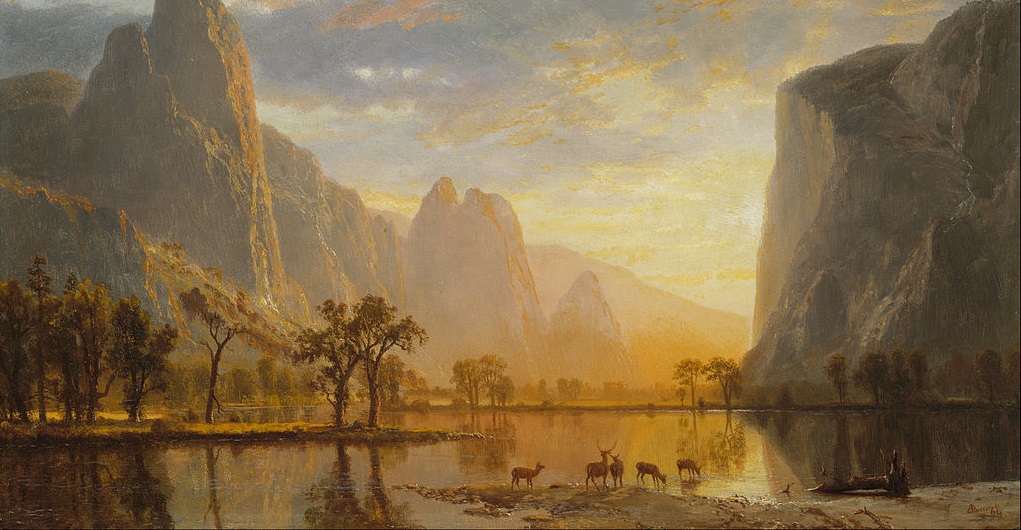
To a Deer

By what right do I take your life today?
Your flesh and blood are not unlike my own.
The same Hand made us both, and gave to you
More grace of form and motion than to me.
It is by reason of that grace you live
Not only in the forests of this world,
But also in the hearts and minds of men—
In history, in legend, and in song.

Your name was often on King David’s lips—
But then again, he sang of hunters too.
And many generations earlier,
God said to Noah that all moving things
Were food for man—and after David’s time,
He spoke to Peter, saying, “kill, and eat!”

By what right does the wolf feed on your kind?
By what right does the cat devour the bird?
To live is to be hungry, and if you
Had fangs and claws, you would not feed on grass.

If honor is a thing that you can know,
I hope that you will see some honor in
The great pains I must take to bring you down.
There is no wrath or greed in what I do.
We must all die someday, and I will strive
To make this death the best one you could have—
And you, as all your ancestors have done,
Will live on in the hearts and minds of men.

Your life will nourish mine, and I will try,
As I have always done, to live a life
Deserving of what God has given me.
And now, farewell—I send you to your rest.


The Sleep of Woodsmen

When evening finds me on some wooded rise,
Or else the level ground along a stream,
A heaviness descends upon my eyes
And Nature takes the semblance of a dream.
For I have known a peace beyond repose,
In rest unlike the comfort of a bed.
Though some men’s brows are furrowed while they doze,
The woodsman’s sleep is like that of the dead.
Go find a spot beneath the open sky,
And drape the night like blankets ’round your form!
The ground will be the couch where you will lie;
Though it be cold, the campfire-hearth is warm.
__Recline at ease in Mother Nature’s arms,
__And be surrendered to her Morphean charms.


Benjamin Daniel Lukey lives in Monroe, North Carolina.  He teaches high school English classes whenever he is not fishing or writing poetry.  His work has previously appeared in Edify Fiction, Sincerely Magazine, Gathering Storm Magazine, and other publications. Please visit hellopoetry.com/bdlukey to read more.


ShareTweetPin
The Society of Classical Poets does not endorse any views expressed in individual poems or commentary.
Read Our Comments Policy Here

RandomPoems

‘Well-Armed Lamb’: A Poem by Warren Bonham
Poetry

‘Well-Armed Lamb’: A Poem by Warren Bonham

July 25, 2024

. Well-Armed Lamb “Democracy is two wolves and a lamb voting on what to have for lunch. Liberty is a...

Preparing for Winter and Spring by Damian Robin
Poetry

Preparing for Winter and Spring by Damian Robin

December 21, 2013

  An English Autumn’s Coming Indoors, a crisp leaf skates on smooth floorboards, gunned by silent puffs from our gapped...

Next Post
‘These Twins’ and Other Poetry by Leo Zoutewelle

'These Twins' and Other Poetry by Leo Zoutewelle

Three Sonnets in an Antiquated Style by James A. Tweedie (with Audio)

Three Sonnets in an Antiquated Style by James A. Tweedie (with Audio)

‘Good Captains’ and Other Poetry by Philip Keefe

'Good Captains' and Other Poetry by Philip Keefe

Comments 7

  1. T. M. Moore says:
    7 years ago

    I very much appreciate the craftsmanship and theme of the villanelle. Well done. I resonate with your view of life. Question for you: Is there wiggle room in the repetition of lines? Yours are so faithful throughout. I find I have to adjust the repeated lines a bit. Am I breaking the rules for villanelle? Thanks.

    Reply
    • C.B. Anderson says:
      7 years ago

      T.M., There is indeed a bit of wiggle room in the repetends. The last word should remain constant, and sometimes is a good idea to repeat ONE of the lines faithfully, lest things get out of hand and the form can no longer be recognized. But grammatical variations (tense, etc.) and breaking the line up with a period, dash or semicolon to provide semantic variations are a plus. These two things keep a villanelle from becoming too predictable and strait-laced.

      Reply
      • T. M. Moore says:
        7 years ago

        C. B., that helps me a lot. I don’t have the skill at villanelles that Benjamin demonstrates here, but I love the form. Your advice encourages me to experiment more, but I’m going to keep Benjamin’s model before me as I do. “Repetends” – is that what we call these?

        Reply
  2. Joe Tessitore says:
    7 years ago

    Beautiful poetry – very well done!

    Reply
  3. C.B. Anderson says:
    7 years ago

    T.M., There is indeed a bit of wiggle room in the repetends. The last word should remain constant, and sometimes is a good idea to repeat ONE of the lines faithfully, lest things get out of hand and the form can no longer be recognized. But grammatical variations (tense, etc.) and breaking the line up with a period, dash or semicolon to provide semantic variations are a plus. These two things keep a villanelle from becoming too predictable and strait-laced.

    Reply
  4. James A. Tweedie says:
    7 years ago

    Ah, at last . . . A villanelle where the lines actually fit together and make perfect sense. Introducing the word “lent” as a counter rhyme with “loan” tied it all together for me. And, in the sonnet, I loved the image captured by the phrase, “drape the night like blankets”—a tangible image I have savored when sleeping in the open air. As the sun sets over the Pacific Northwest coast, these poems have refreshed and renewed me after a busy, beautiful day. Thank you for sharing the poems.

    Reply
  5. David Watt says:
    7 years ago

    Your poetry is well crafted, and a pleasure to read.

    Reply

Leave a Reply Cancel reply

Your email address will not be published. Required fields are marked *


  1. Cynthia L Erlandson on ‘Latitude and Loss’: A Poem by Martin BriggsAugust 21, 2026

    I agree with Josh; I like many slant rhymes for their interesting musicality. There are many beautiful things about this…

  2. Martin Briggs on ‘Latitude and Loss’: A Poem by Martin BriggsAugust 21, 2026

    Thank you, Josh. I'm grateful for your thoughts.

  3. Josh Olson on ‘Latitude and Loss’: A Poem by Martin BriggsAugust 21, 2026

    This is a truly beautiful poem! All the imagery is wonderfully and thoughtfully rendered—a real gem! One thing I particularly…

  4. Joseph S. Salemi on ‘Latitude and Loss’: A Poem by Martin BriggsAugust 21, 2026

    It works perfectly, just like Eliot's image of the yellow smoke moving and curling like a cat, in one of…

  5. Martin Briggs on ‘Latitude and Loss’: A Poem by Martin BriggsAugust 21, 2026

    Precisely. But a legitimate question. Famished snow is hungry and predatory, like the white bear which it symbolises. The image…

Subscribe to Daily Poems

Enter your email address to subscribe to this blog and receive notifications of new posts by email.

Join 1,617 other subscribers

Recent Poems

  • ‘Latitude and Loss’: A Poem by Martin Briggs
  • ‘Act III’ and Other Poetry by C.B. Anderson
  • ‘God’s Funeral’: A Poem by James Sale
  • ‘Star Festival’: A Poem by Margaret Coats
  • ‘Song of the Frog Princess’: A Poem by Scharlie Meeuws
  • ‘The Odyssey: Nolan and Solot Compared’: An Essay by Michael Curtis
  • ‘Solitude’ and Other Poems by Mary Jane Myers
  • ‘The River Not Taken’ and Other Poetry by Brian Yapko
  • ‘Totentanz’: A Poem by James A. Tweedie
  • ‘In God Is Our Trust’: A Poem by Roy E. Peterson
  • ‘Confession’: A Poem by Jeffrey Essmann
  • ‘Religious Poetry, and Religionist Poetry’: An Essay by Joseph S. Salemi
  • The Zingers of Adam Sedia: A Review by Theresa Werba
  • ‘A Paradox’: A Poem by Shamik Banerjee
  • ‘A Prayer of Aristotle’: A Poem by Margaret Coats
  • ‘The Sparrow’: A Poem by Michael Pietrack
  • ‘Chemo Refusal’ and Other Poetry by Golan Shahar
  • ‘Deliverance’ and Other Poetry by Peter Venable
  • ‘Rain’ and Other Poems by Russel Winick
  • ‘The Story of a Plague’ and Other Poetry by Michael Robinson
  • ‘Javert Derailed’: A Poem by Zanna Barton
  • ‘People Forget’: A Poem by James Sale
  • ‘Good and Evil’: A Poem by Roy E. Peterson
  • ‘The Royal Arse Hortillery’: A Poem on the Spoonerism, by Jeff Eardley
  • ‘Who Hears a Robot’s Prayer?’ and Other Poetry by Brian Yapko
  • The Society of Classical Poets 2026 Haiku Competition
  • Four Love Sonnets by Adam Sedia
  • ‘Rasputina Confers with Her Cohorts’: A Poem by Joseph S. Salemi
  • ‘Warfare by Remote Control’: A Poem by Paul A. Freeman
  • ‘The Passing’: A Poem by Margaret Brinton

Categories

  • Acrostic
  • Alexandroid
  • Alliterative
  • Art
  • Best Poems
  • Blank Verse
  • Chant Royal
  • Classical Poets Live
  • Clerihew
  • Covid-19
  • Deconstructing Communism
  • Educational
  • Epic
  • Epigrams and Proverbs
  • Essays
    • Interviews with Poets
    • Poetry Reviews
  • Featured
  • From the Society
  • Great Poets
    • Dante Alighieri
    • Edgar Allan Poe
    • Emily Dickinson
    • Geoffrey Chaucer
    • Henry Wadsworth Longfellow
    • Homer
    • John Keats
    • John Milton
    • Robert Frost
    • William Blake
    • William Shakespeare
    • William Wordsworth
  • Human Rights in China
  • Limerick
  • Love Poems
  • Music
  • Pantoum
  • Performing Arts
  • Poetry
    • Beauty
    • Children's Poems
    • Culture
    • Ekphrastic
    • Found Poems
    • High School Poets
    • Humor
    • Riddles
  • Poetry Challenge
  • Poetry Contests
  • Poetry Forms
    • Curtal Sonnet
    • Haiku
  • Poetry Readings
  • Rhupunt
  • Rondeau
  • Rondeau Redoublé
  • Rondel
  • Rubaiyat
  • Sapphic Verse
  • Satire
  • Science
  • Sestina
  • Shape Poems
  • Short Stories
  • Song Lyrics
  • Sonnet
  • Symposium
  • Terrorism
  • Terza Rima
  • The Environment
  • Translation
  • Triolet
  • Video
  • Villanelle

Quick Links

  • About Us
  • Submit Poetry
  • Become a Member
  • Members List
  • Support the Society
  • Advertisement Placement
  • Comments Policy
  • Terms of Use

Welcome Back!

Login to your account below

Forgotten Password?

Retrieve your password

Please enter your username or email address to reset your password.

Log In
No Result
View All Result
  • Poems
    • Beauty
    • Culture
    • Satire
    • Humor
    • Children’s
    • Art
    • Ekphrastic
    • Epic
    • Epigrams and Proverbs
    • Human Rights in China
    • Music
    • Performing Arts
    • Riddles
    • Science
    • Song Lyrics
    • The Environment
    • The Raven
    • Found Poems
    • High School Poets
    • Terrorism
    • Covid-19
  • Poetry Forms
    • Sonnet
    • Haiku
    • Limerick
    • Villanelle
    • Rondeau
    • Pantoum
    • Sestina
    • Triolet
    • Acrostic
    • Alexandroid
    • Alliterative
    • Blank Verse
    • Chant Royal
    • Clerihew
    • Rhupunt
    • Rondeau Redoublé
    • Rondel
    • Rubaiyat
    • Sapphic Verse
    • Shape Poems
    • Terza Rima
  • Great Poets
    • Geoffrey Chaucer
    • Emily Dickinson
    • Homer
    • Henry Wadsworth Longfellow
    • Dante Alighieri
    • John Keats
    • John Milton
    • Edgar Allan Poe
    • William Shakespeare
    • William Wordsworth
    • William Blake
    • Robert Frost
  • Love Poems
  • Contests
  • SCP Academy
    • Educational
    • Teaching Classical Poetry—A Guide for Educators
    • Poetry Forms
    • The SCP Journal
    • Books

© 2025 SCP. WebDesign by CODEC Prime.