• Submit Poetry
  • Support SCP
  • About Us
  • Members
  • Join
Monday, October 19, 2026
Society of Classical Poets
  • Poems
    • Beauty
    • Culture
    • Satire
    • Humor
    • Children’s
    • Art
    • Ekphrastic
    • Epic
    • Epigrams and Proverbs
    • Human Rights in China
    • Music
    • Performing Arts
    • Riddles
    • Science
    • Song Lyrics
    • The Environment
    • The Raven
    • Found Poems
    • High School Poets
    • Terrorism
    • Covid-19
  • Poetry Forms
    • Sonnet
    • Haiku
    • Limerick
    • Villanelle
    • Rondeau
    • Pantoum
    • Sestina
    • Triolet
    • Acrostic
    • Alexandroid
    • Alliterative
    • Blank Verse
    • Chant Royal
    • Clerihew
    • Rhupunt
    • Rondeau Redoublé
    • Rondel
    • Rubaiyat
    • Sapphic Verse
    • Shape Poems
    • Terza Rima
  • Great Poets
    • Geoffrey Chaucer
    • Emily Dickinson
    • Homer
    • Henry Wadsworth Longfellow
    • Dante Alighieri
    • John Keats
    • John Milton
    • Edgar Allan Poe
    • William Shakespeare
    • William Wordsworth
    • William Blake
    • Robert Frost
  • Love Poems
  • Contests
  • SCP Academy
    • Educational
    • Teaching Classical Poetry—A Guide for Educators
    • Poetry Forms
    • The SCP Journal
    • Books
No Result
View All Result
Society of Classical Poets
No Result
View All Result
Home Poetry Beauty

Three Sonnets in an Antiquated Style by James A. Tweedie (with Audio)

July 13, 2019
in Beauty, Culture, Love Poems, Poetry, Poetry Readings
A A
11
poems Three Sonnets in an Antiquated Style by James A. Tweedie (with Audio)
https://classicalpoets.org/wp-content/uploads/2019/07/my-true-love-laughs-vocal-mp3.mp3

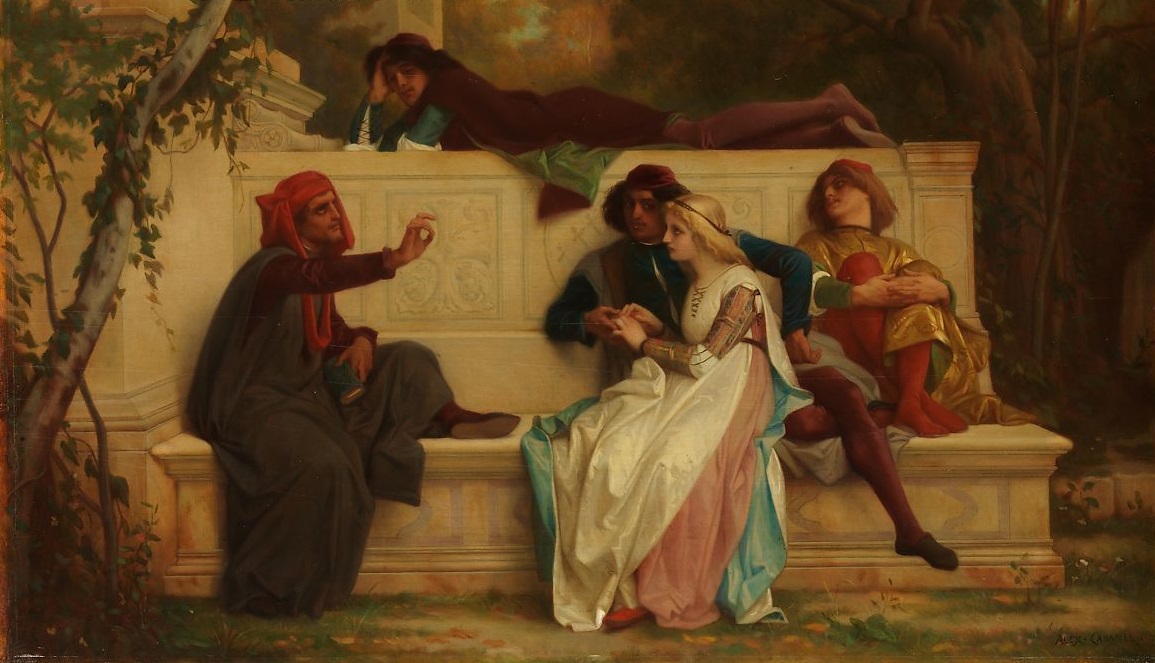
Her Love for Him

My true love laughs, and angel choirs sing;
The mountains echo back his tuneful mirth
While Nature dances, heav’n in step with earth.
‘Tis music to mine ear; mine heart takes wing!
Into my love’s embrace I fly secure,
And tenderly he holds me in his arms
As if to shelter me from sin’s alarms.
Like rooted rock his faithfulness is sure.
If I could sing, my song would rise on high
As counterpoint to laughter’s melody.
My thanks and praise emblazoned in the sky
To God, who gave mine own true love to me.
And so, with heart and mind and strength and soul
I sing of thee, whose love has made me whole.


His Love for Her

As dew from fair Aurora’s tears didst drip
Upon the broad-winged flight of earth’s embrace,
So doth my pleasure-dampened eye let slip
A tear of joy when I behold thy face.
Thy nose, how like a peak in Darien,
Thy two-some cheeks, like rosy-fingered Dawn,
Thy lips, as sweet as red valerian,
Thy neck as lithe and graceful as a swan.
Mine heart belongs to thee and thee alone,
Mine eyes none but thyself wouldst see,
My love desireth nothing but thine own,
My life I proffer, forfeit, unto thee,
All that I am, all that I have are thine,
If only thou wouldst make thine own heart, mine.


A Pledge of Troth

A rock in Sinai’s withered wilderness
Was struck by prophet’s staff; from which, by grace
Of God, burst forth a watered stream apace.
Thus Providence did parchéd Jacob bless.
My true love, like this rock, o’erflows with life.
A living stone to which I cling amain,
From whom bursts forth sweet laughter. It is vain
For me to deign to be less than his wife.
My rock! My love! My anchor in the storm!
I cling to thee and wilt not let thee go!
My summer shade. My winter hearthen warm.
Thou art all things to me; God made thee so.
To thee, I pledge my troth alone to thee.
Whom God has joined together, thee and me.


James A. Tweedie is a recently retired pastor living in Long Beach, Washington. He likes to walk on the beach with his wife. He has written and self-published four novels and a collection of short stories. He has several hundred unpublished poems tucked away in drawers.

ShareTweetPin
The Society of Classical Poets does not endorse any views expressed in individual poems or commentary.
Read Our Comments Policy Here

RandomPoems

‘Priam, King of Troy, Addresses Cassandra’s Concerns about the Horse’ by Michael Vanyukov
Culture

‘Priam, King of Troy, Addresses Cassandra’s Concerns about the Horse’ by Michael Vanyukov

January 20, 2021

. Even then Cassandra, who, by the god’s decree, is never to be believed by Trojans, reveals our future fate...

poem/bonham/vanity
Beauty

A Poem on Social Media Vanity: ‘Awaiting Adulation’ and Other Poetry by Warren Bonham

April 23, 2023

. Awaiting Adulation We all spend our lives awaiting adulations’ late arrival. We’re convinced that’s all we need for our...

Next Post
‘Good Captains’ and Other Poetry by Philip Keefe

'Good Captains' and Other Poetry by Philip Keefe

Two Poems on Dogs by Peter Hartley

Two Poems on Dogs by Peter Hartley

‘Natura Naturans’ and Other Poetry by Terry Norton

'Natura Naturans' and Other Poetry by Terry Norton

Comments 11

  1. Peter Hartley says:
    7 years ago

    Normally hackles rise when I see words like ’tis and thine and thee and wilt but these quaint pieces are advertised right from the start as being in an antiquated style, which I find instantly disarming, and that for me makes all the difference. Reading these I am very easily transported back to an early nineteenth century drawing room to hear an elegant lady in an empire-line dress reading them aloud. And what can be wrong with archaisms in a proper context? It’s not like watching a performance of Coriolanus in Victorian garb (which I’m sorry to say I have done) and it only helps us to suspend our disbelief. I’ve read a few of these Petrarchan /Shakespearean sonnet amalgams by SCP contributors now. They often work very well for me and avoid the pitfalls of forced rhymes so often found in the normal Petrarchan sonnet with only two end-rhymes allowed in its octet. The division of the three stanzas reminds me of The Passionate Shepherd to his Love by Christopher Marlowe and The Nymph’s Reply to the Shepherd, Walter Raleigh’s response. Very fine little poems, and worth reading aloud with eyes half shut.

    Reply
    • James A. Tweedie says:
      7 years ago

      Thank you, Peter. You seem to have caught the spirit in which these poems were written.

      Reply
  2. Sally Cook says:
    7 years ago

    Dear James Tweedie —
    I find these works light and translucent as a moon moth’s wings. Sometimes it is good to escape to another time.
    Thank you.

    Reply
    • James A. Tweedie says:
      7 years ago

      They are somewhat escapist, aren’t they! And thank you for the phrase, “translucent as moon moth’s wings.” Lovely.

      Reply
  3. Joseph S. Salemi says:
    7 years ago

    Three very fine sonnets in an antique style. Today this kind of resurrection of past forms and language is condemned by our modernist tyrants, but it was perfectly normal and acceptable for writers in past centuries. Homer’s epics are written in an archaic Greek that was not spoken in his own time; Cicero’s orations are in a markedly older and different Latin that that of his private letters to friends; the King James 1611 version of the Bible was written in the earlier English of Tyndale; Swinburne used language unheard in Victorian drawing-rooms. Even the arch-modernist Ezra Pound used thee-thou-thy-thine pronouns on occasion, along with the earlier verbal hath-hast-doth-dost formations.

    I have only four suggestions. In poem 1, there needs to be a comma after “melody” in the tenth line, not a period. If a period is used, then lines 11 and 12 are a sentence fragment. With a comma after “melody,” they become a proper dependent structure.

    In poem 2, there should NOT be a comma after “heart” in the last line. It is awkward and unnecessary. The major mark of a good concluding line is that it flows smoothly in both rhythm and diction. The comma after “heart” wrecks that, totally.

    In line 10 of the same poem, the meter is off. “Mine eyes none but thyself wouldst see” can’t be scanned as iambic pentameter. Try this:

    “Mine eyes none but thy pure self would see”

    I’ve substituted “would” for “wouldst,” because the latter form is for a singular subject. It can’t be used for a plural subject like “Mine eyes.” If we’re going to be archaic, we need to follow the archaic rules.

    Reply
    • James A. Tweedie says:
      7 years ago

      Dr. Salemi, As always, thank you for taking the time to read, digest and parse my poetry. I am always the better and wiser for your insights.

      1. As I recall, this may have been a comma before the final edit. I was thinking that a semi-colon might be best but, as you point out, what follows is not an independent clause. So, although it seems awkward to me, the best solution seems to be the comma.

      2. Agreed. In fact, I noticed the comma after I submitted the poem and rued it, but chose not to bother Evan for a correction.

      3. How did I miss this! Unfortunately, your good suggestion also fails to scan as iambic pentameter. (I could insert the word “own” but that would diminish the effect of the same word being used as a rhyme in the following line). I will rewrite the line, “Mine eyes none but thyself alone would see.”

      4. I never realized that “wouldst” is always and only 2nd person singular. “I would” “thou wouldst” “he/she/it would” “we would” “you would” “they would.” Thanks for catching the slip, and for the affirming comments as well.

      Reply
  4. Christina says:
    7 years ago

    In the beauty and richness of their language these poems are simply stunning! How good and refreshing it is to find oneself transported back into an age of courtly love, where the ‘antiquated style’ is wholly appropriate and pleasing.

    Using archaic verb forms consistently is quite a challenge, so I hope, James, that you will not mind my pointing out a blip or two. In 2 line 1, it should be ‘did drip’, ‘didst’ being 2nd person singular. In 3 line 10, ‘will’ not ‘wilt’. And then in places, e.g. the last lìnes of 1 and 3 you have a ‘has’ instead of a ‘hath’! I think it might be cheating to go hybrid!

    Reply
    • James A. Tweedie says:
      7 years ago

      I am humbled by being in the presence of those who actually know this sort of thing! What a wonderful world we live in! Thank you, Christina, for the kind words and the helpful corrections.

      Reply
  5. Joseph S. Salemi says:
    7 years ago

    Here’s part of a helpful paradigm that I use with my classes when teaching Shakespeare’s Sonnets:

    I do I did
    Thou dost Thou didst
    He doth He did

    I have I had
    Thou hast Thou hadst
    He hath He had

    I am I was
    Thou art Thou wast (or wert)
    He is He was

    Thou — always used as subject (“Thou art my friend”)
    Thee — always used as an object (“I love thee”)

    In Shakespeare’s day these forms were in flux, and could be employed interchangeably with the modern ones. But the older forms remained in poetic use long after they had ceased to be used in common speech.

    Reply
    • James A. Tweedie says:
      7 years ago

      That is very helpful. Thank you for allowing me to audit this relevant part of your class! No tuition. No final exam. Perfect!

      Reply
      • C.B. Anderson says:
        7 years ago

        Without Salemi, we’re all screwed.

        Reply

Leave a Reply Cancel reply

Your email address will not be published. Required fields are marked *


  1. Rohini Sunderam on ‘The River & The Sea’: A Poem by Rohini SunderamOctober 19, 2026

    Oh, wow and thank you! I used to love this form of personification of natural forces as a child. It…

  2. Gerard Maritato on ‘Biblical? Emblematic?’: A Poem by Stephen DiLauroOctober 19, 2026

    I will never look in the same way at that apple on my phone! Good cause for reflection.

  3. Joseph S. Salemi on ‘After-Action Report’: A Poem by Joseph S. SalemiOctober 19, 2026

    Thank you, Adam. When "Melissa" recounted the event to me, I had to put it into a poem, but a…

  4. Russel Winick on ‘Their Words, My Fault’ and Other Poems by Russel WinickOctober 19, 2026

    Thank you Adam. I agree with you about the first poem.

  5. Adam Sedia on ‘The River & The Sea’: A Poem by Rohini SunderamOctober 19, 2026

    I was struck by this wonderful narrative that turns a natural phenomenon into a touching love-story. Dramatic narratives like this…

Subscribe to Daily Poems

Enter your email address to subscribe to this blog and receive notifications of new posts by email.

Join 1,660 other subscribers
No Result
View All Result

Resources

       1. A Guide to Writing Poetry

      2. The Best Poems of 2020      

      3. Poetry and Writing Contests

      4. Journals Accepting Formal Verse

Recent Poems

  • ‘Every New Pantheon’: A Poem by C.B. Anderson
  • ‘Biblical? Emblematic?’: A Poem by Stephen DiLauro
  • ‘The Valley’: A Poem by Briana Reavis
  • The Blobfish—‘Mr Blobby’: A Poem by Paul A. Freeman
  • ‘Nature’s Family’: A Poem by Margaret Coats
  • ‘The River & The Sea’: A Poem by Rohini Sunderam
  • Poems by Derzhavin, Akhmatova, and Tyutchev, Translated by Kevin Rainbow
  • ‘After-Action Report’: A Poem by Joseph S. Salemi
  • ‘The Walking Wounded’: A Poem by Jeffrey Essmann
  • ‘Their Words, My Fault’ and Other Poems by Russel Winick
  • ‘Lazarus I’: A Poem by Jason Hunt
  • Poetry Challenge: Dictionary Delights
  • ‘In Defense of Rhyme’: An Essay by Euphrates Moss
  • ‘Gun Control’: A Poem by Kevin Ahern
  • ‘Power of a Pen’: A Poem by Janice Stanley
  • The Best Haiku of 2026
  • ‘One Night in Bangkok’ and Other Poetry by Brian Yapko
  • ‘Invocation’: A Poem by D.R. Rainbolt
  • ‘Enjoy the Peace, Prepare for War’: A Poem by Roy E. Peterson
  • Faust Part Two, Act One: ‘A Pleasant Landscape’ by Goethe, Translated by Josh Olson
  • A Song Inspired by Robert Frost’s ‘The Road Not Taken’, by Gunny Markefka
  • ‘Reappraisals of Mortality’: A Poem by C.B. Anderson
  • ‘What Is the Measure of My Days?’: A Poem by Peter Venable
  • ‘Polar Coordinates’: A Poem by Adam Sedia
  • ‘It Never Lies!’: A Poem by Paul A. Freeman
  • ‘The Mahjong Flowers’: A Set of Sonnets by Margaret Coats
  • ‘The Martyrdom of Saint Cassian’: A Poem by Joseph S. Salemi
  • ‘Mind Versus Beauty’: A Poem by Johann Wolfgang von Goethe, Translated by Eric v.d. Luft
  • ‘Summer Sails’: A Poem by Paulette Calasibetta
  • ‘Aquarius’: A Poem by Patricia Rogers Crozier

Categories

  • Acrostic
  • Alexandroid
  • Alliterative
  • Art
  • Best Poems
  • Blank Verse
  • Chant Royal
  • Classical Poets Live
  • Clerihew
  • Covid-19
  • Deconstructing Communism
  • Educational
  • Epic
  • Epigrams and Proverbs
  • Essays
    • Interviews with Poets
    • Poetry Reviews
  • Featured
  • From the Society
  • Great Poets
    • Dante Alighieri
    • Edgar Allan Poe
    • Emily Dickinson
    • Geoffrey Chaucer
    • Henry Wadsworth Longfellow
    • Homer
    • John Keats
    • John Milton
    • Robert Frost
    • William Blake
    • William Shakespeare
    • William Wordsworth
  • Human Rights in China
  • Limerick
  • Love Poems
  • Music
  • Pantoum
  • Performing Arts
  • Poetry
    • Beauty
    • Children's Poems
    • Culture
    • Ekphrastic
    • Found Poems
    • High School Poets
    • Humor
    • Riddles
  • Poetry Challenge
  • Poetry Contests
  • Poetry Forms
    • Curtal Sonnet
    • Haiku
  • Poetry Readings
  • Rhupunt
  • Rondeau
  • Rondeau Redoublé
  • Rondel
  • Rubaiyat
  • Sapphic Verse
  • Satire
  • Science
  • Sestina
  • Shape Poems
  • Short Stories
  • Song Lyrics
  • Sonnet
  • Symposium
  • Terrorism
  • Terza Rima
  • The Environment
  • Translation
  • Triolet
  • Video
  • Villanelle

Quick Links

  • About Us
  • Submit Poetry
  • Become a Member
  • Members List
  • Support the Society
  • Advertisement Placement
  • Comments Policy
  • Terms of Use

Welcome Back!

Login to your account below

Forgotten Password?

Retrieve your password

Please enter your username or email address to reset your password.

Log In
No Result
View All Result
  • Poems
    • Beauty
    • Culture
    • Satire
    • Humor
    • Children’s
    • Art
    • Ekphrastic
    • Epic
    • Epigrams and Proverbs
    • Human Rights in China
    • Music
    • Performing Arts
    • Riddles
    • Science
    • Song Lyrics
    • The Environment
    • The Raven
    • Found Poems
    • High School Poets
    • Terrorism
    • Covid-19
  • Poetry Forms
    • Sonnet
    • Haiku
    • Limerick
    • Villanelle
    • Rondeau
    • Pantoum
    • Sestina
    • Triolet
    • Acrostic
    • Alexandroid
    • Alliterative
    • Blank Verse
    • Chant Royal
    • Clerihew
    • Rhupunt
    • Rondeau Redoublé
    • Rondel
    • Rubaiyat
    • Sapphic Verse
    • Shape Poems
    • Terza Rima
  • Great Poets
    • Geoffrey Chaucer
    • Emily Dickinson
    • Homer
    • Henry Wadsworth Longfellow
    • Dante Alighieri
    • John Keats
    • John Milton
    • Edgar Allan Poe
    • William Shakespeare
    • William Wordsworth
    • William Blake
    • Robert Frost
  • Love Poems
  • Contests
  • SCP Academy
    • Educational
    • Teaching Classical Poetry—A Guide for Educators
    • Poetry Forms
    • The SCP Journal
    • Books

© 2025 SCP. WebDesign by CODEC Prime.