• Submit Poetry
  • Support SCP
  • About Us
  • Members
  • Join
Friday, October 9, 2026
Society of Classical Poets
  • Poems
    • Beauty
    • Culture
    • Satire
    • Humor
    • Children’s
    • Art
    • Ekphrastic
    • Epic
    • Epigrams and Proverbs
    • Human Rights in China
    • Music
    • Performing Arts
    • Riddles
    • Science
    • Song Lyrics
    • The Environment
    • The Raven
    • Found Poems
    • High School Poets
    • Terrorism
    • Covid-19
  • Poetry Forms
    • Sonnet
    • Haiku
    • Limerick
    • Villanelle
    • Rondeau
    • Pantoum
    • Sestina
    • Triolet
    • Acrostic
    • Alexandroid
    • Alliterative
    • Blank Verse
    • Chant Royal
    • Clerihew
    • Rhupunt
    • Rondeau Redoublé
    • Rondel
    • Rubaiyat
    • Sapphic Verse
    • Shape Poems
    • Terza Rima
  • Great Poets
    • Geoffrey Chaucer
    • Emily Dickinson
    • Homer
    • Henry Wadsworth Longfellow
    • Dante Alighieri
    • John Keats
    • John Milton
    • Edgar Allan Poe
    • William Shakespeare
    • William Wordsworth
    • William Blake
    • Robert Frost
  • Love Poems
  • Contests
  • SCP Academy
    • Educational
    • Teaching Classical Poetry—A Guide for Educators
    • Poetry Forms
    • The SCP Journal
    • Books
No Result
View All Result
Society of Classical Poets
  • Poems
    • Beauty
    • Culture
    • Satire
    • Humor
    • Children’s
    • Art
    • Ekphrastic
    • Epic
    • Epigrams and Proverbs
    • Human Rights in China
    • Music
    • Performing Arts
    • Riddles
    • Science
    • Song Lyrics
    • The Environment
    • The Raven
    • Found Poems
    • High School Poets
    • Terrorism
    • Covid-19
  • Poetry Forms
    • Sonnet
    • Haiku
    • Limerick
    • Villanelle
    • Rondeau
    • Pantoum
    • Sestina
    • Triolet
    • Acrostic
    • Alexandroid
    • Alliterative
    • Blank Verse
    • Chant Royal
    • Clerihew
    • Rhupunt
    • Rondeau Redoublé
    • Rondel
    • Rubaiyat
    • Sapphic Verse
    • Shape Poems
    • Terza Rima
  • Great Poets
    • Geoffrey Chaucer
    • Emily Dickinson
    • Homer
    • Henry Wadsworth Longfellow
    • Dante Alighieri
    • John Keats
    • John Milton
    • Edgar Allan Poe
    • William Shakespeare
    • William Wordsworth
    • William Blake
    • Robert Frost
  • Love Poems
  • Contests
  • SCP Academy
    • Educational
    • Teaching Classical Poetry—A Guide for Educators
    • Poetry Forms
    • The SCP Journal
    • Books
No Result
View All Result
Society of Classical Poets
No Result
View All Result
Home Poetry Beauty

‘The Bell Now Tolls’ by Martin Rizley

August 19, 2020
in Beauty, Culture, Poetry
A A
24
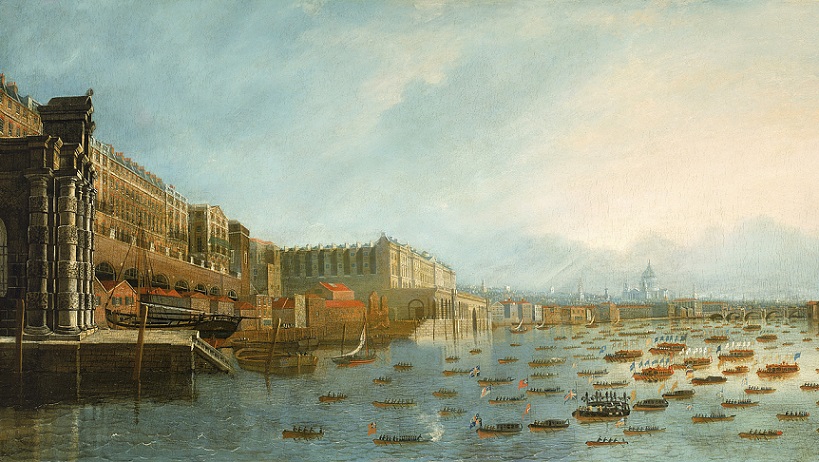
Nelson's Funeral Procession on the Thames, 8 January 1806’  1807.  Daniel Turner

Nelson's Funeral Procession on the Thames, 8 January 1806’ 1807. Daniel Turner


in memory of my father-in-law, Pietro Lorefice (1938-2020)

The bell now tolls, dear Pietro, for this hour
When we must bid your faithful soul adieu,
And lay to rest that mortal frame we knew,
Now spent, like withered grass or faded flower.

I knew that you were likely to precede
My soul in death, since you had been so ill
And had begun your trek up life’s steep hill
While I was but a yet unplanted seed.

Yet, since we never know how life will go,
I did not know for sure if I would grieve
Your sad demise, or be the first to leave
This earthly sphere, while you stayed here below.

My heart still beats—but yours is still as stone;
My flesh is warm—but yours is cold as clay;
Your dust returns to dust this solemn day,
Your temple falls, and earth reclaims her own.

The die is cast, the process has begun
To thoroughly undo your earthly frame,
For nothing here on earth can stay the same,
And all that time has built must come undone.

You change, yet we who stay are changed as well,
Diminished by your death, for when you stole
Away, you left in hearts a gaping hole,
A space within us where you once did dwell.

Yet, as we are reduced, we are made rich
With truth to build our mortal lives upon:
The truth that we must go the way you’ve gone
And leave this passing world without a stitch.

Then all we have accrued while on this earth,
From wealth to fame to family and friends,
Must all be left behind, for when life ends
We leave as naked as we came at birth.

Death comes for all! Yet when death comes, may I
Depart this life as blessedly as you,
Beloved and cherished by all those I knew
Anointed by their tear drops as I die.

How sweet to leave this world as you have left!
Surrounded by so many caring souls
Who ring out tributes like a bell that tolls
And sing sweet songs from loving hearts bereft.

Your memory is honoured by your own
Who walk with pensive steps behind that chest
That bears your body to its place of rest
Where it will lie unmoving and alone.

How blessed, I say, to exit life like this,
Extolled by one’s own family and nation,
One’s life a source of thankful celebration
By all—yet you’ve a greater source of bliss:

For you have kept the faith and battled well
And borne the summer’s heat and winter’s blast;
You’ve crossed the finish line and rest at last
From wrestling with the world, the flesh, and hell.

O, may I likewise fight and not yield ground,
Advancing still in faith and hope and love
Until I claim the victor’s crown above
The day my soul in glory will be found.

You leave behind the countless lives you’ve blessed,
A crumbling, vacant house, and little more;
Behold now, Pietro, what you’ve laid in store
Rejecting lesser riches for the best!

The cypress trees are whispering of you
As we process in silence toward your tomb:
“Make way for him whose life cast out death’s gloom;
Behold how he was loved, and not by few!”


Martin Rizley grew up in Oklahoma and in Texas, and has served in pastoral ministry both in the United States and in Europe. He is currently serving as the pastor of a small evangelical church in the city of Málaga on the southern coast of Spain, where he lives with his wife and daughter. Martin has enjoyed writing and reading poetry as a hobby since his early youth.
ShareTweetPin
The Society of Classical Poets does not endorse any views expressed in individual poems or commentary.
Read Our Comments Policy Here

RandomPoems

Translation of the Iliad’s Beginning by J. Simon Harris
Culture

Translation of the Iliad’s Beginning by J. Simon Harris

January 21, 2018

Homer’s Iliad I.1-47. Translation in the epic hexameter, the meter of the Greek. Sing of the wrath, my goddess, of...

A Biographical Remark in Shakespeare’s Venus and Adonis
Essays

A Biographical Remark in Shakespeare’s Venus and Adonis

May 29, 2016

By Douglas Thornton "And lo I lie between the sun and thee" (Venus and Adonis; line 194) To see the...

Next Post
A Poem on Judgment Day and Other Poetry by Leo Zoutewelle

A Poem on Judgment Day and Other Poetry by Leo Zoutewelle

‘Those Unknown’ by Camille Cechini

'Those Unknown' by Camille Cechini

The Rebirth of Epic: A Review of James Sale’s HellWard

The Rebirth of Epic: A Review of James Sale’s HellWard

Comments 24

  1. Sally Cook says:
    6 years ago

    “Like withered grass or faded flower..” I respond to this lovely phrase.

    Reply
  2. Peter Hartley says:
    6 years ago

    Sometimes I think there can’t be much more left to say about death. But you say it, and it’s different, and it breathes originality, and you use some original language that is very felicitous in context. I like the adverb “blessedly” on L34 and I don’t know why, and “toward” pronounced as one syllable in the third to bottom line. I NEVER hear anyone say “tord” but I know it is correct standard English. Altogether a very fine tribute to your father-in-law of which I’m sure he would be very proud

    Reply
    • Martin Rizley says:
      6 years ago

      Hi Peter,
      I responded to you below– the comment starting “thank you so much. . .”

      Reply
  3. Terry L. Norton says:
    6 years ago

    I enjoyed your elegy on your father. Its many elegant phrasings, especially some of the antitheses and similarities between the dead and the living, capture universal reactions to loss and resonated highly with the family losses I’ve experienced in the last two years.

    Should “process” be “progress” in the last stanza?

    Reply
    • Peter Hartley says:
      6 years ago

      No, process is much better.

      Reply
      • Peter Hartley says:
        6 years ago

        (To move in procession, stress on second syllable)

        Reply
      • Terry L. Norton says:
        6 years ago

        I was thinking of “progress” as in a royal progress. I hadn’t considered the aptness of the connotation of procession.

        Reply
  4. Leo Zoutewelle says:
    6 years ago

    With quiet praise for this elegy you wrote and my condolences to you!

    Reply
    • Martin Rizley says:
      6 years ago

      Thank you, Lou!

      Reply
  5. Martin Rizley says:
    6 years ago

    Thank you so much for your critique of the poem and for pointing out certain features of the poem you that you liked. I appreciate your feedback!

    Reply
  6. Martin Rizley says:
    6 years ago

    Hi Terry,
    I am glad that the poem resonated with your own experience. It is very gratifying for me to know that you were able to respond to the poem on that personal level. Thanks for your feedback!

    Reply
  7. Susan Jarvis Bryant says:
    6 years ago

    A truly beautiful poem that speaks of love, loss, and a cherished life lived well. The penultimate stanza touched my heart with its wisdom and the closing stanza is simply perfect. Your insightful and graceful elegy is a privilege to read – thank you, Martin.

    Reply
    • Martin Rizley says:
      6 years ago

      Thank you, Susan, for your kind words which summarize well the theme of the poem. I appreciate your feedback!

      Reply
  8. Rod Walford says:
    6 years ago

    Martin I can only echo Susan’s words – it is a beautiful poem to read – somehow very different – strikingly so in places. Thank you for sharing your grief so eloquently.

    Reply
  9. C.B. Anderson says:
    6 years ago

    As many others have noticed, Martin, this poem is lovely and, I daresay, fairly sublime. Somehow, while expressing every natural sentiment, you have avoided any triteness.

    Reply
  10. Satyananda Sarangi says:
    6 years ago

    Hello Mr. Martin!

    I will summarise the poem like this :

    “It’s common to die many deaths throughout life but to know the emotion of death and express it while one is alive is the rarest thing to do.”

    From now on, this becomes one of my favourite poems.
    Thank you.

    Regards

    Reply
    • Martin Rizley says:
      6 years ago

      Thank you so much for sharing your response to the poem!

      Reply
  11. David Paul Behrens says:
    6 years ago

    A tremendous eulogistic tribute to your father-in-law. Outstanding!

    Reply
  12. David Watt says:
    6 years ago

    I am really impressed by this moving elegy. The description of whispering cypress trees in the final stanza brings to mind a particularly vivid image.

    Reply
  13. Ujwal says:
    6 years ago

    I lost my father early this year, he was 60. I’ve been trying to come to terms with it, and your poem really resonated with me. Beautifully written and a fitting tribute to your father-in-law.

    Reply
    • Martin Rizley says:
      6 years ago

      My condolences to you on the loss of your father. Thank for letting me know how you were able to identify with the words of the poem during this time of loss in your own life.

      Reply
  14. Martin Rizley says:
    6 years ago

    Thanks, David. In Italy, where we attended my father-in-law´s funeral, it is generally the case that cypress trees are found around the perimeter of the local cemetery. It was for me a moving experience to walk silently in the funeral procession with no sound but that of the wind blowing through the cypresseses.

    Reply
  15. Monty says:
    6 years ago

    This is a beautifully-written, warm, and touching piece, Martin; and the further I read into it, the more it became, for me, not only about your mourning of his death, but also your celebration of his life: the type of person he was: his values, attributes, etc: and the moralistic legacy he left to those close to him. You’ve conveyed your feelings poignantly.

    Reply
    • Martin Rizley says:
      6 years ago

      Thanks you, Monty, for sharing with me your feedback. I’m glad you liked the poem.

      Reply

Leave a Reply Cancel reply

Your email address will not be published. Required fields are marked *


  1. Frederick Martinus on The Best Haiku of 2026October 9, 2026

    Congratulations to all the winners and runners-up!

  2. Paul Freeman on The Best Haiku of 2026October 9, 2026

    Congratulations the winner and runners-up from a non-winner.

  3. Paul Freeman on ‘Power of a Pen’: A Poem by Janice StanleyOctober 9, 2026

    I share your sentiments entirely, Janice. I write virtually everything by pen - poems, short stories, everything creative.

  4. John Savoie on The Best Haiku of 2026October 9, 2026

    Thanks for "hearing" my haiku. I would also encourage the reader to overhear Psalm 84, especially v.3.

  5. Jeff Minick on ‘Power of a Pen’: A Poem by Janice StanleyOctober 9, 2026

    What a beautiful poem, and eye-opening as well, as it made me look more affectionately on the old coffee cup…

Subscribe to Daily Poems

Enter your email address to subscribe to this blog and receive notifications of new posts by email.

Join 1,661 other subscribers
No Result
View All Result

Resources

       1. A Guide to Writing Poetry

      2. The Best Poems of 2020      

      3. Poetry and Writing Contests

      4. Journals Accepting Formal Verse

Recent Poems

  • ‘Power of a Pen’: A Poem by Janice Stanley
  • The Best Haiku of 2026
  • ‘One Night in Bangkok’ and Other Poetry by Brian Yapko
  • ‘Invocation’: A Poem by D.R. Rainbolt
  • ‘Enjoy the Peace, Prepare for War’: A Poem by Roy E. Peterson
  • Faust Part Two, Act One: ‘A Pleasant Landscape’ by Goethe, Translated by Josh Olson
  • A Song Inspired by Robert Frost’s ‘The Road Not Taken’, by Gunny Markefka
  • ‘Reappraisals of Mortality’: A Poem by C.B. Anderson
  • ‘What Is the Measure of My Days?’: A Poem by Peter Venable
  • ‘Polar Coordinates’: A Poem by Adam Sedia
  • ‘It Never Lies!’: A Poem by Paul A. Freeman
  • ‘The Mahjong Flowers’: A Set of Sonnets by Margaret Coats
  • ‘The Martyrdom of Saint Cassian’: A Poem by Joseph S. Salemi
  • ‘Mind Versus Beauty’: A Poem by Johann Wolfgang von Goethe, Translated by Eric v.d. Luft
  • ‘Summer Sails’: A Poem by Paulette Calasibetta
  • ‘Aquarius’: A Poem by Patricia Rogers Crozier
  • ‘No Body Here on Earth’: A Poem by Gerard Maritato
  • A Visualized Reading of The Odyssey: Book 1, Produced by Andrew Benson Brown
  • ‘Now?’ and Other Poetry by Stephen DiLauro
  • ‘From California to Louisiana’: A Sonnet by Mark F. DeWitt
  • ‘A Pot of Tea’ and Other Poetry by Samuel Gregg
  • Eight Riddles for the 2026 Mid-Autumn Festival, by Evan Mantyk
  • ‘Swallowtails’ and Other Poetry by Mary Jane Myers
  • ‘All Flesh Is Grass’: A Poem by Cynthia Erlandson
  • ‘May a Smile Be Your Umbrella’: A Poem by Roy E. Peterson
  • ‘Flexibility’ and Other Poems by Russel Winick
  • ‘Sabin Howard’ and Other Poetry by Bruce Dale Wise
  • ‘Ode to a Dragonfly’ and Other Poetry by Adam Sedia
  • ‘Hobby Horse’: A Poem by A.R. Pereira
  • ‘Big Cat Dance’: A Poem by Paul Erlandson

Categories

  • Acrostic
  • Alexandroid
  • Alliterative
  • Art
  • Best Poems
  • Blank Verse
  • Chant Royal
  • Classical Poets Live
  • Clerihew
  • Covid-19
  • Deconstructing Communism
  • Educational
  • Epic
  • Epigrams and Proverbs
  • Essays
    • Interviews with Poets
    • Poetry Reviews
  • Featured
  • From the Society
  • Great Poets
    • Dante Alighieri
    • Edgar Allan Poe
    • Emily Dickinson
    • Geoffrey Chaucer
    • Henry Wadsworth Longfellow
    • Homer
    • John Keats
    • John Milton
    • Robert Frost
    • William Blake
    • William Shakespeare
    • William Wordsworth
  • Human Rights in China
  • Limerick
  • Love Poems
  • Music
  • Pantoum
  • Performing Arts
  • Poetry
    • Beauty
    • Children's Poems
    • Culture
    • Ekphrastic
    • Found Poems
    • High School Poets
    • Humor
    • Riddles
  • Poetry Challenge
  • Poetry Contests
  • Poetry Forms
    • Curtal Sonnet
    • Haiku
  • Poetry Readings
  • Rhupunt
  • Rondeau
  • Rondeau Redoublé
  • Rondel
  • Rubaiyat
  • Sapphic Verse
  • Satire
  • Science
  • Sestina
  • Shape Poems
  • Short Stories
  • Song Lyrics
  • Sonnet
  • Symposium
  • Terrorism
  • Terza Rima
  • The Environment
  • Translation
  • Triolet
  • Video
  • Villanelle

Quick Links

  • About Us
  • Submit Poetry
  • Become a Member
  • Members List
  • Support the Society
  • Advertisement Placement
  • Comments Policy
  • Terms of Use

Welcome Back!

Login to your account below

Forgotten Password?

Retrieve your password

Please enter your username or email address to reset your password.

Log In
No Result
View All Result
  • Poems
    • Beauty
    • Culture
    • Satire
    • Humor
    • Children’s
    • Art
    • Ekphrastic
    • Epic
    • Epigrams and Proverbs
    • Human Rights in China
    • Music
    • Performing Arts
    • Riddles
    • Science
    • Song Lyrics
    • The Environment
    • The Raven
    • Found Poems
    • High School Poets
    • Terrorism
    • Covid-19
  • Poetry Forms
    • Sonnet
    • Haiku
    • Limerick
    • Villanelle
    • Rondeau
    • Pantoum
    • Sestina
    • Triolet
    • Acrostic
    • Alexandroid
    • Alliterative
    • Blank Verse
    • Chant Royal
    • Clerihew
    • Rhupunt
    • Rondeau Redoublé
    • Rondel
    • Rubaiyat
    • Sapphic Verse
    • Shape Poems
    • Terza Rima
  • Great Poets
    • Geoffrey Chaucer
    • Emily Dickinson
    • Homer
    • Henry Wadsworth Longfellow
    • Dante Alighieri
    • John Keats
    • John Milton
    • Edgar Allan Poe
    • William Shakespeare
    • William Wordsworth
    • William Blake
    • Robert Frost
  • Love Poems
  • Contests
  • SCP Academy
    • Educational
    • Teaching Classical Poetry—A Guide for Educators
    • Poetry Forms
    • The SCP Journal
    • Books

© 2025 SCP. WebDesign by CODEC Prime.