• Submit Poetry
  • Support SCP
  • About Us
  • Members
  • Join
Friday, September 4, 2026
Society of Classical Poets
  • Poems
    • Beauty
    • Culture
    • Satire
    • Humor
    • Children’s
    • Art
    • Ekphrastic
    • Epic
    • Epigrams and Proverbs
    • Human Rights in China
    • Music
    • Performing Arts
    • Riddles
    • Science
    • Song Lyrics
    • The Environment
    • The Raven
    • Found Poems
    • High School Poets
    • Terrorism
    • Covid-19
  • Poetry Forms
    • Sonnet
    • Haiku
    • Limerick
    • Villanelle
    • Rondeau
    • Pantoum
    • Sestina
    • Triolet
    • Acrostic
    • Alexandroid
    • Alliterative
    • Blank Verse
    • Chant Royal
    • Clerihew
    • Rhupunt
    • Rondeau Redoublé
    • Rondel
    • Rubaiyat
    • Sapphic Verse
    • Shape Poems
    • Terza Rima
  • Great Poets
    • Geoffrey Chaucer
    • Emily Dickinson
    • Homer
    • Henry Wadsworth Longfellow
    • Dante Alighieri
    • John Keats
    • John Milton
    • Edgar Allan Poe
    • William Shakespeare
    • William Wordsworth
    • William Blake
    • Robert Frost
  • Love Poems
  • Contests
  • SCP Academy
    • Educational
    • Teaching Classical Poetry—A Guide for Educators
    • Poetry Forms
    • The SCP Journal
    • Books
No Result
View All Result
Society of Classical Poets
  • Poems
    • Beauty
    • Culture
    • Satire
    • Humor
    • Children’s
    • Art
    • Ekphrastic
    • Epic
    • Epigrams and Proverbs
    • Human Rights in China
    • Music
    • Performing Arts
    • Riddles
    • Science
    • Song Lyrics
    • The Environment
    • The Raven
    • Found Poems
    • High School Poets
    • Terrorism
    • Covid-19
  • Poetry Forms
    • Sonnet
    • Haiku
    • Limerick
    • Villanelle
    • Rondeau
    • Pantoum
    • Sestina
    • Triolet
    • Acrostic
    • Alexandroid
    • Alliterative
    • Blank Verse
    • Chant Royal
    • Clerihew
    • Rhupunt
    • Rondeau Redoublé
    • Rondel
    • Rubaiyat
    • Sapphic Verse
    • Shape Poems
    • Terza Rima
  • Great Poets
    • Geoffrey Chaucer
    • Emily Dickinson
    • Homer
    • Henry Wadsworth Longfellow
    • Dante Alighieri
    • John Keats
    • John Milton
    • Edgar Allan Poe
    • William Shakespeare
    • William Wordsworth
    • William Blake
    • Robert Frost
  • Love Poems
  • Contests
  • SCP Academy
    • Educational
    • Teaching Classical Poetry—A Guide for Educators
    • Poetry Forms
    • The SCP Journal
    • Books
No Result
View All Result
Society of Classical Poets
No Result
View All Result
Home Poetry Children's Poems

‘The Wolves and the Sheep’ by Terry L. Norton

August 28, 2020
in Children's Poems, Culture, Poetry
A A
32
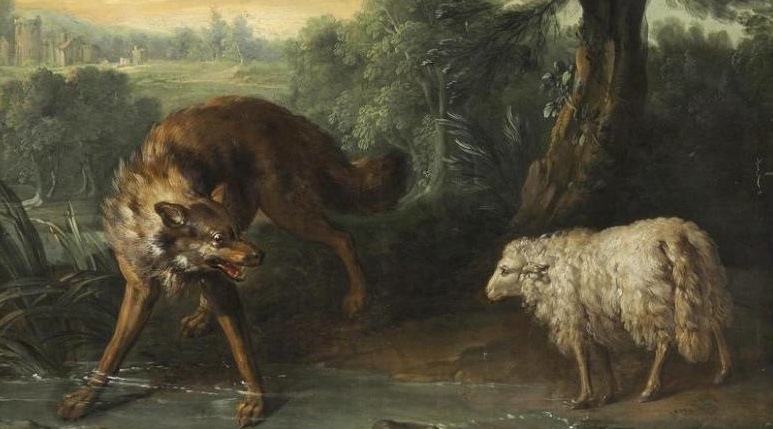
poems 'The Wolves and the Sheep' by Terry L. Norton

adapted from Babrius, first century A.D., and Jean de La Fontaine, 1621-1695

__At least twelve thousand years (though likely more)
Between the wolves and sheep had raged a war,
Until the lupine clan convinced the ewes and rams
They’d cease their onslaughts on the helpless lambs.
The only stipulation to the peace,
The wolves averred to those who wore the fleece,
For harmony to reign throughout the land,
Was that the woolly ones their dogs disband.
The wolves declared, “Your dogs’ aggressive stance
Is root cause of our bitter variance.
Give us your guards that we may punish them
And this incessant surge of warfare stem.”

__The foolish sheep, who bleat on all occasions,
Surrendered to these ravening persuasions.
Yet, just before the terms were finalized,
An ancient aries, wise in years advised,
“How can we live secure in this wide mead,
When time, both past and present, has decreed”
(His woolly back now bristling in alarm)
“That wolves to us are bent on bringing harm?
Though presently the dogs serve as our shield,
Still we our lives to wolf predations yield.
Wolves sometimes slay a ewe or kill a ram
And often seize and carry off a lamb,
Where in the nearby forest, dimly-lit,
By savage, yellowed fangs its throat is slit.
If such acts wolves do when our dogs are here,
What deeds must happen when they disappear?
Eternal watch our shepherds cannot keep
And thus retain the dogs to guard us sheep.”

__Yet to the ram’s appeal, the herd refused to heed
And to the thuggish wolves their dogs did cede.
The wolves then took the watchdogs of the sheep
And that night slew them when they fell asleep.
The wolves grown bold, without the guardians’ check,
The plot unknots as reason would expect
And needs no stated moral for its close,
For all can guess the way the ending goes.


Terry L. Norton is professor emeritus of literacy acquisition at Winthrop University in Rock Hill, South Carolina. He is the author of Cherokee Myths and Legends, Thirty Tales Retold, and is the 2020 second place winner of the 2020 Poetry Translation Competition sponsored by The Society. In addition to The Society, his poems have appeared in Ekphrastic Review and Kakalak Review.

ShareTweetPin
The Society of Classical Poets does not endorse any views expressed in individual poems or commentary.
Read Our Comments Policy Here

RandomPoems

‘Non Existent’ and Other Poetry by Gary Borck
Beauty

‘Non Existent’ and Other Poetry by Gary Borck

August 9, 2022

. . Non Existent One day my body disappeared, __nor could I touch or taste, but I could feel the...

Four Short Comic Pieces by Joseph S. Salemi
Poetry

Four Short Comic Pieces by Joseph S. Salemi

November 20, 2025

  Choosing a Thermometer If tubes hypoglottal Can cause you to throttle, And things in your ears Breed irrational fears,...

Next Post
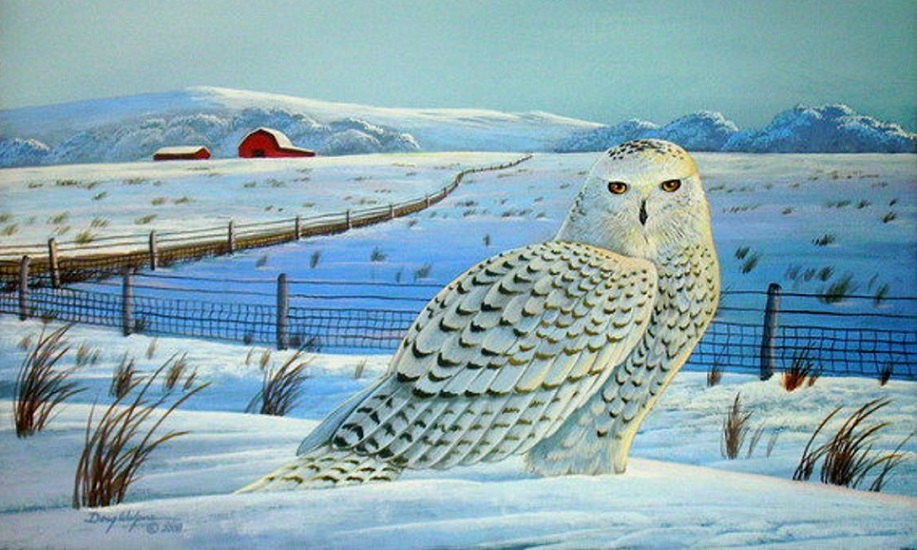
‘Barnes’ Owl in the Snow’ by William Glyn-Jones

'Barnes’ Owl in the Snow' by William Glyn-Jones

What Happened to Narrative Poetry?—An Opinion Piece by James A. Tweedie

Three Poems on Drinking, by C.B. Anderson

‘My Sickness Is a Mistress’ by Kevin Blankinship

'My Sickness Is a Mistress' by Kevin Blankinship

Comments 32

  1. Joe Tessitore says:
    6 years ago

    The analogy is spot-on.
    The poem reads like (what used to be) an honest and informative newspaper article.

    Chilling and well-done.

    Reply
    • Terry L. Norton says:
      6 years ago

      Thank for your perceptive comment on metrics. Occasionally with iambic pentameter couplets, I use a six foot line, or alexandrine. Dryden, Pope, Goldsmith, Keats, and others allowed it as well, and in THE FAIRY QUEEN, Spenser’s contribution to stanzaic form, has eight lines of iambic pentameter and closes with an alexandrine. In his “Dedication of the Aeneis,” Dryden noted that, when the hexameter line is “used with judgment,” it “adds a certain majesty to the verse and stops the sense from overflowing into another line” (54). This technique avoids excessive “enjambement,” especially where a verb might be separated from its subject or its object. However, unlike Dryden, I claim neither majesty or judgment for my writing. I also like open-ended lines, but not when the poem aims for precision of expression. I’m glad you enjoyed the poem.

      Reply
      • Dr. Terry norton says:
        6 years ago

        Woops! I hit an incorrect key. This reply was intended for Mr. Woodruff below.

        I am also glad you enjoyed the poem. Thank you.

        Reply
  2. Julian D. Woodruff says:
    6 years ago

    Terrific! Goose bumps here, in anticipation of (more) goons’ bumps.
    In the line “Yet to the ram’s appeal …,” the extra foot may be intended for emphasis. If not, there are at least 3 easy ways of dropping back to 5.

    Reply
    • Terry L. Norton says:
      6 years ago

      Please see my response above under Mr. Tessitore’s name. I hit an incorrect key in my intention to respond to you concerning metrics with the extra foot.

      Again, thank you for your comment.

      Reply
  3. Mike Bryant says:
    6 years ago

    This is truly a fable for our times and beautifully written. The sheeple have decided to defund the shepherds. God help us. I recently read an article that said we must create millions of small groups of patriots, worldwide, to keep the wolves away. I believe the process has already begun.

    Reply
    • Terry L. Norton says:
      6 years ago

      I appreciate your thoughtful comment.

      Reply
    • Cynthia Erlandson says:
      6 years ago

      My thoughts exactly. The poem is a great parable.

      Reply
  4. Peter Hartley says:
    6 years ago

    Yes I think we can all guess. Horripilation-inducing and very cleverly written. We don’t have wolves in the U.K. but there have been several attempts to re-introduce them (WHY???). There’s probably a very good reason why they died out in the first place.

    Reply
    • Joseph S. Salemi says:
      6 years ago

      Peter, I believe the last native wolf in England was killed in the late fifteenth century (the species may have survived a bit longer in the remoter sections of Wales and Scotland).

      Wolves were always an annoyance, as predators on domestic cattle, pigs, and sheep. When English wool production took off in the 1400s, the imperative to kill off wolves became intense, and led to their final and deserved extirpation.

      What kind of environmentalist lunatics want to bring wolves BACK? Do they also want to reintroduce snakes to Ireland, or the anopheles mosquito to Africa? It’s time for us to recognize that a very large percentage of the environmentalist movement is driven by sheer irrationality.

      Reply
      • Peter Hartley says:
        6 years ago

        Joe S – But even without deliberate human intervention (eg to protect livestock from wolves) many or most of these animals have or would have become extinct through natural causes anyway because they were ill-adapted for survival. Look at the dodo, a great archaic pigeon shuffling along a Mauritian beach, or the great auk which had grown infinitely bigger than the (presumably optimum) size of all its relatives. The extinction of many of these animals is a part of evolution as WE are a part of evolution and the survival of the dodo, while it would be a very picturesque tourist draw, would be more the result of interference on our part, not conservation. The sea eagle, the biggest eagle in the world, has been re-introduced to Scotland. Again, WHY? It is no longer native. We already have the second biggest eagle in the world (the golden), which by all accounts is flourishing. More interference with nature and the natural order is what has brought it back. When creatures become extinct there is more likely to be a cause independent of mankind and a very good one too. But I’m sure that contrary to the splendid work of St Patrick there will be plenty of those crazed environmentalists who would like to see the return of snakes to Ireland. Let’s not just have vipers though. Why stop there?How about a few boa constrictors and pythons to strangle our livestock as well? (After all the beaver has been re-introduced to Scotland with what justification God only knows). There are plenty of sheep in the U.K., far too many for environmentalists to need to worry about.

        Reply
      • Joseph S. Salemi says:
        6 years ago

        Peter, we have no argument. Ninety percent of all animal species that ever lived are now extinct. Palaeontology has shown that there have been several mass extinctions over the eons.

        At its deepest motivational level, extreme environmentalism is profoundly anti-human. It would gladly sacrifice millions of human beings to preserve some goddamned snail-darter. It would love to put thousands of people out of work to prevent coal and oil production. It is fanatically fixated on setting up a tyranny to prevent us from eating the foods we wish to eat.

        Reply
    • Terry L. Norton says:
      6 years ago

      I have nothing against four-legged wolves in remote areas and fear only those with two legs, and I certainly appreciate guard dogs whether with two or four.

      Thanks for your comment. In North Carolina, the reintroduction of red wolves has not met with great success. The coyotes have become something of an infestation in both rural and some urban areas. When at my mother’s farm, I often hear their howls at night.

      Reply
  5. Leo Zoutewelle says:
    6 years ago

    Terry, I thought your poem was great and so pertinent to today! Excellent.
    Thank you for posting!

    Reply
    • Terry L. Norton says:
      6 years ago

      Thank you for your comment. When I came across the two variants of this fable, the implications certainly struck a cord with me.

      Reply
  6. Yael says:
    6 years ago

    Great poem, thanks for sharing. The story of today well-told.

    Reply
    • Terry L. Norton says:
      6 years ago

      Thank you. Glad you liked the narrative.

      Reply
  7. C.B. Anderson says:
    6 years ago

    Yes, defunding the police is is a wonderful idea — let the wolves run the world.

    Incidentally, my favorite brand of Irish whiskey these days is called Wolfhound.

    Reply
    • Terry L. Norton says:
      6 years ago

      I haven’t tried Wolfhound whiskey. Perhaps it would help me cope with a world without the police.

      Reply
      • C.B. Anderson says:
        6 years ago

        Well, yes, Terry, It does help, but it works best if the police are likewise supplied with a case or two.

        Reply
  8. Susan Jarvis Bryant says:
    6 years ago

    This is a wonderful poetic adaptation that taps into the times and sends a shiver of recognition. The closing three lines are my favorite. “The plot unknots as reason would expect/And needs no stated moral for its close,/For all can guess the way the ending goes.” says it all and leads me to question why many today are oblivious to the same moral outcome. I’m hoping this wily wolf wake-up call might well open a few eyes. Very well done, indeed!

    Reply
    • Terry L. Norton says:
      6 years ago

      Yes, I also lack sufficient understanding for the stance that many take today. Thank you, Susan, for your comments.

      Reply
  9. Terry L. Norton says:
    6 years ago

    Thank you for your kind words.

    Reply
  10. Margaret Coats says:
    6 years ago

    Terry, a fabulous tale well told! I second Susan’s appreciation for the final lines, of which my favorite phrase is “the plot unknots.” I notice that Evan has marked this post for children, and the lively rhythm would certainly appeal to them. Come to think of it, perceptive children are able to make the very applications so obscure to many adults, especially when the children have access to good reading material.

    Reply
    • Terry L. Norton says:
      6 years ago

      Interesting that you should mention the post being marked for children. The story comes from a time, whether as part of the oral tradition or in the variants of Babrius and La Fontaine, when literature for children and adults had not diverged as it did later in western society beginning with treatises on education by Locke in SOME THOUGHTS CONCERNING EDUCATION and Rousseau in EMILE. Both recommended the fables attributed to Aesop as children’s reading material. Of course, I have always held that good children’s literature has a crossover appeal for adults.

      Today, with the advent of mass media like television and now computers and smart phones, the lines between what’s suitable for children and adults has once again blurred. Secrets deemed suitable for adults are more easily hidden in books than in media accessible to all. No one will ever be a remedial TV viewer or smart phone user except someone like me for the later.

      Thanks for your kind response.

      Reply
  11. Bill White says:
    6 years ago

    I really like this. Timeless lesson, which can’t be repeated enough.

    Reply
    • Terry L. Norton says:
      6 years ago

      Thanks, Bill, for your gracious comment.

      Reply
      • Bill White says:
        6 years ago

        I am loving your work here, Terry. Very timely stuff.

        Reply
  12. Garrett Myles says:
    6 years ago

    Great story and language! Looking forward to seeing more poems from you.

    Reply
  13. Terry L. Norton says:
    6 years ago

    I appreciate your comment, Garrett.

    Reply
  14. Evelyn Eickmeyer-Quinones says:
    6 years ago

    One of your best, sir.

    Reply
    • Terry L. Norton says:
      6 years ago

      Thank you, Evelyn. I’m glad you likied the poem.

      Reply

Leave a Reply Cancel reply

Your email address will not be published. Required fields are marked *


  1. Levi Warren on The Society of Classical Poets 2026 Haiku CompetitionSeptember 4, 2026

    The third piece here is a vivid picture. To write it required not just the ability to communicate the author's…

  2. MaryJane Myers on ‘Chaucer Announces His Desire to Retire’: A Poem by Paul A. FreemanSeptember 4, 2026

    Paul I’m laughing out loud all the way through this clever poem. I love the way the genius Chaucer feels…

  3. Angelica Rodriguez on ‘The Cristero Centennial’: A Poem by Margaret CoatsSeptember 4, 2026

    A somber reminder of what happened not too long ago. I fear that same atmosphere has engulfed the world we…

  4. Stephen DiLauro on ‘The Cristero Centennial’: A Poem by Margaret CoatsSeptember 4, 2026

    God bless you for writing this! Indeed: A warning. But also a joyous proclamation: Jesus is King! Now and forever!

  5. Cynthia L Erlandson on ‘The Cristero Centennial’: A Poem by Margaret CoatsSeptember 4, 2026

    Thank you for the excellent poetic history lesson, Margaret. May courage not fail us.

Subscribe to Daily Poems

Enter your email address to subscribe to this blog and receive notifications of new posts by email.

Join 1,635 other subscribers

Recent Poems

  • ‘The Cristero Centennial’: A Poem by Margaret Coats
  • ‘A Potpourri of Aphoristic Verses’ by C.B. Anderson
  • ‘The Estuary’: A Poem by Jeff Eardley
  • ‘A World Without the Wednesday Child’: A Poem by Kimberly Fore
  • The 2026 Society of Classical Poets International Poetry Competition
  • The 2026 SCP International High School Poetry Competition
  • ‘Realistic Reflections’ and Other Poetry by Anna J. Arredondo
  • ‘China Made’: A Poem by Theresa Werba
  • ‘The Savage Moon’ and Other Poetry by Brian Yapko
  • Poetry Book Review: Love Found, Yearned For, and Lost by James A. Tweedie
  • ‘When Opportunity Knocks’: A Poem by Roy E. Peterson
  • ‘Legend of the Griffin’: A Poem by Iryna Hall
  • ‘Government Issue’ and Other Poems by Joseph S. Salemi
  • ‘Chaucer Announces His Desire to Retire’: A Poem by Paul A. Freeman
  • ‘Advantages of Restaurants’ and Other Poems by Russel Winick
  • ‘Bone China’: A Poem by Mary Gardner
  • ‘On the Death of One Too Young to Die’: A Poem by Jeffrey Essmann
  • ‘This Too Shall Pass’ and Other Poetry by Justin Dasher
  • ‘Humdrum and Harum-Scarum’: A Lecture on Free Verse, by Robert Bridges (1922)
  • ‘Unrest On the Floodplain’: A Poem by Bhikkhu Nyanasobhano
  • ‘Latitude and Loss’: A Poem by Martin Briggs
  • ‘Act III’ and Other Poetry by C.B. Anderson
  • ‘God’s Funeral’: A Poem by James Sale
  • ‘Star Festival’: A Poem by Margaret Coats
  • ‘Song of the Frog Princess’: A Poem by Scharlie Meeuws
  • ‘The Odyssey: Nolan and Solot Compared’: An Essay by Michael Curtis
  • ‘Solitude’ and Other Poems by Mary Jane Myers
  • ‘The River Not Taken’ and Other Poetry by Brian Yapko
  • ‘Totentanz’: A Poem by James A. Tweedie
  • ‘In God Is Our Trust’: A Poem by Roy E. Peterson

Categories

  • Acrostic
  • Alexandroid
  • Alliterative
  • Art
  • Best Poems
  • Blank Verse
  • Chant Royal
  • Classical Poets Live
  • Clerihew
  • Covid-19
  • Deconstructing Communism
  • Educational
  • Epic
  • Epigrams and Proverbs
  • Essays
    • Interviews with Poets
    • Poetry Reviews
  • Featured
  • From the Society
  • Great Poets
    • Dante Alighieri
    • Edgar Allan Poe
    • Emily Dickinson
    • Geoffrey Chaucer
    • Henry Wadsworth Longfellow
    • Homer
    • John Keats
    • John Milton
    • Robert Frost
    • William Blake
    • William Shakespeare
    • William Wordsworth
  • Human Rights in China
  • Limerick
  • Love Poems
  • Music
  • Pantoum
  • Performing Arts
  • Poetry
    • Beauty
    • Children's Poems
    • Culture
    • Ekphrastic
    • Found Poems
    • High School Poets
    • Humor
    • Riddles
  • Poetry Challenge
  • Poetry Contests
  • Poetry Forms
    • Curtal Sonnet
    • Haiku
  • Poetry Readings
  • Rhupunt
  • Rondeau
  • Rondeau Redoublé
  • Rondel
  • Rubaiyat
  • Sapphic Verse
  • Satire
  • Science
  • Sestina
  • Shape Poems
  • Short Stories
  • Song Lyrics
  • Sonnet
  • Symposium
  • Terrorism
  • Terza Rima
  • The Environment
  • Translation
  • Triolet
  • Video
  • Villanelle

Quick Links

  • About Us
  • Submit Poetry
  • Become a Member
  • Members List
  • Support the Society
  • Advertisement Placement
  • Comments Policy
  • Terms of Use

Welcome Back!

Login to your account below

Forgotten Password?

Retrieve your password

Please enter your username or email address to reset your password.

Log In
No Result
View All Result
  • Poems
    • Beauty
    • Culture
    • Satire
    • Humor
    • Children’s
    • Art
    • Ekphrastic
    • Epic
    • Epigrams and Proverbs
    • Human Rights in China
    • Music
    • Performing Arts
    • Riddles
    • Science
    • Song Lyrics
    • The Environment
    • The Raven
    • Found Poems
    • High School Poets
    • Terrorism
    • Covid-19
  • Poetry Forms
    • Sonnet
    • Haiku
    • Limerick
    • Villanelle
    • Rondeau
    • Pantoum
    • Sestina
    • Triolet
    • Acrostic
    • Alexandroid
    • Alliterative
    • Blank Verse
    • Chant Royal
    • Clerihew
    • Rhupunt
    • Rondeau Redoublé
    • Rondel
    • Rubaiyat
    • Sapphic Verse
    • Shape Poems
    • Terza Rima
  • Great Poets
    • Geoffrey Chaucer
    • Emily Dickinson
    • Homer
    • Henry Wadsworth Longfellow
    • Dante Alighieri
    • John Keats
    • John Milton
    • Edgar Allan Poe
    • William Shakespeare
    • William Wordsworth
    • William Blake
    • Robert Frost
  • Love Poems
  • Contests
  • SCP Academy
    • Educational
    • Teaching Classical Poetry—A Guide for Educators
    • Poetry Forms
    • The SCP Journal
    • Books

© 2025 SCP. WebDesign by CODEC Prime.