• Submit Poetry
  • Support SCP
  • About Us
  • Members
  • Join
Saturday, October 10, 2026
Society of Classical Poets
  • Poems
    • Beauty
    • Culture
    • Satire
    • Humor
    • Children’s
    • Art
    • Ekphrastic
    • Epic
    • Epigrams and Proverbs
    • Human Rights in China
    • Music
    • Performing Arts
    • Riddles
    • Science
    • Song Lyrics
    • The Environment
    • The Raven
    • Found Poems
    • High School Poets
    • Terrorism
    • Covid-19
  • Poetry Forms
    • Sonnet
    • Haiku
    • Limerick
    • Villanelle
    • Rondeau
    • Pantoum
    • Sestina
    • Triolet
    • Acrostic
    • Alexandroid
    • Alliterative
    • Blank Verse
    • Chant Royal
    • Clerihew
    • Rhupunt
    • Rondeau Redoublé
    • Rondel
    • Rubaiyat
    • Sapphic Verse
    • Shape Poems
    • Terza Rima
  • Great Poets
    • Geoffrey Chaucer
    • Emily Dickinson
    • Homer
    • Henry Wadsworth Longfellow
    • Dante Alighieri
    • John Keats
    • John Milton
    • Edgar Allan Poe
    • William Shakespeare
    • William Wordsworth
    • William Blake
    • Robert Frost
  • Love Poems
  • Contests
  • SCP Academy
    • Educational
    • Teaching Classical Poetry—A Guide for Educators
    • Poetry Forms
    • The SCP Journal
    • Books
No Result
View All Result
Society of Classical Poets
  • Poems
    • Beauty
    • Culture
    • Satire
    • Humor
    • Children’s
    • Art
    • Ekphrastic
    • Epic
    • Epigrams and Proverbs
    • Human Rights in China
    • Music
    • Performing Arts
    • Riddles
    • Science
    • Song Lyrics
    • The Environment
    • The Raven
    • Found Poems
    • High School Poets
    • Terrorism
    • Covid-19
  • Poetry Forms
    • Sonnet
    • Haiku
    • Limerick
    • Villanelle
    • Rondeau
    • Pantoum
    • Sestina
    • Triolet
    • Acrostic
    • Alexandroid
    • Alliterative
    • Blank Verse
    • Chant Royal
    • Clerihew
    • Rhupunt
    • Rondeau Redoublé
    • Rondel
    • Rubaiyat
    • Sapphic Verse
    • Shape Poems
    • Terza Rima
  • Great Poets
    • Geoffrey Chaucer
    • Emily Dickinson
    • Homer
    • Henry Wadsworth Longfellow
    • Dante Alighieri
    • John Keats
    • John Milton
    • Edgar Allan Poe
    • William Shakespeare
    • William Wordsworth
    • William Blake
    • Robert Frost
  • Love Poems
  • Contests
  • SCP Academy
    • Educational
    • Teaching Classical Poetry—A Guide for Educators
    • Poetry Forms
    • The SCP Journal
    • Books
No Result
View All Result
Society of Classical Poets
No Result
View All Result
Home Poetry Beauty

‘In God We Trust’ by James A. Tweedie

June 22, 2022
in Beauty, Culture, Poetry
A A
12
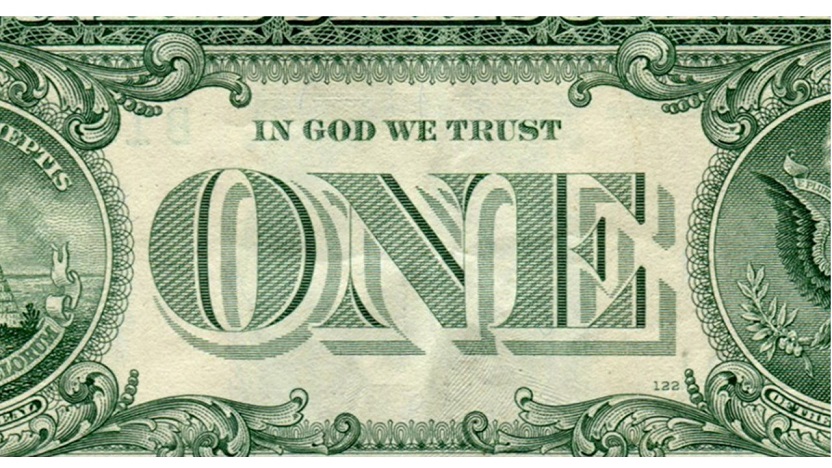
"In God We Trust" photo on US one dollar bill (public domain)

"In God We Trust" photo on US one dollar bill (public domain)

.

“In God We Trust”

The motto for our nation boldly states, “In God we trust,”
Which is, of course, a matter for each person to decide.
We can’t assume such faith is held by all, nor is it just
To claim it as prerequisite for patriotic pride.

But even so, the words, “In God we trust,” make one thing clear:
That when we put our trust in something else, we will have erred.
For party politics will always let us down, I fear,
Regardless of which side we’re on or promises we’ve heard.

For truth be told it will be neither liberty nor law,
The Constitution, Bill of Rights, nor some new civil war—
Where goodness triumphs at the last by means of tooth and claw—
That lead us to the Promised Land like some new Christmas star.

Though Providence has proven true both time and time again
(Despite our human foolishness) we mustn’t think that we
Who dare presume we’re on God’s side are somehow free from sin;
For even when we do what’s right, it’s God who makes us free.

For by the hand of God are life and liberty endowed
And Presidents and Kings who dare pretend they have the powers
To give or take such things away have blasphemed God and bowed
Before a lie that falsely claims to own that which is ours.

I do believe that God’s at work directing history,
By setting limits to the time-bound power that evil wields.
The phrase, “In God we trust” serves as a hint to help us see
That in the end it will be God to whom that evil yields.

Some trust in horses, others trust in chariots and might,
While others trust themselves, as like to Adam at the Fall.
But as for us: “In God we trust!” For such is meet and right.
For were it not for God we’d have no liberty at all.

So let us stand against all those whose power feigns full sway,
For those who claim to give us “rights” can take those rights away.

.

.

James A. Tweedie is a retired pastor living in Long Beach, Washington. He has written and published six novels, one collection of short stories, and three collections of poetry including Mostly Sonnets, all with Dunecrest Press. His poems have been published nationally and internationally in The Lyric, Poetry Salzburg (Austria) Review, California Quarterly, Asses of Parnassus, Lighten Up Online, Better than Starbucks, WestWard Quarterly, Society of Classical Poets, and The Chained Muse.

ShareTweetPin
The Society of Classical Poets does not endorse any views expressed in individual poems or commentary.
Read Our Comments Policy Here

RandomPoems

‘To Winter’ by David Gosselin
Beauty

‘No Going Back’ and Other Poetry by Peter Hartley

February 10, 2022

. No Going Back We feel our lives are slowly closing round Us when the nights grow longer than the...

‘Regrets and Repercussions’ by Peter Hartley
Beauty

‘Regrets and Repercussions’ by Peter Hartley

September 13, 2021

. Regrets and Repercussions Inconsequential are the things we do Sometimes, or things we don’t, we don’t know why. So...

Next Post
‘Australia in 2022’ by Shaun C. Duncan

'Australia in 2022' by Shaun C. Duncan

‘Advice from the Untalented’ and Other Poems by Sally Cook

'Advice from the Untalented' and Other Poems by Sally Cook

‘There Is a Quiet Place’ by Roy E. Peterson

'There Is a Quiet Place' by Roy E. Peterson

Comments 12

  1. C.B. Anderson says:
    4 years ago

    This was very succinct and to the point, James. The only jarring note is that you felt the people needed to be reminded. But maybe we do need to be.

    Reply
    • Julian D. Woodruff says:
      4 years ago

      Never hurts, C.B., especially when the reminder is as clear-eyed as this.
      Thanks, James.

      Reply
  2. Cynthia Erlandson says:
    4 years ago

    How true and well-stated — “were it not for God we’d have no liberty at all.”

    Reply
  3. Adam Wasem says:
    4 years ago

    A finely reasoned disquisition, and so well done technically, James. What the media, academic, and political establishment today all endlessly labor to hide is that the founding fathers were Christians to a man, and virtually everything they did, in establishing the United States, the Bill of Rights and the Constitution, was designed to bind and dilute and downplay the power of government as much as humanly possible, to the point that they have to large parts of the ignorant population poisoned such concepts as the right to bear arms, states’ rights, even the Bill of Rights and the Constitution itself.

    Indeed, the founders only replaced the monarchy with another government because, as Madison observed, “If men were angels, no government would be necessary,” with its implicit recognition that, short of the second coming, fallen humans would always require some form of government to avoid falling into barbarism. Thanks for shining a spotlight again on what the founders originally intended, by acknowleding that we were endowed with inalienable rights by our Creator, and that government’s and the law’s only justifiable function was to act as safeguard of those rights.

    Reply
  4. Michael Pietrack says:
    4 years ago

    The second-to-last stanza reminded me of Psalm 20:7, 33:17, and Isaiah 31:1. Trusting in chariots, etc. The end of the verses at Psalm 20:7 and Isaiah 31:1 shows us where we really need to place our trust. And trust is shown through our actions. Faith/Trust/Love appear to be nouns, but they are verbs.

    This made me think that “In God we Trust” is on our money, but if our money stated “In Money we Trust” it would be more apropos. 2 Timothy 3:2

    Thanks for the thought-provoking poem.

    Reply
    • James A. Tweedie says:
      4 years ago

      You are very welcome, Michael. And the biblical references were, of course, intentional and I liked your snarky aside re 2 Timothy.

      Reply
  5. Cheryl Corey says:
    4 years ago

    Your poem prompted me to do a little research on Wikipedia. Evidently the dollar went through many changes over the years, and “In God We Trust” was not adopted as the motto until a 1956 act of Congress.

    Reply
    • James A. Tweedie says:
      4 years ago

      That is correct. It is a modern accretion just like the Pledge of Allegiance, which evolved from 1892 to its present form in 1954. Our motto is not a foundational document by any means and I would not be surprised if it were someday rescinded. Even so, it is our motto at this time and so in my poem I reflected on what it might mean in the context of the source of our unalienable rights (“our Creator”) as found in the Declaration of Independence. Note that I also affirmed in my first stanza that trust in God is not (and should not be) a prerequisite to being an American citizen or being a patriot. I’m glad you did your research. It is good to know these things.

      Reply
    • Margaret Coats says:
      4 years ago

      A little further research shows this line from verse 4 of “The Star-Spangled Banner,” written in 1814 by Francis Scott Key:

      “And this be our motto–‘In God Is Our Trust.'”

      The United States armed forces (representing officialdom) and most Americans employed “The Star-Spangled Banner” as the national anthem from that time onward. But for legal sticklers, it was in 1916 that President Herbert Hoover signed a declaration confirming the popular and official usage. Thus, popular and official usage was singing “In God We Trust” and calling it our motto for 140 years before the US Congress and President Eisenhower accepted the fact in a formal manner. This is what we call an old tradition, not a modern accretion. Now for the question of the day: is July 4th our national holiday by law or by custom?

      Reply
      • Margaret Coats says:
        4 years ago

        Please excuse me for the incomplete comment above. It should say that in 1916 President Woodrow Wilson made “The Star-Spangled Banner” the national anthem by executive order, and in 1931 Congress passed a law confirming this, which was signed by President Herbert Hoover. And all this history on the national anthem has great relevance to the national motto written into it by a poet during the War of 1812!

        Reply
  6. Margaret Coats says:
    4 years ago

    Well done poem on the national motto, with the necessary disclaimers. But as you point out, the issue is really whether we trust God, or put our faith in something not fully trustworthy.

    Reply
    • C.B. Anderson says:
      4 years ago

      Like, say, the almighty dollar?

      Reply

Leave a Reply Cancel reply

Your email address will not be published. Required fields are marked *


  1. Maria Panayi on The Best Haiku of 2026October 10, 2026

    Congratulations to the winner and the runners up. A truly wonderful collection of haiku. Thank you to both the judges…

  2. Joseph S. Salemi on ‘The One Lone Juror’: A Poem by Joseph S. SalemiOctober 10, 2026

    Many thanks, Pat.

  3. Joseph S. Salemi on ‘Gun Control’: A Poem by Kevin AhernOctober 10, 2026

    A bullet fired directly straight up into the air (in a perfect vertical line) would go up as far as…

  4. Urszula Marciniak on The Best Haiku of 2026October 10, 2026

    Congratulations to the poets. Each of them contributed something that prompts reflection. Each shared a part of themselves.

  5. Urszula Marciniak on The Best Haiku of 2026October 10, 2026

    Dear Monika Cooper, I’ve only just noticed your lovely comment on my haiku from three years ago. Thank you so…

Subscribe to Daily Poems

Enter your email address to subscribe to this blog and receive notifications of new posts by email.

Join 1,660 other subscribers
No Result
View All Result

Resources

       1. A Guide to Writing Poetry

      2. The Best Poems of 2020      

      3. Poetry and Writing Contests

      4. Journals Accepting Formal Verse

Recent Poems

  • ‘Gun Control’: A Poem by Kevin Ahern
  • ‘Power of a Pen’: A Poem by Janice Stanley
  • The Best Haiku of 2026
  • ‘One Night in Bangkok’ and Other Poetry by Brian Yapko
  • ‘Invocation’: A Poem by D.R. Rainbolt
  • ‘Enjoy the Peace, Prepare for War’: A Poem by Roy E. Peterson
  • Faust Part Two, Act One: ‘A Pleasant Landscape’ by Goethe, Translated by Josh Olson
  • A Song Inspired by Robert Frost’s ‘The Road Not Taken’, by Gunny Markefka
  • ‘Reappraisals of Mortality’: A Poem by C.B. Anderson
  • ‘What Is the Measure of My Days?’: A Poem by Peter Venable
  • ‘Polar Coordinates’: A Poem by Adam Sedia
  • ‘It Never Lies!’: A Poem by Paul A. Freeman
  • ‘The Mahjong Flowers’: A Set of Sonnets by Margaret Coats
  • ‘The Martyrdom of Saint Cassian’: A Poem by Joseph S. Salemi
  • ‘Mind Versus Beauty’: A Poem by Johann Wolfgang von Goethe, Translated by Eric v.d. Luft
  • ‘Summer Sails’: A Poem by Paulette Calasibetta
  • ‘Aquarius’: A Poem by Patricia Rogers Crozier
  • ‘No Body Here on Earth’: A Poem by Gerard Maritato
  • A Visualized Reading of The Odyssey: Book 1, Produced by Andrew Benson Brown
  • ‘Now?’ and Other Poetry by Stephen DiLauro
  • ‘From California to Louisiana’: A Sonnet by Mark F. DeWitt
  • ‘A Pot of Tea’ and Other Poetry by Samuel Gregg
  • Eight Riddles for the 2026 Mid-Autumn Festival, by Evan Mantyk
  • ‘Swallowtails’ and Other Poetry by Mary Jane Myers
  • ‘All Flesh Is Grass’: A Poem by Cynthia Erlandson
  • ‘May a Smile Be Your Umbrella’: A Poem by Roy E. Peterson
  • ‘Flexibility’ and Other Poems by Russel Winick
  • ‘Sabin Howard’ and Other Poetry by Bruce Dale Wise
  • ‘Ode to a Dragonfly’ and Other Poetry by Adam Sedia
  • ‘Hobby Horse’: A Poem by A.R. Pereira

Categories

  • Acrostic
  • Alexandroid
  • Alliterative
  • Art
  • Best Poems
  • Blank Verse
  • Chant Royal
  • Classical Poets Live
  • Clerihew
  • Covid-19
  • Deconstructing Communism
  • Educational
  • Epic
  • Epigrams and Proverbs
  • Essays
    • Interviews with Poets
    • Poetry Reviews
  • Featured
  • From the Society
  • Great Poets
    • Dante Alighieri
    • Edgar Allan Poe
    • Emily Dickinson
    • Geoffrey Chaucer
    • Henry Wadsworth Longfellow
    • Homer
    • John Keats
    • John Milton
    • Robert Frost
    • William Blake
    • William Shakespeare
    • William Wordsworth
  • Human Rights in China
  • Limerick
  • Love Poems
  • Music
  • Pantoum
  • Performing Arts
  • Poetry
    • Beauty
    • Children's Poems
    • Culture
    • Ekphrastic
    • Found Poems
    • High School Poets
    • Humor
    • Riddles
  • Poetry Challenge
  • Poetry Contests
  • Poetry Forms
    • Curtal Sonnet
    • Haiku
  • Poetry Readings
  • Rhupunt
  • Rondeau
  • Rondeau Redoublé
  • Rondel
  • Rubaiyat
  • Sapphic Verse
  • Satire
  • Science
  • Sestina
  • Shape Poems
  • Short Stories
  • Song Lyrics
  • Sonnet
  • Symposium
  • Terrorism
  • Terza Rima
  • The Environment
  • Translation
  • Triolet
  • Video
  • Villanelle

Quick Links

  • About Us
  • Submit Poetry
  • Become a Member
  • Members List
  • Support the Society
  • Advertisement Placement
  • Comments Policy
  • Terms of Use

Welcome Back!

Login to your account below

Forgotten Password?

Retrieve your password

Please enter your username or email address to reset your password.

Log In
No Result
View All Result
  • Poems
    • Beauty
    • Culture
    • Satire
    • Humor
    • Children’s
    • Art
    • Ekphrastic
    • Epic
    • Epigrams and Proverbs
    • Human Rights in China
    • Music
    • Performing Arts
    • Riddles
    • Science
    • Song Lyrics
    • The Environment
    • The Raven
    • Found Poems
    • High School Poets
    • Terrorism
    • Covid-19
  • Poetry Forms
    • Sonnet
    • Haiku
    • Limerick
    • Villanelle
    • Rondeau
    • Pantoum
    • Sestina
    • Triolet
    • Acrostic
    • Alexandroid
    • Alliterative
    • Blank Verse
    • Chant Royal
    • Clerihew
    • Rhupunt
    • Rondeau Redoublé
    • Rondel
    • Rubaiyat
    • Sapphic Verse
    • Shape Poems
    • Terza Rima
  • Great Poets
    • Geoffrey Chaucer
    • Emily Dickinson
    • Homer
    • Henry Wadsworth Longfellow
    • Dante Alighieri
    • John Keats
    • John Milton
    • Edgar Allan Poe
    • William Shakespeare
    • William Wordsworth
    • William Blake
    • Robert Frost
  • Love Poems
  • Contests
  • SCP Academy
    • Educational
    • Teaching Classical Poetry—A Guide for Educators
    • Poetry Forms
    • The SCP Journal
    • Books

© 2025 SCP. WebDesign by CODEC Prime.