• Submit Poetry
  • Support SCP
  • About Us
  • Members
  • Join
Monday, August 17, 2026
Society of Classical Poets
  • Poems
    • Beauty
    • Culture
    • Satire
    • Humor
    • Children’s
    • Art
    • Ekphrastic
    • Epic
    • Epigrams and Proverbs
    • Human Rights in China
    • Music
    • Performing Arts
    • Riddles
    • Science
    • Song Lyrics
    • The Environment
    • The Raven
    • Found Poems
    • High School Poets
    • Terrorism
    • Covid-19
  • Poetry Forms
    • Sonnet
    • Haiku
    • Limerick
    • Villanelle
    • Rondeau
    • Pantoum
    • Sestina
    • Triolet
    • Acrostic
    • Alexandroid
    • Alliterative
    • Blank Verse
    • Chant Royal
    • Clerihew
    • Rhupunt
    • Rondeau Redoublé
    • Rondel
    • Rubaiyat
    • Sapphic Verse
    • Shape Poems
    • Terza Rima
  • Great Poets
    • Geoffrey Chaucer
    • Emily Dickinson
    • Homer
    • Henry Wadsworth Longfellow
    • Dante Alighieri
    • John Keats
    • John Milton
    • Edgar Allan Poe
    • William Shakespeare
    • William Wordsworth
    • William Blake
    • Robert Frost
  • Love Poems
  • Contests
  • SCP Academy
    • Educational
    • Teaching Classical Poetry—A Guide for Educators
    • Poetry Forms
    • The SCP Journal
    • Books
No Result
View All Result
Society of Classical Poets
  • Poems
    • Beauty
    • Culture
    • Satire
    • Humor
    • Children’s
    • Art
    • Ekphrastic
    • Epic
    • Epigrams and Proverbs
    • Human Rights in China
    • Music
    • Performing Arts
    • Riddles
    • Science
    • Song Lyrics
    • The Environment
    • The Raven
    • Found Poems
    • High School Poets
    • Terrorism
    • Covid-19
  • Poetry Forms
    • Sonnet
    • Haiku
    • Limerick
    • Villanelle
    • Rondeau
    • Pantoum
    • Sestina
    • Triolet
    • Acrostic
    • Alexandroid
    • Alliterative
    • Blank Verse
    • Chant Royal
    • Clerihew
    • Rhupunt
    • Rondeau Redoublé
    • Rondel
    • Rubaiyat
    • Sapphic Verse
    • Shape Poems
    • Terza Rima
  • Great Poets
    • Geoffrey Chaucer
    • Emily Dickinson
    • Homer
    • Henry Wadsworth Longfellow
    • Dante Alighieri
    • John Keats
    • John Milton
    • Edgar Allan Poe
    • William Shakespeare
    • William Wordsworth
    • William Blake
    • Robert Frost
  • Love Poems
  • Contests
  • SCP Academy
    • Educational
    • Teaching Classical Poetry—A Guide for Educators
    • Poetry Forms
    • The SCP Journal
    • Books
No Result
View All Result
Society of Classical Poets
No Result
View All Result
Home Poetry Culture

‘Full Circle’: A Poem by Dennis McSweeney

December 21, 2024
in Culture, Poetry, Science
A A
7
poems 'Full Circle': A Poem by Dennis McSweeney

.

Full Circle

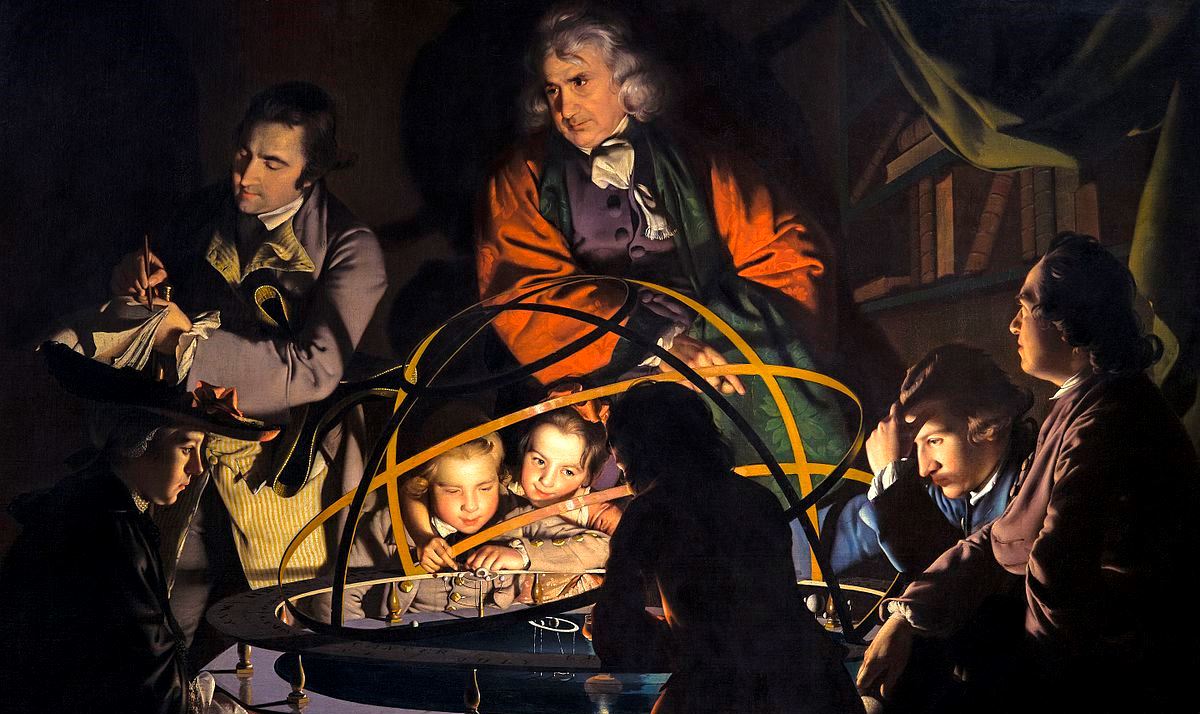
From age to age how long the fray’s been fought
Tween those who seek the Truth on sacred ground
And those who wish to harness mankind’s thought
To what is measured, tested, proved, and sound.

Empiric minds pronounced the pious “fools,”
And promised nature’s Truth would yield in time
To scientific theses, laws, and rules.
For “nature’s but a sum, not one sublime.”

Of little learning did the poet warn,
But nature’s every puzzle solved in turn
Did swell empiricists’ pride, plus their scorn.
“Survey the Whole,” and Truth they would soon learn.

Till they divined that first celestial fire:
The Biggest Bang that bore all time and space.
They found no higher could their thoughts aspire,
And nature’s nature they would never trace.

Of this in humbled awe they speak in tones
That strangely echo ancient hymns and tomes.

.

.

Dennis McSweeney is a marketing consultant who lives in the Midwest. He holds an MBA from Northwestern University. 

ShareTweetPin
The Society of Classical Poets does not endorse any views expressed in individual poems or commentary.
Read Our Comments Policy Here

RandomPoems

Poetry

‘The Dark Knight Rises in Colorado’ and Other Poetry by Betsy M. Hughes

December 20, 2012

Current Events 2012   I.  The Dark Knight Rises in Colorado A silhouette is forming in the door. From reel...

‘Unrequited Love’ by J. Simon Harris
Beauty

‘Unrequited Love’ by J. Simon Harris

March 8, 2018

  You caught me staring at you yesterday, or so it seemed, for you—you smiled and blushed and all your...

Next Post
poem/essmann/beauty

'Be Still and Know . . .': A Poem by Peter Venable

Three Christmas Sonnets by Phillip Whidden

Three Christmas Sonnets by Phillip Whidden

‘The Interview’ and Other Poetry by Brian Yapko

'The Interview' and Other Poetry by Brian Yapko

Comments 7

  1. Paul A. Freeman says:
    2 years ago

    Never say ‘never’.

    I enjoyed the spiritual-scientific debate in your extended sonnet, Dennis, down to the philosophical final couplet.

    Thanks for the read.

    Reply
  2. Roy Eugene Peterson says:
    2 years ago

    The limits of science wonderfully exposed versus cosmic space. The hide-bound empiricist cannot fathom the inexplainable first mover concept and belief in the eternal. Beautifully composed.

    Reply
    • Bob Elkins says:
      2 years ago

      Can you tell us what those limits are Roy? I’ve been looking for them a long time, TYVM.

      Reply
      • Evan Mantyk says:
        2 years ago

        Hi Bob, I’m not sure what Roy is thinking. For myself, I can say science is indeed very limited when looked at from a big-picture point of view. Why should someone continue living if life is mostly unpleasant and uninteresting? With so many wholes in Darwinian evolution, where did people come from? If someone is sure they won’t be caught, why should they not do something immoral? Where did the universe come from? These are huge, life-changing questions and science comes up very limited in answering them.

        Reply
  3. Margaret Coats says:
    2 years ago

    This is good, Dennis. I like the name of “empiricist” for those who might consider themselves scientists. You are correct that pride and scorn seem to be their distinguishing traits. These were not the vices of scientists from whom I learned physics. They pointed out that while physics studies nature, there is also metaphysics that investigates realms beyond those where things can be measured and tested. No need to “harness mankind’s thought” to the empirical realm alone. As you suggest, a “little learning” can be a dangerous thing hiding much truth from one who will not acknowledge its existence. And you are right again in that final couplet: those who find nothing sacred in nature, are likely to speak with religious fervor about knowledge achieved in natural science–even though relativity theories and principles of uncertainty are accepted in physics as limits on what can be known. It takes considerable logical and poetical skill to present the situation as well as you do in this brief poem.

    Reply
  4. Cynthia Erlandson says:
    2 years ago

    I agree that this is very well done. I love the last two lines!

    Reply
  5. Bob Elkins says:
    2 years ago

    Hi Evan – Thank you for a most interesting reply! As the study and codification of the universe at the micro and macro level, I take science’s limitations to be of the same order of infinity as the universe. I think the limitations we are aware of are the limitations of our own ability to understand completely. Since the extent of our knowledge is the continuing contributions of enquirers over millennia, each generation building upon the knowledge gained by previous generations – like generations of masons adding bricks to the same wall, but the wall can never be completed – science is by definition an ongoing process of occasional successes overcoming frequent failures.
    I believe there are conditions to question continued living, but uninteresting just can’t be one of them; the world is a fascinating place in every aspect, just look around your own immediate space. Further, I think we all have to bear a certain amount of unpleasantness in our lives so the question is the degree which one can bear.
    I would point out that there are holes in many areas of scientific disciplines which is why the research continues to try and fill those holes and correct any errors in the previous findings. That is the heart of science definition.
    Your morality question is worthy of discussion and debate, but not in science – in philosophy. Science can make no judgment on morals because it is wholly objective and morality is wholly subjective.
    Finally, I concluded long ago that the origin of the universe may not be in the realm of science but rather of religion.

    Reply

Leave a Reply Cancel reply

Your email address will not be published. Required fields are marked *


  1. Maureen Chollet on Four Love Sonnets by Adam SediaAugust 17, 2026

    Dearest Adam, I fell upon this site tonight. Your poem is esquite. It is one of the most beautiful encounters…

  2. Ben Rast on The Society of Classical Poets 2026 Haiku CompetitionAugust 17, 2026

    Racing hummingbirds Barely weighing a penny - Thunderstorms and rain.

  3. Bernadette Matilda Perez on The Society of Classical Poets 2026 Haiku CompetitionAugust 17, 2026

    wind has come to rest balance smolders in living air travels with give hunger to survive bottomless pits of canine…

  4. Joseph S. Salemi on ‘Religious Poetry, and Religionist Poetry’: An Essay by Joseph S. SalemiAugust 17, 2026

    Dear Bikkhu Nyanasobhano -- I nurture no malice or animus or hostility towards you personally. If I seem angry and…

  5. Josh Olson on ‘Solitude’ and Other Poems by Mary Jane MyersAugust 17, 2026

    I greatly enjoyed these three poems—love the surprising word choices. “Pearl-gray sky” is a beautiful phrase. And as others have…

Subscribe to Daily Poems

Enter your email address to subscribe to this blog and receive notifications of new posts by email.

Join 1,612 other subscribers

Recent Poems

  • ‘The Odyssey: Nolan and Solot Compared’: An Essay by Michael Curtis
  • ‘Solitude’ and Other Poems by Mary Jane Myers
  • ‘The River Not Taken’ and Other Poetry by Brian Yapko
  • ‘Totentanz’: A Poem by James A. Tweedie
  • ‘In God Is Our Trust’: A Poem by Roy E. Peterson
  • ‘Confession’: A Poem by Jeffrey Essmann
  • ‘Religious Poetry, and Religionist Poetry’: An Essay by Joseph S. Salemi
  • The Zingers of Adam Sedia: A Review by Theresa Werba
  • ‘A Paradox’: A Poem by Shamik Banerjee
  • ‘A Prayer of Aristotle’: A Poem by Margaret Coats
  • ‘The Sparrow’: A Poem by Michael Pietrack
  • ‘Chemo Refusal’ and Other Poetry by Golan Shahar
  • ‘Deliverance’ and Other Poetry by Peter Venable
  • ‘Rain’ and Other Poems by Russel Winick
  • ‘The Story of a Plague’ and Other Poetry by Michael Robinson
  • ‘Javert Derailed’: A Poem by Zanna Barton
  • ‘People Forget’: A Poem by James Sale
  • ‘Good and Evil’: A Poem by Roy E. Peterson
  • ‘The Royal Arse Hortillery’: A Poem on the Spoonerism, by Jeff Eardley
  • ‘Who Hears a Robot’s Prayer?’ and Other Poetry by Brian Yapko
  • The Society of Classical Poets 2026 Haiku Competition
  • Four Love Sonnets by Adam Sedia
  • ‘Rasputina Confers with Her Cohorts’: A Poem by Joseph S. Salemi
  • ‘Warfare by Remote Control’: A Poem by Paul A. Freeman
  • ‘The Passing’: A Poem by Margaret Brinton
  • ‘Of Webs and Whispers’: A Poem by Susan Jarvis Bryant
  • Poetry Book Review: Petrarch’s Canzoniere, Translated by A.M. Juster
  • ‘What Folly Dares’ and Other Love Poems by James A. Tweedie
  • ‘Allegrezza’ and Other Poetry by Rob Griffith
  • ‘The Lessons of Lot’: A Poem by Adam Wasem

Categories

  • Acrostic
  • Alexandroid
  • Alliterative
  • Art
  • Best Poems
  • Blank Verse
  • Chant Royal
  • Classical Poets Live
  • Clerihew
  • Covid-19
  • Deconstructing Communism
  • Educational
  • Epic
  • Epigrams and Proverbs
  • Essays
    • Interviews with Poets
    • Poetry Reviews
  • Featured
  • From the Society
  • Great Poets
    • Dante Alighieri
    • Edgar Allan Poe
    • Emily Dickinson
    • Geoffrey Chaucer
    • Henry Wadsworth Longfellow
    • Homer
    • John Keats
    • John Milton
    • Robert Frost
    • William Blake
    • William Shakespeare
    • William Wordsworth
  • Human Rights in China
  • Limerick
  • Love Poems
  • Music
  • Pantoum
  • Performing Arts
  • Poetry
    • Beauty
    • Children's Poems
    • Culture
    • Ekphrastic
    • Found Poems
    • High School Poets
    • Humor
    • Riddles
  • Poetry Challenge
  • Poetry Contests
  • Poetry Forms
    • Curtal Sonnet
    • Haiku
  • Poetry Readings
  • Rhupunt
  • Rondeau
  • Rondeau Redoublé
  • Rondel
  • Rubaiyat
  • Sapphic Verse
  • Satire
  • Science
  • Sestina
  • Shape Poems
  • Short Stories
  • Song Lyrics
  • Sonnet
  • Symposium
  • Terrorism
  • Terza Rima
  • The Environment
  • Translation
  • Triolet
  • Video
  • Villanelle

Quick Links

  • About Us
  • Submit Poetry
  • Become a Member
  • Members List
  • Support the Society
  • Advertisement Placement
  • Comments Policy
  • Terms of Use

Welcome Back!

Login to your account below

Forgotten Password?

Retrieve your password

Please enter your username or email address to reset your password.

Log In
No Result
View All Result
  • Poems
    • Beauty
    • Culture
    • Satire
    • Humor
    • Children’s
    • Art
    • Ekphrastic
    • Epic
    • Epigrams and Proverbs
    • Human Rights in China
    • Music
    • Performing Arts
    • Riddles
    • Science
    • Song Lyrics
    • The Environment
    • The Raven
    • Found Poems
    • High School Poets
    • Terrorism
    • Covid-19
  • Poetry Forms
    • Sonnet
    • Haiku
    • Limerick
    • Villanelle
    • Rondeau
    • Pantoum
    • Sestina
    • Triolet
    • Acrostic
    • Alexandroid
    • Alliterative
    • Blank Verse
    • Chant Royal
    • Clerihew
    • Rhupunt
    • Rondeau Redoublé
    • Rondel
    • Rubaiyat
    • Sapphic Verse
    • Shape Poems
    • Terza Rima
  • Great Poets
    • Geoffrey Chaucer
    • Emily Dickinson
    • Homer
    • Henry Wadsworth Longfellow
    • Dante Alighieri
    • John Keats
    • John Milton
    • Edgar Allan Poe
    • William Shakespeare
    • William Wordsworth
    • William Blake
    • Robert Frost
  • Love Poems
  • Contests
  • SCP Academy
    • Educational
    • Teaching Classical Poetry—A Guide for Educators
    • Poetry Forms
    • The SCP Journal
    • Books

© 2025 SCP. WebDesign by CODEC Prime.