• Submit Poetry
  • Support SCP
  • About Us
  • Members
  • Join
Monday, September 7, 2026
Society of Classical Poets
  • Poems
    • Beauty
    • Culture
    • Satire
    • Humor
    • Children’s
    • Art
    • Ekphrastic
    • Epic
    • Epigrams and Proverbs
    • Human Rights in China
    • Music
    • Performing Arts
    • Riddles
    • Science
    • Song Lyrics
    • The Environment
    • The Raven
    • Found Poems
    • High School Poets
    • Terrorism
    • Covid-19
  • Poetry Forms
    • Sonnet
    • Haiku
    • Limerick
    • Villanelle
    • Rondeau
    • Pantoum
    • Sestina
    • Triolet
    • Acrostic
    • Alexandroid
    • Alliterative
    • Blank Verse
    • Chant Royal
    • Clerihew
    • Rhupunt
    • Rondeau Redoublé
    • Rondel
    • Rubaiyat
    • Sapphic Verse
    • Shape Poems
    • Terza Rima
  • Great Poets
    • Geoffrey Chaucer
    • Emily Dickinson
    • Homer
    • Henry Wadsworth Longfellow
    • Dante Alighieri
    • John Keats
    • John Milton
    • Edgar Allan Poe
    • William Shakespeare
    • William Wordsworth
    • William Blake
    • Robert Frost
  • Love Poems
  • Contests
  • SCP Academy
    • Educational
    • Teaching Classical Poetry—A Guide for Educators
    • Poetry Forms
    • The SCP Journal
    • Books
No Result
View All Result
Society of Classical Poets
  • Poems
    • Beauty
    • Culture
    • Satire
    • Humor
    • Children’s
    • Art
    • Ekphrastic
    • Epic
    • Epigrams and Proverbs
    • Human Rights in China
    • Music
    • Performing Arts
    • Riddles
    • Science
    • Song Lyrics
    • The Environment
    • The Raven
    • Found Poems
    • High School Poets
    • Terrorism
    • Covid-19
  • Poetry Forms
    • Sonnet
    • Haiku
    • Limerick
    • Villanelle
    • Rondeau
    • Pantoum
    • Sestina
    • Triolet
    • Acrostic
    • Alexandroid
    • Alliterative
    • Blank Verse
    • Chant Royal
    • Clerihew
    • Rhupunt
    • Rondeau Redoublé
    • Rondel
    • Rubaiyat
    • Sapphic Verse
    • Shape Poems
    • Terza Rima
  • Great Poets
    • Geoffrey Chaucer
    • Emily Dickinson
    • Homer
    • Henry Wadsworth Longfellow
    • Dante Alighieri
    • John Keats
    • John Milton
    • Edgar Allan Poe
    • William Shakespeare
    • William Wordsworth
    • William Blake
    • Robert Frost
  • Love Poems
  • Contests
  • SCP Academy
    • Educational
    • Teaching Classical Poetry—A Guide for Educators
    • Poetry Forms
    • The SCP Journal
    • Books
No Result
View All Result
Society of Classical Poets
No Result
View All Result
Home Poetry Culture

‘Sonnet of the Hardened Heart’: A Poem by Theresa Werba

November 15, 2025
in Culture, Poetry, Sonnet
A A
15
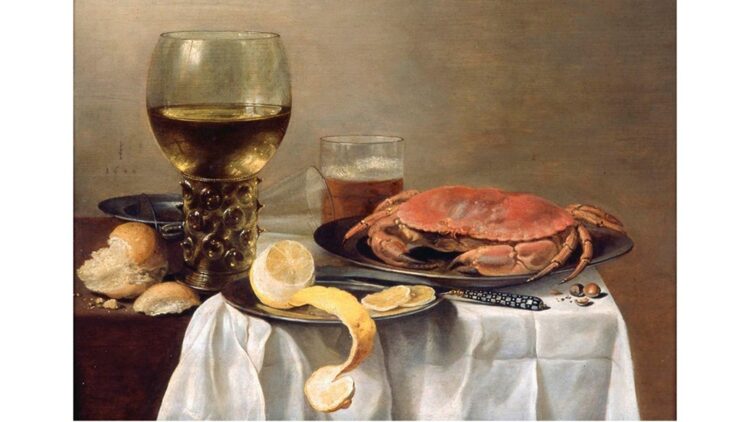
"Still Life with a Crab" by Pieter Claesz

"Still Life with a Crab" by Pieter Claesz


Sonnet of the Hardened Heart

Care less, I warn myself; bother no more
With inner crevices: prying the shell
Like scabs (rough, oozing, sore), which crust, but tell
Of tumults against the psychic seabed floor;
It is in vain. Swollen and hard around
The meat (like newborn skin, or the vaginal flower),
The protection, obdurate, damns me. Damn the mound
Which buries my soul and suffocates what little power
My will may afford. That meat, that flower, that skin
(A pulsing pinkish mass) is thus entombed;
And yet, for her to exist at all, the wound
Must needs be sealed by this guardian within.

She lives within her shell; perhaps she dies
As well, because it makes and mutes her cries.


Theresa Werba (formerly known to the SCP community as Theresa Rodriguez) is the author of eight books, including What Was and Is: Formal Poetry and Free Verse, and Sonnets, a collection of sixty-five Shakespearean, Spenserian, and Petrarchan sonnets. Her work appears in numerous journals, websites, and online publications, including the SCP Journal. She has been featured on Classical Poets Live where she discusses musicality and elocution in formal poetry. She is a contributing writer for Classical Singer Magazine. Werba’s background as a Classical singer informs her dramatic poetry readings which are available on Youtube @thesonnetqueen. Her website is www.theresawerba.com.

ShareTweetPin
The Society of Classical Poets does not endorse any views expressed in individual poems or commentary.
Read Our Comments Policy Here

RandomPoems

‘Thorns Grow with Song’ by Maura H. Harrison
Beauty

‘Thorns Grow with Song’ by Maura H. Harrison

January 9, 2023

. Thorns Grow with Song It’s time to rend our hearts and look inside The chambered will, into the voices...

‘Gallows Lane’ and Other Poetry by Cheryl Corey
Culture

‘Gallows Lane’ and Other Poetry by Cheryl Corey

April 15, 2024

. Gallows Lane A lesser charge once meant the pillory, With head and wrists securely set in blocks; For just...

Next Post
Gilgamesh Lines Discovered in 2011, Translated by Michael Curtis

Gilgamesh Lines Discovered in 2011, Translated by Michael Curtis

‘Sonnet’ by Andrew McDiarmid

'November by the Sea': A Poem by Margaret Brinton

‘Snootsplaining’: A Poem by Susan Jarvis Bryant

'Snootsplaining': A Poem by Susan Jarvis Bryant

Comments 15

  1. Theresa Werba says:
    10 months ago

    This was the earliest sonnet I have written that I can date in my memory– about 1985 or so, I was 23 years old. I had learned something about sonnets in high school but not sure how I ever got into writing them. You can also see that I employed a variant-hybrid form: abba cdcd effe gg. Not sure if that was intentional or the product of inexperience! Still the kernels of a lifetime of sonnet writing are there!

    Reply
  2. Margaret Brinton says:
    10 months ago

    Painfully profound!

    Reply
    • Theresa Werba says:
      10 months ago

      Thank you Margaret, I am glad this sonnet resonates with you!!!

      Reply
  3. Brian Yapko says:
    10 months ago

    You may have been young and emotionally raw when you wrote this poem, Theresa, but it has so many excellent qualities that really point the way to the brilliant future writer that you have become. If you were 23 at the time, you must be in your early 60s now (as am I) and I certainly hope that life in all its fullness has tempered that feeling of Plath-like angst that you express so well!

    I think we’ve all gone through the agony of heartache in our youth — an agony which made it feel like we were the first person in the world to experience heartbreak. But there’s nothing trite about your work. Your use of language is exceptional, your imagery — frightening in its rawness. But your ability to craft a sonnet — one which is of an apparently unique but intuitively satisfying form — is terrific. I love seeing early works by writers just the way I love seeing great artists’ early paintings. I prefer your contemporary work, Theresa, but I think this is a poem to be very proud of!

    Reply
    • Theresa Werba says:
      10 months ago

      Oh Brian, thank you so much for your kind comments and observations, it means so much to me! Unfortunately “the agony of heartache” has been around via various people through the greater part of my 63 years, but such experiences have certainly created precious fodder for sonnet and other poetry writing. The second section of What Was and Is, entitled “All The Loves I’ve Loved and Known,” has poetry written for nine of them. I placed “Sonnet of the Hardened” Heart in the prologue section, setting up for what is to come. When I think of early works by writers, I actually think of Mozart and several of his minuets– written when he was 5-6 years old! Unbelievable! Thank you again for your words about my words!

      Reply
  4. Joseph S. Salemi says:
    10 months ago

    This is an ambitious sonnet, which attempts much in its diction, syntax, enjambment, and emotional compression. It does seem the product of youth, in its intensity and strong sense of despair.

    The image of the “hardened heart” is saved from being commonplace by making it visible and tangible. What I get from the description is a picture of an actual organ, of living flesh, but somehow covered with painful scabs, or living within a shell like a hermit crab. The speaker wishes to “care less,” but this can only be accomplished by cutting oneself off from the world around her, but doing this does not ease her psychic pain, and it is both suffocating and debilitating.

    Changing from abba to cdcd in the middle of the sestet is acceptable, but it does give the reader a slight jolt of uncertainty — which may be what the poet wants. My one formal criticism would be the somewhat wobbly metrics of line 12. There could be several fixes for it, but what comes to my mind is this as a re-write:

    Must needs be sealed by this strict guard within.

    The trouble with “guardian” is that it could be taken as trisyllabic or as a glide (GARD – yin), and on both cases it is awkward.

    Reply
    • Theresa Werba says:
      10 months ago

      Dr. Salemi, thank you so much for your analysis and insights, it means the world to me. The image you see and picture is pretty much exactly what I was thinking of at the time. I appreciate your insight about the change of rhyming in the middle– perhaps it was done unconsciously, and it does indeed provide a “slight jolt of uncertainty,” which hopefully only intensifies the overall intent of this sonnet. Looking now, I see that I must have meant for “guar-di-an” to be three syllables, with one and three stressed, which isn’t really the way it is said, so I understand what you are saying. Maybe such an imperfection can serve to enhance the unsettling impact of the entire poem. Thank you again for your much-appreciated analysis and perspective!!!

      Reply
  5. Margaret Coats says:
    10 months ago

    An early work displaying early talent, Theresa. What’s really good about it, and not necessarily characteristic of either youth or experience, is the sophisticated structure of speech taking up the imagery into a coherent theme. This is simply a mastery of language, that students are expected to learn and value, then ultimately practice, in worthwhile education. For you here, it culminates in a very effective final line that almost seems inspired, although we can see a parallel structure to “makes and mutes.” Generation after generation has learned that kind of thing, but it takes both talent and inspiration of the moment, from my point of view, to conclude a good poem in that manner.

    The fleshy imagery and the “damns” would be typical of young creativity, though never inappropriate when well employed. They also strike me as possibly echoing whatever wave of feminism was breaking on artistic shores at the time you wrote this–or not too long before. Sonnets were practically unthinkable at the time, but there’s more than enough of this theme and material in the modernists. Adrienne Rich and Erica Jong come to mind.

    Your oeuvre of sonnets is not truly comparable, but better in many ways. The classic form contributes much, and you are a thoroughly seasoned sonneteer!

    Reply
    • Theresa Werba says:
      10 months ago

      Margaret, I am so deeply touched by your appreciative comments and astute observations of my first “official” sonnet of 40 years ago. I do think it was “inspiration of the moment” that brought this poem out of me– little did I know at the time that that particular point would pale in comparison to what was to come years down the road. The “fleshy imagery” and “damns” most definitely came from a place of pain and cynicism– I did not have any (conscious) feminist intentions, just a cri de cœur which I was able to express in sonnet form. And that was way before many more heartaches that befell me over those next 40 years! In retrospect I do see now how having undiagnosed autism (until 10 years ago) is at least part of the explanation for why my life went the way it did in this respect. Most of all, I am so grateful that I can be seen as being “thoroughly seasoned” sonneteer after this many years!!! That means the world to me!!!

      Reply
  6. Paul Freeman says:
    10 months ago

    To write so honestly, at such a young age, about vulnerability and the hurt of heartache, displays both talent and maturity.

    Reply
    • Theresa Werba says:
      10 months ago

      Thank you so much, Paul. I am glad I was able to capture in sonnet form the vulnerability and heartache I had already experienced by my early 20s. I am gratified that these elements resonated with you!!! Nowadays I often write about maturity itself, but more the grey hair, wrinkles, and aches and pains type!

      Reply
  7. James Sale says:
    10 months ago

    A powerful poem with some powerful images, and a great sense of sound effects: the final couplet, for example: “She lives within her shell; perhaps she dies
    As well, because it makes and mutes her cries.” – the internal rhyming of ‘well’ in the ‘shell’ and the marvellous alliteration of ‘makes’ and ‘mutes’. Very accomplished – young or otherwise.

    Reply
    • Theresa Werba says:
      10 months ago

      Thank you very much James for your kind comments. I do have to admit that I really do like that final couplet— I always have. I am truly glad this early attempt at sonnet writing has stood the test of time!!!

      Reply
  8. Adam Sedia says:
    10 months ago

    This is highly visual, even tactile work that screams in agony and jars the senses. Attention-grabbing in every sense. Your likening of the shellfish with its hard protective coating and soft, ultra-sensitive interior is highly personalized and rendered sensuous by your voluptuous and explicitly anatomic description. This was a pleasure to read and demonstrates impressive early talent.

    (I had left a comment earlier, but it seems not to have posted, so forgive the late arrival of this one.)

    Reply
  9. Theresa Werba says:
    10 months ago

    Adam, thank you for your insightful comments. I am so glad this early sonnet was a pleasure to read. Nothing gratifies my soul more than this!

    Reply

Leave a Reply Cancel reply

Your email address will not be published. Required fields are marked *


  1. Perica Dujmović on The Society of Classical Poets 2026 Haiku CompetitionSeptember 7, 2026

    Thank you, I appreciate it.

  2. Margaret Coats on ‘The Cristero Centennial’: A Poem by Margaret CoatsSeptember 7, 2026

    Thank you, Stephen. The poem and the events it recounts have two levels or perspectives, which gradually becomes apparent in…

  3. Margaret Coats on ‘The Ballad of Babi Yar’ by Theresa RodriguezSeptember 7, 2026

    Theresa, I think I was too horrified by the effect of this poem to comment when it first came out.…

  4. Margaret Coats on ‘A Prayer of Aristotle’: A Poem by Margaret CoatsSeptember 7, 2026

    Yes, pure act, or in your own other words, Bruce, "devoid of potency." Awe or wonder is the ultimate effect…

  5. Margaret Coats on ‘The Cristero Centennial’: A Poem by Margaret CoatsSeptember 6, 2026

    Cynthia, thanks for your response. We need those cardinal virtues.

Subscribe to Daily Poems

Enter your email address to subscribe to this blog and receive notifications of new posts by email.

Join 1,638 other subscribers

Recent Poems

  • ‘On to Better Days’: A Poem by Bruce Dale Wise
  • ‘Serenade’ and Other Poetry by Adam Sedia
  • ‘Self-Exploration’ and Other Poems by Paul Millan
  • ‘Victory’: A Poem by Jonathan Graver
  • ‘The Cristero Centennial’: A Poem by Margaret Coats
  • ‘A Potpourri of Aphoristic Verses’ by C.B. Anderson
  • ‘The Estuary’: A Poem by Jeff Eardley
  • ‘A World Without the Wednesday Child’: A Poem by Kimberly Fore
  • The 2026 Society of Classical Poets International Poetry Competition
  • The 2026 SCP International High School Poetry Competition
  • ‘Realistic Reflections’ and Other Poetry by Anna J. Arredondo
  • ‘China Made’: A Poem by Theresa Werba
  • ‘The Savage Moon’ and Other Poetry by Brian Yapko
  • Poetry Book Review: Love Found, Yearned For, and Lost by James A. Tweedie
  • ‘When Opportunity Knocks’: A Poem by Roy E. Peterson
  • ‘Legend of the Griffin’: A Poem by Iryna Hall
  • ‘Government Issue’ and Other Poems by Joseph S. Salemi
  • ‘Chaucer Announces His Desire to Retire’: A Poem by Paul A. Freeman
  • ‘Advantages of Restaurants’ and Other Poems by Russel Winick
  • ‘Bone China’: A Poem by Mary Gardner
  • ‘On the Death of One Too Young to Die’: A Poem by Jeffrey Essmann
  • ‘This Too Shall Pass’ and Other Poetry by Justin Dasher
  • ‘Humdrum and Harum-Scarum’: A Lecture on Free Verse, by Robert Bridges (1922)
  • ‘Unrest On the Floodplain’: A Poem by Bhikkhu Nyanasobhano
  • ‘Latitude and Loss’: A Poem by Martin Briggs
  • ‘Act III’ and Other Poetry by C.B. Anderson
  • ‘God’s Funeral’: A Poem by James Sale
  • ‘Star Festival’: A Poem by Margaret Coats
  • ‘Song of the Frog Princess’: A Poem by Scharlie Meeuws
  • ‘The Odyssey: Nolan and Solot Compared’: An Essay by Michael Curtis

Categories

  • Acrostic
  • Alexandroid
  • Alliterative
  • Art
  • Best Poems
  • Blank Verse
  • Chant Royal
  • Classical Poets Live
  • Clerihew
  • Covid-19
  • Deconstructing Communism
  • Educational
  • Epic
  • Epigrams and Proverbs
  • Essays
    • Interviews with Poets
    • Poetry Reviews
  • Featured
  • From the Society
  • Great Poets
    • Dante Alighieri
    • Edgar Allan Poe
    • Emily Dickinson
    • Geoffrey Chaucer
    • Henry Wadsworth Longfellow
    • Homer
    • John Keats
    • John Milton
    • Robert Frost
    • William Blake
    • William Shakespeare
    • William Wordsworth
  • Human Rights in China
  • Limerick
  • Love Poems
  • Music
  • Pantoum
  • Performing Arts
  • Poetry
    • Beauty
    • Children's Poems
    • Culture
    • Ekphrastic
    • Found Poems
    • High School Poets
    • Humor
    • Riddles
  • Poetry Challenge
  • Poetry Contests
  • Poetry Forms
    • Curtal Sonnet
    • Haiku
  • Poetry Readings
  • Rhupunt
  • Rondeau
  • Rondeau Redoublé
  • Rondel
  • Rubaiyat
  • Sapphic Verse
  • Satire
  • Science
  • Sestina
  • Shape Poems
  • Short Stories
  • Song Lyrics
  • Sonnet
  • Symposium
  • Terrorism
  • Terza Rima
  • The Environment
  • Translation
  • Triolet
  • Video
  • Villanelle

Quick Links

  • About Us
  • Submit Poetry
  • Become a Member
  • Members List
  • Support the Society
  • Advertisement Placement
  • Comments Policy
  • Terms of Use

Welcome Back!

Login to your account below

Forgotten Password?

Retrieve your password

Please enter your username or email address to reset your password.

Log In
No Result
View All Result
  • Poems
    • Beauty
    • Culture
    • Satire
    • Humor
    • Children’s
    • Art
    • Ekphrastic
    • Epic
    • Epigrams and Proverbs
    • Human Rights in China
    • Music
    • Performing Arts
    • Riddles
    • Science
    • Song Lyrics
    • The Environment
    • The Raven
    • Found Poems
    • High School Poets
    • Terrorism
    • Covid-19
  • Poetry Forms
    • Sonnet
    • Haiku
    • Limerick
    • Villanelle
    • Rondeau
    • Pantoum
    • Sestina
    • Triolet
    • Acrostic
    • Alexandroid
    • Alliterative
    • Blank Verse
    • Chant Royal
    • Clerihew
    • Rhupunt
    • Rondeau Redoublé
    • Rondel
    • Rubaiyat
    • Sapphic Verse
    • Shape Poems
    • Terza Rima
  • Great Poets
    • Geoffrey Chaucer
    • Emily Dickinson
    • Homer
    • Henry Wadsworth Longfellow
    • Dante Alighieri
    • John Keats
    • John Milton
    • Edgar Allan Poe
    • William Shakespeare
    • William Wordsworth
    • William Blake
    • Robert Frost
  • Love Poems
  • Contests
  • SCP Academy
    • Educational
    • Teaching Classical Poetry—A Guide for Educators
    • Poetry Forms
    • The SCP Journal
    • Books

© 2025 SCP. WebDesign by CODEC Prime.