• Submit Poetry
  • Support SCP
  • About Us
  • Members
  • Join
Friday, September 4, 2026
Society of Classical Poets
  • Poems
    • Beauty
    • Culture
    • Satire
    • Humor
    • Children’s
    • Art
    • Ekphrastic
    • Epic
    • Epigrams and Proverbs
    • Human Rights in China
    • Music
    • Performing Arts
    • Riddles
    • Science
    • Song Lyrics
    • The Environment
    • The Raven
    • Found Poems
    • High School Poets
    • Terrorism
    • Covid-19
  • Poetry Forms
    • Sonnet
    • Haiku
    • Limerick
    • Villanelle
    • Rondeau
    • Pantoum
    • Sestina
    • Triolet
    • Acrostic
    • Alexandroid
    • Alliterative
    • Blank Verse
    • Chant Royal
    • Clerihew
    • Rhupunt
    • Rondeau Redoublé
    • Rondel
    • Rubaiyat
    • Sapphic Verse
    • Shape Poems
    • Terza Rima
  • Great Poets
    • Geoffrey Chaucer
    • Emily Dickinson
    • Homer
    • Henry Wadsworth Longfellow
    • Dante Alighieri
    • John Keats
    • John Milton
    • Edgar Allan Poe
    • William Shakespeare
    • William Wordsworth
    • William Blake
    • Robert Frost
  • Love Poems
  • Contests
  • SCP Academy
    • Educational
    • Teaching Classical Poetry—A Guide for Educators
    • Poetry Forms
    • The SCP Journal
    • Books
No Result
View All Result
Society of Classical Poets
  • Poems
    • Beauty
    • Culture
    • Satire
    • Humor
    • Children’s
    • Art
    • Ekphrastic
    • Epic
    • Epigrams and Proverbs
    • Human Rights in China
    • Music
    • Performing Arts
    • Riddles
    • Science
    • Song Lyrics
    • The Environment
    • The Raven
    • Found Poems
    • High School Poets
    • Terrorism
    • Covid-19
  • Poetry Forms
    • Sonnet
    • Haiku
    • Limerick
    • Villanelle
    • Rondeau
    • Pantoum
    • Sestina
    • Triolet
    • Acrostic
    • Alexandroid
    • Alliterative
    • Blank Verse
    • Chant Royal
    • Clerihew
    • Rhupunt
    • Rondeau Redoublé
    • Rondel
    • Rubaiyat
    • Sapphic Verse
    • Shape Poems
    • Terza Rima
  • Great Poets
    • Geoffrey Chaucer
    • Emily Dickinson
    • Homer
    • Henry Wadsworth Longfellow
    • Dante Alighieri
    • John Keats
    • John Milton
    • Edgar Allan Poe
    • William Shakespeare
    • William Wordsworth
    • William Blake
    • Robert Frost
  • Love Poems
  • Contests
  • SCP Academy
    • Educational
    • Teaching Classical Poetry—A Guide for Educators
    • Poetry Forms
    • The SCP Journal
    • Books
No Result
View All Result
Society of Classical Poets
No Result
View All Result
Home Poetry Culture

Eight Centuries of Angst: Three Poems on Death, by Martin Briggs

January 19, 2026
in Culture, Poetry, Translation
A A
18
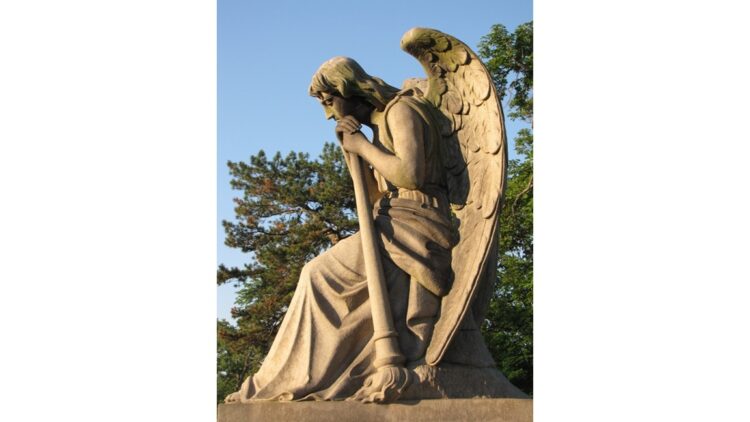
photo of Death with an inverted torch (public domain)

photo of Death with an inverted torch (public domain)


Threefold Sorrow

by Anonymous, 13th century
translated from Middle English by Martin Briggs

Among my thoughts are always three
That steal my happiness from me.
One is that I must away;
One, I do not know the day;
The third One is my greatest woe:
I know not whither I must go.


Middle English Original

Wanne ich þenche þinges þre
ne mai neure bliþe be:
þat on is ich sal awe,
þat oþer is ich ne wot wilk day.
þat þridde is mi moste kare,
i ne woth nevre wuder i sal fare.


The Genius of the Inverted Torch

Suggested by an aphorism of Schiller:

Lieblich sieht er zwar aus mit seinen erloschenen Fackel;
Aber, ihr Herren, der Tod ist so ästhetisch doch nicht.

He may look lovely with his extinguished torch;
But, gentlemen, death is not so aesthetically pleasing after all.

Winsome death displays exquisite taste,
so that you almost wish he’d catch your eye;
extinguishes a life with such good grace,
as if it were a privilege to die.

Don’t be deceived by iconography
of grief, the Classic pose, the grand lament:
mourning is a mask, cast off when he
snuffs out your flame, revokes all sentiment.

You won’t appreciate his elegance
when he seals up your cold unconscious head;
he can’t appeal to the aesthetic sense
of a corpse upon its final bed.

For that dandy of the rococo
in vulgar truth will thieve your warmth and light,
and gloat with baleful malice as you go,
betrayed, into a cold and lonely night.


Ill Winds

—after Paul Verlaine

Clouds descend.
Branches bend,
Ill winds blow.
A tree unweaves;
Cast-off leaves
Decay below.

There and here
A ring, a year,
Slowly grow;
Trees survive,
Leaves revive,
They come, they go.

Summer rain
Will fall again.
But ill winds blow
And frosts portend.
For in the end
Must come snow.


Martin Briggs lives in Suffolk, England. He only began writing in earnest after retiring from a career in public administration, since when he has been published in various publications on both sides of the Atlantic.


ShareTweetPin
The Society of Classical Poets does not endorse any views expressed in individual poems or commentary.
Read Our Comments Policy Here

RandomPoems

‘The Animals on Christmas Eve’ by Sally Cook
Beauty

‘The Animals on Christmas Eve’ by Sally Cook

December 24, 2022

. The Animals on Christmas Eve Some boarded dogs stayed for a while Until their owners took them home; I...

‘Windmill Song’ and Other Poetry by Don Shook
Beauty

‘Windmill Song’ and Other Poetry by Don Shook

August 7, 2017

  Windmill Song Alone it shudders on a hill, Defiant in the wind. A strong south gale could topple it,...

Next Post
A Poem for the Inauguration of President Donald J. Trump, by Paul Martin Freeman

A Poem for the Inauguration of President Donald J. Trump, by Paul Martin Freeman

‘Liturgical Loopholes’ and Other Poetry by Susan Jarvis Bryant

'Liturgical Loopholes' and Other Poetry by Susan Jarvis Bryant

‘Qoheleth’: A Poem by Peter Venable

'Qoheleth': A Poem by Peter Venable

Comments 18

  1. Margaret Coats says:
    8 months ago

    Diverse perspectives from different centuries and cultures, Martin, well gathered by you as others might not think to do. Your expansion of the Schiller aphorism is marvelous. Thinking of the many artistic images for death, and showing how they fail to correspond to the reality for the individual, digs underneath culture. Even primitive mounds or tombs make a point of hiding the horrid reason for human grief–while you imagine it not from the mourner’s point of view, but the corpse’s. Helps to value life in the sickroom, or wherever one may be tempted to exalt death. Your translation of the Middle English verses points elsewhere. For that author, the worst thing was uncertainty about where he would go after death. We are often certain it will be heaven or nowhere beyond the grave!

    Reply
    • Martin Briggs says:
      8 months ago

      Thank you, Margaret, for reading and commenting. I rather regret the merry little subtitle (“Three Poems on Death”), which somehow became appended after I submitted these pieces. They are less about death than about how humanity fears or confronts death: a hair-splitting distinction perhaps, but my intention (which you have grasped) was to look at the issue through the lenses of different periods and contrasting social attitudes or literary fashions.

      Reply
  2. Yael says:
    8 months ago

    Nice trio, good job! I like how these three poems circle around the condition of mortals in a fallen world, with each poem describing a different perspective from a different time and view angle.

    Reply
    • Martin Briggs says:
      8 months ago

      Thank you Yael. You have understood my purpose completely.

      Reply
  3. Roy Eugene Peterson says:
    8 months ago

    Martin, these three poems seemingly from different ages contemplating the end of our mortal lives are compelling and gracefully written causing us to pause in contemplation.

    Reply
    • Martin Briggs says:
      8 months ago

      Thanks Roy. Yes – three different ways of saying the same thing.

      Reply
  4. Paul Buchheit says:
    8 months ago

    Very nice, Martin. So interesting to picture an individual from a millennium ago with the exact sentiments we feel today.

    Reply
    • Martin Briggs says:
      8 months ago

      Thanks for commenting, Paul. I wonder what Anon what think if he knew his thoughts are still reverberating so many centuries later.

      Reply
  5. C.B. Anderson says:
    8 months ago

    All three were ass-kicking good, in my opinion. Unsubtlety is sometimes the highest form of subtlety. Memento mori.

    Reply
    • Martin Briggs says:
      8 months ago

      Thank you, CB. Glad you approve.

      Reply
  6. Cheryl Corey says:
    8 months ago

    Very nice rhythm to your dimeter in “Winds”.

    Reply
    • Martin Briggs says:
      8 months ago

      Thanks Cheryl.

      Reply
  7. Susan Jarvis Bryant says:
    8 months ago

    I appreciate every one of these eye-opening poetic confections – thank you for the wise, witty, and heart-touching translation. I love the brevity and the beauty of “Ill Winds”. But it is “The Genius of the Inverted Torch” that has captured my imagination. It speaks the stark truth with beauty – not an easy thing to do. Having worked in a funeral home for the last ten years, I know your words to be true on a literal level. Your words also speak to the soul of the harshness of death in an age of euthanasia, where a kind and soothing visit from the Grim Reaper is sold as the answer to life’s trials and torments. Great stuff! Thank you, Martin!

    Reply
    • Martin Briggs says:
      8 months ago

      Thank you for this appreciation, Susan. It never occurred to me that I might be read by a professional (so to speak). The Schiller piece is certainly more than mere morbidity: it has, as you say, topical and chilling resonance today.

      Reply
  8. Paul A. Freeman says:
    8 months ago

    I enjoyed all three, Martin. And all so different in total length, line length and rhyme and meter.

    My favourite line in ‘The Genius of the Inverted Torch’ is, “You won’t appreciate his elegance
    when he seals up your cold unconscious head…” You really wrote a strong defence for Grimmy. He’d get acquitted every time.

    Thanks for the reads.

    Reply
    • Martin Briggs says:
      8 months ago

      Thanks Paul. Here’s to health and happiness….

      Reply
  9. Cynthia L Erlandson says:
    8 months ago

    I am really impressed by one who can translate from Middle English! These are quite thoughtful meditations on death, displayed in lovely form. I especially favor “Winds”, with its lyric-feeling three- and four-syllable lines in lilting rhythm, and its poignant imagery that paints a picture of nature’s cycles, always ending in the sadness represented by frost and snow.

    Reply
    • Martin Briggs says:
      8 months ago

      Thank you Cynthia. I’m pleased if these pieces struck a chord.

      Reply

Leave a Reply Cancel reply

Your email address will not be published. Required fields are marked *


  1. Angelica Rodriguez on ‘The Cristero Centennial’: A Poem by Margaret CoatsSeptember 4, 2026

    A somber reminder of what happened not too long ago. I fear that same atmosphere has engulfed the world we…

  2. Stephen DiLauro on ‘The Cristero Centennial’: A Poem by Margaret CoatsSeptember 4, 2026

    God bless you for writing this! Indeed: A warning. But also a joyous proclamation: Jesus is King! Now and forever!

  3. Cynthia L Erlandson on ‘The Cristero Centennial’: A Poem by Margaret CoatsSeptember 4, 2026

    Thank you for the excellent poetic history lesson, Margaret. May courage not fail us.

  4. Margaret Brinton on ‘The Cristero Centennial’: A Poem by Margaret CoatsSeptember 4, 2026

    Hello Margaret C. This is, indeed, an ominous poem. My mind returns to the relatively "innocent" mid-century decades when corruption,…

  5. Paul Freeman on ‘A Potpourri of Aphoristic Verses’ by C.B. AndersonSeptember 4, 2026

    Some creditable couplets ( if I can add to the descriptors of 'gnomic verses' and 'aphorisms'). The first half are…

Subscribe to Daily Poems

Enter your email address to subscribe to this blog and receive notifications of new posts by email.

Join 1,635 other subscribers

Recent Poems

  • ‘The Cristero Centennial’: A Poem by Margaret Coats
  • ‘A Potpourri of Aphoristic Verses’ by C.B. Anderson
  • ‘The Estuary’: A Poem by Jeff Eardley
  • ‘A World Without the Wednesday Child’: A Poem by Kimberly Fore
  • The 2026 Society of Classical Poets International Poetry Competition
  • The 2026 SCP International High School Poetry Competition
  • ‘Realistic Reflections’ and Other Poetry by Anna J. Arredondo
  • ‘China Made’: A Poem by Theresa Werba
  • ‘The Savage Moon’ and Other Poetry by Brian Yapko
  • Poetry Book Review: Love Found, Yearned For, and Lost by James A. Tweedie
  • ‘When Opportunity Knocks’: A Poem by Roy E. Peterson
  • ‘Legend of the Griffin’: A Poem by Iryna Hall
  • ‘Government Issue’ and Other Poems by Joseph S. Salemi
  • ‘Chaucer Announces His Desire to Retire’: A Poem by Paul A. Freeman
  • ‘Advantages of Restaurants’ and Other Poems by Russel Winick
  • ‘Bone China’: A Poem by Mary Gardner
  • ‘On the Death of One Too Young to Die’: A Poem by Jeffrey Essmann
  • ‘This Too Shall Pass’ and Other Poetry by Justin Dasher
  • ‘Humdrum and Harum-Scarum’: A Lecture on Free Verse, by Robert Bridges (1922)
  • ‘Unrest On the Floodplain’: A Poem by Bhikkhu Nyanasobhano
  • ‘Latitude and Loss’: A Poem by Martin Briggs
  • ‘Act III’ and Other Poetry by C.B. Anderson
  • ‘God’s Funeral’: A Poem by James Sale
  • ‘Star Festival’: A Poem by Margaret Coats
  • ‘Song of the Frog Princess’: A Poem by Scharlie Meeuws
  • ‘The Odyssey: Nolan and Solot Compared’: An Essay by Michael Curtis
  • ‘Solitude’ and Other Poems by Mary Jane Myers
  • ‘The River Not Taken’ and Other Poetry by Brian Yapko
  • ‘Totentanz’: A Poem by James A. Tweedie
  • ‘In God Is Our Trust’: A Poem by Roy E. Peterson

Categories

  • Acrostic
  • Alexandroid
  • Alliterative
  • Art
  • Best Poems
  • Blank Verse
  • Chant Royal
  • Classical Poets Live
  • Clerihew
  • Covid-19
  • Deconstructing Communism
  • Educational
  • Epic
  • Epigrams and Proverbs
  • Essays
    • Interviews with Poets
    • Poetry Reviews
  • Featured
  • From the Society
  • Great Poets
    • Dante Alighieri
    • Edgar Allan Poe
    • Emily Dickinson
    • Geoffrey Chaucer
    • Henry Wadsworth Longfellow
    • Homer
    • John Keats
    • John Milton
    • Robert Frost
    • William Blake
    • William Shakespeare
    • William Wordsworth
  • Human Rights in China
  • Limerick
  • Love Poems
  • Music
  • Pantoum
  • Performing Arts
  • Poetry
    • Beauty
    • Children's Poems
    • Culture
    • Ekphrastic
    • Found Poems
    • High School Poets
    • Humor
    • Riddles
  • Poetry Challenge
  • Poetry Contests
  • Poetry Forms
    • Curtal Sonnet
    • Haiku
  • Poetry Readings
  • Rhupunt
  • Rondeau
  • Rondeau Redoublé
  • Rondel
  • Rubaiyat
  • Sapphic Verse
  • Satire
  • Science
  • Sestina
  • Shape Poems
  • Short Stories
  • Song Lyrics
  • Sonnet
  • Symposium
  • Terrorism
  • Terza Rima
  • The Environment
  • Translation
  • Triolet
  • Video
  • Villanelle

Quick Links

  • About Us
  • Submit Poetry
  • Become a Member
  • Members List
  • Support the Society
  • Advertisement Placement
  • Comments Policy
  • Terms of Use

Welcome Back!

Login to your account below

Forgotten Password?

Retrieve your password

Please enter your username or email address to reset your password.

Log In
No Result
View All Result
  • Poems
    • Beauty
    • Culture
    • Satire
    • Humor
    • Children’s
    • Art
    • Ekphrastic
    • Epic
    • Epigrams and Proverbs
    • Human Rights in China
    • Music
    • Performing Arts
    • Riddles
    • Science
    • Song Lyrics
    • The Environment
    • The Raven
    • Found Poems
    • High School Poets
    • Terrorism
    • Covid-19
  • Poetry Forms
    • Sonnet
    • Haiku
    • Limerick
    • Villanelle
    • Rondeau
    • Pantoum
    • Sestina
    • Triolet
    • Acrostic
    • Alexandroid
    • Alliterative
    • Blank Verse
    • Chant Royal
    • Clerihew
    • Rhupunt
    • Rondeau Redoublé
    • Rondel
    • Rubaiyat
    • Sapphic Verse
    • Shape Poems
    • Terza Rima
  • Great Poets
    • Geoffrey Chaucer
    • Emily Dickinson
    • Homer
    • Henry Wadsworth Longfellow
    • Dante Alighieri
    • John Keats
    • John Milton
    • Edgar Allan Poe
    • William Shakespeare
    • William Wordsworth
    • William Blake
    • Robert Frost
  • Love Poems
  • Contests
  • SCP Academy
    • Educational
    • Teaching Classical Poetry—A Guide for Educators
    • Poetry Forms
    • The SCP Journal
    • Books

© 2025 SCP. WebDesign by CODEC Prime.