• Submit Poetry
  • Support SCP
  • About Us
  • Members
  • Join
Sunday, September 13, 2026
Society of Classical Poets
  • Poems
    • Beauty
    • Culture
    • Satire
    • Humor
    • Children’s
    • Art
    • Ekphrastic
    • Epic
    • Epigrams and Proverbs
    • Human Rights in China
    • Music
    • Performing Arts
    • Riddles
    • Science
    • Song Lyrics
    • The Environment
    • The Raven
    • Found Poems
    • High School Poets
    • Terrorism
    • Covid-19
  • Poetry Forms
    • Sonnet
    • Haiku
    • Limerick
    • Villanelle
    • Rondeau
    • Pantoum
    • Sestina
    • Triolet
    • Acrostic
    • Alexandroid
    • Alliterative
    • Blank Verse
    • Chant Royal
    • Clerihew
    • Rhupunt
    • Rondeau Redoublé
    • Rondel
    • Rubaiyat
    • Sapphic Verse
    • Shape Poems
    • Terza Rima
  • Great Poets
    • Geoffrey Chaucer
    • Emily Dickinson
    • Homer
    • Henry Wadsworth Longfellow
    • Dante Alighieri
    • John Keats
    • John Milton
    • Edgar Allan Poe
    • William Shakespeare
    • William Wordsworth
    • William Blake
    • Robert Frost
  • Love Poems
  • Contests
  • SCP Academy
    • Educational
    • Teaching Classical Poetry—A Guide for Educators
    • Poetry Forms
    • The SCP Journal
    • Books
No Result
View All Result
Society of Classical Poets
  • Poems
    • Beauty
    • Culture
    • Satire
    • Humor
    • Children’s
    • Art
    • Ekphrastic
    • Epic
    • Epigrams and Proverbs
    • Human Rights in China
    • Music
    • Performing Arts
    • Riddles
    • Science
    • Song Lyrics
    • The Environment
    • The Raven
    • Found Poems
    • High School Poets
    • Terrorism
    • Covid-19
  • Poetry Forms
    • Sonnet
    • Haiku
    • Limerick
    • Villanelle
    • Rondeau
    • Pantoum
    • Sestina
    • Triolet
    • Acrostic
    • Alexandroid
    • Alliterative
    • Blank Verse
    • Chant Royal
    • Clerihew
    • Rhupunt
    • Rondeau Redoublé
    • Rondel
    • Rubaiyat
    • Sapphic Verse
    • Shape Poems
    • Terza Rima
  • Great Poets
    • Geoffrey Chaucer
    • Emily Dickinson
    • Homer
    • Henry Wadsworth Longfellow
    • Dante Alighieri
    • John Keats
    • John Milton
    • Edgar Allan Poe
    • William Shakespeare
    • William Wordsworth
    • William Blake
    • Robert Frost
  • Love Poems
  • Contests
  • SCP Academy
    • Educational
    • Teaching Classical Poetry—A Guide for Educators
    • Poetry Forms
    • The SCP Journal
    • Books
No Result
View All Result
Society of Classical Poets
No Result
View All Result
Home Love Poems

Four Love Sonnets by Adam Sedia

July 31, 2026
in Love Poems, Poetry, Sonnet
A A
6
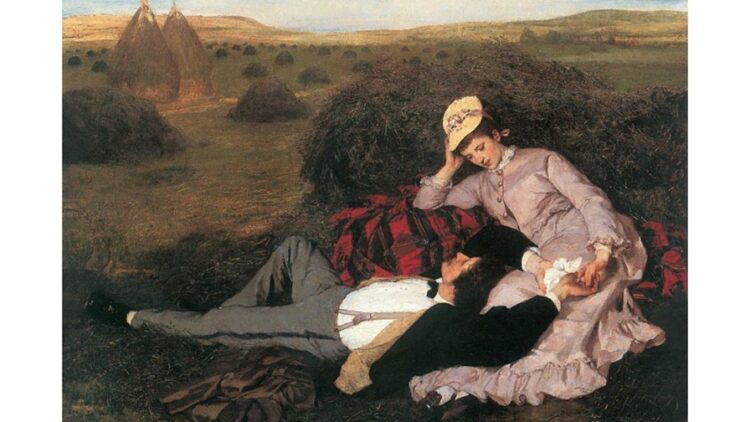
"Lovers" by Pál Szinyei Merse

"Lovers" by Pál Szinyei Merse


I

This mystic draw, these pangs I feel for you—
Are they mere sparks, the scent of pheromones,
Complex reactions deep within our bones
Compelling what transpires between us two?

Or is it something science never knew,
Unreached by every method it condones,
The greatest of its myriad unknowns,
Yet which its wiles cannot deny is true?

The latter! This strange force we call our love.
Is more complex and powerful by far
Than any fact of biochemistry,

Yet just as real. Its ecstasy hints of
Things far beyond what science says there are—
At once fate, miracle, and mystery!


II

Is it just thrust and throb of passion’s throes,
The panting palpitations of rapt breasts—
Or are they mere expression that attests
Joint destiny some force outside us chose?

Does it surge from the depths as Etna blows,
A fire that bursts and dies but never rests—
Or rise like snow-clad Himalayan crests,
Beyond all pangs and pain, desires and woes?

My senses speak first, say the first is true,
For my own body tells me to deny
The ecstasy, you brought it, is to lie;

Then reason speaks and says the latter, too,
Describes our love, for once the body’s fire
Is quenched, your soul evokes a pure desire.


VI

The night is our domain; here we hold sway,
Each other’s monarchs, joint and absolute,
With no liege but each other to salute,
Free from the bonds imposed by tyrant day,

Each sovereign, each holding each at bay.
In shade and starlight, all else fallen mute,
We give each to the other and transmute
This night into a world we shape our way.

The ecstasy of our nocturnal reign
Embraces all, leaves nothing but to spurn
False worldly crowns and honor in their place

One subject—she who also is my queen;
One law—to love and be loved in return;
One realm—two souls unbound by time or space.


VII

I am the sun, the orb that flames aloft,
Intently coursing, measuring the days,
Intense with white-hot, omnipresent blaze,
That blinds and sears when the clouds’ cloak is doffed.

You are the moon. Your orb glows silver, soft,
Mysterious in your ever-changing ways.
You know day, but night’s darkness best displays
Your muted beauty that enchants so oft.

Yet when our paths cross, all my fiery power
Cannot withstand the passage of your form;
It overcomes my fires, consumes my day.

The heavens darken as the midnight hour,
To veil our union, in which we transform
Time, space, and heaven in our interplay.


Adam Sedia (b. 1984) lives in his native Northwest Indiana and practices law as a civil and appellate litigator. He has published four books of poetry and his poems, essays, and fiction have appeared in various literary journals. He is also a composer, and his musical works may be heard on his YouTube channel.

Tags: Adam Sedia
ShareTweetPin
The Society of Classical Poets does not endorse any views expressed in individual poems or commentary.
Read Our Comments Policy Here

RandomPoems

‘Silence Is Not Golden’ by Roy E. Peterson
Culture

‘Silence Is Not Golden’ by Roy E. Peterson

July 31, 2021

. Silence is not golden. I’ll differ with you here. __Silence is an awful trap Lined with sharpest fear. Silence...

Three Poems Before Sleeping, by C.B. Anderson
Beauty

Three Poems Before Sleeping, by C.B. Anderson

January 23, 2019

The Catholic Work Ethic I'll do as much as I am able __Before the sun has set. I doubt that...

Next Post
The Society of Classical Poets 2026 Haiku Competition

The Society of Classical Poets 2026 Haiku Competition

‘Who Hears a Robot’s Prayer?’ and Other Poetry by Brian Yapko

'Who Hears a Robot's Prayer?' and Other Poetry by Brian Yapko

‘The Royal Arse Hortillery’: A Poem on the Spoonerism, by Jeff Eardley

'The Royal Arse Hortillery': A Poem on the Spoonerism, by Jeff Eardley

Comments 6

  1. Roy Eugene Peterson says:
    1 month ago

    Adam, these are passionate poems beautifully written that provocatively portray that love is something mystical and magnificent beyond “biochemistry” and mere carnal desire.

    Reply
  2. Theresa Werba says:
    1 month ago

    Adam, I could not love these sonnets more. Absolutely beautiful, perfect, superb, superior, exactly what a sonnet should be. Four of the best sonnets I have ever had the pleasure to read and know.

    Reply
  3. Joseph S. Salemi says:
    1 month ago

    The enumeration indicates that these are part of a longer sequence — surely a very intense and passionate one, in accord with the older tradition of sonneteering.

    Notice that in the octets of the first two, Sedia uses his ABBA quatrains to ask questions, which are then answered in the following sestets. In the full sequence, this may be part of the overall narrative plan. He composes each of the quatrains as a single, complete sentence, and thereby makes possible a very strong volta.

    Sonnet VI and VII are different — they describe the love of the speaker and the addressee in two different figures: royalty in VI, and moon and sun in VII. These two sonnets are descriptive and celebrational, while the first two are inquisitive and analytical.

    It would be interesting to know how long this sequence is. In many sonnet sequences, the range of approach is varied: celebrating, praising, questioning, arguing, fighting, doubting, worrying, and even insulting. These four sonnets are totally wrapped up in the ecstasy of love, and I wonder if Sedia’s entire sequence shows other possible reactions and feelings.

    Reply
  4. Margaret Coats says:
    1 month ago

    I imagine, Adam, the sequence may have many sonnets still unwritten and yet to come. The ones here, perhaps, are those stabilized enough to be circulated. Very much enjoyed by me as a scholar of the genre. In fact, these, with the sonnets published by James Tweedie a few days ago, provide further fascinating examples of the love sequence as a genre seriously practiced by contemporary poets. Your first poem corresponds to many sonnets opening a love sequence by philosophical questions about love’s nature. You answer that your love is as real as the physical body, and yet superior to it. Four or five hundred years ago, the poet might have referred to “beauty and virtue” in answering the question. In your second sonnet, you again take a classic philosophical approach in answering your question first by (physical) senses and then by (intellectual) reason. However, you proceed beyond body and mind in reference to the soul, which is a topic that develops in the third sonnet presented here. That third sonnet first seems to be a “night” poem–but hardly a descriptive one. The theme is really the mutual sovereignty of two souls joined by love–over a realm that is “night” rather than day because it is fully realized and better understood as a darkness that is neither time nor space. In the fourth sonnet, you differentiate male and female as sun and moon–which does happen in some traditional sonnet sequences, though in many the sun image is assigned to the woman as giver of life and warmth to the lover. But in those, the moon never appears in the same poem. Your work is unique because I think you’re referring to a solar eclipse in which the moon can effectively darken the day on earth by blocking the light of the sun. Your sestet, when “paths cross,” uses the unusual occurrence of the eclipse to claim transcendent power over the heavens themselves that can be achieved by the union of man and woman represented by sun and moon. This is new in the thousands of sonnets I’ve read. Look forward to more as your collection of sonnets increases!

    Reply
  5. Patricia Crozier says:
    1 month ago

    Breathtaking and enchanting!

    Reply
  6. Maureen Chollet says:
    4 weeks ago

    Dearest Adam,
    I fell upon this site tonight. Your poem is esquite. It is one of the most beautiful encounters of poetry I have ever laid my eye upon. It is tremendously breathtaking and it moved my spirit to soar and rise into belief again that which has been hidden , locked away, taken from me and torn apart.

    Reply

Leave a Reply Cancel reply

Your email address will not be published. Required fields are marked *


  1. T. M. on ‘Soul of a Prophet’: A Trialog Poem by T.M. MooreSeptember 13, 2026

    Thank you, Margaret, for your kind and encouraging thoughts. I was sure other poets had done things like this, but…

  2. Ganga Unnikrishnan on National Poetry Month Limerick ChallengeSeptember 13, 2026

    Thank you

  3. Ganga Unnikrishnan on National Poetry Month Limerick ChallengeSeptember 13, 2026

    Thank you Roy

  4. Golan Shahar on ‘Professional Mourner’: A Poem by Brian YapkoSeptember 13, 2026

    Wow, Brian! Does this actually exist? Professional mourners?

  5. Martin Briggs on ‘Professional Mourner’: A Poem by Brian YapkoSeptember 13, 2026

    What an original idea, Brian. And very entertaining, without losing sight of the underlying insincerity and money-grabbing which - alas…

Subscribe to Daily Poems

Enter your email address to subscribe to this blog and receive notifications of new posts by email.

Join 1,737 other subscribers
No Result
View All Result

Resources

       1. A Guide to Writing Poetry

      2. The Best Poems of 2020      

      3. Poetry and Writing Contests

      4. Journals Accepting Formal Verse

Recent Poems

  • ‘Professional Mourner’: A Poem by Brian Yapko
  • A Distillation of Shakespeare’s ‘A Midsummer Night’s Dream’ by Martin Briggs
  • ‘How the Mighty Fell!’: A Poem by Jeff Kemper
  • ‘The One Lone Juror’: A Poem by Joseph S. Salemi
  • ‘Soul of a Prophet’: A Trialog Poem by T.M. Moore
  • ‘Nelson and George’: A Poem by David Filpula
  • ‘When She Arrives’: A Poem by Bhairab Barman
  • ‘On to Better Days’: A Poem by Bruce Dale Wise
  • ‘Serenade’ and Other Poetry by Adam Sedia
  • ‘Self-Exploration’ and Other Poems by Paul Millan
  • ‘Victory’: A Poem by Jonathan Graver
  • ‘The Cristero Centennial’: A Poem by Margaret Coats
  • ‘A Potpourri of Aphoristic Verses’ by C.B. Anderson
  • ‘The Estuary’: A Poem by Jeff Eardley
  • ‘A World Without the Wednesday Child’: A Poem by Kimberly Fore
  • The 2026 Society of Classical Poets International Poetry Competition
  • The 2026 SCP International High School Poetry Competition
  • ‘Realistic Reflections’ and Other Poetry by Anna J. Arredondo
  • ‘China Made’: A Poem by Theresa Werba
  • ‘The Savage Moon’ and Other Poetry by Brian Yapko
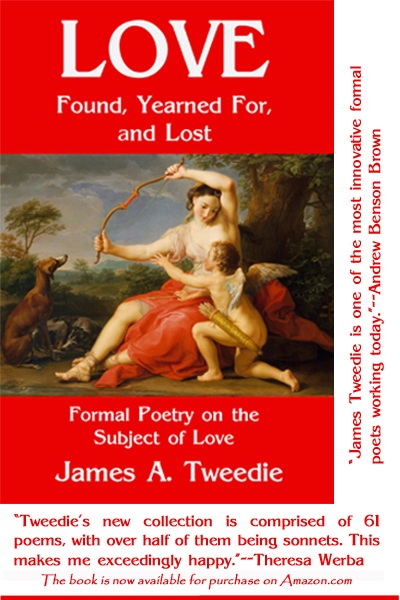
  • Poetry Book Review: Love Found, Yearned For, and Lost by James A. Tweedie
  • ‘When Opportunity Knocks’: A Poem by Roy E. Peterson
  • ‘Legend of the Griffin’: A Poem by Iryna Hall
  • ‘Government Issue’ and Other Poems by Joseph S. Salemi
  • ‘Chaucer Announces His Desire to Retire’: A Poem by Paul A. Freeman
  • ‘Advantages of Restaurants’ and Other Poems by Russel Winick
  • ‘Bone China’: A Poem by Mary Gardner
  • ‘On the Death of One Too Young to Die’: A Poem by Jeffrey Essmann
  • ‘This Too Shall Pass’ and Other Poetry by Justin Dasher
  • ‘Humdrum and Harum-Scarum’: A Lecture on Free Verse, by Robert Bridges (1922)

Categories

  • Acrostic
  • Alexandroid
  • Alliterative
  • Art
  • Best Poems
  • Blank Verse
  • Chant Royal
  • Classical Poets Live
  • Clerihew
  • Covid-19
  • Deconstructing Communism
  • Educational
  • Epic
  • Epigrams and Proverbs
  • Essays
    • Interviews with Poets
    • Poetry Reviews
  • Featured
  • From the Society
  • Great Poets
    • Dante Alighieri
    • Edgar Allan Poe
    • Emily Dickinson
    • Geoffrey Chaucer
    • Henry Wadsworth Longfellow
    • Homer
    • John Keats
    • John Milton
    • Robert Frost
    • William Blake
    • William Shakespeare
    • William Wordsworth
  • Human Rights in China
  • Limerick
  • Love Poems
  • Music
  • Pantoum
  • Performing Arts
  • Poetry
    • Beauty
    • Children's Poems
    • Culture
    • Ekphrastic
    • Found Poems
    • High School Poets
    • Humor
    • Riddles
  • Poetry Challenge
  • Poetry Contests
  • Poetry Forms
    • Curtal Sonnet
    • Haiku
  • Poetry Readings
  • Rhupunt
  • Rondeau
  • Rondeau Redoublé
  • Rondel
  • Rubaiyat
  • Sapphic Verse
  • Satire
  • Science
  • Sestina
  • Shape Poems
  • Short Stories
  • Song Lyrics
  • Sonnet
  • Symposium
  • Terrorism
  • Terza Rima
  • The Environment
  • Translation
  • Triolet
  • Video
  • Villanelle

Quick Links

  • About Us
  • Submit Poetry
  • Become a Member
  • Members List
  • Support the Society
  • Advertisement Placement
  • Comments Policy
  • Terms of Use

Welcome Back!

Login to your account below

Forgotten Password?

Retrieve your password

Please enter your username or email address to reset your password.

Log In
No Result
View All Result
  • Poems
    • Beauty
    • Culture
    • Satire
    • Humor
    • Children’s
    • Art
    • Ekphrastic
    • Epic
    • Epigrams and Proverbs
    • Human Rights in China
    • Music
    • Performing Arts
    • Riddles
    • Science
    • Song Lyrics
    • The Environment
    • The Raven
    • Found Poems
    • High School Poets
    • Terrorism
    • Covid-19
  • Poetry Forms
    • Sonnet
    • Haiku
    • Limerick
    • Villanelle
    • Rondeau
    • Pantoum
    • Sestina
    • Triolet
    • Acrostic
    • Alexandroid
    • Alliterative
    • Blank Verse
    • Chant Royal
    • Clerihew
    • Rhupunt
    • Rondeau Redoublé
    • Rondel
    • Rubaiyat
    • Sapphic Verse
    • Shape Poems
    • Terza Rima
  • Great Poets
    • Geoffrey Chaucer
    • Emily Dickinson
    • Homer
    • Henry Wadsworth Longfellow
    • Dante Alighieri
    • John Keats
    • John Milton
    • Edgar Allan Poe
    • William Shakespeare
    • William Wordsworth
    • William Blake
    • Robert Frost
  • Love Poems
  • Contests
  • SCP Academy
    • Educational
    • Teaching Classical Poetry—A Guide for Educators
    • Poetry Forms
    • The SCP Journal
    • Books

© 2025 SCP. WebDesign by CODEC Prime.