


Government Issue
Found in a junkshop, nestled in between
Dark bottles and some ill-assorted scraps:
A battered thing, its cover (olive green)
Showed verdigris along the old brass snaps.
The maker’s stamp read 1942.
U.S. was stenciled on the canvas case,
And in the thick aluminum, ARZEW
Then SICILY and ANZIO—each place
The soldier-owner of this small canteen
Had fought was scratched in letters rough and square.
Yet how could he forget where he had been,
Those shrapnel-spitting landfalls of despair?
And then I thought “Three beaches—nothing more.”
There is a grim finality in war.
The Final Checkmate
_No strategy with chessmen
_(Deploy them how you will)
Can stop the Final Checkmate as
_He zeroes in to kill.
_Your knights and rooks and bishops,
_Your pawns in rank and file—
Not one of them can hold him back,
_Nor all your force and guile
_Can stop the Final Checkmate
_From clearing off the board,
And finding you alone before
_His unrelenting sword.
_You sidestep to a corner,
_You zigzag left and right—
You try to hold a candle to
_The fast-descending night,
_But Final Checkmate’s steady
_In his approaching tread.
He leaves no loophole for escape—
_Your king is trapped and dead.
The Wiccan Table
Grant, we beg O Lord, that Thy people may avoid
diabolical contagion.
—Martinus Del Rio, S.J.,
Disquisitionum Magicarum Libri Sex
A parchment strip that bears a charm
To bring an enemy to harm;
A lodestone, astrolabe, and bowls
Of pig’s blood, pitch, and half-burned coals;
Amulets, la main de gloire,
A musty leather-bound grimoire;
Fetishes of withered tares,
Pentagrams and backwards prayers;
The finger of a murdered child,
The Tetragrammaton defiled;
Potions made from noxious plants
To blind or cripple or entrance;
Waxen dolls and sulfur’s smell—
All the panoply of Hell.
Last, a chalice cast in lead
With which the coven toasts the dead,
While near to it, a blood-flecked blade
Awaits the victim to be flayed.
Notes
Arzew, Sicily, Anzio: three beachheads where American troops fought in World War II.
Checkmate: the final move in chess that marks the end of the game. From the Persian words
Shāh Māt, which mean “The king is defeated.”
Wiccan: having to do with the cult of witchcraft and black magic. The modern Wicca sect uses
the name, but purports to be benevolent.
Martinus Del Rio, S.J.: a Spanish Jesuit (1551-1608) who wrote a major text on witchcraft that was used extensively in witchcraft trials and investigations.
Disquisitionum Magicarum Libri Sex: this is Del Rio’s book, published in 1599. The title means “Six Books of Magical Disquisitions.”
La main de gloire: the hand of glory. This refers to the severed hand of an executed criminal, dried and used as a candle holder in the ceremonies of witchcraft.
Grimoire: a book of magical rituals, spells, curses, and enchantments.
Pentagram: a five-pointed star turned upside-down, frequently associated with the demonic arts.
Backwards prayers: saying certain Christian prayers backwards was a standard practice in summoning up the Devil.
Finger of a murdered child: this object was required in certain spells and charms. It is mentioned in “Macbeth” as one of the ingredients thrown by the three weird sisters into their cauldron.
Tetragrammaton: the name of God, written in Hebrew with the four Hebrew letters YODH, HE, WAW, and HE. The tetragrammaton, twisted and defiled, was used in certain rituals performed by witches.
Joseph S. Salemi has published five books of poetry, and his poems, translations and scholarly articles have appeared in over one hundred publications world-wide. He is the editor of the literary magazine TRINACRIA and writes for Expansive Poetry On-line. He teaches in the Department of Humanities at New York University and in the Department of Classical Languages at Hunter College.








Joseph, these are three powerful poems. Each one of them tells an amazing story with a clear and dire conclusion.
The finality of war in “Government Issue” is a stark reminder of battles on Italian beaches and the sadness (in my mind) of finding such a piece of inscribed memorabilia in a junk shop. “The Final Checkmate” is perhaps one of the greatest depictions of our final demise with your correlation to playing chess. It is both relatable and haunting. “The Wiccan Table” is a chilling tale that from your outstanding succinct description educated me to things like a severed “murdered children’s finger” that seems so heinous as to be not only uncivilized, but also inhuman, much as the other blood cults of the past that may still exist in secret.
Thank you, Roy. I deliberately put these three pieces together because they shared a common theme, to some degree. The first was about death in combat, the second about death as a Grim Reaper coming after everyone, and the third about the spiritual death of witchcraft and black magic.
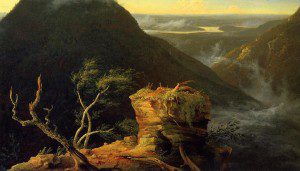
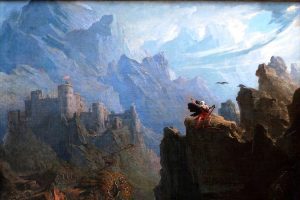
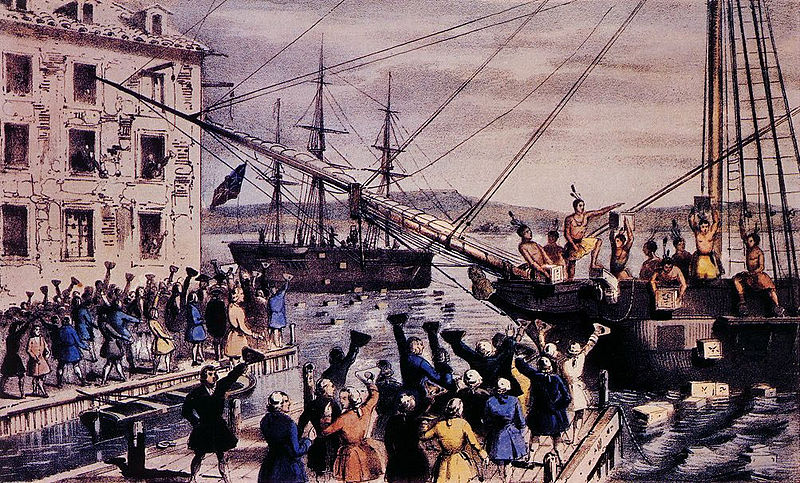
As for “The Wiccan Table,” I intended the poem to be the verbal equivalent of those beautiful 17th and 18th-century still life paintings, where a group of objects is shown resting on a table top. The typical still-life of that time usually included fruit, flowers, a book, a cup or glass of some sort, and small metal objects; and this mix of materials allowed the painter to demonstrate his skill in reproducing things of various colors and textures on his canvas.
The traditional European still-life, as I have written elsewhere, is a symbol of nature tamed and compelled to serve human ends. I wrote “The Wiccan Table” as a way to imagine various frightening and unpleasant objects put together on a table, as a symbol of witchcraft’s desire to serve diabolical ends.
Salemi never gives a moment’s respite to those who want life to be an endless slurpy of peaches and cream. At times he can be even more hard-edged than his predecessor, Leo Yankevich. Luckily, I count him a friend, and his poems only enrich my inner moil.
Many thanks, Kip. I don’t think I could ever be as tough as Leo. I’m glad to enrich your inner moil — one of the most important tasks of a poet, without a doubt.
Three thought provoking and educative pieces. I remember a character in a film (I forget which) holidaying with his family in Italy and noting that the last time he was on a particular beach, it was red with blood. Your prosaically named poem, Government Issue, leaves a similar impression.
The Final Checkmate, an extended game of chess (and an extended metaphor), with Death waiting at the end of it had me in mind of The seventh Seal.
And the Wiccan Tale. Next time I want to write a story involving witches and magic, this poem is my first port of call.
Thanks for the reads.
Thanks for the comments, Paul. The phrase “government issue” has a special meaning for Americans, because it was used in the Second World War to refer to any material product or piece of equipment that came directly to soldiers as part and parcel of their official war gear. So you had a “government issue” helmet, or “government issue” rations, or a “government issue” Garand rifle. Among the soldiers this naturally was shortened to “G.I.” and then became a common term for any enlisted American soldier. Just as the term “doughboys” was used in World War I to refer to American troops, so also did “G.I.” become the standard word for an American soldier in World War II.
So in my poem “Government Issue,” I was able to use the term to mean the old military canteen that was being described, but also to suggest the unlucky soldier who may have died while carrying it. There were many G.I.s who were killed in combat, and I recall many World War II veterans in the 1950s whose voices would crack when they said the word “G.I.” It meant only one thing to them — an American soldier. And they had seen too many of them die.
A friend who read the poem “The Final Checkmate” also mentioned the parallel with Bergman’s famous film. It didn’t occur to me while I was composing it, but I had seen the film many years earlier and there may have been an unconscious link.
As for “The Wiccan Table,” I love list poems, and once I start my only difficulty is getting myself to stop before the list grows unwieldly. There is plenty of other witchy and diabolical stuff I could have included.
Thanks for clearing up ‘doughboys’ for me. I’ve heard the term many times (in films mostly, I imagine) and wondered, but never got off the (metaphorical) couch to find out. GI I’ve always associated with General Infantryman and did wonder when I saw the title.
I got the irony that the canteen was in a junkshop, making it more or less a fading memory to a generation more or less gone, and that ‘Anzio’ could well have marked the previous owner’s final part in the war. It’s a very provoking and somewhat melancholy piece.
Joseph, “The Final Checkmate” depressed me. Not because of the subject matter, but because I’ve been working on a poem of my own about an old chessplayer – chess as a metaphor for life and so on. You got there first, and you said it more skilfully than I can!
Well, poems have to be depressing sometimes, and even deeply upsetting. It’s just part of life. I do think that there is a silent (but mistaken) assumption among many of us who write formal, metrical verse that our prosodic preferences should require us to be hopeful and upbeat and positive all the time.
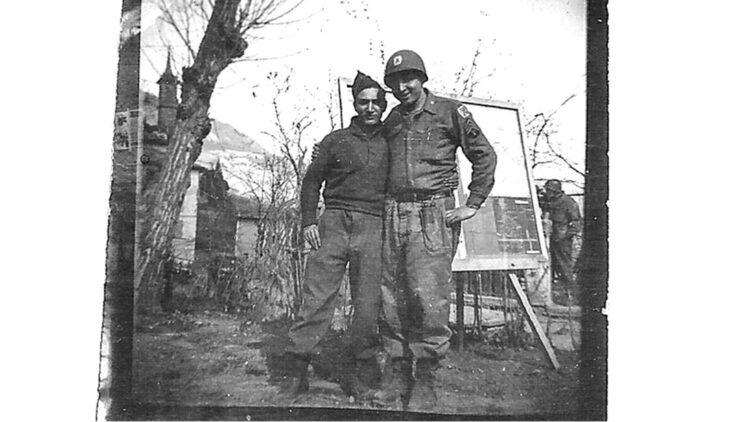
Joe, sorry to be coming to these excellent poems so late, but I would not like them to go without a comment of appreciation. I especially like Government Issue sonnet and am glad that Evan used that great photograph of your father. To me these poems are almost the poetic version of still life paintings. You use objects in all three pieces to great effect: the canteen, the chessboard, the various disturbing items on the Wiccan Table. So even though the subject matter of each poem is quite abstract, it is because the speakers have taken these objects and used them to launch into contemplation of things much deeper.
That Final Checkmate reminded me of Ingmar Bergman’s “The Seventh Seal” where a knight and Death are engaged in a chess game to the death. What’s very clever here is the short sing-song lines which are suggestive of a game but which ironically address the most grave of subjects. I also like the incantatory quality of the couplets in Wiccan Table.
The unsettling aspect of these pieces — the somewhat disturbing tone of each — strikes me as a demonstration of one of the things that Classical poetry does exceedingly well. While the average reader can be expected to look to rhyme and meter for predictability and order, this very structure can also serve as a frame for the discussion of very unsettling subjects which might otherwise not be taken as seriously. You could not write a prose version of the Chess piece and have it be effective WITHOUT there being rhyme and meter. You could not have an incantatory quality in WICCAN TABLE without the couplets. Form here is ESSENTIAL to the subject and the mood you wish to convey. I suppose one could argue that Government Issue could have been written without rhyme, but then something essential would also be lost: as it reads now, it is a tough story but one which also serves as a true epitaph. That epitaph quality would be lost if it were not written with rhyme intact.
Excellent poems, all three, Joe. I’m grateful that you shared them.
Thank you, Brian. I’m pleased that you like the poems.
I did try to make the poems something akin to a still-life painting, and it has always struck me that the French use the word “Mort” as part of their description for such a work. That’s why death is so brooding a theme in all three pieces.
A literary critic has accused me (in print) of being nothing but a descriptive poet who just gives overly precise details of physical reality that can be seen. He complains that I summon up no new ideas, no thoughtful notions, no striking and disturbing claims on the reader’s attention. But the guy is a dyed-in-the-wool ideologized postmodernist for whom meaning and message take precedence over everything , and who has been schooled in the idea that in the use of language, less is always more. For him, the shorter the poem, the better. (He also distrusts regular meter and rhyme.)
I prefer to develop my images, and make them fuller and deeper than a mere passing mention. As I said in my reply to Paul, I love list poems, and I was tempted to include a lot more material in my description of the Wiccan table. As for the poems being unsettling, that’s exactly what I was aiming at.
In the photo Evan used, you can see on the helmet and left arm of Fred Ransenberg the division patch of the Tenth Mountain Division with its two crossed swords. This was the unit my father was sent to after his return from his 1944 furlough in the states.