• Submit Poetry
  • Support SCP
  • About Us
  • Members
  • Join
Saturday, September 5, 2026
Society of Classical Poets
  • Poems
    • Beauty
    • Culture
    • Satire
    • Humor
    • Children’s
    • Art
    • Ekphrastic
    • Epic
    • Epigrams and Proverbs
    • Human Rights in China
    • Music
    • Performing Arts
    • Riddles
    • Science
    • Song Lyrics
    • The Environment
    • The Raven
    • Found Poems
    • High School Poets
    • Terrorism
    • Covid-19
  • Poetry Forms
    • Sonnet
    • Haiku
    • Limerick
    • Villanelle
    • Rondeau
    • Pantoum
    • Sestina
    • Triolet
    • Acrostic
    • Alexandroid
    • Alliterative
    • Blank Verse
    • Chant Royal
    • Clerihew
    • Rhupunt
    • Rondeau Redoublé
    • Rondel
    • Rubaiyat
    • Sapphic Verse
    • Shape Poems
    • Terza Rima
  • Great Poets
    • Geoffrey Chaucer
    • Emily Dickinson
    • Homer
    • Henry Wadsworth Longfellow
    • Dante Alighieri
    • John Keats
    • John Milton
    • Edgar Allan Poe
    • William Shakespeare
    • William Wordsworth
    • William Blake
    • Robert Frost
  • Love Poems
  • Contests
  • SCP Academy
    • Educational
    • Teaching Classical Poetry—A Guide for Educators
    • Poetry Forms
    • The SCP Journal
    • Books
No Result
View All Result
Society of Classical Poets
  • Poems
    • Beauty
    • Culture
    • Satire
    • Humor
    • Children’s
    • Art
    • Ekphrastic
    • Epic
    • Epigrams and Proverbs
    • Human Rights in China
    • Music
    • Performing Arts
    • Riddles
    • Science
    • Song Lyrics
    • The Environment
    • The Raven
    • Found Poems
    • High School Poets
    • Terrorism
    • Covid-19
  • Poetry Forms
    • Sonnet
    • Haiku
    • Limerick
    • Villanelle
    • Rondeau
    • Pantoum
    • Sestina
    • Triolet
    • Acrostic
    • Alexandroid
    • Alliterative
    • Blank Verse
    • Chant Royal
    • Clerihew
    • Rhupunt
    • Rondeau Redoublé
    • Rondel
    • Rubaiyat
    • Sapphic Verse
    • Shape Poems
    • Terza Rima
  • Great Poets
    • Geoffrey Chaucer
    • Emily Dickinson
    • Homer
    • Henry Wadsworth Longfellow
    • Dante Alighieri
    • John Keats
    • John Milton
    • Edgar Allan Poe
    • William Shakespeare
    • William Wordsworth
    • William Blake
    • Robert Frost
  • Love Poems
  • Contests
  • SCP Academy
    • Educational
    • Teaching Classical Poetry—A Guide for Educators
    • Poetry Forms
    • The SCP Journal
    • Books
No Result
View All Result
Society of Classical Poets
No Result
View All Result
Home Poetry Culture

A Poem for the 30th Anniversary of the Rwandan Genocide, by Paul A. Freeman

May 17, 2024
in Culture, Poetry
A A
27
poems A Poem for the 30th Anniversary of the Rwandan Genocide, by Paul A. Freeman

.

Rwanda, April 1994

Inside Nyamata Church the pews are piled
with clothes, the blood that drenched them dull and dry.
What demon turned sane men and women wild
with bloodlust that ten thousand here would die?
 
A long-historic grudge again saw light,
a tribal discord fanned by men on air
who cried: “Our foes are cockroaches, a blight!
Exterminate them! Not one carcase spare!”
 
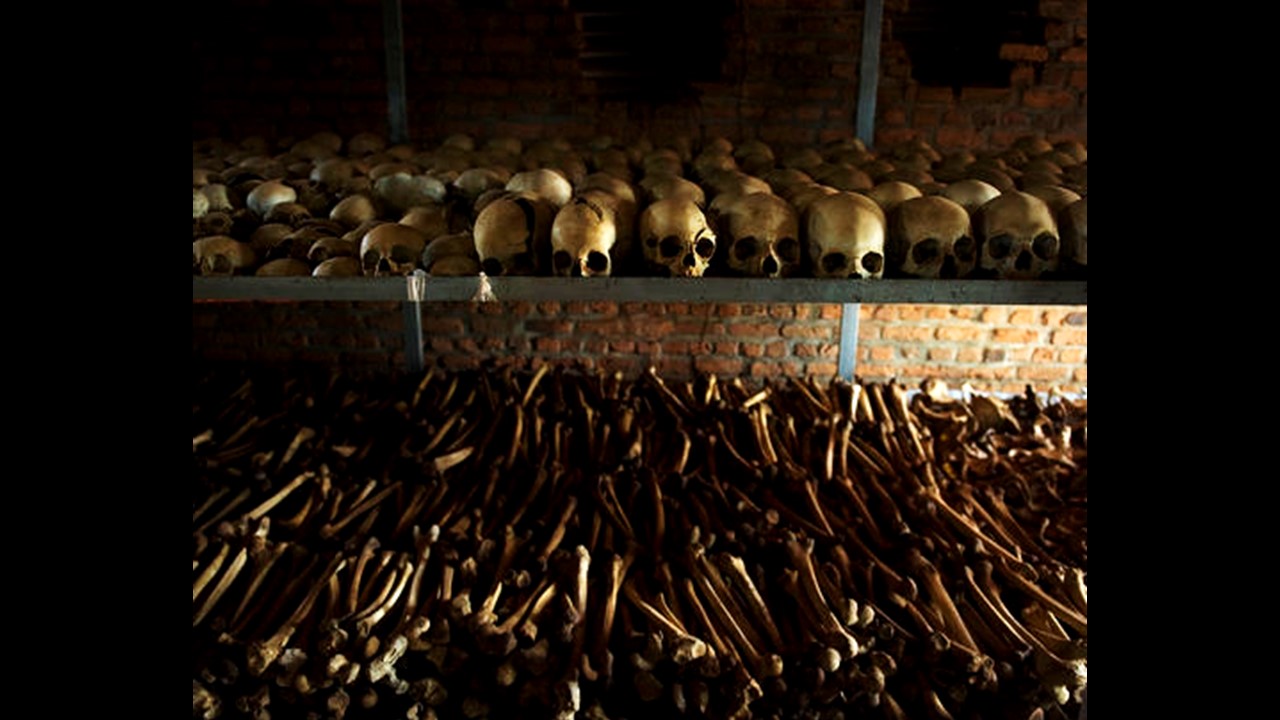
Inside Nyamata Church are skulls you’ll find
that once were joined to bodies left to rot
while mayhem raged. Oh, cannot Time rewind?
Obliterate this genocidal blot!
 
The mantra, ‘Never more!’ rings out again;
a hollow pledge that won’t erase the stain.

.

.

Paul A. Freeman is the author of Rumours of Ophir, a crime novel which was taught in Zimbabwean high schools and has been translated into German. In addition to having two novels, a children’s book and an 18,000-word narrative poem (Robin Hood and Friar Tuck: Zombie Killers!) commercially published, Paul is the author of hundreds of published short stories, poems and articles.

ShareTweetPin
The Society of Classical Poets does not endorse any views expressed in individual poems or commentary.
Read Our Comments Policy Here

RandomPoems

‘Apocalypse’: Three Sonnets by Peter Hartley
Beauty

‘Apocalypse’: Three Sonnets by Peter Hartley

December 21, 2020

_ I How will I know you or will you know me?When every bird has hurtled to the ground,When every...

‘How Eden Weeps’ by Mark Sheeky
Poetry

‘How Eden Weeps’ by Mark Sheeky

February 7, 2017

  How Eden weeps to see, the ache of every tortured tree. How Eden doth recoil, at bitter cancer of...

Next Post
‘Saturn’: A Poem by Alan Orsborn

'Saturn': A Poem by Alan Orsborn

‘He Lied About His Age’: A Poem by Joyce E. Rogers

'He Lied About His Age': A Poem by Joyce E. Rogers

Poems About Doing the Dishes, by Julian Woodruff

Poems About Doing the Dishes, by Julian Woodruff

Comments 27

  1. Julian D. Woodruff says:
    2 years ago

    How right you are in those last 2 lines, Paul. And how often we are reminded of that hollowness.

    Reply
    • Paul A. Freeman says:
      2 years ago

      Thanks for reading and commenting, Julian. 30 years is indeed a thought-provoking reminder.

      Reply
  2. Margaret Coats says:
    2 years ago

    Paul, my particular interest in Rwanda began after the 1994 genocide against the Tutsi, but it includes one sorrowful event showing that horrors did not end with the civil war. In 2000, my children participated in the Pueri Cantores (Little Singers) celebration in Rome with 5000 children from choirs around the world, including Rwandans. A few Rwandan singers were invited to prolong their Roman trip by going to visit a choir school in the Netherlands. They were the only survivors, as all the little singers returning to Rwanda were murdered. This is so small a part of the whole story that I can find no notice of it online. Southern California choirs took notice at the time by singing a memorial Mass. Since then I have been edified by meeting an important writer who survived the genocide, and also the king in exile, now deceased.

    Thank you for taking notice yet again.

    Reply
    • Paul A. Freeman says:
      2 years ago

      I was in southern Africa, in Zimbabwe, when the genocide happened. I recall that what was occurring was downplayed and underreported in the press for much of its duration.

      Another opportunity for mankind to do the right thing, missed.

      Reply
  3. Brian A. Yapko says:
    2 years ago

    This is a uniquely painful poem which does an admirable job of drawing our attention to a horrific chapter in history. “Cannot Time rewind?” Indeed. Would that it could. And I agree with Julian. That final couplet is shattering. Well done, Paul.

    Reply
    • Paul A. Freeman says:
      2 years ago

      My proximity in time and space does give me pause. Everything happened so quickly, over about 100 days, and the wheels of intervention just never really got moving.

      Reply
  4. Mike Bryant says:
    2 years ago

    Paul, unfortunately, “never again” is more like “ever and always.”

    The Rwanda genocide was carefully orchestrated by those who had control of the media and the narrative. People were divided and demonized, then, the brainwashed were armed and paid to take care of the dirty work.

    All carefully accomplished by the wealthy. Who runs Rwanda today?

    It’s an old story… and it’s as new as this morning’s headlines.

    Who wins World War III ? The billionaires and their offspring, that’s who.

    Lest we forget.

    Reply
    • Paul A. Freeman says:
      2 years ago

      Rwandan radio personalities certainly did their part. Dehumanising the targeted minority, in this case comparing them time and again to cockroaches, became normalised, and was one of the instigators’ primary tactics.

      Reply
      • Mike Bryant says:
        2 years ago

        There is plenty of name-calling going on everywhere. There always has been and there always will be.

        The real problems begin when the dehumanizing descriptives are government approved and paid for.

        Some of the approved slurs…

        conspiracy theorist, Christian nationalist, climate denier, election denier. white supremacist, toxic male, TERF, transphobe, xenophobe, Islamophobe, anti-vaxxer, super-spreader, cultist… oh yeah, speaking of cultists, I just saw this:

        https://summarynews.whatfinger.com/2024/05/16/the-view-co-host-sarahaines-says-catholics-who-participate-in-traditional-latin-mass-are-cult-like-and-extremist/

        The genocides are all government approved… they usually lead to government approved wars… money, then the name-callers are armed and sent after the disapproved groups… the billionaires get richer and everyone else gets deader… no matter who wins because they back both sides… the sides that they created, incited and armed.

        Pretty sweet deal, right?

        A millionaire client of mine explained it all to me thirty years ago…

        Funny thing is… they could change the narrative tomorrow and whole different groups would then become the disapproved. It doesn’t matter… as long as we all keep hating each other we play right into their hands.

        Reply
  5. Allegra Silberstein says:
    2 years ago

    Your poem was one we need to read again and again in remembrance and continued that never again might become a reality.

    Reply
    • Paul A. Freeman says:
      2 years ago

      Thanks, Allegra. I appreciate your comment and wish I’d never been compelled to write it.

      Reply
  6. Phil S. Rogers says:
    2 years ago

    Paul; A good reminder of something, with everything else going on, I had not thought of in some time. Thank you.

    Reply
    • Paul A. Freeman says:
      2 years ago

      Thanks for commenting, Phil. One of my wife’s myriad cousins is married to a Rwandan woman. It’s strange meeting someone with no living family. So much of our conversation and what we are revolves around family. For her, the genocide is with her every day.

      Reply
  7. Mike Bryant says:
    2 years ago

    How they divide us…

    https://americanmind.org/features/expropriation-the-end-game-of-anti-whiteness/as-whites-go-so-goes-the-nation/

    Reply
  8. Cheryl Corey says:
    2 years ago

    If I’m not mistaken, it was the first major genocide since the Holocaust. The actual number killed is unclear – 800,000? 1 million? In addition, how many were maimed by machetes?

    Reply
    • Paul A. Freeman says:
      2 years ago

      800,000 is the much accepted figure, Cheryl. All in the space of 100 days.

      I don’t think many escaped with a maiming. Once you were set upon, it was by a gang, and was merciless.

      There’s an excellent film about the events of the genocide, called Hotel Rwanda, about a hotel manager who sheltered and saved over 1000 people.

      One of the unsung heroes of the genocide was Captain Mbaye Diagne, a Senegalese soldier serving in Rwanda as a UN military observer. Under his own initiative, he saved hundreds of civilians, but died tragically in a mortar bomb explosion.

      Reply
  9. C.B. Anderson says:
    2 years ago

    How quickly we forget. When horrors pile up on horrors, there comes a certain numbness. Whether we like it or not, the weight of history is upon us, and we find ourselves on the verge of suffocation. Just breathing, it seems, is a privilege accorded only to those who hold the upper hand. God help us.

    Reply
    • Paul Freeman says:
      2 years ago

      It’s difficult to write a piece like this. There’s always a need to decompress afterwards. Although the problems in the world may be suffocating at the moment, it must have been a similar feeling during the Second World War, yet we overcame.

      Reply
  10. Joshua C. Frank says:
    2 years ago

    Thank you, Paul, for bringing this to our attention. We need more awareness of all genocides, not only historical, but the ones still going on right before our eyes.

    My favorite lines are the closing couplet:

    “The mantra, ‘Never more!’ rings out again;
    a hollow pledge that won’t erase the stain.”

    So many times we vow this, and then we go and support the side doing the killing. It’s happened so many times in history, you’re absolutely right that it’s “a hollow pledge.”

    Reply
    • Paul A. Freeman says:
      2 years ago

      Thanks for reading and commenting, Joshua.

      The speed and intensity with which the Rwandan genocide happened was perhaps the most terrifying aspect of the event.

      Reply
      • Mike Bryant says:
        2 years ago

        Genocides are like bankruptcies… they happen gradually, then suddenly.

        Reply
  11. Daniel Kemper says:
    2 years ago

    The thing I’d like to point out is, the horrors having been well described and noted in the poem and the commentary, is after the aftermath, if you will. By what miraculous means did Rwandans manage to coexist, and better than coexist and tolerate each other, but live together again? The only source of miracles, the Christian influence. The forgiveness of Christ. At least that’s how I have heard it.

    It’s fascinating, ironic, frustrating at all these Marxist lite pretenders; what’s their solution. (Actually, given their endemic Holodomor’s, as they’re trying to set Europe up for now), they probably don’t see anything wrong.)

    Reply
    • Daniel Kemper says:
      2 years ago

      Disclaiming bias: I have family who survived Mengistu’s mass murders. I’ve also seen the history steadily re-written trying to downplay and minimize the numbers which the best estimates (IMO) are ~one million. Never ever reported that I can see. Just the sequel (the 1980’s famine).

      Reply
  12. BDW says:
    2 years ago

    Of course, time can’t rewind; but poets can remind the World of what occurred back then. The reason why I penned this brief flashback a few weeks before was to bring up the distorted numbers compared to Gaza.

    Flashback:
    It has been thirty years since that mass genocide occurred—
    800,000 Tutsis, Hutus, and Twa were interred.
    In 1994, around one-hundred days, in breadth—
    Rwanda had devolved into a dread display of death.

    Reply
  13. Paul Freeman says:
    2 years ago

    Mengistu is still living happily in Harare where he was given safe haven by another criminal, Robert Gabriel Mugabe, for no better reason than ‘he helped us during the liberation war’. So much for justice.

    Reply
    • Daniel Kemper says:
      2 years ago

      I know. Ug. They always have golden parachutes. Didn’t even Idi Amin do similarly? Was it Egypt or the Saudis?

      Reply
      • Paul A. Freeman says:
        2 years ago

        Indeed, Idi Amin lived out his life to a ripe old age quite anonymously in Jeddah, Saudi Arabia.

        Reply

Leave a Reply Cancel reply

Your email address will not be published. Required fields are marked *


  1. Laura Deagon on ‘The Cristero Centennial’: A Poem by Margaret CoatsSeptember 4, 2026

    It's hard to believe that something like this has been suppressed from the history presented to us in academia. I…

  2. Alice V. Brock on The Society of Classical Poets 2026 Haiku CompetitionSeptember 4, 2026

    1. Sunset The sun slides away Finish here, begin elsewhere Gifting crimson streams 2. Fly Away Hard sticks, soft feathers…

  3. Yael on ‘The Cristero Centennial’: A Poem by Margaret CoatsSeptember 4, 2026

    Great history lesson poem Margaret, thank you. Christ is King indeed and the gates of hell cannot prevail against Him.

  4. Margaret Coats on ‘The Cristero Centennial’: A Poem by Margaret CoatsSeptember 4, 2026

    Thank you for appreciating my poem, jd. The Cristero history, relatively close to us in time and just across our…

  5. Margaret Coats on ‘The Cristero Centennial’: A Poem by Margaret CoatsSeptember 4, 2026

    Thanks for your comment, Roy. From your history studies, you would realize that the United States started out on the…

Subscribe to Daily Poems

Enter your email address to subscribe to this blog and receive notifications of new posts by email.

Join 1,636 other subscribers

Recent Poems

  • ‘The Cristero Centennial’: A Poem by Margaret Coats
  • ‘A Potpourri of Aphoristic Verses’ by C.B. Anderson
  • ‘The Estuary’: A Poem by Jeff Eardley
  • ‘A World Without the Wednesday Child’: A Poem by Kimberly Fore
  • The 2026 Society of Classical Poets International Poetry Competition
  • The 2026 SCP International High School Poetry Competition
  • ‘Realistic Reflections’ and Other Poetry by Anna J. Arredondo
  • ‘China Made’: A Poem by Theresa Werba
  • ‘The Savage Moon’ and Other Poetry by Brian Yapko
  • Poetry Book Review: Love Found, Yearned For, and Lost by James A. Tweedie
  • ‘When Opportunity Knocks’: A Poem by Roy E. Peterson
  • ‘Legend of the Griffin’: A Poem by Iryna Hall
  • ‘Government Issue’ and Other Poems by Joseph S. Salemi
  • ‘Chaucer Announces His Desire to Retire’: A Poem by Paul A. Freeman
  • ‘Advantages of Restaurants’ and Other Poems by Russel Winick
  • ‘Bone China’: A Poem by Mary Gardner
  • ‘On the Death of One Too Young to Die’: A Poem by Jeffrey Essmann
  • ‘This Too Shall Pass’ and Other Poetry by Justin Dasher
  • ‘Humdrum and Harum-Scarum’: A Lecture on Free Verse, by Robert Bridges (1922)
  • ‘Unrest On the Floodplain’: A Poem by Bhikkhu Nyanasobhano
  • ‘Latitude and Loss’: A Poem by Martin Briggs
  • ‘Act III’ and Other Poetry by C.B. Anderson
  • ‘God’s Funeral’: A Poem by James Sale
  • ‘Star Festival’: A Poem by Margaret Coats
  • ‘Song of the Frog Princess’: A Poem by Scharlie Meeuws
  • ‘The Odyssey: Nolan and Solot Compared’: An Essay by Michael Curtis
  • ‘Solitude’ and Other Poems by Mary Jane Myers
  • ‘The River Not Taken’ and Other Poetry by Brian Yapko
  • ‘Totentanz’: A Poem by James A. Tweedie
  • ‘In God Is Our Trust’: A Poem by Roy E. Peterson

Categories

  • Acrostic
  • Alexandroid
  • Alliterative
  • Art
  • Best Poems
  • Blank Verse
  • Chant Royal
  • Classical Poets Live
  • Clerihew
  • Covid-19
  • Deconstructing Communism
  • Educational
  • Epic
  • Epigrams and Proverbs
  • Essays
    • Interviews with Poets
    • Poetry Reviews
  • Featured
  • From the Society
  • Great Poets
    • Dante Alighieri
    • Edgar Allan Poe
    • Emily Dickinson
    • Geoffrey Chaucer
    • Henry Wadsworth Longfellow
    • Homer
    • John Keats
    • John Milton
    • Robert Frost
    • William Blake
    • William Shakespeare
    • William Wordsworth
  • Human Rights in China
  • Limerick
  • Love Poems
  • Music
  • Pantoum
  • Performing Arts
  • Poetry
    • Beauty
    • Children's Poems
    • Culture
    • Ekphrastic
    • Found Poems
    • High School Poets
    • Humor
    • Riddles
  • Poetry Challenge
  • Poetry Contests
  • Poetry Forms
    • Curtal Sonnet
    • Haiku
  • Poetry Readings
  • Rhupunt
  • Rondeau
  • Rondeau Redoublé
  • Rondel
  • Rubaiyat
  • Sapphic Verse
  • Satire
  • Science
  • Sestina
  • Shape Poems
  • Short Stories
  • Song Lyrics
  • Sonnet
  • Symposium
  • Terrorism
  • Terza Rima
  • The Environment
  • Translation
  • Triolet
  • Video
  • Villanelle

Quick Links

  • About Us
  • Submit Poetry
  • Become a Member
  • Members List
  • Support the Society
  • Advertisement Placement
  • Comments Policy
  • Terms of Use

Welcome Back!

Login to your account below

Forgotten Password?

Retrieve your password

Please enter your username or email address to reset your password.

Log In
No Result
View All Result
  • Poems
    • Beauty
    • Culture
    • Satire
    • Humor
    • Children’s
    • Art
    • Ekphrastic
    • Epic
    • Epigrams and Proverbs
    • Human Rights in China
    • Music
    • Performing Arts
    • Riddles
    • Science
    • Song Lyrics
    • The Environment
    • The Raven
    • Found Poems
    • High School Poets
    • Terrorism
    • Covid-19
  • Poetry Forms
    • Sonnet
    • Haiku
    • Limerick
    • Villanelle
    • Rondeau
    • Pantoum
    • Sestina
    • Triolet
    • Acrostic
    • Alexandroid
    • Alliterative
    • Blank Verse
    • Chant Royal
    • Clerihew
    • Rhupunt
    • Rondeau Redoublé
    • Rondel
    • Rubaiyat
    • Sapphic Verse
    • Shape Poems
    • Terza Rima
  • Great Poets
    • Geoffrey Chaucer
    • Emily Dickinson
    • Homer
    • Henry Wadsworth Longfellow
    • Dante Alighieri
    • John Keats
    • John Milton
    • Edgar Allan Poe
    • William Shakespeare
    • William Wordsworth
    • William Blake
    • Robert Frost
  • Love Poems
  • Contests
  • SCP Academy
    • Educational
    • Teaching Classical Poetry—A Guide for Educators
    • Poetry Forms
    • The SCP Journal
    • Books

© 2025 SCP. WebDesign by CODEC Prime.