• Submit Poetry
  • Support SCP
  • About Us
  • Members
  • Join
Saturday, July 18, 2026
Society of Classical Poets
  • Poems
    • Beauty
    • Culture
    • Satire
    • Humor
    • Children’s
    • Art
    • Ekphrastic
    • Epic
    • Epigrams and Proverbs
    • Human Rights in China
    • Music
    • Performing Arts
    • Riddles
    • Science
    • Song Lyrics
    • The Environment
    • The Raven
    • Found Poems
    • High School Poets
    • Terrorism
    • Covid-19
  • Poetry Forms
    • Sonnet
    • Haiku
    • Limerick
    • Villanelle
    • Rondeau
    • Pantoum
    • Sestina
    • Triolet
    • Acrostic
    • Alexandroid
    • Alliterative
    • Blank Verse
    • Chant Royal
    • Clerihew
    • Rhupunt
    • Rondeau Redoublé
    • Rondel
    • Rubaiyat
    • Sapphic Verse
    • Shape Poems
    • Terza Rima
  • Great Poets
    • Geoffrey Chaucer
    • Emily Dickinson
    • Homer
    • Henry Wadsworth Longfellow
    • Dante Alighieri
    • John Keats
    • John Milton
    • Edgar Allan Poe
    • William Shakespeare
    • William Wordsworth
    • William Blake
    • Robert Frost
  • Love Poems
  • Contests
  • SCP Academy
    • Educational
    • Teaching Classical Poetry—A Guide for Educators
    • Poetry Forms
    • The SCP Journal
    • Books
No Result
View All Result
Society of Classical Poets
  • Poems
    • Beauty
    • Culture
    • Satire
    • Humor
    • Children’s
    • Art
    • Ekphrastic
    • Epic
    • Epigrams and Proverbs
    • Human Rights in China
    • Music
    • Performing Arts
    • Riddles
    • Science
    • Song Lyrics
    • The Environment
    • The Raven
    • Found Poems
    • High School Poets
    • Terrorism
    • Covid-19
  • Poetry Forms
    • Sonnet
    • Haiku
    • Limerick
    • Villanelle
    • Rondeau
    • Pantoum
    • Sestina
    • Triolet
    • Acrostic
    • Alexandroid
    • Alliterative
    • Blank Verse
    • Chant Royal
    • Clerihew
    • Rhupunt
    • Rondeau Redoublé
    • Rondel
    • Rubaiyat
    • Sapphic Verse
    • Shape Poems
    • Terza Rima
  • Great Poets
    • Geoffrey Chaucer
    • Emily Dickinson
    • Homer
    • Henry Wadsworth Longfellow
    • Dante Alighieri
    • John Keats
    • John Milton
    • Edgar Allan Poe
    • William Shakespeare
    • William Wordsworth
    • William Blake
    • Robert Frost
  • Love Poems
  • Contests
  • SCP Academy
    • Educational
    • Teaching Classical Poetry—A Guide for Educators
    • Poetry Forms
    • The SCP Journal
    • Books
No Result
View All Result
Society of Classical Poets
No Result
View All Result
Home Poetry Beauty

A Poem on the Earliest Known English Poet, Caedmon, by Philip Rosenbaum

September 9, 2020
in Beauty, Culture, Poetry
A A
4
poems A Poem on the Earliest Known English Poet, Caedmon, by Philip Rosenbaum

.

Poet’s Note: The Venerable Bede tells us that in the 7th century Caedmon, “having lived in a secular habit till he was well advanced in years, had never learned anything of versifying.” Leaving a celebration because he feared having to sing, he spent the night in a stable where he took care of the horses. “A Person appeared to him in his sleep, and saluting him by his name, said, ‘Caedmon, sing some song to me.’ . . . Hereupon he presently began to sing verses to the praise of God.”

“Others after him attempted, in the English nation, to compose religious poems, but none could ever compare with him, for he did not learn the art of poetry from men, but from God; for which reason he never could compose any trivial or vain poem, but only those which relate to religion suited his religious tongue.”

.

In Days of Old

Fleeing the harp because he could not sing,
With the cattle he laid him down to sleep.
No man since Adam ever slept so deep.
God took his fear (a hard, unyielding thing)
And left a soft and lovely gift to cling
To him forever. Do the barren weep
When God gives children and a house to keep?
With joy old Caedmon let his praises ring!
Must what began in Eden end in Hell?
For a thousand years poets of our tongue
Remembered Caedmon’s God and all was well;
But we no longer sing as we have sung.
Cultures can die. And we have runes to tell
What life was like when our first bard was young.

.

.

Philip Rosenbaum lives in Gainesville, Virginia, with his wife, Jeanne. Now retired, he has been the director of a residential wilderness school for troubled boys, and the manager of a collection of antique fine art. He is the author of one published volume of verse, Holy Week Sonnets, and two published works in prose, How To Enjoy the Boring Parts of the Bible and The Promise (on the importance of honoring parents).


ShareTweetPin
The Society of Classical Poets does not endorse any views expressed in individual poems or commentary.
Read Our Comments Policy Here

RandomPoems

‘Sonnet for Elizabeth’ by Joseph Charles MacKenzie (with Audio)
Poetry

‘The Waters’: A Poem by Margaret Brinton

April 30, 2026

  The Waters _'Tis more than oceanic seas ___That bring me Wonder. I have tasted spray from New York's waterfall,...

‘My Inner Attorney’: A Poem by Warren Bonham
Culture

‘My Inner Attorney’: A Poem by Warren Bonham

January 10, 2025

. My Inner Attorney "Not everyone who says to me, ‘Lord, Lord,’ will enter the kingdom of heaven, but only...

Next Post
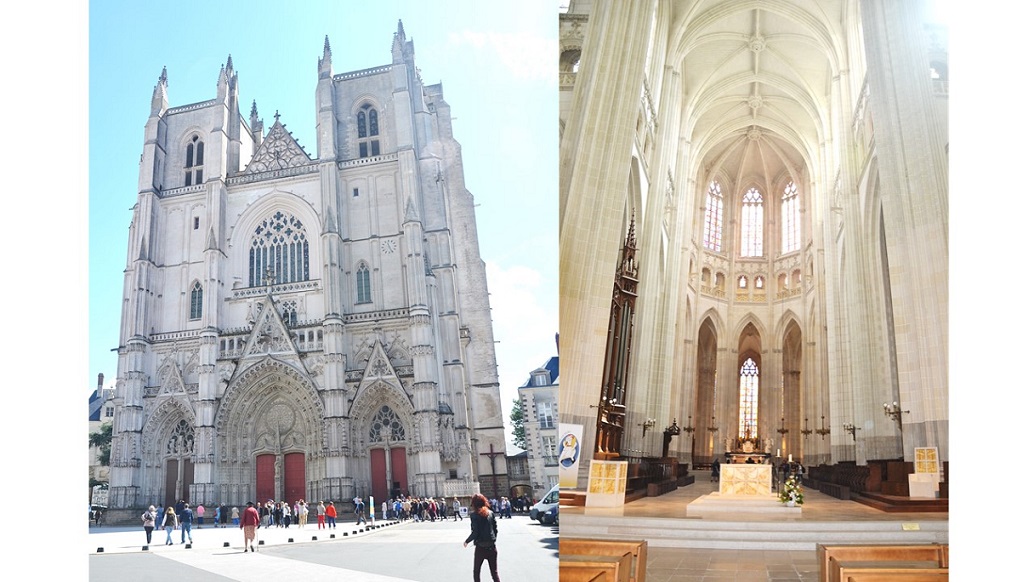
A Poem for Nantes Cathedral, by Margaret Coats

A Poem for Nantes Cathedral, by Margaret Coats

A Poem on the Real Definition of Fascism: ‘Misdirection’ by Russel Winick

A Poem on the Real Definition of Fascism: 'Misdirection' by Russel Winick

‘Terrorism Can Be Defeated’ by Sandip Saha

'Remember 9/11': A Rondeau by Susan Jarvis Bryant

Comments 4

  1. Margaret Coats says:
    6 years ago

    This is a finely crafted sonnet; note especially the unexpected and dramatic turn at line 8, where the poem moves with no transition (except the knowledge that a sonnet should have a turn about there) from then to now. Now seems less satisfying (as it should), but the moral is hardly pretentious, and the final sentence provides a resolution by pointing back to the beautiful octave. Well done! If I may suggest one little improvement, I would place a “the” separating the stressed syllables “years” and “po” of “poets” in line 10. That gives the line 11 syllables, but I am happy with two unstressed or elided syllables to begin an iambic line.

    Reply
    • C.B. Anderson says:
      6 years ago

      Simpler would be to omit “For” at the beginning of the line AND add a “the” where you specified. This would solve both problems.

      Reply
  2. Cynthia Erlandson says:
    6 years ago

    “No man since Adam ever slept so deep.” and “Must what began in Eden end in hell?” are quite brilliant lines, connecting to each other, as well as connecting the poem to its theme of “our first bard.” Very beautiful!

    Reply
  3. Sophia Giudici says:
    6 years ago

    I love the nod to the tradition of Christian poets, and how we no longer sing of the same things. Haunting and beautiful, and yet this image of Caedmon is somehow comforting.

    Reply

Leave a Reply Cancel reply

Your email address will not be published. Required fields are marked *

  1. Theresa Werba on ‘American Dreams’: A Poem by Adam SediaJuly 18, 2026

    Congrats on your Finalist win Adam, such an excellently-wrought and powerful poem!

  2. Theresa Werba on ‘The 51st State’: A Poem by James SaleJuly 18, 2026

    Congrats James on your Finalist win!!!

  3. Brian Yapko on ‘Americans Cross the Rubicon’: A July 4th Poem by Brian YapkoJuly 18, 2026

    Thank you very much indeed, Adam. The Civil War and Pearl Harbor were decisive enough. I wanted a full range…

  4. Theresa Werba on ‘Two Fateful American Coin Flips’: A Poem by James A. TweedieJuly 18, 2026

    Jim, congrats on your win!!!

  5. BDW on ‘For Those We Never Meet’: A Poem by Aneesh AgarwalJuly 18, 2026

    Mr. Agawal has generalized the largest labour insurrection in America from the early 20th century—1921, that cost the lives of…

Subscribe to Daily Poems

Enter your email address to subscribe to this blog and receive notifications of new posts by email.

Join 1,594 other subscribers

Recent Poems

  • Winners and Rankings of The Great American Poetry Competition
  • ‘The Gold Star Mother’: A Poem by Gerard Maritato
  • ‘An American Dash’: A Poem by Linda Ellis
  • ‘The Anonymous Soldier’: A Poem by Lucy Lind
  • ‘For Those We Never Meet’: A Poem by Aneesh Agarwal
  • ‘Ben Franklin’s Copper Fugio Cent’: A Poem by Geoffrey Smagacz
  • Three Brief Poems by Luxorius, Translated by Joseph S. Salemi
  • ‘The American Spirit’: A Poem by Dusty Grein
  • ‘The Ballad of Zebulon Pike’: A Poem by M.D. Skeen
  • ‘We Are the Ones’ and Other Poetry by Cheryl Corey
  • ‘My Pyjamas!’ and Other Poems by Susan Jarvis Bryant
  • ‘A Snowy Egret’: A Poem by Bruce Dale Wise
  • ‘The Swearing-in of Calvin Coolidge’: A Sonnet by Robert W. Crawford
  • ‘Ballad of the Sequoia’: A Poem by Lauren V. Leon
  • ‘The 51st State’: A Poem by James Sale
  • ‘La Uva’ (The Grape): A Poem by Michael Pietrack
  • ‘There’s Blood that Flows Within the Stripes’: A Poem by Lauren V. Leon
  • ‘Birdsong’: A Poem by Jeffrey Essmann
  • ‘The Melody That Lingers On’ and Other Poetry by John McPherson
  • ‘American Dreams’: A Poem by Adam Sedia
  • ‘An American Fabius’: A Poem by John Hernandez
  • ‘Vernal Clinic’ and Other Poetry by C.B. Anderson
  • ‘Omaha Beach’ and Other Poetry by Bradford Skow
  • ‘Music to Part the Veil’: A Poem by T.M. Moore
  • ‘A Gentleman’s Guide to Losing a War’ and Other Poetry by Arnon Peterson
  • ‘Black Shuck’: A Poem by Martin Briggs
  • ‘When the Last World War II Veteran Passes Away’: A Poem by N.S. Boone
  • ‘A Fallow Year at Worthy Farm’: A Poem by Paul A. Freeman
  • ‘Outstanding in Afghanistan’: A Poem by Jared S. Chang
  • ‘250 More’: A Poem by Miguel Moreno

Categories

  • Acrostic
  • Alexandroid
  • Alliterative
  • Art
  • Best Poems
  • Blank Verse
  • Chant Royal
  • Classical Poets Live
  • Clerihew
  • Covid-19
  • Deconstructing Communism
  • Educational
  • Epic
  • Epigrams and Proverbs
  • Essays
    • Interviews with Poets
    • Poetry Reviews
  • Featured
  • From the Society
  • Great Poets
    • Dante Alighieri
    • Edgar Allan Poe
    • Emily Dickinson
    • Geoffrey Chaucer
    • Henry Wadsworth Longfellow
    • Homer
    • John Keats
    • John Milton
    • Robert Frost
    • William Blake
    • William Shakespeare
    • William Wordsworth
  • Human Rights in China
  • Limerick
  • Love Poems
  • Music
  • Pantoum
  • Performing Arts
  • Poetry
    • Beauty
    • Children's Poems
    • Culture
    • Ekphrastic
    • Found Poems
    • High School Poets
    • Humor
    • Riddles
  • Poetry Challenge
  • Poetry Contests
  • Poetry Forms
    • Curtal Sonnet
    • Haiku
  • Poetry Readings
  • Rhupunt
  • Rondeau
  • Rondeau Redoublé
  • Rondel
  • Rubaiyat
  • Sapphic Verse
  • Satire
  • Science
  • Sestina
  • Shape Poems
  • Short Stories
  • Song Lyrics
  • Sonnet
  • Symposium
  • Terrorism
  • Terza Rima
  • The Environment
  • Translation
  • Triolet
  • Video
  • Villanelle

Quick Links

  • About Us
  • Submit Poetry
  • Become a Member
  • Members List
  • Support the Society
  • Advertisement Placement
  • Comments Policy
  • Terms of Use

Welcome Back!

Login to your account below

Forgotten Password?

Retrieve your password

Please enter your username or email address to reset your password.

Log In
No Result
View All Result
  • Poems
    • Beauty
    • Culture
    • Satire
    • Humor
    • Children’s
    • Art
    • Ekphrastic
    • Epic
    • Epigrams and Proverbs
    • Human Rights in China
    • Music
    • Performing Arts
    • Riddles
    • Science
    • Song Lyrics
    • The Environment
    • The Raven
    • Found Poems
    • High School Poets
    • Terrorism
    • Covid-19
  • Poetry Forms
    • Sonnet
    • Haiku
    • Limerick
    • Villanelle
    • Rondeau
    • Pantoum
    • Sestina
    • Triolet
    • Acrostic
    • Alexandroid
    • Alliterative
    • Blank Verse
    • Chant Royal
    • Clerihew
    • Rhupunt
    • Rondeau Redoublé
    • Rondel
    • Rubaiyat
    • Sapphic Verse
    • Shape Poems
    • Terza Rima
  • Great Poets
    • Geoffrey Chaucer
    • Emily Dickinson
    • Homer
    • Henry Wadsworth Longfellow
    • Dante Alighieri
    • John Keats
    • John Milton
    • Edgar Allan Poe
    • William Shakespeare
    • William Wordsworth
    • William Blake
    • Robert Frost
  • Love Poems
  • Contests
  • SCP Academy
    • Educational
    • Teaching Classical Poetry—A Guide for Educators
    • Poetry Forms
    • The SCP Journal
    • Books

© 2025 SCP. WebDesign by CODEC Prime.