• Submit Poetry
  • Support SCP
  • About Us
  • Members
  • Join
Saturday, July 18, 2026
Society of Classical Poets
  • Poems
    • Beauty
    • Culture
    • Satire
    • Humor
    • Children’s
    • Art
    • Ekphrastic
    • Epic
    • Epigrams and Proverbs
    • Human Rights in China
    • Music
    • Performing Arts
    • Riddles
    • Science
    • Song Lyrics
    • The Environment
    • The Raven
    • Found Poems
    • High School Poets
    • Terrorism
    • Covid-19
  • Poetry Forms
    • Sonnet
    • Haiku
    • Limerick
    • Villanelle
    • Rondeau
    • Pantoum
    • Sestina
    • Triolet
    • Acrostic
    • Alexandroid
    • Alliterative
    • Blank Verse
    • Chant Royal
    • Clerihew
    • Rhupunt
    • Rondeau Redoublé
    • Rondel
    • Rubaiyat
    • Sapphic Verse
    • Shape Poems
    • Terza Rima
  • Great Poets
    • Geoffrey Chaucer
    • Emily Dickinson
    • Homer
    • Henry Wadsworth Longfellow
    • Dante Alighieri
    • John Keats
    • John Milton
    • Edgar Allan Poe
    • William Shakespeare
    • William Wordsworth
    • William Blake
    • Robert Frost
  • Love Poems
  • Contests
  • SCP Academy
    • Educational
    • Teaching Classical Poetry—A Guide for Educators
    • Poetry Forms
    • The SCP Journal
    • Books
No Result
View All Result
Society of Classical Poets
  • Poems
    • Beauty
    • Culture
    • Satire
    • Humor
    • Children’s
    • Art
    • Ekphrastic
    • Epic
    • Epigrams and Proverbs
    • Human Rights in China
    • Music
    • Performing Arts
    • Riddles
    • Science
    • Song Lyrics
    • The Environment
    • The Raven
    • Found Poems
    • High School Poets
    • Terrorism
    • Covid-19
  • Poetry Forms
    • Sonnet
    • Haiku
    • Limerick
    • Villanelle
    • Rondeau
    • Pantoum
    • Sestina
    • Triolet
    • Acrostic
    • Alexandroid
    • Alliterative
    • Blank Verse
    • Chant Royal
    • Clerihew
    • Rhupunt
    • Rondeau Redoublé
    • Rondel
    • Rubaiyat
    • Sapphic Verse
    • Shape Poems
    • Terza Rima
  • Great Poets
    • Geoffrey Chaucer
    • Emily Dickinson
    • Homer
    • Henry Wadsworth Longfellow
    • Dante Alighieri
    • John Keats
    • John Milton
    • Edgar Allan Poe
    • William Shakespeare
    • William Wordsworth
    • William Blake
    • Robert Frost
  • Love Poems
  • Contests
  • SCP Academy
    • Educational
    • Teaching Classical Poetry—A Guide for Educators
    • Poetry Forms
    • The SCP Journal
    • Books
No Result
View All Result
Society of Classical Poets
No Result
View All Result
Home Poetry Beauty

A Translation of Catullus’s ‘Ad Sirmium Insulam’ by Douglas Thornton

July 25, 2017
in Beauty, Culture, Poetry, Translation
A A
7
poems A Translation of Catullus's 'Ad Sirmium Insulam' by Douglas Thornton

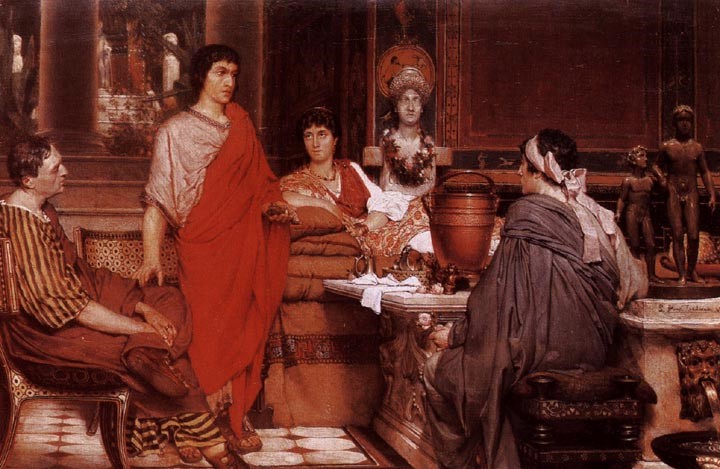
The important events in the life of Gaius Valerius Catullus (84-54 B.C.) are recounted through the poems he has left. The particular poem below was written on his return from Asia Minor, where he had attempted at a public career by following Memmius, the patron of the poet Lucretius, into the province of Bithynia. But his hopes being dashed, he took refuge after the long journey at his home in the present-day village of Sirmione, in northern Italy, on Lake Garda.


Ad Sirmium Insulam

(Translation by Douglas Thornton)

Of the islands which in stagnant
Waters and vast seas Neptune holds,
Sirmio—the pearl of islands!—
Now my heart with you rejoices
Safe and sound, still scarce believing
Thynia and Bithynian
Fields have gone. What more fortunate
Care, after so many struggles,
When the mind shrugs off its burden,
Drained by foreign toil, than come
Unto our hearth and find comfort
In our longed-for bed! Thus hello,
Charming Sirmio, whom I enjoy
Enjoying; and you, rippling lake
Of Lydian wave surrounding
My home, drown out all other noise.


Ad Sirmium Insulam

(Original)

Paene insularum, Sirmio, insularumque
Ocelle, quascumque in liquentibus stagnis
Marique vasto fert uterque Neptunus,
Quam te libenter quamque laetus inviso,
Vix mi ipse credens Thuniam atque Bithunos
Liquisse campos et videre te in tuto.
O quid solutis est beatius curis,
Cum mens onus reponit, ac peregrino
Labore fessi venimus larem ad nostrum,
Desideratoque acquiescimus lecto?
Hoc est quod unum est pro laboribus tantis.
Salve, O venusta Sirmio, atque ero gaude
Gaudente, vosque, O Lydiae lacus undae,
Ridete quidquid est domi cachinnorum.[/column]


Douglas Thornton is a poet and English teacher living in France.  Please visit his blog at www.douglasthornton.blogspot.com

ShareTweetPin
The Society of Classical Poets does not endorse any views expressed in individual poems or commentary.
Read Our Comments Policy Here

RandomPoems

‘Christmas’: A Spenserian Sonnet by Jeffrey Essmann
Beauty

‘Christmas’: A Spenserian Sonnet by Jeffrey Essmann

December 23, 2023

. Christmas I don’t recall the tree or what we ate With sentiment Dickensian and sweet. The tree was in...

‘The Name We Leave’ and Other Poetry by Angel L. Villanueva
Beauty

‘The Name We Leave’ and Other Poetry by Angel L. Villanueva

February 19, 2024

. The Name We Leave When we first breathe and start to peer, What we will be is still unclear....

Next Post
Essay: Leo Yankevich: un Coup d’œil (A Glance)

Essay: Leo Yankevich: un Coup d'œil (A Glance)

‘The Devil’s New Mission’ and Other Poetry by Troy Camplin

'The Devil's New Mission' and Other Poetry by Troy Camplin

“Though You Behold Me Silent in This Room…” By Joseph Charles MacKenzie

“Though You Behold Me Silent in This Room…” By Joseph Charles MacKenzie

Comments 7

  1. J. Simon Harris says:
    9 years ago

    This is a really nice poem. I have never read Catullus, but your translation makes me want to read more. The poem somehow reminds me of old Japanese poetry–maybe the sentiment, or the second-person address to his hometown… it’s hard to pin down. There’s nothing quite like coming home after a long journey, is there?

    Reply
    • Douglas Thornton says:
      9 years ago

      Thank you, sir! Catullus has some very profound and heartfelt poems, which indeed make him very modern, but he can as well be on the vulgar side, so you have to pick and choose. I think in his best poems, especially this one, he has a way of bringing distant sentiment and thought into word, and the rhythm is nonetheless delicate for it–this, as well, is what seems to bring him closer to the old Japanese poetry.

      Reply
  2. Aedile Cwerbus says:
    9 years ago

    To the Grotto of Catullus
    by Aedile Cwerbus
    for Douglas Thornton

    In northern Italy, an hour from Verona is
    Lake Garda, Italy’s large lake and famed peninsula,
    Catullus called his dearest home, the pearl Sermio,
    and Pound thought worth the journey, o, a century ago.

    Free from Bithynia, Catullus could unwind his mind,
    and leave, in limping iambs, all his burdens far behind;
    and Tennyson as well could pause and see the ruins left,
    eroding walls, gray stoneway falls, and archways time bereft.

    In Sermio the tourists swarm the waterfront cafes,
    beside the trinket shops and vibrant flowery displays;
    but at Catullus’ grotto where the grass and olives grow,
    though all things fade, there are some, ah, that we do not let go.

    Reply
    • Douglas Thornton says:
      9 years ago

      That we all may seek out our own grottos and live with the deep joy that we are always going home! Thank you for this very kind poem.

      Reply
  3. David Watt says:
    9 years ago

    Where else but through The Society of Classical Poets do we find a mix of history, education, and fine translations of poetry? The response poem serves to ‘ice the cake.’

    Reply
  4. Aedile Cwerbus says:
    9 years ago

    One of the remarkable aspects of Catullus’ poetry is his metrical range. To naturally fall into any meter is a difficult matter, but to utilize the range he did, and all by the time he was thirty, was meteoric. Catullus, like Calvus, was one of the Neoterici, the Roman “Modernists,” and I would say that his vulgarity is part of what made him modern to the Romans, like Cicero.

    Although a more common meter of his was the Phalaecian hendecasyllable, in sonnet-length “Ad Sermium,” he used Scazon (Choliambics), also hendecasyllabic. In his choliambics there is usually a caesura after the fifth syllable. In line 8, however, coinciding with the meaning of the line—the onus—he breaks that pattern. The whole poem is a tour de force, from the opening play of insularum, to the laughter of the final line. I particularly like the brilliant coup of line 10.

    Although many writers have translated this particular poem into English, including Victorians, like Richard Francis Burton and Thomas Hardy in rhyme, it shows the strength of a culture when it attempts translations of the best classical writers in order to bring them to its present.

    This is why work like that of Mr. Harris and Mr. Thornton is valuable, particularly here @ SCP.

    Reply
  5. Douglas Thornton says:
    9 years ago

    This may just be a side-note, but I believe it were Virgil who saw in the longer poetry of Catullus, notably poem LXIV, the matter for which he based his poetry on. Apparently, Catullus was dissuased from this longer sort of poetry because it did not suit the public’s taste. It was nonetheless an intriguing time for Latin poetry and is certainly interesting for us to look in to and dwell upon. Thank you, Mr. Wise for your information on the subject.

    Reply

Leave a Reply Cancel reply

Your email address will not be published. Required fields are marked *

  1. Joseph S. Salemi on Three Brief Poems by Luxorius, Translated by Joseph S. SalemiJuly 18, 2026

    Kip, don't leave them there! Get them out to an audience. Too many "conservative" and "Christian" websites are clogged with…

  2. C.B. Anderson on Three Brief Poems by Luxorius, Translated by Joseph S. SalemiJuly 18, 2026

    I don't know whether or not I should I should be pissed-off at you for showing that my own attempts…

  3. Russel Winick on ‘When the Phone Rings’ and Other Short Poems by Russel WinickJuly 18, 2026

    Margaret — I see that I somehow missed this comment earlier, and for that I must —- apologize! I always…

  4. Russel Winick on ‘When the Phone Rings’ and Other Short Poems by Russel WinickJuly 18, 2026

    Thank you Marguerite. The quest continues.

  5. Karen Rodgers on ‘The Gold Star Mother’: A Poem by Gerard MaritatoJuly 18, 2026

    Thanks Gerry, Nick Dixon says it in one line; Publishing Censorship Has Gone Insane https://www.nickreads.com/p/publishing-censorship-has-gone-insane >they can cancel culture all…

Subscribe to Daily Poems

Enter your email address to subscribe to this blog and receive notifications of new posts by email.

Join 1,594 other subscribers

Recent Poems

  • Winners and Rankings of The Great American Poetry Competition
  • ‘The Gold Star Mother’: A Poem by Gerard Maritato
  • ‘An American Dash’: A Poem by Linda Ellis
  • ‘The Anonymous Soldier’: A Poem by Lucy Lind
  • ‘For Those We Never Meet’: A Poem by Aneesh Agarwal
  • ‘Ben Franklin’s Copper Fugio Cent’: A Poem by Geoffrey Smagacz
  • Three Brief Poems by Luxorius, Translated by Joseph S. Salemi
  • ‘The American Spirit’: A Poem by Dusty Grein
  • ‘The Ballad of Zebulon Pike’: A Poem by M.D. Skeen
  • ‘We Are the Ones’ and Other Poetry by Cheryl Corey
  • ‘My Pyjamas!’ and Other Poems by Susan Jarvis Bryant
  • ‘A Snowy Egret’: A Poem by Bruce Dale Wise
  • ‘The Swearing-in of Calvin Coolidge’: A Sonnet by Robert W. Crawford
  • ‘Ballad of the Sequoia’: A Poem by Lauren V. Leon
  • ‘The 51st State’: A Poem by James Sale
  • ‘La Uva’ (The Grape): A Poem by Michael Pietrack
  • ‘There’s Blood that Flows Within the Stripes’: A Poem by Lauren V. Leon
  • ‘Birdsong’: A Poem by Jeffrey Essmann
  • ‘The Melody That Lingers On’ and Other Poetry by John McPherson
  • ‘American Dreams’: A Poem by Adam Sedia
  • ‘An American Fabius’: A Poem by John Hernandez
  • ‘Vernal Clinic’ and Other Poetry by C.B. Anderson
  • ‘Omaha Beach’ and Other Poetry by Bradford Skow
  • ‘Music to Part the Veil’: A Poem by T.M. Moore
  • ‘A Gentleman’s Guide to Losing a War’ and Other Poetry by Arnon Peterson
  • ‘Black Shuck’: A Poem by Martin Briggs
  • ‘When the Last World War II Veteran Passes Away’: A Poem by N.S. Boone
  • ‘A Fallow Year at Worthy Farm’: A Poem by Paul A. Freeman
  • ‘Outstanding in Afghanistan’: A Poem by Jared S. Chang
  • ‘250 More’: A Poem by Miguel Moreno

Categories

  • Acrostic
  • Alexandroid
  • Alliterative
  • Art
  • Best Poems
  • Blank Verse
  • Chant Royal
  • Classical Poets Live
  • Clerihew
  • Covid-19
  • Deconstructing Communism
  • Educational
  • Epic
  • Epigrams and Proverbs
  • Essays
    • Interviews with Poets
    • Poetry Reviews
  • Featured
  • From the Society
  • Great Poets
    • Dante Alighieri
    • Edgar Allan Poe
    • Emily Dickinson
    • Geoffrey Chaucer
    • Henry Wadsworth Longfellow
    • Homer
    • John Keats
    • John Milton
    • Robert Frost
    • William Blake
    • William Shakespeare
    • William Wordsworth
  • Human Rights in China
  • Limerick
  • Love Poems
  • Music
  • Pantoum
  • Performing Arts
  • Poetry
    • Beauty
    • Children's Poems
    • Culture
    • Ekphrastic
    • Found Poems
    • High School Poets
    • Humor
    • Riddles
  • Poetry Challenge
  • Poetry Contests
  • Poetry Forms
    • Curtal Sonnet
    • Haiku
  • Poetry Readings
  • Rhupunt
  • Rondeau
  • Rondeau Redoublé
  • Rondel
  • Rubaiyat
  • Sapphic Verse
  • Satire
  • Science
  • Sestina
  • Shape Poems
  • Short Stories
  • Song Lyrics
  • Sonnet
  • Symposium
  • Terrorism
  • Terza Rima
  • The Environment
  • Translation
  • Triolet
  • Video
  • Villanelle

Quick Links

  • About Us
  • Submit Poetry
  • Become a Member
  • Members List
  • Support the Society
  • Advertisement Placement
  • Comments Policy
  • Terms of Use

Welcome Back!

Login to your account below

Forgotten Password?

Retrieve your password

Please enter your username or email address to reset your password.

Log In
No Result
View All Result
  • Poems
    • Beauty
    • Culture
    • Satire
    • Humor
    • Children’s
    • Art
    • Ekphrastic
    • Epic
    • Epigrams and Proverbs
    • Human Rights in China
    • Music
    • Performing Arts
    • Riddles
    • Science
    • Song Lyrics
    • The Environment
    • The Raven
    • Found Poems
    • High School Poets
    • Terrorism
    • Covid-19
  • Poetry Forms
    • Sonnet
    • Haiku
    • Limerick
    • Villanelle
    • Rondeau
    • Pantoum
    • Sestina
    • Triolet
    • Acrostic
    • Alexandroid
    • Alliterative
    • Blank Verse
    • Chant Royal
    • Clerihew
    • Rhupunt
    • Rondeau Redoublé
    • Rondel
    • Rubaiyat
    • Sapphic Verse
    • Shape Poems
    • Terza Rima
  • Great Poets
    • Geoffrey Chaucer
    • Emily Dickinson
    • Homer
    • Henry Wadsworth Longfellow
    • Dante Alighieri
    • John Keats
    • John Milton
    • Edgar Allan Poe
    • William Shakespeare
    • William Wordsworth
    • William Blake
    • Robert Frost
  • Love Poems
  • Contests
  • SCP Academy
    • Educational
    • Teaching Classical Poetry—A Guide for Educators
    • Poetry Forms
    • The SCP Journal
    • Books

© 2025 SCP. WebDesign by CODEC Prime.