• Submit Poetry
  • Support SCP
  • About Us
  • Members
  • Join
Thursday, September 3, 2026
Society of Classical Poets
  • Poems
    • Beauty
    • Culture
    • Satire
    • Humor
    • Children’s
    • Art
    • Ekphrastic
    • Epic
    • Epigrams and Proverbs
    • Human Rights in China
    • Music
    • Performing Arts
    • Riddles
    • Science
    • Song Lyrics
    • The Environment
    • The Raven
    • Found Poems
    • High School Poets
    • Terrorism
    • Covid-19
  • Poetry Forms
    • Sonnet
    • Haiku
    • Limerick
    • Villanelle
    • Rondeau
    • Pantoum
    • Sestina
    • Triolet
    • Acrostic
    • Alexandroid
    • Alliterative
    • Blank Verse
    • Chant Royal
    • Clerihew
    • Rhupunt
    • Rondeau Redoublé
    • Rondel
    • Rubaiyat
    • Sapphic Verse
    • Shape Poems
    • Terza Rima
  • Great Poets
    • Geoffrey Chaucer
    • Emily Dickinson
    • Homer
    • Henry Wadsworth Longfellow
    • Dante Alighieri
    • John Keats
    • John Milton
    • Edgar Allan Poe
    • William Shakespeare
    • William Wordsworth
    • William Blake
    • Robert Frost
  • Love Poems
  • Contests
  • SCP Academy
    • Educational
    • Teaching Classical Poetry—A Guide for Educators
    • Poetry Forms
    • The SCP Journal
    • Books
No Result
View All Result
Society of Classical Poets
  • Poems
    • Beauty
    • Culture
    • Satire
    • Humor
    • Children’s
    • Art
    • Ekphrastic
    • Epic
    • Epigrams and Proverbs
    • Human Rights in China
    • Music
    • Performing Arts
    • Riddles
    • Science
    • Song Lyrics
    • The Environment
    • The Raven
    • Found Poems
    • High School Poets
    • Terrorism
    • Covid-19
  • Poetry Forms
    • Sonnet
    • Haiku
    • Limerick
    • Villanelle
    • Rondeau
    • Pantoum
    • Sestina
    • Triolet
    • Acrostic
    • Alexandroid
    • Alliterative
    • Blank Verse
    • Chant Royal
    • Clerihew
    • Rhupunt
    • Rondeau Redoublé
    • Rondel
    • Rubaiyat
    • Sapphic Verse
    • Shape Poems
    • Terza Rima
  • Great Poets
    • Geoffrey Chaucer
    • Emily Dickinson
    • Homer
    • Henry Wadsworth Longfellow
    • Dante Alighieri
    • John Keats
    • John Milton
    • Edgar Allan Poe
    • William Shakespeare
    • William Wordsworth
    • William Blake
    • Robert Frost
  • Love Poems
  • Contests
  • SCP Academy
    • Educational
    • Teaching Classical Poetry—A Guide for Educators
    • Poetry Forms
    • The SCP Journal
    • Books
No Result
View All Result
Society of Classical Poets
No Result
View All Result
Home Poetry Forms Haiku

‘Across Western Skies’: A Haiku and Poem by Bruce Dale Wise

November 28, 2021
in Haiku
A A
3
poems 'Across Western Skies': A Haiku and Poem by Bruce Dale Wise

.

Haiku

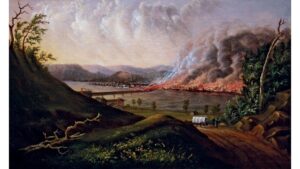
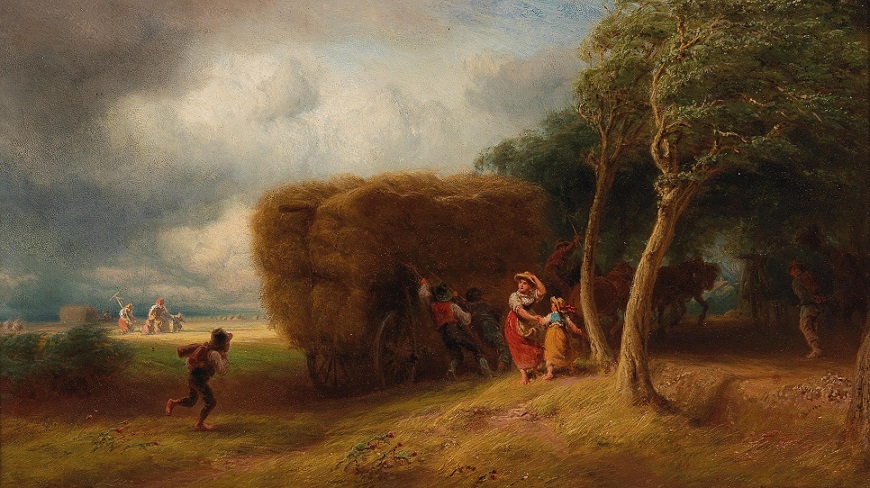
Across western skies,
a long, dark array of clouds:
the storm approaches.

.

.

Parnassus

O, God, he saw the awesome summit rising up ahead,
surprising in its beauty, fearsome in its dire dread.
It rose up higher than surrounding forms—that rounded mount—
above the town, there at its foot, so brown, but radiant.

O, how he longed to climb Parnassus, up its nasty slopes,
much harder, arduous, than he had ever once supposed.
Though picturesque and stunning, it was likewise dangerous:
those jagged, rugged crags, like devil love or angel lust.

Orpheus and the Muses shared its airy atmosphere,
but just as well its limestone and the bauxite mining there.
Though one may come to meet with Pegasus on its grand heights,
thigh-goring boars and howling wolves are just as likely sights.

.

.

Bruce Dale Wise is a poet currently residing in Texas. 

ShareTweetPin
The Society of Classical Poets does not endorse any views expressed in individual poems or commentary.
Read Our Comments Policy Here

RandomPoems

‘Underfoot’ and Other Japanese-style Poems by Benjamin Daniel Lukey
Beauty

‘Underfoot’ and Other Japanese-style Poems by Benjamin Daniel Lukey

November 22, 2024

. Underfoot Fescue and clover: A luxuriant carpet Fit for a king’s feet. . . Murder They take noisy flight,...

Haiku Competition 2022
Haiku

Haiku Competition 2022

June 29, 2022

. Our 2023 Haiku Competition is on now HERE. WHO Anyone in the world, of any age or background, may...

Next Post
Video Poem for the 2022 Beijing Winter Olympics: ‘Sinister Symbols’ by James A. Tweedie

Video Poem for the 2022 Beijing Winter Olympics: 'Sinister Symbols' by James A. Tweedie

‘Allentown Nights’ and Other Poetry by Sally Cook

'Allentown Nights' and Other Poetry by Sally Cook

A Poem for Peng Shuai, by Douglas J. Lanzo

A Poem for Peng Shuai, by Douglas J. Lanzo

Comments 3

  1. C.B. Anderson says:
    5 years ago

    Bauxite?! I never took you as a lover of aluminum, but I will take you on your word.

    Reply
    • BDW says:
      5 years ago

      as per Acwiles Berude:

      Bauxite, the primary raw material in aluminum production, is rich in the elements of the periodic table. Aluminum is lightweight, durable, ductile, corrosion-resistant, and reusable. Unlike plastic, it’s not toxic. It’s used in mobile phones and tablet PCs. Imagine how much modern industry, like construction, automotive, aviation, energy, food, etc., depends on it.

      Aluminum, a silvery white metal, is the 13th element in the periodic table, the most widespread metal on Earth (8%+), and 3rd most common chemical element on the planet, after oxygen and silicon. Side note: rubies and sapphires are corundum, i. e., aluminum oxide (Al2O3).

      I suspect Mr. Anderson thinks poets should embrace their worlds, as so many have over the eons, for example, Homer, from which L12 of this dodeca of last month comes. I like the idea of thinking of Mount Parnassus, both from a NewMillennial perspective and a Classical point of view.

      Reply
  2. BDW says:
    5 years ago

    As with nearly all of the poetry of Acwiles Berude, as well as the poetry of hundreds of others in that school associated with the writer Bruce Dale Wise, it travels under the radar. So it is never surprising to find little critical analysis of their works, and even less appreciation. This generation has little interest in what he, or they, are trying to do. Be that as it may, it is still interesting for some of us to look at what they are trying to do.

    Taking any poem at random, say, “Parnassus”, gives us a partial view of what that author is up to. First off, the poem is a dodeca in iambic heptameter, a structure and a line, one finds the poet regularizing in his poetry of the last decade. He uses both, as Ezra Pound (1885-1972) put it, “to break the pentameter”, or at least its hold, as Wise himself , who has written countless sonnets and poems with iambic pentameter, seems to want to do. What he, and other members of his school, are fond of is creating new linguistic structures, in this case, the dodeca, a twelve lined poem of iambic heptameter, subsumed in English under the banner of the ballad.

    In the first stanza, the opening line, though reminiscent of Gerard Manley Hopkins (1844-1889) in its alliteration, length and vista, does not use sprung rhythm; in fact, the poet shows his allegiance to what T. S. Eliot (1888-1965) called “good prose”. The second couplet, again, though reminiscent of Emily Dickinson (1830-1886) in its use of dashes, slant rhyme, internal rhyme and tempo, shows that same allegiance. It’s as though he is touching the edges of those 19th century poets, but bringing them into the NewMillenium in a prosaic form.

    In the second stanza, we see that continued allegiance, but understated, as in the manner of Ernest Hemingway (1899-1961), where the topic is poetry itself. The surprising adjective “nasty” takes one immediately into Wise’s Slant; poetry is harsh, “hard…arduous…dangerous”—not a common theme in either PostModernist or NewMillennial verse; in fact, with free verse the common stream of the moem, the opposite is believed. This is indeed ironic for a poet striving after the virtues of prose. After the gutteral, palatal, voiced-stop alliteration, he concludes the stanza with a simile of lateral-dental oxymoronic imagery.

    The last stanza begins with the echoic sound “O”, but here is placed within the Ancient preHomeric poet’s name accompanied by the inspirational goddesses of literature, art, and science. The focus on Ancient Greece continues in line three; but the second line brings poetic flight, the “airy atmosphere” back to the Ground, with the mention of limestone and bauxite mining, and finally the Greek mountain itself to its fauna, “thigh-goring boars and howling wolves”, both noted by Homer (c. 750 BC) in his epics.

    More could be said about the poetic elements, structure and theme, which unite fluidly in this lyric, and which show both his link to Ancient Classical literature and to NewMillennial visions, but the main point here is noting his articulation of another new platform on which to perform.

    Reply

Leave a Reply Cancel reply

Your email address will not be published. Required fields are marked *


  1. Justin Dasher on ‘This Too Shall Pass’ and Other Poetry by Justin DasherSeptember 3, 2026

    Margaret, thank you! I appreciate how detailed your reading is (and that you picked up on the cor ad cor…

  2. Justin Dasher on ‘This Too Shall Pass’ and Other Poetry by Justin DasherSeptember 3, 2026

    Thank you Paul!

  3. Justin Dasher on ‘This Too Shall Pass’ and Other Poetry by Justin DasherSeptember 3, 2026

    D.R., thank you for reading! I love that image as well, the phrase used for sleep in the Genesis passage…

  4. Justin Dasher on ‘This Too Shall Pass’ and Other Poetry by Justin DasherSeptember 3, 2026

    Thank you for the kind words!

  5. Roy Eugene Peterson on ‘The Estuary’: A Poem by Jeff EardleySeptember 3, 2026

    Jeff, this is one of those perfectly attuned poems comparing the seemingly far off tides with life.

Subscribe to Daily Poems

Enter your email address to subscribe to this blog and receive notifications of new posts by email.

Join 1,634 other subscribers

Recent Poems

  • ‘The Estuary’: A Poem by Jeff Eardley
  • ‘A World Without the Wednesday Child’: A Poem by Kimberly Fore
  • The 2026 Society of Classical Poets International Poetry Competition
  • The 2026 SCP International High School Poetry Competition
  • ‘Realistic Reflections’ and Other Poetry by Anna J. Arredondo
  • ‘China Made’: A Poem by Theresa Werba
  • ‘The Savage Moon’ and Other Poetry by Brian Yapko
  • Poetry Book Review: Love Found, Yearned For, and Lost by James A. Tweedie
  • ‘When Opportunity Knocks’: A Poem by Roy E. Peterson
  • ‘Legend of the Griffin’: A Poem by Iryna Hall
  • ‘Government Issue’ and Other Poems by Joseph S. Salemi
  • ‘Chaucer Announces His Desire to Retire’: A Poem by Paul A. Freeman
  • ‘Advantages of Restaurants’ and Other Poems by Russel Winick
  • ‘Bone China’: A Poem by Mary Gardner
  • ‘On the Death of One Too Young to Die’: A Poem by Jeffrey Essmann
  • ‘This Too Shall Pass’ and Other Poetry by Justin Dasher
  • ‘Humdrum and Harum-Scarum’: A Lecture on Free Verse, by Robert Bridges (1922)
  • ‘Unrest On the Floodplain’: A Poem by Bhikkhu Nyanasobhano
  • ‘Latitude and Loss’: A Poem by Martin Briggs
  • ‘Act III’ and Other Poetry by C.B. Anderson
  • ‘God’s Funeral’: A Poem by James Sale
  • ‘Star Festival’: A Poem by Margaret Coats
  • ‘Song of the Frog Princess’: A Poem by Scharlie Meeuws
  • ‘The Odyssey: Nolan and Solot Compared’: An Essay by Michael Curtis
  • ‘Solitude’ and Other Poems by Mary Jane Myers
  • ‘The River Not Taken’ and Other Poetry by Brian Yapko
  • ‘Totentanz’: A Poem by James A. Tweedie
  • ‘In God Is Our Trust’: A Poem by Roy E. Peterson
  • ‘Confession’: A Poem by Jeffrey Essmann
  • ‘Religious Poetry, and Religionist Poetry’: An Essay by Joseph S. Salemi

Categories

  • Acrostic
  • Alexandroid
  • Alliterative
  • Art
  • Best Poems
  • Blank Verse
  • Chant Royal
  • Classical Poets Live
  • Clerihew
  • Covid-19
  • Deconstructing Communism
  • Educational
  • Epic
  • Epigrams and Proverbs
  • Essays
    • Interviews with Poets
    • Poetry Reviews
  • Featured
  • From the Society
  • Great Poets
    • Dante Alighieri
    • Edgar Allan Poe
    • Emily Dickinson
    • Geoffrey Chaucer
    • Henry Wadsworth Longfellow
    • Homer
    • John Keats
    • John Milton
    • Robert Frost
    • William Blake
    • William Shakespeare
    • William Wordsworth
  • Human Rights in China
  • Limerick
  • Love Poems
  • Music
  • Pantoum
  • Performing Arts
  • Poetry
    • Beauty
    • Children's Poems
    • Culture
    • Ekphrastic
    • Found Poems
    • High School Poets
    • Humor
    • Riddles
  • Poetry Challenge
  • Poetry Contests
  • Poetry Forms
    • Curtal Sonnet
    • Haiku
  • Poetry Readings
  • Rhupunt
  • Rondeau
  • Rondeau Redoublé
  • Rondel
  • Rubaiyat
  • Sapphic Verse
  • Satire
  • Science
  • Sestina
  • Shape Poems
  • Short Stories
  • Song Lyrics
  • Sonnet
  • Symposium
  • Terrorism
  • Terza Rima
  • The Environment
  • Translation
  • Triolet
  • Video
  • Villanelle

Quick Links

  • About Us
  • Submit Poetry
  • Become a Member
  • Members List
  • Support the Society
  • Advertisement Placement
  • Comments Policy
  • Terms of Use

Welcome Back!

Login to your account below

Forgotten Password?

Retrieve your password

Please enter your username or email address to reset your password.

Log In
No Result
View All Result
  • Poems
    • Beauty
    • Culture
    • Satire
    • Humor
    • Children’s
    • Art
    • Ekphrastic
    • Epic
    • Epigrams and Proverbs
    • Human Rights in China
    • Music
    • Performing Arts
    • Riddles
    • Science
    • Song Lyrics
    • The Environment
    • The Raven
    • Found Poems
    • High School Poets
    • Terrorism
    • Covid-19
  • Poetry Forms
    • Sonnet
    • Haiku
    • Limerick
    • Villanelle
    • Rondeau
    • Pantoum
    • Sestina
    • Triolet
    • Acrostic
    • Alexandroid
    • Alliterative
    • Blank Verse
    • Chant Royal
    • Clerihew
    • Rhupunt
    • Rondeau Redoublé
    • Rondel
    • Rubaiyat
    • Sapphic Verse
    • Shape Poems
    • Terza Rima
  • Great Poets
    • Geoffrey Chaucer
    • Emily Dickinson
    • Homer
    • Henry Wadsworth Longfellow
    • Dante Alighieri
    • John Keats
    • John Milton
    • Edgar Allan Poe
    • William Shakespeare
    • William Wordsworth
    • William Blake
    • Robert Frost
  • Love Poems
  • Contests
  • SCP Academy
    • Educational
    • Teaching Classical Poetry—A Guide for Educators
    • Poetry Forms
    • The SCP Journal
    • Books

© 2025 SCP. WebDesign by CODEC Prime.