• Submit Poetry
  • Support SCP
  • About Us
  • Members
  • Join
Saturday, July 18, 2026
Society of Classical Poets
  • Poems
    • Beauty
    • Culture
    • Satire
    • Humor
    • Children’s
    • Art
    • Ekphrastic
    • Epic
    • Epigrams and Proverbs
    • Human Rights in China
    • Music
    • Performing Arts
    • Riddles
    • Science
    • Song Lyrics
    • The Environment
    • The Raven
    • Found Poems
    • High School Poets
    • Terrorism
    • Covid-19
  • Poetry Forms
    • Sonnet
    • Haiku
    • Limerick
    • Villanelle
    • Rondeau
    • Pantoum
    • Sestina
    • Triolet
    • Acrostic
    • Alexandroid
    • Alliterative
    • Blank Verse
    • Chant Royal
    • Clerihew
    • Rhupunt
    • Rondeau Redoublé
    • Rondel
    • Rubaiyat
    • Sapphic Verse
    • Shape Poems
    • Terza Rima
  • Great Poets
    • Geoffrey Chaucer
    • Emily Dickinson
    • Homer
    • Henry Wadsworth Longfellow
    • Dante Alighieri
    • John Keats
    • John Milton
    • Edgar Allan Poe
    • William Shakespeare
    • William Wordsworth
    • William Blake
    • Robert Frost
  • Love Poems
  • Contests
  • SCP Academy
    • Educational
    • Teaching Classical Poetry—A Guide for Educators
    • Poetry Forms
    • The SCP Journal
    • Books
No Result
View All Result
Society of Classical Poets
  • Poems
    • Beauty
    • Culture
    • Satire
    • Humor
    • Children’s
    • Art
    • Ekphrastic
    • Epic
    • Epigrams and Proverbs
    • Human Rights in China
    • Music
    • Performing Arts
    • Riddles
    • Science
    • Song Lyrics
    • The Environment
    • The Raven
    • Found Poems
    • High School Poets
    • Terrorism
    • Covid-19
  • Poetry Forms
    • Sonnet
    • Haiku
    • Limerick
    • Villanelle
    • Rondeau
    • Pantoum
    • Sestina
    • Triolet
    • Acrostic
    • Alexandroid
    • Alliterative
    • Blank Verse
    • Chant Royal
    • Clerihew
    • Rhupunt
    • Rondeau Redoublé
    • Rondel
    • Rubaiyat
    • Sapphic Verse
    • Shape Poems
    • Terza Rima
  • Great Poets
    • Geoffrey Chaucer
    • Emily Dickinson
    • Homer
    • Henry Wadsworth Longfellow
    • Dante Alighieri
    • John Keats
    • John Milton
    • Edgar Allan Poe
    • William Shakespeare
    • William Wordsworth
    • William Blake
    • Robert Frost
  • Love Poems
  • Contests
  • SCP Academy
    • Educational
    • Teaching Classical Poetry—A Guide for Educators
    • Poetry Forms
    • The SCP Journal
    • Books
No Result
View All Result
Society of Classical Poets
No Result
View All Result
Home Poetry Culture

‘Black Holes’ and Other Poetry by Beth Houston

September 6, 2025
in Culture, Poetry, Science
A A
8
poems 'Black Holes' and Other Poetry by Beth Houston

.

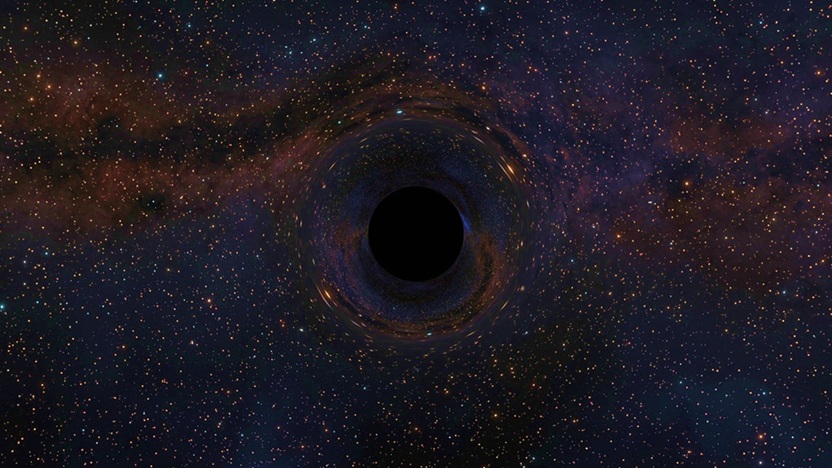
Black Holes

Some say the universe is full of holes
That suck in all that is. At warp-speed, gone.
One wonders where was space-time goes. Like souls,
perhaps, through portals to some wide-eyed dawn.
Or through a trap door dumped below death’s hell
No speck escapes, no world, no life, no droid
Or god or mystic mage that casts this spell
That populates the mechanistic void.
Some hope light’s washed-out ash at least sifts back
As junk recycled, slough repurposed, light
Reborn as infant stars pushed through a crack.
Here, even zero names a something, right?
If part of us escapes black’s undertow
We’ll never know. Or will we, do we, though?

.

.

The Temple

The priest shoves past the blasted temple door
Behind which cinders camouflage the dead
Who last night bought his peace, his wine-soaked bread,
But now sought refuge from a raging war.
Which oligarch of church and state keeps score
With holy battle’s chalked up corpses fed
Jihad, Crusade, or Pogrom? Whose wars spread
Through fire, through blood-blessed sacrifice? All pour
Through mothers’ hands blind faith consumed with hate
That consecrates the kill. Each lie collides
With its competing sacred lie to sate
Deep greed that thrives on strapped-on suicides
Exploding altars to its foe’s estate,
Ensuring God’s eternal will abides.

.

.

Beth Houston has taught writing at ten universities and colleges in California and Florida. She has published a couple hundred poems in dozens of literary journals. She edits the Extreme formal poetry anthologies. www.bethhouston.com

ShareTweetPin
The Society of Classical Poets does not endorse any views expressed in individual poems or commentary.
Read Our Comments Policy Here

RandomPoems

‘The Mystery of the Amber Room’ by Brian Yapko
Art

‘The Mystery of the Amber Room’ by Brian Yapko

November 4, 2021

. A fabled place adrift in history Which makes the spirit ache for what was lost; A masterpiece destroyed in...

‘The Untrue Artist’ and Other Poetry by Reid McGrath
Beauty

‘Guilty Thoughts’: Three Poems by Peter Hartley

November 26, 2021

. Guilty Thoughts I Through idle thoughts alone if no-one knows, We cannot hurt someone who never will Find out....

Next Post
‘Hope’: A Petrarchan Sonnet by Jeffrey Essmann

'Hope': A Petrarchan Sonnet by Jeffrey Essmann

‘To the Venezuelan Drug Runners Sleeping in the Sea’: A Poem by Joseph S. Salemi

'To the Venezuelan Drug Runners Sleeping in the Sea': A Poem by Joseph S. Salemi

A Poem for Third Anniversary of Queen Elizabeth II’s Death, by Cynthia Erlandson

A Poem for Third Anniversary of Queen Elizabeth II's Death, by Cynthia Erlandson

Comments 8

  1. Joseph S. Salemi says:
    10 months ago

    Two very nice sonnets, and in perfectly regular meter, as we would naturally expect from Beth Houston.

    “Black Holes” presents a series of observations and speculations on a still very mysterious subject. The sestet is especially effective, since it presents possibilities and unanswered questions in a way that provokes further thought on the matter, rather than merely giving the speaker’s opinions.

    I find “The Temple” somewhat more difficult to unravel completely, though much of the sonnet is clear. The first quatrain, as I understand it, presents a priest entering (or leaving?) a war-wrecked temple in which there are corpses of those of his congregation who had entered the place as sanctuary from violence. The second quatrain rhetorically asks for the identification of whatever forces of authority–church or state–brought about these deaths.

    The sestet gives us the speaker’s view, which is that the competing lies and greed of different belligerents, using “blood-blessed sacrifice” and “blind faith,” have brought about this mayhem and destruction. The hate generated by this propaganda passes through “mothers’ hands” to their children. The words “strapped-on suicides” seems to suggest suicide bombers who kill themselves by strapping explosives to their bodies, perhaps in a temple or at an altar of the enemy.

    The last line is, in my view, deeply sarcastic, expressing the opinion given by such bombers (on whatever side they may be on) that they are doing “God’s eternal will.”

    Reply
    • Beth Houston says:
      10 months ago

      Joseph, I appreciate your insightful comments.
      I don’t really like to discuss my own poems: Why rob the reader of the pleasure (and pain?) of interpretation? But I will make a few points.
      The poem says “church and state,” not “church or state.”
      The priest shoves “past” the blasted (damaged) door from the outside. Behind (from the priest’s viewpoint) the door are dead people—not necessarily of his congregation, perhaps many, perhaps few—that have come there specifically for refuge and that the previous night had sought peace (etc.) from the priest, whether during an evening service or privately.
      Perhaps that helps. Thanks for your perspective!

      Reply
  2. Paul A. Freeman says:
    10 months ago

    ‘Black Holes’ is a pretty amazing piece of work, Beth. I felt like I was watching the astronaut in ‘Interstellar’ trying to communicate with his daughter between dimensions. Like the mentioned film, spellbinding and more accessible and revealing on a second and third viewings.

    “One wonders where ‘was’ space-time goes.” That’s about my favourite line – it’s both profound and thought-provoking!

    The Temple is a phenomenal poem. That “…church and state keeps score / With holy battle’s chalked up corpses fed” is so relevant today, as it was in the Middle Ages and onwards with history’s ‘Jihad, Crusade, or Pogrom’. Just look at what’s going on in the Middle East, in Eastern Europe (Putin claiming to be on an anti-Nazification crusade) and, strangely, the resurgence of ‘taking the cross’ in England, purportedly for patriotic/nationalistic rather than religious reasons.

    I was particularly taken by the line, ‘Each lie collides / With its competing sacred lie’ (to justify intolerance) and by the irony of the final line.

    These are two complex poems that beg to be reread and examined both in the light of history and current events.

    Brilliant stuff, Beth.

    Reply
    • Beth Houston says:
      10 months ago

      Paul, thanks for the feedback. That’s a clever connection between “Black Holes” and Interstellar!
      Yes, the oligarchy’s exploitation of church/state is so historically ubiquitous that it almost seems to be ingrained in our DNA. I don’t think it is, though. (I’m writing more sonnets on this theme.)
      I greatly appreciate your appreciation. All the best.

      Reply
  3. Russel Winick says:
    10 months ago

    These poems both blew me away! I reserve the right to comment more fully after I have read each of them several times more, as they both require and deserve. Thank you for sharing them with us.

    Reply
    • Beth Houston says:
      10 months ago

      Russel, I’m delighted that these poems resonated. Like any poet, I’d love for you to “comment more fully.”

      Reply
  4. Susan Jarvis Bryant says:
    10 months ago

    Beth, it’s great to see you here with two admirably wrought, thought-provoking sonnets. “The Temple” is my favorite of the two, and particularly powerful in its striking imagery and entanglement of religion, violence, and political power. To me, it appears to highlight the corruption of faith by greed and ideology. The allusions to crusades, jihads, and pogroms lend it historical grounding, while at the same time, speaking to the tragic events of today’s world. To me “The Temple” reads as a lament and a scorching indictment of humanity’s repeated cycles of sanctified violence and the words haunt me… all down to your magical touch. Both poems leave me with many unanswered questions, and for a woman of immense curiosity, that’s a good thing. Thank you!

    Reply
    • Beth Houston says:
      10 months ago

      Susan, great to see you here, too. Thanks for your thoughtful comments—which of course I would expect of you.
      I appreciate your use of words like entanglement, corruption, tragic, violence. This dark side is a perpetual aspect of the world we live in–so far. I’m hopeful (perhaps misguidedly) that we can collectively progress beyond the seductions of greed, hubris, and meanspiritedness.
      Here’s to change! Cheers.

      Reply

Leave a Reply Cancel reply

Your email address will not be published. Required fields are marked *

  1. Joseph S. Salemi on National Poetry Month Limerick ChallengeJuly 18, 2026

    The music got cranked up, da capo— The audience cried “Oh please, stop, Oh! The prize-winning song Is just half-assed…

  2. Joseph S. Salemi on National Poetry Month Limerick ChallengeJuly 18, 2026

    Susan, that is very timely. He that hath ears to hear, let him hear.

  3. Susan Jarvis Bryant on ‘My Pyjamas!’ and Other Poems by Susan Jarvis BryantJuly 18, 2026

    Jan, thank you very much for your encouraging comment. I'm so glad you enjoyed the poems and especially glad they…

  4. James Sale on ‘The 51st State’: A Poem by James SaleJuly 18, 2026

    Not quite a win, Theresa, but thank you for the thought, and congratulations yourself on your "Finalist' status for your…

  5. Susan Jarvis Bryant on National Poetry Month Limerick ChallengeJuly 18, 2026

    A Slippery Victory There once was a prize for the best, Though merit was hardly the test. The winner was…

Subscribe to Daily Poems

Enter your email address to subscribe to this blog and receive notifications of new posts by email.

Join 1,594 other subscribers

Recent Poems

  • Winners and Rankings of The Great American Poetry Competition
  • ‘The Gold Star Mother’: A Poem by Gerard Maritato
  • ‘An American Dash’: A Poem by Linda Ellis
  • ‘The Anonymous Soldier’: A Poem by Lucy Lind
  • ‘For Those We Never Meet’: A Poem by Aneesh Agarwal
  • ‘Ben Franklin’s Copper Fugio Cent’: A Poem by Geoffrey Smagacz
  • Three Brief Poems by Luxorius, Translated by Joseph S. Salemi
  • ‘The American Spirit’: A Poem by Dusty Grein
  • ‘The Ballad of Zebulon Pike’: A Poem by M.D. Skeen
  • ‘We Are the Ones’ and Other Poetry by Cheryl Corey
  • ‘My Pyjamas!’ and Other Poems by Susan Jarvis Bryant
  • ‘A Snowy Egret’: A Poem by Bruce Dale Wise
  • ‘The Swearing-in of Calvin Coolidge’: A Sonnet by Robert W. Crawford
  • ‘Ballad of the Sequoia’: A Poem by Lauren V. Leon
  • ‘The 51st State’: A Poem by James Sale
  • ‘La Uva’ (The Grape): A Poem by Michael Pietrack
  • ‘There’s Blood that Flows Within the Stripes’: A Poem by Lauren V. Leon
  • ‘Birdsong’: A Poem by Jeffrey Essmann
  • ‘The Melody That Lingers On’ and Other Poetry by John McPherson
  • ‘American Dreams’: A Poem by Adam Sedia
  • ‘An American Fabius’: A Poem by John Hernandez
  • ‘Vernal Clinic’ and Other Poetry by C.B. Anderson
  • ‘Omaha Beach’ and Other Poetry by Bradford Skow
  • ‘Music to Part the Veil’: A Poem by T.M. Moore
  • ‘A Gentleman’s Guide to Losing a War’ and Other Poetry by Arnon Peterson
  • ‘Black Shuck’: A Poem by Martin Briggs
  • ‘When the Last World War II Veteran Passes Away’: A Poem by N.S. Boone
  • ‘A Fallow Year at Worthy Farm’: A Poem by Paul A. Freeman
  • ‘Outstanding in Afghanistan’: A Poem by Jared S. Chang
  • ‘250 More’: A Poem by Miguel Moreno

Categories

  • Acrostic
  • Alexandroid
  • Alliterative
  • Art
  • Best Poems
  • Blank Verse
  • Chant Royal
  • Classical Poets Live
  • Clerihew
  • Covid-19
  • Deconstructing Communism
  • Educational
  • Epic
  • Epigrams and Proverbs
  • Essays
    • Interviews with Poets
    • Poetry Reviews
  • Featured
  • From the Society
  • Great Poets
    • Dante Alighieri
    • Edgar Allan Poe
    • Emily Dickinson
    • Geoffrey Chaucer
    • Henry Wadsworth Longfellow
    • Homer
    • John Keats
    • John Milton
    • Robert Frost
    • William Blake
    • William Shakespeare
    • William Wordsworth
  • Human Rights in China
  • Limerick
  • Love Poems
  • Music
  • Pantoum
  • Performing Arts
  • Poetry
    • Beauty
    • Children's Poems
    • Culture
    • Ekphrastic
    • Found Poems
    • High School Poets
    • Humor
    • Riddles
  • Poetry Challenge
  • Poetry Contests
  • Poetry Forms
    • Curtal Sonnet
    • Haiku
  • Poetry Readings
  • Rhupunt
  • Rondeau
  • Rondeau Redoublé
  • Rondel
  • Rubaiyat
  • Sapphic Verse
  • Satire
  • Science
  • Sestina
  • Shape Poems
  • Short Stories
  • Song Lyrics
  • Sonnet
  • Symposium
  • Terrorism
  • Terza Rima
  • The Environment
  • Translation
  • Triolet
  • Video
  • Villanelle

Quick Links

  • About Us
  • Submit Poetry
  • Become a Member
  • Members List
  • Support the Society
  • Advertisement Placement
  • Comments Policy
  • Terms of Use

Welcome Back!

Login to your account below

Forgotten Password?

Retrieve your password

Please enter your username or email address to reset your password.

Log In
No Result
View All Result
  • Poems
    • Beauty
    • Culture
    • Satire
    • Humor
    • Children’s
    • Art
    • Ekphrastic
    • Epic
    • Epigrams and Proverbs
    • Human Rights in China
    • Music
    • Performing Arts
    • Riddles
    • Science
    • Song Lyrics
    • The Environment
    • The Raven
    • Found Poems
    • High School Poets
    • Terrorism
    • Covid-19
  • Poetry Forms
    • Sonnet
    • Haiku
    • Limerick
    • Villanelle
    • Rondeau
    • Pantoum
    • Sestina
    • Triolet
    • Acrostic
    • Alexandroid
    • Alliterative
    • Blank Verse
    • Chant Royal
    • Clerihew
    • Rhupunt
    • Rondeau Redoublé
    • Rondel
    • Rubaiyat
    • Sapphic Verse
    • Shape Poems
    • Terza Rima
  • Great Poets
    • Geoffrey Chaucer
    • Emily Dickinson
    • Homer
    • Henry Wadsworth Longfellow
    • Dante Alighieri
    • John Keats
    • John Milton
    • Edgar Allan Poe
    • William Shakespeare
    • William Wordsworth
    • William Blake
    • Robert Frost
  • Love Poems
  • Contests
  • SCP Academy
    • Educational
    • Teaching Classical Poetry—A Guide for Educators
    • Poetry Forms
    • The SCP Journal
    • Books

© 2025 SCP. WebDesign by CODEC Prime.