• Submit Poetry
  • Support SCP
  • About Us
  • Members
  • Join
Thursday, May 14, 2026
Society of Classical Poets
  • Poems
    • Beauty
    • Culture
    • Satire
    • Humor
    • Children’s
    • Art
    • Ekphrastic
    • Epic
    • Epigrams and Proverbs
    • Human Rights in China
    • Music
    • Performing Arts
    • Riddles
    • Science
    • Song Lyrics
    • The Environment
    • The Raven
    • Found Poems
    • High School Poets
    • Terrorism
    • Covid-19
  • Poetry Forms
    • Sonnet
    • Haiku
    • Limerick
    • Villanelle
    • Rondeau
    • Pantoum
    • Sestina
    • Triolet
    • Acrostic
    • Alexandroid
    • Alliterative
    • Blank Verse
    • Chant Royal
    • Clerihew
    • Rhupunt
    • Rondeau Redoublé
    • Rondel
    • Rubaiyat
    • Sapphic Verse
    • Shape Poems
    • Terza Rima
  • Great Poets
    • Geoffrey Chaucer
    • Emily Dickinson
    • Homer
    • Henry Wadsworth Longfellow
    • Dante Alighieri
    • John Keats
    • John Milton
    • Edgar Allan Poe
    • William Shakespeare
    • William Wordsworth
    • William Blake
    • Robert Frost
  • Love Poems
  • Contests
  • SCP Academy
    • Educational
    • Teaching Classical Poetry—A Guide for Educators
    • Poetry Forms
    • The SCP Journal
    • Books
No Result
View All Result
Society of Classical Poets
  • Poems
    • Beauty
    • Culture
    • Satire
    • Humor
    • Children’s
    • Art
    • Ekphrastic
    • Epic
    • Epigrams and Proverbs
    • Human Rights in China
    • Music
    • Performing Arts
    • Riddles
    • Science
    • Song Lyrics
    • The Environment
    • The Raven
    • Found Poems
    • High School Poets
    • Terrorism
    • Covid-19
  • Poetry Forms
    • Sonnet
    • Haiku
    • Limerick
    • Villanelle
    • Rondeau
    • Pantoum
    • Sestina
    • Triolet
    • Acrostic
    • Alexandroid
    • Alliterative
    • Blank Verse
    • Chant Royal
    • Clerihew
    • Rhupunt
    • Rondeau Redoublé
    • Rondel
    • Rubaiyat
    • Sapphic Verse
    • Shape Poems
    • Terza Rima
  • Great Poets
    • Geoffrey Chaucer
    • Emily Dickinson
    • Homer
    • Henry Wadsworth Longfellow
    • Dante Alighieri
    • John Keats
    • John Milton
    • Edgar Allan Poe
    • William Shakespeare
    • William Wordsworth
    • William Blake
    • Robert Frost
  • Love Poems
  • Contests
  • SCP Academy
    • Educational
    • Teaching Classical Poetry—A Guide for Educators
    • Poetry Forms
    • The SCP Journal
    • Books
No Result
View All Result
Society of Classical Poets
No Result
View All Result
Home Poetry Beauty

‘Boasted Viridian’ and Other Poetry by Alec Ream

May 28, 2018
in Beauty, Poetry
A A
12
poems 'Boasted Viridian' and Other Poetry by Alec Ream

.

.

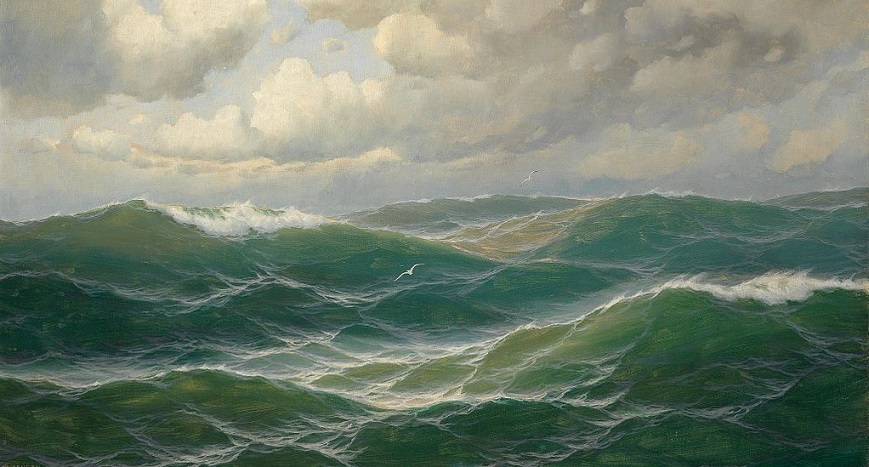
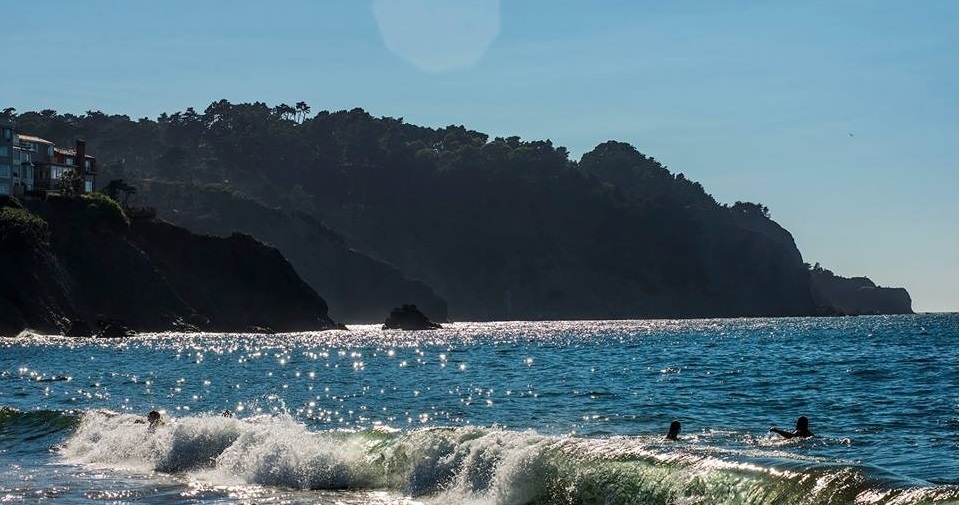
Boasted Viridian

Said Viridian Green to Cerulean Blue,
“The waves would be boring without me and you,
The crashing unflashing, the sheen without glow,
Silver unplugged: not luminous Bro.”

.

.

Of Weeding and Air Conditioning

No facial expression announcing the work
No special confession “look I didn’t shirk”
You weed up a sweat, when weeding’s the thing
And when you get wet, the breeze feels like Spring

.

.

Colonist

I was the white man, hailing from Spain
To colonies sailing for riches and gain
I was from Britain and wanted for land,
My home but an island surrounded by sand

I was the Dutchman, and long overrun,
I wanted a place and my time in the sun
And I was the Frenchman, and I sought romance,
And the swirling and mixing, the whirl of the dance

Yet also went Christ, He came with the Word –
Much abused, like the Author who wrote it. Absurd:
That the stench that this world mostly ends up to be,
Still brings them unflinchingly closer to Me.

.

.

Alec Ream is a writer living in Virginia. His poetic work and creative fiction have been widely published. A member of the Demosthenian Literary Society at UGA, he wrote on Lookout Mountain, and continued to write, lecture and work for Delta Kappa Epsilon HQ. He was first published reading to the pledge class of Michigan DKE, in Ann Arbor in 2008. Recently, his poem Green Fire was read at the Washington Literary Society & Debating Union at UVA.

ShareTweetPin
The Society of Classical Poets does not endorse any views expressed in individual poems or commentary.
Read Our Comments Policy Here

RandomPoems

A Poem for Independence Day, July 4th, 2021, by Roy E. Peterson
Culture

‘American Dream Where Did You Go?’: A July 4th Poem by Roy E. Peterson

July 4, 2024

. American Dream Where Did You Go? American dream, where did you go? Visions grand that I loved so? Land...

‘Diomedes Speaks’ by James Sale
Beauty

‘Diomedes Speaks’ by James Sale

April 29, 2020

We meet Diomedes, the Greek hero of Troy, trapped in a flame with Odysseus in Canto 26 of Dante’s Inferno....

Next Post
A Translation of ‘Longing’ by Friedrich Schiller

A Translation of 'Longing' by Friedrich Schiller

‘The Seabirds’ and Other Poetry by David Paul Behrens

'The Seabirds' and Other Poetry by David Paul Behrens

‘The Book of Kells’ by Jane Blanchard

'The Book of Kells' by Jane Blanchard

Comments 12

  1. E. V. says:
    8 years ago

    I liked reading your poems. You create lovely imagery and employ good meter.

    Reply
  2. C.B. Anderson says:
    8 years ago

    These looked a bit unfinished to me. There were many fine points (if you are into fine points) of diction & meter and grammar that could be improved. But overall, I liked your approach. Although this venue sometimes seems like a playground, it never hurts to get downright serious with technical realities. Your poems had so many pyrrhic feet that I almost lost the overarching meter. It’s your choice, of course, but you need to decide whether or not you wish to write metrical poems, or some kind of hybrid. As always, my comments are subject to further comments, and I am certainly not immune to contradiction, or saved from incisive criticism. For me, it’s a question of whether we are playing hardball or softball.

    Reply
    • E. V. says:
      8 years ago

      For it to be either, we’d need an oppositional dynamic, and here I thought we were all Team SCP! But, seriously, C.B., no one doubts your literary skill. With the time and effort you invest in criticizing your fellow poets, you might as well complete the thought with a mini-tutorial. For example, take an offending line, explain what the problem is and provide an improved version of it. I’m not sure if I also speak for other writers (or if I only speak for myself), but I don’t mind some criticism if (IF!!!) it teaches me something new that I can use to improve my technique. Of course, I have no right to “volunteer” A.K.R., whose work I thought was delightful. If you need a willing volunteer, feel free to take a swipe at my recent poem, “The Revving Roar of Rolling Thunder”, pub’d 5/25/18. (The extreme use of alliteration in the title was intentional.) There’s no need to feel sorry for a writer who’s learning and improving; pity the writer who can’t improve.

      Reply
    • Leo Yankevich says:
      8 years ago

      E. V.,

      You can improve by reading the poems of the great poets of the past and by spending less time online asking for advice. You need to go old-school to learn craft and literary sensibility.

      The sooner you start the better, that is, the younger the better. If you can’t write well when you are 23 you won’t write well when you are 50. This is my theory. I do know, though, that there are exceptions.

      Nothing irritates me more than a buffoon who thinks he is going to paint or write well, without having abstained sensibility and craft in youth. Talent helps too, but few have that.

      Reply
      • E. V. says:
        8 years ago

        No, Leo, my motive wasn’t to “go online asking for advice”; I don’t submit work until I’m confident in its merit. My motive, Leo, was to encourage C.B. to change his strategy from “bash & burn” to “constructive criticism”. It seems some commenters revel in the “criticizing” without any regard for the adjective “constructive”.

        As for your 2nd paragraph, I disagree! Yes, talent does need to be nurtured, and getting an early start helps, but it is absolutely ludicrous to hold the position that talented people can’t blossom past a certain age.

        Obviously, we both have different opinions about who the buffoons are!

        E. V.

        Reply
  3. Leo Yankevich says:
    8 years ago

    I enjoyed the third poem, even though the rhymes in the final couplet are not very good. Me/be is as lame as it gets. Regarding the metre: I hear 4 strong beats a line. So this is sprung rhythm/accentual, metre.

    Reply
  4. AKR says:
    8 years ago

    the words me and be ought to be pedestrian, or lame – that will do – in that they refer to the gnostic and excruciatingly humble point of the poem: colonialism brought the Christian gospel mixed with much suffering and evil.

    Reply
  5. AKR says:
    8 years ago

    friendly note: I’m chiefly writing for right-to-left-of-center fraternity brothers in Berkeley and Michigan DKE circa 2008 plus Infantry/Cav from Hawija 2005. Sidney Lanier (more hybrid than I) meant allot to me growing up. This is low toned and humble but clearly and firmly true.

    Reply
  6. Leo Yankevich says:
    8 years ago

    AKR,

    Ah, so the “gnosis” of your poem is at its core, a gnosis which only libtards can comprehend? Let us remember that sans Christianity and European culture and morality, the natives would still be ripping out one anothers’ hearts and claiming to be the first open-heart surgeons.

    Reply
  7. Lew Icarus Bede says:
    8 years ago

    Mr. Ream’s “Colonist” is a remarkable poem. Like Mr. Yankevich I enjoyed it; the poem is tuneful, clear, and nicely done. What is amazing is that in such a tightly wrought work, the poem could easily be tightened further in the manner Mr. Anderson has suggested, with very little tweaking. I think a period would go nice at the end of the second stanza. Also, in the second stanza’s second couplet the rampant ‘ands’ could be reined in, but this is only a stylistic choice.

    One of the effective techniques Mr. Ream uses in his anapestic tetrametres is the halting, pulling out of an unaccented syllable, in the first line of each stanza, to highlight his message, and to tie the stanzas neatly together. In addition, his enjambment in the final stanza reminds me of Lermontov’s enjambment in the last stanza of “The Rock”. Despite Mr. Yankevich’s forthright assertion, I actually very much like the couplet be/Me at the end of the poem; because it contrasts aurally and meaningfully with the alliterative pair of stench/unflinchingly. In fact, Mr. Ream’s final couplet, although not iambic, as Emily Dickinson nearly always was, reminds me of Emily Dickinson’s poetic practice, the play of polysyllabic and monosyllabic diction, and the powerful, single-word punch at the end. Surprisingly, at least to me, what came to my mind was the following predominantly anapestic-tetrametre stanza in Julia Ward Howe’s “The Battle Hymn of the Republic”:

    “In the beauty of the lilies Christ was born across the sea,
    With a glory in His bosom that transfigures you and me:
    As he died to make men holy, let us die to make men free,
    While God is marching on.”

    She ended her stanza firmly with an iambic trimetre.

    In the contretemps between Mr. Ream and Mr. Yankevich, though I agree historically with both Mr. Yankevich’s forcible sentence, “Let us remember that sans Christianity and European culture and morality, the natives would still be ripping out one anothers’ [sic] hearts and claiming to be the first open-heart surgeons”, and Mr. Ream’s own “excruciatingly humble point…colonialism brought the Christian gospel mixed with much suffering and evil”, I find “Colonist” is above such pedestrian remarks. Though perhaps not as metrically precise as Ms. Holbrook’s moving blank-verse sonnet “What Happened in Las Vegas” or Mr. Wilson’s almost-scientific “Pika”, it too displays heightened poetic worth and noteworthy talent. It seems, in my mind at least, to adumbrate real artistic merit in this playground venue.

    [Note: I prefer referring to works in italics, but they don’t transfer to the commentary; I may forget quotation marks. In addition to other battles of the moment, I am fighting grammatical niceties, mainly British and American. Now I know that we all make typing errors, and that’s to be expected on first write-throughs, which is my modus operandi; but not only am I struggling against various national punctuations, but also the purposes and placements of various marks; so I apologize for any sensibilities I may offend. But there it is. Ah, Cummings.]

    Reply
  8. Leo Yankevich says:
    8 years ago

    Lew Icarus Bede (Bruce Wise),

    You may be right about the last line, however I still believe it could be better. I wouldn’t say it is gnostic, but rather manichaean.

    Reply
  9. Cause Bewilder says:
    8 years ago

    1. What language: hybrid, pyrrhic, Manichaean. I need a gnomic key; or perhaps the metrical theories of Sidney Lanier, or Poe.

    2. As Poe once stated: “Even in the most musical lines we find the succession interrupted.” Take the iambic poem “Al Aaraaf”: How does one mark the following line?

    “Headlong hitherward o’er the starry sea.”

    I see the iambic ending, but the beginning is hardly iambic.

    3. I wonder what Mr. Anderson would make of Poe’s “The Bells” or Lanier’s “The Marshes of Glynn”, etc. It seems I remember reading somewhere that Poe claimed there were no pyrrhic feet.

    4. Anyway, I do see Lanier in “Boasted Viridian”; but generally I think Lanier’s theories are assailable.

    5. Finally here is a semi-southern poem…for a semi-southerner.

    Missive to James Smith

    I would have thought the Southern Poetry Review
    would have appreciated works on Faulkner, Lee,
    and Flannery; but then I guess it isn’t true
    tradition means a lot down South. Apparently,
    in Dixie too, old times are quite forgotten. Rise,
    oh, shades of Poe, Timrod, and Simms! roll round your tombs.
    And Lanier, Ryan, Hayne, and Tabb just roll your eyes.
    Oh, ye inhabiters of insubstantial rooms!
    Call forth the rolls! Call Cable, Cawein, Horton, Page!
    Roll out the sheets of Harris, Allen, and Murfree.
    Expunge all ghastly memories of Time and Age.
    We’re dead to all those faint, pale ghosts of History.
    Oh, let us keep our heads within this moment’s sand.
    The world will little note, nor long remember, and…

    Reply

Leave a Reply Cancel reply

Your email address will not be published. Required fields are marked *

  1. Joseph S. Salemi on ‘On An Old Photograph’: A Poem by Joseph S. SalemiMay 13, 2026

    Thank you very much, Paul. I suppose the most frightening thing about monumental historical changes is that, when we are…

  2. C.B. Anderson on Winners of Friends of Falun Gong 2026 Poetry Competition AnnouncedMay 13, 2026

    This is grim stuff, no doubt, and the idea of becoming friendly with the Chicoms is antithetical to any moral…

  3. Roy Eugene Peterson on ‘Creation of Mom’: A Mother’s Day Poem by Roy E. PetersonMay 13, 2026

    Thank you, Paul for the commendation!

  4. Paul Freeman on ‘On An Old Photograph’: A Poem by Joseph S. SalemiMay 13, 2026

    I enjoyed how the everyday events of life are placed against the monumental changes happening around the parents and the…

  5. Paul Freeman on ‘Creation of Mom’: A Mother’s Day Poem by Roy E. PetersonMay 13, 2026

    I enjoyed the joyousness of this poem, Roy. It starts with a fun stanza to set the tone and gallops…

Subscribe to Daily Poems

Enter your email address to subscribe to this blog and receive notifications of new posts by email.

Join 1,593 other subscribers

Recent Poems

  • Winners of Friends of Falun Gong 2026 Poetry Competition Announced
  • A Poem on Coach “Black Mike” Castronis from Athens Y Camp, by Alec Ream
  • A Poem on the Zambian National Park Mosi-oa-Tunya, by Paul A. Freeman
  • ‘Creation of Mom’: A Mother’s Day Poem by Roy E. Peterson
  • ‘Spontaneous Conjugal Combustion’ and Other Poems by Susan Jarvis Bryant
  • ‘The Man in the Moon Was a Very Round Man’: A Poem by Lauren V. Leon
  • ‘Fibromytrauma’: A Poem by Golan Shahar
  • ‘A Lonely Sliver’: A Poem by Katie Tencza
  • ‘Higher Gas Prices Are a Small Price to Pay’: An Iran War Poem by Mark F. Stone
  • ‘Always Ahead’: A Poem by Scharlie Meeuws
  • ‘Hamlet’s Lawyer’ and Other Poetry by Brian Yapko
  • ‘On An Old Photograph’: A Poem by Joseph S. Salemi
  • ‘Faust Foresees His End’: A Poem by Martin Briggs
  • ‘À la Carte’ and Other Poetry by C.B. Anderson
  • ‘Where the Sweet Bluebonnets Bloom’: A Poem by Roy E. Peterson
  • ‘The Waters’: A Poem by Margaret Brinton
  • ‘The Pinnacle of Poetry’ and Other Poems by Russel Winick
  • The First American Sonnets: An Essay on David Humphreys, by Margaret Coats
  • ‘The Holy Rollers on Poetry’: A Poem by Joseph S. Salemi
  • Sappho’s ‘Poem 1’ Translated by Bruce Phenix
  • ‘The Cautionary Tale of Phone Addicted Mimi’: A Poem by Paul A. Freeman
  • ‘Look Away’: A Poem for America’s 250th Anniversary, by Roger Crane
  • ‘Sunday Morning in Canada’: A Poem by Jeffrey Essmann
  • ‘Bean’: A Poem by Jan Mennite
  • ‘The Swan’s Song ’: A Poem for Shakespeare’s Birthday, by Susan Jarvis Bryant
  • ‘The Gravedigger’: A Poem by Marie Burdett
  • ‘Waiting for the Perfect Man’: A Poem by Janice Canerdy
  • ‘The George-A-Saurus’ and Other Poetry by Brian Yapko
  • ‘When Asked: What’s Your Favorite Season?’: A Poem by Paul Millan  
  • ‘The Last At-Bat of Lyndon Braun’: A Poem by Michael Pietrack

Categories

  • Acrostic
  • Alexandroid
  • Alliterative
  • Art
  • Best Poems
  • Blank Verse
  • Chant Royal
  • Classical Poets Live
  • Clerihew
  • Covid-19
  • Deconstructing Communism
  • Educational
  • Epic
  • Epigrams and Proverbs
  • Essays
    • Interviews with Poets
    • Poetry Reviews
  • Featured
  • From the Society
  • Great Poets
    • Dante Alighieri
    • Edgar Allan Poe
    • Emily Dickinson
    • Geoffrey Chaucer
    • Henry Wadsworth Longfellow
    • Homer
    • John Keats
    • John Milton
    • Robert Frost
    • William Blake
    • William Shakespeare
    • William Wordsworth
  • Human Rights in China
  • Limerick
  • Love Poems
  • Music
  • Pantoum
  • Performing Arts
  • Poetry
    • Beauty
    • Children's Poems
    • Culture
    • Ekphrastic
    • Found Poems
    • High School Poets
    • Humor
    • Riddles
  • Poetry Challenge
  • Poetry Contests
  • Poetry Forms
    • Curtal Sonnet
    • Haiku
  • Poetry Readings
  • Rhupunt
  • Rondeau
  • Rondeau Redoublé
  • Rondel
  • Rubaiyat
  • Sapphic Verse
  • Satire
  • Science
  • Sestina
  • Shape Poems
  • Short Stories
  • Song Lyrics
  • Sonnet
  • Symposium
  • Terrorism
  • Terza Rima
  • The Environment
  • Translation
  • Triolet
  • Video
  • Villanelle

Quick Links

  • About Us
  • Submit Poetry
  • Become a Member
  • Members List
  • Support the Society
  • Advertisement Placement
  • Comments Policy
  • Terms of Use

Welcome Back!

Login to your account below

Forgotten Password?

Retrieve your password

Please enter your username or email address to reset your password.

Log In
No Result
View All Result
  • Poems
    • Beauty
    • Culture
    • Satire
    • Humor
    • Children’s
    • Art
    • Ekphrastic
    • Epic
    • Epigrams and Proverbs
    • Human Rights in China
    • Music
    • Performing Arts
    • Riddles
    • Science
    • Song Lyrics
    • The Environment
    • The Raven
    • Found Poems
    • High School Poets
    • Terrorism
    • Covid-19
  • Poetry Forms
    • Sonnet
    • Haiku
    • Limerick
    • Villanelle
    • Rondeau
    • Pantoum
    • Sestina
    • Triolet
    • Acrostic
    • Alexandroid
    • Alliterative
    • Blank Verse
    • Chant Royal
    • Clerihew
    • Rhupunt
    • Rondeau Redoublé
    • Rondel
    • Rubaiyat
    • Sapphic Verse
    • Shape Poems
    • Terza Rima
  • Great Poets
    • Geoffrey Chaucer
    • Emily Dickinson
    • Homer
    • Henry Wadsworth Longfellow
    • Dante Alighieri
    • John Keats
    • John Milton
    • Edgar Allan Poe
    • William Shakespeare
    • William Wordsworth
    • William Blake
    • Robert Frost
  • Love Poems
  • Contests
  • SCP Academy
    • Educational
    • Teaching Classical Poetry—A Guide for Educators
    • Poetry Forms
    • The SCP Journal
    • Books

© 2025 SCP. WebDesign by CODEC Prime.