• Submit Poetry
  • Support SCP
  • About Us
  • Members
  • Join
Tuesday, May 12, 2026
Society of Classical Poets
  • Poems
    • Beauty
    • Culture
    • Satire
    • Humor
    • Children’s
    • Art
    • Ekphrastic
    • Epic
    • Epigrams and Proverbs
    • Human Rights in China
    • Music
    • Performing Arts
    • Riddles
    • Science
    • Song Lyrics
    • The Environment
    • The Raven
    • Found Poems
    • High School Poets
    • Terrorism
    • Covid-19
  • Poetry Forms
    • Sonnet
    • Haiku
    • Limerick
    • Villanelle
    • Rondeau
    • Pantoum
    • Sestina
    • Triolet
    • Acrostic
    • Alexandroid
    • Alliterative
    • Blank Verse
    • Chant Royal
    • Clerihew
    • Rhupunt
    • Rondeau Redoublé
    • Rondel
    • Rubaiyat
    • Sapphic Verse
    • Shape Poems
    • Terza Rima
  • Great Poets
    • Geoffrey Chaucer
    • Emily Dickinson
    • Homer
    • Henry Wadsworth Longfellow
    • Dante Alighieri
    • John Keats
    • John Milton
    • Edgar Allan Poe
    • William Shakespeare
    • William Wordsworth
    • William Blake
    • Robert Frost
  • Love Poems
  • Contests
  • SCP Academy
    • Educational
    • Teaching Classical Poetry—A Guide for Educators
    • Poetry Forms
    • The SCP Journal
    • Books
No Result
View All Result
Society of Classical Poets
  • Poems
    • Beauty
    • Culture
    • Satire
    • Humor
    • Children’s
    • Art
    • Ekphrastic
    • Epic
    • Epigrams and Proverbs
    • Human Rights in China
    • Music
    • Performing Arts
    • Riddles
    • Science
    • Song Lyrics
    • The Environment
    • The Raven
    • Found Poems
    • High School Poets
    • Terrorism
    • Covid-19
  • Poetry Forms
    • Sonnet
    • Haiku
    • Limerick
    • Villanelle
    • Rondeau
    • Pantoum
    • Sestina
    • Triolet
    • Acrostic
    • Alexandroid
    • Alliterative
    • Blank Verse
    • Chant Royal
    • Clerihew
    • Rhupunt
    • Rondeau Redoublé
    • Rondel
    • Rubaiyat
    • Sapphic Verse
    • Shape Poems
    • Terza Rima
  • Great Poets
    • Geoffrey Chaucer
    • Emily Dickinson
    • Homer
    • Henry Wadsworth Longfellow
    • Dante Alighieri
    • John Keats
    • John Milton
    • Edgar Allan Poe
    • William Shakespeare
    • William Wordsworth
    • William Blake
    • Robert Frost
  • Love Poems
  • Contests
  • SCP Academy
    • Educational
    • Teaching Classical Poetry—A Guide for Educators
    • Poetry Forms
    • The SCP Journal
    • Books
No Result
View All Result
Society of Classical Poets
No Result
View All Result
Home Poetry Beauty

Four Poems on Writing, by C.B. Anderson

October 22, 2020
in Beauty, Culture, Humor, Poetry, Villanelle
A A
22
poems Four Poems on Writing, by C.B. Anderson


Vocations

Always there are things we should be doing;
Others, though, are better left unfinished.
Also, there are ends well worth pursuing;
Likewise, goals that leave a wight diminished.

Everybody wants to be successful
Launching some sublunary endeavor,
Or to be a mild receptive vessel
Filled with God’s amazing grace forever.

Often we just do as we’re instructed,
Hoping for a paycheck on a weekly
Schedule, from which taxes are deducted—
Thefts that we submit to rather meekly.

Poets, now, are odd because they’re working
Sans the prospect of remuneration.
No one wants to be accused of shirking
Duties self-assigned that spark creation.


Apostasy

To show, it’s said, is better than to tell,
Some sound advice that’s easy to forget.
If tautly metered, formal verse is swell,

So long as readers aren’t condemned to dwell
On Grandma or the author’s favorite pet.
To show, it’s said, is better than to tell,

And formal poets do it just as well
As those who play the game without a net.
If tautly metered, formal verse is swell,

But so is singing “Farmer in the Dell”
Or getting out from underneath a debt.
To show, it’s said, is better than to tell,

Yet sometimes even formalists must spell
The very meaning out, to their regret.
Though tautly metered formal verse is swell,

I’d rather die today and burn in hell
(This is a promise, not an idle threat.)
Than write another proper villanelle.


Ars Longa, Vita Brevis

Since Art is long and Life is short,
Unflaggingly, a thousand strong,
We grab our pens and so report
For duty in the field of song.

Here on the battleground of Lyric
A victory is never Pyrrhic.

If Art were short and Life were long,
So many lines we would abort
If any word there sounded wrong
Or lacked the power to transport.


Conjugations

for any poet who believes good grammar is non-essential

Unwittingly, the teacher lied
When spelling out the verbal tenses,
And up until the day he died
He shrank from coming to his senses.

He lay upon his garret bed
To rest his torso and his brain;
He wondered where his mind had fled
And whether Pound had likewise lain.

The lemmings wont to follow rules
Looked priggish from where he was lying—
A congeries of utter fools
Who’ve never learned old norms are dying.

He laid his textbooks on the floor,
Confounded by their pedantry;
“To study language nevermore,”
He mused, “will be the remedy.

“I’ll torture English as I please,
Lay waste to all that writers cherish.
Precision is a fell disease
That must be cured. Let grammar perish!”


C.B. Anderson was the longtime gardener for the PBS television series, The Victory Garden.  Hundreds of his poems have appeared in scores of print and electronic journals out of North America, Great Britain, Ireland, Austria, Australia and India.  His collection, Mortal Soup and the Blue Yonder was published in 2013 by White Violet Press

ShareTweetPin
The Society of Classical Poets does not endorse any views expressed in individual poems or commentary.
Read Our Comments Policy Here

RandomPoems

‘Beauty’ and Other Poems by Shindy Cai
Beauty

‘Beauty’ and Other Poems by Shindy Cai

August 3, 2024

. Beauty Flowers are the faded stars that fall from silver skies, Raindrops are the sacred tears that leak from...

‘Classical Camouflaged’ and Other Poems by James Ph. Kotsybar
Beauty

‘Classical Camouflaged’ and Other Poems by James Ph. Kotsybar

June 11, 2022

. Classical Camouflaged __It begins, like all prose poems today, with a bit of narrated diary, as though it were...

Next Post
‘Why Tens of Millions Support President Trump’ by Mark F. Stone

'Why Tens of Millions Support President Trump' by Mark F. Stone

20 Riddles by Evan Mantyk

20 Riddles by Evan Mantyk

Essay: ‘Portrait of a Millennial Art Student’ by Sally Cook

Essay: 'Portrait of a Millennial Art Student' by Sally Cook

Comments 22

  1. Susan Jarvis Bryant says:
    6 years ago

    C.B. Thanks to you, I have two exquisite treasures to add to my collection jar – “sublunary” is my new luminous gem of a word and “wight” is supreme. I can’t wait to use “wight”!

    I love poems about the creative process, and these are particularly engaging, especially the very-nearly-a-villanelle, which could be improved by replacing the “dwelling on Grandma” line. As you well know, everyone loves a good Grandma poem! It has also inspired this wight (hurray!) to write a poem about her favorite pet – Dwight, a white-tailed kite.

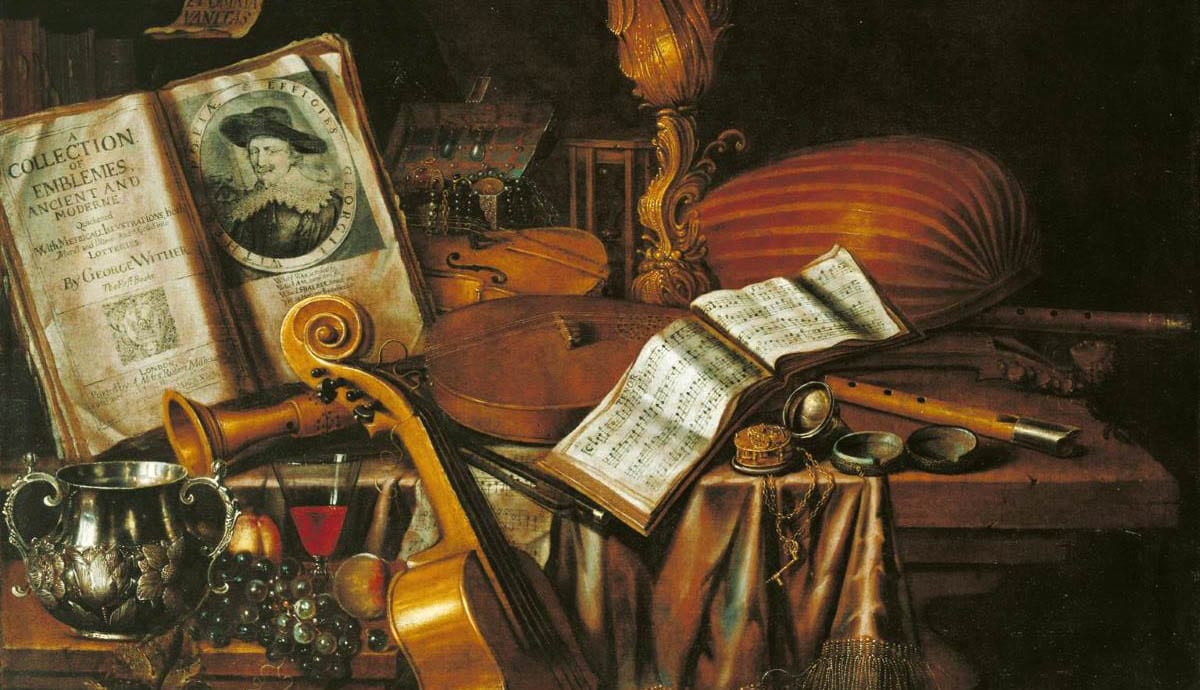
    Thank you for my morning smile! The accompanying picture of Erato goes beautifully with your work.

    Reply
    • C.B. Anderson says:
      6 years ago

      Well, Susan, it’s always my pleasure to add new vocabulary items. “Wight” is especially useful when a word such as “person” or “human” or “mortal” doesn’t fit the meter. You should know, however, that many editors despise poems about the writing process, and are not shy about expressing this sentiment up front.

      A wight (or a kite) named Dwight? God forfend! Eisenhower must be rolling in his grave. Evan, of course, is entirely responsible for the accompanying artwork, for which I thank him. Liking Grandma or cat poems is entirely a matter of taste. Someday I might get to share with you my great grandmother and cat poems I wrote many long years ago.

      Reply
  2. Julian D. Woodruff says:
    6 years ago

    “Congeries” is terrific, too.
    C.B. [i.e., Mr. Anderson], my hat is off to you.

    Reply
    • C.B. Anderson says:
      6 years ago

      “Congeries” is a useful word, Julian, because it affords a metrical possibility that many of its synonyms do not. But keep your hat on, because I’m not quite done yet.

      Reply
      • Julian D. Woodruff says:
        6 years ago

        By no means thinking that you’re done,
        C.B. The phrase is simply one
        Well known to me from Schumann, who
        Used it in praising Chopin’s Opus 2.

        Reply
  3. Joe Tessitore says:
    6 years ago

    “Burn in hell” and “villanelle” is a gem of a rhyme!

    Reply
    • C.B. Anderson says:
      6 years ago

      I thought you’d like that, Joe. But be assured that my promise never to write another villanelle expires at the end of this poem. Stay safe in NYC. It’s a ghost town, I hear, and let not your own ghost be among them — unless you’re just out for some Halloween fun.

      Reply
      • Joe Tessitore says:
        6 years ago

        Far be it from me to disagree with you and our president, but I think the city is more a combination of the Wild West and the Walking Dead.

        Reply
  4. Cynthia Erlandson says:
    6 years ago

    I love your idea of reporting “for duty in the field of song”! I think all poetry should be musical in some way, or ways. “And whether Pound had likewise lain” is quite humorous, too!

    Reply
    • C.B. Anderson says:
      6 years ago

      Yes, Cynthia, there seems to be some ambiguity when it comes to the meanings of “lyric,” “lyrics,” & “song.” It’s not my fault, and I tried to take advantage of the circumstance. I’m sure that Pound is quite “cozy” in his new eternal abode.

      Reply
  5. Joseph S. Salemi says:
    6 years ago

    These are really immaculately crafted poems. The sheer elegance, the perfect command of proper English, the graceful meter and rhyme — the poems are pure Kip Anderson.

    I love the villanelle, but I agree that we have too many of them. It takes a master’s level of poetic skill to write a really good one. A slapdash, quickly written villanelle is excruciating to read.

    Has anyone noticed in “Conjugations” how the poet has written quatrains 1, 3, and 5 with intertwined masculine and feminine rhymes, while writing 2 and 4 with uniform masculine rhymes? A great poet like Anderson doesn’t just count syllables and make rhymes at random — he has an overarching structure that goes beyond that. Let me stoop to vulgarity, and quote a long-gone relative. He would have said that it makes the poem “tighter than a duck’s arse — and that’s waterproof.”

    Reply
    • C.B. Anderson says:
      6 years ago

      Well shucks (to avoid yet another vulgarity), Joseph, I’ve said before that you understand my writing better than I understand it myself, and you are correct in observing that I try to manage masculine/feminine end rhymes in a systematic balanced fashion. I cannot help but do it — it’s my nature. But jeezus, I didn’t expect even you to pick up on that.

      Reply
  6. David Paul Behrens says:
    6 years ago

    A good means of expanding one’s vocabulary is to read C.B. Anderson’s poetry, with a dictionary close at hand. If you desire food for thought, these poems are a smorgasbord!

    Reply
    • C.B. Anderson says:
      6 years ago

      Apparently, David Paul, you are not one of those dogs unable to learn a new trick. Dictionaries are invaluable.

      Reply
  7. Jared Carter says:
    6 years ago

    Salud, Kip!

    Reply
  8. James A. Tweedie says:
    6 years ago

    C.B. The word “elegance” comes to mind as I parse and ponder your poetry—not elegance in a baroque sense (which tends to encrust and encumber far to much formal poetry) but elegance in the simple sense, as in the delicacy of a mincing measured step in a minuet. In short, lyrics that are both lyrical and lyric simultaneously. The use of feminine endings throughout in “Vocations” is a good example of what I mean by “elegance”—which for some reason reminds me of the definition of an English gentleman as being one who uses the butter knife when he dines alone.

    However you choose to describe it, you’ve got it.

    Elegance.

    Reply
    • C.B. Anderson says:
      6 years ago

      Thanks, Jared. And bottoms up!

      Reply
    • C.B. Anderson says:
      6 years ago

      Well, James, in this case every line of the poem is trochaic, and so feminine end rhymes are appropriate, if not necessary. I sometimes wish I could twist syntax the way other writers have done so successfully (Dylan Thomas comes to mind), but I find that I am more comfortable using plain simple English. I think our language has an inherent musicality that requires little supererogatory adornment.

      Reply
  9. David Watt says:
    6 years ago

    C.B., I always look forward to the incorporation of less commonly used words into your poetry, such as congeries and wight.

    Joe S. has correctly highlighted your skillful use of feminine and masculine rhyme endings in “Conjugations”. You give the impression of ‘working without a net’ because the plan and structure underpinning your poems never intrudes on the finished piece.

    Reply
    • C.B. Anderson says:
      6 years ago

      David, I think it was Robert Frost who objected to “free” verse by saying that writing in that style would be like playing tennis without a net. You can be sure that I DO play with a net in place — and boundary lines as well!

      Reply
  10. C.B. Anderson says:
    6 years ago

    Thanks, Jared. And bottoms up!

    Reply
  11. Tamara Beryl Latham says:
    4 years ago

    C.B., the four poems you’ve presented clearly demonstrate your mastery of the craft of poetry. My favorites were “Apostasy” and “Conjugations.”

    This particular verse is an example of your natural wit.

    He lay upon his garret bed
    To rest his torso and his brain;
    He wondered where his mind had fled
    And whether Pound had likewise lain.

    Your style reminds me a little of Harvey Stanbrough, who wrote a few books on grammar in poetry, as well as formal verse.

    The line (below) in Harvey’s poetry book, “Residua, On Love and War and Other Fallacies,” where he was admonishing a critic, reminds me of something you might write.

    “your train of thought has long since lost its track.” 🙂

    In case I’ve failed to mention, you too are one of the great writers on this board. Thanks for sharing your wonderful poetry. 🙂

    Reply

Leave a Reply Cancel reply

Your email address will not be published. Required fields are marked *

  1. Susan Jarvis Bryant on ‘Spontaneous Conjugal Combustion’ and Other Poems by Susan Jarvis BryantMay 12, 2026

    Yael, it's always lovely to hear from you. I'm thrilled you enjoyed the poems. I did have people in mind…

  2. Susan Jarvis Bryant on ‘Spontaneous Conjugal Combustion’ and Other Poems by Susan Jarvis BryantMay 12, 2026

    James, I'm hoping you enjoyed the villanelle and it hasn't worried you too much. Mike often suffers for my art…

  3. Susan Jarvis Bryant on ‘Spontaneous Conjugal Combustion’ and Other Poems by Susan Jarvis BryantMay 12, 2026

    C.B. I just love the Queen Elizabeth II and Welsh Corgis scene... I would have claimed that one had I…

  4. Susan Jarvis Bryant on ‘Spontaneous Conjugal Combustion’ and Other Poems by Susan Jarvis BryantMay 12, 2026

    Brian, thank you so much for this extremely generous and perceptive reading. I thoroughly appreciate your take on my quirky…

  5. Susan Jarvis Bryant on ‘Spontaneous Conjugal Combustion’ and Other Poems by Susan Jarvis BryantMay 12, 2026

    Awww, what a beautiful comment, Mark. It's lovely to hear of the joys of marital bliss after 53 years. Congratulations!…

Subscribe to Daily Poems

Enter your email address to subscribe to this blog and receive notifications of new posts by email.

Join 1,593 other subscribers

Recent Poems

  • A Poem on Coach “Black Mike” Castronis from Athens Y Camp, by Alec Ream
  • A Poem on the Zambian National Park Mosi-oa-Tunya, by Paul A. Freeman
  • ‘Creation of Mom’: A Mother’s Day Poem by Roy E. Peterson
  • ‘Spontaneous Conjugal Combustion’ and Other Poems by Susan Jarvis Bryant
  • ‘The Man in the Moon Was a Very Round Man’: A Poem by Lauren V. Leon
  • ‘Fibromytrauma’: A Poem by Golan Shahar
  • ‘A Lonely Sliver’: A Poem by Katie Tencza
  • ‘Higher Gas Prices Are a Small Price to Pay’: An Iran War Poem by Mark F. Stone
  • ‘Always Ahead’: A Poem by Scharlie Meeuws
  • ‘Hamlet’s Lawyer’ and Other Poetry by Brian Yapko
  • ‘On An Old Photograph’: A Poem by Joseph S. Salemi
  • ‘Faust Foresees His End’: A Poem by Martin Briggs
  • ‘À la Carte’ and Other Poetry by C.B. Anderson
  • ‘Where the Sweet Bluebonnets Bloom’: A Poem by Roy E. Peterson
  • ‘The Waters’: A Poem by Margaret Brinton
  • ‘The Pinnacle of Poetry’ and Other Poems by Russel Winick
  • The First American Sonnets: An Essay on David Humphreys, by Margaret Coats
  • ‘The Holy Rollers on Poetry’: A Poem by Joseph S. Salemi
  • Sappho’s ‘Poem 1’ Translated by Bruce Phenix
  • ‘The Cautionary Tale of Phone Addicted Mimi’: A Poem by Paul A. Freeman
  • ‘Look Away’: A Poem for America’s 250th Anniversary, by Roger Crane
  • ‘Sunday Morning in Canada’: A Poem by Jeffrey Essmann
  • ‘Bean’: A Poem by Jan Mennite
  • ‘The Swan’s Song ’: A Poem for Shakespeare’s Birthday, by Susan Jarvis Bryant
  • ‘The Gravedigger’: A Poem by Marie Burdett
  • ‘Waiting for the Perfect Man’: A Poem by Janice Canerdy
  • ‘The George-A-Saurus’ and Other Poetry by Brian Yapko
  • ‘When Asked: What’s Your Favorite Season?’: A Poem by Paul Millan  
  • ‘The Last At-Bat of Lyndon Braun’: A Poem by Michael Pietrack
  • ‘The Perpetual Battle’ and Other Poetry by Adam Sedia

Categories

  • Acrostic
  • Alexandroid
  • Alliterative
  • Art
  • Best Poems
  • Blank Verse
  • Chant Royal
  • Classical Poets Live
  • Clerihew
  • Covid-19
  • Deconstructing Communism
  • Educational
  • Epic
  • Epigrams and Proverbs
  • Essays
    • Interviews with Poets
    • Poetry Reviews
  • Featured
  • From the Society
  • Great Poets
    • Dante Alighieri
    • Edgar Allan Poe
    • Emily Dickinson
    • Geoffrey Chaucer
    • Henry Wadsworth Longfellow
    • Homer
    • John Keats
    • John Milton
    • Robert Frost
    • William Blake
    • William Shakespeare
    • William Wordsworth
  • Human Rights in China
  • Limerick
  • Love Poems
  • Music
  • Pantoum
  • Performing Arts
  • Poetry
    • Beauty
    • Children's Poems
    • Culture
    • Ekphrastic
    • Found Poems
    • High School Poets
    • Humor
    • Riddles
  • Poetry Challenge
  • Poetry Contests
  • Poetry Forms
    • Curtal Sonnet
    • Haiku
  • Poetry Readings
  • Rhupunt
  • Rondeau
  • Rondeau Redoublé
  • Rondel
  • Rubaiyat
  • Sapphic Verse
  • Satire
  • Science
  • Sestina
  • Shape Poems
  • Short Stories
  • Song Lyrics
  • Sonnet
  • Symposium
  • Terrorism
  • Terza Rima
  • The Environment
  • Translation
  • Triolet
  • Video
  • Villanelle

Quick Links

  • About Us
  • Submit Poetry
  • Become a Member
  • Members List
  • Support the Society
  • Advertisement Placement
  • Comments Policy
  • Terms of Use

Welcome Back!

Login to your account below

Forgotten Password?

Retrieve your password

Please enter your username or email address to reset your password.

Log In
No Result
View All Result
  • Poems
    • Beauty
    • Culture
    • Satire
    • Humor
    • Children’s
    • Art
    • Ekphrastic
    • Epic
    • Epigrams and Proverbs
    • Human Rights in China
    • Music
    • Performing Arts
    • Riddles
    • Science
    • Song Lyrics
    • The Environment
    • The Raven
    • Found Poems
    • High School Poets
    • Terrorism
    • Covid-19
  • Poetry Forms
    • Sonnet
    • Haiku
    • Limerick
    • Villanelle
    • Rondeau
    • Pantoum
    • Sestina
    • Triolet
    • Acrostic
    • Alexandroid
    • Alliterative
    • Blank Verse
    • Chant Royal
    • Clerihew
    • Rhupunt
    • Rondeau Redoublé
    • Rondel
    • Rubaiyat
    • Sapphic Verse
    • Shape Poems
    • Terza Rima
  • Great Poets
    • Geoffrey Chaucer
    • Emily Dickinson
    • Homer
    • Henry Wadsworth Longfellow
    • Dante Alighieri
    • John Keats
    • John Milton
    • Edgar Allan Poe
    • William Shakespeare
    • William Wordsworth
    • William Blake
    • Robert Frost
  • Love Poems
  • Contests
  • SCP Academy
    • Educational
    • Teaching Classical Poetry—A Guide for Educators
    • Poetry Forms
    • The SCP Journal
    • Books

© 2025 SCP. WebDesign by CODEC Prime.