• Submit Poetry
  • Support SCP
  • About Us
  • Members
  • Join
Tuesday, May 12, 2026
Society of Classical Poets
  • Poems
    • Beauty
    • Culture
    • Satire
    • Humor
    • Children’s
    • Art
    • Ekphrastic
    • Epic
    • Epigrams and Proverbs
    • Human Rights in China
    • Music
    • Performing Arts
    • Riddles
    • Science
    • Song Lyrics
    • The Environment
    • The Raven
    • Found Poems
    • High School Poets
    • Terrorism
    • Covid-19
  • Poetry Forms
    • Sonnet
    • Haiku
    • Limerick
    • Villanelle
    • Rondeau
    • Pantoum
    • Sestina
    • Triolet
    • Acrostic
    • Alexandroid
    • Alliterative
    • Blank Verse
    • Chant Royal
    • Clerihew
    • Rhupunt
    • Rondeau Redoublé
    • Rondel
    • Rubaiyat
    • Sapphic Verse
    • Shape Poems
    • Terza Rima
  • Great Poets
    • Geoffrey Chaucer
    • Emily Dickinson
    • Homer
    • Henry Wadsworth Longfellow
    • Dante Alighieri
    • John Keats
    • John Milton
    • Edgar Allan Poe
    • William Shakespeare
    • William Wordsworth
    • William Blake
    • Robert Frost
  • Love Poems
  • Contests
  • SCP Academy
    • Educational
    • Teaching Classical Poetry—A Guide for Educators
    • Poetry Forms
    • The SCP Journal
    • Books
No Result
View All Result
Society of Classical Poets
  • Poems
    • Beauty
    • Culture
    • Satire
    • Humor
    • Children’s
    • Art
    • Ekphrastic
    • Epic
    • Epigrams and Proverbs
    • Human Rights in China
    • Music
    • Performing Arts
    • Riddles
    • Science
    • Song Lyrics
    • The Environment
    • The Raven
    • Found Poems
    • High School Poets
    • Terrorism
    • Covid-19
  • Poetry Forms
    • Sonnet
    • Haiku
    • Limerick
    • Villanelle
    • Rondeau
    • Pantoum
    • Sestina
    • Triolet
    • Acrostic
    • Alexandroid
    • Alliterative
    • Blank Verse
    • Chant Royal
    • Clerihew
    • Rhupunt
    • Rondeau Redoublé
    • Rondel
    • Rubaiyat
    • Sapphic Verse
    • Shape Poems
    • Terza Rima
  • Great Poets
    • Geoffrey Chaucer
    • Emily Dickinson
    • Homer
    • Henry Wadsworth Longfellow
    • Dante Alighieri
    • John Keats
    • John Milton
    • Edgar Allan Poe
    • William Shakespeare
    • William Wordsworth
    • William Blake
    • Robert Frost
  • Love Poems
  • Contests
  • SCP Academy
    • Educational
    • Teaching Classical Poetry—A Guide for Educators
    • Poetry Forms
    • The SCP Journal
    • Books
No Result
View All Result
Society of Classical Poets
No Result
View All Result
Home Poetry Beauty

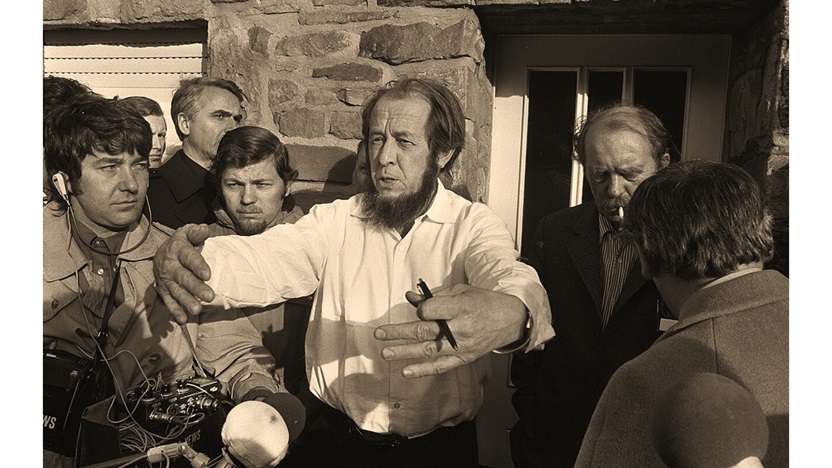
‘Look Up’: A Poem Inspired by Aleksandr Solzhenitsyn, by T.M. Moore

October 20, 2024
in Beauty, Culture, Poetry
A A
10
poems 'Look Up': A Poem Inspired by Aleksandr Solzhenitsyn, by T.M. Moore

.

Look Up

Aleksandr Solzhenitsyn on a world split apart

The prophet scorned the academic dress
of those who had invited him to their
Parnassus of the Ivy League. Why wear
their garb, when he intended not to bless

them, but to warn, and even to condemn
their way of life, their stewardship, their views
and their pretensions? Though he would refuse
their outward show, he would reveal to them

the secrets of their souls, and scorch them by
his unexpected and unwelcome theme.
Dressed in his olive jacket, he might seem
to them a kindred spirit, come to ply

them with some words of revolution, or
congratulations for a job well done.
But what the exile had to say, not one
of them expected, or had answer for.

He spoke about the world that they had made,
about its disregard of history,
its dedication to the urgency
of gaining more and more; the homage paid

to individual rights at the expense
of proven standards of morality.
He chided them, and said they could not see
that they no different were from those against

whom they presumed to stand. He said the world
was split apart, but not politically
(as everyone who heard him thought that he
might say). To their amazement, he unfurled

a different kind of world-split. On the one
hand, those who struggled for the rights of man
(as they regarded them), who had a plan
for mundane happiness, to be hard won

by politics and economics and,
if necessary, military might—
a vision of a world where every right
was granted, everyone could take his stand

on his own chosen ground, and do what he
preferred—within the bounds of law, of course.
The captive East, he argued, was no worse
or better than the West might seem to be.

Their vision was the same, although their means
diverged in many ways. Each sought to make
the most of present moments, and to take
advantage of the other, stealing scenes,

dispatching armies here and there, and when
they could, securing gains and trumpeting
their victories. Their split was not the thing
he wanted to impress on them, not then,

though he had written on that split before;
and, when they read the topic he proposed,
his high-born hosts can only have supposed
that this would be his chosen theme once more.

But it was not. The split he spoke about
was not quite au courant within the halls
of academe, amid the ivy walls
of Harvard’s hallowed ground. But with no doubt

or hesitation, he pursued his theme:
The world had, in its vanity and pride,
detached itself from God, set Him aside,
and chosen to pursue a foolish dream

of independence from the will of God.
In East and West alike, the interests of
prosperity and power rose high above
all other matters. Socialism trod

down people in the East, while in the West
a loss of will to stand for truth and right
was leaving freedom captive to a night
of deepening despair, from which the best

thoughts even of the brightest men would not
be able to deliver us. For we
had turned away from God’s morality
to seek one of our own. And we forgot

that all our rights and freedoms came to us
because we are His image-bearers. Now,
flush with the rights of man, we know not how
to live, nor whom to love, nor what to trust.

No God restrains our passions now; but more
than ever, self-restraint is our great need.
Yet neither our best efforts nor our creed
of self-reliance can our hope restore.

Can we not see that drinking from the cup
of mere autonomy and passion would
destroy us? Let us therefore do the good
and right thing and return to looking up.

.

.

T. M. Moore is Principal of The Fellowship of Ailbe, a spiritual fellowship in the Celtic Christian tradition. He and his wife and editor, Susie, make their home in the Champlain Valley of Vermont.


ShareTweetPin
The Society of Classical Poets does not endorse any views expressed in individual poems or commentary.
Read Our Comments Policy Here

RandomPoems

‘The Graveyard of My Mind’ by Phil S. Rogers
Beauty

‘The Graveyard of My Mind’ by Phil S. Rogers

March 20, 2020

  I pour myself four fingers, or maybe it is five, sit in a broken rocker and slowly close my...

‘The Cautionary Tale of Phone Addicted Mimi’: A Poem by Paul A. Freeman
Poetry

‘The Cautionary Tale of Phone Addicted Mimi’: A Poem by Paul A. Freeman

April 27, 2026

  The Cautionary Tale of Phone Addicted Mimi A girl called Mimi thought it best to give her active brain...

Next Post
‘The Mask’ and Other Poetry by Peter Venable

'The Mask' and Other Poetry by Peter Venable

‘St. George Updated’ by Susan Jarvis Bryant

'S O S': A Poem by Susan Jarvis Bryant

‘The Good Life’: A Poem by Rusty Rabon

'The Good Life': A Poem by Rusty Rabon

Comments 10

  1. Rohini says:
    2 years ago

    That was a powerful poem, well put. The longer I stay on this earth the more I see the need to ‘look up’.

    Reply
  2. Joseph S. Salemi says:
    2 years ago

    Solzhenitsyn was booed at Harvard when he made that brilliant speech, because he refused to suck up to the audience of arrogant left-liberal narcissists who were sitting before him. He told them quite bluntly that they were symptoms of a moribund, decaying West, with no more claims to moral authority than the Communist dictatorship that had persecuted and exiled him.

    Reply
  3. Margaret Coats says:
    2 years ago

    Thank you, Mr. Moore, for reminding us of Solzhenitsyn, and especially of his great speech at Harvard, which I had the privilege of hearing in person. I was then a graduate student, and had read Solzhenitsyn’s books in English since high school. To me and, I believe, to most of those present, the speech was warm, inspiring, and well-received. The great man said what you say he did, but he did not intend to scorn or scorch. He was clearly still on a spiritual journey himself, and recalled his own faults and wanderings while he criticized not only East and West at that time, but in past centuries. Such a broad perspective became more and more beautiful as Solzhenitsyn reminded us of forgotten values in history and traditional culture. Knowing his writings, I was not surprised but uplifted at his call for a return to God. I felt much affirmed as a beginning professional in literature when President Derek Bok presented the honorary degree of Litt.D. to Solzhenitsyn, both of them with smiles glowing on their faces. The last sentence in your poem best reflects my memories of that inspirational day.

    Reply
  4. Mike Bryant says:
    2 years ago

    Your poem sums up the thrust of Solzhenitsyn’s commencement address beautifully.

    A few excerpts from the New York Times article of June 9, 1978:

    CAMBRIDGE, Mass., In a commencement address at Harvard today, Aleksandr I. Solzhenitsyn left traditional sentiment to others and delivered his own bitter view of a West grown slack, pusillanimous and evil through devotion to man’s appetites instead of God’s design.
    ………
    In the tones of an evangelist excoriating sinners, he said that the West had lost its courage, that political and intellectual bureaucrats had declined into depressed passivity and perplexity while displaying weakness and cowardice.
    ………
    In the West, he said, addressing an audience of 15,000 enduring the rain in Harvard Yard, unfashionable views are condemned to obscurity. The result is “strong mass prejudices, a self‐deluding interpretation of the contemporary world, petrified armor around people’s minds.”

    I can only imagine Solzhenitsyn’s horror at the state of the world today. One thing is certain… if he were alive today he would not be invited to speak again.

    Reply
  5. Cynthia Erlandson says:
    2 years ago

    Thank you very much, Mr. Moore, for this moving narrative of what must have been quite a dramatic experience to those who heard the speech. I think the word “narrative” came to mind because you have brought a speech alive by telling it like a story with a good deal of suspense. I now want to read more Solzhenitsyn.

    Reply
    • T. M. says:
      2 years ago

      Thanks to all for your comments. We need more voices like Solzhenitsyn’s today.

      Reply
  6. Roy Eugene Peterson says:
    2 years ago

    Like Margaret, I had the privilege of being in the presence of Aleksander Solzhenitsyn. In my case he came through the U.S. Army Russian Institute in Germany before continuing on to the states. He spoke to us with a similar message, and I was then privileged to meet him. In my Russian literature class, I had to take a test on some of his works. Thank you for bringing back those memories.

    Reply
  7. Joseph S. Salemi says:
    2 years ago

    To any interested parties:

    See the comment of Jeremy Kee at The Imaginative Conservative” (August 2023) —

    Solzhenitsyn’s address at Harvard was “a speech that was greeted by a chorus of boos.”

    Reply
  8. Susan Jarvis Bryant says:
    2 years ago

    T.M., having recently read Solzhenitsyn’s “The Gulag Archipelago”, I thank you wholeheartedly for this timely and adeptly written poem that taps into the very core of a courageous, wise, and humble man I have come to admire greatly. Every telling line of your poem is significant, but these heartrending and powerful words jump out at me: “Now, / flush with the rights of man, we know not how / to live, nor whom to love, nor what to trust.” They point clearly to the huge problem we face in today’s society – an age-old problem that we should have learned from. I hope this devastating observation encourages those who relate to your words to look further than the earthly for solutions.

    Reply
  9. T. M. says:
    2 years ago

    He was a great man. His best line, I think, came in an essay entitled, “As Breathing and Consciousness Return.” He was addressing the question of how to bring down the Soviet megalith, and he insisted that all that would be necessary was for everyone who truly loved Mother Russia to take a single moral step within their own power. Think: The candlelight revolution of 1989. Lovers of this country should take note. Thanks for your kind assessment of the poem, Susan.

    Reply

Leave a Reply Cancel reply

Your email address will not be published. Required fields are marked *

  1. Susan Jarvis Bryant on ‘Spontaneous Conjugal Combustion’ and Other Poems by Susan Jarvis BryantMay 12, 2026

    Joe, I love your interpretation - as far as I'm concerned" a gold-digging young gigolo who attaches himself to a…

  2. Roy Eugene Peterson on National Poetry Month Limerick ChallengeMay 12, 2026

    Urszula, what an imaginative limerick! That is something Poe might have done! Sorry to be so late seeing this.

  3. Roy Eugene Peterson on National Poetry Month Limerick ChallengeMay 12, 2026

    Agreed, Urszula! Thank you for commenting.

  4. Joseph S. Salemi on ‘Spontaneous Conjugal Combustion’ and Other Poems by Susan Jarvis BryantMay 12, 2026

    When I was in the U.K. I heard that "poodle" could mean a henpecked or subservient husband, and by extension…

  5. Susan Jarvis Bryant on ‘Spontaneous Conjugal Combustion’ and Other Poems by Susan Jarvis BryantMay 12, 2026

    Yael, it's always lovely to hear from you. I'm thrilled you enjoyed the poems. I did have people in mind…

Subscribe to Daily Poems

Enter your email address to subscribe to this blog and receive notifications of new posts by email.

Join 1,593 other subscribers

Recent Poems

  • A Poem on Coach “Black Mike” Castronis from Athens Y Camp, by Alec Ream
  • A Poem on the Zambian National Park Mosi-oa-Tunya, by Paul A. Freeman
  • ‘Creation of Mom’: A Mother’s Day Poem by Roy E. Peterson
  • ‘Spontaneous Conjugal Combustion’ and Other Poems by Susan Jarvis Bryant
  • ‘The Man in the Moon Was a Very Round Man’: A Poem by Lauren V. Leon
  • ‘Fibromytrauma’: A Poem by Golan Shahar
  • ‘A Lonely Sliver’: A Poem by Katie Tencza
  • ‘Higher Gas Prices Are a Small Price to Pay’: An Iran War Poem by Mark F. Stone
  • ‘Always Ahead’: A Poem by Scharlie Meeuws
  • ‘Hamlet’s Lawyer’ and Other Poetry by Brian Yapko
  • ‘On An Old Photograph’: A Poem by Joseph S. Salemi
  • ‘Faust Foresees His End’: A Poem by Martin Briggs
  • ‘À la Carte’ and Other Poetry by C.B. Anderson
  • ‘Where the Sweet Bluebonnets Bloom’: A Poem by Roy E. Peterson
  • ‘The Waters’: A Poem by Margaret Brinton
  • ‘The Pinnacle of Poetry’ and Other Poems by Russel Winick
  • The First American Sonnets: An Essay on David Humphreys, by Margaret Coats
  • ‘The Holy Rollers on Poetry’: A Poem by Joseph S. Salemi
  • Sappho’s ‘Poem 1’ Translated by Bruce Phenix
  • ‘The Cautionary Tale of Phone Addicted Mimi’: A Poem by Paul A. Freeman
  • ‘Look Away’: A Poem for America’s 250th Anniversary, by Roger Crane
  • ‘Sunday Morning in Canada’: A Poem by Jeffrey Essmann
  • ‘Bean’: A Poem by Jan Mennite
  • ‘The Swan’s Song ’: A Poem for Shakespeare’s Birthday, by Susan Jarvis Bryant
  • ‘The Gravedigger’: A Poem by Marie Burdett
  • ‘Waiting for the Perfect Man’: A Poem by Janice Canerdy
  • ‘The George-A-Saurus’ and Other Poetry by Brian Yapko
  • ‘When Asked: What’s Your Favorite Season?’: A Poem by Paul Millan  
  • ‘The Last At-Bat of Lyndon Braun’: A Poem by Michael Pietrack
  • ‘The Perpetual Battle’ and Other Poetry by Adam Sedia

Categories

  • Acrostic
  • Alexandroid
  • Alliterative
  • Art
  • Best Poems
  • Blank Verse
  • Chant Royal
  • Classical Poets Live
  • Clerihew
  • Covid-19
  • Deconstructing Communism
  • Educational
  • Epic
  • Epigrams and Proverbs
  • Essays
    • Interviews with Poets
    • Poetry Reviews
  • Featured
  • From the Society
  • Great Poets
    • Dante Alighieri
    • Edgar Allan Poe
    • Emily Dickinson
    • Geoffrey Chaucer
    • Henry Wadsworth Longfellow
    • Homer
    • John Keats
    • John Milton
    • Robert Frost
    • William Blake
    • William Shakespeare
    • William Wordsworth
  • Human Rights in China
  • Limerick
  • Love Poems
  • Music
  • Pantoum
  • Performing Arts
  • Poetry
    • Beauty
    • Children's Poems
    • Culture
    • Ekphrastic
    • Found Poems
    • High School Poets
    • Humor
    • Riddles
  • Poetry Challenge
  • Poetry Contests
  • Poetry Forms
    • Curtal Sonnet
    • Haiku
  • Poetry Readings
  • Rhupunt
  • Rondeau
  • Rondeau Redoublé
  • Rondel
  • Rubaiyat
  • Sapphic Verse
  • Satire
  • Science
  • Sestina
  • Shape Poems
  • Short Stories
  • Song Lyrics
  • Sonnet
  • Symposium
  • Terrorism
  • Terza Rima
  • The Environment
  • Translation
  • Triolet
  • Video
  • Villanelle

Quick Links

  • About Us
  • Submit Poetry
  • Become a Member
  • Members List
  • Support the Society
  • Advertisement Placement
  • Comments Policy
  • Terms of Use

Welcome Back!

Login to your account below

Forgotten Password?

Retrieve your password

Please enter your username or email address to reset your password.

Log In
No Result
View All Result
  • Poems
    • Beauty
    • Culture
    • Satire
    • Humor
    • Children’s
    • Art
    • Ekphrastic
    • Epic
    • Epigrams and Proverbs
    • Human Rights in China
    • Music
    • Performing Arts
    • Riddles
    • Science
    • Song Lyrics
    • The Environment
    • The Raven
    • Found Poems
    • High School Poets
    • Terrorism
    • Covid-19
  • Poetry Forms
    • Sonnet
    • Haiku
    • Limerick
    • Villanelle
    • Rondeau
    • Pantoum
    • Sestina
    • Triolet
    • Acrostic
    • Alexandroid
    • Alliterative
    • Blank Verse
    • Chant Royal
    • Clerihew
    • Rhupunt
    • Rondeau Redoublé
    • Rondel
    • Rubaiyat
    • Sapphic Verse
    • Shape Poems
    • Terza Rima
  • Great Poets
    • Geoffrey Chaucer
    • Emily Dickinson
    • Homer
    • Henry Wadsworth Longfellow
    • Dante Alighieri
    • John Keats
    • John Milton
    • Edgar Allan Poe
    • William Shakespeare
    • William Wordsworth
    • William Blake
    • Robert Frost
  • Love Poems
  • Contests
  • SCP Academy
    • Educational
    • Teaching Classical Poetry—A Guide for Educators
    • Poetry Forms
    • The SCP Journal
    • Books

© 2025 SCP. WebDesign by CODEC Prime.