• Submit Poetry
  • Support SCP
  • About Us
  • Members
  • Join
Friday, September 4, 2026
Society of Classical Poets
  • Poems
    • Beauty
    • Culture
    • Satire
    • Humor
    • Children’s
    • Art
    • Ekphrastic
    • Epic
    • Epigrams and Proverbs
    • Human Rights in China
    • Music
    • Performing Arts
    • Riddles
    • Science
    • Song Lyrics
    • The Environment
    • The Raven
    • Found Poems
    • High School Poets
    • Terrorism
    • Covid-19
  • Poetry Forms
    • Sonnet
    • Haiku
    • Limerick
    • Villanelle
    • Rondeau
    • Pantoum
    • Sestina
    • Triolet
    • Acrostic
    • Alexandroid
    • Alliterative
    • Blank Verse
    • Chant Royal
    • Clerihew
    • Rhupunt
    • Rondeau Redoublé
    • Rondel
    • Rubaiyat
    • Sapphic Verse
    • Shape Poems
    • Terza Rima
  • Great Poets
    • Geoffrey Chaucer
    • Emily Dickinson
    • Homer
    • Henry Wadsworth Longfellow
    • Dante Alighieri
    • John Keats
    • John Milton
    • Edgar Allan Poe
    • William Shakespeare
    • William Wordsworth
    • William Blake
    • Robert Frost
  • Love Poems
  • Contests
  • SCP Academy
    • Educational
    • Teaching Classical Poetry—A Guide for Educators
    • Poetry Forms
    • The SCP Journal
    • Books
No Result
View All Result
Society of Classical Poets
  • Poems
    • Beauty
    • Culture
    • Satire
    • Humor
    • Children’s
    • Art
    • Ekphrastic
    • Epic
    • Epigrams and Proverbs
    • Human Rights in China
    • Music
    • Performing Arts
    • Riddles
    • Science
    • Song Lyrics
    • The Environment
    • The Raven
    • Found Poems
    • High School Poets
    • Terrorism
    • Covid-19
  • Poetry Forms
    • Sonnet
    • Haiku
    • Limerick
    • Villanelle
    • Rondeau
    • Pantoum
    • Sestina
    • Triolet
    • Acrostic
    • Alexandroid
    • Alliterative
    • Blank Verse
    • Chant Royal
    • Clerihew
    • Rhupunt
    • Rondeau Redoublé
    • Rondel
    • Rubaiyat
    • Sapphic Verse
    • Shape Poems
    • Terza Rima
  • Great Poets
    • Geoffrey Chaucer
    • Emily Dickinson
    • Homer
    • Henry Wadsworth Longfellow
    • Dante Alighieri
    • John Keats
    • John Milton
    • Edgar Allan Poe
    • William Shakespeare
    • William Wordsworth
    • William Blake
    • Robert Frost
  • Love Poems
  • Contests
  • SCP Academy
    • Educational
    • Teaching Classical Poetry—A Guide for Educators
    • Poetry Forms
    • The SCP Journal
    • Books
No Result
View All Result
Society of Classical Poets
No Result
View All Result
Home Poetry Beauty

‘Musical Comedy or Doggerel for Dilettantes’ by James A. Tweedie

August 31, 2018
in Beauty, Culture, Humor, Music, Performing Arts, Poetry
A A
15
poems 'Musical Comedy or Doggerel for Dilettantes' by James A. Tweedie

Musical Comedy
or
Doggerel for Dilettantes

The Sonata

Like a Classical sonata, our day opens with a theme,
Whether thrown from bed by thunder or lulled softy from a dream.
With our breakfast comes a second theme, which contrasts with the first,
And includes both toast and cereal and juice to slake our thirst.
Next, we leave the house to go where we will study, work, or play
While a closing theme transitions to the business of the day.
Now our day begins in earnest as the themes weave in and out
As we multi-task and juggle on a circuitous route.
As the day unfolds we find the themes develop even more,
‘Til we find our way back home and step inside through the front door.
Now the sunrise theme returns as we prepare our evening meal
And we’re serenaded as we eat our veggies, rice, or veal.
Then the second theme appears while we relax and watch TV,
Or perhaps we read a book or listen to a good CD.
Then at last the final theme returns and like a lullaby
It transitions to a coda as we bid the day good-bye.


Sarabande

Note: The poem should be read as a sarabande—very slowly with the rhythmic pattern being:

poems 'Musical Comedy or Doggerel for Dilettantes' by James A. Tweedie


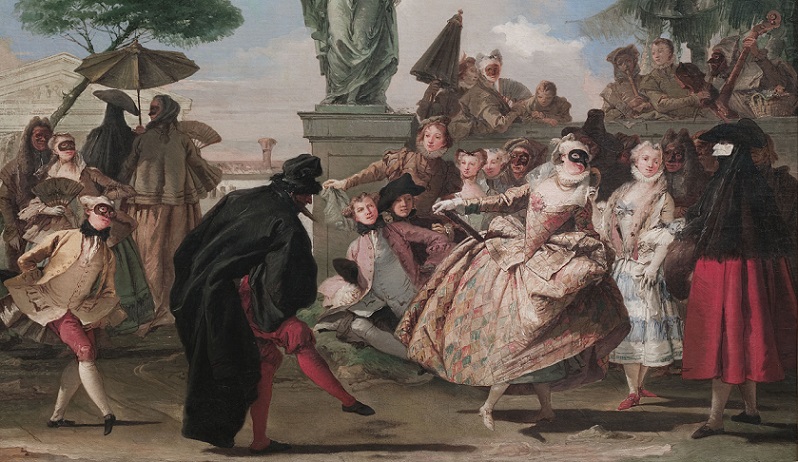
The Minuet

The dainty minuet is set
In elegant three-quarter time.
It’s sometimes played by a quartet
And once was thought to be sublime.

The sixteen measures of the dance
Are followed by a simple “Trio.”
Tempo (sometimes left to chance)
Is almost never scored con brio.

Ladies, Lords in powdered wigs
Would join the dance at a soirée;
But those once-coveted shindigs
Are not so popular today.


The Fugue

Fugues are common music themes which twist and wind
About like ramen—vying memes each trying to find
A tonic ending. Fugues are common music themes
Which twist and wind about like ramen—vying memes
Each trying to find a tonic ending. Fugues are common
Music themes which twist and wind about like ramen—
Vying memes each trying to find a tonic ending.
(Note: Add gin to make the tonic more mind-bending).


Poet’s Note: Some years ago, in an attempt to gain a better appreciation of the music of Bach and Handel, I researched and then composed a faux Baroque Suite. A digital recording is below. Among other things, the suite includes examples of a Sarabande, a Minuet & Trio, and two fugues. For an example of (the first movement of) a sonata you will have to look elsewhere.”


James A. Tweedie is a recently retired pastor living in Long Beach, Washington. He likes to walk on the beach with his wife. He has written and self-published four novels and a collection of short stories. He has several hundred unpublished poems tucked away in drawers.
ShareTweetPin
The Society of Classical Poets does not endorse any views expressed in individual poems or commentary.
Read Our Comments Policy Here

RandomPoems

‘Tower of Ivory’ by Joseph Charles MacKenzie
Beauty

‘Tower of Ivory’ by Joseph Charles MacKenzie

March 13, 2020

  What curve, what contrapposto, shift of weight, Recalls the tusk from which some Gothic hand Had carved the Paris...

‘Bemused’ and Other Poetry by N. Ram
Beauty

‘Bemused’ and Other Poetry by N. Ram

December 31, 2017

  Bemused “Polyhymnia would not lift her veil, All my attempts at sacred poetry failed, Calliope did not lend me...

Next Post
The Society of Classical Poets 2019 Poetry Competition

The Society of Classical Poets 2019 Poetry Competition

‘The Injured, Desolate Jericho’ by E.V. Wyler

'The Injured, Desolate Jericho' by E.V. Wyler

‘Venezuelan Woes’ and Other Poetry by Bruce Dale Wise

'Venezuelan Woes' and Other Poetry by Bruce Dale Wise

Comments 15

  1. Joseph Tessitore says:
    8 years ago

    Well done all around Reverend James!

    I’m in for the gin!

    Reply
    • James A. Tweedie says:
      8 years ago

      Thank you, Joe. Cheers!

      Reply
  2. Amy Foreman says:
    8 years ago

    What fun, James! I thought the fugue especially clever . . . really, they should all find their way into a Music Appreciation and History textbook, to lighten and enlighten students of these forms!

    And the accompanying original composition was Baroque “suiteness” itself! Bach-esque and beautiful. Loved every bit!

    Sincerely,

    A Delighted Dilletante, who must rush off to walk her doggerel . . . 😉

    Reply
    • James A. Tweedie says:
      8 years ago

      Amy, thank you for taking the time to write an inspired smile. Like yawns, smiles can also be contageous!

      Reply
  3. David Paul Behrens says:
    8 years ago

    The Sonata reminds me of a Moody Blues album called Days of Future Passed, taking us on a journey of experiences which happen to us during a single day. I wish I’d thought of using that theme. Not that I could ever even come close to creating what you have with this entire posting, which is beyond adequate description. How about fabulous, amazing, tremendous, outstanding or beautiful? There are not enough words in the dictionary to describe the greatness of this poetry and music. Very enjoyable!

    Reply
    • James A. Tweedie says:
      8 years ago

      Wow. I have never received a compliment on steroids before. Thank you, David.

      Reply
  4. David Watt says:
    8 years ago

    I love the way you liken the movements of a sonata to the activities we transition through each day. In this way you demonstrate that Music and Life exist as notes on the same page. Thank you for taking the trouble to cover such an interesting range of musical forms.

    Reply
    • James A. Tweedie says:
      8 years ago

      David, You’re very welcome. Glad you liked it.

      Reply
  5. Mark Stone says:
    8 years ago

    James, Hello. In The Sonata, I think “softly” is misspelled in L2. Also, I read L8 as an anapest followed by six iambs. I would want to put the stress on “cu” in “circuitous” rather than on the “i”, so I would move “circuitous” one syllable to the left, such as: As we multi-task and move on a circuitous, new route. Finally, I would delete the commas after “Next” and “work” in L5 and after “rice” in L12. I enjoyed the poems, and I very much like the concept of presenting a poem on sheet music.

    Reply
  6. Mark Stone says:
    8 years ago

    James, I like this poem, but if I were to edit “The Minuet,” I would change it to an 8-6 (alternating 8-syllable and 6-syllable lines in iambic meter). This would tighten it up with little loss of content. There is a name for this form of poem, but I can’t remember what it is. My suggestion is:

    The dainty minuet is set
    in sweet three-quarter time.
    It’s sometimes played by a quartet
    and once was thought sublime.

    The sixteen measures of the dance
    are followed by a “Trio.”
    The tempo (sometimes left to chance)
    is rarely scored con brio.

    Ladies, Lords in powdered wigs
    would dance at a soirée,
    but those once coveted shindigs
    aren’t popular today.

    Reply
  7. James A. Tweedie says:
    8 years ago

    Mark, You are true to your name with your comments being right on the mark! I frequently find myself excising excess commas from both my poetry and prose. The fewer the better. “Circuitous” IS a bit of a stumble and I confess I let it go instead of resolving it. I like your rewrite of Sonata—it is quite successful, I think. But if I do any revision I will keep what I have and simply correct the iambs missing at the beginning of lines 7 and 9. Your comments and suggestions are helpful and greatly appreciated. Thank you.

    Reply
  8. James Sale says:
    8 years ago

    James – I am mega-impressed – the poem is great fun, but with the music too! Wow. Is that a first for SCP? you certainly have incredible ability. In listening to the music it sounds so authentic. Well done. A great achievement.

    Reply
    • James A. Tweedie says:
      8 years ago

      Thank you, Mr. Sale. I am tickled to know that you not only took the time to listen to my music but that you also enjoyed it! Oddly enough, in spite of my poem by the same name, I am particularly fond of my Sarabande.

      Reply
  9. William Krusch says:
    8 years ago

    Mr. Tweedie, you must compose music. As someone who was trained as a classical musician and who studied trumpet, theory, and (some) orchestral conducting with musicians from the Pittsburgh, Boston Pops, Cincinnati, Honolulu, and Charleston Symphony Orchestras, I must say that your suite possesses many merits. While the inner movements occasionally experience some odd harmonic movements and voice leading, the overture and fugue demonstrate better part writing than many of the works I have heard from composition students at major summer music institutes. Perhaps the inner movements are a bit slow for my taste, but that is no critique against the music itself. I highly recommend you continute to write music. I will send your suite, if you do not mind, to my friend who studied at the Peabody Conservatory and now conducts the Charleston Symphony and Hong Kong Sinfonietta to see what his opinion is. There is serious potential in your work – you have an ear for counterpoint.

    Reply
    • James A. Tweedie says:
      8 years ago

      Mr. Krusch, Thank you for your encouraging words. I did my undergraduate work with two majors, one of which was Humanities the other being Music (a non-performance degree). Composition has always been an avocation of mine. It proved useful in my ministry but I had few venues for performing music of the sort posted with this poem. The use of the word dilettante in the title of my poem was, in part, autobiographical. Alongside the poems hidden away in my drawers is a great deal of music of all kinds, much of which has never seen the light of day. I am, of course, delighted that you enjoyed my faux Baroque Suite. You may feel free to share it with anyone you would like.

      Reply

Leave a Reply Cancel reply

Your email address will not be published. Required fields are marked *


  1. Levi Warren on The Society of Classical Poets 2026 Haiku CompetitionSeptember 4, 2026

    The third piece here is a vivid picture. To write it required not just the ability to communicate the author's…

  2. MaryJane Myers on ‘Chaucer Announces His Desire to Retire’: A Poem by Paul A. FreemanSeptember 4, 2026

    Paul I’m laughing out loud all the way through this clever poem. I love the way the genius Chaucer feels…

  3. Angelica Rodriguez on ‘The Cristero Centennial’: A Poem by Margaret CoatsSeptember 4, 2026

    A somber reminder of what happened not too long ago. I fear that same atmosphere has engulfed the world we…

  4. Stephen DiLauro on ‘The Cristero Centennial’: A Poem by Margaret CoatsSeptember 4, 2026

    God bless you for writing this! Indeed: A warning. But also a joyous proclamation: Jesus is King! Now and forever!

  5. Cynthia L Erlandson on ‘The Cristero Centennial’: A Poem by Margaret CoatsSeptember 4, 2026

    Thank you for the excellent poetic history lesson, Margaret. May courage not fail us.

Subscribe to Daily Poems

Enter your email address to subscribe to this blog and receive notifications of new posts by email.

Join 1,635 other subscribers

Recent Poems

  • ‘The Cristero Centennial’: A Poem by Margaret Coats
  • ‘A Potpourri of Aphoristic Verses’ by C.B. Anderson
  • ‘The Estuary’: A Poem by Jeff Eardley
  • ‘A World Without the Wednesday Child’: A Poem by Kimberly Fore
  • The 2026 Society of Classical Poets International Poetry Competition
  • The 2026 SCP International High School Poetry Competition
  • ‘Realistic Reflections’ and Other Poetry by Anna J. Arredondo
  • ‘China Made’: A Poem by Theresa Werba
  • ‘The Savage Moon’ and Other Poetry by Brian Yapko
  • Poetry Book Review: Love Found, Yearned For, and Lost by James A. Tweedie
  • ‘When Opportunity Knocks’: A Poem by Roy E. Peterson
  • ‘Legend of the Griffin’: A Poem by Iryna Hall
  • ‘Government Issue’ and Other Poems by Joseph S. Salemi
  • ‘Chaucer Announces His Desire to Retire’: A Poem by Paul A. Freeman
  • ‘Advantages of Restaurants’ and Other Poems by Russel Winick
  • ‘Bone China’: A Poem by Mary Gardner
  • ‘On the Death of One Too Young to Die’: A Poem by Jeffrey Essmann
  • ‘This Too Shall Pass’ and Other Poetry by Justin Dasher
  • ‘Humdrum and Harum-Scarum’: A Lecture on Free Verse, by Robert Bridges (1922)
  • ‘Unrest On the Floodplain’: A Poem by Bhikkhu Nyanasobhano
  • ‘Latitude and Loss’: A Poem by Martin Briggs
  • ‘Act III’ and Other Poetry by C.B. Anderson
  • ‘God’s Funeral’: A Poem by James Sale
  • ‘Star Festival’: A Poem by Margaret Coats
  • ‘Song of the Frog Princess’: A Poem by Scharlie Meeuws
  • ‘The Odyssey: Nolan and Solot Compared’: An Essay by Michael Curtis
  • ‘Solitude’ and Other Poems by Mary Jane Myers
  • ‘The River Not Taken’ and Other Poetry by Brian Yapko
  • ‘Totentanz’: A Poem by James A. Tweedie
  • ‘In God Is Our Trust’: A Poem by Roy E. Peterson

Categories

  • Acrostic
  • Alexandroid
  • Alliterative
  • Art
  • Best Poems
  • Blank Verse
  • Chant Royal
  • Classical Poets Live
  • Clerihew
  • Covid-19
  • Deconstructing Communism
  • Educational
  • Epic
  • Epigrams and Proverbs
  • Essays
    • Interviews with Poets
    • Poetry Reviews
  • Featured
  • From the Society
  • Great Poets
    • Dante Alighieri
    • Edgar Allan Poe
    • Emily Dickinson
    • Geoffrey Chaucer
    • Henry Wadsworth Longfellow
    • Homer
    • John Keats
    • John Milton
    • Robert Frost
    • William Blake
    • William Shakespeare
    • William Wordsworth
  • Human Rights in China
  • Limerick
  • Love Poems
  • Music
  • Pantoum
  • Performing Arts
  • Poetry
    • Beauty
    • Children's Poems
    • Culture
    • Ekphrastic
    • Found Poems
    • High School Poets
    • Humor
    • Riddles
  • Poetry Challenge
  • Poetry Contests
  • Poetry Forms
    • Curtal Sonnet
    • Haiku
  • Poetry Readings
  • Rhupunt
  • Rondeau
  • Rondeau Redoublé
  • Rondel
  • Rubaiyat
  • Sapphic Verse
  • Satire
  • Science
  • Sestina
  • Shape Poems
  • Short Stories
  • Song Lyrics
  • Sonnet
  • Symposium
  • Terrorism
  • Terza Rima
  • The Environment
  • Translation
  • Triolet
  • Video
  • Villanelle

Quick Links

  • About Us
  • Submit Poetry
  • Become a Member
  • Members List
  • Support the Society
  • Advertisement Placement
  • Comments Policy
  • Terms of Use

Welcome Back!

Login to your account below

Forgotten Password?

Retrieve your password

Please enter your username or email address to reset your password.

Log In
No Result
View All Result
  • Poems
    • Beauty
    • Culture
    • Satire
    • Humor
    • Children’s
    • Art
    • Ekphrastic
    • Epic
    • Epigrams and Proverbs
    • Human Rights in China
    • Music
    • Performing Arts
    • Riddles
    • Science
    • Song Lyrics
    • The Environment
    • The Raven
    • Found Poems
    • High School Poets
    • Terrorism
    • Covid-19
  • Poetry Forms
    • Sonnet
    • Haiku
    • Limerick
    • Villanelle
    • Rondeau
    • Pantoum
    • Sestina
    • Triolet
    • Acrostic
    • Alexandroid
    • Alliterative
    • Blank Verse
    • Chant Royal
    • Clerihew
    • Rhupunt
    • Rondeau Redoublé
    • Rondel
    • Rubaiyat
    • Sapphic Verse
    • Shape Poems
    • Terza Rima
  • Great Poets
    • Geoffrey Chaucer
    • Emily Dickinson
    • Homer
    • Henry Wadsworth Longfellow
    • Dante Alighieri
    • John Keats
    • John Milton
    • Edgar Allan Poe
    • William Shakespeare
    • William Wordsworth
    • William Blake
    • Robert Frost
  • Love Poems
  • Contests
  • SCP Academy
    • Educational
    • Teaching Classical Poetry—A Guide for Educators
    • Poetry Forms
    • The SCP Journal
    • Books

© 2025 SCP. WebDesign by CODEC Prime.