• Submit Poetry
  • Support SCP
  • About Us
  • Members
  • Join
Thursday, September 3, 2026
Society of Classical Poets
  • Poems
    • Beauty
    • Culture
    • Satire
    • Humor
    • Children’s
    • Art
    • Ekphrastic
    • Epic
    • Epigrams and Proverbs
    • Human Rights in China
    • Music
    • Performing Arts
    • Riddles
    • Science
    • Song Lyrics
    • The Environment
    • The Raven
    • Found Poems
    • High School Poets
    • Terrorism
    • Covid-19
  • Poetry Forms
    • Sonnet
    • Haiku
    • Limerick
    • Villanelle
    • Rondeau
    • Pantoum
    • Sestina
    • Triolet
    • Acrostic
    • Alexandroid
    • Alliterative
    • Blank Verse
    • Chant Royal
    • Clerihew
    • Rhupunt
    • Rondeau Redoublé
    • Rondel
    • Rubaiyat
    • Sapphic Verse
    • Shape Poems
    • Terza Rima
  • Great Poets
    • Geoffrey Chaucer
    • Emily Dickinson
    • Homer
    • Henry Wadsworth Longfellow
    • Dante Alighieri
    • John Keats
    • John Milton
    • Edgar Allan Poe
    • William Shakespeare
    • William Wordsworth
    • William Blake
    • Robert Frost
  • Love Poems
  • Contests
  • SCP Academy
    • Educational
    • Teaching Classical Poetry—A Guide for Educators
    • Poetry Forms
    • The SCP Journal
    • Books
No Result
View All Result
Society of Classical Poets
  • Poems
    • Beauty
    • Culture
    • Satire
    • Humor
    • Children’s
    • Art
    • Ekphrastic
    • Epic
    • Epigrams and Proverbs
    • Human Rights in China
    • Music
    • Performing Arts
    • Riddles
    • Science
    • Song Lyrics
    • The Environment
    • The Raven
    • Found Poems
    • High School Poets
    • Terrorism
    • Covid-19
  • Poetry Forms
    • Sonnet
    • Haiku
    • Limerick
    • Villanelle
    • Rondeau
    • Pantoum
    • Sestina
    • Triolet
    • Acrostic
    • Alexandroid
    • Alliterative
    • Blank Verse
    • Chant Royal
    • Clerihew
    • Rhupunt
    • Rondeau Redoublé
    • Rondel
    • Rubaiyat
    • Sapphic Verse
    • Shape Poems
    • Terza Rima
  • Great Poets
    • Geoffrey Chaucer
    • Emily Dickinson
    • Homer
    • Henry Wadsworth Longfellow
    • Dante Alighieri
    • John Keats
    • John Milton
    • Edgar Allan Poe
    • William Shakespeare
    • William Wordsworth
    • William Blake
    • Robert Frost
  • Love Poems
  • Contests
  • SCP Academy
    • Educational
    • Teaching Classical Poetry—A Guide for Educators
    • Poetry Forms
    • The SCP Journal
    • Books
No Result
View All Result
Society of Classical Poets
No Result
View All Result
Home Blank Verse

‘Prelude to the Gettysburg Address’ by Arthur Mortensen

April 17, 2017
in Blank Verse, Culture, Poetry, Short Stories
A A
3
poems 'Prelude to the Gettysburg Address' by Arthur Mortensen

Posting atop the hill beyond the field
in rain so thick he barely saw the bodies,
the General tilted back his hat and sat,
shaking his head. His horse shifted a foot
and whinnied, a grazing wound across its haunch
still oozing blood, an equine service stripe
its tail would whip to chase away the flies.

The cannon silent, Lee’s army now withdrawn,
the residue of those three days now lay,
their arms, if still attached, askew, their legs
apart or vanished, their uniforms wet gray
with stains across the chest or back or thighs,
their heads thrown back, their mouths in some surprise,
more rows and heaps of tangled dead than Meade
had ever seen. Twenty-five thousand sprawled
below and all around the Round Tops’ heights,
most of them Lee’s, but many of his own.
A crowd of privates walked among these dead,
searching every body for a trace
of names to register their bloody passing.

Beside Meade’s mount, a splintered oak stood stripped
by bullets of its leaves, its roots exposed
by craters opened up by mortars or
by cannon balls. He’d heard a few whiz by
his ears that afternoon before the end,
but comforted by knowing that just one
would separate his body into shreds
as if a god with tiger claws had ripped
apart his skin and bones, he hadn’t moved
except to cross behind the crouching men
then decimating Pickett’s line of charge.
He knew the reasons why, but hadn’t time
to offer philosophical resolve
to badly bloodied troops, nor for the mother
of one dead boy from Boston, a neighbor’s son,
for whom he’d have to write a dreaded letter
when decision had been reached for hot pursuit.

A Colonel in the cavalry rode up,
his right arm splinted and his left eye patched.

“We did it, sir!”
________________And Meade nodded his head,
taking the simple words as cue to wheel,
salute the man, and canter off the hill.
But met on this great battlefield of war,
would words satisfy the mothers, wives
and children they had done in? Doubting that,
he frowned, knowing he had poor power to add
or detract from what the Civil War had brought
to make the little town of Gettysburg
a final resting place for those brave men
who thought they brought the best of life
to battle for a cause already lost.

Of course the world would long remember,
and hold the dead responsible for acts
of politicians, as heroes of the North,
or villains of the South, but who had sent them,
commanding to death these fragile, boyish lives?
What policy commanded life and death?
But Meade didn’t want to dwell on that;
what wailing would he miss he hadn’t heard
in this grim victory that chased the Grays
back south toward homes that Blues would soon be burning?

A battered march of wounded crossed his path,
all rebel boys under a careless guard
who shouted “your eyes right” as Meade went by,
snapping a quick salute to all of them,
but staring down at mangled teenage boys
whose beards were mostly powder burns and mud,
whose uniforms were torn and matted brown,
and in whose hollow, haunting eyes he saw
exhaustion, grief and most of all deep fear.
How many bragged before the battle started
of all the Yankees they would kill, recruits
in boyish shouts, the veterans in rage
at what they must have known would soon occur?
All soldiers’ stories have the same hard ring
that sounds above the empty well of death;
he knew they whispered them as he rode by.
And, though he couldn’t hear a word, he felt
a tear welling, and wanted to step down
and speak to each of them as to his own,
speak of a future won, the unfinished work
that someone, pointing to this hallowed ground,
could dedicate to memories of the dead.

But he held back, taking a breath instead,
and spurred his horse onward until he reached
the headquarters tent, where Lincoln stood outside
under a stovepipe hat, waiting to hear
of victory, but sober as a preacher
who’d found the other side of marriage vows
was that dark space where spouses lay in peace.


Arthur Mortensen has been published in Sparrow, Poetry Nottingham, Blue Unicorn; American Arts Quarterly; Ekphrasis; The Lyric; Trinacria; Orbis; Pennsylvania Review, and others, with poems forthcoming in The Dark Horse, Pennsylvania Review and Chronicles. He has published three books: A Disciple After the Fact; A Life in The Theater; Why Hamlet Waited So Long. A chapbook from the 90s, Relics of the Cold War, was performed as a play by the Medicine Show Ensemble in New York

ShareTweetPin
The Society of Classical Poets does not endorse any views expressed in individual poems or commentary.
Read Our Comments Policy Here

RandomPoems

‘Premonition’: A Poem by Adam Sedia
Culture

‘Premonition’: A Poem by Adam Sedia

April 30, 2025

. Premonition The sun shines down in undimmed majestyAcross the heavens’ undiminished breadthOn life unsapped, unweighted levityOf loves and laughs...

On Insects and Worms for Food: ‘Snub the Grub’ by Susan Jarvis Bryant
Culture

On Insects and Worms for Food: ‘Snub the Grub’ by Susan Jarvis Bryant

August 24, 2022

. Snub the Grub upon reading news of a beetle burger, The Daily Mail, August 24, 2022 I scan the...

Next Post
‘They’re Giants: On America and North Korea’ by James Sale

'They're Giants: On America and North Korea' by James Sale

‘Verification’ and Other Poetry by C.B. Anderson

'Verification' and Other Poetry by C.B. Anderson

‘Molothrus Ater’ by Jane Blanchard

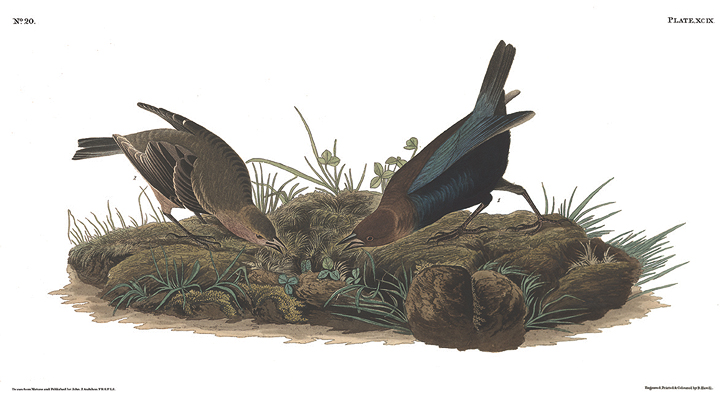
'Molothrus Ater' by Jane Blanchard

Comments 3

  1. David Hollywood says:
    9 years ago

    A wonderful epic poem requiring of being delivered and enacted and emphasised!

    Reply
  2. Amy Foreman says:
    9 years ago

    Thank you, Arthur–this is a very moving poem!

    Reply
  3. Wilbur Dee Case says:
    9 years ago

    You are at the edge of great, narrative, dramatic power. I enjoy the occasional pictoral [sic] detail, “still oozing blood, an equine service stripe/ its tail would whip to chase away the flies…” and rhetorical gambits, “Beside Meade’s mount, a splintered oak stood stripped/ by bullets of its leaves, its roots exposed/ by craters opened up by mortars or/ by cannon balls.”

    Reply

Leave a Reply Cancel reply

Your email address will not be published. Required fields are marked *


  1. Margaret Coats on ‘A World Without the Wednesday Child’: A Poem by Kimberly ForeSeptember 2, 2026

    Very thoughtful verses, Kimberly, that make your readers more thoughtful. I discovered that a recently deceased friend was a Wednesday's…

  2. Thomas A. Hemminger on The Society of Classical Poets 2026 Haiku CompetitionSeptember 2, 2026

    Rain is welcome here— where parched, cracked earth wastes no tears, canyons drink their fill. Rivers wash the world. Eddies…

  3. Robert Nachtegall on ‘A World Without the Wednesday Child’: A Poem by Kimberly ForeSeptember 2, 2026

    Kimberly, a thoughtful and clever poem. I enjoy your vivid imagery and esteem for the melancholic temperament. Well done.

  4. Roy Eugene Peterson on ‘When Opportunity Knocks’: A Poem by Roy E. PetersonSeptember 2, 2026

    Perfect comment, C.B.

  5. Margaret Coats on ‘This Too Shall Pass’ and Other Poetry by Justin DasherSeptember 2, 2026

    The comments immediately preceding this one of mine have reminded me to praise the profound beauty of your "Otherness," Justin.…

Subscribe to Daily Poems

Enter your email address to subscribe to this blog and receive notifications of new posts by email.

Join 1,633 other subscribers

Recent Poems

  • ‘A World Without the Wednesday Child’: A Poem by Kimberly Fore
  • The 2026 Society of Classical Poets International Poetry Competition
  • The 2026 SCP International High School Poetry Competition
  • ‘Realistic Reflections’ and Other Poetry by Anna J. Arredondo
  • ‘China Made’: A Poem by Theresa Werba
  • ‘The Savage Moon’ and Other Poetry by Brian Yapko
  • Poetry Book Review: Love Found, Yearned For, and Lost by James A. Tweedie
  • ‘When Opportunity Knocks’: A Poem by Roy E. Peterson
  • ‘Legend of the Griffin’: A Poem by Iryna Hall
  • ‘Government Issue’ and Other Poems by Joseph S. Salemi
  • ‘Chaucer Announces His Desire to Retire’: A Poem by Paul A. Freeman
  • ‘Advantages of Restaurants’ and Other Poems by Russel Winick
  • ‘Bone China’: A Poem by Mary Gardner
  • ‘On the Death of One Too Young to Die’: A Poem by Jeffrey Essmann
  • ‘This Too Shall Pass’ and Other Poetry by Justin Dasher
  • ‘Humdrum and Harum-Scarum’: A Lecture on Free Verse, by Robert Bridges (1922)
  • ‘Unrest On the Floodplain’: A Poem by Bhikkhu Nyanasobhano
  • ‘Latitude and Loss’: A Poem by Martin Briggs
  • ‘Act III’ and Other Poetry by C.B. Anderson
  • ‘God’s Funeral’: A Poem by James Sale
  • ‘Star Festival’: A Poem by Margaret Coats
  • ‘Song of the Frog Princess’: A Poem by Scharlie Meeuws
  • ‘The Odyssey: Nolan and Solot Compared’: An Essay by Michael Curtis
  • ‘Solitude’ and Other Poems by Mary Jane Myers
  • ‘The River Not Taken’ and Other Poetry by Brian Yapko
  • ‘Totentanz’: A Poem by James A. Tweedie
  • ‘In God Is Our Trust’: A Poem by Roy E. Peterson
  • ‘Confession’: A Poem by Jeffrey Essmann
  • ‘Religious Poetry, and Religionist Poetry’: An Essay by Joseph S. Salemi
  • The Zingers of Adam Sedia: A Review by Theresa Werba

Categories

  • Acrostic
  • Alexandroid
  • Alliterative
  • Art
  • Best Poems
  • Blank Verse
  • Chant Royal
  • Classical Poets Live
  • Clerihew
  • Covid-19
  • Deconstructing Communism
  • Educational
  • Epic
  • Epigrams and Proverbs
  • Essays
    • Interviews with Poets
    • Poetry Reviews
  • Featured
  • From the Society
  • Great Poets
    • Dante Alighieri
    • Edgar Allan Poe
    • Emily Dickinson
    • Geoffrey Chaucer
    • Henry Wadsworth Longfellow
    • Homer
    • John Keats
    • John Milton
    • Robert Frost
    • William Blake
    • William Shakespeare
    • William Wordsworth
  • Human Rights in China
  • Limerick
  • Love Poems
  • Music
  • Pantoum
  • Performing Arts
  • Poetry
    • Beauty
    • Children's Poems
    • Culture
    • Ekphrastic
    • Found Poems
    • High School Poets
    • Humor
    • Riddles
  • Poetry Challenge
  • Poetry Contests
  • Poetry Forms
    • Curtal Sonnet
    • Haiku
  • Poetry Readings
  • Rhupunt
  • Rondeau
  • Rondeau Redoublé
  • Rondel
  • Rubaiyat
  • Sapphic Verse
  • Satire
  • Science
  • Sestina
  • Shape Poems
  • Short Stories
  • Song Lyrics
  • Sonnet
  • Symposium
  • Terrorism
  • Terza Rima
  • The Environment
  • Translation
  • Triolet
  • Video
  • Villanelle

Quick Links

  • About Us
  • Submit Poetry
  • Become a Member
  • Members List
  • Support the Society
  • Advertisement Placement
  • Comments Policy
  • Terms of Use

Welcome Back!

Login to your account below

Forgotten Password?

Retrieve your password

Please enter your username or email address to reset your password.

Log In
No Result
View All Result
  • Poems
    • Beauty
    • Culture
    • Satire
    • Humor
    • Children’s
    • Art
    • Ekphrastic
    • Epic
    • Epigrams and Proverbs
    • Human Rights in China
    • Music
    • Performing Arts
    • Riddles
    • Science
    • Song Lyrics
    • The Environment
    • The Raven
    • Found Poems
    • High School Poets
    • Terrorism
    • Covid-19
  • Poetry Forms
    • Sonnet
    • Haiku
    • Limerick
    • Villanelle
    • Rondeau
    • Pantoum
    • Sestina
    • Triolet
    • Acrostic
    • Alexandroid
    • Alliterative
    • Blank Verse
    • Chant Royal
    • Clerihew
    • Rhupunt
    • Rondeau Redoublé
    • Rondel
    • Rubaiyat
    • Sapphic Verse
    • Shape Poems
    • Terza Rima
  • Great Poets
    • Geoffrey Chaucer
    • Emily Dickinson
    • Homer
    • Henry Wadsworth Longfellow
    • Dante Alighieri
    • John Keats
    • John Milton
    • Edgar Allan Poe
    • William Shakespeare
    • William Wordsworth
    • William Blake
    • Robert Frost
  • Love Poems
  • Contests
  • SCP Academy
    • Educational
    • Teaching Classical Poetry—A Guide for Educators
    • Poetry Forms
    • The SCP Journal
    • Books

© 2025 SCP. WebDesign by CODEC Prime.