• Submit Poetry
  • Support SCP
  • About Us
  • Members
  • Join
Saturday, July 18, 2026
Society of Classical Poets
  • Poems
    • Beauty
    • Culture
    • Satire
    • Humor
    • Children’s
    • Art
    • Ekphrastic
    • Epic
    • Epigrams and Proverbs
    • Human Rights in China
    • Music
    • Performing Arts
    • Riddles
    • Science
    • Song Lyrics
    • The Environment
    • The Raven
    • Found Poems
    • High School Poets
    • Terrorism
    • Covid-19
  • Poetry Forms
    • Sonnet
    • Haiku
    • Limerick
    • Villanelle
    • Rondeau
    • Pantoum
    • Sestina
    • Triolet
    • Acrostic
    • Alexandroid
    • Alliterative
    • Blank Verse
    • Chant Royal
    • Clerihew
    • Rhupunt
    • Rondeau Redoublé
    • Rondel
    • Rubaiyat
    • Sapphic Verse
    • Shape Poems
    • Terza Rima
  • Great Poets
    • Geoffrey Chaucer
    • Emily Dickinson
    • Homer
    • Henry Wadsworth Longfellow
    • Dante Alighieri
    • John Keats
    • John Milton
    • Edgar Allan Poe
    • William Shakespeare
    • William Wordsworth
    • William Blake
    • Robert Frost
  • Love Poems
  • Contests
  • SCP Academy
    • Educational
    • Teaching Classical Poetry—A Guide for Educators
    • Poetry Forms
    • The SCP Journal
    • Books
No Result
View All Result
Society of Classical Poets
  • Poems
    • Beauty
    • Culture
    • Satire
    • Humor
    • Children’s
    • Art
    • Ekphrastic
    • Epic
    • Epigrams and Proverbs
    • Human Rights in China
    • Music
    • Performing Arts
    • Riddles
    • Science
    • Song Lyrics
    • The Environment
    • The Raven
    • Found Poems
    • High School Poets
    • Terrorism
    • Covid-19
  • Poetry Forms
    • Sonnet
    • Haiku
    • Limerick
    • Villanelle
    • Rondeau
    • Pantoum
    • Sestina
    • Triolet
    • Acrostic
    • Alexandroid
    • Alliterative
    • Blank Verse
    • Chant Royal
    • Clerihew
    • Rhupunt
    • Rondeau Redoublé
    • Rondel
    • Rubaiyat
    • Sapphic Verse
    • Shape Poems
    • Terza Rima
  • Great Poets
    • Geoffrey Chaucer
    • Emily Dickinson
    • Homer
    • Henry Wadsworth Longfellow
    • Dante Alighieri
    • John Keats
    • John Milton
    • Edgar Allan Poe
    • William Shakespeare
    • William Wordsworth
    • William Blake
    • Robert Frost
  • Love Poems
  • Contests
  • SCP Academy
    • Educational
    • Teaching Classical Poetry—A Guide for Educators
    • Poetry Forms
    • The SCP Journal
    • Books
No Result
View All Result
Society of Classical Poets
No Result
View All Result
Home Poetry Beauty

‘Snowdrops’ by Martin Rizley

March 7, 2020
in Beauty, Culture, Poetry
A A
17
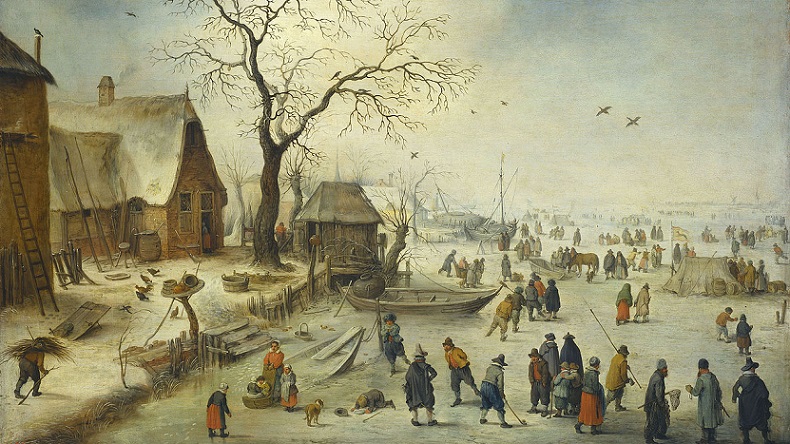
poem/Tweedi/winter


Now breaking through the crust of snow, pale messengers appear
To herald with celestial glow the springtime of the year;
With gentle boldness, bursting forth,
They beckon warming winds henceforth
To melt cold winter’s mantle, blowing over moor and mere.

For months, the earth, to cold’s embrace a captive, has been bound,
While winter, like a wolf, has paced voraciously around,
Devouring all things green in sight
And picking bare the trees at night
With gusts of icy breath, erasing verdure from the ground.

But now, spring’s vanguards, dressed in white, like angel hosts arrayed,
Declare the end of that dark night they silently invade;
Their advent marks the break of day,
When lush green fields and riotous May
The ravenous wolf will put to flight, as frozen wastelands fade.

Arising from the mouldering ground like spirits from the grave,
They haunt the landscape all around, a heavenly enclave
Sent here to purify the earth,
Presiding o’er the land’s rebirth,
As field and fen again resound with music, wave on wave.

Like hatching chicks, they peep their heads up through their crystal shell,
Emerging, as their number spreads throughout the melting dell;
In silent strength, they take their place,
Transforming with their quiet grace
The frosty fields to flower beds, to tell us, “All is well.”

Yet snowdrops are themselves the slaves of time, and so must die;
Their drooping heads must drop in graves at last and there must lie;
The wolf of winter must return,
But not for long—the tide will turn—
As snowdrops come again to pave the way for spring’s reply.

So let us hear the happy news these passing prophets say:
Their dazzling presence brings to view a future glorious day
When countless angels, dressed in white,
Will usher in the end of night
As endless spring descends like dew to never pass away!


Martin Rizley grew up in Oklahoma and in Texas, and has served in pastoral ministry both in the United States and in Europe. He is currently serving as the pastor of a small evangelical church in the city of Málaga on the southern coast of Spain, where he lives with his wife and daughter. Martin has enjoyed writing and reading poetry as a hobby since his early youth.

ShareTweetPin
The Society of Classical Poets does not endorse any views expressed in individual poems or commentary.
Read Our Comments Policy Here

RandomPoems

‘Sophisticated Stupidity’ and Other Poetry by James Bontrager
Poetry

‘Sophisticated Stupidity’ and Other Poetry by James Bontrager

February 18, 2025

. Sophisticated Stupidity Preserve the fish, defend the trees_And save the wilting daisies;Protect the coral in the seas_But kill the...

‘Tonight I Sail the Dreamy Sea’ and Other Love Poems by Roy E. Peterson
Love Poems

‘Better with Love’: A Poem by Russel Winick

July 11, 2023

. Better with Love I thought I was a pleasant sort __When we first met. Not perfect but near sweet...

Next Post
poems 'Daylight Savings' by T.M. Moore

'Daylight Savings' by T.M. Moore

Interview with Samuel Gilliland: ‘The Finest Lyric Poet in Scotland’

A Poem on Sam Gilliland: 'The Last Bard of Scotland' by Joseph Charles MacKenzie

‘Rhyme to Me’ by Lee Nyary

'A Soliloquy on Modern Poetry' and Other Poetry by Richard Lackman

Comments 17

  1. Joe Tessitore says:
    6 years ago

    What an incredibly beautiful poem that reads like a dream and resonates so very deeply!

    And are you on the most remarkable roll, or what?

    Reply
    • Martin Rizley says:
      6 years ago

      Thank you, Joe, for your very encouraging feedback!

      Reply
  2. Julian D. Woodruff says:
    6 years ago

    What a song! Dazzling alliteration.

    Reply
    • Martin Rizley says:
      6 years ago

      I am so glad you liked the poem, Julian!

      Reply
  3. Paul Oratofsky says:
    6 years ago

    Musically, verbally, and lyrically beautiful. A joy to read. It’s the admixture of compatible but different melodies brilliantly laced together into one harmonious fabric that makes this sing so deliciously.

    Thanks for this, Martin.

    Reply
    • Martin Rizley says:
      6 years ago

      Thank you, Paul, for taking the time to read it and share you thoughts in response. Much appreciated.

      Reply
  4. Peter Hartley says:
    6 years ago

    Martin – I might have written “governing” or “overseeing” rather than “presiding o’er”, but then I’d do anything to avoid archaisms, and admittedly my two suggestions don’t have precisely the same meaning anyway. Apart from that little niggle it is very atmospheric, and Paul above describes the poem far better than I could.

    Reply
    • Martin Rizley says:
      6 years ago

      I am glad you found the poem “atmospheric.” I often find myself moved to write (especially nature poems) by the desire to express the mood or atmospher of a particular scene in writing. I appreciate your taking the time to give me your critique.

      Reply
  5. C.B. Anderson says:
    6 years ago

    Galanthus nivalis has been blooming in my garden for two weeks now, due to the mild weather. I have only one niggling objection to the poem, which is that in the first stanza you rhymed “forth” with “henceforth.” This is essentially an identity rhyme (“forth”/”forth”) and, as such, a weak rhyme. Of course your options were limited to “north” and “swarth,” or to some other word of which “orth” is a part. Though not strictly forbidden, I find such identity rhymes to be ugly and a sign of insufficient imagination or diligence.

    Reply
    • Joe Tessitore says:
      6 years ago

      I caught it too, C.B., (actually, I had to go back and look at it) but I think the syllabic/rhythmic difference of “bursting forth” and “henceforth” carried it for me.

      Reply
    • Martin Rizley says:
      6 years ago

      I try to avoid identity rhymes generally, but perhaps it was because of the rhythmic difference that Joe points out between “bursting forth” and “henceforth,” I left it in place. If I could think of an alternative reading that uses “north” (for example), I woul very likely change this line of the poem; but so far nothing has come to mind.

      Reply
      • James A. TWeedie says:
        6 years ago

        “worth” would be acceptable as both a near and as a sight rhyme. I suggest this even though the double “forth” rhyme is perfectly fine with me. Blake does this to the point of tedium and seems to get a pass for it and his rhymes are far less sophisticated than any we see here at SCP. I

        Also, whatever comments have described this poem as lovely, or whatever, I see their bet and raise it! It is way above the average fare and I was blessed by both its beauty and form, as well as its message.

        Reply
  6. Susan Jarvis Bryant says:
    6 years ago

    This tour de force of an enviably crafted poem paints mellifluous, linguistic scenes that dazzle the mind’s eye with awe and beauty . This glorious tribute to those ‘passing prophets’ is an absolute privilege to read. Thank you!

    Reply
    • Martin Rizley says:
      6 years ago

      Thank you so much for expressing your appreciation of the poem. I am very glad you liked it!

      Reply
  7. Margaret Coats says:
    6 years ago

    Fine seasonal poem that proceeds beyond the seasons in graceful language and music. Your skill with a bold and rare stanza form, as well as your careful focus on the image of the snowdrop, makes this poem at least as good as John Keble’s “Tuesday in Easter Week” (subtitled “To the Snowdrop” in his celebrated volume The Christian Year, published 1827).

    Reply
    • Martin Rizley says:
      6 years ago

      I know that the snowdrop has appeared repeatedly in literature, and its symbolic tie to new life and the resurrection has been noted before, but I was not familiar with the poem by John Keble. Thanks for the lead, and for your very encouraging feedback.

      Reply
  8. Monty says:
    6 years ago

    I fully agree, Martin, with the sentiments of two other commenters in this thread:

    With CB, when he says that identity-rhymes are “weak” and can look “ugly” on the page.
    With Joe, when he says that you’re “on the most remarkable roll” . . and you really are.

    The ‘roll’ seems to’ve started with your winning entry ‘2b or not 2b’ in last year’s ‘Line of Shakespeare’ competition . . since when you’ve just kept on rolling. Long may it continue . .

    Reply

Leave a Reply Cancel reply

Your email address will not be published. Required fields are marked *

  1. Karen Rodgers on ‘The Gold Star Mother’: A Poem by Gerard MaritatoJuly 18, 2026

    Brilliant Gerard, brillant. I studied lietrature at University and made the mistake of choosing almost exclusively options from the 20th…

  2. Marguerite on ‘When the Phone Rings’ and Other Short Poems by Russel WinickJuly 18, 2026

    Amen on "Apologies!"

  3. Susan Jarvis Bryant on ‘My Pyjamas!’ and Other Poems by Susan Jarvis BryantJuly 18, 2026

    Jan, thank you very much for your encouraging comment. I'm so glad you enjoyed the poems and especially glad they…

  4. James Sale on ‘The 51st State’: A Poem by James SaleJuly 18, 2026

    Not quite a win, Theresa, but thank you for the thought, and congratulations yourself on your "Finalist' status for your…

  5. Susan Jarvis Bryant on National Poetry Month Limerick ChallengeJuly 18, 2026

    Beautifully written and hilarious, Jan! You have inspired me to have a go. Thank you!

Subscribe to Daily Poems

Enter your email address to subscribe to this blog and receive notifications of new posts by email.

Join 1,594 other subscribers

Recent Poems

  • Winners and Rankings of The Great American Poetry Competition
  • ‘The Gold Star Mother’: A Poem by Gerard Maritato
  • ‘An American Dash’: A Poem by Linda Ellis
  • ‘The Anonymous Soldier’: A Poem by Lucy Lind
  • ‘For Those We Never Meet’: A Poem by Aneesh Agarwal
  • ‘Ben Franklin’s Copper Fugio Cent’: A Poem by Geoffrey Smagacz
  • Three Brief Poems by Luxorius, Translated by Joseph S. Salemi
  • ‘The American Spirit’: A Poem by Dusty Grein
  • ‘The Ballad of Zebulon Pike’: A Poem by M.D. Skeen
  • ‘We Are the Ones’ and Other Poetry by Cheryl Corey
  • ‘My Pyjamas!’ and Other Poems by Susan Jarvis Bryant
  • ‘A Snowy Egret’: A Poem by Bruce Dale Wise
  • ‘The Swearing-in of Calvin Coolidge’: A Sonnet by Robert W. Crawford
  • ‘Ballad of the Sequoia’: A Poem by Lauren V. Leon
  • ‘The 51st State’: A Poem by James Sale
  • ‘La Uva’ (The Grape): A Poem by Michael Pietrack
  • ‘There’s Blood that Flows Within the Stripes’: A Poem by Lauren V. Leon
  • ‘Birdsong’: A Poem by Jeffrey Essmann
  • ‘The Melody That Lingers On’ and Other Poetry by John McPherson
  • ‘American Dreams’: A Poem by Adam Sedia
  • ‘An American Fabius’: A Poem by John Hernandez
  • ‘Vernal Clinic’ and Other Poetry by C.B. Anderson
  • ‘Omaha Beach’ and Other Poetry by Bradford Skow
  • ‘Music to Part the Veil’: A Poem by T.M. Moore
  • ‘A Gentleman’s Guide to Losing a War’ and Other Poetry by Arnon Peterson
  • ‘Black Shuck’: A Poem by Martin Briggs
  • ‘When the Last World War II Veteran Passes Away’: A Poem by N.S. Boone
  • ‘A Fallow Year at Worthy Farm’: A Poem by Paul A. Freeman
  • ‘Outstanding in Afghanistan’: A Poem by Jared S. Chang
  • ‘250 More’: A Poem by Miguel Moreno

Categories

  • Acrostic
  • Alexandroid
  • Alliterative
  • Art
  • Best Poems
  • Blank Verse
  • Chant Royal
  • Classical Poets Live
  • Clerihew
  • Covid-19
  • Deconstructing Communism
  • Educational
  • Epic
  • Epigrams and Proverbs
  • Essays
    • Interviews with Poets
    • Poetry Reviews
  • Featured
  • From the Society
  • Great Poets
    • Dante Alighieri
    • Edgar Allan Poe
    • Emily Dickinson
    • Geoffrey Chaucer
    • Henry Wadsworth Longfellow
    • Homer
    • John Keats
    • John Milton
    • Robert Frost
    • William Blake
    • William Shakespeare
    • William Wordsworth
  • Human Rights in China
  • Limerick
  • Love Poems
  • Music
  • Pantoum
  • Performing Arts
  • Poetry
    • Beauty
    • Children's Poems
    • Culture
    • Ekphrastic
    • Found Poems
    • High School Poets
    • Humor
    • Riddles
  • Poetry Challenge
  • Poetry Contests
  • Poetry Forms
    • Curtal Sonnet
    • Haiku
  • Poetry Readings
  • Rhupunt
  • Rondeau
  • Rondeau Redoublé
  • Rondel
  • Rubaiyat
  • Sapphic Verse
  • Satire
  • Science
  • Sestina
  • Shape Poems
  • Short Stories
  • Song Lyrics
  • Sonnet
  • Symposium
  • Terrorism
  • Terza Rima
  • The Environment
  • Translation
  • Triolet
  • Video
  • Villanelle

Quick Links

  • About Us
  • Submit Poetry
  • Become a Member
  • Members List
  • Support the Society
  • Advertisement Placement
  • Comments Policy
  • Terms of Use

Welcome Back!

Login to your account below

Forgotten Password?

Retrieve your password

Please enter your username or email address to reset your password.

Log In
No Result
View All Result
  • Poems
    • Beauty
    • Culture
    • Satire
    • Humor
    • Children’s
    • Art
    • Ekphrastic
    • Epic
    • Epigrams and Proverbs
    • Human Rights in China
    • Music
    • Performing Arts
    • Riddles
    • Science
    • Song Lyrics
    • The Environment
    • The Raven
    • Found Poems
    • High School Poets
    • Terrorism
    • Covid-19
  • Poetry Forms
    • Sonnet
    • Haiku
    • Limerick
    • Villanelle
    • Rondeau
    • Pantoum
    • Sestina
    • Triolet
    • Acrostic
    • Alexandroid
    • Alliterative
    • Blank Verse
    • Chant Royal
    • Clerihew
    • Rhupunt
    • Rondeau Redoublé
    • Rondel
    • Rubaiyat
    • Sapphic Verse
    • Shape Poems
    • Terza Rima
  • Great Poets
    • Geoffrey Chaucer
    • Emily Dickinson
    • Homer
    • Henry Wadsworth Longfellow
    • Dante Alighieri
    • John Keats
    • John Milton
    • Edgar Allan Poe
    • William Shakespeare
    • William Wordsworth
    • William Blake
    • Robert Frost
  • Love Poems
  • Contests
  • SCP Academy
    • Educational
    • Teaching Classical Poetry—A Guide for Educators
    • Poetry Forms
    • The SCP Journal
    • Books

© 2025 SCP. WebDesign by CODEC Prime.