• Submit Poetry
  • Support SCP
  • About Us
  • Members
  • Join
Thursday, May 14, 2026
Society of Classical Poets
  • Poems
    • Beauty
    • Culture
    • Satire
    • Humor
    • Children’s
    • Art
    • Ekphrastic
    • Epic
    • Epigrams and Proverbs
    • Human Rights in China
    • Music
    • Performing Arts
    • Riddles
    • Science
    • Song Lyrics
    • The Environment
    • The Raven
    • Found Poems
    • High School Poets
    • Terrorism
    • Covid-19
  • Poetry Forms
    • Sonnet
    • Haiku
    • Limerick
    • Villanelle
    • Rondeau
    • Pantoum
    • Sestina
    • Triolet
    • Acrostic
    • Alexandroid
    • Alliterative
    • Blank Verse
    • Chant Royal
    • Clerihew
    • Rhupunt
    • Rondeau Redoublé
    • Rondel
    • Rubaiyat
    • Sapphic Verse
    • Shape Poems
    • Terza Rima
  • Great Poets
    • Geoffrey Chaucer
    • Emily Dickinson
    • Homer
    • Henry Wadsworth Longfellow
    • Dante Alighieri
    • John Keats
    • John Milton
    • Edgar Allan Poe
    • William Shakespeare
    • William Wordsworth
    • William Blake
    • Robert Frost
  • Love Poems
  • Contests
  • SCP Academy
    • Educational
    • Teaching Classical Poetry—A Guide for Educators
    • Poetry Forms
    • The SCP Journal
    • Books
No Result
View All Result
Society of Classical Poets
  • Poems
    • Beauty
    • Culture
    • Satire
    • Humor
    • Children’s
    • Art
    • Ekphrastic
    • Epic
    • Epigrams and Proverbs
    • Human Rights in China
    • Music
    • Performing Arts
    • Riddles
    • Science
    • Song Lyrics
    • The Environment
    • The Raven
    • Found Poems
    • High School Poets
    • Terrorism
    • Covid-19
  • Poetry Forms
    • Sonnet
    • Haiku
    • Limerick
    • Villanelle
    • Rondeau
    • Pantoum
    • Sestina
    • Triolet
    • Acrostic
    • Alexandroid
    • Alliterative
    • Blank Verse
    • Chant Royal
    • Clerihew
    • Rhupunt
    • Rondeau Redoublé
    • Rondel
    • Rubaiyat
    • Sapphic Verse
    • Shape Poems
    • Terza Rima
  • Great Poets
    • Geoffrey Chaucer
    • Emily Dickinson
    • Homer
    • Henry Wadsworth Longfellow
    • Dante Alighieri
    • John Keats
    • John Milton
    • Edgar Allan Poe
    • William Shakespeare
    • William Wordsworth
    • William Blake
    • Robert Frost
  • Love Poems
  • Contests
  • SCP Academy
    • Educational
    • Teaching Classical Poetry—A Guide for Educators
    • Poetry Forms
    • The SCP Journal
    • Books
No Result
View All Result
Society of Classical Poets
No Result
View All Result
Home Poetry Culture

‘Strange Blindness: A Play in Two Acts’ by Cynthia Erlandson

April 12, 2025
in Culture, Poetry
A A
12
poems 'Strange Blindness: A Play in Two Acts' by Cynthia Erlandson

.

Strange Blindness: A Play in Two Acts

.

Prologue

Joseph and Jesus knew that perfect timing—
and not plain, unforeshadowed proclamation—
would show the deepest truth about life’s drama.
Its plot twists often need a drawn-out comma
for characters who need some preparation
before they can perceive the play’s full meaning.

.

Act I

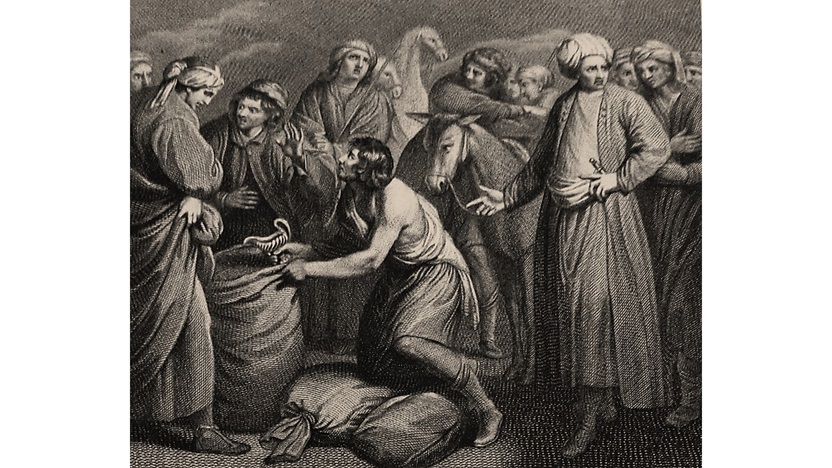
“So Joseph recognized his brothers, but they did not
recognize him.” —Genesis 42: 8

As one long-dead to these eleven others,
omniscient Joseph leaves them blind. He sees
the past and future starting to converge,
as in his childhood dreams. Emotions surge.
His flair for improvising emerges, and frees
his mind to write new roles for these wretched brothers.
Having their sight restored would overwhelm
them at this point, and cut the drama short
of its potential power—would avert
its climax. So, with no apparent qualm,
he keeps contriving more suspenseful scenes
for them to act without knowing what the play means,
to show them a haunting, shadowed silhouette
of the truth they were determined to forget.

.

Act II

“. . . Jesus himself drew near and went with them. But
their eyes were restrained, so that they did not know
him.”  —Luke 24: 15-16

Supporting characters don’t recognize
the lead, who makes his re-entrance quietly
from somewhere far beyond the footlights’ blaze.
During an intermission of three days,
the disillusioned audience has withdrawn,
assuming that the play had ended when
the lead had died. Not knowing night from dawn,
forgetting that the curtain’s not been drawn,
eleven friends who should have known the script
are waiting in the wings, bewildered, dazed.
Too paralyzed by grief to see the signs
of rising day, they’re fearful, unequipped
to play their parts, not knowing they have lines.
Two minor characters, in cameo,
oblivious that they are on a stage,
are joined by One whose speech comes from a page
they’ve read before; yet still they do not know
this one who’d left his friends three days ago.
He won’t unblind them at this moment, though,
because to fearful eyes he needs to show,
not tell. They walk and talk until a change
of scenery: a table; breaking bread
with perfect timing, he unveils a strange
new vision of the Word who once had said
that they would see him risen from the dead.

.

from Foundations of the Cross and Other Bible Stories

.

.

Cynthia Erlandson is a poet and fitness professional living in Michigan.  Her third collection of poems, Foundations of the Cross and Other Bible Stories, was released in July, 2024 by Wipf and Stock Publishers.  Her other collections are These Holy Mysteries and Notes on Time.  Her poems have also appeared in First Things, Modern Age, The North American Anglican, The Orchards Poetry Review, The Book of Common Praise hymnal, The Catholic Poetry Room, and elsewhere.

ShareTweetPin
The Society of Classical Poets does not endorse any views expressed in individual poems or commentary.
Read Our Comments Policy Here

RandomPoems

‘The End Begins’ and Other Poetry by Mike Bryant
Culture

‘The End Begins’ and Other Poetry by Mike Bryant

June 5, 2022

. The End Begins a rondeau redoublé Now the end begins, do not despair. It’s meant to be. What better...

‘Smile’ by Kylee Draper
Beauty

‘Smile’ by Kylee Draper

December 27, 2013

It spreads like wildfire when you give a smile. At first you won’t really notice at all, But if you...

Next Post
‘Cantarella Wine’: A Poem by Brian Yapko

'Cantarella Wine': A Poem by Brian Yapko

‘Ovechkin Beats Gretzky’: A Poem of Hockey Slang by Warren Bonham

'Ovechkin Beats Gretzky': A Poem of Hockey Slang by Warren Bonham

‘Druthers’ and Other Poetry by C.B. Anderson

'Druthers' and Other Poetry by C.B. Anderson

Comments 12

  1. Gigi Ryan says:
    1 year ago

    Dear Cynthia,
    I love the perspective you take to flesh these dramas out and weave them together. None of these men (except Jesus) knew that their lives would be stories told for thousands of years. Thank you for this clever and fresh way of viewing these narratives!
    Gigi

    Reply
    • Cynthia Erlandson says:
      1 year ago

      Thank you, Gigi! There’s something almost incarnational (I hope that’s the best word) about the act of writing, in that it causes the writer to imagine what might have been going through the minds of the characters, and to empathize with them — more than I, at least, would have been able to do by just reading the story.

      Reply
  2. Roy Eugene Peterson says:
    1 year ago

    Cynthia, this is a heartwarming story which is a perfect passion play inspired by the stories of both Joseph and Jesus separated only by centuries, but not by similar circumstances. Bless you for giving us this pre-Easter sermon and Happy Easter to you.

    Reply
    • Cynthia Erlandson says:
      1 year ago

      Thank you, Roy. There are so many prefigurings and foreshadowings of Christ in the Old Testament that fascinate me; but it took many readings for those things to reveal themselves. A blessed Holy Week and Easter to you, as well.

      Reply
  3. Margaret Coats says:
    1 year ago

    Here are two resurrection dramas, each stage-managed by the person whose return from the dead has immense significance. The progenitors of Israel and the apostles who will impart the life of Christ to His universal Church need to realize their roles in order to perform them capably. And the earlier drama is a type of the later. Good recognition, Cynthia, of the two-act play, each act with eleven important characters. Still more significant is the recognition that Christ will give His resurrected life throughout all history to come in the Eucharist, where the Emmaus disciples come to recognize Him. Presentation of this expanding drama today, as we are about to enter Holy Week, gives us a “comma” (in the rare sense of a “pause”) to consider its many ramifications. Fine foreshadowing!

    Reply
    • Cynthia Erlandson says:
      1 year ago

      Thank you so much, Margaret! Somehow, I didn’t even catch the parallel of eleven brothers and eleven disciples — thank you! (I probably would have tried to include that in the poem if I had.) Yes, the Emmaus Road story is my favorite. It gives me the chills to imagine being one of those two disciples who suddenly realized who Christ was, just as He performed the sacramental act of breaking bread, and disappeared!

      Reply
  4. Warren Bonham says:
    1 year ago

    What a great way to kickstart this Holy week. I’ve always been drawn to the story of the walk to Emmaus. I’m certain that I’ve made that walk all too often without recognizing who I’m walking next to.

    Reply
    • Cynthia Erlandson says:
      1 year ago

      Indeed, Warren. Thank you. I love Easter Monday especially, because of this mysterious and exciting Scripture reading. The incarnate — but to us now invisible — Christ is always with us, especially in the Eucharist.

      Reply
  5. Dan Davis says:
    1 year ago

    Thank you for this beautiful poem serving to keep the connection between the Old and New strong.

    Reply
    • Cynthia Erlandson says:
      1 year ago

      I’m very grateful for your comment, Dan, especially since the unity of Old and New Testaments has been a major theme of mine. (In fact, it’s the whole idea behind “Foundations of the Cross and Other Bible Stories.) 🙂

      Reply
  6. Adam Sedia says:
    1 year ago

    An interesting juxtaposition of Old and New Testament episodes, with drama serving as an interesting metaphor for the Passion, Death, and Resurrection. This was an insightful mediation for the season.

    Reply
    • Cynthia L Erlandson says:
      1 year ago

      Thank you so much, Adam. I love the way the two Testaments connect to each other. In some situations, the truth — as Christ showed by not answering Pilate’s question “What is truth?” — is better left unspoken, at least until the proper time.

      Reply

Leave a Reply Cancel reply

Your email address will not be published. Required fields are marked *

  1. Paul Freeman on ‘To May, the Prince of Months’ by Eustache Deschamps, Translated by Margaret CoatsMay 14, 2026

    I particularly enjoyed the references to the old and sick being rejuvenated/resuscitated by May after the rigours of winter. To…

  2. Maria on ‘To May, the Prince of Months’ by Eustache Deschamps, Translated by Margaret CoatsMay 14, 2026

    Dear Margaret this is a beautiful poem that captures the essence of the month of May. In is such a…

  3. Cynthia L Erlandson on ‘To May, the Prince of Months’ by Eustache Deschamps, Translated by Margaret CoatsMay 14, 2026

    So beautiful! I was enjoying all of your wonderful slant rhymes for “nature”, and then saw that those in the…

  4. Joseph S. Salemi on ‘To May, the Prince of Months’ by Eustache Deschamps, Translated by Margaret CoatsMay 14, 2026

    A very nice rendering of Eustache, and one that must have taken a great deal of work to maintain the…

  5. Roy Eugene Peterson on ‘To May, the Prince of Months’ by Eustache Deschamps, Translated by Margaret CoatsMay 14, 2026

    Margaret, your translation talents are amazing. Your manipulation of each line is masterful to achieve such effective rhymes in English…

Subscribe to Daily Poems

Enter your email address to subscribe to this blog and receive notifications of new posts by email.

Join 1,593 other subscribers

Recent Poems

  • ‘To May, the Prince of Months’ by Eustache Deschamps, Translated by Margaret Coats
  • Winners of Friends of Falun Gong 2026 Poetry Competition Announced
  • A Poem on Coach “Black Mike” Castronis from Athens Y Camp, by Alec Ream
  • A Poem on the Zambian National Park Mosi-oa-Tunya, by Paul A. Freeman
  • ‘Creation of Mom’: A Mother’s Day Poem by Roy E. Peterson
  • ‘Spontaneous Conjugal Combustion’ and Other Poems by Susan Jarvis Bryant
  • ‘The Man in the Moon Was a Very Round Man’: A Poem by Lauren V. Leon
  • ‘Fibromytrauma’: A Poem by Golan Shahar
  • ‘A Lonely Sliver’: A Poem by Katie Tencza
  • ‘Higher Gas Prices Are a Small Price to Pay’: An Iran War Poem by Mark F. Stone
  • ‘Always Ahead’: A Poem by Scharlie Meeuws
  • ‘Hamlet’s Lawyer’ and Other Poetry by Brian Yapko
  • ‘On An Old Photograph’: A Poem by Joseph S. Salemi
  • ‘Faust Foresees His End’: A Poem by Martin Briggs
  • ‘À la Carte’ and Other Poetry by C.B. Anderson
  • ‘Where the Sweet Bluebonnets Bloom’: A Poem by Roy E. Peterson
  • ‘The Waters’: A Poem by Margaret Brinton
  • ‘The Pinnacle of Poetry’ and Other Poems by Russel Winick
  • The First American Sonnets: An Essay on David Humphreys, by Margaret Coats
  • ‘The Holy Rollers on Poetry’: A Poem by Joseph S. Salemi
  • Sappho’s ‘Poem 1’ Translated by Bruce Phenix
  • ‘The Cautionary Tale of Phone Addicted Mimi’: A Poem by Paul A. Freeman
  • ‘Look Away’: A Poem for America’s 250th Anniversary, by Roger Crane
  • ‘Sunday Morning in Canada’: A Poem by Jeffrey Essmann
  • ‘Bean’: A Poem by Jan Mennite
  • ‘The Swan’s Song ’: A Poem for Shakespeare’s Birthday, by Susan Jarvis Bryant
  • ‘The Gravedigger’: A Poem by Marie Burdett
  • ‘Waiting for the Perfect Man’: A Poem by Janice Canerdy
  • ‘The George-A-Saurus’ and Other Poetry by Brian Yapko
  • ‘When Asked: What’s Your Favorite Season?’: A Poem by Paul Millan  

Categories

  • Acrostic
  • Alexandroid
  • Alliterative
  • Art
  • Best Poems
  • Blank Verse
  • Chant Royal
  • Classical Poets Live
  • Clerihew
  • Covid-19
  • Deconstructing Communism
  • Educational
  • Epic
  • Epigrams and Proverbs
  • Essays
    • Interviews with Poets
    • Poetry Reviews
  • Featured
  • From the Society
  • Great Poets
    • Dante Alighieri
    • Edgar Allan Poe
    • Emily Dickinson
    • Geoffrey Chaucer
    • Henry Wadsworth Longfellow
    • Homer
    • John Keats
    • John Milton
    • Robert Frost
    • William Blake
    • William Shakespeare
    • William Wordsworth
  • Human Rights in China
  • Limerick
  • Love Poems
  • Music
  • Pantoum
  • Performing Arts
  • Poetry
    • Beauty
    • Children's Poems
    • Culture
    • Ekphrastic
    • Found Poems
    • High School Poets
    • Humor
    • Riddles
  • Poetry Challenge
  • Poetry Contests
  • Poetry Forms
    • Curtal Sonnet
    • Haiku
  • Poetry Readings
  • Rhupunt
  • Rondeau
  • Rondeau Redoublé
  • Rondel
  • Rubaiyat
  • Sapphic Verse
  • Satire
  • Science
  • Sestina
  • Shape Poems
  • Short Stories
  • Song Lyrics
  • Sonnet
  • Symposium
  • Terrorism
  • Terza Rima
  • The Environment
  • Translation
  • Triolet
  • Video
  • Villanelle

Quick Links

  • About Us
  • Submit Poetry
  • Become a Member
  • Members List
  • Support the Society
  • Advertisement Placement
  • Comments Policy
  • Terms of Use

Welcome Back!

Login to your account below

Forgotten Password?

Retrieve your password

Please enter your username or email address to reset your password.

Log In
No Result
View All Result
  • Poems
    • Beauty
    • Culture
    • Satire
    • Humor
    • Children’s
    • Art
    • Ekphrastic
    • Epic
    • Epigrams and Proverbs
    • Human Rights in China
    • Music
    • Performing Arts
    • Riddles
    • Science
    • Song Lyrics
    • The Environment
    • The Raven
    • Found Poems
    • High School Poets
    • Terrorism
    • Covid-19
  • Poetry Forms
    • Sonnet
    • Haiku
    • Limerick
    • Villanelle
    • Rondeau
    • Pantoum
    • Sestina
    • Triolet
    • Acrostic
    • Alexandroid
    • Alliterative
    • Blank Verse
    • Chant Royal
    • Clerihew
    • Rhupunt
    • Rondeau Redoublé
    • Rondel
    • Rubaiyat
    • Sapphic Verse
    • Shape Poems
    • Terza Rima
  • Great Poets
    • Geoffrey Chaucer
    • Emily Dickinson
    • Homer
    • Henry Wadsworth Longfellow
    • Dante Alighieri
    • John Keats
    • John Milton
    • Edgar Allan Poe
    • William Shakespeare
    • William Wordsworth
    • William Blake
    • Robert Frost
  • Love Poems
  • Contests
  • SCP Academy
    • Educational
    • Teaching Classical Poetry—A Guide for Educators
    • Poetry Forms
    • The SCP Journal
    • Books

© 2025 SCP. WebDesign by CODEC Prime.