• Submit Poetry
  • Support SCP
  • About Us
  • Members
  • Join
Sunday, May 17, 2026
Society of Classical Poets
  • Poems
    • Beauty
    • Culture
    • Satire
    • Humor
    • Children’s
    • Art
    • Ekphrastic
    • Epic
    • Epigrams and Proverbs
    • Human Rights in China
    • Music
    • Performing Arts
    • Riddles
    • Science
    • Song Lyrics
    • The Environment
    • The Raven
    • Found Poems
    • High School Poets
    • Terrorism
    • Covid-19
  • Poetry Forms
    • Sonnet
    • Haiku
    • Limerick
    • Villanelle
    • Rondeau
    • Pantoum
    • Sestina
    • Triolet
    • Acrostic
    • Alexandroid
    • Alliterative
    • Blank Verse
    • Chant Royal
    • Clerihew
    • Rhupunt
    • Rondeau Redoublé
    • Rondel
    • Rubaiyat
    • Sapphic Verse
    • Shape Poems
    • Terza Rima
  • Great Poets
    • Geoffrey Chaucer
    • Emily Dickinson
    • Homer
    • Henry Wadsworth Longfellow
    • Dante Alighieri
    • John Keats
    • John Milton
    • Edgar Allan Poe
    • William Shakespeare
    • William Wordsworth
    • William Blake
    • Robert Frost
  • Love Poems
  • Contests
  • SCP Academy
    • Educational
    • Teaching Classical Poetry—A Guide for Educators
    • Poetry Forms
    • The SCP Journal
    • Books
No Result
View All Result
Society of Classical Poets
  • Poems
    • Beauty
    • Culture
    • Satire
    • Humor
    • Children’s
    • Art
    • Ekphrastic
    • Epic
    • Epigrams and Proverbs
    • Human Rights in China
    • Music
    • Performing Arts
    • Riddles
    • Science
    • Song Lyrics
    • The Environment
    • The Raven
    • Found Poems
    • High School Poets
    • Terrorism
    • Covid-19
  • Poetry Forms
    • Sonnet
    • Haiku
    • Limerick
    • Villanelle
    • Rondeau
    • Pantoum
    • Sestina
    • Triolet
    • Acrostic
    • Alexandroid
    • Alliterative
    • Blank Verse
    • Chant Royal
    • Clerihew
    • Rhupunt
    • Rondeau Redoublé
    • Rondel
    • Rubaiyat
    • Sapphic Verse
    • Shape Poems
    • Terza Rima
  • Great Poets
    • Geoffrey Chaucer
    • Emily Dickinson
    • Homer
    • Henry Wadsworth Longfellow
    • Dante Alighieri
    • John Keats
    • John Milton
    • Edgar Allan Poe
    • William Shakespeare
    • William Wordsworth
    • William Blake
    • Robert Frost
  • Love Poems
  • Contests
  • SCP Academy
    • Educational
    • Teaching Classical Poetry—A Guide for Educators
    • Poetry Forms
    • The SCP Journal
    • Books
No Result
View All Result
Society of Classical Poets
No Result
View All Result
Home Poetry Beauty

‘The Drift of Dark Days’ and Other Poetry by C.B. Anderson

December 12, 2024
in Beauty, Culture, Humor, Poetry
A A
25
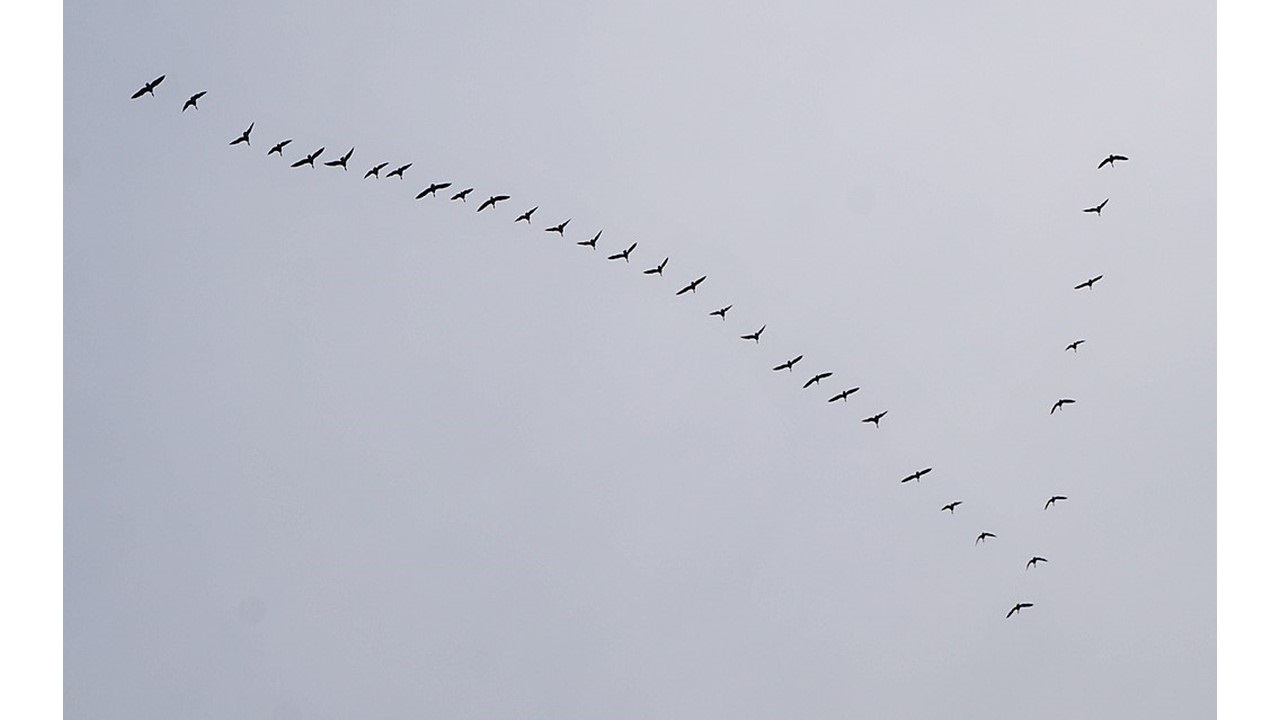
a photo of geese flying in v formation by Jiaqian

a photo of geese flying in v formation by Jiaqian

.

The Drift of Dark Days

November is a time for us to grieve
About the dying of the warmth and light,
About the passing of our joie de vivre,
As we await the bitter arctic bite.

Near-perfect vees of fleeing geese are gone
From curdled skies reminding us of slate;
The only promise found in each new dawn
Is that the day’s already growing late.

And so it is, we’re hoping that December
Will steer us past the solar minimum
And cause us, shortly after, to remember
The Child that lit the whole continuum.

.

.

In a Manner of Speaking

__Just why do all our colloquies
__Devolve into frivolities?

We’ve squandered most of what we have received
And lost the thread of what we once believed.

__Don’t be afraid to speak your mind;
__Your audience is not unkind.

Far better that we often disagree
Than that forevermore we silent be.

__Contentious statements ring our bells,
__Yet stir afresh our deepest wells.

Our arguments should be imbued with vigor
And always point the way to something bigger.

__So never hesitate to speak—
__The earth is wasted on the meek.

.

.

C.B. Anderson was the longtime gardener for the PBS television series, The Victory Garden.  Hundreds of his poems have appeared in scores of print and electronic journals out of North America, Great Britain, Ireland, Austria, Australia and India.  His collection, Mortal Soup and the Blue Yonder was published in 2013 by White Violet Press.

ShareTweetPin
The Society of Classical Poets does not endorse any views expressed in individual poems or commentary.
Read Our Comments Policy Here

RandomPoems

Three Poems Before Sleeping, by C.B. Anderson
Beauty

Three Poems Before Sleeping, by C.B. Anderson

January 23, 2019

The Catholic Work Ethic I'll do as much as I am able __Before the sun has set. I doubt that...

‘Jorge Bergoglio Blesses the Amazon Synod’ by Joseph S. Salemi
Culture

‘Jorge Bergoglio Blesses the Amazon Synod’ by Joseph S. Salemi

February 10, 2020

  Bongo, bongo, bongo, I don’t wanna leave the Congo, Oh no, no, no, no, no! Bingle, bangle, bungle, I’m...

Next Post
‘Homemade Halos—An Election Reflection’: A Poem by Warren Bonham

'Homemade Halos---An Election Reflection': A Poem by Warren Bonham

‘The Marble Angel’ and Other Poetry by Martin Rizley

'I Saw An Angel Weeping': A Poem by Michael Walker

‘The Pox Fox’ by Susan Jarvis Bryant

'Sharpton': A Poem by James A. Tweedie

Comments 25

  1. Brian A. Yapko says:
    1 year ago

    These are both great poems, C.B., but I especially admire the progression of thought that leads us from grief to the awesome light represented by the Child who is the reason for the season. And, as always, I drool over your rhymes: grieve/joie de vivre and minimum/continuum stand out. And then there is your brilliant phrasing of “curdled skies” and “solar minimum.” Absolutely terrific.

    Reply
    • C.B. Anderson says:
      1 year ago

      You are a close reader, Brian, and I am glad that you think my poems bear close reading. I too thought that minimum/continuum was a pretty fair slant rhyme. A good rhyme is is something like the meat of a pistachio, where the line structure is the shell, no? I wish I were able to articulate my thoughts and feeiings about the work of others as well as you can. May your Florida skies be always cream-silky.

      Reply
  2. Roy Eugene Peterson says:
    1 year ago

    C.B, you continue to dazzle and amaze with your erudite poetic skills and masterful rhymes. Like Brian, I praise you for “The Drift of Dark Days” that reflects the doldrums of the somber surroundings of the end of year months, but then like a piercing beam of light shines on the hope that was the birth of the Christ child. This switch of emotions can be felt in the heart and soul of believers. What a great concluding couplet contained “In a Manner of Speaking” when you say: ”
    __So never hesitate to speak—
    __The earth is wasted on the meek.
    You reflect my own belief in the need, especially for Christians, to speak without hesitation. Great poems that should endure.

    Reply
    • C.B. Anderson says:
      1 year ago

      Thank you, Roy. Though I might have a few talents, I would never list erudition as one of them. I just try to keep things simple. I guess it would be fair to say that “The Drift …” is actually a Christmas poem, the first I have written in many years, to my discredit. And regarding the second poem, I hope it was not offensive that the final couplet seems to contradict the Beattitude Jesus spoke in the Sermon on the Mount. And that just brings us back to the pesky First Amendment thing.

      Reply
  3. Joseph S. Salemi says:
    1 year ago

    Kip, these are two knockout pieces — just stunning in their clarity and force.

    The first is upsetting and consoling at the same time, and its alliterative title hits us with the coming seriousness. It can’t get any more serious than the approach of winter and death, but it ends with the light of the Child in a magical turnabout.

    The second is the perfect doctor’s prescription for the West’s current paralysis of self-censored speech; and the interplay of tetrameter and pentameter couplets turns the poem into a series of sequential epigrams. And the last line (“The earth is wasted on the meek”) is a powerful jolt of reality.

    K.A.N.D!

    Reply
    • C.B. Anderson says:
      1 year ago

      It could be said, Joseph, that I grew up in the safe harbor of Trinacria, but I would be remiss if I didn’t mention the many essays of yours Leo published in The Pennsylvania Review, which were always head-turners. I struggled to find the right title for the first poem, but I settled on “Drift” because of its manifold meanings, if you catch my drift. As for the second poem, I didn’t begin with the intention of making it a series of non-enjambed couplets; that’s just how it worked out.

      Reply
  4. Cynthia Erlandson says:
    1 year ago

    I love your description of November and the transition into December; and especially that beautiful last line of “The Drift of Dark Days”. I agree that the alternation of pentameter and tetrameter makes the already interesting content of “In a Manner of Speaking” even more interesting.

    Reply
    • C.B. Anderson says:
      1 year ago

      Indeed, Cynthia, the winter solstice is when everything turns around, which might be one of the reasons Christmas is celebrated in December, when many scholars have argue that Jesus was born in the spring. You know as well as anyone that playing with nonce forms/structures is one of the things we most enjoy doing.

      Reply
  5. Susan Jarvis Bryant says:
    1 year ago

    C.B., what an absolute privilege to read these two striking poems. “The Drift of Dark Days” (I love the alliterative title) is a beautifully crafted, unique Christmas message that says it all. I particularly like those “Near-perfect vees of fleeing geese” – a mellifluous marvel! “In a Manner of Speaking” speaks to my spirit and spurs me on in an exquisitely rhymed and metered composition. You’ve made my Texas evening. Thank you!

    Reply
    • C.B. Anderson says:
      1 year ago

      Perhaps, Susan, there is another reason why Texas is called the Lone Star State. Do Canada geese winter in Texas?

      Reply
    • Susan Jarvis Bryant says:
      1 year ago

      C.B., yes, Canada geese winter in Texas. They are also resident in the UK, and feisty flocks of them are the bane of many a jogger and cyclist. One aggressive goose can literally knock you off your bike. I’m not too fond of them.

      Reply
      • C.B. Anderson says:
        1 year ago

        And from what I understand, Susan, they aren’t even good to eat. Around here they are most despised by golfers, for reasons you can well imagine.

        Reply
  6. Gigi Ryan says:
    1 year ago

    Dear C.B.,
    The hopeful ending of, “The Drift of Dark Days,” was delightful and unexpected. The encouragement of, “In a Manner of Speaking,” is well taken.
    Thank you for these eloquent reminders of Truth and duty.
    Gigi

    Reply
    • C.B. Anderson says:
      1 year ago

      As always, Gigi, you are quite welcome. What good is the First Amendment if we don’t invoke it?

      Reply
  7. Isabella says:
    1 year ago

    Two wonderful poems! I especially enjoyed ” The drift of dark days” which drifted beautifully to an ending of hope and light.

    Reply
  8. C.B. Anderson says:
    1 year ago

    We are in the midst of such days, Isabella, and I am hoping for a bright outcome.

    Reply
  9. Rohini says:
    1 year ago

    Two perfect poems, in sentiment and skill. You are indeed a master craftsman.

    Reply
    • C.B. Anderson says:
      1 year ago

      Perhaps so, Rohini. Nowadays I find it easier to wield a pen than to handle a rake or a hammer.

      Reply
  10. James A. Tweedie says:
    1 year ago

    C.B. Goodly advice well-said in the second, with the first piercing the dark’ning slate of winter like a star-tipped arrow pointing the way to the child in the manger.

    Thank you for both. Both, in their own, well-crafted ways, “point the way to something bigger.” And Christmas is most certainly “something bigger.”

    Reply
    • C.B. Anderson says:
      1 year ago

      Thank you, James. It’s never a bad idea to acknowledge a New Possibility.

      Reply
  11. Margaret Coats says:
    1 year ago

    A “Drift” you are with excellent direction, C. B. While many scholars have argued that Jesus was born in springtime, more over a longer period have argued that He was born at solar minimum, thus lighting the whole continuum in geophysical time. Our calendar corrections have brought the date of the liturgical celebration close–and some fine tunings may still be unapplied. As for your final rhyme in “A Manner of Speaking,” it’s a comprehensive one because there is really no contrast between meekness and speaking. Something bigger tends to be accomplished by those who use few words.

    Reply
    • C.B. Anderson says:
      1 year ago

      Some great points here, Margaret. There are not “many scholars” with whom I would care to argue, but when it comes down to brass tacks, Christmas is what Christmas is, period. I might disagree with your concluding point however, because “mute” and “laconic” are not synonyms. In any case, your subtle excerpts from my text in your comment were not lost on me. Like Brian, Joe and a few others, you are a very close reader, and that is something I cherish.

      Reply
  12. Anna J. Arredondo says:
    1 year ago

    C.B., I enjoyed both of these, and can’t decide which I find more relatable.

    Even in Colorado, which boasts an abundance of bright, sunny days east coasters can only dream of, I find the dearth of daylight distressing. Once we hit the solar minimum, I usually observe aloud and happily to my family that the days will be getting longer now…

    Regarding the second, a quote I came across attributed to Winston Churchill: “If two people agree on everything, one of them is unnecessary.” I lament the rarity of the occurrence of a healthy disagreement leading to a hearty, honest debate of ideas, that can “ring our bells” and “stir afresh our deepest wells.” I was always known as one who “likes to argue” and in the current climate, willing opponents can be hard to come across.

    Incidentally, my recent Scripture reading makes an interesting connection between the Child of your first poem and the unflinching speaking of truth in the second. In Luke 11, following a series of “woe to you”s to the Pharisees, we come to verses 45 and 46: “And one of the lawyers answered and said to Him, Teacher, by saying these things, you insult us also. And He said, Woe to you lawyers also!…”

    Reply
    • C.B. Anderson says:
      1 year ago

      As a native Pennsylvanian myself, Anna, I have seen both rainbows and blizzards aplenty. Even cradles of liberty are not immune to corruption or from being turned into the subject of a drinking game. Keep arguing! The world depends on it.

      Reply
  13. Adam Sedia says:
    1 year ago

    “The Drift of Dark Days” uses a common allegory for Christmas and the winter solstice, but illustrates how an often-used theme can still seem fresh and new. You spring the allegory at the end, saving it to drive home the point in one fell swoop.

    “In a Manner of Speaking” showcases your trademark aphoristic style.

    Reply

Leave a Reply Cancel reply

Your email address will not be published. Required fields are marked *

  1. Roy Eugene Peterson on ‘The Wiles of a Woman’: A Poem by Roy E. PetersonMay 16, 2026

    This is a great educational comment, Joseph, for those who have not read mythology, or for those like me who…

  2. Joseph S. Salemi on ‘The Wiles of a Woman’: A Poem by Roy E. PetersonMay 16, 2026

    The ancients believed that men and women never could get along because they were produced in different ways. The male…

  3. Roy Eugene Peterson on ‘The Wiles of a Woman’: A Poem by Roy E. PetersonMay 16, 2026

    Jan, I am so heartened you took inspiration for a poem or poems from my attempts at humor. I look…

  4. Roy Eugene Peterson on ‘The Wiles of a Woman’: A Poem by Roy E. PetersonMay 16, 2026

    Wonderful comments, Brian. I am so pleased you found them amusing. We all have faced uncertainty in our lives when…

  5. Jan Mennite on ‘The Wiles of a Woman’: A Poem by Roy E. PetersonMay 16, 2026

    Both great, thought provoking works, clear and honest...and sad at times, especially at the end, Roy. Yes, the two sexes…

Subscribe to Daily Poems

Enter your email address to subscribe to this blog and receive notifications of new posts by email.

Join 1,593 other subscribers

Recent Poems

  • ‘The Wiles of a Woman’: A Poem by Roy E. Peterson
  • ‘Amore’: A Love Poem by James A. Tweedie
  • ‘To May, the Prince of Months’ by Eustache Deschamps, Translated by Margaret Coats
  • Winners of Friends of Falun Gong 2026 Poetry Competition Announced
  • A Poem on Coach “Black Mike” Castronis from Athens Y Camp, by Alec Ream
  • A Poem on the Zambian National Park Mosi-oa-Tunya, by Paul A. Freeman
  • ‘Creation of Mom’: A Mother’s Day Poem by Roy E. Peterson
  • ‘Spontaneous Conjugal Combustion’ and Other Poems by Susan Jarvis Bryant
  • ‘The Man in the Moon Was a Very Round Man’: A Poem by Lauren V. Leon
  • ‘Fibromytrauma’: A Poem by Golan Shahar
  • ‘A Lonely Sliver’: A Poem by Katie Tencza
  • ‘Higher Gas Prices Are a Small Price to Pay’: An Iran War Poem by Mark F. Stone
  • ‘Always Ahead’: A Poem by Scharlie Meeuws
  • ‘Hamlet’s Lawyer’ and Other Poetry by Brian Yapko
  • ‘On An Old Photograph’: A Poem by Joseph S. Salemi
  • ‘Faust Foresees His End’: A Poem by Martin Briggs
  • ‘À la Carte’ and Other Poetry by C.B. Anderson
  • ‘Where the Sweet Bluebonnets Bloom’: A Poem by Roy E. Peterson
  • ‘The Waters’: A Poem by Margaret Brinton
  • ‘The Pinnacle of Poetry’ and Other Poems by Russel Winick
  • The First American Sonnets: An Essay on David Humphreys, by Margaret Coats
  • ‘The Holy Rollers on Poetry’: A Poem by Joseph S. Salemi
  • Sappho’s ‘Poem 1’ Translated by Bruce Phenix
  • ‘The Cautionary Tale of Phone Addicted Mimi’: A Poem by Paul A. Freeman
  • ‘Look Away’: A Poem for America’s 250th Anniversary, by Roger Crane
  • ‘Sunday Morning in Canada’: A Poem by Jeffrey Essmann
  • ‘Bean’: A Poem by Jan Mennite
  • ‘The Swan’s Song ’: A Poem for Shakespeare’s Birthday, by Susan Jarvis Bryant
  • ‘The Gravedigger’: A Poem by Marie Burdett
  • ‘Waiting for the Perfect Man’: A Poem by Janice Canerdy

Categories

  • Acrostic
  • Alexandroid
  • Alliterative
  • Art
  • Best Poems
  • Blank Verse
  • Chant Royal
  • Classical Poets Live
  • Clerihew
  • Covid-19
  • Deconstructing Communism
  • Educational
  • Epic
  • Epigrams and Proverbs
  • Essays
    • Interviews with Poets
    • Poetry Reviews
  • Featured
  • From the Society
  • Great Poets
    • Dante Alighieri
    • Edgar Allan Poe
    • Emily Dickinson
    • Geoffrey Chaucer
    • Henry Wadsworth Longfellow
    • Homer
    • John Keats
    • John Milton
    • Robert Frost
    • William Blake
    • William Shakespeare
    • William Wordsworth
  • Human Rights in China
  • Limerick
  • Love Poems
  • Music
  • Pantoum
  • Performing Arts
  • Poetry
    • Beauty
    • Children's Poems
    • Culture
    • Ekphrastic
    • Found Poems
    • High School Poets
    • Humor
    • Riddles
  • Poetry Challenge
  • Poetry Contests
  • Poetry Forms
    • Curtal Sonnet
    • Haiku
  • Poetry Readings
  • Rhupunt
  • Rondeau
  • Rondeau Redoublé
  • Rondel
  • Rubaiyat
  • Sapphic Verse
  • Satire
  • Science
  • Sestina
  • Shape Poems
  • Short Stories
  • Song Lyrics
  • Sonnet
  • Symposium
  • Terrorism
  • Terza Rima
  • The Environment
  • Translation
  • Triolet
  • Video
  • Villanelle

Quick Links

  • About Us
  • Submit Poetry
  • Become a Member
  • Members List
  • Support the Society
  • Advertisement Placement
  • Comments Policy
  • Terms of Use

Welcome Back!

Login to your account below

Forgotten Password?

Retrieve your password

Please enter your username or email address to reset your password.

Log In
No Result
View All Result
  • Poems
    • Beauty
    • Culture
    • Satire
    • Humor
    • Children’s
    • Art
    • Ekphrastic
    • Epic
    • Epigrams and Proverbs
    • Human Rights in China
    • Music
    • Performing Arts
    • Riddles
    • Science
    • Song Lyrics
    • The Environment
    • The Raven
    • Found Poems
    • High School Poets
    • Terrorism
    • Covid-19
  • Poetry Forms
    • Sonnet
    • Haiku
    • Limerick
    • Villanelle
    • Rondeau
    • Pantoum
    • Sestina
    • Triolet
    • Acrostic
    • Alexandroid
    • Alliterative
    • Blank Verse
    • Chant Royal
    • Clerihew
    • Rhupunt
    • Rondeau Redoublé
    • Rondel
    • Rubaiyat
    • Sapphic Verse
    • Shape Poems
    • Terza Rima
  • Great Poets
    • Geoffrey Chaucer
    • Emily Dickinson
    • Homer
    • Henry Wadsworth Longfellow
    • Dante Alighieri
    • John Keats
    • John Milton
    • Edgar Allan Poe
    • William Shakespeare
    • William Wordsworth
    • William Blake
    • Robert Frost
  • Love Poems
  • Contests
  • SCP Academy
    • Educational
    • Teaching Classical Poetry—A Guide for Educators
    • Poetry Forms
    • The SCP Journal
    • Books

© 2025 SCP. WebDesign by CODEC Prime.