• Submit Poetry
  • Support SCP
  • About Us
  • Members
  • Join
Tuesday, October 20, 2026
Society of Classical Poets
  • Poems
    • Beauty
    • Culture
    • Satire
    • Humor
    • Children’s
    • Art
    • Ekphrastic
    • Epic
    • Epigrams and Proverbs
    • Human Rights in China
    • Music
    • Performing Arts
    • Riddles
    • Science
    • Song Lyrics
    • The Environment
    • The Raven
    • Found Poems
    • High School Poets
    • Terrorism
    • Covid-19
  • Poetry Forms
    • Sonnet
    • Haiku
    • Limerick
    • Villanelle
    • Rondeau
    • Pantoum
    • Sestina
    • Triolet
    • Acrostic
    • Alexandroid
    • Alliterative
    • Blank Verse
    • Chant Royal
    • Clerihew
    • Rhupunt
    • Rondeau Redoublé
    • Rondel
    • Rubaiyat
    • Sapphic Verse
    • Shape Poems
    • Terza Rima
  • Great Poets
    • Geoffrey Chaucer
    • Emily Dickinson
    • Homer
    • Henry Wadsworth Longfellow
    • Dante Alighieri
    • John Keats
    • John Milton
    • Edgar Allan Poe
    • William Shakespeare
    • William Wordsworth
    • William Blake
    • Robert Frost
  • Love Poems
  • Contests
  • SCP Academy
    • Educational
    • Teaching Classical Poetry—A Guide for Educators
    • Poetry Forms
    • The SCP Journal
    • Books
No Result
View All Result
Society of Classical Poets
No Result
View All Result
Home Poetry Beauty

‘The Playland’: A Poem by Shamik Banerjee

July 3, 2025
in Beauty, Poetry
A A
16
poems 'The Playland': A Poem by Shamik Banerjee

.

The Playland

Once in a playland caked with fresh-born mud,
I saw a league of book-freed children smile
collectively like petals of a bud
in varied forms, yet similar all the while.
Palms latched, they capered; every tooth a pearl;
all independent like the wandering clouds.
No hands to throw them in the worldly whirl
nor cares to mute their laughter spread aloud.
Unmoving, as I stood to soak my eye
in childhood’s jolliness that flittered free
like countless godwits soaring through the sky,
I saw my youth resuscitate in me
and gained a lot beneath that April’s sun—
this sight whose wealth can be compared to none.

.

.

Shamik Banerjee is a poet from Assam, India, where he resides with his parents. His poems have been published by Sparks of Calliope, The Hypertexts, Snakeskin, Ink Sweat & Tears, Autumn Sky Daily, Ekstasis, among others. He received second place in the Southern Shakespeare Company Sonnet Contest, 2024.


ShareTweetPin
The Society of Classical Poets does not endorse any views expressed in individual poems or commentary.
Read Our Comments Policy Here

RandomPoems

‘Government Issue’ and Other Poems by Joseph S. Salemi
Poetry

‘Government Issue’ and Other Poems by Joseph S. Salemi

August 27, 2026

  Government Issue Found in a junkshop, nestled in between Dark bottles and some ill-assorted scraps: A battered thing, its...

Resources for Educators
Culture

‘Poetry 101 Lecture’ by Mary Gardner

November 4, 2022

. Poetry 101 Lecture Today we shall discuss why poems have a poor repute (Though if one dislikes poetry, apology...

Next Post
A Poem After Chesterton’s ‘A Ballad of Theatricals’, by M.D. Skeen

A Poem After Chesterton's 'A Ballad of Theatricals', by M.D. Skeen

‘Independence Day, 2025’: A Poem by Susan Jarvis Bryant

'Independence Day, 2025': A Poem by Susan Jarvis Bryant

A Poem on the Ghost Town Bodie, by James A. Tweedie

A Poem on the Ghost Town Bodie, by James A. Tweedie

Comments 16

  1. Roy Eugene Peterson says:
    1 year ago

    This is a moving reminder of what it is like to be young and free, to share good times with friends, and to feel unbridled joy. Wonderful reminder, Shamik.

    Reply
    • Shamik Banerjee says:
      1 year ago

      Aren’t we all young souls trapped in ageing bodies, Mr. Peterson? Thank you so much for reading and commenting. God bless!

      Reply
  2. Cheryl A Corey says:
    1 year ago

    Shamik, there’s much to like in your sonnet: “fresh-born mud”; “every tooth a pearl”; and godwit birds. As it closes with the memory of youthful carefree days, the poem retains a lively freshness throughout. Very nice.

    Reply
    • Shamik Banerjee says:
      1 year ago

      I am very happy to learn about your thoughts on my poem, Cheryl. Thank you so much for reading and commenting.

      Reply
  3. Joseph S. Salemi says:
    1 year ago

    This is a solid, creditable Shakespearean sonnet by a poet who may very well have English as a second language. This shows the universality of English in the world today — just as in the ancient word, Syrians like Philodemus could write excellent poetry in classical Greek, and North African Berbers like Fronto could write immaculate Latin prose. A master craftsman like Shamik puts many of our native speakers and poets to shame.

    I note two things: the poem begins with a trochaic (or as I like to say, choriambic) start. The word “Once” takes the first stress. And in the fourth line, the word “similar” needs an elision of the medial /i/ to fit the meter. Not a glaring elision, but a small and barely noticeable one.

    The ideologues who push for “perfect, unvaried, unsubstituted meter” will no doubt look upon these two things as “errors” or “defects.” But in fact they are signs of Shamik’s professional skill as a true traditional poet.

    Reply
    • Shamik Banerjee says:
      1 year ago

      It took me time to absorb these precious words coming from a master of traditional poetry himself. What can I even say, Mr. Salemi? I’m overwhelmed at the moment, and all I can think of is gratitude for having someone like you amongst us who not only is a great poet himself but also a great guide. Thank you so much for your uplifting words!

      Reply
  4. Warren Bonham says:
    1 year ago

    We should all do as you have done and find ways to resuscitate youth. I grew up when we were allowed to roam free without any adult supervision, and long before video games. Those were the days.

    Reply
    • Shamik Banerjee says:
      1 year ago

      I agree, Warren. I was born in the 90s and used to spend most of my leisure hours outdoors, playing football, cricket, cycling…you name it. Now, I am just another sheep of the herd. Yes, I do find myself scrolling through social media often now, but I am glad that the urge to go out for a brief stroll, sit in a tea stall, gaze at the passing throngs, and watch schoolchildren play is still alive in me. Grateful for your comment.

      Reply
  5. Cynthia L Erlandson says:
    1 year ago

    What a lovely sonnet, with so many really original phrases. “Book-freed children” is such a concise and attention-grabbing way of saying a thing. Describing the children as “like petals of a bud” — each unique yet similar — is also so far from being trite that it really engages the reader’s imagination. “Worldly whirl” is a wonderful alliteration. And the narrator soaking his eye in childhood’s jolliness is an expression that I’m guessing (I’m making the assumption that, as Joseph theorized above, you may not be a native English speaker) probably wouldn’t have been thought of by a native English speaker.

    Reply
    • Priscilla King says:
      1 year ago

      Or not English only? Is it one of those expressions, like “lotus eyes” or “long eyes” for prettiness or “still struggling” for keeping the faith, that are familiar in some bilingual areas but seem fresh in the US?

      Reply
  6. Adam Sedia says:
    1 year ago

    You give us a nostalgic vision of childhood’s freedom from cares as seen from the perspective of the adult worn down by the burdens of life. We can all step into this scene and sympathize with its perspective.

    Reply
  7. Gigi Ryan says:
    1 year ago

    Dear Shamik,
    Oh, that more children knew the joy the children in your poem knew! I resonate with your “resuscitated youth.” What a meaningful phrase. I had to look up godwit. A new word for me – thank you.
    Gigi

    Reply
  8. Paul A. Freeman says:
    1 year ago

    I think most of those commenting are of an era where, once schooldays ended, we were out and about, exploring, having fun and annoying the more staid citizens of the community.

    Your poem brings it all back. I loved the image ‘every tooth a pearl’. It emphasises both the participants’ age and innocence.

    If I might make one small suggestion, maybe you could consider changing ‘wandering’ to ‘meandering’, what with wandering being so synonymous with clouds.

    Thanks for the read, Shamik.

    Reply
  9. Susan Jarvis Bryant says:
    1 year ago

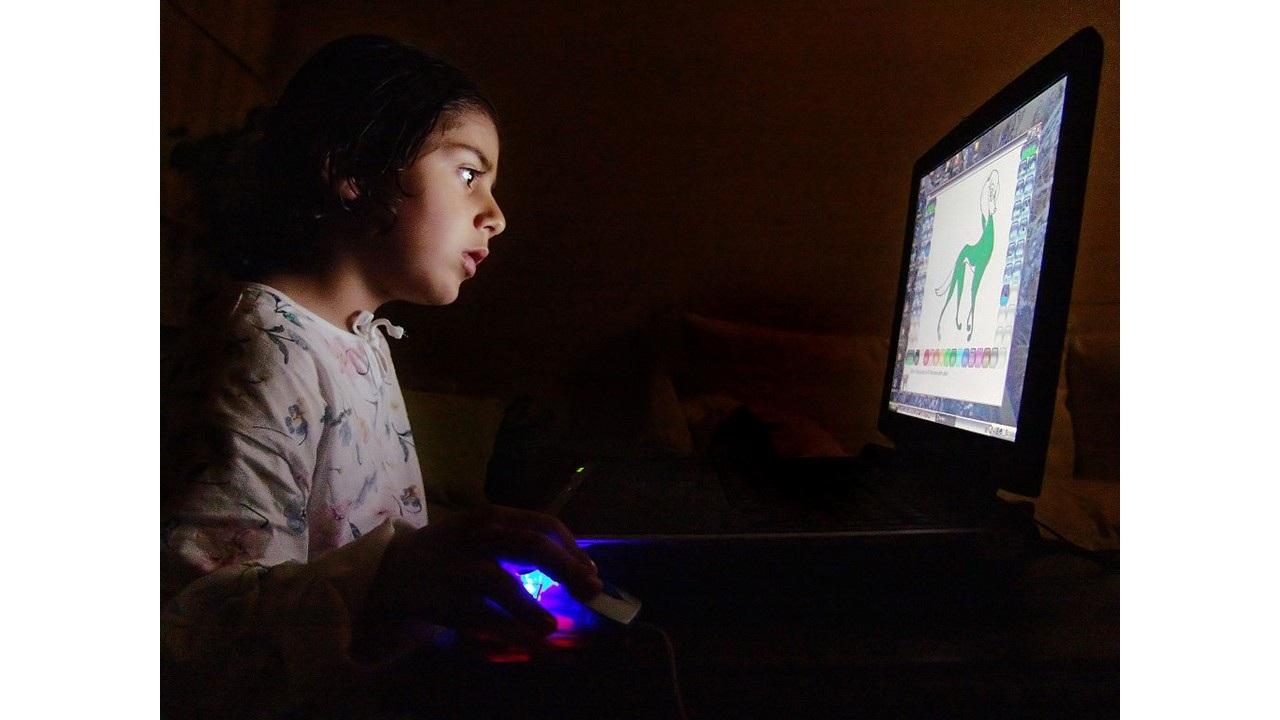
    I just love the musicality and beauty of this alliterative sonnet with images that rise from the page to make me smile in delight, and the accompanying picture is perfect. Shamik, thank you for your splash of sunshine on a stormy morning in Texas.

    Reply
  10. Bruce Phenix says:
    1 year ago

    Thank you for this fresh and lovely poem, Shamik. I just want to say how much I agree with all the positive comments you’ve deservedly garnered above! Best wishes, Bruce.

    Reply
  11. C.B. Anderson says:
    1 year ago

    As a person who has often been mud-caked, even unto early adulthood, I deeply appreciate your accurate estimation of the importance of play. Keep the good English coming!

    Reply

Leave a Reply Cancel reply

Your email address will not be published. Required fields are marked *


  1. Stephen DiLauro on ‘Biblical? Emblematic?’: A Poem by Stephen DiLauroOctober 20, 2026

    Thank you, Margaret. Not familiar with Harris' writing. However, I didn't think this was the first time anyon made the…

  2. Dr Bhairab Barman on Poetry Challenge: Dictionary DelightsOctober 20, 2026

    "The Entomology of Desire" Dr Bhairab Barman At vesper, she unpinned her golden hair, While susurrus of silk disturbed the…

  3. Stephen DiLauro on ‘Biblical? Emblematic?’: A Poem by Stephen DiLauroOctober 19, 2026

    My grandfather had several apple groves on his fruit farm on upstate NY. I loved going there. I wrote a…

  4. Marguerite Crozier on ‘Biblical? Emblematic?’: A Poem by Stephen DiLauroOctober 19, 2026

    Stephen, this association is mentioned importantly in the Robert Harris book, "Second Sleep," a really good read, but not one…

  5. Joseph S. Salemi on ‘Every New Pantheon’: A Poem by C.B. AndersonOctober 19, 2026

    No, that totally escaped my notice. I just assumed that the first part dealt with the existence of divinities, while…

Subscribe to Daily Poems

Enter your email address to subscribe to this blog and receive notifications of new posts by email.

Join 1,660 other subscribers
No Result
View All Result

Resources

       1. A Guide to Writing Poetry

      2. The Best Poems of 2020      

      3. Poetry and Writing Contests

      4. Journals Accepting Formal Verse

Recent Poems

  • ‘The Siege on Castle Hill’: A Poem by Apollo Clark Co
  • ‘Every New Pantheon’: A Poem by C.B. Anderson
  • ‘Biblical? Emblematic?’: A Poem by Stephen DiLauro
  • ‘The Valley’: A Poem by Briana Reavis
  • The Blobfish—‘Mr Blobby’: A Poem by Paul A. Freeman
  • ‘Nature’s Family’: A Poem by Margaret Coats
  • ‘The River & The Sea’: A Poem by Rohini Sunderam
  • Poems by Derzhavin, Akhmatova, and Tyutchev, Translated by Kevin Rainbow
  • ‘After-Action Report’: A Poem by Joseph S. Salemi
  • ‘The Walking Wounded’: A Poem by Jeffrey Essmann
  • ‘Their Words, My Fault’ and Other Poems by Russel Winick
  • ‘Lazarus I’: A Poem by Jason Hunt
  • Poetry Challenge: Dictionary Delights
  • ‘In Defense of Rhyme’: An Essay by Euphrates Moss
  • ‘Gun Control’: A Poem by Kevin Ahern
  • ‘Power of a Pen’: A Poem by Janice Stanley
  • The Best Haiku of 2026
  • ‘One Night in Bangkok’ and Other Poetry by Brian Yapko
  • ‘Invocation’: A Poem by D.R. Rainbolt
  • ‘Enjoy the Peace, Prepare for War’: A Poem by Roy E. Peterson
  • Faust Part Two, Act One: ‘A Pleasant Landscape’ by Goethe, Translated by Josh Olson
  • A Song Inspired by Robert Frost’s ‘The Road Not Taken’, by Gunny Markefka
  • ‘Reappraisals of Mortality’: A Poem by C.B. Anderson
  • ‘What Is the Measure of My Days?’: A Poem by Peter Venable
  • ‘Polar Coordinates’: A Poem by Adam Sedia
  • ‘It Never Lies!’: A Poem by Paul A. Freeman
  • ‘The Mahjong Flowers’: A Set of Sonnets by Margaret Coats
  • ‘The Martyrdom of Saint Cassian’: A Poem by Joseph S. Salemi
  • ‘Mind Versus Beauty’: A Poem by Johann Wolfgang von Goethe, Translated by Eric v.d. Luft
  • ‘Summer Sails’: A Poem by Paulette Calasibetta

Categories

  • Acrostic
  • Alexandroid
  • Alliterative
  • Art
  • Best Poems
  • Blank Verse
  • Chant Royal
  • Classical Poets Live
  • Clerihew
  • Covid-19
  • Deconstructing Communism
  • Educational
  • Epic
  • Epigrams and Proverbs
  • Essays
    • Interviews with Poets
    • Poetry Reviews
  • Featured
  • From the Society
  • Great Poets
    • Dante Alighieri
    • Edgar Allan Poe
    • Emily Dickinson
    • Geoffrey Chaucer
    • Henry Wadsworth Longfellow
    • Homer
    • John Keats
    • John Milton
    • Robert Frost
    • William Blake
    • William Shakespeare
    • William Wordsworth
  • Human Rights in China
  • Limerick
  • Love Poems
  • Music
  • Pantoum
  • Performing Arts
  • Poetry
    • Beauty
    • Children's Poems
    • Culture
    • Ekphrastic
    • Found Poems
    • High School Poets
    • Humor
    • Riddles
  • Poetry Challenge
  • Poetry Contests
  • Poetry Forms
    • Curtal Sonnet
    • Haiku
  • Poetry Readings
  • Rhupunt
  • Rondeau
  • Rondeau Redoublé
  • Rondel
  • Rubaiyat
  • Sapphic Verse
  • Satire
  • Science
  • Sestina
  • Shape Poems
  • Short Stories
  • Song Lyrics
  • Sonnet
  • Symposium
  • Terrorism
  • Terza Rima
  • The Environment
  • Translation
  • Triolet
  • Video
  • Villanelle

Quick Links

  • About Us
  • Submit Poetry
  • Become a Member
  • Members List
  • Support the Society
  • Advertisement Placement
  • Comments Policy
  • Terms of Use

Welcome Back!

Login to your account below

Forgotten Password?

Retrieve your password

Please enter your username or email address to reset your password.

Log In
No Result
View All Result
  • Poems
    • Beauty
    • Culture
    • Satire
    • Humor
    • Children’s
    • Art
    • Ekphrastic
    • Epic
    • Epigrams and Proverbs
    • Human Rights in China
    • Music
    • Performing Arts
    • Riddles
    • Science
    • Song Lyrics
    • The Environment
    • The Raven
    • Found Poems
    • High School Poets
    • Terrorism
    • Covid-19
  • Poetry Forms
    • Sonnet
    • Haiku
    • Limerick
    • Villanelle
    • Rondeau
    • Pantoum
    • Sestina
    • Triolet
    • Acrostic
    • Alexandroid
    • Alliterative
    • Blank Verse
    • Chant Royal
    • Clerihew
    • Rhupunt
    • Rondeau Redoublé
    • Rondel
    • Rubaiyat
    • Sapphic Verse
    • Shape Poems
    • Terza Rima
  • Great Poets
    • Geoffrey Chaucer
    • Emily Dickinson
    • Homer
    • Henry Wadsworth Longfellow
    • Dante Alighieri
    • John Keats
    • John Milton
    • Edgar Allan Poe
    • William Shakespeare
    • William Wordsworth
    • William Blake
    • Robert Frost
  • Love Poems
  • Contests
  • SCP Academy
    • Educational
    • Teaching Classical Poetry—A Guide for Educators
    • Poetry Forms
    • The SCP Journal
    • Books

© 2025 SCP. WebDesign by CODEC Prime.