• Submit Poetry
  • Support SCP
  • About Us
  • Members
  • Join
Thursday, September 3, 2026
Society of Classical Poets
  • Poems
    • Beauty
    • Culture
    • Satire
    • Humor
    • Children’s
    • Art
    • Ekphrastic
    • Epic
    • Epigrams and Proverbs
    • Human Rights in China
    • Music
    • Performing Arts
    • Riddles
    • Science
    • Song Lyrics
    • The Environment
    • The Raven
    • Found Poems
    • High School Poets
    • Terrorism
    • Covid-19
  • Poetry Forms
    • Sonnet
    • Haiku
    • Limerick
    • Villanelle
    • Rondeau
    • Pantoum
    • Sestina
    • Triolet
    • Acrostic
    • Alexandroid
    • Alliterative
    • Blank Verse
    • Chant Royal
    • Clerihew
    • Rhupunt
    • Rondeau Redoublé
    • Rondel
    • Rubaiyat
    • Sapphic Verse
    • Shape Poems
    • Terza Rima
  • Great Poets
    • Geoffrey Chaucer
    • Emily Dickinson
    • Homer
    • Henry Wadsworth Longfellow
    • Dante Alighieri
    • John Keats
    • John Milton
    • Edgar Allan Poe
    • William Shakespeare
    • William Wordsworth
    • William Blake
    • Robert Frost
  • Love Poems
  • Contests
  • SCP Academy
    • Educational
    • Teaching Classical Poetry—A Guide for Educators
    • Poetry Forms
    • The SCP Journal
    • Books
No Result
View All Result
Society of Classical Poets
  • Poems
    • Beauty
    • Culture
    • Satire
    • Humor
    • Children’s
    • Art
    • Ekphrastic
    • Epic
    • Epigrams and Proverbs
    • Human Rights in China
    • Music
    • Performing Arts
    • Riddles
    • Science
    • Song Lyrics
    • The Environment
    • The Raven
    • Found Poems
    • High School Poets
    • Terrorism
    • Covid-19
  • Poetry Forms
    • Sonnet
    • Haiku
    • Limerick
    • Villanelle
    • Rondeau
    • Pantoum
    • Sestina
    • Triolet
    • Acrostic
    • Alexandroid
    • Alliterative
    • Blank Verse
    • Chant Royal
    • Clerihew
    • Rhupunt
    • Rondeau Redoublé
    • Rondel
    • Rubaiyat
    • Sapphic Verse
    • Shape Poems
    • Terza Rima
  • Great Poets
    • Geoffrey Chaucer
    • Emily Dickinson
    • Homer
    • Henry Wadsworth Longfellow
    • Dante Alighieri
    • John Keats
    • John Milton
    • Edgar Allan Poe
    • William Shakespeare
    • William Wordsworth
    • William Blake
    • Robert Frost
  • Love Poems
  • Contests
  • SCP Academy
    • Educational
    • Teaching Classical Poetry—A Guide for Educators
    • Poetry Forms
    • The SCP Journal
    • Books
No Result
View All Result
Society of Classical Poets
No Result
View All Result
Home Poetry Beauty

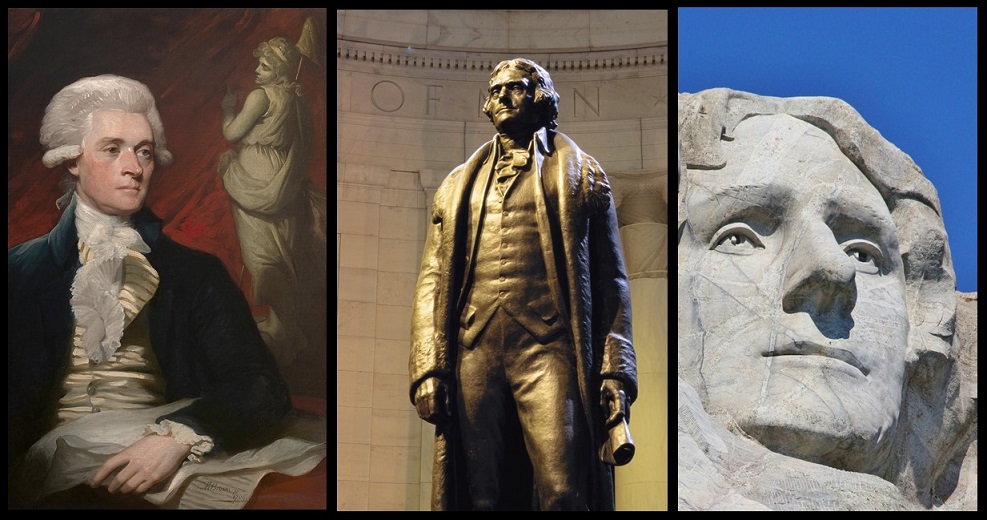
Thomas Jefferson, Poet: An Essay by Michael Curtis

September 5, 2021
in Beauty, Culture, Essays, Poetry
A A
4
poems Thomas Jefferson, Poet: An Essay by Michael Curtis

.

Most schoolgirls, street-people, attorneys, and Bachelors of Art are aware that Thomas Jefferson composed what is likely the most widely-known, oft-repeated sentence in American history:

.

We hold these truths to be self-evident, that all men are created equal, that they are endowed by their Creator with certain unalienable Rights, that among these are Life, Liberty and the pursuit of Happiness.

.

And some will understand that by the principle expressed, much of the world enjoys an almost universal franchise, so very reasonable is the truth.

Yes, Thomas Jefferson was a master of prose, of philosophical thought, of architecture, of statesmanship, of horticulture, of most every skill, task, challenge to which he applied himself.  Most know that Thomas Jefferson was President of these United States, that he loved his wife, his family, that he honored his friends, that his correspondence in prose is voluminous … curious that so very many are eager to invent biographical details when so much truth is in record.

Many know much of Thomas Jefferson that is not true. Innuendo crowds-out veracity, leaving little attention space to know that Jefferson was attuned to verse, that he authored a scholarly essay upon the subject¹, assembled commonplace poetry books², those clippings from newspapers and miscellany that were a fashion well into the old 20th Century.  Fewer know that Jefferson applied himself to the craft of composition in verse, with commendable success.

We cannot be certain of how many verses the great man might have composed, though we are rather certain of two, one for his daughter, the other for his granddaughter.  The verse to his daughter was composed in 1826, near his end when committed to his deathbed.  On July 2, two days before his death, Jefferson told his daughter, Martha Randolph, that he had composed a verse in her honor, that she should read it, when he was gone.  Martha found the verse on a single sheet in a small box where her father told her it would be, and she read, “A death-bed Adieu. Th:J to MR.”

.

Life’s visions are vanished, it’s dreams are no more.
Dear friends of my bosom, why bathed in tears?
I go to my fathers; I welcome the shore,
which crowns all my hopes, or which buries my cares.
Then farewell my dear, my lov’d daughter, Adieu!
The last pang in life is in parting from you.
Two Seraphs await me, long shrouded in death;
I will bear them your love on my last parting breath.

.

The verse to his granddaughter, Ellen Coolidge, is unfinished, of uncertain date.  A few scholars, to enhance personal reputation, attempt to debunk Jefferson authorship, though the verse is in a Jefferson hand, in that trailing of composition that belies copying, and no other author or source has been proposed.  So here, in bunking, “To Ellen”:

.

Tis hope supports each noble flame,
‘Tis hope inspires poetic lays,
Our heroes fight in hopes of fame,
And poets write in hopes of praise.

She sings sweet songs of future years,
And dries the tears of present sorrow,
Bids doubting mortals cease their fears,
And tells them of a bright to-morrow.

And where true love a visit pays,
The minstrel hope is allways there,
To soothe young Cupid with her lays,
And keep the lover from despair.

Why fades the rose upon thy cheek;
Why droop the lilies at the view?
Thy cause of sorrow, Ellen speak,
Why alter’d thus thy sprightly hue?

Each day, alas! with breaking heart,
I see they beautous form decline;
Yet fear my anguish to impart,
Lest it should add a pang to thine.

I will not be afraid whi
have to…

.

Perhaps you hear echoes of The Great Conversation, author to author, Homer to Virgil to Milton to Dryden to Pope to Jefferson, as I hear.  Perhaps you know that Jefferson’s 1787 Great Books list is the earliest that has come to us, a list of recommendations to education, a list essentially the same as the Harvard Classics, a list despised by Progressives because it inculcates good, without concern for tones of flesh or DNA determined features.

Why bring these verses to your attention? For enjoyment, for emolument, the richness you gain in coming to possess Classive Civilization and honor in your nation’s history.

.

¹The 1786 “Thoughts on English Prosody”, an inquiry into meter which concluded that English poetry’s predominant characteristic is rather more accent than quantity (qualitative meter, stressed syllables, alike iambic pentameter, rather than the quantitative meter of Latin).
 
²From a youth of fifteen until a man of thirty, Jefferson assembled a commonplace book of favored prose and verse.  Later, in 1801, Vice-President Jefferson began poetry scrapbooks, and when ready, encouraged his granddaughters to make scrapbooks of their own.  Virginia Randolph Trist recounted, “whenever an opportunity occurred, he sent us books; and he never saw a little story or piece of poetry in a newspaper, suited to our ages and tastes, that he did not preserve and send it to us.”
 
…and, might want to add this note: James Watt, inventor in correspondence with Jefferson (regarding Jefferson’s copying press), is likely the contributor who sent to “The Bee, or Literary Weekly Intelligencer” the last  two stanza of the “Ellen” verse, titled for publication “To Maria”, with this note: “It is requested as a favour that Dr. Anderson will insert the enclosed in his paper called the Bee, being the production of a genius not generally known.”

.

.

Michael Curtis is an architect, sculptor, painter, historian, and poet, has for more than 40 years contributed to the revival of the classical arts. He has taught and lectured at universities, colleges, and museums, including The Institute of Classical Architecture, The National Gallery of Art, et cetera; his pictures and statues are housed in over four hundred private and public collections, including The Library of Congress, The Supreme Court, et alibi; his verse has been published in over twenty journals; his work in the visual arts can be found at TheClassicalArtist.com, and his literary work can be found at TheStudioBooks.com.

ShareTweetPin
The Society of Classical Poets does not endorse any views expressed in individual poems or commentary.
Read Our Comments Policy Here

RandomPoems

‘To Write of Death’ by Jeffrey Essmann
Beauty

‘Perfectionist Inclined’ and Other Poetry by Lynn Kong

November 7, 2020

  Perfectionist Inclined Maligned by self-encasing brine, defined By certainty's demise, self-image lies Within a shrine. Perfectionist inclined, I crouch...

‘How Long Will It Last?’: A Haiku and Other Poetry by Joe Tessitore
Beauty

‘How Long Will It Last?’: A Haiku and Other Poetry by Joe Tessitore

October 3, 2021

. Haiku How long will it last? Butterflies are in decline. Monarch flutters past. . . Nevermore (and Somewhat Less)...

Next Post
In Memory of Sean Howard: A Poem by James A. Tweedie

In Memory of Sean Howard: A Poem by James A. Tweedie

Haiku Competition 2021

The 21 Best Haiku of 2021

poem/coats/beauty

'On Lonely Paths' and Other Poetry by Martin Rizley

Comments 4

  1. Sally Cook says:
    5 years ago

    Dear Michael Curtis –

    Thank you for a very interesting and worthwhile essay on Thomas Jefferson.
    Those men who moved our country forward in its early days had such higher standards, unlike the majority of today’s “leaders”. I truly appreciate the care you have taken.

    Reply
  2. Susan Jarvis Bryant says:
    5 years ago

    As a relatively new citizen, I read this informative essay with intrigue. Thank you very much for the educative and delightful journey.

    Reply
  3. Michael Curtis says:
    5 years ago

    Thank you both for noticing. Much appreciated.

    Reply
  4. Michael Charles Maibach says:
    4 years ago

    Everything Michael Curtis touches – like Jefferson – is improved. Here he improves our memory, and our sense of heart of this great American. Many thanks, Michael!

    Reply

Leave a Reply Cancel reply

Your email address will not be published. Required fields are marked *


  1. Benjamin L. Perez on ‘A World Without the Wednesday Child’: A Poem by Kimberly ForeSeptember 3, 2026

    “A brass abyss of polished hell” — wow.

  2. Anna J. Arredondo on ‘A Potpourri of Aphoristic Verses’ by C.B. AndersonSeptember 3, 2026

    Well! What an apt title for a collection of aphorisms, or gnomic verses. I love it, and I am envious.…

  3. Joseph S. Salemi on ‘Government Issue’ and Other Poems by Joseph S. SalemiSeptember 3, 2026

    Well, poems have to be depressing sometimes, and even deeply upsetting. It's just part of life. I do think that…

  4. Theresa Werba on ‘A Potpourri of Aphoristic Verses’ by C.B. AndersonSeptember 3, 2026

    C.B., I absolutely love these!!! You are a real truth-teller!!!

  5. Joseph S. Salemi on ‘A Potpourri of Aphoristic Verses’ by C.B. AndersonSeptember 3, 2026

    These are perfect gnomic verses. They follow the tradition of ancient gnomic poetry-- short, concise, and pithy, while packed with…

Subscribe to Daily Poems

Enter your email address to subscribe to this blog and receive notifications of new posts by email.

Join 1,634 other subscribers

Recent Poems

  • ‘A Potpourri of Aphoristic Verses’ by C.B. Anderson
  • ‘The Estuary’: A Poem by Jeff Eardley
  • ‘A World Without the Wednesday Child’: A Poem by Kimberly Fore
  • The 2026 Society of Classical Poets International Poetry Competition
  • The 2026 SCP International High School Poetry Competition
  • ‘Realistic Reflections’ and Other Poetry by Anna J. Arredondo
  • ‘China Made’: A Poem by Theresa Werba
  • ‘The Savage Moon’ and Other Poetry by Brian Yapko
  • Poetry Book Review: Love Found, Yearned For, and Lost by James A. Tweedie
  • ‘When Opportunity Knocks’: A Poem by Roy E. Peterson
  • ‘Legend of the Griffin’: A Poem by Iryna Hall
  • ‘Government Issue’ and Other Poems by Joseph S. Salemi
  • ‘Chaucer Announces His Desire to Retire’: A Poem by Paul A. Freeman
  • ‘Advantages of Restaurants’ and Other Poems by Russel Winick
  • ‘Bone China’: A Poem by Mary Gardner
  • ‘On the Death of One Too Young to Die’: A Poem by Jeffrey Essmann
  • ‘This Too Shall Pass’ and Other Poetry by Justin Dasher
  • ‘Humdrum and Harum-Scarum’: A Lecture on Free Verse, by Robert Bridges (1922)
  • ‘Unrest On the Floodplain’: A Poem by Bhikkhu Nyanasobhano
  • ‘Latitude and Loss’: A Poem by Martin Briggs
  • ‘Act III’ and Other Poetry by C.B. Anderson
  • ‘God’s Funeral’: A Poem by James Sale
  • ‘Star Festival’: A Poem by Margaret Coats
  • ‘Song of the Frog Princess’: A Poem by Scharlie Meeuws
  • ‘The Odyssey: Nolan and Solot Compared’: An Essay by Michael Curtis
  • ‘Solitude’ and Other Poems by Mary Jane Myers
  • ‘The River Not Taken’ and Other Poetry by Brian Yapko
  • ‘Totentanz’: A Poem by James A. Tweedie
  • ‘In God Is Our Trust’: A Poem by Roy E. Peterson
  • ‘Confession’: A Poem by Jeffrey Essmann

Categories

  • Acrostic
  • Alexandroid
  • Alliterative
  • Art
  • Best Poems
  • Blank Verse
  • Chant Royal
  • Classical Poets Live
  • Clerihew
  • Covid-19
  • Deconstructing Communism
  • Educational
  • Epic
  • Epigrams and Proverbs
  • Essays
    • Interviews with Poets
    • Poetry Reviews
  • Featured
  • From the Society
  • Great Poets
    • Dante Alighieri
    • Edgar Allan Poe
    • Emily Dickinson
    • Geoffrey Chaucer
    • Henry Wadsworth Longfellow
    • Homer
    • John Keats
    • John Milton
    • Robert Frost
    • William Blake
    • William Shakespeare
    • William Wordsworth
  • Human Rights in China
  • Limerick
  • Love Poems
  • Music
  • Pantoum
  • Performing Arts
  • Poetry
    • Beauty
    • Children's Poems
    • Culture
    • Ekphrastic
    • Found Poems
    • High School Poets
    • Humor
    • Riddles
  • Poetry Challenge
  • Poetry Contests
  • Poetry Forms
    • Curtal Sonnet
    • Haiku
  • Poetry Readings
  • Rhupunt
  • Rondeau
  • Rondeau Redoublé
  • Rondel
  • Rubaiyat
  • Sapphic Verse
  • Satire
  • Science
  • Sestina
  • Shape Poems
  • Short Stories
  • Song Lyrics
  • Sonnet
  • Symposium
  • Terrorism
  • Terza Rima
  • The Environment
  • Translation
  • Triolet
  • Video
  • Villanelle

Quick Links

  • About Us
  • Submit Poetry
  • Become a Member
  • Members List
  • Support the Society
  • Advertisement Placement
  • Comments Policy
  • Terms of Use

Welcome Back!

Login to your account below

Forgotten Password?

Retrieve your password

Please enter your username or email address to reset your password.

Log In
No Result
View All Result
  • Poems
    • Beauty
    • Culture
    • Satire
    • Humor
    • Children’s
    • Art
    • Ekphrastic
    • Epic
    • Epigrams and Proverbs
    • Human Rights in China
    • Music
    • Performing Arts
    • Riddles
    • Science
    • Song Lyrics
    • The Environment
    • The Raven
    • Found Poems
    • High School Poets
    • Terrorism
    • Covid-19
  • Poetry Forms
    • Sonnet
    • Haiku
    • Limerick
    • Villanelle
    • Rondeau
    • Pantoum
    • Sestina
    • Triolet
    • Acrostic
    • Alexandroid
    • Alliterative
    • Blank Verse
    • Chant Royal
    • Clerihew
    • Rhupunt
    • Rondeau Redoublé
    • Rondel
    • Rubaiyat
    • Sapphic Verse
    • Shape Poems
    • Terza Rima
  • Great Poets
    • Geoffrey Chaucer
    • Emily Dickinson
    • Homer
    • Henry Wadsworth Longfellow
    • Dante Alighieri
    • John Keats
    • John Milton
    • Edgar Allan Poe
    • William Shakespeare
    • William Wordsworth
    • William Blake
    • Robert Frost
  • Love Poems
  • Contests
  • SCP Academy
    • Educational
    • Teaching Classical Poetry—A Guide for Educators
    • Poetry Forms
    • The SCP Journal
    • Books

© 2025 SCP. WebDesign by CODEC Prime.