• Submit Poetry
  • Support SCP
  • About Us
  • Members
  • Join
Tuesday, May 12, 2026
Society of Classical Poets
  • Poems
    • Beauty
    • Culture
    • Satire
    • Humor
    • Children’s
    • Art
    • Ekphrastic
    • Epic
    • Epigrams and Proverbs
    • Human Rights in China
    • Music
    • Performing Arts
    • Riddles
    • Science
    • Song Lyrics
    • The Environment
    • The Raven
    • Found Poems
    • High School Poets
    • Terrorism
    • Covid-19
  • Poetry Forms
    • Sonnet
    • Haiku
    • Limerick
    • Villanelle
    • Rondeau
    • Pantoum
    • Sestina
    • Triolet
    • Acrostic
    • Alexandroid
    • Alliterative
    • Blank Verse
    • Chant Royal
    • Clerihew
    • Rhupunt
    • Rondeau Redoublé
    • Rondel
    • Rubaiyat
    • Sapphic Verse
    • Shape Poems
    • Terza Rima
  • Great Poets
    • Geoffrey Chaucer
    • Emily Dickinson
    • Homer
    • Henry Wadsworth Longfellow
    • Dante Alighieri
    • John Keats
    • John Milton
    • Edgar Allan Poe
    • William Shakespeare
    • William Wordsworth
    • William Blake
    • Robert Frost
  • Love Poems
  • Contests
  • SCP Academy
    • Educational
    • Teaching Classical Poetry—A Guide for Educators
    • Poetry Forms
    • The SCP Journal
    • Books
No Result
View All Result
Society of Classical Poets
  • Poems
    • Beauty
    • Culture
    • Satire
    • Humor
    • Children’s
    • Art
    • Ekphrastic
    • Epic
    • Epigrams and Proverbs
    • Human Rights in China
    • Music
    • Performing Arts
    • Riddles
    • Science
    • Song Lyrics
    • The Environment
    • The Raven
    • Found Poems
    • High School Poets
    • Terrorism
    • Covid-19
  • Poetry Forms
    • Sonnet
    • Haiku
    • Limerick
    • Villanelle
    • Rondeau
    • Pantoum
    • Sestina
    • Triolet
    • Acrostic
    • Alexandroid
    • Alliterative
    • Blank Verse
    • Chant Royal
    • Clerihew
    • Rhupunt
    • Rondeau Redoublé
    • Rondel
    • Rubaiyat
    • Sapphic Verse
    • Shape Poems
    • Terza Rima
  • Great Poets
    • Geoffrey Chaucer
    • Emily Dickinson
    • Homer
    • Henry Wadsworth Longfellow
    • Dante Alighieri
    • John Keats
    • John Milton
    • Edgar Allan Poe
    • William Shakespeare
    • William Wordsworth
    • William Blake
    • Robert Frost
  • Love Poems
  • Contests
  • SCP Academy
    • Educational
    • Teaching Classical Poetry—A Guide for Educators
    • Poetry Forms
    • The SCP Journal
    • Books
No Result
View All Result
Society of Classical Poets
No Result
View All Result
Home Poetry Culture

Three Poems of the Nuclear Age by Peter Austin

July 30, 2020
in Culture, Deconstructing Communism, Poetry, The Environment
A A
6
poems Three Poems of the Nuclear Age by Peter Austin


Tomoko

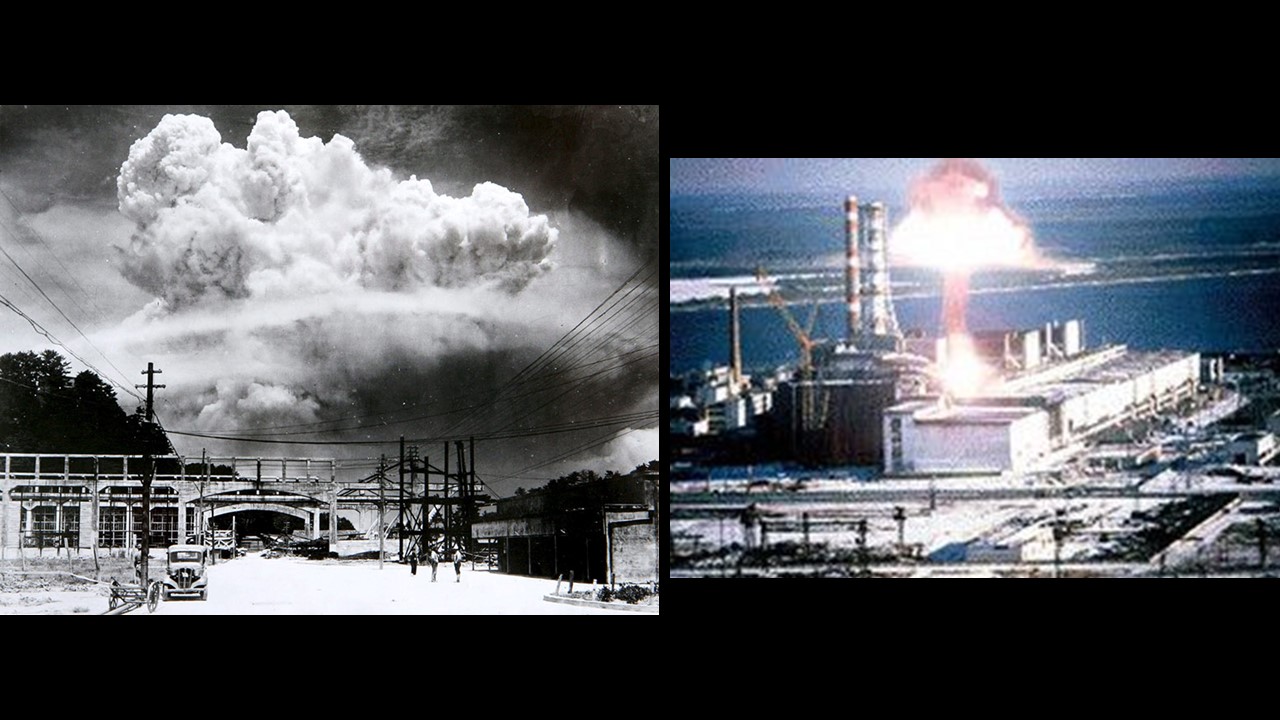
When the Enola Gay dropped ‘Little Boy’,
Tomoko—just a little girl herself—
Was robbed of any hope of earthly joy
And sentenced to a life upon the shelf,

Until, that is, she and two dozen more
(The ‘Hiroshima Maidens’, all of whom
Were suitably disfigured and, therefore,
Fit for the U.S. conscience to consume)

Were taken to The States and gifted, there,
With reconstructive surgery. The rest
Received new faces, easing their despair
At never finding husbands. Feeling blest,

They each flew home to live (as someone said)
‘A relatively normal life’, while she,
Under the surgeon’s scalpel, wound up dead.
The a-bomb merely wiped out her esprit;

Remissness killed her. She was just thirteen.
‘Beauty hunt fatal!’ typed one local hack,
As if she were some timeworn pageant queen
Aching to claim her sixteenth springtime back.


The Yaroshuk Academy of Science

In April nineteen-eighty-six
A man named Colonel Yaroshuk (by training
A chemical dosimetrist) was told
On a Chernobyl map to fix
The radiation hotspots. Uncomplaining,
He, with his hand-held Geiger-counter, strolled

From the reactor’s ruin through
The zone of radiation’s every sector,
Encircling every hotspot for the sake
Of accuracy. He (who knew
The thin lead vest he wore was no protector
Against a meltdown’s miasmatic wake),

A paralytic, lies in bed,
Fed by a spoon, intent on Death’s defiance.
His pension covers anodynes and smokes
Or, if he’d rather, food. It’s said
The Yaroshuk Academy of Science
Is waiting to be named until he croaks.


A Thousand Cranes

On August sixth of nineteen forty-five,
Hiroshima was bombed. A little girl
Named Sadako came out of it alive,
Despite defenestration by the hurl

Of one of Little Boy’s rampaging arms….
She loved to run and, at eleven, made
Her class’s relay team. Free from alarms
Since toddlerhood, by fearful dreams unpreyed

Upon, she found, one morning in November,
Lumps upon her neck and behind both ears
And, later, each a tiny violet ember,
Purpura spots upon her legs. The fears

Of okāsan and tōsan came to be
When leukemia was the diagnosis.
With not much time left, in hospital she
Built her life to its apotheosis

When a friend suggested she pass the days
In folding origami paper cranes.
This, at the time, was something of a craze
(Alongside that of cutting dolls in chains)

And drew Sadako to it. Where to get
The paper, though, was not an easy task,
So she tried magazine page, serviette,
And, when her best friend came by, thought to ask,

‘Chizuko, could you get me some from school…?’
Remembering a legend that she’d learned
About a man who (certainly no fool)
Had folded a thousand, and thereby earned

A granted wish, she took that as her aim….
Over the months, she sickened bit by bit,
Suspicioning that no one overcame
Such a disease as this yet, full of grit,

Surpassed her target. One day in October,
Requesting tea on rice, she took a bite,
Said, ‘It’s good,’ in a lucid voice and sober,
Slowly closed her eyes and gave up the fight.


Poet’s Note: Sadako had folded close to 1,400 cranes by the time she died. Some have been donated to significant places around the world, such as the 9-11 memorial and Pearl Harbor. In 1999, a statue of her holding a ruby-red Crane was unveiled at the Hiroshima Peace Memorial. Its plaque reads, ‘This is our cry. This is our prayer. Peace on Earth.’

Okāsan and tōsan mean mother and father.


Peter Austin is a retired Professor of English who lives in Toronto with his younger two daughters.
ShareTweetPin
The Society of Classical Poets does not endorse any views expressed in individual poems or commentary.
Read Our Comments Policy Here

RandomPoems

‘Haiku’ and Other Poetry by Wendy Lee Klenetsky
Haiku

‘Haiku’ and Other Poetry by Wendy Lee Klenetsky

February 13, 2017

  Haiku "You are what you eat!" That's what all of the books say Then I guess I'm nuts!  ...

Three Rhyming Riddles by Matthew J. Morris
Beauty

‘All the Colors’: A Poem by M.W. Larcinese

December 7, 2025

  All the Colors With all the colors of the rainbow glowing in their hue, I find the one I...

Next Post
A Poem on Moses on the Mount by Jeffrey Kemper

A Poem on Moses on the Mount by Jeffrey Kemper

‘Freakish Tattooing’ by Joseph S. Salemi

'Rueing Tattoos' and Other Poetry by Susan Jarvis Bryant

poetry/death/eternity

'Verses on the Death of His Father' ('Coplas por la muerte de su padre') by Jorge Manrique

Comments 6

  1. James A. Tweedie says:
    6 years ago

    Peter, Estimated numbers can be numbing: 6,000,000 (Jews), 2,000,000 (Stalingrad), 1,000,000 (Leningrad), 250,000 (Okinawa, 200,000 (Nanking), 140,000 (Hiroshima), 100,000 (Tokyo), 80,000 (Nagasaki), 30,000 (Dresden), 25,000 (London Blitz), and on and on, culminating at 70,000,000 (World War 2 total deaths).

    I have stood in silence amidst the 186 mass graves of the nameless dead at the Piskaryovskoe Cemetery outside Leningrad and have wandered the rows of the dead at U.S. National Cemeteries at Punchbowl, Normandy, and Arlington.

    Each of your poems reduces the impersonal, incomprehensible numbers down to one and gives that one person a name—Tomoko—Sadako—and a story; and that one name—that one story—becomes more unbearably painful than the nameless total. It seems that it is one thing to mourn the abstract dead—and quite another to grieve the death of one particular person who we now know by name.

    Like a shriveled child’s shoe displayed in a holocaust museum, your words remind us that each single digit in each of these vast, nameless numbers represents an actual person who lived, and breathed, who hoped and dreamed, and died too young—and, more specifically, was killed—because they were the enemy.

    And every generation vows, “Never again . . .”

    Reply
    • MaryCeleste Crow says:
      6 years ago

      Seems to me that the one man is a tragedy theme in these pieces is pure schmaltz. Propagandistic, sentimental, effeminate. I abhor total war like any good Christian, but the japs waged it and got more than the bargained for. (Ever here about the death ships?) I seem to remember Samuel Morrison postulated that without the nuclear bombings 1 million more people on both sides would have died. And, anyway, we gave them more than ample opportunity to surrender, which they steadfastly refused. Why apologize? For what, being badass? No thanks. There is something of the stench of anti-Americanism in these pieces, too. The writer lives in Toronto, which, I presume, means he is a Canadian. If so, it would explain this perspective, since I don’t know one Canadian, other than the brilliant Kevin Michael Grace, who can’t seem to breath without uttering something negative about America.

      You bring up the bombing of Dresden, good on you. Now that was evil: no reason other than pure vengeance to appease the bloodlust of some people. But I wonder if they would let folded cranes made by little blond German girls fly from 911 memorials. No, that couldn’t be. Whites cant mourn the horror inflicted upon them, especially ebil raythis nasties, since they suffer from white privelage and just by living perpetuate systemic racism, and, as we all know, are to blame for all the evil in the world, for now and evermore. I get the mocking of the hypocrisy of the “never again” meme, but, ahem, it is happening under your very eyes. Can’t you see the statues toppling? Did you not witness the anti white pograms of the last months by the “peaceful protesters”?

      And, by the way, wasn’t it Stalin who said “one man is a tragedy; 1 million a statistic”.

      Reply
      • C.B. Anderson says:
        6 years ago

        MaryCeleste,

        You make some strong points, but please remember: poems are just poems. Cut Canadians some slack; it’s cold up there and they have to put up with it every day, while below them U.S. Americans bask in a subtropical paradise. Yes, the “Japs” got what they asked for, and more. The one thing I hate more than the suffering of little girls is origami. The only white privilege is the privilege of getting blamed for all social ills, and the privilege of being denied credit for almost everything that makes life worth living: advanced medicine, communication technology, The Constitution, and on and on. This is the new white man’s burden.

        Reply
      • Dave Whippman says:
        6 years ago

        You seem to be assuming a lot of things about Mr Austin’s agenda. I couldn’t detect any anti-American, anti-white feeling here. The protagonist of the middle poem, after all, is a white male. And sentimental? I thought the tone of the poems was quite restrained. He does what poets tend to do: focus on individuals, saying something about wider issues in the process.

        Yes, the Japanese waged total war, and it was brutal. So did the Nazis, but when the Germans “got more than they bargained for” it was apparently different: “pure vengeance to appease the bloodlust of some people.” Really? Remember that like the Japanese, Germany had been given every chance to surrender.

        You might say that as a Brit, I can’t judge what is anti-American. I can only answer that I have no more time for BLM, Antifa, etc than you. (We have versions of them over here.) And people like Noam Chomsky et al, plus a lot of Brits, who really are anti-American, irritate the hell out of me.

        By the way: my parents’ generation saw British cities torn apart by German bombs, long before Dresden was touched.

        Reply
  2. Rod Walford says:
    6 years ago

    To my mind these adroit poems raise issues far too complex to be discussed here without getting into the realms of racism and aggression. But let me just say I found them educational as well as being tragic – indelible blots on the pages of history.

    Reply
    • C.B. Anderson says:
      6 years ago

      Right you are, Rod. The complexities involved would take pages and pages to sort out. So we can just be thankful that Mr. Austin has seen fit to give us a first-hand view of another trio of his poetic offspring. Over the years I have noticed that Peter is better than almost anyone else at fitting historical events into form that is precisely crafted.

      Reply

Leave a Reply Cancel reply

Your email address will not be published. Required fields are marked *

  1. Russel Winick on A Poem on the Zambian National Park Mosi-oa-Tunya, by Paul A. FreemanMay 12, 2026

    I love this poem, Paul, because of how well it describes and explains one of the most uniquely beautiful places…

  2. Susan Jarvis Bryant on ‘Spontaneous Conjugal Combustion’ and Other Poems by Susan Jarvis BryantMay 12, 2026

    Joe, I love your interpretation - as far as I'm concerned" a gold-digging young gigolo who attaches himself to a…

  3. Roy Eugene Peterson on National Poetry Month Limerick ChallengeMay 12, 2026

    Urszula, what an imaginative limerick! That is something Poe might have done! Sorry to be so late seeing this.

  4. Roy Eugene Peterson on National Poetry Month Limerick ChallengeMay 12, 2026

    Agreed, Urszula! Thank you for commenting.

  5. Joseph S. Salemi on ‘Spontaneous Conjugal Combustion’ and Other Poems by Susan Jarvis BryantMay 12, 2026

    When I was in the U.K. I heard that "poodle" could mean a henpecked or subservient husband, and by extension…

Subscribe to Daily Poems

Enter your email address to subscribe to this blog and receive notifications of new posts by email.

Join 1,593 other subscribers

Recent Poems

  • A Poem on Coach “Black Mike” Castronis from Athens Y Camp, by Alec Ream
  • A Poem on the Zambian National Park Mosi-oa-Tunya, by Paul A. Freeman
  • ‘Creation of Mom’: A Mother’s Day Poem by Roy E. Peterson
  • ‘Spontaneous Conjugal Combustion’ and Other Poems by Susan Jarvis Bryant
  • ‘The Man in the Moon Was a Very Round Man’: A Poem by Lauren V. Leon
  • ‘Fibromytrauma’: A Poem by Golan Shahar
  • ‘A Lonely Sliver’: A Poem by Katie Tencza
  • ‘Higher Gas Prices Are a Small Price to Pay’: An Iran War Poem by Mark F. Stone
  • ‘Always Ahead’: A Poem by Scharlie Meeuws
  • ‘Hamlet’s Lawyer’ and Other Poetry by Brian Yapko
  • ‘On An Old Photograph’: A Poem by Joseph S. Salemi
  • ‘Faust Foresees His End’: A Poem by Martin Briggs
  • ‘À la Carte’ and Other Poetry by C.B. Anderson
  • ‘Where the Sweet Bluebonnets Bloom’: A Poem by Roy E. Peterson
  • ‘The Waters’: A Poem by Margaret Brinton
  • ‘The Pinnacle of Poetry’ and Other Poems by Russel Winick
  • The First American Sonnets: An Essay on David Humphreys, by Margaret Coats
  • ‘The Holy Rollers on Poetry’: A Poem by Joseph S. Salemi
  • Sappho’s ‘Poem 1’ Translated by Bruce Phenix
  • ‘The Cautionary Tale of Phone Addicted Mimi’: A Poem by Paul A. Freeman
  • ‘Look Away’: A Poem for America’s 250th Anniversary, by Roger Crane
  • ‘Sunday Morning in Canada’: A Poem by Jeffrey Essmann
  • ‘Bean’: A Poem by Jan Mennite
  • ‘The Swan’s Song ’: A Poem for Shakespeare’s Birthday, by Susan Jarvis Bryant
  • ‘The Gravedigger’: A Poem by Marie Burdett
  • ‘Waiting for the Perfect Man’: A Poem by Janice Canerdy
  • ‘The George-A-Saurus’ and Other Poetry by Brian Yapko
  • ‘When Asked: What’s Your Favorite Season?’: A Poem by Paul Millan  
  • ‘The Last At-Bat of Lyndon Braun’: A Poem by Michael Pietrack
  • ‘The Perpetual Battle’ and Other Poetry by Adam Sedia

Categories

  • Acrostic
  • Alexandroid
  • Alliterative
  • Art
  • Best Poems
  • Blank Verse
  • Chant Royal
  • Classical Poets Live
  • Clerihew
  • Covid-19
  • Deconstructing Communism
  • Educational
  • Epic
  • Epigrams and Proverbs
  • Essays
    • Interviews with Poets
    • Poetry Reviews
  • Featured
  • From the Society
  • Great Poets
    • Dante Alighieri
    • Edgar Allan Poe
    • Emily Dickinson
    • Geoffrey Chaucer
    • Henry Wadsworth Longfellow
    • Homer
    • John Keats
    • John Milton
    • Robert Frost
    • William Blake
    • William Shakespeare
    • William Wordsworth
  • Human Rights in China
  • Limerick
  • Love Poems
  • Music
  • Pantoum
  • Performing Arts
  • Poetry
    • Beauty
    • Children's Poems
    • Culture
    • Ekphrastic
    • Found Poems
    • High School Poets
    • Humor
    • Riddles
  • Poetry Challenge
  • Poetry Contests
  • Poetry Forms
    • Curtal Sonnet
    • Haiku
  • Poetry Readings
  • Rhupunt
  • Rondeau
  • Rondeau Redoublé
  • Rondel
  • Rubaiyat
  • Sapphic Verse
  • Satire
  • Science
  • Sestina
  • Shape Poems
  • Short Stories
  • Song Lyrics
  • Sonnet
  • Symposium
  • Terrorism
  • Terza Rima
  • The Environment
  • Translation
  • Triolet
  • Video
  • Villanelle

Quick Links

  • About Us
  • Submit Poetry
  • Become a Member
  • Members List
  • Support the Society
  • Advertisement Placement
  • Comments Policy
  • Terms of Use

Welcome Back!

Login to your account below

Forgotten Password?

Retrieve your password

Please enter your username or email address to reset your password.

Log In
No Result
View All Result
  • Poems
    • Beauty
    • Culture
    • Satire
    • Humor
    • Children’s
    • Art
    • Ekphrastic
    • Epic
    • Epigrams and Proverbs
    • Human Rights in China
    • Music
    • Performing Arts
    • Riddles
    • Science
    • Song Lyrics
    • The Environment
    • The Raven
    • Found Poems
    • High School Poets
    • Terrorism
    • Covid-19
  • Poetry Forms
    • Sonnet
    • Haiku
    • Limerick
    • Villanelle
    • Rondeau
    • Pantoum
    • Sestina
    • Triolet
    • Acrostic
    • Alexandroid
    • Alliterative
    • Blank Verse
    • Chant Royal
    • Clerihew
    • Rhupunt
    • Rondeau Redoublé
    • Rondel
    • Rubaiyat
    • Sapphic Verse
    • Shape Poems
    • Terza Rima
  • Great Poets
    • Geoffrey Chaucer
    • Emily Dickinson
    • Homer
    • Henry Wadsworth Longfellow
    • Dante Alighieri
    • John Keats
    • John Milton
    • Edgar Allan Poe
    • William Shakespeare
    • William Wordsworth
    • William Blake
    • Robert Frost
  • Love Poems
  • Contests
  • SCP Academy
    • Educational
    • Teaching Classical Poetry—A Guide for Educators
    • Poetry Forms
    • The SCP Journal
    • Books

© 2025 SCP. WebDesign by CODEC Prime.