• Submit Poetry
  • Support SCP
  • About Us
  • Members
  • Join
Tuesday, October 20, 2026
Society of Classical Poets
  • Poems
    • Beauty
    • Culture
    • Satire
    • Humor
    • Children’s
    • Art
    • Ekphrastic
    • Epic
    • Epigrams and Proverbs
    • Human Rights in China
    • Music
    • Performing Arts
    • Riddles
    • Science
    • Song Lyrics
    • The Environment
    • The Raven
    • Found Poems
    • High School Poets
    • Terrorism
    • Covid-19
  • Poetry Forms
    • Sonnet
    • Haiku
    • Limerick
    • Villanelle
    • Rondeau
    • Pantoum
    • Sestina
    • Triolet
    • Acrostic
    • Alexandroid
    • Alliterative
    • Blank Verse
    • Chant Royal
    • Clerihew
    • Rhupunt
    • Rondeau Redoublé
    • Rondel
    • Rubaiyat
    • Sapphic Verse
    • Shape Poems
    • Terza Rima
  • Great Poets
    • Geoffrey Chaucer
    • Emily Dickinson
    • Homer
    • Henry Wadsworth Longfellow
    • Dante Alighieri
    • John Keats
    • John Milton
    • Edgar Allan Poe
    • William Shakespeare
    • William Wordsworth
    • William Blake
    • Robert Frost
  • Love Poems
  • Contests
  • SCP Academy
    • Educational
    • Teaching Classical Poetry—A Guide for Educators
    • Poetry Forms
    • The SCP Journal
    • Books
No Result
View All Result
Society of Classical Poets
No Result
View All Result
Home Poetry Beauty

‘Today My Brown Sedan Is Two’ and Other Poetry by Shamik Banerjee

June 6, 2024
in Beauty, Culture, Poetry
A A
10
poems 'Today My Brown Sedan Is Two' and Other Poetry by Shamik Banerjee

.

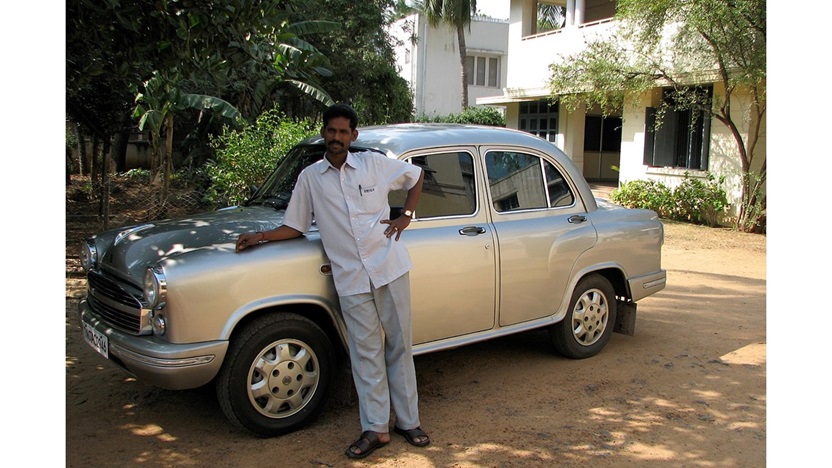
Today My Brown Sedan Is Two

Today, my brown sedan is two,
But I behave as if it’s twenty,
So freezing by a showroom’s door,
I scan the models—new; aplenty.

And busy with an old dollop
Of mud, there goes my niece of seven.
I wonder how she finds in it
Unhindered joy and all of heaven.

.

.

The District Judge 

While sitting by the desk, as noon grew old,
He kept on staring at the ceiling fan
(That was in haste to turn his lunch all cold)
With somewhat unconvinced and frozen eyes.
Caught in the duel between hard facts and lies,
He thought about those last resounding cries
Of two young boys, the almost-widowed wife,
Each pleading made by their convicted man,
And the black ink pen that expunged his life.

.

.

Shamik Banerjee is a poet from Assam, India, where he resides with his parents. His poems have been published by Sparks of Calliope, The Hypertexts, Snakeskin, Ink Sweat & Tears, Autumn Sky Daily, Ekstasis, among others. He received second place in the Southern Shakespeare Company Sonnet Contest, 2024.

ShareTweetPin
The Society of Classical Poets does not endorse any views expressed in individual poems or commentary.
Read Our Comments Policy Here

RandomPoems

‘Passing Through a Graveyard’: A Poem by Robert Nachtegall
Beauty

‘Passing Through a Graveyard’: A Poem by Robert Nachtegall

October 28, 2024

. Passing Through a Graveyard Marred old friends whose breath has passed Are cold friends whose breadth I pass. Some...

‘Shades of Vesuvius’: A Poem by Stephen M. Dickey
Culture

‘Shades of Vesuvius’: A Poem by Stephen M. Dickey

March 24, 2024

. Shades of Vesuvius Seldom does one see horror in a tranche De vie like that in Herculaneum And Pompeii, when a...

Next Post
‘From a Classified Location in England’: A Veteran’s Day Poem by Brian Yapko

'On the 80th Anniversary of D-Day': A Poem by Paul A. Freeman

‘Poetry Is Warfare’: A Poem by Gigi Ryan

'Poetry Is Warfare': A Poem by Gigi Ryan

poem/freeman/humor

'Admonition': A Poem by Edward Stansell

Comments 10

  1. Roy Eugene Peterson says:
    2 years ago

    The first poem took me back in time to when I was six and my cousin made some mud pies and insisted that I taste them! They tasted like mud! That second poem exudes the sadness of being locked away and a life destroyed. I sense the disparity between the facts of the case that may have given way to the lies told, much like political cases. I noted the unusual rhyme scheme that seemed to accentuate the desultory results of a trial.

    Reply
    • Shamik Banerjee says:
      2 years ago

      Nothing is as golden as childhood days, Mr. Peterson. I admire your keen perception and theories presented. You are absolutely right about the relationship between the rhyme scheme and the result of the court session. Thank you so much for reading and expressing your valuable thoughts.

      Reply
  2. Daniel Kemper says:
    2 years ago

    I like the almost somatic link between the ceiling fans cooling effect on the judge’s lunch, and the logic of the situation, despite the imagination of passionate moments, steadily cooling until it is as cold as black ink.

    The apparent setting, the death of the children, and the uncertainty of justice reminded me (perhaps shallowly) of some scenes from The God of Small Things. Actually, not perhaps shallowly, definitely shallowly, there’s so much difference. But it did indeed float to mind.

    In the first poem, it’s a great juxtaposition between the worry or lack thereof between young and old. Perfection calms the worries of the old; imperfection calms the worries of the young. (?)

    Reply
    • Shamik Banerjee says:
      2 years ago

      Dear Daniel, I greatly value the time you took to not only read my poems but also write your understanding of them. I really like the narrative you’ve provided for The District Judge. The God of Small Things is an excellent novel by Arundhati Roy and is a must for every bookworm. I must say I’m truly moved by your insight regarding my second poem. The sense of lack is definitely the core of it but the other part of your theory is fitting too. I never thought of it from that line but now that I do, your theory settles very well. Thank you so very much.

      Reply
  3. C.B. Anderson says:
    2 years ago

    Your unique and oblique takes on the world always bemuse me, and I can easily imgine you playing with our brains in ways heretofore beyond the scope of our experience.

    Reply
  4. Shamik Banerjee says:
    2 years ago

    Thank you so much for reading and commenting, Mr. Anderson. I learn from SCP everyday and strive to improve, bit by bit. I hope you are doing well.

    Reply
  5. Gigi Ryan says:
    2 years ago

    Dear Shamik,

    I read your first poem several times. You compare the contentedness of a young child to that of the discontent of an adult. You wonder how she finds such joy. While children have much to learn from their elders, we can still learn from watching them. Thank you for reminding me to watch and learn.

    In your second poem, you caught well the sober and heavy responsibility of a judge. Here he must make a decision with far reaching consequences, and at the same time his lunch, of little importance in comparison, grows cold.

    Both of your poems use contrast to make your reader think. Thank you.
    Gigi

    Reply
  6. Shamik Banerjee says:
    2 years ago

    Dear Gigi, you have captured the very essence of my poems and put forth an apt summary of them. Thank you so much for taking the time to read and comment. It’s always a pleasure to read your words.

    Reply
  7. Paul Freeman says:
    2 years ago

    You’ve made me think up a new term – polarised poetry.

    The first poem contrasts responsibility-laden adulthood with the innocence of childhood.

    The second contrasts the smaller responsibilities of life (eat your food before it gets cold), with the great responsibility of deciding whether to end a man’s life.

    Thanks for the reads.

    Reply
  8. Margaret Coats says:
    2 years ago

    Your first poem, Shamik, seems to me to be about toys and joys. Often a man pays so much attention to his car that it appears to be a child’s favorite toy. As well, at least where I live, men identify one another with their cars. If they cannot recall a name, they speak of the man who drives a brown sedan. Women, however, are more likely to speak of clothes another woman usually wears. And children, like your niece, can make a toy or identifying joy, from almost anything. I myself used to play with camphor berries as if they were chess pieces (at least until they dried up, and I had to pick fresh ones from the tree). That’s a bit different from wanting a new car when your sedan is only two years old, which is a form of dreaming of the future when you will need and can afford a new car. I hope my elderly brown sedan continues to hum for a few years more, because I really prefer it to almost any new one I can think of. Therefore you have my wishes that your young car may function well and look better for a long time–and that your next car may be a dream come true.

    How much less fortunate is that “District Judge,” who must think of varied circumstances in a disturbing capital case. You have not made the case quite clear to us; it is presented as it flows through the mind of the judge in a particular setting. His is a serious occupation with great responsibility. An uneasy job, too, far from the joys of mud pies or new cars. In both poems, you give your reader just enough to develop a concerned train of thought. Well done.

    Reply

Leave a Reply Cancel reply

Your email address will not be published. Required fields are marked *


  1. Roy Eugene Peterson on Poetry Challenge: Dictionary DelightsOctober 20, 2026

    This is a brilliantly conceptualized poem with fascinating words that sent me to the dictionary for elucidation.

  2. Brian Yapko on ‘The Siege on Castle Hill’: A Poem by Apollo Clark CoOctober 20, 2026

    I very much admire what you were aiming for with this poem, Apollo, and its multiple points of view. It…

  3. Brian Yapko on ‘Every New Pantheon’: A Poem by C.B. AndersonOctober 20, 2026

    I love this poem, Kip. It says so much about the tension between atheism and faith -- a faith which,…

  4. Roy Eugene Peterson on ‘The Siege on Castle Hill’: A Poem by Apollo Clark CoOctober 20, 2026

    Apollo, what a great story told in captivating poetry with a vivid portrayal blessed with your great imagery. The way…

  5. Stephen DiLauro on ‘Biblical? Emblematic?’: A Poem by Stephen DiLauroOctober 20, 2026

    Sorry for the name.mix up, Marguerite. I thought I typed it correctly. Damn autocorrect probably got me again.

Subscribe to Daily Poems

Enter your email address to subscribe to this blog and receive notifications of new posts by email.

Join 1,660 other subscribers
No Result
View All Result

Resources

       1. A Guide to Writing Poetry

      2. The Best Poems of 2020      

      3. Poetry and Writing Contests

      4. Journals Accepting Formal Verse

Recent Poems

  • ‘The Siege on Castle Hill’: A Poem by Apollo Clark Co
  • ‘Every New Pantheon’: A Poem by C.B. Anderson
  • ‘Biblical? Emblematic?’: A Poem by Stephen DiLauro
  • ‘The Valley’: A Poem by Briana Reavis
  • The Blobfish—‘Mr Blobby’: A Poem by Paul A. Freeman
  • ‘Nature’s Family’: A Poem by Margaret Coats
  • ‘The River & The Sea’: A Poem by Rohini Sunderam
  • Poems by Derzhavin, Akhmatova, and Tyutchev, Translated by Kevin Rainbow
  • ‘After-Action Report’: A Poem by Joseph S. Salemi
  • ‘The Walking Wounded’: A Poem by Jeffrey Essmann
  • ‘Their Words, My Fault’ and Other Poems by Russel Winick
  • ‘Lazarus I’: A Poem by Jason Hunt
  • Poetry Challenge: Dictionary Delights
  • ‘In Defense of Rhyme’: An Essay by Euphrates Moss
  • ‘Gun Control’: A Poem by Kevin Ahern
  • ‘Power of a Pen’: A Poem by Janice Stanley
  • The Best Haiku of 2026
  • ‘One Night in Bangkok’ and Other Poetry by Brian Yapko
  • ‘Invocation’: A Poem by D.R. Rainbolt
  • ‘Enjoy the Peace, Prepare for War’: A Poem by Roy E. Peterson
  • Faust Part Two, Act One: ‘A Pleasant Landscape’ by Goethe, Translated by Josh Olson
  • A Song Inspired by Robert Frost’s ‘The Road Not Taken’, by Gunny Markefka
  • ‘Reappraisals of Mortality’: A Poem by C.B. Anderson
  • ‘What Is the Measure of My Days?’: A Poem by Peter Venable
  • ‘Polar Coordinates’: A Poem by Adam Sedia
  • ‘It Never Lies!’: A Poem by Paul A. Freeman
  • ‘The Mahjong Flowers’: A Set of Sonnets by Margaret Coats
  • ‘The Martyrdom of Saint Cassian’: A Poem by Joseph S. Salemi
  • ‘Mind Versus Beauty’: A Poem by Johann Wolfgang von Goethe, Translated by Eric v.d. Luft
  • ‘Summer Sails’: A Poem by Paulette Calasibetta

Categories

  • Acrostic
  • Alexandroid
  • Alliterative
  • Art
  • Best Poems
  • Blank Verse
  • Chant Royal
  • Classical Poets Live
  • Clerihew
  • Covid-19
  • Deconstructing Communism
  • Educational
  • Epic
  • Epigrams and Proverbs
  • Essays
    • Interviews with Poets
    • Poetry Reviews
  • Featured
  • From the Society
  • Great Poets
    • Dante Alighieri
    • Edgar Allan Poe
    • Emily Dickinson
    • Geoffrey Chaucer
    • Henry Wadsworth Longfellow
    • Homer
    • John Keats
    • John Milton
    • Robert Frost
    • William Blake
    • William Shakespeare
    • William Wordsworth
  • Human Rights in China
  • Limerick
  • Love Poems
  • Music
  • Pantoum
  • Performing Arts
  • Poetry
    • Beauty
    • Children's Poems
    • Culture
    • Ekphrastic
    • Found Poems
    • High School Poets
    • Humor
    • Riddles
  • Poetry Challenge
  • Poetry Contests
  • Poetry Forms
    • Curtal Sonnet
    • Haiku
  • Poetry Readings
  • Rhupunt
  • Rondeau
  • Rondeau Redoublé
  • Rondel
  • Rubaiyat
  • Sapphic Verse
  • Satire
  • Science
  • Sestina
  • Shape Poems
  • Short Stories
  • Song Lyrics
  • Sonnet
  • Symposium
  • Terrorism
  • Terza Rima
  • The Environment
  • Translation
  • Triolet
  • Video
  • Villanelle

Quick Links

  • About Us
  • Submit Poetry
  • Become a Member
  • Members List
  • Support the Society
  • Advertisement Placement
  • Comments Policy
  • Terms of Use

Welcome Back!

Login to your account below

Forgotten Password?

Retrieve your password

Please enter your username or email address to reset your password.

Log In
No Result
View All Result
  • Poems
    • Beauty
    • Culture
    • Satire
    • Humor
    • Children’s
    • Art
    • Ekphrastic
    • Epic
    • Epigrams and Proverbs
    • Human Rights in China
    • Music
    • Performing Arts
    • Riddles
    • Science
    • Song Lyrics
    • The Environment
    • The Raven
    • Found Poems
    • High School Poets
    • Terrorism
    • Covid-19
  • Poetry Forms
    • Sonnet
    • Haiku
    • Limerick
    • Villanelle
    • Rondeau
    • Pantoum
    • Sestina
    • Triolet
    • Acrostic
    • Alexandroid
    • Alliterative
    • Blank Verse
    • Chant Royal
    • Clerihew
    • Rhupunt
    • Rondeau Redoublé
    • Rondel
    • Rubaiyat
    • Sapphic Verse
    • Shape Poems
    • Terza Rima
  • Great Poets
    • Geoffrey Chaucer
    • Emily Dickinson
    • Homer
    • Henry Wadsworth Longfellow
    • Dante Alighieri
    • John Keats
    • John Milton
    • Edgar Allan Poe
    • William Shakespeare
    • William Wordsworth
    • William Blake
    • Robert Frost
  • Love Poems
  • Contests
  • SCP Academy
    • Educational
    • Teaching Classical Poetry—A Guide for Educators
    • Poetry Forms
    • The SCP Journal
    • Books

© 2025 SCP. WebDesign by CODEC Prime.