• Submit Poetry
  • Support SCP
  • About Us
  • Members
  • Join
Friday, September 4, 2026
Society of Classical Poets
  • Poems
    • Beauty
    • Culture
    • Satire
    • Humor
    • Children’s
    • Art
    • Ekphrastic
    • Epic
    • Epigrams and Proverbs
    • Human Rights in China
    • Music
    • Performing Arts
    • Riddles
    • Science
    • Song Lyrics
    • The Environment
    • The Raven
    • Found Poems
    • High School Poets
    • Terrorism
    • Covid-19
  • Poetry Forms
    • Sonnet
    • Haiku
    • Limerick
    • Villanelle
    • Rondeau
    • Pantoum
    • Sestina
    • Triolet
    • Acrostic
    • Alexandroid
    • Alliterative
    • Blank Verse
    • Chant Royal
    • Clerihew
    • Rhupunt
    • Rondeau Redoublé
    • Rondel
    • Rubaiyat
    • Sapphic Verse
    • Shape Poems
    • Terza Rima
  • Great Poets
    • Geoffrey Chaucer
    • Emily Dickinson
    • Homer
    • Henry Wadsworth Longfellow
    • Dante Alighieri
    • John Keats
    • John Milton
    • Edgar Allan Poe
    • William Shakespeare
    • William Wordsworth
    • William Blake
    • Robert Frost
  • Love Poems
  • Contests
  • SCP Academy
    • Educational
    • Teaching Classical Poetry—A Guide for Educators
    • Poetry Forms
    • The SCP Journal
    • Books
No Result
View All Result
Society of Classical Poets
  • Poems
    • Beauty
    • Culture
    • Satire
    • Humor
    • Children’s
    • Art
    • Ekphrastic
    • Epic
    • Epigrams and Proverbs
    • Human Rights in China
    • Music
    • Performing Arts
    • Riddles
    • Science
    • Song Lyrics
    • The Environment
    • The Raven
    • Found Poems
    • High School Poets
    • Terrorism
    • Covid-19
  • Poetry Forms
    • Sonnet
    • Haiku
    • Limerick
    • Villanelle
    • Rondeau
    • Pantoum
    • Sestina
    • Triolet
    • Acrostic
    • Alexandroid
    • Alliterative
    • Blank Verse
    • Chant Royal
    • Clerihew
    • Rhupunt
    • Rondeau Redoublé
    • Rondel
    • Rubaiyat
    • Sapphic Verse
    • Shape Poems
    • Terza Rima
  • Great Poets
    • Geoffrey Chaucer
    • Emily Dickinson
    • Homer
    • Henry Wadsworth Longfellow
    • Dante Alighieri
    • John Keats
    • John Milton
    • Edgar Allan Poe
    • William Shakespeare
    • William Wordsworth
    • William Blake
    • Robert Frost
  • Love Poems
  • Contests
  • SCP Academy
    • Educational
    • Teaching Classical Poetry—A Guide for Educators
    • Poetry Forms
    • The SCP Journal
    • Books
No Result
View All Result
Society of Classical Poets
No Result
View All Result
Home Poetry Beauty

Two Whale Poems, by James A. Tweedie

November 22, 2019
in Beauty, Culture, Poetry
A A
21
poems Two Whale Poems, by James A. Tweedie

Reflections on a Dead Whale

The sound of surf; the scratch of sand on feet;
The sight of distant ships; the taste of salt;
And on the gentle springtime ocean breeze
The putrid, pungent, rotting stench of death.

A behemoth, a California Gray,
A biblical leviathan, as still as stone.
A girl, she was, and thirty-eight feet long,
I know, because I paced it off myself.

Marine biologists from Portland State
Were finishing a full necropsy which
Had disemboweled the whale and left a large
Entangled pile of entrails on the beach.

One eye excised, her uterus exposed;
Her liver splayed upon the blood-soaked shore,
Her stomach opened up for all to see,
And skin as thin and soft as Naugahyde.

Her body pierced, her flesh and blubber flayed,
Her blowhole left atop her head unscathed.
Her gaping maw and still-intact baleen
Forced open by her massive, swollen tongue.

I asked if they had found the cause of death.
“No human interaction,” they replied.
“We think there may have been a hemorrhage,
And malnutrition could have played a part.”

And then they left, a caravan of trucks,
Returning to their lab to do more tests.
The stranded whale was left behind to rot;
Too large to bury, burn, or haul away.

Three whales were washed up on the shore that day,
The other two, ten miles to the north;
Too isolated to attract a team
Of scientists to find out why they died.

At least one whale or two wash up each year
And most are Grays, although a Humpback and
A Sperm once came ashore within a week
Of one another, not too long ago.

The long migration of the Grays each spring
Is arduous enough to cull the herd
Of weaker whales who fall behind and die,
And float ashore along the Northwest coast.

The strongest make it to the Bering Sea
Where calves are birthed and nursed by mothers who
Engorge themselves on krill until they start
Their Fall migration back to Mexico.

To see such animals that large up close
Is quite impressive, even when they’re dead.
But even more impressive is to see
Them in the ocean when they are alive.

Death is a most impressive mystery.
But more so, life. Or so it seems to me.


Whale Watch

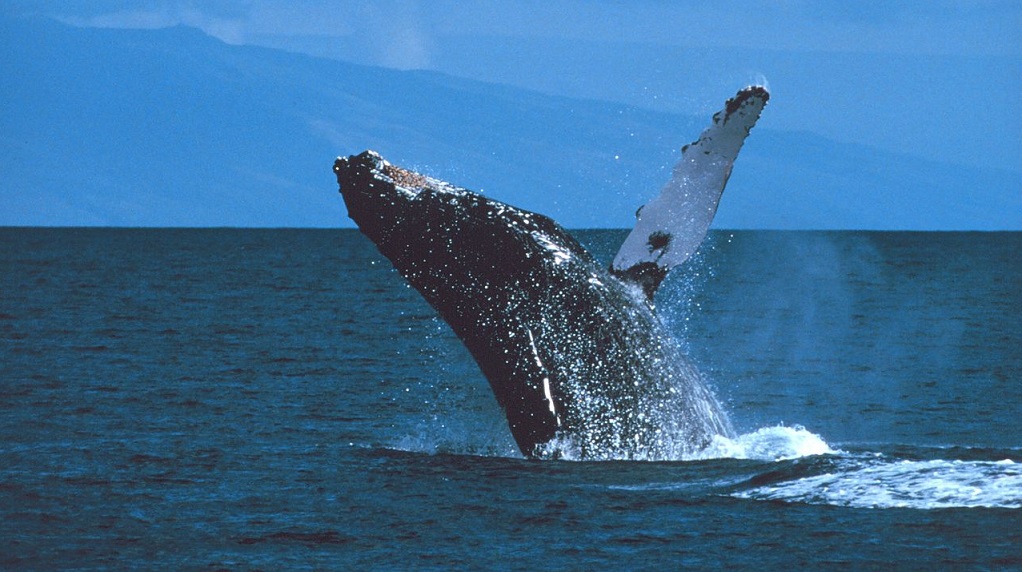
At first, a single whale (a humpback stray)
Was acting crazy half a mile off-shore.
I watched it bobbing up and down at play
In ways I’d never seen one act before.

But she (or he) was clearly not alone,
For as she danced upon that unseen shoal
I counted at least five whales, fully grown,
All breaching like a game of Whack-A-Mole.

And on it went for more than half-an hour,
With splashes, spouts, jetés, and pirouettes
Exquisitely performed with grace and pow’r.
It was as good as nature ever gets.

Perhaps a feeding frenzy . . . nothing more.
But what a thrill to see the humpbacks soar!


James A. Tweedie is a recently retired pastor living in Long Beach, Washington. He likes to walk on the beach with his wife. He has written and self-published four novels and a collection of short stories. He has several hundred unpublished poems tucked away in drawers.


ShareTweetPin
The Society of Classical Poets does not endorse any views expressed in individual poems or commentary.
Read Our Comments Policy Here

RandomPoems

poem/cooper/revenge
Beauty

‘La Muerte’ and Other Poetry by Monika Cooper

March 31, 2023

. La Muerte In those days, no king ruled in Ithaca. A pack moved in with communist ideals: An orgy...

‘Curtain Up!’ and Other Poetry by Joe Tessitore
Beauty

‘Curtain Up!’ and Other Poetry by Joe Tessitore

June 11, 2018

Curtain Up! Sunset and the robins sing, nightingales reply song that summer evenings bring, weeping willows sigh from lawns and from...

Next Post
‘Whither Thou Goest…’ by Leo Zoutewelle

'Whither Thou Goest...' by Leo Zoutewelle

poem/graham/culture

'Sonnet: America in 2019' by Bruce Dale Wise

‘The Plight of Animals’ and Other Poetry by Peter Hartley

'The Plight of Animals' and Other Poetry by Peter Hartley

Comments 21

  1. Leo Zoutewelle says:
    7 years ago

    Hi James,
    I loved the sonnet, but I could literally see neither rhyme nor reason for the first poem. I’d like to learn more about that.
    Leo

    Reply
    • James A. Tweedie says:
      7 years ago

      Leo,

      Good comment. Here’s my response.

      1. No rhyme? Because (except for the closing couplet) it is blank verse.
      2. No reason? None, really. I simply journaled my experience and thoughts in verse. It is a narrative, descriptive poem self-consciously designed to read as much like prose as possible. It is intended more as a curiosity than as an example of anything profound or elegant. I expect that some will embrace it as being poetry and others will be more skeptical. It is what it is.

      Also, sometimes I get tired of writing sonnets.

      Reply
      • Leo Zoutewelle says:
        7 years ago

        Thank you James,,
        Seriously, that was helpful.

        Reply
      • Monty says:
        7 years ago

        What? So you could see “no reason” for the first poem, Leo? I believe that that’s the first time on these pages that I’ve ever noticed someone questioning an author’s ‘reason’ for writing a poem.

        Surely it’s the case that there is only ever ONE ‘reason’ for writing a poem: the author is sufficiently struck by an image/feeling/happening . . that they feel impelled to convey/share that sentiment to/with others by means of verse. That alone should always justify an author’s “reason” for such an act . . should it not?

        Reply
  2. Robert Cooperman says:
    7 years ago

    “Whale Watch” was quite charming. It seemed quite effortless in its adherence to rhyme and meter, which is usually the result of sweating blood over the poem.

    Reply
  3. Peter Hartley says:
    7 years ago

    James – Unlike Leo I didn’t even notice the lack of rhyme in the first poem at a first reading, as I was rapidly becoming embroiled in a splanchnic slurry. A sombre subject indeed, well handled and informative, and I’m glad to hear that the whale is thought to have died of natural causes. One of the most crowded moments of my life was the sight of a Humpback whale breaching a mere ten feet away from our flimsy inflatable, its piggy little eye on a level with our own and full of an alien intelligence. So this poem brought back vivid memories too.

    Reply
    • Jim Tweedie says:
      7 years ago

      Peter,

      Peter,

      “Splanchnic slurry.” I had to look up the word “splanchnic” in order to make sense out the phrase. Not surprisingly, it did. Coincidentally, I have recently submitted another poem with a splanchnic reference . . . so . . . you will need to find another word to use in your future comment lest you be caught repeating yourself!

      Reply
  4. David Paul Behrens says:
    7 years ago

    Poetry (2013)

    Poetry that rhymes
    Is out of fashion.
    Unfortunately for me,
    It is my passion.

    So just like a king
    Must wear his crown,
    If it does not rhyme,
    I don’t write it down.

    Okay, so Reflections on a Dead Whale doesn’t rhyme. So what? It is interesting, nonetheless. The couplet at the end, which does rhyme, sums it all up with some deep meaning.

    I enjoyed both poems. (And who doesn’t like whales?)

    Reply
    • James A. Tweedie says:
      7 years ago

      From what I have read, approximately 1/2 of whales (of all species) that wash up dead on the Pacific Northwest coast from San Francisco up die from some form of human contact (usually with a ship). The other half from natural causes—in recent years often related to malnourishment caused by greater-than-historic grey whale populations overwhelming the winter food supply off of Baja. Climate change is most certainly also playing a role in such things. The less-common deaths of Blue, sperm, orca and humpback whales is not so much from malnourishment but primarily from human contact followed by complications from age/disease.

      Reply
    • James A. Tweedie says:
      7 years ago

      Shan, maybe?

      Reply
  5. James A. Tweedie says:
    7 years ago

    Spellcheck did it again! It was supposed to say, “Ahab, maybe?”

    Reply
    • D Robin says:
      7 years ago

      In Chinese ‘shàn’, with a fourth, downward tone, 善, is benevolence or compassion. Not sure that fits with your drift here, Cap’n James, but the spellchecker could do with some – as could we all …

      Reply
      • James A. Tweedie says:
        7 years ago

        Lol! The SCP knowledge base never fails to amaze me! And, apparently, my cell phone is bi-lingual!

        Reply
  6. C.B. Anderson says:
    7 years ago

    I like whales. They are impressive beasts, and I wish I were personally acquainted with a few of them, or at least had had a close encounter or two (though not so much in the manner described in the first poem. There’s nothing wrong with blank verse. Milton liked it, and I should probably write more of it, but, like Mr. Behrens, I am addicted to rhyme.

    Reply
  7. Lannie David Brockstein says:
    7 years ago

    Hello James A. Tweedie,

    Might it have been a whale orgy that the speaker in your “Whale Watch” did witness?

    That same phenomenon might also have been what did beach the whale of your “Reflections on a Dead Whale” work.

    Whale Orgy Documentary: https://www.youtube.com/watch?v=eqC_0zt7Sew

    Despite their slutty ways, I will always be grateful to whales for their having saved the Earth in 1986, along with the crew of the U.S.S. Enterprise, as chronicled in “Star Trek VI: The Voyage Home”.

    From Lannie.

    Reply
  8. James Sale says:
    7 years ago

    Both excellent poems, James. Blank verse plus the stanzaic form holds the structure together as you itemise ‘death’ and cannot really come to an understanding of it, for all the parts that make it up; but it is the concluding couplet when the rhyme strikes that brings the whole poem alive. It is analogous to our own lives which often make little sense as we live it, but at the point of death, then the story is complete and it makes sense backwards. So the rhyme (especially of mystery/me) is very potent, very powerful. Well done.

    Reply
    • James A. Tweedie says:
      7 years ago

      Thank you, James. Your thoughts echo my own and my intent in the closing couplet was very much as you describe. As Monty hints at above, I would not have bothered to write the first poem if the experience it describes had not touched me in some profound and vulnerable place, one that I felt worthy of exploration. As you well know from your own experience, situations concerning life and death are where we are most starkly confronted by the mystery and meaning of our human existence.

      Reply
  9. Anna J. Arredondo says:
    7 years ago

    I enjoyed these two contrasting poems on the same subject. The first is powerfully descriptive and thought-provoking. The second, playful and entertaining as the whales themselves. I love the Whack-A-Mole line!

    Reply
  10. David Watt says:
    7 years ago

    James, both of your poems got me thinking about the annual trek of humpback whales along the East coast of Australia. They are a magnificent, awe-inspiring creature. The whales also support an increasing number of whale watching ventures.

    The Whack-A-Mole line also struck me as being a delightfully playful rhyme. Well done!

    Reply
  11. W. S. "Eel" Bericuda says:
    7 years ago

    In reading “Reflections on a Dead Whale”, I noticed the absence of rhyme, until the final couplet, which reminded me of a Shakespearean scene-closure; but what was most remarkable to me was how the lines ignited verbal sparks. Perhaps it was the stanzaic structure, or the poem’s imagery; I don’t know; but whatever the case, I thought the blank verse nicely done. The poem has that same clear-sighted vision seen in PostModernist Ted Hughes’ stanzaic “View of a Pig”. In looking at the couplet of “Whale Watch”, the first line gives greater impetus to the second. The single phrase “feeding frenzy” sent me back to a tennos I wrote four years ago on whale watching in the Columbia River.

    Reply
  12. Anissa Gage says:
    7 years ago

    In your second poem I especially loved your eloquent use of “jetes, and pirouettes”.
    ‘

    Reply

Leave a Reply Cancel reply

Your email address will not be published. Required fields are marked *


  1. Margaret Coats on ‘A Prayer of Aristotle’: A Poem by Margaret CoatsSeptember 4, 2026

    Thanks, Bruce, you offer luxurious appreciation of valuable prose which is mostly Greek to us, even when we've learned to…

  2. Margaret Coats on ‘Humdrum and Harum-Scarum’: A Lecture on Free Verse, by Robert Bridges (1922)September 4, 2026

    Thank you, Phillip Whidden, for recommending this essay. It's worthwhile comprehending the issues as an intelligent poet and critic understood…

  3. BDW on ‘A Prayer of Aristotle’: A Poem by Margaret CoatsSeptember 3, 2026

    The Prose Apartments by Esiad L Werecub Along the highway of communication, one can find the prose apartment paragraphs conveniently…

  4. Kimberly Fore on ‘A World Without the Wednesday Child’: A Poem by Kimberly ForeSeptember 3, 2026

    Thank you all for your kind words, and some to chew on. It is encouragement to press on.

  5. Cynthia Erlandson on ‘A Potpourri of Aphoristic Verses’ by C.B. AndersonSeptember 3, 2026

    Getting older makes us colder. Sweaters in summer are a bummer.

Subscribe to Daily Poems

Enter your email address to subscribe to this blog and receive notifications of new posts by email.

Join 1,634 other subscribers

Recent Poems

  • ‘A Potpourri of Aphoristic Verses’ by C.B. Anderson
  • ‘The Estuary’: A Poem by Jeff Eardley
  • ‘A World Without the Wednesday Child’: A Poem by Kimberly Fore
  • The 2026 Society of Classical Poets International Poetry Competition
  • The 2026 SCP International High School Poetry Competition
  • ‘Realistic Reflections’ and Other Poetry by Anna J. Arredondo
  • ‘China Made’: A Poem by Theresa Werba
  • ‘The Savage Moon’ and Other Poetry by Brian Yapko
  • Poetry Book Review: Love Found, Yearned For, and Lost by James A. Tweedie
  • ‘When Opportunity Knocks’: A Poem by Roy E. Peterson
  • ‘Legend of the Griffin’: A Poem by Iryna Hall
  • ‘Government Issue’ and Other Poems by Joseph S. Salemi
  • ‘Chaucer Announces His Desire to Retire’: A Poem by Paul A. Freeman
  • ‘Advantages of Restaurants’ and Other Poems by Russel Winick
  • ‘Bone China’: A Poem by Mary Gardner
  • ‘On the Death of One Too Young to Die’: A Poem by Jeffrey Essmann
  • ‘This Too Shall Pass’ and Other Poetry by Justin Dasher
  • ‘Humdrum and Harum-Scarum’: A Lecture on Free Verse, by Robert Bridges (1922)
  • ‘Unrest On the Floodplain’: A Poem by Bhikkhu Nyanasobhano
  • ‘Latitude and Loss’: A Poem by Martin Briggs
  • ‘Act III’ and Other Poetry by C.B. Anderson
  • ‘God’s Funeral’: A Poem by James Sale
  • ‘Star Festival’: A Poem by Margaret Coats
  • ‘Song of the Frog Princess’: A Poem by Scharlie Meeuws
  • ‘The Odyssey: Nolan and Solot Compared’: An Essay by Michael Curtis
  • ‘Solitude’ and Other Poems by Mary Jane Myers
  • ‘The River Not Taken’ and Other Poetry by Brian Yapko
  • ‘Totentanz’: A Poem by James A. Tweedie
  • ‘In God Is Our Trust’: A Poem by Roy E. Peterson
  • ‘Confession’: A Poem by Jeffrey Essmann

Categories

  • Acrostic
  • Alexandroid
  • Alliterative
  • Art
  • Best Poems
  • Blank Verse
  • Chant Royal
  • Classical Poets Live
  • Clerihew
  • Covid-19
  • Deconstructing Communism
  • Educational
  • Epic
  • Epigrams and Proverbs
  • Essays
    • Interviews with Poets
    • Poetry Reviews
  • Featured
  • From the Society
  • Great Poets
    • Dante Alighieri
    • Edgar Allan Poe
    • Emily Dickinson
    • Geoffrey Chaucer
    • Henry Wadsworth Longfellow
    • Homer
    • John Keats
    • John Milton
    • Robert Frost
    • William Blake
    • William Shakespeare
    • William Wordsworth
  • Human Rights in China
  • Limerick
  • Love Poems
  • Music
  • Pantoum
  • Performing Arts
  • Poetry
    • Beauty
    • Children's Poems
    • Culture
    • Ekphrastic
    • Found Poems
    • High School Poets
    • Humor
    • Riddles
  • Poetry Challenge
  • Poetry Contests
  • Poetry Forms
    • Curtal Sonnet
    • Haiku
  • Poetry Readings
  • Rhupunt
  • Rondeau
  • Rondeau Redoublé
  • Rondel
  • Rubaiyat
  • Sapphic Verse
  • Satire
  • Science
  • Sestina
  • Shape Poems
  • Short Stories
  • Song Lyrics
  • Sonnet
  • Symposium
  • Terrorism
  • Terza Rima
  • The Environment
  • Translation
  • Triolet
  • Video
  • Villanelle

Quick Links

  • About Us
  • Submit Poetry
  • Become a Member
  • Members List
  • Support the Society
  • Advertisement Placement
  • Comments Policy
  • Terms of Use

Welcome Back!

Login to your account below

Forgotten Password?

Retrieve your password

Please enter your username or email address to reset your password.

Log In
No Result
View All Result
  • Poems
    • Beauty
    • Culture
    • Satire
    • Humor
    • Children’s
    • Art
    • Ekphrastic
    • Epic
    • Epigrams and Proverbs
    • Human Rights in China
    • Music
    • Performing Arts
    • Riddles
    • Science
    • Song Lyrics
    • The Environment
    • The Raven
    • Found Poems
    • High School Poets
    • Terrorism
    • Covid-19
  • Poetry Forms
    • Sonnet
    • Haiku
    • Limerick
    • Villanelle
    • Rondeau
    • Pantoum
    • Sestina
    • Triolet
    • Acrostic
    • Alexandroid
    • Alliterative
    • Blank Verse
    • Chant Royal
    • Clerihew
    • Rhupunt
    • Rondeau Redoublé
    • Rondel
    • Rubaiyat
    • Sapphic Verse
    • Shape Poems
    • Terza Rima
  • Great Poets
    • Geoffrey Chaucer
    • Emily Dickinson
    • Homer
    • Henry Wadsworth Longfellow
    • Dante Alighieri
    • John Keats
    • John Milton
    • Edgar Allan Poe
    • William Shakespeare
    • William Wordsworth
    • William Blake
    • Robert Frost
  • Love Poems
  • Contests
  • SCP Academy
    • Educational
    • Teaching Classical Poetry—A Guide for Educators
    • Poetry Forms
    • The SCP Journal
    • Books

© 2025 SCP. WebDesign by CODEC Prime.