• Submit Poetry
  • Support SCP
  • About Us
  • Members
  • Join
Friday, September 4, 2026
Society of Classical Poets
  • Poems
    • Beauty
    • Culture
    • Satire
    • Humor
    • Children’s
    • Art
    • Ekphrastic
    • Epic
    • Epigrams and Proverbs
    • Human Rights in China
    • Music
    • Performing Arts
    • Riddles
    • Science
    • Song Lyrics
    • The Environment
    • The Raven
    • Found Poems
    • High School Poets
    • Terrorism
    • Covid-19
  • Poetry Forms
    • Sonnet
    • Haiku
    • Limerick
    • Villanelle
    • Rondeau
    • Pantoum
    • Sestina
    • Triolet
    • Acrostic
    • Alexandroid
    • Alliterative
    • Blank Verse
    • Chant Royal
    • Clerihew
    • Rhupunt
    • Rondeau Redoublé
    • Rondel
    • Rubaiyat
    • Sapphic Verse
    • Shape Poems
    • Terza Rima
  • Great Poets
    • Geoffrey Chaucer
    • Emily Dickinson
    • Homer
    • Henry Wadsworth Longfellow
    • Dante Alighieri
    • John Keats
    • John Milton
    • Edgar Allan Poe
    • William Shakespeare
    • William Wordsworth
    • William Blake
    • Robert Frost
  • Love Poems
  • Contests
  • SCP Academy
    • Educational
    • Teaching Classical Poetry—A Guide for Educators
    • Poetry Forms
    • The SCP Journal
    • Books
No Result
View All Result
Society of Classical Poets
  • Poems
    • Beauty
    • Culture
    • Satire
    • Humor
    • Children’s
    • Art
    • Ekphrastic
    • Epic
    • Epigrams and Proverbs
    • Human Rights in China
    • Music
    • Performing Arts
    • Riddles
    • Science
    • Song Lyrics
    • The Environment
    • The Raven
    • Found Poems
    • High School Poets
    • Terrorism
    • Covid-19
  • Poetry Forms
    • Sonnet
    • Haiku
    • Limerick
    • Villanelle
    • Rondeau
    • Pantoum
    • Sestina
    • Triolet
    • Acrostic
    • Alexandroid
    • Alliterative
    • Blank Verse
    • Chant Royal
    • Clerihew
    • Rhupunt
    • Rondeau Redoublé
    • Rondel
    • Rubaiyat
    • Sapphic Verse
    • Shape Poems
    • Terza Rima
  • Great Poets
    • Geoffrey Chaucer
    • Emily Dickinson
    • Homer
    • Henry Wadsworth Longfellow
    • Dante Alighieri
    • John Keats
    • John Milton
    • Edgar Allan Poe
    • William Shakespeare
    • William Wordsworth
    • William Blake
    • Robert Frost
  • Love Poems
  • Contests
  • SCP Academy
    • Educational
    • Teaching Classical Poetry—A Guide for Educators
    • Poetry Forms
    • The SCP Journal
    • Books
No Result
View All Result
Society of Classical Poets
No Result
View All Result
Home Poetry Beauty

‘Unveiled, They Appear’: A Poem by David Hollywood

October 19, 2023
in Beauty, Poetry
A A
18
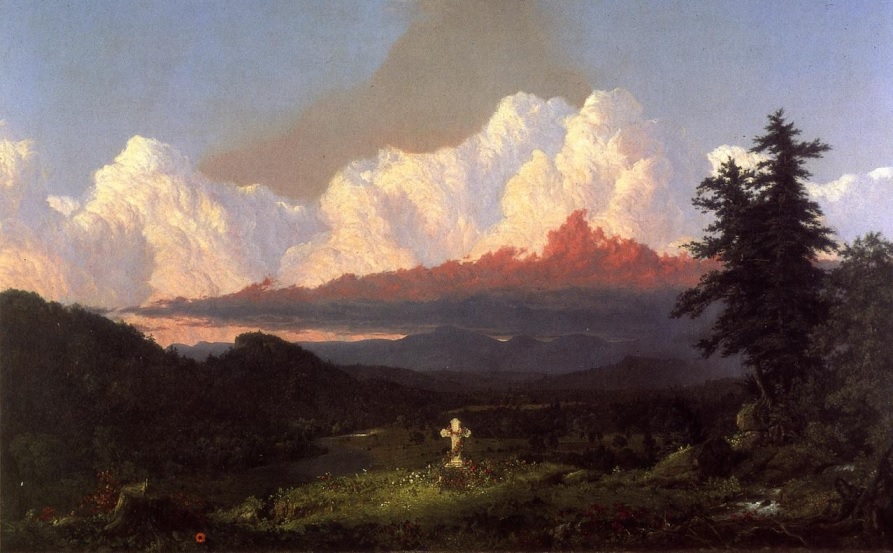
poems 'Unveiled, They Appear': A Poem by David Hollywood

.

Unveiled, They Appear

Reminiscence, and longings, and echoes unseal,
from the depths in the ground which has covered, concealed,
recollections of those who you meant to reveal.
What your senses revere, neath our cavern of earth,
Is the essence you feel, for all that we’re worth.
In your mind are impressions of who you held dear,
as they rise from their tombs, unveiled… they appear.
Evoked by remembrance and perceptions of then!
What our image portrays, but your eyes do not see,
is found in your thoughts, of what you set free.
Contemplations of loss, which sadness has told,
are reflections of lives, you no longer can hold,
as your memories envision
what your sorrows recalled.

.

.

David Hollywood co-Directed The Bahrain Writer’s Circle and founded and ‘The Colours of Life’ poetry festival in Bahrain, The Gulf, and latterly worked in Antigua, The West Indies upon a variety of poetry in performance events. He is the author of an eclectic collection of poems titled ‘Waiting Spaces’ plus co-author of ‘My Beautiful Bahrain’, ‘Poetic Bahrain’, ‘More of My Beautiful Bahrain’, ‘Lonely’ and a variety of further publications. He is a literary critic for ‘Taj Mahal Review’ plus an essayist on the subject of poetry appreciation. He currently lives in his home country of Ireland.


ShareTweetPin
The Society of Classical Poets does not endorse any views expressed in individual poems or commentary.
Read Our Comments Policy Here

RandomPoems

‘Owl Ensconced on Oaken Branch’ by Corey Elizabeth Jackson
Beauty

‘Owl Ensconced on Oaken Branch’ by Corey Elizabeth Jackson

February 23, 2021

. Owl ensconced on oaken branch, A wingèd spirit rare, His gaze is wisdom: calm, intent, Bewitching and aware. Soulful...

Winners of Friends of Falun Gong 2024 Poetry Competition Announced
Human Rights in China

Winners of Friends of Falun Gong 2024 Poetry Competition Announced

May 13, 2024

. FIRST PLACE . Free to Be the PRC by James A. Tweedie According to the PRC’s unwritten protocol,To be...

Next Post
poem/hook/translation

'Quiet Night Thoughts' by Li Bai, Translated by Talbot Hook, and Other Poetry

‘The Truth about Fall Colors’ and Other Autumn Poetry by C.B. Anderson

'The Truth about Fall Colors' and Other Autumn Poetry by C.B. Anderson

poem/woodruff/satire

'Be Careful What You Ask For' and Other Poetry by Julian Woodruff

Comments 18

  1. Roy Eugene Peterson says:
    3 years ago

    This is such a beautiful poem of those who have gone on before us yet remain etched in our hearts and memories. A poem such as yours is more blissful than melancholy. Thanks for pricking my memory today.

    Reply
    • David Hollywood says:
      3 years ago

      Thank you, Roy, for your response, and I sense it is important and poignant to occasionally regain a connection with those we have loved, and known as friends, but who are now lost to us in all but our recollections. At least that is a form of tender regard and respect we can hold onto in honour of them. Thank you again.

      Reply
  2. Paul A. Freeman says:
    3 years ago

    I found this poem haunting, but in a good and a profound way.

    You did a fine job here, David.

    Thanks for the read.

    Reply
    • David Hollywood says:
      3 years ago

      That is exceptionally kind of you Paul, and I am happy the poem has had such effect. Thank you for your appreciations.

      Reply
  3. Margaret Coats says:
    3 years ago

    David, your poem is profound and eerie. The speaker addresses someone “‘neath our cavern of earth,” suggesting that both lie buried in depths of ground that cover and conceal persons who rise from their tombs unveiled, nevertheless! How does this happen? You ask your readers for careful attention to syntax and vocabulary. The unrhymed (and therefore emphasized) line ending “perceptions of then!” tells us the deceased addressee has taken care to record and “set free” memories of lives he or she can no longer hold. The final, shorter, again unrhymed lines indicate this was done because of, or at times of, sorrow. This is a fine reminder that words possess a power greater and most lasting that the power of senses.

    Reply
    • Margaret Coats says:
      3 years ago

      I meant to conclude by saying, “more lasting than the power of the senses.” Please excuse my typos. I agree with C. B. Anderson below that images of the poem are evanescent, and I suppose that is the poet’s intent, in accord with increasingly indistinct memories. The reader is told of impressions, perceptions, and reflections to which he has no access. Their existence seems to be the point of a poem spoken by a deceased person to one like himself. Haunting!

      Reply
    • David Hollywood says:
      3 years ago

      Many thanks Margaret for your appreciation and I am uplifted by your comments. Yes, we have an essence of ourselves which resides alongside the person who is buried and whose company we long and yearn for, and who we now mourn, and would wish to recall back into our own life. But as this can never be done my thought was, we at least have the capacity to imagine being with them through memory and in the hope of one day seeing them again in an afterlife, and are therefore already enjoined in some way. As for my method of presentation I am of the view a poem does not need to always be necessarily easy to comprehend if it is to penetrate into realms of thought and feelings which inspire something obscure in our understandings. Otherwise, I would revert to prose in order to say something plainly. Thanking you again.

      Reply
  4. C.B. Anderson says:
    3 years ago

    Somehow, I feel that this poem does not really hold together. The images have only a tenuous connection, and the syntax is strained at times. The last four lines are a complete muddle. I think that Margaret understands what you were aiming for, but from here it looks like your arrow fell short.

    Reply
    • David Hollywood says:
      3 years ago

      Thank you C.B. for your response to my poem. However, I am somewhat confused by what you state because the challenge of the poem is so sensitive as to require of the reader a cognitive understanding which appreciates imagery and allusion as well as nostalgic yearnings due to loss, and which I should have hoped you would apply. I have always held that poetry should never be plain. Otherwise, I may as well write prose, and as we all know there are vast numbers of well-known poetry which deny easy understandings, and yet survive. If they are not instantly comprehensible, then what are we to do with them? I admit to often attempting to using conjecture and abstract reasoning through my words, and this is in the hope they add tone allied to sentiment and are therefore interesting to the heart as well as the mind, and also with the desire that they travel to the extremes of communication in order to touch those aspects of our being which are not every day, yet they are recognisably part of our essence. While appreciating your contribution calls for an easier understanding, I know you shall not be offended if I reject this. Also, I am of the view is your objections do not carry any explanation as to what is wrong with my verse, but simply state you don’t understand, whereas other readers do! So, who do I write for? Thanking you again, and all best regards.

      Reply
      • C.B. Anderson says:
        3 years ago

        Well yes, David, we all follow our own propensities, but difficulty in understanding is not the same thing as obscurity. I do not know for whom you write, but judging from the prose you typed above, perhaps you should stick to poetry, where, as you say (or imply), anything goes. As for my lack of “explanation” of what is wrong with “my verse,” either you see it or you do not. The entire canon of English poetry is at your fingertips, and no amount of dodging will turn a sow’s ear into a silk purse.

        Reply
  5. Patrick Murtha says:
    3 years ago

    It has taken me several readings to grab onto something, and yet when I read it again, that thing I thought I was clinging to is no longer there. And here I will say with C. B. Anderson, “I think Margaret understands what you were aiming for…” In a certain sense there is a lot of sound, pleasant sounds perhaps, but the meaning is hard to nail down. The sentences, to be brief, are too vague and ambiguous. For example, what does it mean to say, “What your senses revere, neath our cavern of earth, is the essence you feel, for all that we’re worth”?

    Reply
  6. David Hollywood says:
    3 years ago

    Thank you, Patrick, for your comments, and the fact it has taken several readings is uplifting, even though the meanings flow between being understood and are then lost again. In that case I sense the poem has worked because my view of poetry is that its significance should not always be obvious. Prose is easier to follow, but poetry is special in its demands and requirements of both the writer and reader. I am of the school of thought that Poets are misers. They don’t use many words to say what they mean and should look for lucidity through brevity, the use of various idioms and the occasionally difficult or inaccessible language of the intangible. As an example, I can comprehend the image of an Angel appearing in a classical landscape painting of what never existed, but which still portrays elements of the symbolism and values and reality we may acknowledge as having meaning, and which we hold so dearly, but we can never authentically witness within a life? Except maybe through dreams! With regard to request as to what does the following mean: ‘What your sense revere, neath our cavern of earth, is the essence you feel, for all that we’re worth’ is to say in a prose format that you know how you feel about what is important, and how so much of that has been lost through the death of your love/friend, but to whom you are still emotionally attached, and are therefore still with in some emotional manner, inside the earth, and which is where we are all going to end up at some stage, and are aware of right now as we comprehend the reality of where we are going… and onward and upwards from there. Thanking you again for your observations.

    Reply
    • Patrick Murtha says:
      3 years ago

      David, my words were not meant to suggest a certain pleasant or labyrinth-like evasiveness. They were not meant to compliment the poem, but rather to offer, I hope, sound advice on poetry. A poem is to be, as you yourself say, lucid. But your poem is not lucid or even elusive in its lucidity. A poem ought to be clear in its language. There can be a certain depth in its analogies or its allegorical meanings. But the first meaning, the literal meaning, must be reasonably comprehensible. Such is the poetry of the great poets: Shakespeare, Herrick, Crashaw, Tennyson, Frost, Kilmer, Longfellow, Poe. Even the great and mystical poetry of Sacred Scriptures or the poems of Coventry Patmore are always clear, concise, and comprehensible in their first understanding (the literal sense) without having to be read and re-read and re-read again before one thinks one might grasped a grain of understanding in a seeming bushel of chaff. (I am not saying the poem is chaff, but only seems because, even if it is all grain, the obscurity of language, the breach of grammatical clarity, etc., confuses needlessly and hurts rather than heals the poem.)

      I hope these words reach your ears with more grace than supposedly Anderson’s words did, lest I too be accused of being “self-absorbed” and evidently “very silly” for offering similar advice.

      Reply
  7. C.B. Anderson says:
    3 years ago

    What you have written, Mr. Hollywood, if I may put it in a nutshell, is sheer nonsense.

    Reply
    • David Hollywood says:
      3 years ago

      Dear C.B. As you are evidently a very silly and self-absorbed man I see no merit in prolonging our correspondence, and therefore only wish for you that you shall be well. Goodbye.

      Reply
      • C.B. Anderson says:
        3 years ago

        The sound of you licking your wounds can be heard halfway around the world. You have made it so. O silly, self-absorbed me! Just write a good poem and then see what happens.

        Reply
  8. Mia says:
    3 years ago

    Thank you Mr Hollywood for this classically beautiful poem.
    By the way I find Xanadu, difficult to understand….( and pronounce)
    but love it nevertheless.

    Reply
    • David Hollywood says:
      3 years ago

      Thank you Mia for your very kind appreciations, and I am so glad you have found merit in the poem. Yes I agree Xanadu is very beautiful, and a challenging poem which draws us towards it. All best wishes.

      Reply

Leave a Reply Cancel reply

Your email address will not be published. Required fields are marked *


  1. Roy Eugene Peterson on ‘The Cristero Centennial’: A Poem by Margaret CoatsSeptember 4, 2026

    This is a fantastic preview of what could happen here! What a great treatment of classical historical proportions. I remember…

  2. BDW on ‘A Prayer of Aristotle’: A Poem by Margaret CoatsSeptember 4, 2026

    Eternal Laws by Esiad L Werecub “The Sun proceeds unmoved…” —Emily Dickinson This figure is not a creator, this self-thinking…

  3. Jeff Eardley on ‘The Estuary’: A Poem by Jeff EardleySeptember 4, 2026

    Margaret, thank you for taking the time to comment. Your work and your analytic contributions are a huge part of…

  4. Jeff Eardley on ‘The Estuary’: A Poem by Jeff EardleySeptember 4, 2026

    Norma, so did I. I recall heading for the sea in an amphibious vehicle called a DUKW. Happy .days indeed.

  5. Margaret Coats on ‘A Prayer of Aristotle’: A Poem by Margaret CoatsSeptember 4, 2026

    Thanks, Bruce, you offer luxurious appreciation of valuable prose which is mostly Greek to us, even when we've learned to…

Subscribe to Daily Poems

Enter your email address to subscribe to this blog and receive notifications of new posts by email.

Join 1,634 other subscribers

Recent Poems

  • ‘The Cristero Centennial’: A Poem by Margaret Coats
  • ‘A Potpourri of Aphoristic Verses’ by C.B. Anderson
  • ‘The Estuary’: A Poem by Jeff Eardley
  • ‘A World Without the Wednesday Child’: A Poem by Kimberly Fore
  • The 2026 Society of Classical Poets International Poetry Competition
  • The 2026 SCP International High School Poetry Competition
  • ‘Realistic Reflections’ and Other Poetry by Anna J. Arredondo
  • ‘China Made’: A Poem by Theresa Werba
  • ‘The Savage Moon’ and Other Poetry by Brian Yapko
  • Poetry Book Review: Love Found, Yearned For, and Lost by James A. Tweedie
  • ‘When Opportunity Knocks’: A Poem by Roy E. Peterson
  • ‘Legend of the Griffin’: A Poem by Iryna Hall
  • ‘Government Issue’ and Other Poems by Joseph S. Salemi
  • ‘Chaucer Announces His Desire to Retire’: A Poem by Paul A. Freeman
  • ‘Advantages of Restaurants’ and Other Poems by Russel Winick
  • ‘Bone China’: A Poem by Mary Gardner
  • ‘On the Death of One Too Young to Die’: A Poem by Jeffrey Essmann
  • ‘This Too Shall Pass’ and Other Poetry by Justin Dasher
  • ‘Humdrum and Harum-Scarum’: A Lecture on Free Verse, by Robert Bridges (1922)
  • ‘Unrest On the Floodplain’: A Poem by Bhikkhu Nyanasobhano
  • ‘Latitude and Loss’: A Poem by Martin Briggs
  • ‘Act III’ and Other Poetry by C.B. Anderson
  • ‘God’s Funeral’: A Poem by James Sale
  • ‘Star Festival’: A Poem by Margaret Coats
  • ‘Song of the Frog Princess’: A Poem by Scharlie Meeuws
  • ‘The Odyssey: Nolan and Solot Compared’: An Essay by Michael Curtis
  • ‘Solitude’ and Other Poems by Mary Jane Myers
  • ‘The River Not Taken’ and Other Poetry by Brian Yapko
  • ‘Totentanz’: A Poem by James A. Tweedie
  • ‘In God Is Our Trust’: A Poem by Roy E. Peterson

Categories

  • Acrostic
  • Alexandroid
  • Alliterative
  • Art
  • Best Poems
  • Blank Verse
  • Chant Royal
  • Classical Poets Live
  • Clerihew
  • Covid-19
  • Deconstructing Communism
  • Educational
  • Epic
  • Epigrams and Proverbs
  • Essays
    • Interviews with Poets
    • Poetry Reviews
  • Featured
  • From the Society
  • Great Poets
    • Dante Alighieri
    • Edgar Allan Poe
    • Emily Dickinson
    • Geoffrey Chaucer
    • Henry Wadsworth Longfellow
    • Homer
    • John Keats
    • John Milton
    • Robert Frost
    • William Blake
    • William Shakespeare
    • William Wordsworth
  • Human Rights in China
  • Limerick
  • Love Poems
  • Music
  • Pantoum
  • Performing Arts
  • Poetry
    • Beauty
    • Children's Poems
    • Culture
    • Ekphrastic
    • Found Poems
    • High School Poets
    • Humor
    • Riddles
  • Poetry Challenge
  • Poetry Contests
  • Poetry Forms
    • Curtal Sonnet
    • Haiku
  • Poetry Readings
  • Rhupunt
  • Rondeau
  • Rondeau Redoublé
  • Rondel
  • Rubaiyat
  • Sapphic Verse
  • Satire
  • Science
  • Sestina
  • Shape Poems
  • Short Stories
  • Song Lyrics
  • Sonnet
  • Symposium
  • Terrorism
  • Terza Rima
  • The Environment
  • Translation
  • Triolet
  • Video
  • Villanelle

Quick Links

  • About Us
  • Submit Poetry
  • Become a Member
  • Members List
  • Support the Society
  • Advertisement Placement
  • Comments Policy
  • Terms of Use

Welcome Back!

Login to your account below

Forgotten Password?

Retrieve your password

Please enter your username or email address to reset your password.

Log In
No Result
View All Result
  • Poems
    • Beauty
    • Culture
    • Satire
    • Humor
    • Children’s
    • Art
    • Ekphrastic
    • Epic
    • Epigrams and Proverbs
    • Human Rights in China
    • Music
    • Performing Arts
    • Riddles
    • Science
    • Song Lyrics
    • The Environment
    • The Raven
    • Found Poems
    • High School Poets
    • Terrorism
    • Covid-19
  • Poetry Forms
    • Sonnet
    • Haiku
    • Limerick
    • Villanelle
    • Rondeau
    • Pantoum
    • Sestina
    • Triolet
    • Acrostic
    • Alexandroid
    • Alliterative
    • Blank Verse
    • Chant Royal
    • Clerihew
    • Rhupunt
    • Rondeau Redoublé
    • Rondel
    • Rubaiyat
    • Sapphic Verse
    • Shape Poems
    • Terza Rima
  • Great Poets
    • Geoffrey Chaucer
    • Emily Dickinson
    • Homer
    • Henry Wadsworth Longfellow
    • Dante Alighieri
    • John Keats
    • John Milton
    • Edgar Allan Poe
    • William Shakespeare
    • William Wordsworth
    • William Blake
    • Robert Frost
  • Love Poems
  • Contests
  • SCP Academy
    • Educational
    • Teaching Classical Poetry—A Guide for Educators
    • Poetry Forms
    • The SCP Journal
    • Books

© 2025 SCP. WebDesign by CODEC Prime.