• Submit Poetry
  • Support SCP
  • About Us
  • Members
  • Join
Thursday, October 1, 2026
Society of Classical Poets
  • Poems
    • Beauty
    • Culture
    • Satire
    • Humor
    • Children’s
    • Art
    • Ekphrastic
    • Epic
    • Epigrams and Proverbs
    • Human Rights in China
    • Music
    • Performing Arts
    • Riddles
    • Science
    • Song Lyrics
    • The Environment
    • The Raven
    • Found Poems
    • High School Poets
    • Terrorism
    • Covid-19
  • Poetry Forms
    • Sonnet
    • Haiku
    • Limerick
    • Villanelle
    • Rondeau
    • Pantoum
    • Sestina
    • Triolet
    • Acrostic
    • Alexandroid
    • Alliterative
    • Blank Verse
    • Chant Royal
    • Clerihew
    • Rhupunt
    • Rondeau Redoublé
    • Rondel
    • Rubaiyat
    • Sapphic Verse
    • Shape Poems
    • Terza Rima
  • Great Poets
    • Geoffrey Chaucer
    • Emily Dickinson
    • Homer
    • Henry Wadsworth Longfellow
    • Dante Alighieri
    • John Keats
    • John Milton
    • Edgar Allan Poe
    • William Shakespeare
    • William Wordsworth
    • William Blake
    • Robert Frost
  • Love Poems
  • Contests
  • SCP Academy
    • Educational
    • Teaching Classical Poetry—A Guide for Educators
    • Poetry Forms
    • The SCP Journal
    • Books
No Result
View All Result
Society of Classical Poets
  • Poems
    • Beauty
    • Culture
    • Satire
    • Humor
    • Children’s
    • Art
    • Ekphrastic
    • Epic
    • Epigrams and Proverbs
    • Human Rights in China
    • Music
    • Performing Arts
    • Riddles
    • Science
    • Song Lyrics
    • The Environment
    • The Raven
    • Found Poems
    • High School Poets
    • Terrorism
    • Covid-19
  • Poetry Forms
    • Sonnet
    • Haiku
    • Limerick
    • Villanelle
    • Rondeau
    • Pantoum
    • Sestina
    • Triolet
    • Acrostic
    • Alexandroid
    • Alliterative
    • Blank Verse
    • Chant Royal
    • Clerihew
    • Rhupunt
    • Rondeau Redoublé
    • Rondel
    • Rubaiyat
    • Sapphic Verse
    • Shape Poems
    • Terza Rima
  • Great Poets
    • Geoffrey Chaucer
    • Emily Dickinson
    • Homer
    • Henry Wadsworth Longfellow
    • Dante Alighieri
    • John Keats
    • John Milton
    • Edgar Allan Poe
    • William Shakespeare
    • William Wordsworth
    • William Blake
    • Robert Frost
  • Love Poems
  • Contests
  • SCP Academy
    • Educational
    • Teaching Classical Poetry—A Guide for Educators
    • Poetry Forms
    • The SCP Journal
    • Books
No Result
View All Result
Society of Classical Poets
No Result
View All Result
Home Great Poets Robert Frost

‘The River Not Taken’ and Other Poetry by Brian Yapko

August 16, 2026
in Robert Frost, Culture, Poetry, Rondeau
A A
15
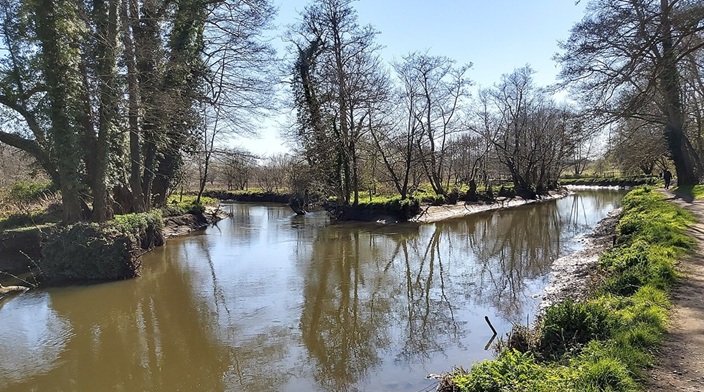
photo of a split in the River Wey, by John P Reeves

photo of a split in the River Wey, by John P Reeves


The River Not Taken

—after Robert Frost

The sloop’s main sail was hoisted tight
But in the fog I now was lost;
I reached where half the stream veered right
The other left. Encroaching night
Meant I must choose; but at what cost?

I had no time and so chose West
To where I knew the sun would set;
That Eastward might yet still be best—
Was something which I could not test
And left me with a vague regret.

What can you do? You choose, then go;
The past is narrowed to a strait
And what you chose three leagues ago
Determines all you think and know
And somehow navigates your fate.

Your world view—drawn from all you learn—
Is such a river. Where you start
Means less than how you trim and turn,
For from this choosing you’ll discern
Your own lived truth and moral chart.

Your sails catch wind and now you’re caught
From now until you breathe your last;
Each prejudice and hope and thought,
Each fact that you have learned and taught—
Is borne from choices past and passed.


Joseph Weighs His Brothers’ Fates

—a rondeau

If I forgive them, then they’ve won—
They profit from the web they spun
Convinced they are both skilled and smart
As each one plays his cunning part.
They’re not my brothers! No, not one!

Should I seek vengeance? Shall I shun
And mock, assault, enslave and stun?
I’d have to sheathe each poisoned dart
__If I forgive…

Yet, once my rage-filled acts are done
Might not the violence I’ve begun
Just rip my tattered soul apart?
Would it not salve my wounded heart
To see each as my father’s son
__If I forgive?


Brian Yapko is a retired lawyer whose poetry has appeared in over fifty journals.  He is the winner of the 2023 SCP International Poetry Competition. Brian is also the author of several short stories, the science fiction novel El Nuevo Mundo and the gothic archaeological novel  Bleeding Stone.  He lives in Bradenton, Florida.
Tags: Bible storiesBrian YapkoPoetry About Life
ShareTweetPin
The Society of Classical Poets does not endorse any views expressed in individual poems or commentary.
Read Our Comments Policy Here

RandomPoems

‘To the Class of 2018’ and Other Poetry by Benjamin Daniel Lukey
Beauty

‘Alexander’ by Daniel Kemper

April 14, 2020

  As Alexander rose upon a hill, somewhere east of King Darius’s dust, at once a pure, serene and awful...

A Straight Shooter: Interview with C.B. Anderson
Classical Poets Live

Short Poems of C.B. Anderson Read by Andrew Benson Brown

February 22, 2024

. https://www.youtube.com/shorts/XalCoWn_Rhc?feature=share https://www.youtube.com/shorts/GKv8ihtSVgI?feature=share https://www.youtube.com/shorts/f81q-LksA8o?feature=share https://www.youtube.com/shorts/8XvUrH1Q7Ac?feature=share https://www.youtube.com/shorts/gZLvIRfMrZo?feature=share https://www.youtube.com/shorts/6fLWboTS_xI?feature=share . . C.B. Anderson was the longtime gardener for the PBS television series, The...

Next Post
‘Solitude’ by Müller and ‘Serenade’ by Rellstab, Translated by Joseph David Greene

'Solitude' and Other Poems by Mary Jane Myers

‘The Odyssey: Nolan and Solot Compared’: An Essay by Michael Curtis

'The Odyssey: Nolan and Solot Compared': An Essay by Michael Curtis

‘Song of the Frog Princess’: A Poem by Scharlie Meeuws

'Song of the Frog Princess': A Poem by Scharlie Meeuws

Comments 15

  1. Theresa Werba says:
    2 months ago

    As a person who has had many “vague” (and not so vague) regrets about the many choices I made at various forks in the river of life, your poem “The River Not Taken” really speaks to me, especially the last phrase, “choices past and passed.” Couldn’t be said better or more succinctly!!! I have often thought about writing a “forks in the river” book where various alternate histories would play out in how the story enfolds and ultimately ends. And I like your “Joseph” rondeau– it gives us insight into Joseph’s internal workings and cogitations of his mind as he comes to the ultimate decision to forgive his brothers. Well done as always, Brian!

    Reply
  2. James A. Tweedie says:
    2 months ago

    Brian,

    It is the endings of both poems that linger in my mind, each marked by a creative brilliance that raises words from one level to a higher one.

    Rare for truth to be stated so succinctly and with such finality as this:

    From now until you breathe your last;
    Each prejudice and hope and thought,
    Each fact that you have learned and taught—
    Is borne from choices past and passed.

    But the best of all is the clever and inspired twist in ending your insightful rondeau as a question.

    Reply
  3. Mark Stellinga says:
    2 months ago

    Brian, that – “which should I choose” – dilemma is something so many of us have to contend with when we reach the point where that decision has to be made, but every now and then, luckily or not, ‘Fate’ steps in to make it for us.

    I don’t believe one – at least not I, can adequately sooth their (my) soul through ‘Forgiveness’ alone – depending on the grievance – without appropriate restitution to some degree, but I definitely know how stubborn a conscience can be.

    Both excellent renderings –

    Reply
  4. James Sale says:
    2 months ago

    Fabulous, especially The River Not Taken – a great conceit and allusion in itself: roads have one set of connotations, but a rivers others. And in this case that sense almost of the life force, chi or prana on which we all have to hoist up our sail (or ‘sale’ in my case of course!) and as you pointedly comment: every thing counts, ‘each fact’, nothing is unimportant as we reach, respectively, our final destinations. Great writing.

    Reply
  5. Joseph S. Salemi says:
    2 months ago

    “The River Not Taken” uses an epigraph that alludes to Frost’s famous poem, but Yapko’s poem is in fact much more intellectually serious than Frost’s. It is more philosophically and psychologically penetrating, since it makes the speaker’s choice much more consequential in terms of his worldview, his prejudices, his beliefs, his knowledge, and future actions. This is especially clear in the last three quintains, which are seriously discursive rather than just impressionistic. Frost is a great poet, but his tendency was to affect a clipped New-England taciturnity at times. His last words that “…and that has made all the difference” seem very weak compared to Yapko’s ending.

    The poem in the voice of Joseph show how a small fixed form like the rondeau can have a major effect on how well a poem tells a story. If this had been written as an ordinary dramatic monologue in blank verse or rhyming couplets, we would not have the intensity that we have here. But the rondeau’s tripartite rigid form and fixed rhyme scheme allow us to see Joseph’s natural resentment, his desire for vengeance, and his final choice to forgive — all intensely focused in each section. Everything is clear and exact. This gives a real backbone to the scriptural story.

    Let me add this — in both poems we can see the basic argument that those of us in the movement to revitalize the traditional practice of English verse are making. We want the clarity, the discursiveness, the intellectual seriousness of metrical verse. Brian Yapko is giving those things to us.

    Reply
    • John Savoie says:
      2 months ago

      Frost admits his poem is whimsical,
      but it is intellectually serious too,
      very, “a tricky tricky poem” indeed.

      [apologies for the walled link–
      I’ll see how to share the full thing]

      https://www.jstor.org/stable/1559684

      Reply
    • Brian Yapko says:
      4 hours ago

      I would like to thank you individually, Joe, for your extremely generous comment regarding my “River” poem and the inspiration it took from Robert Frost’s “The Road Not Taken.” I was always somewhat dissatisfied with Frost’s ending and did indeed hope to write something some might perceive as a bit more decisive. It was a difficult poem to write in some ways because Frost only had four quintains and I found that inadequate for my needs, so I had to add in an extra. I like to think that distances my piece a little from his. And as I mentioned below, although this poem may seem simple I have come to see it as one of my very favorites.

      Thank you as well for the insight regarding Joseph. As you may have guessed, I did originally consider this as a dramatic monologue, but found it very unsatisfactory. Condensing it into a rondeau, I felt, gave it an emotional intensity that I could not otherwise achieve.

      I’m very grateful for your final points. I strive to make my work as clear and readable as possible. I’m glad it works for you. Thank you again!

      Reply
  6. David Whippman says:
    2 months ago

    Good poems Brian. A nice take on Frost’s famous work, and then your take on the Bible story. In a way, the second poem asks the same question asked in the Iliad about the wrath of Achilles: is forgiveness best? Joseph chose forgiveness in the end, proving himself wiser than the Greek hero.

    Reply
  7. Roy Eugene Peterson says:
    2 months ago

    Both poems offer food for thought in dramatic form. “Now you’re caught” is indeed the current on which you’re borne. Nautical terms like “league” and “trim” add so much to the fix we are in. If I could return to my former state, I often wonder what would have been my fate. Thinking of brothers’ dirty laundry, certainly left Joseph in a quandary. Forgiving others is never easy, especially if they have been so sleazy.

    Reply
  8. Golan Shahar says:
    2 months ago

    Kudos Brian! I enjoyed both poems very much. Choice is a gnawing topic that I see in the clinic all the time. It also what makes us human. There is no way around the pain of choosing. I really loved the second poem about Joseph and his brothers. To forgive or not forgive? That is the question. I have no answer.

    Reply
  9. Cynthia L Erlandson says:
    2 months ago

    I love the way you reflect the thoughts of Frost’s poem; and I love the way you get inside of Joseph’s mind. You’ve made both poems about the turns and twists of decisions.

    Reply
  10. C.B. Anderson says:
    1 month ago

    In the first poem Yapko is flexing his muscles, possibly beating Frost at his own game: tennis with a net. Salemi (above) got it just right. Brian’s flights always end with a KO.

    Reply
  11. Rusty Rabon says:
    1 month ago

    An excellent poem. I found that each stanza of the poem speaks to the struggle to forgive another person for wrongs suffered because of them, showing the progression of thought that one goes through in deciding to forgive.

    In the first stanza, you understand the desire that another person not feel satisfied in the pain they have caused another, and also the desire within the person who was hurt to completely reject any connection with the offender. “They’re not my brothers! No, not one!”

    Then the second stanza gets practical. What form would a lack of forgiveness take in action? “Shun and mock, assault, enslave, and stun?” Who among us has not, at one time or another, felt the desire to retaliate against another person for a perceived – or actual – hurt of offense? You show that forgiveness would mean “sheathing” each of his retributive “darts” should he choose to forgive.

    With the third stanza, I relate to your understanding that forgiveness is as much about settling our own soul as it is about an action or attitude toward another person. Rather than viewing the offender as an enemy, “would it not salve my wounded heart to see each as my father’s son.” Here you understand that strife within families can be the most bitter, acknowledging that to not forgive the offending family member would “rip my tattered soul apart.”

    Thank you for this insighful work!

    Reply
    • Brian Yapko says:
      4 hours ago

      Rusty, I wanted to also address this comment individually because it is both lucid and highly insightful. Thank you for this. Yes, this was very much about going through the human struggle to choose forgiveness even when every fiber of one’s being wants to wallow in self-pitying resentment and retaliation. Forgiveness may come easy to some, but I have found it to be an internal battle in which it takes some real distance, thought and meditation to allow “the better angels of my nature” to prevail. I hoped that a reader might understand that it is not effortless and you really helped clarify this. Thank you again.

      Reply
  12. Brian Yapko says:
    4 hours ago

    Dear Theresa, James T., Mark, James S., Joe, John, David, Roy, Golan, Cynthia, Kip and Rusty — my deepest gratitude to all of you for your generous comments regarding both “River” and “Joseph.” I apologize for responding so late to your gracious words but have been on a sabbatical and unavailable to respond earlier. I would like to especially thank those of you who discussed “The River Not Taken.” In the course of my poetry-writing, I find that this piece is one of the most favorite things that I have written. All my best to each of you. And thank you!

    Reply

Leave a Reply Cancel reply

Your email address will not be published. Required fields are marked *


  1. Joseph S. Salemi on ‘The Martyrdom of Saint Cassian’: A Poem by Joseph S. SalemiOctober 1, 2026

    Many thanks, Roy. I had a feeling that you would like this poem, and that's what made me dig it…

  2. Josh Olson on ‘Mind Versus Beauty’: A Poem by Johann Wolfgang von Goethe, Translated by Eric v.d. LuftOctober 1, 2026

    As a huge fan of Goethe's poetry, it's always a treat to get a translation that sticks to the original…

  3. Roy Eugene Peterson on ‘The Martyrdom of Saint Cassian’: A Poem by Joseph S. SalemiOctober 1, 2026

    Joseph, what a great poem! I never could have imagined such a macabre scene with the slow death of a…

  4. Yael on ‘Mind Versus Beauty’: A Poem by Johann Wolfgang von Goethe, Translated by Eric v.d. LuftOctober 1, 2026

    Anyone attempting to translate Goethe into English deserves my praise and respect. This translation gives the basic storyline of the…

  5. Brian Yapko on ‘The River Not Taken’ and Other Poetry by Brian YapkoOctober 1, 2026

    Rusty, I wanted to also address this comment individually because it is both lucid and highly insightful. Thank you for…

Subscribe to Daily Poems

Enter your email address to subscribe to this blog and receive notifications of new posts by email.

Join 1,661 other subscribers
No Result
View All Result

Resources

       1. A Guide to Writing Poetry

      2. The Best Poems of 2020      

      3. Poetry and Writing Contests

      4. Journals Accepting Formal Verse

Recent Poems

  • ‘The Martyrdom of Saint Cassian’: A Poem by Joseph S. Salemi
  • ‘Mind Versus Beauty’: A Poem by Johann Wolfgang von Goethe, Translated by Eric v.d. Luft
  • ‘Summer Sails’: A Poem by Paulette Calasibetta
  • ‘Aquarius’: A Poem by Patricia Rogers Crozier
  • ‘No Body Here on Earth’: A Poem by Gerard Maritato
  • A Visualized Reading of The Odyssey: Book 1, Produced by Andrew Benson Brown
  • ‘Now?’ and Other Poetry by Stephen DiLauro
  • ‘From California to Louisiana’: A Sonnet by Mark F. DeWitt
  • ‘A Pot of Tea’ and Other Poetry by Samuel Gregg
  • Eight Riddles for the 2026 Mid-Autumn Festival, by Evan Mantyk
  • ‘Swallowtails’ and Other Poetry by Mary Jane Myers
  • ‘All Flesh Is Grass’: A Poem by Cynthia Erlandson
  • ‘May a Smile Be Your Umbrella’: A Poem by Roy E. Peterson
  • ‘Flexibility’ and Other Poems by Russel Winick
  • ‘Sabin Howard’ and Other Poetry by Bruce Dale Wise
  • ‘Ode to a Dragonfly’ and Other Poetry by Adam Sedia
  • ‘Hobby Horse’: A Poem by A.R. Pereira
  • ‘Big Cat Dance’: A Poem by Paul Erlandson
  • ‘Freedom’s Wring’: A Poem by C.B. Anderson
  • ‘Island of Poets’: A Poem in Sapphic Verse by Margaret Coats
  • ‘Military Quatrains, or the Modern Archilochus’: A Poem by Joseph S. Salemi
  • ‘The Secret Rose’ and Other Poetry by Luke Perera
  • ‘The Family Archive’: A Poem by Robert Thomas
  • ‘Pedagogy’: A Poem by Jonathan Kinsman
  • ‘Who Are the Villains?’ and Other Poetry by Adam Wasem
  • ‘Isle of Romance’: A Poem by Margaret Brinton
  • ‘Professional Mourner’: A Poem by Brian Yapko
  • A Distillation of Shakespeare’s ‘A Midsummer Night’s Dream’ by Martin Briggs
  • ‘How the Mighty Fell!’: A Poem by Jeff Kemper
  • ‘The One Lone Juror’: A Poem by Joseph S. Salemi

Categories

  • Acrostic
  • Alexandroid
  • Alliterative
  • Art
  • Best Poems
  • Blank Verse
  • Chant Royal
  • Classical Poets Live
  • Clerihew
  • Covid-19
  • Deconstructing Communism
  • Educational
  • Epic
  • Epigrams and Proverbs
  • Essays
    • Interviews with Poets
    • Poetry Reviews
  • Featured
  • From the Society
  • Great Poets
    • Dante Alighieri
    • Edgar Allan Poe
    • Emily Dickinson
    • Geoffrey Chaucer
    • Henry Wadsworth Longfellow
    • Homer
    • John Keats
    • John Milton
    • Robert Frost
    • William Blake
    • William Shakespeare
    • William Wordsworth
  • Human Rights in China
  • Limerick
  • Love Poems
  • Music
  • Pantoum
  • Performing Arts
  • Poetry
    • Beauty
    • Children's Poems
    • Culture
    • Ekphrastic
    • Found Poems
    • High School Poets
    • Humor
    • Riddles
  • Poetry Challenge
  • Poetry Contests
  • Poetry Forms
    • Curtal Sonnet
    • Haiku
  • Poetry Readings
  • Rhupunt
  • Rondeau
  • Rondeau Redoublé
  • Rondel
  • Rubaiyat
  • Sapphic Verse
  • Satire
  • Science
  • Sestina
  • Shape Poems
  • Short Stories
  • Song Lyrics
  • Sonnet
  • Symposium
  • Terrorism
  • Terza Rima
  • The Environment
  • Translation
  • Triolet
  • Video
  • Villanelle

Quick Links

  • About Us
  • Submit Poetry
  • Become a Member
  • Members List
  • Support the Society
  • Advertisement Placement
  • Comments Policy
  • Terms of Use

Welcome Back!

Login to your account below

Forgotten Password?

Retrieve your password

Please enter your username or email address to reset your password.

Log In
No Result
View All Result
  • Poems
    • Beauty
    • Culture
    • Satire
    • Humor
    • Children’s
    • Art
    • Ekphrastic
    • Epic
    • Epigrams and Proverbs
    • Human Rights in China
    • Music
    • Performing Arts
    • Riddles
    • Science
    • Song Lyrics
    • The Environment
    • The Raven
    • Found Poems
    • High School Poets
    • Terrorism
    • Covid-19
  • Poetry Forms
    • Sonnet
    • Haiku
    • Limerick
    • Villanelle
    • Rondeau
    • Pantoum
    • Sestina
    • Triolet
    • Acrostic
    • Alexandroid
    • Alliterative
    • Blank Verse
    • Chant Royal
    • Clerihew
    • Rhupunt
    • Rondeau Redoublé
    • Rondel
    • Rubaiyat
    • Sapphic Verse
    • Shape Poems
    • Terza Rima
  • Great Poets
    • Geoffrey Chaucer
    • Emily Dickinson
    • Homer
    • Henry Wadsworth Longfellow
    • Dante Alighieri
    • John Keats
    • John Milton
    • Edgar Allan Poe
    • William Shakespeare
    • William Wordsworth
    • William Blake
    • Robert Frost
  • Love Poems
  • Contests
  • SCP Academy
    • Educational
    • Teaching Classical Poetry—A Guide for Educators
    • Poetry Forms
    • The SCP Journal
    • Books

© 2025 SCP. WebDesign by CODEC Prime.