• Submit Poetry
  • Support SCP
  • About Us
  • Members
  • Join
Saturday, July 18, 2026
Society of Classical Poets
  • Poems
    • Beauty
    • Culture
    • Satire
    • Humor
    • Children’s
    • Art
    • Ekphrastic
    • Epic
    • Epigrams and Proverbs
    • Human Rights in China
    • Music
    • Performing Arts
    • Riddles
    • Science
    • Song Lyrics
    • The Environment
    • The Raven
    • Found Poems
    • High School Poets
    • Terrorism
    • Covid-19
  • Poetry Forms
    • Sonnet
    • Haiku
    • Limerick
    • Villanelle
    • Rondeau
    • Pantoum
    • Sestina
    • Triolet
    • Acrostic
    • Alexandroid
    • Alliterative
    • Blank Verse
    • Chant Royal
    • Clerihew
    • Rhupunt
    • Rondeau Redoublé
    • Rondel
    • Rubaiyat
    • Sapphic Verse
    • Shape Poems
    • Terza Rima
  • Great Poets
    • Geoffrey Chaucer
    • Emily Dickinson
    • Homer
    • Henry Wadsworth Longfellow
    • Dante Alighieri
    • John Keats
    • John Milton
    • Edgar Allan Poe
    • William Shakespeare
    • William Wordsworth
    • William Blake
    • Robert Frost
  • Love Poems
  • Contests
  • SCP Academy
    • Educational
    • Teaching Classical Poetry—A Guide for Educators
    • Poetry Forms
    • The SCP Journal
    • Books
No Result
View All Result
Society of Classical Poets
  • Poems
    • Beauty
    • Culture
    • Satire
    • Humor
    • Children’s
    • Art
    • Ekphrastic
    • Epic
    • Epigrams and Proverbs
    • Human Rights in China
    • Music
    • Performing Arts
    • Riddles
    • Science
    • Song Lyrics
    • The Environment
    • The Raven
    • Found Poems
    • High School Poets
    • Terrorism
    • Covid-19
  • Poetry Forms
    • Sonnet
    • Haiku
    • Limerick
    • Villanelle
    • Rondeau
    • Pantoum
    • Sestina
    • Triolet
    • Acrostic
    • Alexandroid
    • Alliterative
    • Blank Verse
    • Chant Royal
    • Clerihew
    • Rhupunt
    • Rondeau Redoublé
    • Rondel
    • Rubaiyat
    • Sapphic Verse
    • Shape Poems
    • Terza Rima
  • Great Poets
    • Geoffrey Chaucer
    • Emily Dickinson
    • Homer
    • Henry Wadsworth Longfellow
    • Dante Alighieri
    • John Keats
    • John Milton
    • Edgar Allan Poe
    • William Shakespeare
    • William Wordsworth
    • William Blake
    • Robert Frost
  • Love Poems
  • Contests
  • SCP Academy
    • Educational
    • Teaching Classical Poetry—A Guide for Educators
    • Poetry Forms
    • The SCP Journal
    • Books
No Result
View All Result
Society of Classical Poets
No Result
View All Result
Home Poetry Culture

A Fake News Pantoum and Other Poetry by Brian Yapko

December 9, 2021
in Culture, Humor, Pantoum, Poetry, Rondeau
A A
9
An illustration featured in an 1894 issue of Puck magazine. (public domain)

An illustration featured in an 1894 issue of Puck magazine. (public domain)

.

What Is Truth?

a pantoum

To keep us blind and riven
You falsify the facts.
You will not be forgiven—
These are a tyrant’s acts!

You falsify the facts
Promoting news that’s fake.
These are a tyrant’s acts—
Our liberty’s at stake!

Promoting news that’s fake,
You think you won’t get caught.
Our liberty’s at stake
As you assault free thought.

You think you won’t get caught.
You make good people cower.
As you assault free thought
You flaunt abuse of power.

You make good people cower
To keep us blind and riven.
You flaunt abuse of power.
You will not be forgiven.

.

.

These Words We Sing

a rondeau

These words we sing they quake to hear
Those dolts who dream we’ll disappear.
With scornful sneers they clutch and cling
To falsehoods only hate can bring,
Stone deaf with manufactured fear.

They seek to smash all we hold dear
So we must make our meaning clear!
Let’s make them heed our song’s strong sting—
__These words we sing.

Let’s sing of fools who, like King Lear,
Would rip a realm apart and cheer,
Then Sauron-like reforge the Ring
To wield like tyrants in Beijing.
We’ll pierce their fictions like a spear—
__These words we sing!

.

.

Tomi Apologizes for Breaking Their Commitment

I told you that I’d do it and I meant it.
The money that you lent me—sure, I spent it!
I needed one more piercing. Don’t you care
About my self-esteem? This isn’t fair!
It’s all your fault. You’re always trying to bust me
When you have zero reason to mistrust me!
Don’t say I never finish what I’ve started
Or that my drug use leaves you broken-hearted.
You hurt me when you say that I’m not cautious
And that my solemn pledges make you nauseous!
I’m busy all the time—my fingers ache
From liking things online—there’s lots at stake.
There’s glass to break and signs to make, graffiti …
It’s not like I’m off sunning in Tahiti!
You’re so judgmental. Can’t you be more lenient?
Commitments only count when they’re convenient!

.

.

Brian Yapko is a lawyer who also writes poetry. He lives in Santa Fe, New Mexico.

ShareTweetPin
The Society of Classical Poets does not endorse any views expressed in individual poems or commentary.
Read Our Comments Policy Here

RandomPoems

poem/Tweedie/beauty
Beauty

‘Canyon de Chelly’: A Poem by James A. Tweedie

May 17, 2023

. Canyon de Chelly Reflections of a Non-Native Visitor . An updraft from the red-rock canyon floor Blows through the...

‘Bohème’ and Other Poems by Sally Cook
Beauty

‘Bohème’ and Other Poems by Sally Cook

March 26, 2025

. Bohème Opera in a bare and frigid room As winter winds were sweeping, like a broom, Raised an enthusiasm,...

Next Post
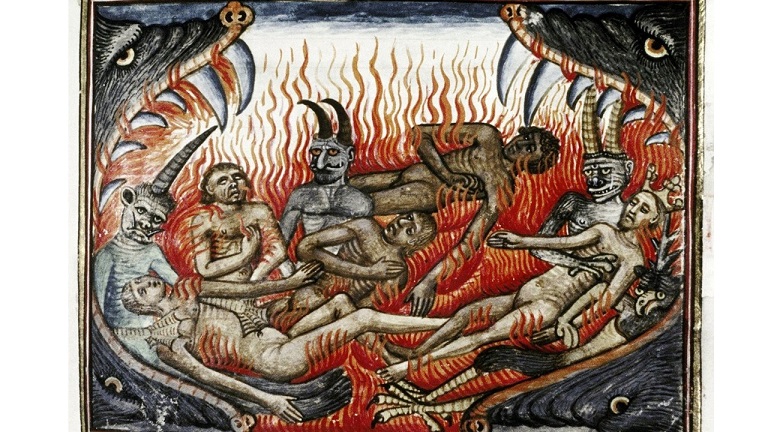
A Poem on Hot Flashes: ‘The Devil and the Hounds of Hell’ by Norma Pain

A Poem on Hot Flashes: 'The Devil and the Hounds of Hell' by Norma Pain

‘Maria Montessori’ and Other Clerihews by Peter Hartley

'Maria Montessori' and Other Clerihews by Peter Hartley

‘So Simple’ and Other Poetry by Mike Bryant

'So Simple' and Other Poetry by Mike Bryant

Comments 9

  1. Margaret Coats says:
    5 years ago

    Three good poems on the use and misuse of language! The pantoum is the most straightforward–although even there the reader must know what “fake news” is, and be convinced that there is a lot of it. That is controversial, as the fake news makers themselves present such a convincing charade of believing their colleagues in mainstream media. Since a pantoum is almost a round form, and is the only form I know of in which all lines are repeated, using it to discuss fake news produces the desired effect of incomprehensibility, even when the language is clear. Your choice to end with “You will not be forgiven” supplies a suitable condemnation, as does the title. Pilate’s question to Jesus is certainly the world’s most obvious example of stubborn disbelief in truth, even when Truth is visibly and personally present.

    The rondeau at first seems to express confident hope that the poet can truthfully overcome liars. But the last stanza, with the misjudging King Lear compared to the malicious Sauron, and then to actual rather than fictional tyrants, packs in so much that the reader may start feeling confused even here, and become less confident in song.

    I presume the last poem is about Tomi Ahonen, who seems to have made a career of confusing the world’s perceptions about himself, and yet amassing a fortune based on communications devices. With regard to himself, I am so little interested that I don’t care to know his history. I will compliment you, Brian, on choosing such a superb real character on whom to base this poetic “apology.” It rings true!

    Reply
    • Brian Yapko says:
      5 years ago

      Thank you, Margaret, for taking a look at these — three poems which are unquestionably not among my best work but which gave me an opportunity to experiment a little and play around with form. I’m glad you liked the pantoum. It’s my first attempt at this form — and after doing it once I suspect that I’m done. I’d always wanted to try my hand at this type of poem but == for me — it’s so circular and repetitive that I have a hard time figuring out a way for it to go somewhere. But it did serve the subject at least. Fake news is everywhere and the way it works is through constant, unchecked repetition. So it seemed liked a good marriage of form and subject.

      I totally get what you say about the rondeau. I wanted it to be overwhelming and, perhaps, put too many ingredients into the stew. In my zeal to condemn those who would destroy Western civilization I tried to cram in a lot of wrongdoers — fictional and real. Sorry if it got confusing. I suppose one must triage one’s enemies to combat them effectively.

      As for “Tomi” — actually, I have no idea who Tomi Ahonen is and will look him up. I was trying to find a “gender fluid” name that I could associate with a certain level of irresponsibility and found this one on the internet as a popular one for those who abjure traditional male/female names. This poem also is somewhat experimental for me. I was aiming for a humorous but frustrating account of a typical Generation Z person whose definition of “commitment” is on the narcissistic side. The irony is that Tomi never once actually apologizes but makes excuses. I’ve seen such nonsense first-hand more than once. Anyway, thanks again for your thoughts!

      Reply
  2. Susan Jarvis Bryant says:
    5 years ago

    Brian, I thoroughly appreciate the subject matter and forms chosen to convey the contentious message of each poem in an unflinching manner. The pantoum is tight and impactful. I believe the hypnotic propaganda spewed from TVs is known as “Operation Mockingbird”… how apt. The pantoum is a perfect form to get your point cross… and you do it with poetic aplomb. You manage to make it run along smoothly – a challenging task with pantoums. I especially like the repeating close of “You will not be forgiven”. The closing stanza is always the hardest… but the most effective… if you do it right… and you have. Very well done, indeed.

    The rondeau is powerful, but I especially like “Tomi Apologizes for Breaking Their Commitment” (great tongue in cheek title). All the whining entitlement of victimhood surfaces and reveals an ugliness we should all turn our backs on. I love the closing couplet. Great stuff!

    Reply
    • Brian Yapko says:
      5 years ago

      Thank you for this comment, Susan. You get exactly what I was aiming for with the pantoum. It looks like an easy form but it’s really hard to recycle and then repurpose each line and still retain and build on meaning. For me, at least, it has a limited use.

      I’m particularly happy that you liked Tomi. I felt very cheeky writing the title which is far and away my favorite part of the poem. The poem’s genesis was my negative experience with a young customer service person who clearly could not tell the difference between a commitment and a convenience. I built from that and I’m glad the final result hit its target.

      Reply
  3. C.B. Anderson says:
    5 years ago

    All three, Brian, were as tight as an E-string on a guitar, and I mean that in the best possible way. The flow of each was smooth and tonic, and the ideas, I thought, were masterfully interwoven. I know what you mean about the utility of some fixed forms, and I don’t think I’ve ever written a rondeau or a pantoum. I’ll probably stick to triolets and villanelles.

    Reply
    • Brian Yapko says:
      5 years ago

      Whoops — sorry, C.B. I responded in the wrong place. See my comment below.

      Reply
  4. Brian Yapko says:
    5 years ago

    Thank you very much, C.B. I’ve never heard of triolets so I appreciate the chance to research something new. It looks like a very interesting form. I’ll look forward to your next one!

    Reply
    • C.B. Anderson says:
      5 years ago

      Don’t hold your breath, Brian. I rarely write them. But the second poem here is one of them published quite a few years ago:

      https://lightpoetrymagazine.com/c-b-anderson-winter-16/

      It’s just one more repeating form — always worth a try, but no place to hoard your most precious treasures.

      Reply
      • Brian Yapko says:
        5 years ago

        C.B., both of these poems are frigging brilliant and hilarious. Ok, now that I know what a triolet is I have to give it a try. What a great form for humor!
        But your cheese poem is even greater! I actually laughed out loud which rarely happens when I read poetry. Your Neruda verse rhyming “peso” with “queso” and then again “Neruda” with “gouda” is sheer genius. I’d never even heard of Neruda until a few months ago when a neighbor from South American mentioned him. I didn’t dig deep because of his politics but at least now I know who he is. Thanks for the education and the laugh!

        Reply

Leave a Reply Cancel reply

Your email address will not be published. Required fields are marked *

  1. Karen Rodgers on ‘The Gold Star Mother’: A Poem by Gerard MaritatoJuly 18, 2026

    Brilliant Gerard, brillant. I studied lietrature at University and made the mistake of choosing almost exclusively options from the 20th…

  2. Marguerite on ‘When the Phone Rings’ and Other Short Poems by Russel WinickJuly 18, 2026

    Amen on "Apologies!"

  3. Susan Jarvis Bryant on ‘My Pyjamas!’ and Other Poems by Susan Jarvis BryantJuly 18, 2026

    Jan, thank you very much for your encouraging comment. I'm so glad you enjoyed the poems and especially glad they…

  4. James Sale on ‘The 51st State’: A Poem by James SaleJuly 18, 2026

    Not quite a win, Theresa, but thank you for the thought, and congratulations yourself on your "Finalist' status for your…

  5. Susan Jarvis Bryant on National Poetry Month Limerick ChallengeJuly 18, 2026

    Beautifully written and hilarious, Jan! You have inspired me to have a go. Thank you!

Subscribe to Daily Poems

Enter your email address to subscribe to this blog and receive notifications of new posts by email.

Join 1,594 other subscribers

Recent Poems

  • Winners and Rankings of The Great American Poetry Competition
  • ‘The Gold Star Mother’: A Poem by Gerard Maritato
  • ‘An American Dash’: A Poem by Linda Ellis
  • ‘The Anonymous Soldier’: A Poem by Lucy Lind
  • ‘For Those We Never Meet’: A Poem by Aneesh Agarwal
  • ‘Ben Franklin’s Copper Fugio Cent’: A Poem by Geoffrey Smagacz
  • Three Brief Poems by Luxorius, Translated by Joseph S. Salemi
  • ‘The American Spirit’: A Poem by Dusty Grein
  • ‘The Ballad of Zebulon Pike’: A Poem by M.D. Skeen
  • ‘We Are the Ones’ and Other Poetry by Cheryl Corey
  • ‘My Pyjamas!’ and Other Poems by Susan Jarvis Bryant
  • ‘A Snowy Egret’: A Poem by Bruce Dale Wise
  • ‘The Swearing-in of Calvin Coolidge’: A Sonnet by Robert W. Crawford
  • ‘Ballad of the Sequoia’: A Poem by Lauren V. Leon
  • ‘The 51st State’: A Poem by James Sale
  • ‘La Uva’ (The Grape): A Poem by Michael Pietrack
  • ‘There’s Blood that Flows Within the Stripes’: A Poem by Lauren V. Leon
  • ‘Birdsong’: A Poem by Jeffrey Essmann
  • ‘The Melody That Lingers On’ and Other Poetry by John McPherson
  • ‘American Dreams’: A Poem by Adam Sedia
  • ‘An American Fabius’: A Poem by John Hernandez
  • ‘Vernal Clinic’ and Other Poetry by C.B. Anderson
  • ‘Omaha Beach’ and Other Poetry by Bradford Skow
  • ‘Music to Part the Veil’: A Poem by T.M. Moore
  • ‘A Gentleman’s Guide to Losing a War’ and Other Poetry by Arnon Peterson
  • ‘Black Shuck’: A Poem by Martin Briggs
  • ‘When the Last World War II Veteran Passes Away’: A Poem by N.S. Boone
  • ‘A Fallow Year at Worthy Farm’: A Poem by Paul A. Freeman
  • ‘Outstanding in Afghanistan’: A Poem by Jared S. Chang
  • ‘250 More’: A Poem by Miguel Moreno

Categories

  • Acrostic
  • Alexandroid
  • Alliterative
  • Art
  • Best Poems
  • Blank Verse
  • Chant Royal
  • Classical Poets Live
  • Clerihew
  • Covid-19
  • Deconstructing Communism
  • Educational
  • Epic
  • Epigrams and Proverbs
  • Essays
    • Interviews with Poets
    • Poetry Reviews
  • Featured
  • From the Society
  • Great Poets
    • Dante Alighieri
    • Edgar Allan Poe
    • Emily Dickinson
    • Geoffrey Chaucer
    • Henry Wadsworth Longfellow
    • Homer
    • John Keats
    • John Milton
    • Robert Frost
    • William Blake
    • William Shakespeare
    • William Wordsworth
  • Human Rights in China
  • Limerick
  • Love Poems
  • Music
  • Pantoum
  • Performing Arts
  • Poetry
    • Beauty
    • Children's Poems
    • Culture
    • Ekphrastic
    • Found Poems
    • High School Poets
    • Humor
    • Riddles
  • Poetry Challenge
  • Poetry Contests
  • Poetry Forms
    • Curtal Sonnet
    • Haiku
  • Poetry Readings
  • Rhupunt
  • Rondeau
  • Rondeau Redoublé
  • Rondel
  • Rubaiyat
  • Sapphic Verse
  • Satire
  • Science
  • Sestina
  • Shape Poems
  • Short Stories
  • Song Lyrics
  • Sonnet
  • Symposium
  • Terrorism
  • Terza Rima
  • The Environment
  • Translation
  • Triolet
  • Video
  • Villanelle

Quick Links

  • About Us
  • Submit Poetry
  • Become a Member
  • Members List
  • Support the Society
  • Advertisement Placement
  • Comments Policy
  • Terms of Use

Welcome Back!

Login to your account below

Forgotten Password?

Retrieve your password

Please enter your username or email address to reset your password.

Log In
No Result
View All Result
  • Poems
    • Beauty
    • Culture
    • Satire
    • Humor
    • Children’s
    • Art
    • Ekphrastic
    • Epic
    • Epigrams and Proverbs
    • Human Rights in China
    • Music
    • Performing Arts
    • Riddles
    • Science
    • Song Lyrics
    • The Environment
    • The Raven
    • Found Poems
    • High School Poets
    • Terrorism
    • Covid-19
  • Poetry Forms
    • Sonnet
    • Haiku
    • Limerick
    • Villanelle
    • Rondeau
    • Pantoum
    • Sestina
    • Triolet
    • Acrostic
    • Alexandroid
    • Alliterative
    • Blank Verse
    • Chant Royal
    • Clerihew
    • Rhupunt
    • Rondeau Redoublé
    • Rondel
    • Rubaiyat
    • Sapphic Verse
    • Shape Poems
    • Terza Rima
  • Great Poets
    • Geoffrey Chaucer
    • Emily Dickinson
    • Homer
    • Henry Wadsworth Longfellow
    • Dante Alighieri
    • John Keats
    • John Milton
    • Edgar Allan Poe
    • William Shakespeare
    • William Wordsworth
    • William Blake
    • Robert Frost
  • Love Poems
  • Contests
  • SCP Academy
    • Educational
    • Teaching Classical Poetry—A Guide for Educators
    • Poetry Forms
    • The SCP Journal
    • Books

© 2025 SCP. WebDesign by CODEC Prime.