• Submit Poetry
  • Support SCP
  • About Us
  • Members
  • Join
Saturday, July 18, 2026
Society of Classical Poets
  • Poems
    • Beauty
    • Culture
    • Satire
    • Humor
    • Children’s
    • Art
    • Ekphrastic
    • Epic
    • Epigrams and Proverbs
    • Human Rights in China
    • Music
    • Performing Arts
    • Riddles
    • Science
    • Song Lyrics
    • The Environment
    • The Raven
    • Found Poems
    • High School Poets
    • Terrorism
    • Covid-19
  • Poetry Forms
    • Sonnet
    • Haiku
    • Limerick
    • Villanelle
    • Rondeau
    • Pantoum
    • Sestina
    • Triolet
    • Acrostic
    • Alexandroid
    • Alliterative
    • Blank Verse
    • Chant Royal
    • Clerihew
    • Rhupunt
    • Rondeau Redoublé
    • Rondel
    • Rubaiyat
    • Sapphic Verse
    • Shape Poems
    • Terza Rima
  • Great Poets
    • Geoffrey Chaucer
    • Emily Dickinson
    • Homer
    • Henry Wadsworth Longfellow
    • Dante Alighieri
    • John Keats
    • John Milton
    • Edgar Allan Poe
    • William Shakespeare
    • William Wordsworth
    • William Blake
    • Robert Frost
  • Love Poems
  • Contests
  • SCP Academy
    • Educational
    • Teaching Classical Poetry—A Guide for Educators
    • Poetry Forms
    • The SCP Journal
    • Books
No Result
View All Result
Society of Classical Poets
  • Poems
    • Beauty
    • Culture
    • Satire
    • Humor
    • Children’s
    • Art
    • Ekphrastic
    • Epic
    • Epigrams and Proverbs
    • Human Rights in China
    • Music
    • Performing Arts
    • Riddles
    • Science
    • Song Lyrics
    • The Environment
    • The Raven
    • Found Poems
    • High School Poets
    • Terrorism
    • Covid-19
  • Poetry Forms
    • Sonnet
    • Haiku
    • Limerick
    • Villanelle
    • Rondeau
    • Pantoum
    • Sestina
    • Triolet
    • Acrostic
    • Alexandroid
    • Alliterative
    • Blank Verse
    • Chant Royal
    • Clerihew
    • Rhupunt
    • Rondeau Redoublé
    • Rondel
    • Rubaiyat
    • Sapphic Verse
    • Shape Poems
    • Terza Rima
  • Great Poets
    • Geoffrey Chaucer
    • Emily Dickinson
    • Homer
    • Henry Wadsworth Longfellow
    • Dante Alighieri
    • John Keats
    • John Milton
    • Edgar Allan Poe
    • William Shakespeare
    • William Wordsworth
    • William Blake
    • Robert Frost
  • Love Poems
  • Contests
  • SCP Academy
    • Educational
    • Teaching Classical Poetry—A Guide for Educators
    • Poetry Forms
    • The SCP Journal
    • Books
No Result
View All Result
Society of Classical Poets
No Result
View All Result
Home Poetry Beauty

‘A Star’: A Poem by John Freeborn

January 24, 2024
in Beauty, Culture, High School Poets, Poetry
A A
12
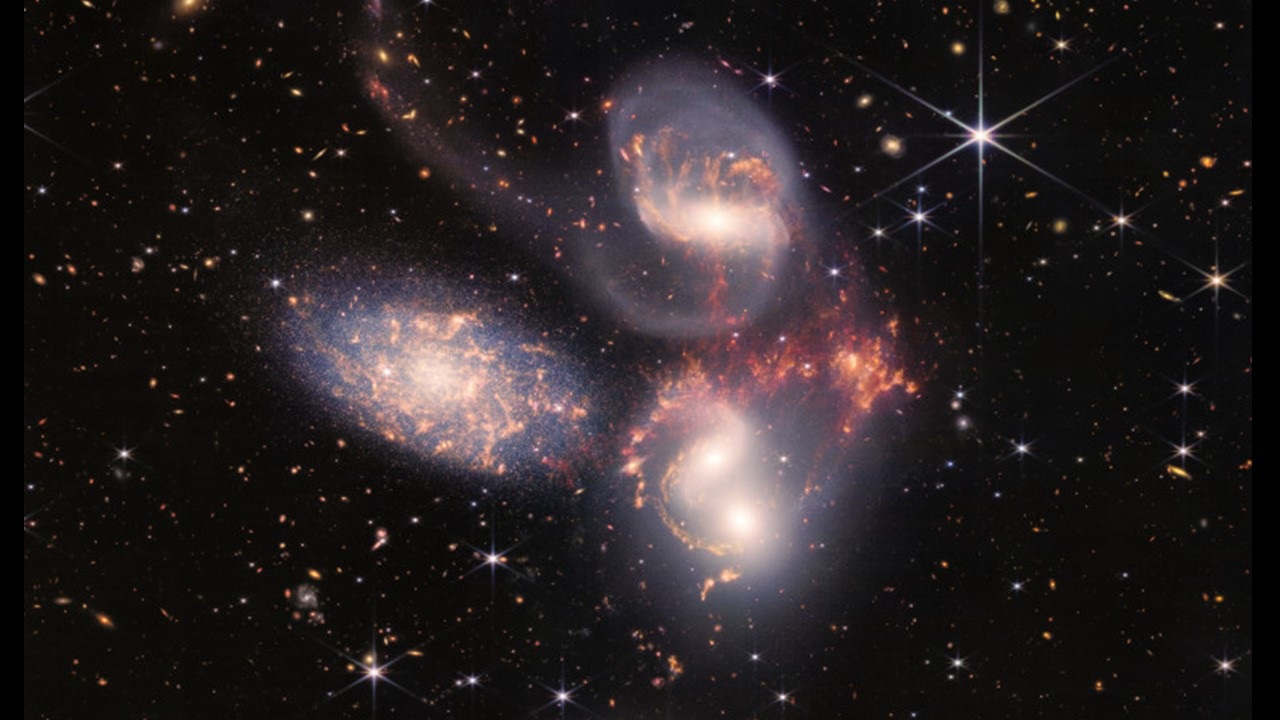
poems 'A Star': A Poem by John Freeborn

.

A Star

O silent sphere of silver-soft-spun light,
Thou crystal pearl strung on an airy veil
Suffusing bright celestial delight
In snowy glory o’er thy starry trail:
The bridal necklace of the night inflame
With purer ray, whose brighter progeny
Unveils her blushing face, unmarred by shame,
With vestal grace’s immortality—
Or so at first you seemed to me.
Yet naught I see now, but the faded spark
Of silent photons passing fitfully
Through deserts vast and void, and endless dark.
Are all the heavens a malign illusion
Sown unguided by the hands of Fate
And empty Chance, for hapless man’s confusion
In hubris-blinded wisdom desolate?
Is all your glory but the optic nerve
Convulsing with a chemic undulation,
Expressing signals traced along the curve
Of cosmic space-time’s ghostly adumbration?
Enough. Some subtler sense within my soul
Of reason and aesthetic sight combined
Perceives aright the hierarchic whole
Of countless patterns into one entwined,
Revealing in their firmamental dance
To primal nature’s wilder harmony,
Sublimely wrought through time’s azure expanse,
The one and many knit in unity.
As flowing waters pulse from hidden wells,
Cascading into fountains silver-clear,
Or stars illume the shadow-dappled dells
And glimmer in the ocean’s gilded mirror:
So beauty’s form subsists eternally,
Unveiled incarnate from that changeless Source
Who maketh every lesser being be
And guides the heavens in their higher course—
Who spreads the shining heavens, sun and moon;
Photonic light diffused through space and time;
Who weaves, as though upon a living loom
The cosmic pattern of creation’s rhyme—
Who fills the heavens with His ordered grace
And leaves in them, though dimmed, an imprint of His triune face.

.

.

John Freeborn is a twelfth grade student at Logos Online School. He lives in Concordia, Kansas.
ShareTweetPin
The Society of Classical Poets does not endorse any views expressed in individual poems or commentary.
Read Our Comments Policy Here

RandomPoems

‘The Music of the Earth’ and Other Poetry by Martin Rizley
Beauty

‘Ode to Winter’ and Other Poetry by Susan Jarvis Bryant

November 26, 2022

. Ode to Winter A honeypool of sun seeps from the skies. The crisp and clingy leaves have lost their...

‘Backyard Bliss’ and Other Poetry by Susan Jarvis Bryant
Beauty

‘Backyard Bliss’ and Other Poetry by Susan Jarvis Bryant

September 1, 2020

  Backyard Bliss I hear hope’s song fill skies today __In trills beyond my door. Her citrus kiss burns through...

Next Post
‘Requiem’ and Other Poems by C.B. Anderson

'Requiem' and Other Poems by C.B. Anderson

On Living with Someone with Alzheimer’s, and Other Poems by Vicki Roberts

On Living with Someone with Alzheimer's, and Other Poems by Vicki Roberts

A Poem on Paisley, and Other Poetry by Margaret Coats

A Poem on Paisley, and Other Poetry by Margaret Coats

Comments 12

  1. Roy Eugene Peterson says:
    2 years ago

    John, you have written a great classic poem at such a tender age. It is filled with sparkling word rhymes that stimulate by their exceptional word choice, super vocabulary and your deft alliteration. You have a classical poetry future as bright as the star you eulogize. Your contemplation of eternity and the divine is exceptional and reaches into the heart and soul.

    Reply
  2. Stephen M. Dickey says:
    2 years ago

    Greetings from Lawrence!
    I second Roy’s opinion, it’s a very impressive piece, it’s very rich in astronomical imagery. I grew up in a household with a laser/optics theorist in it, and am admittedly a sucker for words like “photon” in poems, and poems on this kind of topic.
    I have a couple of questions comments, that you can do with as you will:
    What is the subject of “inflame”? I am also wondering why you have “maketh” versus “guides”, etc. Seems to me you could just have “makes” and have the second syllable of “every” count (similar to what you did in “hierarchic”) and have it as an inversion. But these are minor points.

    Reply
    • John Freeborn says:
      2 years ago

      I appreciate the kind words. Regarding your additional comments: 1) The subject of inflame is the “necklace of the night” (i.e., the starry sky). 2) I didn’t really care for the “maketh,” either: it felt incongruous. I guess I’m just too used to giving it two syllables when writing poetry — your suggestion never even crossed my mind. Thanks for pointing that out!

      Reply
  3. Peg says:
    2 years ago

    What a JOY, Mr Freeborn…
    HALLELUJAH

    Reply
  4. jd says:
    2 years ago

    Beautiful, John. Thank you.

    Reply
  5. Shamik Banerjee says:
    2 years ago

    Love your piece, John. The poem imparts a classical feeling, given the rich vocabulary and syntax. I was captivated by the first few lines and thought it was a poem on astronomy solely, but the turn not only impressed me but doubled the delight of reading it. Thank you for sharing your talent. God bless you.

    Reply
  6. Daniel Kemper says:
    2 years ago

    First, I third Roy’s comment.

    Next on the nit raised by Steven: Musashi says, “Pay attention to trifles.” To get a poem examined on such details is a sign of the skill behind the poem. For me, since the poem was set in an archaic tone, it didn’t bug me. Suggest “fashions” if you want to change it. The tone was even Miltonic in places with such phrases as “Convulsing with a chemic undulation,” and “Photonic light diffused.” Some amateur physicist likely will try to ding you on redundancy for photon…light, but your attention to detail seems clear: light is not always in the form of a photon, a particle; it can be a wave, which you handle deftly with “diffused.” That’s one of the things I like most about this poem: The details like that are right but are not obtrusive. I also liked the attention to perfecting meter, maintaining a metrical smoothness throughout. There’s a lot to love here.

    BTW, is this, by any chance a section of a larger work, perhaps in progress?

    Reply
    • John Freeborn says:
      2 years ago

      Thank you! “Photonic light” was supposed to show how a star’s beauty (the poem’s first theme) isn’t antithetical to what we learn from science (presented as the materialistic doubt brought up in the poem’s second section). As C.S. Lewis said, “That [mere “balls of flaming gas”] isn’t what stars are, but only what they are made of.” In other words, the light we see is comprised of photons (or wave/particle duality, as you point out), but that doesn’t destroy its being something beautiful: the whole (light) is greater than its component parts. Perhaps I made this point too subtly, though. To your question, I actually do hope to expand the theme; there was much more I’d hoped to weave into the poem, but I decided to cut this version short so I could finish it before the SCP High School Poetry Contest deadline.

      Reply
  7. Gary Borck says:
    2 years ago

    John, this is an exceptional poem. There’s definitely a poetic voice here. A wonderful, flowing and richly descriptive poem. A real pleasure to read。

    Reply
  8. Paul A. Freeman says:
    2 years ago

    I liked the archaic style. It felt Wordsworthian.

    I don’t think I could have carried through a poem of such length at your age, John. Nice one.

    Reply
  9. Margaret Coats says:
    2 years ago

    A rich description in beautiful language, as others have noted. But that’s not all. This is a poem with logical structure: four parts (approximately ten lines each), and the type of language changes to suit reasoned discourse in each part. The aesthetic perception comes first, followed by scientific description clearly articulated to contrast with the aesthetic. Part Three unifies One and Two by applying a philosophic perspective. Its conclusion naturally leads to a question about the source of beauty and truth and their interrelation–which is answered in the religious considerations of Part Four. John, the magnificence of your poem is to bring these parts together so that they flow naturally from one to the next, in language that changes appropriately with the frame of reference. And yet, the star as subject is not lost sight of. The transcendent experience of seeing it and thinking about it develops masterfully–concluding easily in the longer final line where the reader is invited to see the face of God.

    Reply
  10. Emily Cartwright says:
    2 years ago

    Beautiful.
    Wow.

    Reply

Leave a Reply Cancel reply

Your email address will not be published. Required fields are marked *

  1. Marguerite on ‘When the Phone Rings’ and Other Short Poems by Russel WinickJuly 18, 2026

    Amen on "Apologies!"

  2. Susan Jarvis Bryant on ‘My Pyjamas!’ and Other Poems by Susan Jarvis BryantJuly 18, 2026

    Jan, thank you very much for your encouraging comment. I'm so glad you enjoyed the poems and especially glad they…

  3. James Sale on ‘The 51st State’: A Poem by James SaleJuly 18, 2026

    Not quite a win, Theresa, but thank you for the thought, and congratulations yourself on your "Finalist' status for your…

  4. Susan Jarvis Bryant on National Poetry Month Limerick ChallengeJuly 18, 2026

    Beautifully written and hilarious, Jan! You have inspired me to have a go. Thank you!

  5. Jan Mennite on ‘My Pyjamas!’ and Other Poems by Susan Jarvis BryantJuly 18, 2026

    Susan, I always feel that my poetic intelligence increases while I read your work. I laughed and learned and felt…

Subscribe to Daily Poems

Enter your email address to subscribe to this blog and receive notifications of new posts by email.

Join 1,594 other subscribers

Recent Poems

  • Winners and Rankings of The Great American Poetry Competition
  • ‘The Gold Star Mother’: A Poem by Gerard Maritato
  • ‘An American Dash’: A Poem by Linda Ellis
  • ‘The Anonymous Soldier’: A Poem by Lucy Lind
  • ‘For Those We Never Meet’: A Poem by Aneesh Agarwal
  • ‘Ben Franklin’s Copper Fugio Cent’: A Poem by Geoffrey Smagacz
  • Three Brief Poems by Luxorius, Translated by Joseph S. Salemi
  • ‘The American Spirit’: A Poem by Dusty Grein
  • ‘The Ballad of Zebulon Pike’: A Poem by M.D. Skeen
  • ‘We Are the Ones’ and Other Poetry by Cheryl Corey
  • ‘My Pyjamas!’ and Other Poems by Susan Jarvis Bryant
  • ‘A Snowy Egret’: A Poem by Bruce Dale Wise
  • ‘The Swearing-in of Calvin Coolidge’: A Sonnet by Robert W. Crawford
  • ‘Ballad of the Sequoia’: A Poem by Lauren V. Leon
  • ‘The 51st State’: A Poem by James Sale
  • ‘La Uva’ (The Grape): A Poem by Michael Pietrack
  • ‘There’s Blood that Flows Within the Stripes’: A Poem by Lauren V. Leon
  • ‘Birdsong’: A Poem by Jeffrey Essmann
  • ‘The Melody That Lingers On’ and Other Poetry by John McPherson
  • ‘American Dreams’: A Poem by Adam Sedia
  • ‘An American Fabius’: A Poem by John Hernandez
  • ‘Vernal Clinic’ and Other Poetry by C.B. Anderson
  • ‘Omaha Beach’ and Other Poetry by Bradford Skow
  • ‘Music to Part the Veil’: A Poem by T.M. Moore
  • ‘A Gentleman’s Guide to Losing a War’ and Other Poetry by Arnon Peterson
  • ‘Black Shuck’: A Poem by Martin Briggs
  • ‘When the Last World War II Veteran Passes Away’: A Poem by N.S. Boone
  • ‘A Fallow Year at Worthy Farm’: A Poem by Paul A. Freeman
  • ‘Outstanding in Afghanistan’: A Poem by Jared S. Chang
  • ‘250 More’: A Poem by Miguel Moreno

Categories

  • Acrostic
  • Alexandroid
  • Alliterative
  • Art
  • Best Poems
  • Blank Verse
  • Chant Royal
  • Classical Poets Live
  • Clerihew
  • Covid-19
  • Deconstructing Communism
  • Educational
  • Epic
  • Epigrams and Proverbs
  • Essays
    • Interviews with Poets
    • Poetry Reviews
  • Featured
  • From the Society
  • Great Poets
    • Dante Alighieri
    • Edgar Allan Poe
    • Emily Dickinson
    • Geoffrey Chaucer
    • Henry Wadsworth Longfellow
    • Homer
    • John Keats
    • John Milton
    • Robert Frost
    • William Blake
    • William Shakespeare
    • William Wordsworth
  • Human Rights in China
  • Limerick
  • Love Poems
  • Music
  • Pantoum
  • Performing Arts
  • Poetry
    • Beauty
    • Children's Poems
    • Culture
    • Ekphrastic
    • Found Poems
    • High School Poets
    • Humor
    • Riddles
  • Poetry Challenge
  • Poetry Contests
  • Poetry Forms
    • Curtal Sonnet
    • Haiku
  • Poetry Readings
  • Rhupunt
  • Rondeau
  • Rondeau Redoublé
  • Rondel
  • Rubaiyat
  • Sapphic Verse
  • Satire
  • Science
  • Sestina
  • Shape Poems
  • Short Stories
  • Song Lyrics
  • Sonnet
  • Symposium
  • Terrorism
  • Terza Rima
  • The Environment
  • Translation
  • Triolet
  • Video
  • Villanelle

Quick Links

  • About Us
  • Submit Poetry
  • Become a Member
  • Members List
  • Support the Society
  • Advertisement Placement
  • Comments Policy
  • Terms of Use

Welcome Back!

Login to your account below

Forgotten Password?

Retrieve your password

Please enter your username or email address to reset your password.

Log In
No Result
View All Result
  • Poems
    • Beauty
    • Culture
    • Satire
    • Humor
    • Children’s
    • Art
    • Ekphrastic
    • Epic
    • Epigrams and Proverbs
    • Human Rights in China
    • Music
    • Performing Arts
    • Riddles
    • Science
    • Song Lyrics
    • The Environment
    • The Raven
    • Found Poems
    • High School Poets
    • Terrorism
    • Covid-19
  • Poetry Forms
    • Sonnet
    • Haiku
    • Limerick
    • Villanelle
    • Rondeau
    • Pantoum
    • Sestina
    • Triolet
    • Acrostic
    • Alexandroid
    • Alliterative
    • Blank Verse
    • Chant Royal
    • Clerihew
    • Rhupunt
    • Rondeau Redoublé
    • Rondel
    • Rubaiyat
    • Sapphic Verse
    • Shape Poems
    • Terza Rima
  • Great Poets
    • Geoffrey Chaucer
    • Emily Dickinson
    • Homer
    • Henry Wadsworth Longfellow
    • Dante Alighieri
    • John Keats
    • John Milton
    • Edgar Allan Poe
    • William Shakespeare
    • William Wordsworth
    • William Blake
    • Robert Frost
  • Love Poems
  • Contests
  • SCP Academy
    • Educational
    • Teaching Classical Poetry—A Guide for Educators
    • Poetry Forms
    • The SCP Journal
    • Books

© 2025 SCP. WebDesign by CODEC Prime.