


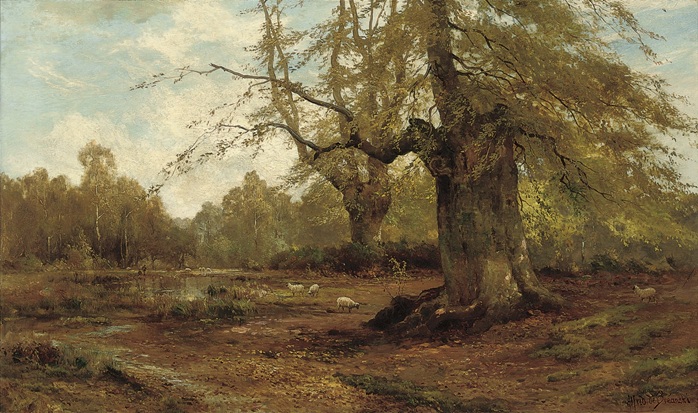
Burnham Beeches
A weary pilgrim rests ‘neath ageless trees,
Enraptured by a blackbird’s ancient rhyme;
The tones of his soft voice upon the breeze
Invoke the metered poetry of Time.
Each phrase is like a faded memory
Of many lives our pilgrim led before;
Each life, since passed, transformed by history,
Into eternal myth and metaphor.
What ode shall sound this time beside his mound,
When finally his soul from body flies?
A paean of his deeds with kindness bound,
Or fabled cautions versed through bitter cries?
The black bard flicks his wings with skilful art;
The pilgrim journeys on with tempered heart.
Andrew Moody teaches and studies the art of classical riding in London, UK. He follows a traditional pathway of learning that was established in Renaissance riding academies, enriching his horsemanship by studying fine art drawing, early music, historic dance, and ancient philosophy. Andy is currently engaged in part-time doctoral research at Durham University, exploring the choreography of riding and equestrian ballet in the 16th century.

















Andrew, “black bard” was a fascinating twist in your mellifluous poem along with the final reflective line. I can see the imagery in my mind of your beautiful “paean.”
Pilgrim and blackbird seem to become many binary systems within the “metered poetry of Time.” Beautifully expressed, Andrew.
This is a well-crafted nineteenth-century sonnet — and I do not say that disparagingly. Your inversion and truncation (“‘neath”) place the poem firmly in the classical English tradition, and you give us a fine specimen of carrying that tradition forward. The subject is original and the treatment fresh. The title is also delightfully misleading. The poem is less about the trees than about the blackbird singing in them, yet the title forces the reader to focus on the “ageless” trees — the setting “out of time,” which really is the central theme of the poem.
I particularly liked the lines: ‘The tones of his soft voice upon the breeze / Invoke the metered poetry of Time.’
Burnham Beeches is part of my old stomping ground, particularly during school holidays. I loved the reveal that the narrator is a ‘black bard’ the bird continues its pilgrimage.
Thanks for the read, Andrew.
A beautiful sonnet, Andrew.