• Submit Poetry
  • Support SCP
  • About Us
  • Members
  • Join
Saturday, July 18, 2026
Society of Classical Poets
  • Poems
    • Beauty
    • Culture
    • Satire
    • Humor
    • Children’s
    • Art
    • Ekphrastic
    • Epic
    • Epigrams and Proverbs
    • Human Rights in China
    • Music
    • Performing Arts
    • Riddles
    • Science
    • Song Lyrics
    • The Environment
    • The Raven
    • Found Poems
    • High School Poets
    • Terrorism
    • Covid-19
  • Poetry Forms
    • Sonnet
    • Haiku
    • Limerick
    • Villanelle
    • Rondeau
    • Pantoum
    • Sestina
    • Triolet
    • Acrostic
    • Alexandroid
    • Alliterative
    • Blank Verse
    • Chant Royal
    • Clerihew
    • Rhupunt
    • Rondeau Redoublé
    • Rondel
    • Rubaiyat
    • Sapphic Verse
    • Shape Poems
    • Terza Rima
  • Great Poets
    • Geoffrey Chaucer
    • Emily Dickinson
    • Homer
    • Henry Wadsworth Longfellow
    • Dante Alighieri
    • John Keats
    • John Milton
    • Edgar Allan Poe
    • William Shakespeare
    • William Wordsworth
    • William Blake
    • Robert Frost
  • Love Poems
  • Contests
  • SCP Academy
    • Educational
    • Teaching Classical Poetry—A Guide for Educators
    • Poetry Forms
    • The SCP Journal
    • Books
No Result
View All Result
Society of Classical Poets
  • Poems
    • Beauty
    • Culture
    • Satire
    • Humor
    • Children’s
    • Art
    • Ekphrastic
    • Epic
    • Epigrams and Proverbs
    • Human Rights in China
    • Music
    • Performing Arts
    • Riddles
    • Science
    • Song Lyrics
    • The Environment
    • The Raven
    • Found Poems
    • High School Poets
    • Terrorism
    • Covid-19
  • Poetry Forms
    • Sonnet
    • Haiku
    • Limerick
    • Villanelle
    • Rondeau
    • Pantoum
    • Sestina
    • Triolet
    • Acrostic
    • Alexandroid
    • Alliterative
    • Blank Verse
    • Chant Royal
    • Clerihew
    • Rhupunt
    • Rondeau Redoublé
    • Rondel
    • Rubaiyat
    • Sapphic Verse
    • Shape Poems
    • Terza Rima
  • Great Poets
    • Geoffrey Chaucer
    • Emily Dickinson
    • Homer
    • Henry Wadsworth Longfellow
    • Dante Alighieri
    • John Keats
    • John Milton
    • Edgar Allan Poe
    • William Shakespeare
    • William Wordsworth
    • William Blake
    • Robert Frost
  • Love Poems
  • Contests
  • SCP Academy
    • Educational
    • Teaching Classical Poetry—A Guide for Educators
    • Poetry Forms
    • The SCP Journal
    • Books
No Result
View All Result
Society of Classical Poets
No Result
View All Result
Home Poetry Beauty

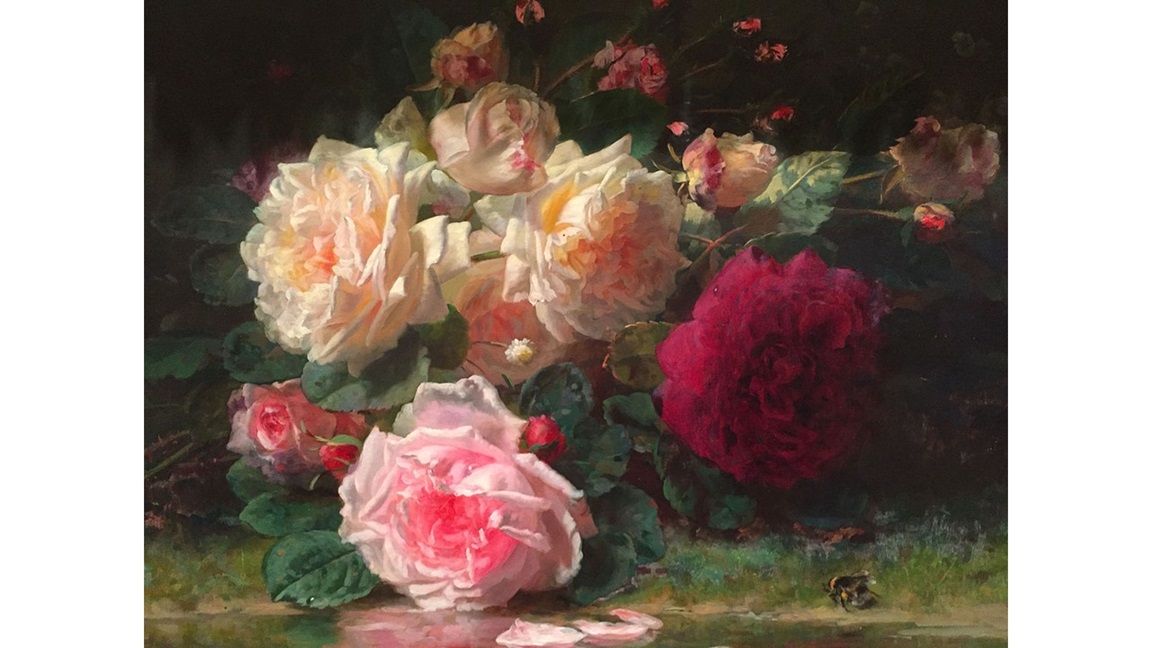
Five Rose Poems by Rainer Maria Rilke, Translated by Alan Orsborn

June 18, 2024
in Beauty, Music, Poetry, Translation
A A
9
poems Five Rose Poems by Rainer Maria Rilke, Translated by Alan Orsborn
.
.

Five Rose Poems by Rainer Maria Rilke

translated by Alan Orsborn
.
The Austrian poet Rainer Maria Rilke (1875-1926), writing in both German and French, penned 24 French poems about roses that were published posthumously in 1927 as Les Roses. The American composer Morten Lauridsen (b. 1943) selected five of these poems, composing a song cycle around them that he called Les Chansons des Roses. The fifth poem he set as his grand finale, calling it Dirait-on, “so they say.” Dirait-on is the most widely known and loved of the five musical settings. These are translations of Rainer Maria Rilke’s five rose poems as sequenced within Morten Lauridsen’s composition.
.
.

.
.

I

We had proposed to you nonetheless
__That you fill your calyx.
Delighted with the dramatics,
__You turned daring with your largesse.
.
You expanded yourself one hundred times—you’re rich enough—
__Into one bloom;
That tells the state of him in love…
__But that’s what you ever assume.
.
.
Calyx: French calice. A pun, calice means both “chalice” and “calyx,” the botanical term for the cup-like covering of a developing flower bud.
Him: French celui: Words referring to the narrator of these poems are masculine, grammatically feminine words are used for the rose (or the woman, as the case may be).
.
.

II

Against whom, Rose,
Have you sought to acquire
All these thorns?
Is joy so forlorn
That it dares require
This armed thing that grows
Briars?
.
What threat does this prevent,
This overblown barbed wire?
Your numerous opponents
I retired,
Those that were never scared.
In spite of that, summer and fall
You still wound the care
That gives all.
.
.

III

Of your dreams overrun,
Manifold flower within,
As watered as weepers’ skin,
You bend low before the sun.
.
Your soft strength slumbers
With a tentative passion,
Unfolding tender contours
Betwixt cheek and bosom.
.
.

IV

I am so aware of your
Being, Perfect Rose,
That my intents must seem a blur
With this party my heart throws.
.
I breathe you in as if you were just,
Rose, all of life,
And I, a perfect friend to trust
A friend alike.
.
.
Friend…friend…:  French, masculine and feminine grammatical forms, respectively.
.
.

V

Unconstraint rounds unconstraint,
Tenderness holds tenderness…
Your interior stirs in ceaseless
Self-caress, so they say;

Within yourself caressed,
Your own reflection’s light reveals
The metaphor you express
Of Narcissus fulfilled.

.
.
Narcissus: In Greek and Roman mythology, Narcissus, unable to have contact with his own water-reflected image with which he had become obsessed, wasted away and died.  The flowers that subsequently sprang from his chest bear his name.
.
.
.
.
Original French
.
.
1. C’est pourtant nous qui t’avons proposé  (En une seule fleur)
.
C’est pourtant nous qui t’avons proposé
de remplir ton calice.
Enchantée de cet artifice,
ton abondance l’avait osé.
.
Tu étais assez riche, pour devenir cent fois toi-même
en une seule fleur ;
c’est l’état de celui qui aime…
Mais tu n’as pas pensé ailleurs.
.
2. Contre qui, rose
.
Contre qui, rose,
avez-vous adopté
ces épines ?
Votre joie trop fine
vous a-t-elle forcée
de devenir cette chose
armée ?
.
Mais de qui vous protège
cette arme exagérée ?
Combien d’ennemis vous ai-je
enlevés
qui ne la craignaient point.
Au contraire, d’été en automne,
vous blessez les soins
qu’on vous donne.
.
3. De ton rêve trop plein
.
De ton rêve trop plein,
fleur en dedans nombreuse,
mouillée comme une pleureuse,
tu te penches sur le matin.
.
Tes douces forces qui dorment
dans un désir incertain,
développent ses tendres formes
entre joues et seins.
.
4. J’ai une telle conscience de ton (La rose complète)
.
J’ai une telle conscience de ton
être, rose complète,
que mon consentement te confond
avec mon cœur en fête.
.
Je te respire comme si tu étais,
rose, toute la vie,
et je me sens l’ami parfait
d’une telle amie.
.
5. Abandon entouré d’abandon  (Dirait-on)
.
Abandon entouré d’abandon,
tendresse touchant aux tendresses…
C’est ton intérieur qui sans cesse
se caresse, dirait-on ;
.
se caresse en soi-même,
par son propre reflet éclairé.
Ainsi tu inventes le thème
du Narcisse exhaucé.
.
.
.
.
Alan Orsborn lives in Washington state.
ShareTweetPin
The Society of Classical Poets does not endorse any views expressed in individual poems or commentary.
Read Our Comments Policy Here

RandomPoems

‘To a Blank Page’ by M. P. Lauretta
Beauty

‘Upon These Boughs that Shake Against the Cold’ by Cynthia Erlandson

June 25, 2022

. “Upon These Boughs that Shake Against the Cold” ---Shakespeare, Sonnet 73 Her script was always lovely and unique, And...

‘Just Hang On!’: A Poem by Dusty Grein
Poetry

‘Just Hang On!’: A Poem by Dusty Grein

November 30, 2025

  Just Hang On! When I was young, I played outside and cousins often were my crew; the big kids...

Next Post
‘To a Cicada’ and Other Poetry by Martin Rizley

A Poem on 'Cicada Fever' in Springfield, Illinois, by Mary Jane Myers

‘Vintage Love’: A Poem by Gigi Ryan

'A Precious Wife Is Like Fine Wine' and Other Poetry by Martin Rizley

‘The Day the Roofers Came’ and Other Poems by Susan Jarvis Bryant

'The Day the Roofers Came' and Other Poems by Susan Jarvis Bryant

Comments 9

  1. Phil S. Rogers says:
    2 years ago

    Most interesting and educational. I would guess most people make no connection between Narcissus in mythology and the flower. In Texas our roses are gorgeous this time of year. Thank you, Alan.

    Reply
  2. Alan Orsborn says:
    2 years ago

    You’re very welcome. Working on these poems made me want to plant a rose garden.

    Reply
  3. Cynthia Erlandson says:
    2 years ago

    These are lovely. Though I can’t comment on the translation per se, I very much enjoy your creative and beautiful rhymes, like nonetheless/largesse/; calyx/dramatics; slumbers/contours; tenderness/ceaseless, which seem to reflect the intent of the original rhyme scheme. Like Phil, I appreciate the way you’ve tied in Narcissus with the rose’s self-caressing. And I’m thankful to have been introduced to this music, as well.

    Reply
  4. Alan Orsborn says:
    2 years ago

    I chose the calyx/dramatics rhyme over chalice/artifice. I like calyx/dramatics better, especially because I liked dramatics better than artifice. I hesitated because it committed that line to being about a rose exclusively with a botanical term like calyx. The rose poems are written in such a way as to be subject to various interpretation. Is Rilke writing about a rose? A woman? Both? The challenge with Rilke is to execute an accurate translation that allows the readers to come to their own conclusions.

    Reply
  5. James A. Tweedie says:
    2 years ago

    Alan,

    Well translated, well versed, well rhymed, and the final sentence in your comment reply to Cynthia is well said. In short, well done.

    Reply
  6. Alan Orsborn says:
    2 years ago

    You are so right, James, that is the challenge. I’ve learned a lot and I’m still learning. Hopefully these poems can create a bridge for readers to not only Rainer Maria Rilke’s exquisite poetry but also to Morten Lauridsen’s sublime music.

    Reply
  7. Margaret Coats says:
    2 years ago

    You set yourself a real challenge of translation, Alan. The most difficult poems to translate at all are the simple ones like these with clearly meaningful imagery that crosses the boundaries of language difference. I think you are most successful with the third and the fourth of the poems. These present the multiple touches of tenderness present in Rilke’s work that harks back to innumerable French rose poems in earlier ages. In your first and second, I find the final lines not true to Rilke’s words, because of the constraints of your rhyme choices. These may be good enough to satisfy many readers of English, but even without considering the French, they strike me as rather obscure conclusions to what has gone before. In the fifth poem, you have done well with six lines, and my dissatisfaction with the concluding two is Rilke’s fault, not yours. He seems to have intended the immense leap of re-interpreting the highly developed image of the rose and the classic myth of Narcissus in tandem, and I simply find “exhauce” a failure. Your word “fulfilled” is again not quite right for it, but does offer an authentic re-interpretation. And therefore I congratulate you on making something of it in your own way.

    Lauridsen’s music is inescapable because I live near him, and the interpreter (chorus and director) makes a big difference in the full effect of each piece. Brave work in taking on a similar challenge with these Rilke poems!

    Reply
  8. Alan Orsborn says:
    2 years ago

    Margaret,

    I very much appreciate the detailed and specific feedback from an expert such as yourself. Yes, I somewhat naively started this project not fully understanding Rilke’s polyphonic voice, only wanting to make Rilke’s poetry in Morten Lauridsen’s song cycle more widely available. As I went along, I began to understand the difficulties, slowly at first, then suddenly. I translated them in their numerical order, so it may not be surprising that you found more issues with the first two poems, and the translations seem to improve as you read along.

    The third poem is the one I feel the best about in terms of my translation, and the fourth is the runner up. The fourth is also my favorite of the five (in French) but I like all of them, with the possible exception of the fifth.

    The fifth poem is very strange. I’ve had several theories about it, but I currently interpret the concentric circles of the moving petals as creating a vortex (the vortex is a recurring theme in Rilke’s German poetry collection New Poems). This vortex gives rise to the rose’s reflection that in turn illuminates the rose. The rose and its reflection are joined in this transcendent light that achieve what Narcissus could not. Anyway, that’s all debatable. My other theory was this is about a lover’s quarrel and the poet is being sarcastic. I reject that interpretation now because as I have been with Rilke’s poetry more, I find he is very gentle. Nevertheless I have often wondered if Rilke would have been surprised to find that Lauridsen made the fifth poem the grand finale of his song cycle.

    You may live near Morten Lauridsen in LA, but we in Washington, east and west, have small claims on him. He was born on the Palouse in the town of Colfax, and he has a house in the San Juans.

    Reply
  9. Nurul Hoque says:
    1 year ago

    Hello Alan Orsborn,
    I came across your translation of Rainer Maria Rilke’s “Five Rose Poems” and was truly moved by them. As a Bengali poet and blogger, I would love to translate these beautiful poems into Bengali and share them on my blog. Would you consider allowing me to do so while crediting you for your translation?
    Thank you for your consideration!
    Warm regards,
    Nurul Hoque
    Chittagong, Bangladesh.

    Reply

Leave a Reply Cancel reply

Your email address will not be published. Required fields are marked *

  1. Theresa Werba on ‘American Dreams’: A Poem by Adam SediaJuly 18, 2026

    Congrats on your Finalist win Adam, such an excellently-wrought and powerful poem!

  2. Theresa Werba on ‘The 51st State’: A Poem by James SaleJuly 18, 2026

    Congrats James on your Finalist win!!!

  3. Brian Yapko on ‘Americans Cross the Rubicon’: A July 4th Poem by Brian YapkoJuly 18, 2026

    Thank you very much indeed, Adam. The Civil War and Pearl Harbor were decisive enough. I wanted a full range…

  4. Theresa Werba on ‘Two Fateful American Coin Flips’: A Poem by James A. TweedieJuly 18, 2026

    Jim, congrats on your win!!!

  5. BDW on ‘For Those We Never Meet’: A Poem by Aneesh AgarwalJuly 18, 2026

    Mr. Agawal has generalized the largest labour insurrection in America from the early 20th century—1921, that cost the lives of…

Subscribe to Daily Poems

Enter your email address to subscribe to this blog and receive notifications of new posts by email.

Join 1,595 other subscribers

Recent Poems

  • Winners and Rankings of The Great American Poetry Competition
  • ‘The Gold Star Mother’: A Poem by Gerard Maritato
  • ‘An American Dash’: A Poem by Linda Ellis
  • ‘The Anonymous Soldier’: A Poem by Lucy Lind
  • ‘For Those We Never Meet’: A Poem by Aneesh Agarwal
  • ‘Ben Franklin’s Copper Fugio Cent’: A Poem by Geoffrey Smagacz
  • Three Brief Poems by Luxorius, Translated by Joseph S. Salemi
  • ‘The American Spirit’: A Poem by Dusty Grein
  • ‘The Ballad of Zebulon Pike’: A Poem by M.D. Skeen
  • ‘We Are the Ones’ and Other Poetry by Cheryl Corey
  • ‘My Pyjamas!’ and Other Poems by Susan Jarvis Bryant
  • ‘A Snowy Egret’: A Poem by Bruce Dale Wise
  • ‘The Swearing-in of Calvin Coolidge’: A Sonnet by Robert W. Crawford
  • ‘Ballad of the Sequoia’: A Poem by Lauren V. Leon
  • ‘The 51st State’: A Poem by James Sale
  • ‘La Uva’ (The Grape): A Poem by Michael Pietrack
  • ‘There’s Blood that Flows Within the Stripes’: A Poem by Lauren V. Leon
  • ‘Birdsong’: A Poem by Jeffrey Essmann
  • ‘The Melody That Lingers On’ and Other Poetry by John McPherson
  • ‘American Dreams’: A Poem by Adam Sedia
  • ‘An American Fabius’: A Poem by John Hernandez
  • ‘Vernal Clinic’ and Other Poetry by C.B. Anderson
  • ‘Omaha Beach’ and Other Poetry by Bradford Skow
  • ‘Music to Part the Veil’: A Poem by T.M. Moore
  • ‘A Gentleman’s Guide to Losing a War’ and Other Poetry by Arnon Peterson
  • ‘Black Shuck’: A Poem by Martin Briggs
  • ‘When the Last World War II Veteran Passes Away’: A Poem by N.S. Boone
  • ‘A Fallow Year at Worthy Farm’: A Poem by Paul A. Freeman
  • ‘Outstanding in Afghanistan’: A Poem by Jared S. Chang
  • ‘250 More’: A Poem by Miguel Moreno

Categories

  • Acrostic
  • Alexandroid
  • Alliterative
  • Art
  • Best Poems
  • Blank Verse
  • Chant Royal
  • Classical Poets Live
  • Clerihew
  • Covid-19
  • Deconstructing Communism
  • Educational
  • Epic
  • Epigrams and Proverbs
  • Essays
    • Interviews with Poets
    • Poetry Reviews
  • Featured
  • From the Society
  • Great Poets
    • Dante Alighieri
    • Edgar Allan Poe
    • Emily Dickinson
    • Geoffrey Chaucer
    • Henry Wadsworth Longfellow
    • Homer
    • John Keats
    • John Milton
    • Robert Frost
    • William Blake
    • William Shakespeare
    • William Wordsworth
  • Human Rights in China
  • Limerick
  • Love Poems
  • Music
  • Pantoum
  • Performing Arts
  • Poetry
    • Beauty
    • Children's Poems
    • Culture
    • Ekphrastic
    • Found Poems
    • High School Poets
    • Humor
    • Riddles
  • Poetry Challenge
  • Poetry Contests
  • Poetry Forms
    • Curtal Sonnet
    • Haiku
  • Poetry Readings
  • Rhupunt
  • Rondeau
  • Rondeau Redoublé
  • Rondel
  • Rubaiyat
  • Sapphic Verse
  • Satire
  • Science
  • Sestina
  • Shape Poems
  • Short Stories
  • Song Lyrics
  • Sonnet
  • Symposium
  • Terrorism
  • Terza Rima
  • The Environment
  • Translation
  • Triolet
  • Video
  • Villanelle

Quick Links

  • About Us
  • Submit Poetry
  • Become a Member
  • Members List
  • Support the Society
  • Advertisement Placement
  • Comments Policy
  • Terms of Use

Welcome Back!

Login to your account below

Forgotten Password?

Retrieve your password

Please enter your username or email address to reset your password.

Log In
No Result
View All Result
  • Poems
    • Beauty
    • Culture
    • Satire
    • Humor
    • Children’s
    • Art
    • Ekphrastic
    • Epic
    • Epigrams and Proverbs
    • Human Rights in China
    • Music
    • Performing Arts
    • Riddles
    • Science
    • Song Lyrics
    • The Environment
    • The Raven
    • Found Poems
    • High School Poets
    • Terrorism
    • Covid-19
  • Poetry Forms
    • Sonnet
    • Haiku
    • Limerick
    • Villanelle
    • Rondeau
    • Pantoum
    • Sestina
    • Triolet
    • Acrostic
    • Alexandroid
    • Alliterative
    • Blank Verse
    • Chant Royal
    • Clerihew
    • Rhupunt
    • Rondeau Redoublé
    • Rondel
    • Rubaiyat
    • Sapphic Verse
    • Shape Poems
    • Terza Rima
  • Great Poets
    • Geoffrey Chaucer
    • Emily Dickinson
    • Homer
    • Henry Wadsworth Longfellow
    • Dante Alighieri
    • John Keats
    • John Milton
    • Edgar Allan Poe
    • William Shakespeare
    • William Wordsworth
    • William Blake
    • Robert Frost
  • Love Poems
  • Contests
  • SCP Academy
    • Educational
    • Teaching Classical Poetry—A Guide for Educators
    • Poetry Forms
    • The SCP Journal
    • Books

© 2025 SCP. WebDesign by CODEC Prime.