


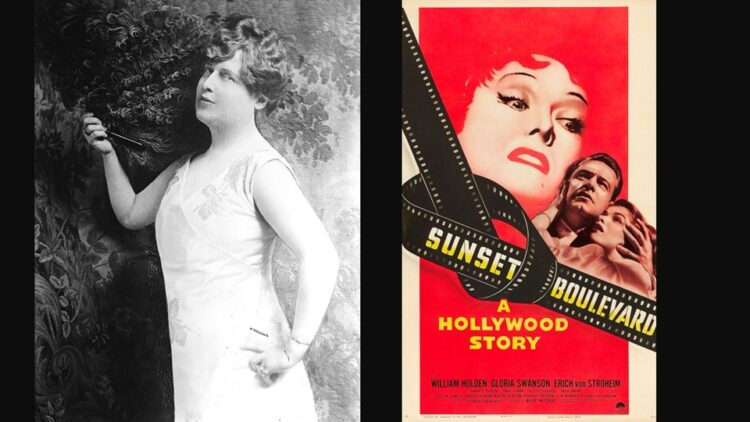
Florence Foster Jenkins
“A Jenkins recital was never exactly an aesthetic experience—
only to the degree that an early Christian among the lions
provided aesthetic experience; it was chiefly immolatory,
and Madame Jenkins was always eaten in the end.”
—William Meredith
Carnegie Hall, New York. October 25, 1944.
High F above high C? Or some stray feline—
Whose caterwauling makes me sorely wish
That it would end so I could make a beeline
Out to the lobby. Watch her dip and swish
As she plows forth from Mendelssohn to Brahms!
Her voice: like none that I have ever heard:
A screech which makes me pray exploding bombs
Might somehow drown out every note and word.
Imagine being famous for the fault
Of lacking talent yet too vain to notice.
A painting void of hue, a vase of salt,
A pond which nurtures neither koi nor lotus.
I should not share these thoughts! I am no fraud
To join an audience which offers cheers
Like knives for music they feign to applaud,
But privately deride with smirks and jeers.
Am I obliged to laud her since she longs
To sing? This well-heeled socialite has wealth
To rent out concert halls and warble songs
As make one long to steal away in stealth.
Dear Lady Florence! Yes, she is quite kind
But staunch in her resolve to skirt the truth.
No Pons or Callas, she’s as deaf and blind
To her tin ear as to her distant youth.
Her pipe dream pushes all that’s true aside
Because she is addicted to attention.
What now? Puccini. Tosca’s suicide.
Then Mozart. Then six bows for her pretension.
This torture—will it ever end its term?
The curtain call! At last, at last I’m free!
How hard the lot of those compelled to squirm
To adulate her mediocrity.
Poet’s Note: The opera impresario Ira Siff dubbed socialite and dilettante Florence Foster Jenkins as “the anti-Callas”: He said, “Jenkins was exquisitely bad, so bad that it added up to quite a good evening of theater … She would stray from the original music, and do insightful and instinctual things with her voice, but in a terribly distorted way. There was no end to the horribleness … They say Cole Porter had to bang his cane into his foot in order not to laugh out loud when she sang. She was that bad. Nevertheless, Porter rarely missed a recital.”
Ode to Norma Desmond
“I am big. It’s the pictures that got small.” —former (fictional)
silent film star Norma Desmond in “Sunset Boulevard” (1950),
screenplay by Billy Wilder, Charles Brackett and D.M. Marshman, Jr.
Norma Desmond’s mansion, Beverly Hills, California. January 1950.
They capture you on film as you descend
The staircase where you play your final scene.
Your eyes are glazed as if you’ve lost your mind.
You float—a silk-garbed yacht which soon must founder.
But you need spare no thoughts for that just yet.
The cameras are all that matter now,
And all those people out there in the dark.
You don’t recall the lover you just killed.
Consumed by drama fraught with dreams and dooms,
You do not grasp a murder trial looms.
Who knows what really makes a movie star?
A couture gown, some henna in the hair,
A chin lift; dabs of Christian Dior blush;
Mascara, rouge, high cheeks by Estee Lauder,
A tennis court, a lavish salary,
An antique Rolls, a custom swimming pool,
Your photographs and portraits everywhere;
A mansion off of Sunset Boulevard
Which counterfeits a Florentine palazzo
(With flooring made of Veronese terrazzo.)
A motion picture queen must outshine life!
Exaggerated gestures, flashing eyes;
The flickering of brilliant black and white
With close-ups of a face which millions cherish,
The fan letters—ten-thousand every week
Which beg you for one small lock of your hair.
A servant who claims all you hope to hear:
That you’re still young, still wanted, still a star!
Your beauty once put all the world to shame.
But that was then. Now few recall your name.
For your films were as silent as the grave
Which made you obsolete when talkies came.
Poor Norma—haughty prisoner of lost dreams.
It may well be that pride and vanity
Have severed you from your humanity,
For you loved being a celebrity—
The paparazzi, autographs, awards—
And now you cannot bear to be ignored.
You wait, deluded, for DeMille to call,
Convinced that it’s the pictures which got small.
But now there is a lover pooled in blood—
For “no one leaves a star!”—that’s what you roared.
The corpse—a handsome writer no one knew—
Sold soul and flesh to live with you in wealth.
You held him hostage, but he used you back,
Then cursed you. Damn your fantasies and lies!
He pierced right through your dreams into your dread.
Are you to blame for shooting that man dead?
Well, Sunset is a moral cul-de sac—
Depraved, deluded, doomed. Now fade to black.
Brian Yapko is a retired lawyer whose poetry has appeared in over fifty journals. He is the winner of the 2023 SCP International Poetry Competition. Brian is also the author of several short stories, the science fiction novel El Nuevo Mundo and the gothic archaeological novel Bleeding Stone. He lives in Bradenton, Florida.













As one who long ago surrendered to the horrible fascination of F F Jenkins (perhaps the tonal equivalent of William McGonagall), I’m pleased to see her afforded more of the attention she craved. Those in search of an excruciating experience could do no better than seek out her ground-breaking performance of the Queen of the Night’s aria. Two enjoyable pieces, Brian, and both full of pathos.
Thank you so much, Martin. I have taken you up on your recommendation and posted the Queen of the Night aria below. As Mozart says to Salieri in Amadeus, “I didn’t know music like that was possible!”
McGonagall would himself be a phenomenal subject for a poem. Any interest in writing it?
One grins and bears it, Brian – these are wonderful, descriptive pieces outlining the disintegration of two whole lives. I am particularly touched by “You wait, deluded, for DeMille to call” – does it have to end that way for them all? Why, no! I read only this weekend that Matt Damon is a great guy, spends loads of time with his wife and daughters, and actually builds time into this schedule so that he can be with them. He turns away work for that end! Why even more recently he said to them, ‘Look, I am not taking any offers … unless Christopher Nolan calls.’ You can’t get better than that – look it up – there’s a poem there for you! And I have no objection to being the dedicatee of it!
Thank you so much, James. I love hearing stories about celebrities who are actually decent people, who have a family life and who don’t let Hollywood’s shoddy values get to their heads. I think of Paul Newman and Joanne Woodward married for 50 years. I think of Rick Moranis who turned his back on Hollywood so that he could raise his children. People of character exist but they are swimming against the current.
Another was the stunningly beautiful Dorothy Provine, an accomplished actress, singer, and dancer who might have had a long and pyrotechnic career. But she retired early with her husband to a small island off the West coast, to live a quiet and reclusive family life.
Brian, what a wonderful Sunday morning treat! I love both beautifully crafted poems, which pair so well.
The Jenkins poem paints a perfect picture. Martin’s “the tonal equivalent of William McGonagall” observation is spot on. I am bowled over by “A painting void of hue, a vase of salt”– so cutting yet somehow compassionate in how it frames her blindness to her glaring faults. This captures the very essence of Jenkins perfectly.
In the Desmond poem, you paint this tragic figure so vividly with your deftly woven words that I can see Norma float before me, “a silk-garbed yacht which soon must founder” — superb! Yet my favorite line is: “A servant who claims all you hope to hear” because this line says it all quietly and beautifully. You conjure (with poetic panache) a world that exists on echoes of praise that the main character wouldn’t survive without.
I also admire the way you expose different aspects of narcissistic oblivion (one joyous and one tormented) and to do so with underlying compassion takes a great deal of skill. As I read them, I went from laughter to a sense of pity for these deluded exhibitionists. Very well done indeed!
Thank you so much, Susan! I’m really pleased that you liked the pairing of the two poems. The Jenkins poem was fun to write and made me laugh. Oddly, the Norma Desmond poem struck me as utterly tragic. It’s so hard to interact with people who are so self-referential that they have lost all objectivity. In my practice, I had to deal with a surprisingly large percentage of people who would enter litigation so invested in “being right” that they would gladly burn it all down to prove it. This is one of the reasons I refused to go into Family Law. Watching people torch their own homes and intimate relationships makes this area of law worse than any other. And it was usually fueled by the narcissism of “how dare they, I’ll show them.” That would be Norma Desmond (as played by Gloria Swanson) shooting the William Holden character. “No one leaves a star.” Hollywood has a way of creating monsters. It’s actually worse today.
I’m pleased you liked the line which refers to the obsequious servant Max (played by the immortal Erich von Stroheim) who was willing to engage in any level of codependent toadying to feed Norma’s fantasies. Had he only been honest with her perhaps her expectations of life would have been right-sized. Norma Desmond’s story is a tragedy for sure. We find it amusing, but in a cautionary-tale/train-wreck sort of way.
Brian, I may be among those who do not recognize these personalities but recognize them in others I have observed over the years. What inspired words you used in your deft display of ear and visual assaults like “plowing forth” and “caterwauling.” These are fabulously entertaining, the first in terms of piercing ear renditions, and the second in terms of one who continues to seek adulation long past their more youthful looks. Susan is right about the comedy mixed with pathos that permeates these great poems.
Thank you so much, Roy! I highly recommend that you see two films: “Florence Foster Jenkins” in which Meryl Streep played the title character. It was a film which was extremely entertaining and in many ways very sweet. The conspiracy of love that surrounded this uniquely untalented real-life person is particularly interesting. One wonders if supporting the pretense is actually kind or is it cruel? Well, the recording of Florence Foster Jenkins in the end shows that she did achieve an immortality of sorts, but it’s probably not what she would have wanted.
The other film is Billy Wilder’s “Sunset Boulevard” which may be this great director’s greatest picture. Gloria Swanson’s portrayal of Norma Desmond is not only iconic — it is a wonder of combined vulnerability and arrogance. Many real Hollywood personalities had cameos in that film including columnist Hedda Hopper, actors H.B. Warner and Buster Keaton, and the immortal director Cecil B. DeMille. The film is a classic.
Self-delusion is a standard human failing, but it tends to be more common (and visible) in the wealthy than in the humbler classes. Jenkins was so bad that many listeners assumed that her act was a deliberate parody or spoof, not a serious performance. A brilliant musician like Cole Porter never missed her when she appeared, but that is parallel to our tendency to be fixated on the unfolding vision of a trainwreck.
Desmond is a fictive character, but as in all fictive mimesis she is true to life, and therefore compelling and believable. The verisimilitude is confirmed by the countless real facts we know about many stars of stage or screen. In one sense Brian’s poem can be taken as an ekphrasis (the poetic description of a work of art), since he follows the details of the 1950 film faithfully. But as with the case of Jenkins, readers of the poem all know many instances of this kind of delusional behavior in persons of their acquaintance.
The descriptive force in both poems is highly professional and polished, most especially in the details of Norma Desmond’s clothing, cosmetics, home, possessions. and circumstances. Her inability to accept the fact that she is getting old, and that the era of silent film is done, is pitiable but also laughable.
One thing I notice: the Jenkins poem is more dependent on metaphor and simile than the Desmond piece. Images of a plow, a pond, exploding bombs, paintings, a vase, and knives dot the poem. This flood of figurative comparison is necessary, because one cannot simply say “She was a spectacularly lousy singer, and used her wealth to buy a public venue for her crappy art.”
Thank you very much indeed, Joe for this appreciative comment. It’s something of an old trope that when poor people act a certain way it’s “crazy” but when wealthy people act that way it’s “eccentric.” Well, FFJ was eccentric for sure. You’re quite right about Cole Porter’s attendance. It’s the trainwreck that he’s after in a “mean girls” sort of way.
I’m especially pleased by your comments about the Norma Desmond poem. I wanted this to be a poem in which shoddy values were front and center. That entailed a list. All the externals that Norma would think were important, and nothing at all of grace or good character. It is a portrait of unbridled vanity — one of those deadly sins that seems to be emblematic of our age, and which is particularly associated with the entertainment industry and it’s pearl-clutching, finger-wagging virtue signallers. I suppose this poem is sardonically funny in a way, though I found it tragically sad as I was writing it. I lived in Los Angeles and grew up in Beverly Hills. Norma Desmond is not a fiction in the least. Rather, she is a composite. And you will see her on any station, in any movie theater, on any YouTube channel. Now that everyone can have their own channel and be a tick-tock or YouTube star, the world has caught up to Norma Desmond. This is her age.
Brian, thank you for these 2 hilarious reminders that there have been – and still are – ‘entertainers’ (in several artistic genres) who’ve manages to convince themselves that they’re one of the greatest at what they’ve become known for. This Jenkins broad brings to MY music-loving mind – in the world of Country Music, performers like Hank Williams Sr. – Jr. – AND the 3rd, and, most painfully of all, ERNEST TUBB!!! Where’s an assassin when you desperately need one?
Despite having never heard Jenkins ‘perform(??)’, and never having watched Norma doing-her-Hollywood-thing, your 2 beautiful, heartfelt tributes tell me all I need to know concerning bothering to look either of them up. You’re scarily good at being ‘nice’ and being ‘nasty’ — at the same time!
I want to comment on Brian being nice and nasty at the same time. I perceive it thru the lens of Christian love; one can love the person, and still be candid about their faults.
I couldn’t agree more, David, but I guarantee you – Brian knows I’m just messin’ with him. We’re ‘poetry-buds’. 🙂
You bet we are, Mark! And don’t say I didn’t warn you about the Jenkins recital. Next time I’ll have you sign a release.
Thank you, David. I’m not sure if you’re commenting to Mark or to me, but either way I appreciate your thoughts on this. If directed to me, I did not intend to be nasty. I hope you can see a thread of compassion running through both poems — especially the Norma poem, since I actually feel pity for the character. As for FFJ, she has her reward and I did no greater harm to her than the rather delightful movie about her, the Meryl Streep “Florence Foster Jenkins.” One can care for the person or character and still point out their faults. Discernment matters.
And if you’re worried about Mark hurting feelings — not at all, not at all! As Mark notes, we are poetry buddies so I take his mock complaint with a grain of salt.
Thank you so much, Mark!? Yes, as I mentioned to Joe, this is now Norma’s Age, where anyone can be a star and no one actually has to have talent and delusion is easily fed. I don’t know Ernest Tubb, so I will now go to YouTube and look him up. But you really should watch Sunset Boulevard. It’s a classic. And it nails Hollywood values with brutal accuracy.
If anyone is interested in a YouTube video of Florence Foster Jenkins singing Mozart’s Queen of the Night aria, here it is: Warning: you may want earplugs. https://youtu.be/qtf2Q4yyuJ0?si=1w-SXMSZJXjzXOCv
I just chugged a full bottle of Maximum Strength Pepto Bismol you ornery pinhead, and it hasn’t helped in the least! What a dirty trick! Thanks a lot, Brian!
I enjoyed both of your poems Brian, though I know nothing about these two delightful individuals but I have to thank you for the link to Florence Foster Jenkins rendition of…. something! I laughed my head off all the way through. It just tickled my sense of humor with all of the cat pictures and comments. Thank you, I needed that. 🙂
Thank you so much, Norma! Florence Foster Jenkins was no doubt delightful! I’m glad you enjoyed the Youtube video and I strongly encourage you to see Meryl Streep’s portrait of her in the film Florence Foster Jenkins. Hugh Grant plays her fantasy-supporting husband. It’s fun and fascinating.
Norma Desmond is not fun, but possibly more fascinating. She was a fictional horror, conceived by the great director, Billy Wilder. Norma was a sweet girl who came to Hollywood in the 1920s and was corrupted by an entertainment industry which fed and nurtured her own narcissism — a 20th Century cinematic corollary to Dickens’ Miss Havisham from Great Expectations. And yet there is something about Norma that tugs at the heart — her almost childlike vanity, the parallel reality that she has created and lives in. But she could be iron-willed in the worst possible way. And delusional. And we must not forget that she ends up with a gun in her hands and a murder — all for the sake of vanity. Do watch Sunset Boulevard if you get the chance.
Brian, I was delighted with your poems about Florence Foster Jenkins and Norma Desmond. Two tragic, deluded figures that you have put into such excellent poetry! ! I always have loved Gloria Swanson’s portrayal of Norma Desmond!!!! Now all you need to do is do one about Baby Jane Hudson— Bette Davis was absolutely phenomenal as that similarly deluded character. As a voice teacher, I always found the phenomenon that was Florence Foster Jenkins particularly interesting. It makes me wonder if she might have had some kind of hearing deficit, and simply could not hear herself!!! I was also impressed with Meryl Streep’s portrayal in the eponymous film. Streep actually had early operatic training with Estelle Liebling and then worked with Arthur Levy to learn the nine coloratura arias the “right” way, only to add her own artistry in “rendering” them the way Florence Foster Jenkins did. It’s a great film, loads of fun and has a touch of pathos in it as well. And, if you want something else particularly interesting, go check out Alessandro Moreschi, “The Last Castrato”— here is a link to the 1902 recording of him singing the Bach/Gounod “Ave Maria”.
https://www.youtube.com/watch?v=KLjvfqnD0ws
At least we can get some idea of the aesthetic of late 19th/early 20th operatic singing by the castrati! The one thing that stands out his is utter lack of blending of his chest and falsetto registers through the passaggio!!! Curioser and curioser!!! Yet he is at least artistic in his attempts—there are moments of both tragedy and beauty in his singing. I think the oddity of these individuals is what makes them all the more intriguing!! Anyway, thank you again Brian for your delightful poetry about two very singular individuals!!!!
The castrati were the originators and developers of the bel canto style of singing, and even when they were gone from the musical world their vocal techniques and unusual abilities were imitated by unmutilated singers — although many have said that those unusual abilities were due to the anatomical consequences of castration. That particular recording from 1902 was made by a primitive device, and much of the ample richness of Moreschi’s voice is missing from it, according to some early listeners.
So true, Dr. Salemi!!! It would be wonder indeed to be able to record Moreschi now! or better yet, the great Farinelli!!! (“Viva il coltello!” “There is but one God, and one Farinelli!”)
Here is a “male soprano”, or “sopranist” Radu Marian (b. 1977) uploaded in 2010 (date of recording not specified) of the same “Ave Maria” by Bach/Gounod, for comparison. He describes himself as an “endocrinological castrato” who never went through puberty. Perhaps in his prime, Moreschi sounded more like this:
https://www.youtube.com/watch?v=OfrxOKcAkNI
Wow, Theresa, that music is amazing! It’s hard for me to distinguish between Marian’s “male soprano” voice versus the counter-tenor voices one hears. But it’s a haunting, ethereal sound. Truly amazing.
It is interesting to see that since the 19th Century, the roles which had been written by castrati have been assigned to counter-tenors. I recently watched a duet between Caesar and Cleopatra from Handel’s opera Giulio Cesare/Julius Caesar from 1724 and it is simply bizarre to see a love-duet in which the female role is a soprano — and, basically, so is the male role. In a way, it’s very modern. But I don’t think Caesar would have appreciated it.
Theresa, I’m thrilled that you enjoyed both of these poems and that you are, in fact, familiar with both subjects! Florence Foster Jenkins must be a real hoot for someone who is a voice teacher! I find her voice actually hard to listen to and it’s interesting that you mention the hearing deficit. That would really explain a lot because she doesn’t seem able to fully appreciate pitch and she seems really unsure of her musical cues. As for Streep, I’ve heard it said that it is harder for a good singer to give the illusion of singing badly than it is to actually sing well. As you mention this involves a certain amount of unlearning and then rendering.
I’m also very glad that you enjoyed the Sunset Boulevard poem. I have long loved this movie — not because it is particularly fun, but because it is so deeply, deeply observant. I grew up in L.A., went to Beverly Hills High School, and was surrounded by entertainment industry types all day every day for many years. Billy Wilder nailed this portrait from the vanity photos throughout the house to the horoscope to the easy buying of relationships, and on and on. It’s scary good. And Gloria Swanson’s portrayal is not only iconic, but immortal. That she didn’t win the Oscar that year is a travesty.
A poem about Betty Davis’s character in “Whatever Happened to Baby Jane?” Wow, what an interesting idea. Her character’s living in the past and her “frenemy” relationship with her sister, Joan Crawford… I’m warming to the idea already. Stay tuned!
As for Farinelli, I think you might have joined the site after the fact, but not only am I familiar with Farinelli — I wrote a dramatic monologue in his voice which won first place in the SCP International Competition in 2023: You’ve given me an opportunity to shamelessly plug my take on “Farinelli” here:
https://www.classicalpoets.org/farinelli-by-brian-yapko/
I would be honored if you gave it a look.
The story of Farinelli is one of a collision of incredible pathos and unfortunate values. Fame, fortune, utter alienation from the humanity who adulated him. Moreschi’s Youtube is actually linked in that poetry thread, but it is awesome to see him remembered and revisited here. I love the stories of human beings who have become famous for their curious attributes and your appreciation of those mentioned here tells me that we are very much of like mind!
Thank you again, Theresa. I’m very grateful!
Brian, I did read your excellent winning poem “Farinelli” before, and I am so sorry I did not reference it when I made my own comment about “the great Farinelli.” I love your phrase “sterile wealth”—just about sums up the sequelae of his castration, including the engendering of his legendary voice!!!
Regarding the 1951 Oscars, it would be very difficult for “All About Eve” not to have won Best Picture. It also was a truly exceptional film!!! (And how could George Sanders not win Best Supporting Actor???) “Sunset” did win Best Story and Screenplay, as well as Best Black-and-White Art Direction–Set Decoration, and Best Original Score, so there’s that. Gloria Swanson was up against the double threat of Bette Davis and Anne Baxter, so of course the Academy chose “none of the above” and went with Judy Holiday in “Born Yesterday.” “The Third Man” was a crazy weird film too, also nominated (and won Best Black-and-White Cinematography, and rightly so!)
You might be happy to know that you caused me to rewatch “Sunset Boulevard”— Desmond’s “close-up” at the end is eerily similar in intent to Baby Jane Hudson’s end-of-the-movie insanity at the beach!!!
Theresa, thank you so much! I know what you are saying about “All About Eve” which is a phenomenal film. I’m a big fan of both Bette Davis and Anne Baxter. And “The Third Man” is an amazing noir film with one heck of a zither soundtrack. And I’ve always been fond of Judy Holliday (“Bells Are Ringing’ comes to mind.) But I can’t help feeling Judy didn’t deserve the Oscar for “Born Yesterday.” She’s good, but she’s not Gloria Swanson/Bette Davis good!
That Bette Davis and Joan Crawford could have had a very different relationship in “Whatever Happened to Baby Jane” is the real tragedy and something that elevates the movie about the typical “hagsploitation” films that “Baby Jane” inspired.
I’m glad to see you’re up on your movies and movie lore!
Thank you, Theresa. Whoops! My reply to you came out below rather than in direct response. Sorry about that!
Twice now my reply to your comment landed in a new thread.. sorry, Theresa. I’m not sure why that happened. Please see below.
Writing this poem about F.F. Jenkins is a brilliant idea! ( and well done, of course.) I, like Martin, immediately thought of McGonagall, as well. Thanks for the fun!
Thank you so much, Cynthia! I’m so glad you liked the Jenkins poem! Now I must go binge-read William McGonnagal. I’d never before heard of the term poetaster.” I suppose there’s something to be said about having such great boundaries that you don’t let criticism in. But that kind of closed-fist also keeps teaching and growth out. Well, it’s a big world.
Check out my essay on McGonagall and his poetry here at the SCP archives. Just type in “Understanding Bad Poetry” in the search engine at the upper right of the screen.
Both of these are wonderful period-pieces from an era many have sadly forgotten. I admire your narrator in “Florence Foster Jenkins” for staying through the whole show. I wonder what “compelled” him. You tease us with your silence. I also love how the poem shifts from the performance to ruminate, then back to the performance again, just as a bored or uninterested concertgoer would. I admire this astuteness.
I admit I had to look up the incident described in “Ode,” but didn’t need to — you’ve provided enough facts to ground the real message of your poem: stardom fades. With the death of celebrity culture, I could hardly think of a less appropriate piece. The screen direction at the ending is a fantastic, touch.
Thank you very much indeed, Adam. I think we can all relate to suffering through a performance that was not necessarily stellar for the sake of love. I remember my parents coming to see me in plays in high school and never telling me directly how awful I was or how dull the play was. But who knows what they said amongst themselves? And what is that fine line between supporting someone’s dream versus enabling them?
I’m glad you looked up that scene in Sunset Boulevard. It’s the highlight of an amazing classic. In fact, it seems like a good time to link that final scene right here: https://youtu.be/SA9lFsiut2Q?si=deHiKvlCaVPiTSDC
That is one of the most powerful iconic closing scenes in all of American cinema.
Well, Brian, these poems are great! I have also enjoyed reading the responses. I think these two remarkable poems reveal the darkness of narcissism in very different ways.
Desmond is fictional, of course. Maybe that’s why the Jenkins story gets under my skin. It really happened!
By most accounts, she was a pleasant and generous woman. She supported the arts, helped musicians, and brought joy to many people. But she built a false world around herself, and her wealth made that world flourish. Those around her-whether out of kindness, loyalty, or self-interest— could never bring themselves to speak the painful truth. She had a tin ear!
Her story is very, very sad… not a fall from greatness, but the tragedy of a life built around a greatness that never existed.
Thank you very much indeed, Mike. Yes, you have nailed it. These are two portraits of narcissism — one relatively benign, the other highly malignant. Narcissism can indeed manifest in many different ways. The Florence Foster Jenkins story is actually rather amazing for it shows the lengths that people embrace to accomodate someone’s delusion. We see this every day with the transgender phenomenon and what I perceive to be a cruel willingness to keep the delusion going at the expense of reality. Is it simply love? I rather think that it’s the lazy enabling and cowardice of those who are unwilling to speak the uncomfortable truth — something which I see as a great cruelty since it’s for the comfort of the observer rather than the good of the subject. And because it precludes solutions grounded in truth. We all have gifts. Finding the right gift is the key. As is avoiding self-will run riot.
If you really get bored and find yourself sufficiently fascinated to do more research on Florence Foster Jenkins, here is a link to a very interesting article about her Carnegie Hall appearance and her character in general: https://www.tourdefierce.vip/post/florence-foster-jenkins-carnegie-hall-anniversary