


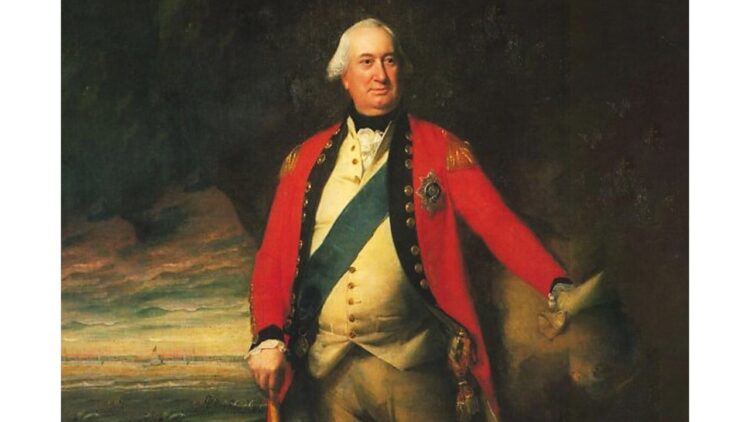
A Gentleman’s Guide
to Losing a War
I hold my spyglass to my face,
_And straighten my cravat.
A cannonball just flew on by,
_And flattened my best hat!
I brought some fancy silver spoons
_To have a pleasant war,
But soon the stupid peasants came,
_And battered at my door!
A proper army stands in lines
_And waits to be shot dead,
But they all hide behind the trees
_And aim right for my head!
We quite politely asked they yield;
_We levied just a tax.
But they returned a heavy fight
_And chased us with an axe.
My drum major has lost his drum.
_The bugler went to sleep.
My favorite sergeant, just today,
_Was captured by a sheep.
They threw our tea right in the sea;
_They brewed a bitter fight.
We now are steeped in boiling depths,
_Without a scone in sight.
They speak of “rights” and “liberty,”
_As if they grew on trees!
They will not house the British men,
_Or pay the standard fees!
I wrote a very learned song
_To mock their ragged state.
I named them “Yankee Doodle” fools,
_And thought they’d take the bait.
But now they sing my brilliant song
_While charging up the hill.
They stole my melody and words,
_And soon they shoot to kill!
I tried to make a quick retreat,
_But stumbled in the muck,
A puddle ruined my best shoes,
_Oh, what atrocious luck!
I’m sailing back to London now,
_To drink a cup of tea.
This revolution is absurd;
_They never will be free.
The Sowing of the State
The melting wax drips down upon the floor,
As dying candles fade into the night.
He turns his weary body to the door
And holds the ink-stained parchment to the light.
The draft is fully finished; he is proud.
The British king will tremble at his pen.
He walks into the hot and stifling crowd,
To share his written soul with other men.
He brings the Declaration to the stand;
They look in quiet awe upon his work.
But like a dagger leaping from a hand,
A sudden rival counters with a smirk.
“How can you think to put a comma there?”
“Your phrasing here is just as clear as mud!”
The edits fly to strip the parchment bare.
The ink spills on the page like dark black blood.
He sinks into his distant, lonely seat.
He had perfection, why must they defile?
If they can strike a vision so complete,
How long before they put the truth on trial?
He looks past where the drapes are neatly hung,
To watch a farmer toiling in the field.
A seed tossed on the surface dies still young.
It takes a plowman’s work to make it yield.
He steps back to the table, spirit strong,
And gazes at the work the men have done.
The plowing of the earth is hard and long;
He signs the paper, “Thomas Jefferson.”
Arnon Peterson is a twelfth grader homeschooled in Oregon City, Oregon.

















Arnon, these are excellent! In the first poem, I especially love the stanza about tea and scones. And in the second one, two lines really stood out for me: “To share his written soul with other men.”, and, “How long before they put the truth on trial?” Congratulations on your fine work. And congratulations to your parents for being such successful home schoolers!
These are two really witty and well-structured poems. The first plays with the differences between British and American colonial methods of warfare in the eighteenth century. The second touches upon any writer’s frustration with having his prose edited by a committee. There were many changes made to Jefferson’s original manuscript, not all of which he easily agreed with.
Arnon:
Well done. Two moving stories told in tight and regular rhythm, crisp rhymes, and just the right amount of emotion. Keep writing, Arnon. We need more poets of your generation.
Both poems are very impressively well thought out and written, but I especially love A Gentleman’s Guide to Losing a War. It’s cleverly entertaining and the punch line lands good and strong. I enjoyed both poems very much, great job!
Two fifty years it’s been Arnon,
Since we said toodle-pip,
And though you mock and rag us Brits
We’er still stiff upper lipped.
Great humour, Arnon.
And a nation is born!
Great work, young man.
I thank you, sir, for your kind words,
And for your merry wit.
You’ve shown this young man once again,
Not every Brit’s a git.
My jaw just about hit the floor when I read the poet bio at the end. These verses show a maturity far beyond the age of the poet, and he should be proud of them. It is wonderful both to see such young talent and to have a forum that appreciates their work. My hope for the future just grew a little brighter.
Arnon, I join the rest in praise of such excellent work at your age or any age for that matter. What a bright future you have writing poetry.
Arnon, your work is so cleverly done, an enjoyable read for a history lesson.
Bravo, Arnon! Your technique and narrative pacing are both top-notch. Write more!
Good contrast of styles and points of view. I see both poems have to do with writing and the unexpected reception by an audience. The British speaker’s “learned song” actually encourages the Yankee objects of his contempt as they make it their own. Jefferson’s “Sowing” is also accepted, though with criticism by his fellow Statesmen, as it goes on to fulfill the purpose of his labors. May your words long flourish, Arnon.
These poems are not bad at all, and I trust that their author has seen Mel Gibson’s The Patriot. Jefferson was a complex character, even for his time.