• Submit Poetry
  • Support SCP
  • About Us
  • Members
  • Join
Thursday, May 14, 2026
Society of Classical Poets
  • Poems
    • Beauty
    • Culture
    • Satire
    • Humor
    • Children’s
    • Art
    • Ekphrastic
    • Epic
    • Epigrams and Proverbs
    • Human Rights in China
    • Music
    • Performing Arts
    • Riddles
    • Science
    • Song Lyrics
    • The Environment
    • The Raven
    • Found Poems
    • High School Poets
    • Terrorism
    • Covid-19
  • Poetry Forms
    • Sonnet
    • Haiku
    • Limerick
    • Villanelle
    • Rondeau
    • Pantoum
    • Sestina
    • Triolet
    • Acrostic
    • Alexandroid
    • Alliterative
    • Blank Verse
    • Chant Royal
    • Clerihew
    • Rhupunt
    • Rondeau Redoublé
    • Rondel
    • Rubaiyat
    • Sapphic Verse
    • Shape Poems
    • Terza Rima
  • Great Poets
    • Geoffrey Chaucer
    • Emily Dickinson
    • Homer
    • Henry Wadsworth Longfellow
    • Dante Alighieri
    • John Keats
    • John Milton
    • Edgar Allan Poe
    • William Shakespeare
    • William Wordsworth
    • William Blake
    • Robert Frost
  • Love Poems
  • Contests
  • SCP Academy
    • Educational
    • Teaching Classical Poetry—A Guide for Educators
    • Poetry Forms
    • The SCP Journal
    • Books
No Result
View All Result
Society of Classical Poets
  • Poems
    • Beauty
    • Culture
    • Satire
    • Humor
    • Children’s
    • Art
    • Ekphrastic
    • Epic
    • Epigrams and Proverbs
    • Human Rights in China
    • Music
    • Performing Arts
    • Riddles
    • Science
    • Song Lyrics
    • The Environment
    • The Raven
    • Found Poems
    • High School Poets
    • Terrorism
    • Covid-19
  • Poetry Forms
    • Sonnet
    • Haiku
    • Limerick
    • Villanelle
    • Rondeau
    • Pantoum
    • Sestina
    • Triolet
    • Acrostic
    • Alexandroid
    • Alliterative
    • Blank Verse
    • Chant Royal
    • Clerihew
    • Rhupunt
    • Rondeau Redoublé
    • Rondel
    • Rubaiyat
    • Sapphic Verse
    • Shape Poems
    • Terza Rima
  • Great Poets
    • Geoffrey Chaucer
    • Emily Dickinson
    • Homer
    • Henry Wadsworth Longfellow
    • Dante Alighieri
    • John Keats
    • John Milton
    • Edgar Allan Poe
    • William Shakespeare
    • William Wordsworth
    • William Blake
    • Robert Frost
  • Love Poems
  • Contests
  • SCP Academy
    • Educational
    • Teaching Classical Poetry—A Guide for Educators
    • Poetry Forms
    • The SCP Journal
    • Books
No Result
View All Result
Society of Classical Poets
No Result
View All Result
Home Poetry Culture

‘For Better or for Worse?’ and Other Poetry by James A. Tweedie

November 10, 2021
in Culture, Humor, Poetry
A A
15
poems 'For Better or for Worse?' and Other Poetry by James A. Tweedie

.

For Better or for Worse?

Poetic genius, swallowed from a bottle;
Ingested from an opiate-filled pipe;
Imagination speeding at full-throttle;
A pleasure-domed Romantic archetype.

No LSD or fentanyl required;
No Kona Gold, Red Bull, or crack cocaine.
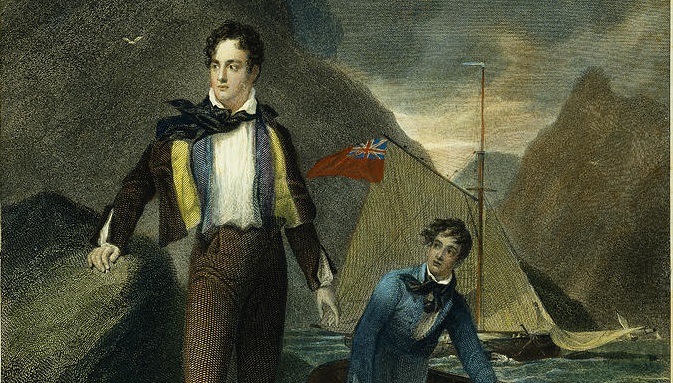
As Byron said, “Whenever I was tired
Laudanum, beer and wine removed the pain.”*

Did bouts of drug- and booze-induced illusion
Inspire the best of Poe and Byron’s verse?
Or did such “savage,” “quarrelsome” delusion
Exchange “what might have been”-for something worse?

Laudanum laude? Muse from heaven or hell?
Or somewhere in between? It’s hard to tell.

.

*The actual (conflated) quote from Byron, “I don’t like laudanum now as I used to do. (Beer, wine, and laudanum makes me) savage and suspicious, and even quarrelsome.” The lists of 19-century writers who used opiates such as laudanum with some frequency include Elizabeth Barrett Browning, John Keats, Lord Byron, Samuel Taylor Coleridge, Edgar Allan Poe, Charles Dickens, Bram Stoker, George Eliot, Ernest Dowson, Louisa May Alcott, Dante Gabriel Rossetti, and Percy Bysshe Shelley.

.

.

Epigram

Un-toga-ed Romans spinning in my head
Inspire descriptive words best left unsaid.
I will, like T.E. Lawrence (being well-bred)
Read Apuleius’ Golden Ass, instead.

.

.

A Bach Cantata or a Bacchanal?

To write a sonnet can be hard, no doubt.
But if I were required to make the call,
Which would be easier to write about?
A Bach cantata or a Bacchanal?

The answer’s obvious, it seems to me.
For orgiastic sexuality
With puking, pulsing, pounding flesh would be
A simple subject for one’s poetry.

The Bach cantata would take far more time
To reproduce, in measured verse and rhyme,
A subject so ethereal, sublime . . .
How can polyphony compare to slime?

To write of Bacchus? Easiest to do.
To write of Bach? The harder of the two.

.

.

James A. Tweedie is a retired pastor living in Long Beach, Washington. He has written and published six novels, one collection of short stories, and three collections of poetry including Mostly Sonnets, all with Dunecrest Press. His poems have been published nationally and internationally in The Lyric, Poetry Salzburg (Austria) Review, California Quarterly, Asses of Parnassus, Lighten Up Online, Better than Starbucks, WestWard Quarterly, Society of Classical Poets, and The Chained Muse.
ShareTweetPin
The Society of Classical Poets does not endorse any views expressed in individual poems or commentary.
Read Our Comments Policy Here

RandomPoems

‘The Way of the World’ by Jeffrey Essmann
Culture

‘Alone Together’ by Joshua C. Frank

October 19, 2022

. Alone Together Narcissus, in the days of old, Fell in love with his reflection. He knew none greater to...

‘Far From Home, First Dream in Months’ by Andrew Szilvasy
Beauty

‘Far From Home, First Dream in Months’ by Andrew Szilvasy

March 30, 2016

August 13, 2012 I dreamt last night of singing with Li Po. (Or is he now sleeping, dreaming of me?)...

Next Post
A Poem for Veteran’s Day 2021, by Roy E. Peterson

A Poem for Veteran's Day 2021, by Roy E. Peterson

Two Poems for Memorial Day 2021, by Susan Jarvis Bryant

'Colours of War' by Paul A. Freeman

‘From a Classified Location in England’: A Veteran’s Day Poem by Brian Yapko

'From a Classified Location in England': A Veteran's Day Poem by Brian Yapko

Comments 15

  1. Peter Hartley says:
    5 years ago

    James – I never realised taking laudanum was QUITE so universal in the nineteenth century, including one or two of those you mention in whose mouths, one might otherwise suspect, it would be difficult to melt butter. They were dark horses, these Victorians, as witness the usual definition of “Victorian” compared with the raunchiness of Queen Victoria herself in private. And the question with which you head your first poem? We are surely all incalculably better off for it. And thank you for the impeccably composed little “trip” to Xanadu.

    Reply
    • James A. Tweedie says:
      5 years ago

      A list of modern opioids from strongest to weakest reads as follows:

      Fentanyl (Duragesic)
      Oxymorphone (Opana ER, Numorphan)
      Hydromorphone (Dilaudid, Exalgo, Contin)
      Heroin (diamorphine)
      Levorphanol (Levo-Dromoran)
      Methadone (Dolophine, methadose)
      Oxycodone (OxyContin, Roxicodone)
      Tapentadol (Nucynta, Palexia SR
      Morphine (Astramorph, Avinza, Kadian)
      Hydrocodone (Zohydro ER)
      Pethidine (Meperidine, Demerol)
      Codeine
      Tramadol (Ultram)
      Laudanum (Opium Tincture)

      In the 18th and 19th century, however, the word “Laudanum” was a synonym for Morphine, an addictive opioid which was readily available and considered to be a cure-all for many ailments, particularly diarrhea (intestinal ailments were common) and pain. It also induces sleep (opioids depress the central nervous system) and, in some people, prompts dreamlike hallucinations.

      Effective pain control is a relatively recent medical development and we forget how unforgiving untreated acute and chronic pain can be. Elizabeth Barrett suffered a chronic, debilitating, undiagnosed ailment from the age of 13 and Laudanum (often generically called “opium”) was the only treatment available to her. Thomas Jefferson took it for his diarrhea and Arthur Conan Doyle’s character, Sherlock Holmes, was also addicted. When mixed with alcohol (as with Poe and Byron) it can lead to physical and mental dysfunction and death.

      We should not be too quick to misjudge the use and misuse of Laudanum in the past.

      All that aside, my point in the first poem is to ask whether its use made good poets better or worse. I don’t know. Peter seems to think so. What do any of you, think?

      On the downside, there are records of good, budding 19th c.. poets who never became great because Laudanum (and alcohol) killed them before they had a chance to shine.

      Reply
      • Joseph S. Salemi says:
        5 years ago

        Right through the 20th century, there was a tonic for women called “Lydia Pinkham’s Solution.” It had a profile of this lady on the label, which looked EXACTLY like the image on our Susan B. Anthony dollar coin. (That’s why my father called the coin “the Lydia Pinkham dollar”).

        The tonic’s original formulation was laudanum (opium dissolved in alcohol) mixed with cocaine. You wonder why all those little old ladies were smiling so much? Taking Lydia Pinkham’s Solution was like taking a speedball with a vodka chaser.

        Reply
  2. jd says:
    5 years ago

    Enjoyed all three very much, Mr. Tweedie,
    thank you..

    Reply
    • James A. Tweedie says:
      5 years ago

      Thank you, jd,

      They were meant to entertain but they were also written to make a point and to raise several important questions about poetry–answers I wouldn’t have raised if I knew what the answers were!

      Reply
  3. Cheryl Corey says:
    5 years ago

    I love your witty compositions, and all three brightened my day. Was laudanum also mixed with wine? Dr. Salemi mentions cocaine. I recall reading that back in the day, people thought that it was good for your health; and, if I’m not mistaken, the original formulation of Coca-Cola contained cocaine, hence the “Coca”! As an aside, when radium was first discovered, they thought that was healthy too, which led to products such as “radium water”.

    Reply
    • James A. Tweedie says:
      5 years ago

      I had forgotten about “radium water!” Perhaps 100 years from now people will look at our present understanding of medicine and think of it as primitive, naive and mistaken, much as we tend to do when we look to our own past.

      Reply
    • Joseph S. Salemi says:
      5 years ago

      The original Coca-Cola, as made in Georgia back in the 1890s, did have cocaine in it, since the drug was considered very healthful (Sigmund Freud thought so, and recommended it to his fiancee). But cocaine was removed from the soft drink sometime in the early years of the 20th century, after the regulations of the Pure Food and Drug Act. Another example of obnoxious governmental busybodies.

      Reply
  4. Jeff Eardley says:
    5 years ago

    Mr. Tweedie, thank you for these three sparkling gems of wit and wisdom to light up a dark, November afternoon over here. I now have a mental image of un-toga’d Romans orgying away, accompanied by Bach. I often think it discourteous to reply in verse, but thinking of Kubla Khan,I just couldn’t help myself.
    I am the man from Porlock,
    You can put the blame on me.
    For interrupting Samuel,
    In his joyful reverie.
    For it was I, supplying him,
    With all that dope he used.
    That rendered him incapable,
    Be-fuddled and bemused.
    His poem may have been too long,
    For folk like us to bear.
    So Mr. Taylor-Coleridge,
    Aren’t you glad I stopped you there?

    Reply
    • James A. Tweedie says:
      5 years ago

      Lol, Jeff,

      And here’s a fun connection. The Greeks had a god of laughter named Gelos. He was a companion of Dionysus (Roman, Bacchus) and we know of his real or imagined festival in Thessalonica (the same place named in two of St. Paul’s letters) because Apuleius mentions it in “The Golden Ass.”

      I mention this because your short poem re STC made me laugh.

      Reply
  5. Sally Cook says:
    5 years ago

    Dear James –

    Exdellent ! I enjoyied them very much. I’m all for Bach ovwer the other.

    Reply
  6. Norma Okun says:
    5 years ago

    Ben Franklin helped to draft the Declaration of Independence and US Constitution and took Laudanum for a severe pain from a bladder stone. Used correctly I think the person using strong narcotics can retain their intelligent brain. I don’t believe the drugs made anyone a poet. Thank you for your poems

    Reply
    • James A. Tweedie says:
      5 years ago

      Norma, We are of the same mind.

      Reply
  7. C.B. Anderson says:
    5 years ago

    Though I regard self-medication as a natural right, James, such a large dose of truth (your poems provide) all at once unsettles the mind, and I am quite comfortable with my addiction to it. So I thank you Dr. Tweedie.

    Reply
  8. Margaret Coats says:
    5 years ago

    James, after seeing your list, I had to recall that sick animals usually refuse anything. Whereas most persons our age have at least twelve daily pill bottles and 38 injections prescribed supposedly to prevent whatever might go wrong. Your set of poems on a small part of the subject is witty and welcome.

    Reply

Leave a Reply Cancel reply

Your email address will not be published. Required fields are marked *

  1. Paul Freeman on ‘To May, the Prince of Months’ by Eustache Deschamps, Translated by Margaret CoatsMay 14, 2026

    I particularly enjoyed the references to the old and sick being rejuvenated/resuscitated by May after the rigours of winter. To…

  2. Maria on ‘To May, the Prince of Months’ by Eustache Deschamps, Translated by Margaret CoatsMay 14, 2026

    Dear Margaret this is a beautiful poem that captures the essence of the month of May. In is such a…

  3. Cynthia L Erlandson on ‘To May, the Prince of Months’ by Eustache Deschamps, Translated by Margaret CoatsMay 14, 2026

    So beautiful! I was enjoying all of your wonderful slant rhymes for “nature”, and then saw that those in the…

  4. Joseph S. Salemi on ‘To May, the Prince of Months’ by Eustache Deschamps, Translated by Margaret CoatsMay 14, 2026

    A very nice rendering of Eustache, and one that must have taken a great deal of work to maintain the…

  5. Roy Eugene Peterson on ‘To May, the Prince of Months’ by Eustache Deschamps, Translated by Margaret CoatsMay 14, 2026

    Margaret, your translation talents are amazing. Your manipulation of each line is masterful to achieve such effective rhymes in English…

Subscribe to Daily Poems

Enter your email address to subscribe to this blog and receive notifications of new posts by email.

Join 1,593 other subscribers

Recent Poems

  • ‘To May, the Prince of Months’ by Eustache Deschamps, Translated by Margaret Coats
  • Winners of Friends of Falun Gong 2026 Poetry Competition Announced
  • A Poem on Coach “Black Mike” Castronis from Athens Y Camp, by Alec Ream
  • A Poem on the Zambian National Park Mosi-oa-Tunya, by Paul A. Freeman
  • ‘Creation of Mom’: A Mother’s Day Poem by Roy E. Peterson
  • ‘Spontaneous Conjugal Combustion’ and Other Poems by Susan Jarvis Bryant
  • ‘The Man in the Moon Was a Very Round Man’: A Poem by Lauren V. Leon
  • ‘Fibromytrauma’: A Poem by Golan Shahar
  • ‘A Lonely Sliver’: A Poem by Katie Tencza
  • ‘Higher Gas Prices Are a Small Price to Pay’: An Iran War Poem by Mark F. Stone
  • ‘Always Ahead’: A Poem by Scharlie Meeuws
  • ‘Hamlet’s Lawyer’ and Other Poetry by Brian Yapko
  • ‘On An Old Photograph’: A Poem by Joseph S. Salemi
  • ‘Faust Foresees His End’: A Poem by Martin Briggs
  • ‘À la Carte’ and Other Poetry by C.B. Anderson
  • ‘Where the Sweet Bluebonnets Bloom’: A Poem by Roy E. Peterson
  • ‘The Waters’: A Poem by Margaret Brinton
  • ‘The Pinnacle of Poetry’ and Other Poems by Russel Winick
  • The First American Sonnets: An Essay on David Humphreys, by Margaret Coats
  • ‘The Holy Rollers on Poetry’: A Poem by Joseph S. Salemi
  • Sappho’s ‘Poem 1’ Translated by Bruce Phenix
  • ‘The Cautionary Tale of Phone Addicted Mimi’: A Poem by Paul A. Freeman
  • ‘Look Away’: A Poem for America’s 250th Anniversary, by Roger Crane
  • ‘Sunday Morning in Canada’: A Poem by Jeffrey Essmann
  • ‘Bean’: A Poem by Jan Mennite
  • ‘The Swan’s Song ’: A Poem for Shakespeare’s Birthday, by Susan Jarvis Bryant
  • ‘The Gravedigger’: A Poem by Marie Burdett
  • ‘Waiting for the Perfect Man’: A Poem by Janice Canerdy
  • ‘The George-A-Saurus’ and Other Poetry by Brian Yapko
  • ‘When Asked: What’s Your Favorite Season?’: A Poem by Paul Millan  

Categories

  • Acrostic
  • Alexandroid
  • Alliterative
  • Art
  • Best Poems
  • Blank Verse
  • Chant Royal
  • Classical Poets Live
  • Clerihew
  • Covid-19
  • Deconstructing Communism
  • Educational
  • Epic
  • Epigrams and Proverbs
  • Essays
    • Interviews with Poets
    • Poetry Reviews
  • Featured
  • From the Society
  • Great Poets
    • Dante Alighieri
    • Edgar Allan Poe
    • Emily Dickinson
    • Geoffrey Chaucer
    • Henry Wadsworth Longfellow
    • Homer
    • John Keats
    • John Milton
    • Robert Frost
    • William Blake
    • William Shakespeare
    • William Wordsworth
  • Human Rights in China
  • Limerick
  • Love Poems
  • Music
  • Pantoum
  • Performing Arts
  • Poetry
    • Beauty
    • Children's Poems
    • Culture
    • Ekphrastic
    • Found Poems
    • High School Poets
    • Humor
    • Riddles
  • Poetry Challenge
  • Poetry Contests
  • Poetry Forms
    • Curtal Sonnet
    • Haiku
  • Poetry Readings
  • Rhupunt
  • Rondeau
  • Rondeau Redoublé
  • Rondel
  • Rubaiyat
  • Sapphic Verse
  • Satire
  • Science
  • Sestina
  • Shape Poems
  • Short Stories
  • Song Lyrics
  • Sonnet
  • Symposium
  • Terrorism
  • Terza Rima
  • The Environment
  • Translation
  • Triolet
  • Video
  • Villanelle

Quick Links

  • About Us
  • Submit Poetry
  • Become a Member
  • Members List
  • Support the Society
  • Advertisement Placement
  • Comments Policy
  • Terms of Use

Welcome Back!

Login to your account below

Forgotten Password?

Retrieve your password

Please enter your username or email address to reset your password.

Log In
No Result
View All Result
  • Poems
    • Beauty
    • Culture
    • Satire
    • Humor
    • Children’s
    • Art
    • Ekphrastic
    • Epic
    • Epigrams and Proverbs
    • Human Rights in China
    • Music
    • Performing Arts
    • Riddles
    • Science
    • Song Lyrics
    • The Environment
    • The Raven
    • Found Poems
    • High School Poets
    • Terrorism
    • Covid-19
  • Poetry Forms
    • Sonnet
    • Haiku
    • Limerick
    • Villanelle
    • Rondeau
    • Pantoum
    • Sestina
    • Triolet
    • Acrostic
    • Alexandroid
    • Alliterative
    • Blank Verse
    • Chant Royal
    • Clerihew
    • Rhupunt
    • Rondeau Redoublé
    • Rondel
    • Rubaiyat
    • Sapphic Verse
    • Shape Poems
    • Terza Rima
  • Great Poets
    • Geoffrey Chaucer
    • Emily Dickinson
    • Homer
    • Henry Wadsworth Longfellow
    • Dante Alighieri
    • John Keats
    • John Milton
    • Edgar Allan Poe
    • William Shakespeare
    • William Wordsworth
    • William Blake
    • Robert Frost
  • Love Poems
  • Contests
  • SCP Academy
    • Educational
    • Teaching Classical Poetry—A Guide for Educators
    • Poetry Forms
    • The SCP Journal
    • Books

© 2025 SCP. WebDesign by CODEC Prime.