• Submit Poetry
  • Support SCP
  • About Us
  • Members
  • Join
Wednesday, September 2, 2026
Society of Classical Poets
  • Poems
    • Beauty
    • Culture
    • Satire
    • Humor
    • Children’s
    • Art
    • Ekphrastic
    • Epic
    • Epigrams and Proverbs
    • Human Rights in China
    • Music
    • Performing Arts
    • Riddles
    • Science
    • Song Lyrics
    • The Environment
    • The Raven
    • Found Poems
    • High School Poets
    • Terrorism
    • Covid-19
  • Poetry Forms
    • Sonnet
    • Haiku
    • Limerick
    • Villanelle
    • Rondeau
    • Pantoum
    • Sestina
    • Triolet
    • Acrostic
    • Alexandroid
    • Alliterative
    • Blank Verse
    • Chant Royal
    • Clerihew
    • Rhupunt
    • Rondeau Redoublé
    • Rondel
    • Rubaiyat
    • Sapphic Verse
    • Shape Poems
    • Terza Rima
  • Great Poets
    • Geoffrey Chaucer
    • Emily Dickinson
    • Homer
    • Henry Wadsworth Longfellow
    • Dante Alighieri
    • John Keats
    • John Milton
    • Edgar Allan Poe
    • William Shakespeare
    • William Wordsworth
    • William Blake
    • Robert Frost
  • Love Poems
  • Contests
  • SCP Academy
    • Educational
    • Teaching Classical Poetry—A Guide for Educators
    • Poetry Forms
    • The SCP Journal
    • Books
No Result
View All Result
Society of Classical Poets
  • Poems
    • Beauty
    • Culture
    • Satire
    • Humor
    • Children’s
    • Art
    • Ekphrastic
    • Epic
    • Epigrams and Proverbs
    • Human Rights in China
    • Music
    • Performing Arts
    • Riddles
    • Science
    • Song Lyrics
    • The Environment
    • The Raven
    • Found Poems
    • High School Poets
    • Terrorism
    • Covid-19
  • Poetry Forms
    • Sonnet
    • Haiku
    • Limerick
    • Villanelle
    • Rondeau
    • Pantoum
    • Sestina
    • Triolet
    • Acrostic
    • Alexandroid
    • Alliterative
    • Blank Verse
    • Chant Royal
    • Clerihew
    • Rhupunt
    • Rondeau Redoublé
    • Rondel
    • Rubaiyat
    • Sapphic Verse
    • Shape Poems
    • Terza Rima
  • Great Poets
    • Geoffrey Chaucer
    • Emily Dickinson
    • Homer
    • Henry Wadsworth Longfellow
    • Dante Alighieri
    • John Keats
    • John Milton
    • Edgar Allan Poe
    • William Shakespeare
    • William Wordsworth
    • William Blake
    • Robert Frost
  • Love Poems
  • Contests
  • SCP Academy
    • Educational
    • Teaching Classical Poetry—A Guide for Educators
    • Poetry Forms
    • The SCP Journal
    • Books
No Result
View All Result
Society of Classical Poets
No Result
View All Result
Home Love Poems

Sonnet ‘1/12/2019’ by Edward Hoke

March 13, 2019
in Love Poems, Poetry
A A
6
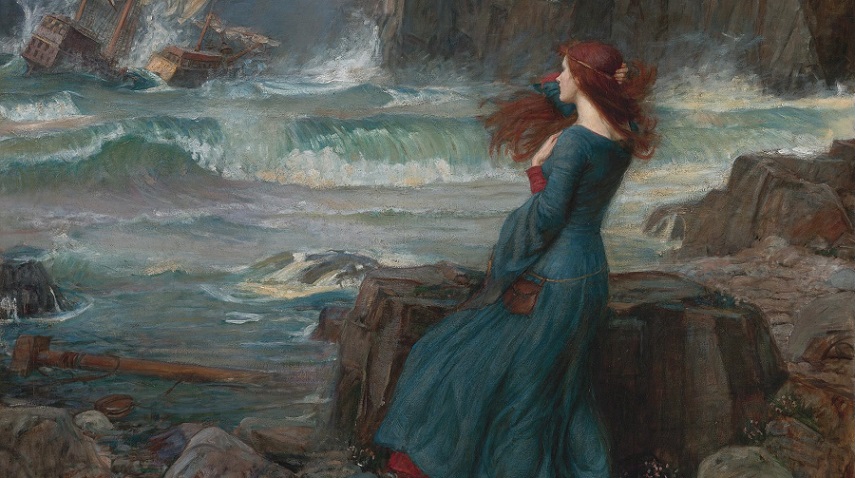
Miranda - The tempest
*oil on canvas
*100.4 x 137.8 cm
*signed b.r.: J.W. Waterhouse / 1916

Miranda - The tempest *oil on canvas *100.4 x 137.8 cm *signed b.r.: J.W. Waterhouse / 1916

O how I long to hold thee in my arms,
And taste again of nature’s sweet reprieve,
To cast off masks, false affectations, charms;
To savor all I had before you leave.

For thee alone I lie awake at night,
Tortured by the memories unmade,
For that alone I scorn all other sight;
The world without thee makes me wish I stayed.

I talked to gods I don’t believe exist,
Yet I cannot be helped by any priest,
On meager scraps of us must I subsist;
A hell for him that turned away a feast.

I made a bed in which I cannot sleep;
Thy ghost is lonesome company to keep.


Edward Hoke studies Acting and Classics at Northwestern University. For weekly poetry-based posts and photos, follow on instagram at @blandmagyar

ShareTweetPin
The Society of Classical Poets does not endorse any views expressed in individual poems or commentary.
Read Our Comments Policy Here

RandomPoems

30 Riddles by Evan Mantyk (+Answers)
Humor

30 Riddles by Evan Mantyk (+Answers)

September 23, 2013

Click here for more riddles I. My mirror image never is that far, I have five different points just like...

‘The Fall of the Fourth Estate’ and Other Poetry by  Randal A. Burd, Jr.
Beauty

‘The Fall of the Fourth Estate’ and Other Poetry by Randal A. Burd, Jr.

April 27, 2019

The Fall of the Fourth Estate a rondeau The Media: the Fourth Estate* Performed disgracefully of late: Delivering the news...

Next Post
Review: “Profane and Sacred Love” by William Ruleman

Review: "Profane and Sacred Love" by William Ruleman

‘The Dragonslayer’ by Jeff Nicholson

'The Dragonslayer' by Jeff Nicholson

‘The Architect’ by Annabelle Fuller

'The Architect' by Annabelle Fuller

Comments 6

  1. David Gosselin says:
    7 years ago

    Dear Edward,

    You write well, and based on some other themes you’ve taken up, it’s nice to see you’re developing good concepts.

    One thing that I think is worth considering is the question of voice. Often, especially when people are relatively newer to writing poetry, they will tend to imitate (unconsciously) the styles that they have studied and immersed themselves in. I did, and perhaps still do sometimes. The great challenge today is of course how to write in our modern times (not to be confounded with the philosophy of modernism), as if with our own voice, while still writing a classical poem.

    A classical poem is not classical because of the kinds of words it uses or style of language, it’s classical because of the standard of composition that it demonstrates. It uses irony and metaphor as a means of elevating the mind as opposed to the drab literal prose that modernist have so often attempted to pass off as poetry.
    At the same time, we don’t want to get lost in the idiosyncrasies of our modern English as well, the goal is always to speak with a universal voice, which resounds true regardless of time or place. However, at the same time, the challenge is to sound like you’re speaking in your rightful voice, rather than being overly effected by another’s style of writing. We should not confuse elevated speech with archaic expressions (though they may coincide sometimes).

    So how does one write with elevated language in our time? That’s actually what John Keats was grappling with. He was trying to re-write his Hyperion because he felt that it had “too many Miltonisms” i.e. inversions, which essentially acted like Latinized English. Inversions can be useful, but too often people just use them to write clunky rhymes, or they are imitating the style of others who imitated a Latinized English. As Keats matured, he sought to remove these kinds of elements from his writing. He was looking to develop and express a more authentic English. It is a great challenge, and more so today since the gap between the last truly great poets and the language they used is essentially 200 years. We don’t want to sound like we are writing from a past time, nor our own time – we want the writing to come from a timeless place.

    I’ll give you some examples below of what I mean.

    I think you’ve been studying Shakespeare’s sonnets, which is good, that’s why you’re able to weave some good ironies together; at the same time, something like:

    O how I long to hold thee in my arms,
    And taste again of nature’s sweet reprieve,
    To cast off masks, false affectations, charms;
    To savor all I had before you leave.

    It seems somewhat like a study, like your are attempting to write in the style of something you’ve been reading.

    I think these are just some good questions for any of us to keep in mind as our poetic voices develop.

    Here are a few examples of what I mean by modern voice in a classical poem:

    https://classicalpoets.org/2019/01/31/it-and-other-poetry-by-daniel-leach/

    https://www.thechainedmuse.com/single-post/2018/09/01/Deep-Down

    Paul Gallagher, who wrote the poem Deep Down linked above, also wrote a great piece on the crucial difference between a classical poet like Shakespeare and someone like Dryden:
    https://archive.schillerinstitute.com/fidelio_archive/1997/fidv06n03-1997Fa/fidv06n03-1997Fa_067-john_drydens_attack_on_shakespea.pdfI

    Robert Frost is the best example of a classical poet in the 20th century, in my opinion:
    https://m.poets.org/poetsorg/poem/my-own

    Lastly here is something I wrote and edited many times. It was written with the kinds of questions raised above in mind:
    https://www.thechainedmuse.com/single-post/2019/02/09/The-Sea

    Best,

    David

    Reply
    • Joseph Charles MacKenzie says:
      7 years ago

      There is nothing more to add to this magisterial comment, except that your sea poem, Mr. Gosselin, was also published I remember some time ago in the actual Society of Classical Poets, is that not so? I remember it because it truly is classic in every way, and distinctly so—a gorgeous, perfect piece!

      Reply
  2. james sale says:
    7 years ago

    I have enjoyed this poem, especially the concluding couplet. Well done – there is real feeling in this poem. I also have enjoyed David Gosselin’s commentary and there is much one could say about it, but I will restrict myself to one point only: the fact that Keats revised his Hyperion, and there are two versions; and both are brilliant in different ways, as the second moved towards the influence of Dante and away from Milton. But Keats’ predicament is exactly the predicament all poets in all ages following the golden age of a language’s best poets (e.g. Shakespeare and Milton, or Dante etc, whoever they be and in whatever language) and what Keats did about it is far more instructive than what TS Eliot did in the C20th, for he was very aware of this issue, but took, I think a wrong turn with his solution. Keats, by going into serious emulation of Milton and Dante, produced two works (the Hyperions) which more or less guarantee him – astonishingly for a 26 year old – entry into the rank of the top 4 or 5 poets in the language. I consider the Hyperions works of genius compared with the plodding epics of, say, Wordsworth. And to add just one more point, as I am in a flow; it is probably a little subjective but the greatest English language poet of the C20th is not Frost, as great as he was, nor, sadly any Englishman or Brit: we have to go to the Emerald Isle and study what true lyric greatness is in WB Yeats, the one poet who perhaps could have written a real epic of the C20th, for his whole cast of mind was epic, but actually never did. Still, what a body of poems.

    Reply
  3. dave whippman says:
    7 years ago

    Clever work about lost love. Very competent handling of the sonnet form which was still very readable.

    Reply
  4. Theresa Rodriguez says:
    7 years ago

    Thank you Edward for producing such a beautiful sonnet! Well done!

    Reply
  5. Monty says:
    7 years ago

    While I consider the above piece to be a decent effort; there are several minor reasons why I can’t concur with one of the above Commenter’s description of “a . . perfect piece”.

    Regarding the 4th line of the 1st stanza:
    Unless I’m reading the line wrongly, it could only make sense to me if the last word of the line was LEFT.. not LEAVE.
    For the last word of the line to be LEAVE.. then the 5th word of the line has to be changed from HAD to HAVE.
    Hence, the line should read as either:

    “To savour all I had before you left”

    or.. “To savour all I have before you leave”

    but not.. “To savour all I had before you leave” (the tenses
    are mixed-up).

    The 2nd line of the 2nd stanza:
    Given which side of the pond the author resides; coupled with my recently-gained knowledge of the flagrant liberties taken with syllables by those from ‘that side’ . . . if I was to say that the line was one syllable short of maintaining metrical equality; then I just know that the author (in the name of ‘convenience) will try to claim that “tortured” contains 3 syllables. I’m getting used to it now: Thus when I point-out that for “tortured” to gain a 3rd syllable it would have to read as ‘tor.. churr.. red’ (with ‘red’ being pronounced the same as the colour) . . . I expect to be dismissed by others from ‘that side’ as being pedantic or officious.
    I now know how you’se operate in the ‘land of convenience’: if you’ve got a 2-syllable gap to fill.. you’ll class “tortured” as 2-syllables . . . but if you’ve got a 3-syllable gap to fill.. you’ll simply class “tortured” as 3-syllables . . . that is your wont!

    Without my knowing why: the 4th line of the 2nd stanza just seems a tad awkward to me.

    Given that the first 3 lines of the 3rd stanza (and indeed the 1st line of the 4th) are all in the first-person; why does the 4th line deviate . . with “him” instead of “I”? Surely it should just simply read: “A hell for I who turned away a feast”.

    Like I said: it’s a decent poem . . but it can’t be described as “perfect”.

    Reply

Leave a Reply Cancel reply

Your email address will not be published. Required fields are marked *


  1. Paul Millan on ‘When Opportunity Knocks’: A Poem by Roy E. PetersonSeptember 2, 2026

    Roy, I liked your epigraph and poem. The final line is great. I wonder how many opportunities I’ve let die…

  2. Paul Millan on ‘A World Without the Wednesday Child’: A Poem by Kimberly ForeSeptember 2, 2026

    I agree with the other Paul about what a great line “only dark reveals the stars” is. I really enjoyed…

  3. Paul Millan on ‘Realistic Reflections’ and Other Poetry by Anna J. ArredondoSeptember 2, 2026

    Anna, I enjoyed reading both of your poems. The first one might be my favorite from both, but also like…

  4. jd on ‘A World Without the Wednesday Child’: A Poem by Kimberly ForeSeptember 2, 2026

    Lovely poem, Kimberly, and so wise. I also thought the "tongueless bell" is excellent and so is the final line.

  5. Russel Winick on ‘Advantages of Restaurants’ and Other Poems by Russel WinickSeptember 2, 2026

    Thanks Paul. I’m glad you liked those poems. And FYI, the setting for “The Change One Word Can Bring” was…

Subscribe to Daily Poems

Enter your email address to subscribe to this blog and receive notifications of new posts by email.

Join 1,633 other subscribers

Recent Poems

  • ‘A World Without the Wednesday Child’: A Poem by Kimberly Fore
  • The 2026 Society of Classical Poets International Poetry Competition
  • The 2026 SCP International High School Poetry Competition
  • ‘Realistic Reflections’ and Other Poetry by Anna J. Arredondo
  • ‘China Made’: A Poem by Theresa Werba
  • ‘The Savage Moon’ and Other Poetry by Brian Yapko
  • Poetry Book Review: Love Found, Yearned For, and Lost by James A. Tweedie
  • ‘When Opportunity Knocks’: A Poem by Roy E. Peterson
  • ‘Legend of the Griffin’: A Poem by Iryna Hall
  • ‘Government Issue’ and Other Poems by Joseph S. Salemi
  • ‘Chaucer Announces His Desire to Retire’: A Poem by Paul A. Freeman
  • ‘Advantages of Restaurants’ and Other Poems by Russel Winick
  • ‘Bone China’: A Poem by Mary Gardner
  • ‘On the Death of One Too Young to Die’: A Poem by Jeffrey Essmann
  • ‘This Too Shall Pass’ and Other Poetry by Justin Dasher
  • ‘Humdrum and Harum-Scarum’: A Lecture on Free Verse, by Robert Bridges (1922)
  • ‘Unrest On the Floodplain’: A Poem by Bhikkhu Nyanasobhano
  • ‘Latitude and Loss’: A Poem by Martin Briggs
  • ‘Act III’ and Other Poetry by C.B. Anderson
  • ‘God’s Funeral’: A Poem by James Sale
  • ‘Star Festival’: A Poem by Margaret Coats
  • ‘Song of the Frog Princess’: A Poem by Scharlie Meeuws
  • ‘The Odyssey: Nolan and Solot Compared’: An Essay by Michael Curtis
  • ‘Solitude’ and Other Poems by Mary Jane Myers
  • ‘The River Not Taken’ and Other Poetry by Brian Yapko
  • ‘Totentanz’: A Poem by James A. Tweedie
  • ‘In God Is Our Trust’: A Poem by Roy E. Peterson
  • ‘Confession’: A Poem by Jeffrey Essmann
  • ‘Religious Poetry, and Religionist Poetry’: An Essay by Joseph S. Salemi
  • The Zingers of Adam Sedia: A Review by Theresa Werba

Categories

  • Acrostic
  • Alexandroid
  • Alliterative
  • Art
  • Best Poems
  • Blank Verse
  • Chant Royal
  • Classical Poets Live
  • Clerihew
  • Covid-19
  • Deconstructing Communism
  • Educational
  • Epic
  • Epigrams and Proverbs
  • Essays
    • Interviews with Poets
    • Poetry Reviews
  • Featured
  • From the Society
  • Great Poets
    • Dante Alighieri
    • Edgar Allan Poe
    • Emily Dickinson
    • Geoffrey Chaucer
    • Henry Wadsworth Longfellow
    • Homer
    • John Keats
    • John Milton
    • Robert Frost
    • William Blake
    • William Shakespeare
    • William Wordsworth
  • Human Rights in China
  • Limerick
  • Love Poems
  • Music
  • Pantoum
  • Performing Arts
  • Poetry
    • Beauty
    • Children's Poems
    • Culture
    • Ekphrastic
    • Found Poems
    • High School Poets
    • Humor
    • Riddles
  • Poetry Challenge
  • Poetry Contests
  • Poetry Forms
    • Curtal Sonnet
    • Haiku
  • Poetry Readings
  • Rhupunt
  • Rondeau
  • Rondeau Redoublé
  • Rondel
  • Rubaiyat
  • Sapphic Verse
  • Satire
  • Science
  • Sestina
  • Shape Poems
  • Short Stories
  • Song Lyrics
  • Sonnet
  • Symposium
  • Terrorism
  • Terza Rima
  • The Environment
  • Translation
  • Triolet
  • Video
  • Villanelle

Quick Links

  • About Us
  • Submit Poetry
  • Become a Member
  • Members List
  • Support the Society
  • Advertisement Placement
  • Comments Policy
  • Terms of Use

Welcome Back!

Login to your account below

Forgotten Password?

Retrieve your password

Please enter your username or email address to reset your password.

Log In
No Result
View All Result
  • Poems
    • Beauty
    • Culture
    • Satire
    • Humor
    • Children’s
    • Art
    • Ekphrastic
    • Epic
    • Epigrams and Proverbs
    • Human Rights in China
    • Music
    • Performing Arts
    • Riddles
    • Science
    • Song Lyrics
    • The Environment
    • The Raven
    • Found Poems
    • High School Poets
    • Terrorism
    • Covid-19
  • Poetry Forms
    • Sonnet
    • Haiku
    • Limerick
    • Villanelle
    • Rondeau
    • Pantoum
    • Sestina
    • Triolet
    • Acrostic
    • Alexandroid
    • Alliterative
    • Blank Verse
    • Chant Royal
    • Clerihew
    • Rhupunt
    • Rondeau Redoublé
    • Rondel
    • Rubaiyat
    • Sapphic Verse
    • Shape Poems
    • Terza Rima
  • Great Poets
    • Geoffrey Chaucer
    • Emily Dickinson
    • Homer
    • Henry Wadsworth Longfellow
    • Dante Alighieri
    • John Keats
    • John Milton
    • Edgar Allan Poe
    • William Shakespeare
    • William Wordsworth
    • William Blake
    • Robert Frost
  • Love Poems
  • Contests
  • SCP Academy
    • Educational
    • Teaching Classical Poetry—A Guide for Educators
    • Poetry Forms
    • The SCP Journal
    • Books

© 2025 SCP. WebDesign by CODEC Prime.