• Submit Poetry
  • Support SCP
  • About Us
  • Members
  • Join
Saturday, July 18, 2026
Society of Classical Poets
  • Poems
    • Beauty
    • Culture
    • Satire
    • Humor
    • Children’s
    • Art
    • Ekphrastic
    • Epic
    • Epigrams and Proverbs
    • Human Rights in China
    • Music
    • Performing Arts
    • Riddles
    • Science
    • Song Lyrics
    • The Environment
    • The Raven
    • Found Poems
    • High School Poets
    • Terrorism
    • Covid-19
  • Poetry Forms
    • Sonnet
    • Haiku
    • Limerick
    • Villanelle
    • Rondeau
    • Pantoum
    • Sestina
    • Triolet
    • Acrostic
    • Alexandroid
    • Alliterative
    • Blank Verse
    • Chant Royal
    • Clerihew
    • Rhupunt
    • Rondeau Redoublé
    • Rondel
    • Rubaiyat
    • Sapphic Verse
    • Shape Poems
    • Terza Rima
  • Great Poets
    • Geoffrey Chaucer
    • Emily Dickinson
    • Homer
    • Henry Wadsworth Longfellow
    • Dante Alighieri
    • John Keats
    • John Milton
    • Edgar Allan Poe
    • William Shakespeare
    • William Wordsworth
    • William Blake
    • Robert Frost
  • Love Poems
  • Contests
  • SCP Academy
    • Educational
    • Teaching Classical Poetry—A Guide for Educators
    • Poetry Forms
    • The SCP Journal
    • Books
No Result
View All Result
Society of Classical Poets
  • Poems
    • Beauty
    • Culture
    • Satire
    • Humor
    • Children’s
    • Art
    • Ekphrastic
    • Epic
    • Epigrams and Proverbs
    • Human Rights in China
    • Music
    • Performing Arts
    • Riddles
    • Science
    • Song Lyrics
    • The Environment
    • The Raven
    • Found Poems
    • High School Poets
    • Terrorism
    • Covid-19
  • Poetry Forms
    • Sonnet
    • Haiku
    • Limerick
    • Villanelle
    • Rondeau
    • Pantoum
    • Sestina
    • Triolet
    • Acrostic
    • Alexandroid
    • Alliterative
    • Blank Verse
    • Chant Royal
    • Clerihew
    • Rhupunt
    • Rondeau Redoublé
    • Rondel
    • Rubaiyat
    • Sapphic Verse
    • Shape Poems
    • Terza Rima
  • Great Poets
    • Geoffrey Chaucer
    • Emily Dickinson
    • Homer
    • Henry Wadsworth Longfellow
    • Dante Alighieri
    • John Keats
    • John Milton
    • Edgar Allan Poe
    • William Shakespeare
    • William Wordsworth
    • William Blake
    • Robert Frost
  • Love Poems
  • Contests
  • SCP Academy
    • Educational
    • Teaching Classical Poetry—A Guide for Educators
    • Poetry Forms
    • The SCP Journal
    • Books
No Result
View All Result
Society of Classical Poets
No Result
View All Result
Home Poetry Culture

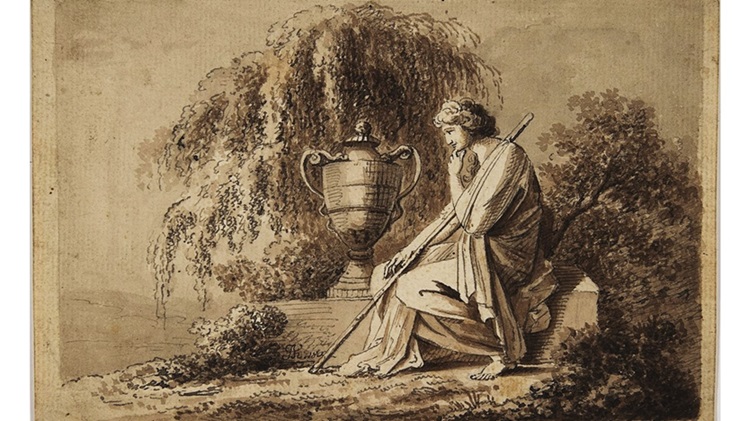
‘Talk Around the Urn’: A Poem by Frank Rable

November 20, 2024
in Culture, Poetry
A A
7
poems 'Talk Around the Urn': A Poem by Frank Rable

.

Talk Around the Urn

In our Sunday best, on folding chairs,
We solemnly talk around the urn;
A tear, a sniffle, show who cares
For the loved one who will not return.

No box is there with dressed up corpse,
But mostly wood burned into ash.
The mourners show the same remorse.
For dead remains gone in a flash.

From the departed, memories flow,
But grief can only take you so far.
So when comes the time to go,
Each gets into his polished car.

The departed chose this worthy site.
It’s old, less talking everywhere.
It was restored. Not much in sight:
A final goodbye, maybe a prayer.

And last the mourners go to lunch.
Reunion takes them from sad to delighted,
And now they are a chipper bunch.
Who honor that guest who’s not invited.

.

.

Frank Rable is a poet living in Pennsylvania.

ShareTweetPin
The Society of Classical Poets does not endorse any views expressed in individual poems or commentary.
Read Our Comments Policy Here

RandomPoems

‘Shanghai’s Robo Dogs’ by Maura H. Harrison
Culture

‘Shanghai’s Robo Dogs’ by Maura H. Harrison

May 19, 2022

. . Shanghai's Robo Dogs With quick unnatural steps, and side to side Focusing glances, robo dogs preside And prowl...

800 Years of the Sonnet in 12 Minutes: A Video by Andrew Benson Brown
Classical Poets Live

800 Years of the Sonnet in 12 Minutes: A Video by Andrew Benson Brown

November 12, 2024

. https://youtu.be/B9aMXFVpFEk . . Andrew Benson Brown's epic-in-progress, Legends of Liberty, chronicles the major events of the American Revolution. He...

Next Post
The Trochaic Poems of Dorothy Parker: An Essay by Joseph S. Salemi

The Trochaic Poems of Dorothy Parker: An Essay by Joseph S. Salemi

poem/essmann/beauty

'Smile': A Poem by Susan Jarvis Bryant

‘Contemplative Days’: A Poem by Margaret Brinton

'Contemplative Days': A Poem by Margaret Brinton

Comments 7

  1. Roy Eugene Peterson says:
    2 years ago

    Morose and melancholy, I can feel the love for the guest revered, loved, and unseen. I can imagine the beautiful urn and then the departure for a revivifying reunion.

    Reply
    • Frank Rable says:
      2 years ago

      Thank you for reading my poem and your comments. I’ve attended funerals since my sister passed away when I was five, They were all open casket affairs, until recently when cremation became more the norm. I worried that somehow it wouldn’t be the same, but it’s close enough, and better in some ways. It’s the attendance of the loved ones that makes it a celebration of one’s life. Comments like,”The undertaker did a good job with him”, or “He didn’t look like himself” can be dispensed with. Instead, the urn, a visual representation of the deceased’s soul, is the center of attention and inspires memories of the the deceased.

      Reply
  2. Paul A. Freeman says:
    2 years ago

    The jocular meter and rhyme belie the sadness of the event and leave the reader with a smile on his face for a life well remembered.

    Thanks for the read, Frank.

    Reply
    • Frank Rable says:
      2 years ago

      Thank you, Paul. The event is a sad one but it has a purpose. The practice of Ceremonial Burial has been with us for thousands of years and reflects our hope for an afterlife as well as a farewell to the deceased. And, as I realized as a child and tried to portray in my poem, you go to the funeral in sadness and finish it happy somehow.

      Reply
  3. Dan Pugh says:
    2 years ago

    To me the ending of this poem is ambiguous. It may be that the mourners are callous to be laughing so soon after the burial. Or it may be that the usual protocol has been reversed. Traditionally the funeral followed the wake. At the wake everyone got as drunk as at a wedding and they swapped funny and endearing stories about the departed as if to bring him back to life in all the ages of his life at once. They laughed more often than they cried. They hugged the memories goodbye. So much better than a eulogy at a funeral.
    It’s especially poignant for me because when I was in medical school in St Louis in 1960-64, there were two City Hospitals—one for Blacks and one for Whites. The Blacks were very proud of their hospital, strongly supported by their community and their churches. But there was a difference between the medical and the surgical wards. The community expected that an admission to the surgical ward might save your life and many surgical patient were in fact cured. But there was a self-fulfilling prophesy that no one came out of the medical wards alive. It was self-fulfilling because no one would let themselves be taken there until it was too late. So the medical wards were a dying house. But they were anything but grim. The beds were lined up unusually far apart so that there would be room for the families. Because they actually held the wake (non-alcoholic) before the patient died. They brought picnic food and partied and told all the stories and laughed and cried with the dying patient included in the party. It was very touching and made me think that in ways we white folks have a lot to learn.

    Reply
    • Frank Rable says:
      2 years ago

      Thank you Dan for your comments about my poem. I am Irish on my mother’s side and have attended many funerals since my first in 1957. We had a very large family. Funeral generally went as follows: A viewing for three days in a funeral parlor, during which time respects were paid to to the deceased, and condolences to those who needed the comforting. Children attended, and ran around laughing in the outer hallways.

      Then there was a funeral procession by cars following the hearse to the church, then another one to a graveside service. Mourners were then invited to a luncheon as a sort of thank you. Sadness was properly left behind with the deceased at the cemetery. The luncheon was a celebration of the departed’s life, a reunion, and even a party. There was laughter, if perhaps slightly subdued. Along with food and coffee, beer was sometimes served but nobody was getting drunk.

      As to eulogies, I was asked to give one on several occasions. I would limit it ten minutes at most and I would tell my three favorite personal memories of the departed. One example was the memory of my Aunt joyfully showing me her fingernails that had been painted a bright yellow by her caretaker. She never complained about how twisted, swollen, and arthritic her fingers had become. She knew how to enjoy small things and endure what she must. I was told that such memories were a comfort to loved ones and inspired their own stories.

      Dan, I have listened to some horrible, overlong eulogies myself. I tell myself that the eulogist meant well. We’re all amateurs at that sort of thing anyway

      Reply
  4. Margaret Coats says:
    2 years ago

    “Remorse for dead remains gone in a flash” is the ambiguity I find here, since Dan Pugh suggested an ambiguous ending. To me, it’s still horrible to burn the body of a departed loved one. This may be true at some level even where cremation is much more the custom than in America. A member of my extended family married into a Japanese family, and lives in Japan, where she went to the funeral for her husband’s grandmother. Close relatives attend the cremation; the son of the departed pushes a button to start burning his mother’s body in a space separated from the living by a thin wall. They could feel the heat and hear the sounds. The American granddaughter-in-law reports that this was accompanied by screaming from Japanese female relatives, who all acted like they had gone berserk.

    Frank, you’ve managed to show how grief and memory are expressed in other ways. Of course the process of grieving soon comes to an end, at least for most funeral attendees, whatever the ritual–and your poem offers a good description of how that may occur. I agree with you that eulogies can be more about the speaker than the deceased, and therefore maybe they should be limited to a comfortable length like that of your poem!

    Reply

Leave a Reply Cancel reply

Your email address will not be published. Required fields are marked *

  1. Theresa Werba on ‘Two Fateful American Coin Flips’: A Poem by James A. TweedieJuly 18, 2026

    Jim, congrats on your win!!!

  2. BDW on ‘For Those We Never Meet’: A Poem by Aneesh AgarwalJuly 18, 2026

    Mr. Agawal has generalized the largest labour insurrection in America from the early 20th century—1921, that cost the lives of…

  3. Ganga Unnikrishnan on National Poetry Month Limerick ChallengeJuly 18, 2026

    Urzsula

  4. Ganga Unnikrishnan on National Poetry Month Limerick ChallengeJuly 18, 2026

    Thank you so much Ursula

  5. Geoffrey Smagacz on ‘Ben Franklin’s Copper Fugio Cent’: A Poem by Geoffrey SmagaczJuly 18, 2026

    Thank you, Margaret

Subscribe to Daily Poems

Enter your email address to subscribe to this blog and receive notifications of new posts by email.

Join 1,596 other subscribers

Recent Poems

  • Winners and Rankings of The Great American Poetry Competition
  • ‘The Gold Star Mother’: A Poem by Gerard Maritato
  • ‘An American Dash’: A Poem by Linda Ellis
  • ‘The Anonymous Soldier’: A Poem by Lucy Lind
  • ‘For Those We Never Meet’: A Poem by Aneesh Agarwal
  • ‘Ben Franklin’s Copper Fugio Cent’: A Poem by Geoffrey Smagacz
  • Three Brief Poems by Luxorius, Translated by Joseph S. Salemi
  • ‘The American Spirit’: A Poem by Dusty Grein
  • ‘The Ballad of Zebulon Pike’: A Poem by M.D. Skeen
  • ‘We Are the Ones’ and Other Poetry by Cheryl Corey
  • ‘My Pyjamas!’ and Other Poems by Susan Jarvis Bryant
  • ‘A Snowy Egret’: A Poem by Bruce Dale Wise
  • ‘The Swearing-in of Calvin Coolidge’: A Sonnet by Robert W. Crawford
  • ‘Ballad of the Sequoia’: A Poem by Lauren V. Leon
  • ‘The 51st State’: A Poem by James Sale
  • ‘La Uva’ (The Grape): A Poem by Michael Pietrack
  • ‘There’s Blood that Flows Within the Stripes’: A Poem by Lauren V. Leon
  • ‘Birdsong’: A Poem by Jeffrey Essmann
  • ‘The Melody That Lingers On’ and Other Poetry by John McPherson
  • ‘American Dreams’: A Poem by Adam Sedia
  • ‘An American Fabius’: A Poem by John Hernandez
  • ‘Vernal Clinic’ and Other Poetry by C.B. Anderson
  • ‘Omaha Beach’ and Other Poetry by Bradford Skow
  • ‘Music to Part the Veil’: A Poem by T.M. Moore
  • ‘A Gentleman’s Guide to Losing a War’ and Other Poetry by Arnon Peterson
  • ‘Black Shuck’: A Poem by Martin Briggs
  • ‘When the Last World War II Veteran Passes Away’: A Poem by N.S. Boone
  • ‘A Fallow Year at Worthy Farm’: A Poem by Paul A. Freeman
  • ‘Outstanding in Afghanistan’: A Poem by Jared S. Chang
  • ‘250 More’: A Poem by Miguel Moreno

Categories

  • Acrostic
  • Alexandroid
  • Alliterative
  • Art
  • Best Poems
  • Blank Verse
  • Chant Royal
  • Classical Poets Live
  • Clerihew
  • Covid-19
  • Deconstructing Communism
  • Educational
  • Epic
  • Epigrams and Proverbs
  • Essays
    • Interviews with Poets
    • Poetry Reviews
  • Featured
  • From the Society
  • Great Poets
    • Dante Alighieri
    • Edgar Allan Poe
    • Emily Dickinson
    • Geoffrey Chaucer
    • Henry Wadsworth Longfellow
    • Homer
    • John Keats
    • John Milton
    • Robert Frost
    • William Blake
    • William Shakespeare
    • William Wordsworth
  • Human Rights in China
  • Limerick
  • Love Poems
  • Music
  • Pantoum
  • Performing Arts
  • Poetry
    • Beauty
    • Children's Poems
    • Culture
    • Ekphrastic
    • Found Poems
    • High School Poets
    • Humor
    • Riddles
  • Poetry Challenge
  • Poetry Contests
  • Poetry Forms
    • Curtal Sonnet
    • Haiku
  • Poetry Readings
  • Rhupunt
  • Rondeau
  • Rondeau Redoublé
  • Rondel
  • Rubaiyat
  • Sapphic Verse
  • Satire
  • Science
  • Sestina
  • Shape Poems
  • Short Stories
  • Song Lyrics
  • Sonnet
  • Symposium
  • Terrorism
  • Terza Rima
  • The Environment
  • Translation
  • Triolet
  • Video
  • Villanelle

Quick Links

  • About Us
  • Submit Poetry
  • Become a Member
  • Members List
  • Support the Society
  • Advertisement Placement
  • Comments Policy
  • Terms of Use

Welcome Back!

Login to your account below

Forgotten Password?

Retrieve your password

Please enter your username or email address to reset your password.

Log In
No Result
View All Result
  • Poems
    • Beauty
    • Culture
    • Satire
    • Humor
    • Children’s
    • Art
    • Ekphrastic
    • Epic
    • Epigrams and Proverbs
    • Human Rights in China
    • Music
    • Performing Arts
    • Riddles
    • Science
    • Song Lyrics
    • The Environment
    • The Raven
    • Found Poems
    • High School Poets
    • Terrorism
    • Covid-19
  • Poetry Forms
    • Sonnet
    • Haiku
    • Limerick
    • Villanelle
    • Rondeau
    • Pantoum
    • Sestina
    • Triolet
    • Acrostic
    • Alexandroid
    • Alliterative
    • Blank Verse
    • Chant Royal
    • Clerihew
    • Rhupunt
    • Rondeau Redoublé
    • Rondel
    • Rubaiyat
    • Sapphic Verse
    • Shape Poems
    • Terza Rima
  • Great Poets
    • Geoffrey Chaucer
    • Emily Dickinson
    • Homer
    • Henry Wadsworth Longfellow
    • Dante Alighieri
    • John Keats
    • John Milton
    • Edgar Allan Poe
    • William Shakespeare
    • William Wordsworth
    • William Blake
    • Robert Frost
  • Love Poems
  • Contests
  • SCP Academy
    • Educational
    • Teaching Classical Poetry—A Guide for Educators
    • Poetry Forms
    • The SCP Journal
    • Books

© 2025 SCP. WebDesign by CODEC Prime.