• Submit Poetry
  • Support SCP
  • About Us
  • Members
  • Join
Tuesday, October 20, 2026
Society of Classical Poets
  • Poems
    • Beauty
    • Culture
    • Satire
    • Humor
    • Children’s
    • Art
    • Ekphrastic
    • Epic
    • Epigrams and Proverbs
    • Human Rights in China
    • Music
    • Performing Arts
    • Riddles
    • Science
    • Song Lyrics
    • The Environment
    • The Raven
    • Found Poems
    • High School Poets
    • Terrorism
    • Covid-19
  • Poetry Forms
    • Sonnet
    • Haiku
    • Limerick
    • Villanelle
    • Rondeau
    • Pantoum
    • Sestina
    • Triolet
    • Acrostic
    • Alexandroid
    • Alliterative
    • Blank Verse
    • Chant Royal
    • Clerihew
    • Rhupunt
    • Rondeau Redoublé
    • Rondel
    • Rubaiyat
    • Sapphic Verse
    • Shape Poems
    • Terza Rima
  • Great Poets
    • Geoffrey Chaucer
    • Emily Dickinson
    • Homer
    • Henry Wadsworth Longfellow
    • Dante Alighieri
    • John Keats
    • John Milton
    • Edgar Allan Poe
    • William Shakespeare
    • William Wordsworth
    • William Blake
    • Robert Frost
  • Love Poems
  • Contests
  • SCP Academy
    • Educational
    • Teaching Classical Poetry—A Guide for Educators
    • Poetry Forms
    • The SCP Journal
    • Books
No Result
View All Result
Society of Classical Poets
No Result
View All Result
Home Poetry Beauty

‘The Harmonies of Holst’: A Poem by Mary Jane Myers

June 4, 2024
in Beauty, Blank Verse, Music, Poetry
A A
10
poems 'The Harmonies of Holst': A Poem by Mary Jane Myers

.

The Harmonies of Holst

While doing errands, driving roundabout,
I listen to the classic music station.
An orchestra plays a courtly lyric song.
What can it be? I know it well, but how?
Perhaps a ballad handed down through ages?
I miss the tranquil host’s informed announcement,
but hear two curious words: Jupiter, jollity.
(A lovely lilting Latinate word, jollity!)

YouTube to the rescue. A simple search.
The Planets, Holst. A famous piece, though I
have never paid it mind. I scroll on through,
without success. Cavorting trumpets. Wait!
The noble theme appears, as a sun from heaven
illumines inky roiling thunderclouds.

My mind becomes enveloped by its rhythms,
the placid dignity, as of grazing sheep,
a green-green meadow verged by serried hedges.
Sometimes I hum aloud, then ululate,
gesticulate, conduct a fictive choir.

This piece reminds me of a cherished hymn,
In the Bleak Midwinter, Rosetti’s couplets
set by Holst. His gorgeous airs are made
to showcase gorgeous poetry. And now,
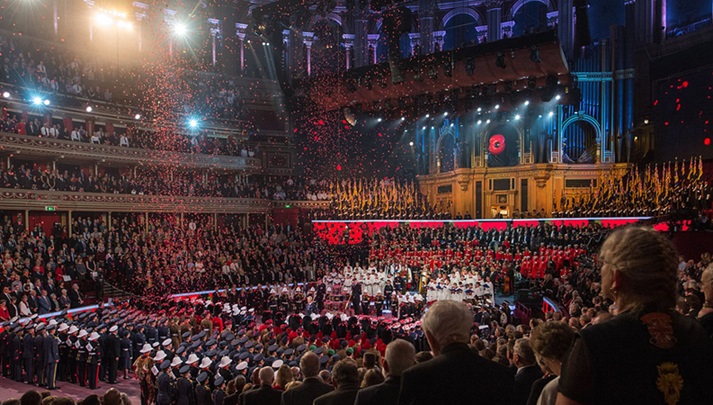
I understand. A patriotic anthem.
The Brits have sung it for a century,
I Vow to Thee My Country, all those state
festivities, Winchester Abbey pomp,
Royals singing, Willis organ swelling.

How did Holst compose this hallowed paean?
A happy fluke. A mothballed Spring-Rice poem,
financial stress, a nonnegotiable deadline:
ah hah! my well-tried “Jupiter” tune will do.
Fortuitous, such synchronicity,
as a psalm of David weds a gnomic verse
to its beloved, a resonating lyre.
Such Proustian “little phrases” seem God-inspired,
afloat in empyrean ethers, from angels’ tongues
to a genius melodist’s ears. We overhear,
absorb their healing balm, our souls renewed.

.

.

.

Mary Jane Myers resides in Springfield, Illinois. She is a retired JD/CPA tax specialist. Her debut short story collection Curious Affairs was published by Paul Dry Books in 2018.

ShareTweetPin
The Society of Classical Poets does not endorse any views expressed in individual poems or commentary.
Read Our Comments Policy Here

RandomPoems

‘Shear Wickedness’ and Other Cat Poetry by Julian Woodruff
Children's Poems

‘Pets and People’ and Other Poetry by Julian Woodruff

July 5, 2022

. Pets and People Do cats and kittens ever wonder Why their owners have no fur? Do dogs think it...

‘Geronimo the Alpaca – In Memoriam’ by Paul A. Freeman
Culture

‘Geronimo the Alpaca – In Memoriam’ by Paul A. Freeman

October 11, 2021

. read about Geronimo here Geronimo! That is my name; I’ve garnered international fame because I haven’t got TB, or...

Next Post
‘Under the Umbrella’: A Poem by Joshua C. Frank, Inspired by Brassens’ Le Parapluie

'Under the Umbrella': A Poem by Joshua C. Frank, Inspired by Brassens' Le Parapluie

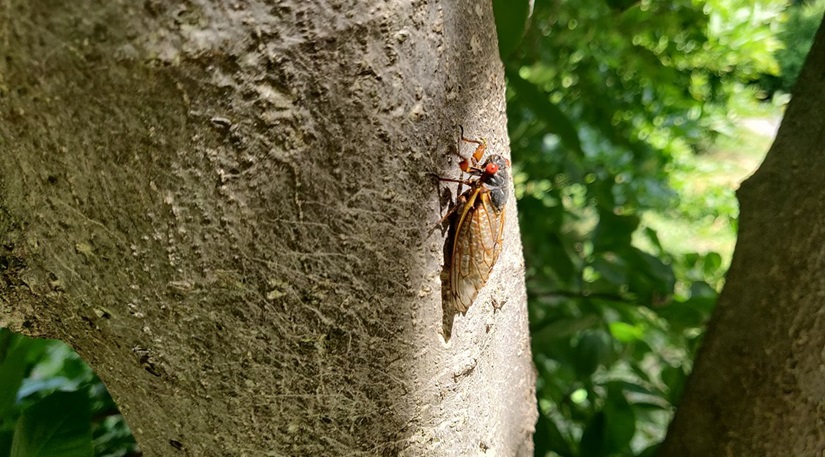
‘To a Cicada’ and Other Poetry by Martin Rizley

'To a Cicada' and Other Poetry by Martin Rizley

‘Today My Brown Sedan Is Two’ and Other Poetry by Shamik Banerjee

'Today My Brown Sedan Is Two' and Other Poetry by Shamik Banerjee

Comments 10

  1. jd says:
    2 years ago

    What a lovely poem, Mary Jane! I’m also very familiar with the melody and never knew its origin. Thank you for the lyrical lesson and for the video clip.

    Reply
    • Mary Jane Myers says:
      2 years ago

      JD
      Thank you for your kind comments. I am trying to describe a common experience I have–I hear snippets of a familiar musical piece that somehow means something to me emotionally–there are memories (also not quite clear at first) associated with it. Yet I can’t “place” the music. Since I like to “catalog” things, I become somewhat preoccupied with tracking down the particulars of the music.
      Most sincerely Mary Jane

      Reply
  2. Janice Canerdy says:
    2 years ago

    Mary Jane, as one who appreciates many types of music, I
    really enjoy poems like this. You have conveyed an appealing,
    descriptive message about the power of music.

    Reply
    • Mary Jane Myers says:
      2 years ago

      Janice
      Thank you for your kind comments. I am a classical music lover. I don’t like the bland “elevator music” versions that we hear constantly in public spaces (music to lull us into relaxing our guards, and spending too much money!)
      Most sincerely Mary Jane

      Reply
  3. Margaret Coats says:
    2 years ago

    You are right, Mary Jane, the Jupiter melody may be “a ballad handed down through ages.” Holst is known to have worked with folk songs, and I can tell you from having sung this hymn tune that he named “Thaxted”: the rhythm is irregular and not easy to teach to a choir. There are some surprising sixteenth notes! Yet it is the kind of stirring folk melody that people hearing it over and over naturally pick up.

    “I Vow to Thee, My Country” is a poem of deep patriotism, more perfectly expressive of love for one’s country, I believe, than any of our American national songs. And that’s partly because verse 2 moves into thoughts of “another country,” or heaven. We do have the tune called Thaxted in American hymnals, paired with words that seem to flow naturally from the final stanza of Sir Cecil Spring Rice’s poem “Urbs Dei” (City of God). It says “we may not see the king” of that city. Frances Ridley Havergal lived and wrote a bit earlier than Sir Cecil, but seems to follow on in her poem of an unseen king:

    O merciful Redeemer,
    Whom yet unseen we love,
    O Name of might and favor,
    All other names above,
    O bringer of salvation
    Who wondrously hast wrought
    Thyself the revelation
    Of love beyond all thought,
    We worship Thee and bless Thee,
    To Thee alone we sing,
    We praise Thee and confess Thee
    Our gracious Lord and King.

    Look for “O Merciful Redeemer” in your hymnal, or try singing this along with music in the video you have so kindly brought to our notice with your own poem of discovery.

    Reply
    • Mary Jane Myers says:
      2 years ago

      Margaret
      Thank you for this additional information. I’m wondering: perhaps I’ve heard/sung the Thaxted hymn in a Roman Catholic context many years ago–but I’m not sure exactly where or when. On Sundays, I attend a High Latin Roman Catholic Mass (1962 Missal). Our choir director is a Gregorian chant specialist who trained in Rome. He includes a closing hymn for the congregation to sing. For reasons unknown to me, he seems to favor 19th century Church of England hymns (e.g., Raise High the Cross).

      Margaret: I’d love to discuss poetic craft with you privately. My e-mail address is [email protected] I’d appreciate so much hearing from you directly.

      Most sincerely Mary Jane

      Reply
      • Margaret Coats says:
        2 years ago

        Thank you, Mary Jane. I’ll respond soon, but wanted to take the earliest opportunity to let you know I saw this.

        Reply
      • Patrick Ford says:
        2 years ago

        Mary Jane, you have almost certainly heard this sung at Catholic Mass at some point as “Oh God Beyond All Praising.” One of my very favorites. It’s used at all major diocesan events in Charlotte, where I first heard this version (think ordinations and other major celebrations involving the bishop).

        I first heard–and was deeply moved by–the tune at a friend’s wedding years ago as “Jerusalem the Golden,” out of a Protestant hymnal.

        Reply
  4. Daniel Kemper says:
    2 years ago

    I’ve read this over several times and am having fun trying to pin down why it’s “sticky” to me. I do not mean sticky in the tactile sense with it’s possible negative connotations, I mean it as my kids refer to songs that “stick” in their heads.

    What I’ve come up with in this highly enjoyable piece is the layering of both song structure and feeling with the narrative of our days. The narrative allows the feeling of the song to enter the feelings of the speaker, thus the reader. That’s what I like most about this poem.

    Happy to read and re-read. What an opulent generation we are!

    Reply
    • Mary Jane Myers says:
      2 years ago

      Daniel Thank you for your perceptive comment about the way our minds “layer” the structure of music with our own feelings. Yes, in my poem I am attempting to describe the “the way our mind works” when we’re listening to music. I’m pleased that my small effort is at least partially successful in describing this mysterious process.

      Most sincerely,
      Mary Jane

      Reply

Leave a Reply Cancel reply

Your email address will not be published. Required fields are marked *


  1. Roy Eugene Peterson on Poetry Challenge: Dictionary DelightsOctober 20, 2026

    This is a brilliantly conceptualized poem with fascinating words that sent me to the dictionary for elucidation.

  2. Brian Yapko on ‘The Siege on Castle Hill’: A Poem by Apollo Clark CoOctober 20, 2026

    I very much admire what you were aiming for with this poem, Apollo, and its multiple points of view. It…

  3. Brian Yapko on ‘Every New Pantheon’: A Poem by C.B. AndersonOctober 20, 2026

    I love this poem, Kip. It says so much about the tension between atheism and faith -- a faith which,…

  4. Roy Eugene Peterson on ‘The Siege on Castle Hill’: A Poem by Apollo Clark CoOctober 20, 2026

    Apollo, what a great story told in captivating poetry with a vivid portrayal blessed with your great imagery. The way…

  5. Stephen DiLauro on ‘Biblical? Emblematic?’: A Poem by Stephen DiLauroOctober 20, 2026

    Sorry for the name.mix up, Marguerite. I thought I typed it correctly. Damn autocorrect probably got me again.

Subscribe to Daily Poems

Enter your email address to subscribe to this blog and receive notifications of new posts by email.

Join 1,660 other subscribers
No Result
View All Result

Resources

       1. A Guide to Writing Poetry

      2. The Best Poems of 2020      

      3. Poetry and Writing Contests

      4. Journals Accepting Formal Verse

Recent Poems

  • ‘The Siege on Castle Hill’: A Poem by Apollo Clark Co
  • ‘Every New Pantheon’: A Poem by C.B. Anderson
  • ‘Biblical? Emblematic?’: A Poem by Stephen DiLauro
  • ‘The Valley’: A Poem by Briana Reavis
  • The Blobfish—‘Mr Blobby’: A Poem by Paul A. Freeman
  • ‘Nature’s Family’: A Poem by Margaret Coats
  • ‘The River & The Sea’: A Poem by Rohini Sunderam
  • Poems by Derzhavin, Akhmatova, and Tyutchev, Translated by Kevin Rainbow
  • ‘After-Action Report’: A Poem by Joseph S. Salemi
  • ‘The Walking Wounded’: A Poem by Jeffrey Essmann
  • ‘Their Words, My Fault’ and Other Poems by Russel Winick
  • ‘Lazarus I’: A Poem by Jason Hunt
  • Poetry Challenge: Dictionary Delights
  • ‘In Defense of Rhyme’: An Essay by Euphrates Moss
  • ‘Gun Control’: A Poem by Kevin Ahern
  • ‘Power of a Pen’: A Poem by Janice Stanley
  • The Best Haiku of 2026
  • ‘One Night in Bangkok’ and Other Poetry by Brian Yapko
  • ‘Invocation’: A Poem by D.R. Rainbolt
  • ‘Enjoy the Peace, Prepare for War’: A Poem by Roy E. Peterson
  • Faust Part Two, Act One: ‘A Pleasant Landscape’ by Goethe, Translated by Josh Olson
  • A Song Inspired by Robert Frost’s ‘The Road Not Taken’, by Gunny Markefka
  • ‘Reappraisals of Mortality’: A Poem by C.B. Anderson
  • ‘What Is the Measure of My Days?’: A Poem by Peter Venable
  • ‘Polar Coordinates’: A Poem by Adam Sedia
  • ‘It Never Lies!’: A Poem by Paul A. Freeman
  • ‘The Mahjong Flowers’: A Set of Sonnets by Margaret Coats
  • ‘The Martyrdom of Saint Cassian’: A Poem by Joseph S. Salemi
  • ‘Mind Versus Beauty’: A Poem by Johann Wolfgang von Goethe, Translated by Eric v.d. Luft
  • ‘Summer Sails’: A Poem by Paulette Calasibetta

Categories

  • Acrostic
  • Alexandroid
  • Alliterative
  • Art
  • Best Poems
  • Blank Verse
  • Chant Royal
  • Classical Poets Live
  • Clerihew
  • Covid-19
  • Deconstructing Communism
  • Educational
  • Epic
  • Epigrams and Proverbs
  • Essays
    • Interviews with Poets
    • Poetry Reviews
  • Featured
  • From the Society
  • Great Poets
    • Dante Alighieri
    • Edgar Allan Poe
    • Emily Dickinson
    • Geoffrey Chaucer
    • Henry Wadsworth Longfellow
    • Homer
    • John Keats
    • John Milton
    • Robert Frost
    • William Blake
    • William Shakespeare
    • William Wordsworth
  • Human Rights in China
  • Limerick
  • Love Poems
  • Music
  • Pantoum
  • Performing Arts
  • Poetry
    • Beauty
    • Children's Poems
    • Culture
    • Ekphrastic
    • Found Poems
    • High School Poets
    • Humor
    • Riddles
  • Poetry Challenge
  • Poetry Contests
  • Poetry Forms
    • Curtal Sonnet
    • Haiku
  • Poetry Readings
  • Rhupunt
  • Rondeau
  • Rondeau Redoublé
  • Rondel
  • Rubaiyat
  • Sapphic Verse
  • Satire
  • Science
  • Sestina
  • Shape Poems
  • Short Stories
  • Song Lyrics
  • Sonnet
  • Symposium
  • Terrorism
  • Terza Rima
  • The Environment
  • Translation
  • Triolet
  • Video
  • Villanelle

Quick Links

  • About Us
  • Submit Poetry
  • Become a Member
  • Members List
  • Support the Society
  • Advertisement Placement
  • Comments Policy
  • Terms of Use

Welcome Back!

Login to your account below

Forgotten Password?

Retrieve your password

Please enter your username or email address to reset your password.

Log In
No Result
View All Result
  • Poems
    • Beauty
    • Culture
    • Satire
    • Humor
    • Children’s
    • Art
    • Ekphrastic
    • Epic
    • Epigrams and Proverbs
    • Human Rights in China
    • Music
    • Performing Arts
    • Riddles
    • Science
    • Song Lyrics
    • The Environment
    • The Raven
    • Found Poems
    • High School Poets
    • Terrorism
    • Covid-19
  • Poetry Forms
    • Sonnet
    • Haiku
    • Limerick
    • Villanelle
    • Rondeau
    • Pantoum
    • Sestina
    • Triolet
    • Acrostic
    • Alexandroid
    • Alliterative
    • Blank Verse
    • Chant Royal
    • Clerihew
    • Rhupunt
    • Rondeau Redoublé
    • Rondel
    • Rubaiyat
    • Sapphic Verse
    • Shape Poems
    • Terza Rima
  • Great Poets
    • Geoffrey Chaucer
    • Emily Dickinson
    • Homer
    • Henry Wadsworth Longfellow
    • Dante Alighieri
    • John Keats
    • John Milton
    • Edgar Allan Poe
    • William Shakespeare
    • William Wordsworth
    • William Blake
    • Robert Frost
  • Love Poems
  • Contests
  • SCP Academy
    • Educational
    • Teaching Classical Poetry—A Guide for Educators
    • Poetry Forms
    • The SCP Journal
    • Books

© 2025 SCP. WebDesign by CODEC Prime.