• Submit Poetry
  • Support SCP
  • About Us
  • Members
  • Join
Thursday, September 3, 2026
Society of Classical Poets
  • Poems
    • Beauty
    • Culture
    • Satire
    • Humor
    • Children’s
    • Art
    • Ekphrastic
    • Epic
    • Epigrams and Proverbs
    • Human Rights in China
    • Music
    • Performing Arts
    • Riddles
    • Science
    • Song Lyrics
    • The Environment
    • The Raven
    • Found Poems
    • High School Poets
    • Terrorism
    • Covid-19
  • Poetry Forms
    • Sonnet
    • Haiku
    • Limerick
    • Villanelle
    • Rondeau
    • Pantoum
    • Sestina
    • Triolet
    • Acrostic
    • Alexandroid
    • Alliterative
    • Blank Verse
    • Chant Royal
    • Clerihew
    • Rhupunt
    • Rondeau Redoublé
    • Rondel
    • Rubaiyat
    • Sapphic Verse
    • Shape Poems
    • Terza Rima
  • Great Poets
    • Geoffrey Chaucer
    • Emily Dickinson
    • Homer
    • Henry Wadsworth Longfellow
    • Dante Alighieri
    • John Keats
    • John Milton
    • Edgar Allan Poe
    • William Shakespeare
    • William Wordsworth
    • William Blake
    • Robert Frost
  • Love Poems
  • Contests
  • SCP Academy
    • Educational
    • Teaching Classical Poetry—A Guide for Educators
    • Poetry Forms
    • The SCP Journal
    • Books
No Result
View All Result
Society of Classical Poets
  • Poems
    • Beauty
    • Culture
    • Satire
    • Humor
    • Children’s
    • Art
    • Ekphrastic
    • Epic
    • Epigrams and Proverbs
    • Human Rights in China
    • Music
    • Performing Arts
    • Riddles
    • Science
    • Song Lyrics
    • The Environment
    • The Raven
    • Found Poems
    • High School Poets
    • Terrorism
    • Covid-19
  • Poetry Forms
    • Sonnet
    • Haiku
    • Limerick
    • Villanelle
    • Rondeau
    • Pantoum
    • Sestina
    • Triolet
    • Acrostic
    • Alexandroid
    • Alliterative
    • Blank Verse
    • Chant Royal
    • Clerihew
    • Rhupunt
    • Rondeau Redoublé
    • Rondel
    • Rubaiyat
    • Sapphic Verse
    • Shape Poems
    • Terza Rima
  • Great Poets
    • Geoffrey Chaucer
    • Emily Dickinson
    • Homer
    • Henry Wadsworth Longfellow
    • Dante Alighieri
    • John Keats
    • John Milton
    • Edgar Allan Poe
    • William Shakespeare
    • William Wordsworth
    • William Blake
    • Robert Frost
  • Love Poems
  • Contests
  • SCP Academy
    • Educational
    • Teaching Classical Poetry—A Guide for Educators
    • Poetry Forms
    • The SCP Journal
    • Books
No Result
View All Result
Society of Classical Poets
No Result
View All Result
Home Poetry Beauty

‘The Poet’s Soul with Artful Pen’ and Other Poetry by Roy E. Peterson

November 25, 2018
in Beauty, Culture, Poetry
A A
13
poems 'The Poet's Soul with Artful Pen' and Other Poetry by Roy E. Peterson

The Poet’s Soul with Artful Pen

Few will read with understanding
What the poet is intending.
Nouns and verbs are still concealing
Concepts with a double meaning.

Adjectives, and adverbs too,
Are used in ways that men find new.
A word familiar with strange ending
Pirouettes on what’s portending.

Misty gleams immortal time
The poet captures in a rhyme.
Feign an artifice to hide
What the poet feels inside.

Durst the poet play with fate
Or touch the latch of heaven’s gate?
A proposition juxtapose
Between an anvil and a rose?

Be ever vigilant, my soul,
For it takes two to make a whole.
The poet’s soul with artful pen
Bestows his riddles upon men.


The Sordid Socialists and Cultish Communists

The sordid socialists
and cultish communists
Are really both the same.
They come with greedy fists
Yet give you all the blame.

They blame the rich for working,
For their industry.
They blame the rich while shirking
Their humanity.

They redistribute wealth
Till everyone is poor.
They tax as if our health
Needs taxes more and more.
The pimps of socialism
Buy whores they can control.
Their short-term mechanism
Is handing out a dole.

They hate that things have merit,
Great inventions reign.
They want to know your profit,
Privacy disdain.

The sordid socialists
And cultish communists
Have focused feral eyes
On top of their hitlists:
America’s the prize.


The Commie Will Hijack a Word

The commie will hijack a word
As new vocabulary.
So if you think “How nice” when heard,
I warn you to be wary.
“Democracy” was thus misused
By Lenin as a cover,
So any sort of power abuse
Is harder to discover.

Some years ago a synonym
For happiness was “gay.”
The word hijacked was turned into
The word it is today.
Antifas say that they hate fascists—
Yet, dressed in a new suit,
You wouldn’t guess that they’re the fascists,
And communists to boot!

The leftists cloak a meaning
In ways that make hearts move.
A rainbow is redeeming,
So who would disapprove?
Once Lenin said his tyrant party,
Which beat the “Mensheviks,”
Would now be called “majority.”
The meaning: “Bolsheviks.”


Roy E. Peterson is a writer and former U.S. military army intelligence officer who currently resides in Texas. 

ShareTweetPin
The Society of Classical Poets does not endorse any views expressed in individual poems or commentary.
Read Our Comments Policy Here

RandomPoems

Two Poems by Bécquer, Translated by Cheryl Corey 
Beauty

‘My Heart’s Desire’: A Poem by Susan Steele Rives

February 22, 2025

. My Heart's Desire There is one thing that I long for, _and another that I need. One essential to...

10 New Riddles for Mid-Autumn Festival 2022
Children's Poems

10 New Riddles for Mid-Autumn Festival 2022

September 8, 2022

. The Mid-Autumn Festival, or Moon Festival, falls on Sept. 10 this year. A common tradition is to read riddles...

Next Post
‘Cosmic Dance’ by Sathya Narayana

'Cosmic Dance' by Sathya Narayana

2015 Poetry Journal Released

A Beginner’s Guide to Sapphic Verse (with Audio)

‘To Chavistas’ and Other Poetry by John Gao

'To Chavistas' and Other Poetry by John Gao

Comments 13

  1. Joe Tessitore says:
    8 years ago

    Good work all around and, for me, one outstanding couplet:

    A proposition juxtapose
    between an anvil and a rose

    Reply
    • Roy E. Peterson says:
      7 years ago

      I appreciate your comment, Joe.

      Reply
  2. Monty says:
    8 years ago

    Regarding ‘The Poet’s Soul . . ‘, Roy: has the word ‘misty’ got another meaning on your side of the pond? In line 12: if you’re using it as a name for someone/something, then it’d make sense to me; but if you’re using it as obscure/cloudy, then I can’t grasp the line ‘Misty gleams immortal time’.

    In line 15: I just turned down the volume on my music for a few seconds; to listen to the word ‘juxtapose’ screaming out for a ‘d’?

    Reply
    • Joe Tessitore says:
      8 years ago

      I think the tense of “juxtapose” is carried over from the preceding couplet, which is in the present tense.

      It’ll be interesting to get the poet’s take on it.

      Reply
      • Joe Tessitore says:
        8 years ago

        and after “heaven’s gate”
        perhaps a semi-colon instead of a question mark?

        Reply
      • Monty says:
        8 years ago

        . . . but the previous couplet ends in a question-mark; thus the preceding line is the start of a new question . . having it’s own tense.

        As an example: if one paraphrased that question, it could read: ‘A proposition sandwiched between an anvil and a rose? Different word: same meaning. But note it was sandwichED (past tense). In the sense of the poem, this would read as: ‘A proposition sandwich between an anvil and a rose’?

        Reply
  3. Monty says:
    8 years ago

    My last reply was in response to your penultimate comment.

    Reply
    • Joseph Tessitore says:
      8 years ago

      I thought he was going for a series of questions (the “anvil/rose being his penultimate?).

      I’m not sure, but it doesn’t sound to me like the anvil/rose couplet can stand alone as a sentence.

      Reply
      • Monty says:
        8 years ago

        ‘Anvil rose’ was his last question; ‘heaven’s gate’ was his penultimate.

        And no, even if one added the missing ‘d’, it still don’t stand up as a sentence. It reads: ‘A proposition juxtaposed’ (as in, it’s the proposition which is being juxtaposed) . . but a ‘proposition’ is only ONE thing. A juxtaposition requires TWO things . . to juxtapose one thing with another. For example, a ‘proposition’ and a supposition can be juxtaposed; but a proposition can’t be juxtaposed with itself!

        Maybe the author’s intention was for the ‘anvil’ and the ‘rose’ to be juxtaposed with each other. If that was the case, it’d make more sense if it read: ‘A juxtaposition proposed with an anvil against a rose?’ That way, the author’s question would be asking (proposing) the potential merits of juxtaposing the anvil and the rose.

        Like ya said: let’s see if the author can elaborate . .

        Reply
  4. Mark Stone says:
    8 years ago

    Lieutenant Colonel Peterson, Hello. My comments relate to the first poem.

    1. I recommend that the poem have a consistent meter. Lines 1-5 are in trochaic meter, and this set me up to expect that for the rest of the poem. However, the rest of the poem is a mishmash of iambic and trochaic lines.

    2. I don’t understand certain parts of the poem, such as S3L1&2. Also, S2L3&4 sounds beautiful, but I have no idea what it means.

    3. When words like “a” or “an” or “the” are left out, typically to keep the meter intact, it sounds like unnatural speech to me and I don’t care for it. Examples would be: “with strange ending” and “with artful pen.”

    4. I agree with Monty that “juxtapose” needs a “d” at the ending, i.e.:

    A proposition juxtaposed
    Between an anvil and a rose?

    5. The last line reads as follows:

    Bestows his riddles upon men.

    Assuming that this line is in iambic meter, the stress falls on the first syllable of “upon.” The problem is that when we say “upon,” we normally put the stress on the second syllable. One fix is to use “on” instead of “upon.” Here are a couple options:

    Bestows his riddles on all men.

    Bestows his riddles on mankind.

    6. I do very much like this sentence:

    Durst the poet play with fate
    Or touch the latch of heaven’s gate?

    7. This poem is within a stone’s throw of being a strong poem, in my opinion. Thank you for sharing it with us.

    Reply
    • Monty says:
      8 years ago

      Regarding the first poem, Mark: I see that you’ve highlighted certain lines/sentences which you “don’t understand”.
      As you made no mention of line 9, I must assume that you’ve understood it.

      Would you care to share your understanding of that line?

      Reply
  5. Steven Shaffer says:
    8 years ago

    I really like “The Sordid Socialists and Cultish Communists”.

    In my opinion, these couplets are right up there with the best of Pope:

    The pimps of socialism
    Buy whores they can control.
    Their short-term mechanism
    Is handing out a dole.

    Reply
  6. Alexander says:
    8 years ago

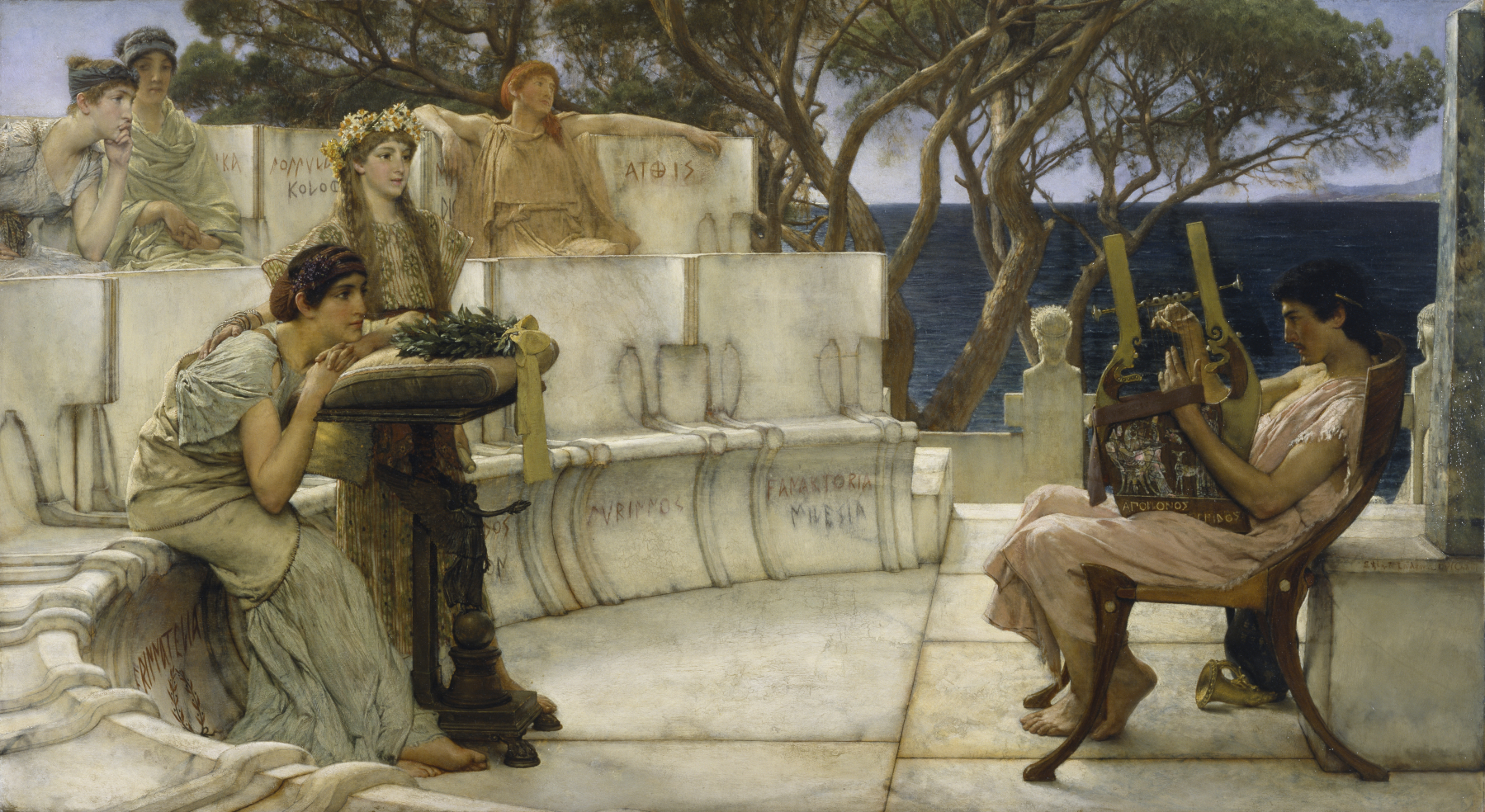
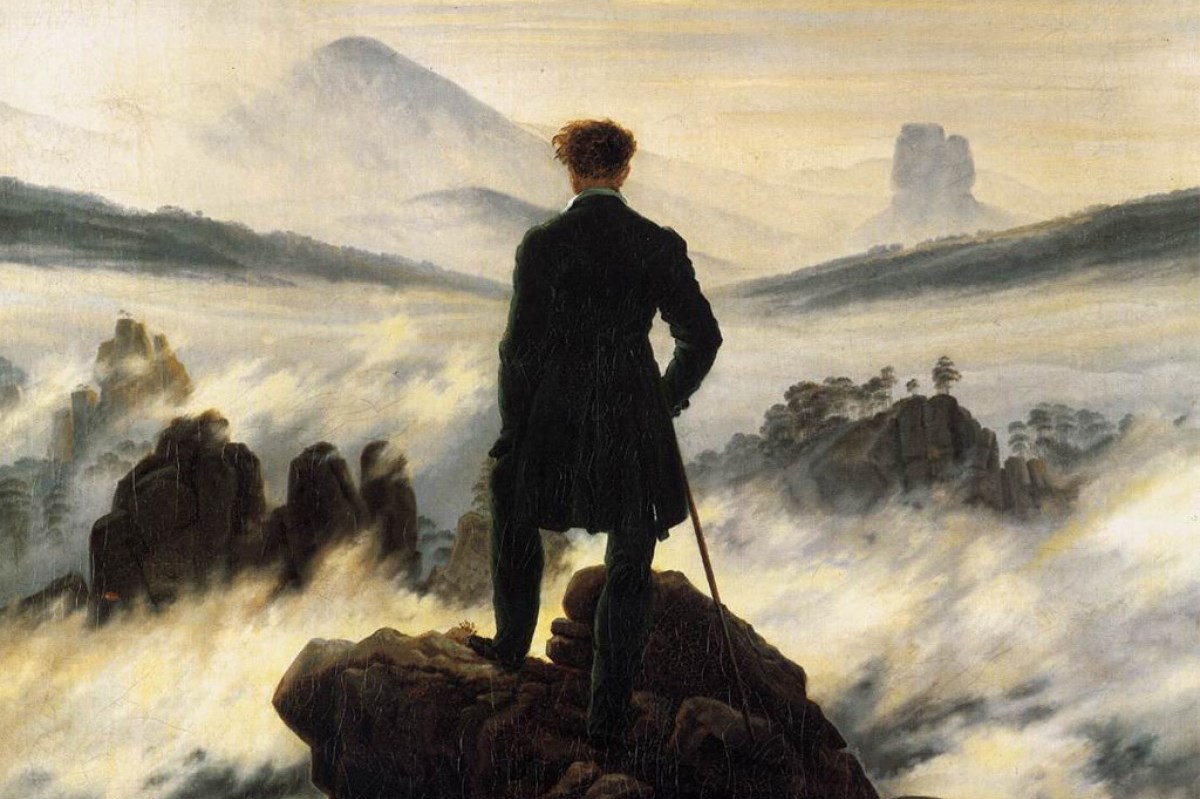
    Excellent lead poem; arresting title and image.

    Reply

Leave a Reply Cancel reply

Your email address will not be published. Required fields are marked *


  1. Justin Dasher on ‘This Too Shall Pass’ and Other Poetry by Justin DasherSeptember 3, 2026

    Margaret, thank you! I appreciate how detailed your reading is (and that you picked up on the cor ad cor…

  2. Justin Dasher on ‘This Too Shall Pass’ and Other Poetry by Justin DasherSeptember 3, 2026

    Thank you Paul!

  3. Justin Dasher on ‘This Too Shall Pass’ and Other Poetry by Justin DasherSeptember 3, 2026

    D.R., thank you for reading! I love that image as well, the phrase used for sleep in the Genesis passage…

  4. Justin Dasher on ‘This Too Shall Pass’ and Other Poetry by Justin DasherSeptember 3, 2026

    Thank you for the kind words!

  5. Roy Eugene Peterson on ‘The Estuary’: A Poem by Jeff EardleySeptember 3, 2026

    Jeff, this is one of those perfectly attuned poems comparing the seemingly far off tides with life.

Subscribe to Daily Poems

Enter your email address to subscribe to this blog and receive notifications of new posts by email.

Join 1,634 other subscribers

Recent Poems

  • ‘The Estuary’: A Poem by Jeff Eardley
  • ‘A World Without the Wednesday Child’: A Poem by Kimberly Fore
  • The 2026 Society of Classical Poets International Poetry Competition
  • The 2026 SCP International High School Poetry Competition
  • ‘Realistic Reflections’ and Other Poetry by Anna J. Arredondo
  • ‘China Made’: A Poem by Theresa Werba
  • ‘The Savage Moon’ and Other Poetry by Brian Yapko
  • Poetry Book Review: Love Found, Yearned For, and Lost by James A. Tweedie
  • ‘When Opportunity Knocks’: A Poem by Roy E. Peterson
  • ‘Legend of the Griffin’: A Poem by Iryna Hall
  • ‘Government Issue’ and Other Poems by Joseph S. Salemi
  • ‘Chaucer Announces His Desire to Retire’: A Poem by Paul A. Freeman
  • ‘Advantages of Restaurants’ and Other Poems by Russel Winick
  • ‘Bone China’: A Poem by Mary Gardner
  • ‘On the Death of One Too Young to Die’: A Poem by Jeffrey Essmann
  • ‘This Too Shall Pass’ and Other Poetry by Justin Dasher
  • ‘Humdrum and Harum-Scarum’: A Lecture on Free Verse, by Robert Bridges (1922)
  • ‘Unrest On the Floodplain’: A Poem by Bhikkhu Nyanasobhano
  • ‘Latitude and Loss’: A Poem by Martin Briggs
  • ‘Act III’ and Other Poetry by C.B. Anderson
  • ‘God’s Funeral’: A Poem by James Sale
  • ‘Star Festival’: A Poem by Margaret Coats
  • ‘Song of the Frog Princess’: A Poem by Scharlie Meeuws
  • ‘The Odyssey: Nolan and Solot Compared’: An Essay by Michael Curtis
  • ‘Solitude’ and Other Poems by Mary Jane Myers
  • ‘The River Not Taken’ and Other Poetry by Brian Yapko
  • ‘Totentanz’: A Poem by James A. Tweedie
  • ‘In God Is Our Trust’: A Poem by Roy E. Peterson
  • ‘Confession’: A Poem by Jeffrey Essmann
  • ‘Religious Poetry, and Religionist Poetry’: An Essay by Joseph S. Salemi

Categories

  • Acrostic
  • Alexandroid
  • Alliterative
  • Art
  • Best Poems
  • Blank Verse
  • Chant Royal
  • Classical Poets Live
  • Clerihew
  • Covid-19
  • Deconstructing Communism
  • Educational
  • Epic
  • Epigrams and Proverbs
  • Essays
    • Interviews with Poets
    • Poetry Reviews
  • Featured
  • From the Society
  • Great Poets
    • Dante Alighieri
    • Edgar Allan Poe
    • Emily Dickinson
    • Geoffrey Chaucer
    • Henry Wadsworth Longfellow
    • Homer
    • John Keats
    • John Milton
    • Robert Frost
    • William Blake
    • William Shakespeare
    • William Wordsworth
  • Human Rights in China
  • Limerick
  • Love Poems
  • Music
  • Pantoum
  • Performing Arts
  • Poetry
    • Beauty
    • Children's Poems
    • Culture
    • Ekphrastic
    • Found Poems
    • High School Poets
    • Humor
    • Riddles
  • Poetry Challenge
  • Poetry Contests
  • Poetry Forms
    • Curtal Sonnet
    • Haiku
  • Poetry Readings
  • Rhupunt
  • Rondeau
  • Rondeau Redoublé
  • Rondel
  • Rubaiyat
  • Sapphic Verse
  • Satire
  • Science
  • Sestina
  • Shape Poems
  • Short Stories
  • Song Lyrics
  • Sonnet
  • Symposium
  • Terrorism
  • Terza Rima
  • The Environment
  • Translation
  • Triolet
  • Video
  • Villanelle

Quick Links

  • About Us
  • Submit Poetry
  • Become a Member
  • Members List
  • Support the Society
  • Advertisement Placement
  • Comments Policy
  • Terms of Use

Welcome Back!

Login to your account below

Forgotten Password?

Retrieve your password

Please enter your username or email address to reset your password.

Log In
No Result
View All Result
  • Poems
    • Beauty
    • Culture
    • Satire
    • Humor
    • Children’s
    • Art
    • Ekphrastic
    • Epic
    • Epigrams and Proverbs
    • Human Rights in China
    • Music
    • Performing Arts
    • Riddles
    • Science
    • Song Lyrics
    • The Environment
    • The Raven
    • Found Poems
    • High School Poets
    • Terrorism
    • Covid-19
  • Poetry Forms
    • Sonnet
    • Haiku
    • Limerick
    • Villanelle
    • Rondeau
    • Pantoum
    • Sestina
    • Triolet
    • Acrostic
    • Alexandroid
    • Alliterative
    • Blank Verse
    • Chant Royal
    • Clerihew
    • Rhupunt
    • Rondeau Redoublé
    • Rondel
    • Rubaiyat
    • Sapphic Verse
    • Shape Poems
    • Terza Rima
  • Great Poets
    • Geoffrey Chaucer
    • Emily Dickinson
    • Homer
    • Henry Wadsworth Longfellow
    • Dante Alighieri
    • John Keats
    • John Milton
    • Edgar Allan Poe
    • William Shakespeare
    • William Wordsworth
    • William Blake
    • Robert Frost
  • Love Poems
  • Contests
  • SCP Academy
    • Educational
    • Teaching Classical Poetry—A Guide for Educators
    • Poetry Forms
    • The SCP Journal
    • Books

© 2025 SCP. WebDesign by CODEC Prime.