• Submit Poetry
  • Support SCP
  • About Us
  • Members
  • Join
Saturday, September 5, 2026
Society of Classical Poets
  • Poems
    • Beauty
    • Culture
    • Satire
    • Humor
    • Children’s
    • Art
    • Ekphrastic
    • Epic
    • Epigrams and Proverbs
    • Human Rights in China
    • Music
    • Performing Arts
    • Riddles
    • Science
    • Song Lyrics
    • The Environment
    • The Raven
    • Found Poems
    • High School Poets
    • Terrorism
    • Covid-19
  • Poetry Forms
    • Sonnet
    • Haiku
    • Limerick
    • Villanelle
    • Rondeau
    • Pantoum
    • Sestina
    • Triolet
    • Acrostic
    • Alexandroid
    • Alliterative
    • Blank Verse
    • Chant Royal
    • Clerihew
    • Rhupunt
    • Rondeau Redoublé
    • Rondel
    • Rubaiyat
    • Sapphic Verse
    • Shape Poems
    • Terza Rima
  • Great Poets
    • Geoffrey Chaucer
    • Emily Dickinson
    • Homer
    • Henry Wadsworth Longfellow
    • Dante Alighieri
    • John Keats
    • John Milton
    • Edgar Allan Poe
    • William Shakespeare
    • William Wordsworth
    • William Blake
    • Robert Frost
  • Love Poems
  • Contests
  • SCP Academy
    • Educational
    • Teaching Classical Poetry—A Guide for Educators
    • Poetry Forms
    • The SCP Journal
    • Books
No Result
View All Result
Society of Classical Poets
  • Poems
    • Beauty
    • Culture
    • Satire
    • Humor
    • Children’s
    • Art
    • Ekphrastic
    • Epic
    • Epigrams and Proverbs
    • Human Rights in China
    • Music
    • Performing Arts
    • Riddles
    • Science
    • Song Lyrics
    • The Environment
    • The Raven
    • Found Poems
    • High School Poets
    • Terrorism
    • Covid-19
  • Poetry Forms
    • Sonnet
    • Haiku
    • Limerick
    • Villanelle
    • Rondeau
    • Pantoum
    • Sestina
    • Triolet
    • Acrostic
    • Alexandroid
    • Alliterative
    • Blank Verse
    • Chant Royal
    • Clerihew
    • Rhupunt
    • Rondeau Redoublé
    • Rondel
    • Rubaiyat
    • Sapphic Verse
    • Shape Poems
    • Terza Rima
  • Great Poets
    • Geoffrey Chaucer
    • Emily Dickinson
    • Homer
    • Henry Wadsworth Longfellow
    • Dante Alighieri
    • John Keats
    • John Milton
    • Edgar Allan Poe
    • William Shakespeare
    • William Wordsworth
    • William Blake
    • Robert Frost
  • Love Poems
  • Contests
  • SCP Academy
    • Educational
    • Teaching Classical Poetry—A Guide for Educators
    • Poetry Forms
    • The SCP Journal
    • Books
No Result
View All Result
Society of Classical Poets
No Result
View All Result
Home Poetry Beauty

Three Poems after Ecclesiastes 9, by Jeff Kemper

May 2, 2021
in Beauty, Culture, Poetry
A A
16
poems Three Poems after Ecclesiastes 9, by Jeff Kemper

.

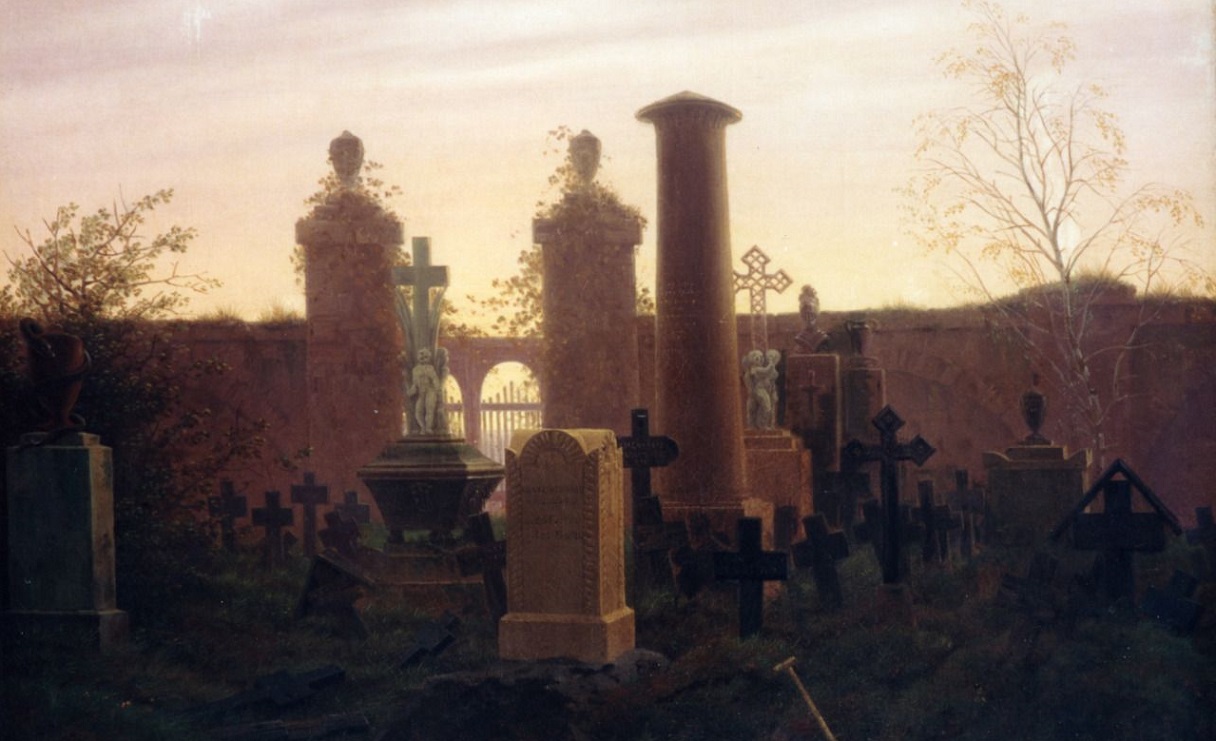
One Fate

Ecclesiastes 9:1-6

Shall I portend, and shall I explicate
What eyes can see themselves, ere they go blind?
The moral and sagacious of mankind
Know not a whit what destinies await,
For to the hand of God they are consigned.
Who knows what fortune then shall arbitrate,
What fate befall—if it be love or hate?

For each one, whether luck or providence,
For righteous or for wicked, there’s one lot;
For pure and for impure, it matters not;
For those who observe rites or abstain thence,
And whether good or sinful, the same plot;
Or if one swears an oath or straddles a fence …
To each one equal destinies dispense.

Beneath the sun a writ from evil pen
Decrees for all equivalence of fate:
That one event shall yet eventuate.
Besides, the hearts of all the sons of men
Are full of villainy. And when their spate
Of madness sports throughout their days, they then
Will scurry down to death’s desult’ry den.

But who is linked with living souls has hope;
A dog alive excels a lion dead.
The living know they shall to death be wed;
The dead know nothing, and in naught they grope
Without reward; their memory has fled.
Be love or hate or envy? Down fate’s slope;
In work beneath the sun—no share, no scope.

.

.

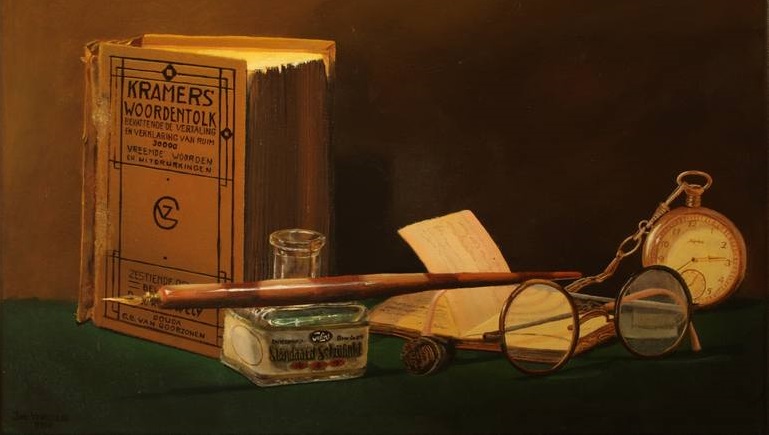
Go Your Way

Ecclesiastes 9:7-10

Now go your way and dine with great delight
And drink your finest wine in merriment,
For God has handed you his grand assent.
Adorn yourself with clothes of brightest white;
Keep oil upon your head and be content;
Enjoy the wife you love with all your might
Until the life God gave you takes to flight.

For that is your stipend in your few days
And in your labor’s toil beneath the sun.
Whatever you endeavor to have done
Perform the task with vigorous displays
Because there is no work for anyone,
No thinking, knowledge, or sagacious ways
In Sheol where you’re bound in your next phase.

.

.

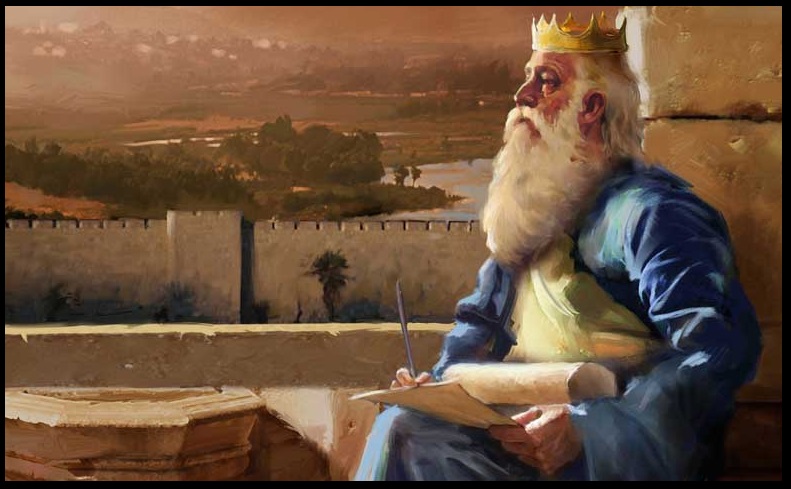
Time and Chance

Ecclesiastes 9: 11, 12

Beneath the sun I saw this protocol:
For fleet of foot the victories elude;
To warriors no pact of peace accrued;
The sage’s wisdom brings not bread withal,
Nor wealth attending sensible and shrewd
Or favor due the men of aptitude.
But rather, time and chance assail them all!

The dividends are random and remote,
And no one knows when his own timepiece stops:
Like fish entangled when the netting drops
Or birds ensnared that sing no cheerful note,
So children of mankind must close their shops
When gambles fail and tragedies emote.
For time and chance shall cast the greater vote!

.

.

Jeff Kemper has been a biology teacher, biblical studies instructor, editor, and painting contractor. He lives with his wife, Sue, in York County, Pennsylvania.


ShareTweetPin
The Society of Classical Poets does not endorse any views expressed in individual poems or commentary.
Read Our Comments Policy Here

RandomPoems

‘To September’ and Other Autumn Poems by Adam Sedia
Beauty

‘To September’ and Other Autumn Poems by Adam Sedia

September 14, 2024

. To September Your fields and groves are lushly emerald still; Your flowers still waft their scents and vaunt their...

‘No News Is Good News’ and Other Poetry by C.B. Anderson
Culture

‘No News Is Good News’ and Other Poetry by C.B. Anderson

November 16, 2022

. No News Is Good News The world contrives, in many different ways, To overload the minutes of our days...

Next Post
‘Forgotten’ and Other Poetry by Randal A. Burd, Jr.

Epitaphs of Great Poets and Writers

‘Hippopotomonstrosesquipedaliaphobia’ by Mike Bryant

'Hippopotomonstrosesquipedaliaphobia' by Mike Bryant

‘The Captive Caesar’ and Other Poetry by Bruce Dale Wise

'52 B.C.' by Cindy Hill

Comments 16

  1. David Paul Behrens says:
    5 years ago

    Ecclesiastes is one of my favorite books in the Bible, which I have just begun to read again in its entirety, finishing the book of Judges last night.

    These poems are outstanding! Thank you.

    Reply
    • Jeff says:
      5 years ago

      One of my favorites, too. Thanks, David.

      Reply
  2. Cynthia Erlandson says:
    5 years ago

    I have loved Ecclesiastes since my teen years, and I love these poems! You aren’t, by chance, meaning to cover the whole book? (That would be an amazing feat!)

    Reply
    • The Society says:
      5 years ago

      Dear Cynthia,

      Poet T.M. Moore published adaptations of the first 6 chapters of Ecclesiastes at the SCP: https://classicalpoets.org/?s=Ecclesiastes+

      I’m unsure if he ever finished.
      Regards,
      Evan

      Reply
      • Cynthia Erlandson says:
        5 years ago

        Thank you! I will look back at them!

        Reply
      • Cynthia Erlandson says:
        5 years ago

        I am so glad you linked me to those, Evan. I think they are mesmerizing and absolutely brilliant! And the choice of terza rima is really insightful, being a form that circles or spirals around, like the way Ecclesiastes describes life.

        Reply
    • Jeff Kemper says:
      5 years ago

      Thank you, Cynthia, for taking the time and for your kind words! I have also loved Ecclesiastes from my youth. I have thought about retelling portions of the Bible and have rendered 50 or so passages in poetry, including the entire book of Ruth. Presently, I’m working on Psalms and have completed a dozen or so, with no intention of doing the entire Psalter (I dare someone to render Ps 119 in a poem that would hold the reader’s interest!)! I have thought about the entire book of Ecclesiastes, but it was a passing thought!

      Reply
    • Jeff Kemper says:
      4 years ago

      It has been over a year and a half since I wrote these poems From Ecclesiastes, so I don’t know whether you’ll see this comment. You might be interested to know that I took up your challenge and have been rewriting the entire book of Ecclesiastes in verse since then. I am 2 and a half chapters from finishing what will be a series of about 25 poems. Thanks for the idea!

      Reply
  3. Susan Jarvis Bryant says:
    5 years ago

    Jeff, your linguistic prowess and your love of scripture shine brightly, beautifully and boldly in these admirably crafted pieces. Your poems drew me in and filled my heart. Thank you!

    Reply
    • Jeff Kemper says:
      5 years ago

      Thank you, Susan! I recall in my college years a guest speaker in church applauding the beautiful poetry of the Psalms and other poetic biblical passages, and I thought to myself, “No, it’s not beautiful poetry!” So later, after studying Hebrew and learning to appreciate what makes Hebrew poetry poetic, I revised my thoughts but still regard translations relatively unpoetic. So much of the essence of the poetic passages is lost in translation that I believe it almost impossible to actually translate Hebrew poetry into English poetry. Consequently, having begun paraphrasing Scriptural poems I found paraphrasing prose passages such as Ec. 9 just as enjoyable.

      Reply
      • Susan Jarvis Bryant says:
        5 years ago

        Jeff, what a lovely story. I love hearing of the origin of poets’ works. You’re doing a beautiful job… don’t stop!

        Reply
  4. Margaret Coats says:
    5 years ago

    Jeff, verse 3 appears to me the one place in the Bible where evil is straightforwardly attributed to the good God: “a writ from evil pen/Decrees for all equivalence of fate.” Overall, the Bible contradicts this, as we can see in various other texts. I can see ways to interpret this passage and support the goodness of God, but since you took up the challenge of versifying these lines, I’d love to hear what you say about how you deal with the problem in your poem.

    Reply
    • Jeff Kemper says:
      5 years ago

      Thank you, Margaret, for the challenge, and what a profound question! Ecclesiastes presents such a difficulties that many scholars believe the epilogue to be a later addition, especially the final two verses, meant to pacify the brazen statements in the rest of the book: “The end of the matter; all has been heard. Fear God and keep his commandments, for this is the whole duty of man. For God will bring every deed into judgment, with every secret thing, whether good or evil.”

      But there is no satisfactory reason for the theory attributing the conclusion to a later pen. To the contrary, I believe the conclusion provides the key to interpreting the entire book. There is no retributive justice in the world. The entry of sin (a much rejected word, today) has messed up everything. As Ec 7:29 puts it, “See, this alone I found, that God made man upright, but they have sought out many schemes.” As a result, Ro 8:20-21 says, “For the creation was subjected to futility, not willingly, but because of him who subjected it, in hope that the creation itself will be set free from its bondage to corruption and obtain the freedom of the glory of the children of God.” That God himself did this was already stated in Gn 3 in the fall narrative.

      The word “evil” in the OT doesn’t always indicate moral evil, but often means things that look bad or negative or simply destructive. Since God cannot endure sin, he must judge it/destroy it. Unfortunately, all creation is included in this. I do not think in terms of contradiction. Rather it is by
      God’s grace that people are not struck dead precisely when they sin, indeed even the most idolatrous and sinful people can be used to demonstrate God’s glory, for which we were created. The great biblical example is God’s use of the intractable Pharaoh at the time of the Exodus (Ex 14:4; cf Ro 9:14-18).

      Back to Ecclesiastes. What Koheleth (“the Preacher”) sees under the sun is something that is not as it should be. But the conclusion sets things right: However badly things appear, fear God because he is judge! I hope this helps elucidate my point of view on Ecclesiastes which builds its case only to say, “It doesn’t matter. God matters, so fear him!”

      Reply
      • Margaret Coats says:
        5 years ago

        Thanks, Jeff. Good reply! I would say that in Ecclesiastes 9 itself, there is implicit recognition of the Fall, and thus acknowledgment that God’s judgment assigning the physical evil of death for mankind is just. As well, the repeated “under the sun” is the Preacher’s caveat, recognizing the limits of his viewpoint. And if his view is limited, things could be made right in some way he can’t see. All of this works quite well with the book’s epilogue. As you say, there is no serious reason to ascribe the epilogue to another hand. Even if there were, the entire book has long been accepted as inspired, and thus God is the principal author. Perhaps He wants us to know how well He understands our limited viewpoint.

        It would be interesting to see some of your psalms. I too have studied Hebrew, and I did my own translation of Psalms 127 and 128 for recitation at my wedding. My view of translation is that it is always a new poem in the new language, and a translator never gets the full connotation of the original words. The point is to make a translation an excellent poem in English. Hebrew poetics, as you know, is based on parallelism. Ecclesiastes is one of the seven poetic books of wisdom, but as I do not own a Hebrew fascicle of it, I took a look at my Vulgate. Saint Jerome translated the Hebrew to Latin in parallel poetic phrases–not as prose! Keep up the good work; you have great predecessor poets.

        Reply
  5. Julian D. Woodruff says:
    5 years ago

    So many great lines on these wonderful renderings, Mr. Eardley. My favorite: “… scurry down to death’s desult’ry den.” Perhaps “… nor sagacious ways”?

    Reply
    • Jeff Kemper says:
      5 years ago

      Thanks, Julian! Believe me, it is a compliment to be mistaken for Jeff Eardley!

      Reply

Leave a Reply Cancel reply

Your email address will not be published. Required fields are marked *


  1. Paul Freeman on ‘Victory’: A Poem by Jonathan GraverSeptember 5, 2026

    I recall the 200th anniversary when I made and painted a models of an English soldier and a rebel soldier…

  2. BDW on ‘Humdrum and Harum-Scarum’: A Lecture on Free Verse, by Robert Bridges (1922)September 5, 2026

    First off, I would like to note that Margaret Coats' literary criticism, though not as deep as Poe’s, outshines his…

  3. Laura Deagon on ‘The Cristero Centennial’: A Poem by Margaret CoatsSeptember 4, 2026

    It's hard to believe that something like this has been suppressed from the history presented to us in academia. I…

  4. Alice V. Brock on The Society of Classical Poets 2026 Haiku CompetitionSeptember 4, 2026

    1. Sunset The sun slides away Finish here, begin elsewhere Gifting crimson streams 2. Fly Away Hard sticks, soft feathers…

  5. Yael on ‘The Cristero Centennial’: A Poem by Margaret CoatsSeptember 4, 2026

    Great history lesson poem Margaret, thank you. Christ is King indeed and the gates of hell cannot prevail against Him.

Subscribe to Daily Poems

Enter your email address to subscribe to this blog and receive notifications of new posts by email.

Join 1,635 other subscribers

Recent Poems

  • ‘Victory’: A Poem by Jonathan Graver
  • ‘The Cristero Centennial’: A Poem by Margaret Coats
  • ‘A Potpourri of Aphoristic Verses’ by C.B. Anderson
  • ‘The Estuary’: A Poem by Jeff Eardley
  • ‘A World Without the Wednesday Child’: A Poem by Kimberly Fore
  • The 2026 Society of Classical Poets International Poetry Competition
  • The 2026 SCP International High School Poetry Competition
  • ‘Realistic Reflections’ and Other Poetry by Anna J. Arredondo
  • ‘China Made’: A Poem by Theresa Werba
  • ‘The Savage Moon’ and Other Poetry by Brian Yapko
  • Poetry Book Review: Love Found, Yearned For, and Lost by James A. Tweedie
  • ‘When Opportunity Knocks’: A Poem by Roy E. Peterson
  • ‘Legend of the Griffin’: A Poem by Iryna Hall
  • ‘Government Issue’ and Other Poems by Joseph S. Salemi
  • ‘Chaucer Announces His Desire to Retire’: A Poem by Paul A. Freeman
  • ‘Advantages of Restaurants’ and Other Poems by Russel Winick
  • ‘Bone China’: A Poem by Mary Gardner
  • ‘On the Death of One Too Young to Die’: A Poem by Jeffrey Essmann
  • ‘This Too Shall Pass’ and Other Poetry by Justin Dasher
  • ‘Humdrum and Harum-Scarum’: A Lecture on Free Verse, by Robert Bridges (1922)
  • ‘Unrest On the Floodplain’: A Poem by Bhikkhu Nyanasobhano
  • ‘Latitude and Loss’: A Poem by Martin Briggs
  • ‘Act III’ and Other Poetry by C.B. Anderson
  • ‘God’s Funeral’: A Poem by James Sale
  • ‘Star Festival’: A Poem by Margaret Coats
  • ‘Song of the Frog Princess’: A Poem by Scharlie Meeuws
  • ‘The Odyssey: Nolan and Solot Compared’: An Essay by Michael Curtis
  • ‘Solitude’ and Other Poems by Mary Jane Myers
  • ‘The River Not Taken’ and Other Poetry by Brian Yapko
  • ‘Totentanz’: A Poem by James A. Tweedie

Categories

  • Acrostic
  • Alexandroid
  • Alliterative
  • Art
  • Best Poems
  • Blank Verse
  • Chant Royal
  • Classical Poets Live
  • Clerihew
  • Covid-19
  • Deconstructing Communism
  • Educational
  • Epic
  • Epigrams and Proverbs
  • Essays
    • Interviews with Poets
    • Poetry Reviews
  • Featured
  • From the Society
  • Great Poets
    • Dante Alighieri
    • Edgar Allan Poe
    • Emily Dickinson
    • Geoffrey Chaucer
    • Henry Wadsworth Longfellow
    • Homer
    • John Keats
    • John Milton
    • Robert Frost
    • William Blake
    • William Shakespeare
    • William Wordsworth
  • Human Rights in China
  • Limerick
  • Love Poems
  • Music
  • Pantoum
  • Performing Arts
  • Poetry
    • Beauty
    • Children's Poems
    • Culture
    • Ekphrastic
    • Found Poems
    • High School Poets
    • Humor
    • Riddles
  • Poetry Challenge
  • Poetry Contests
  • Poetry Forms
    • Curtal Sonnet
    • Haiku
  • Poetry Readings
  • Rhupunt
  • Rondeau
  • Rondeau Redoublé
  • Rondel
  • Rubaiyat
  • Sapphic Verse
  • Satire
  • Science
  • Sestina
  • Shape Poems
  • Short Stories
  • Song Lyrics
  • Sonnet
  • Symposium
  • Terrorism
  • Terza Rima
  • The Environment
  • Translation
  • Triolet
  • Video
  • Villanelle

Quick Links

  • About Us
  • Submit Poetry
  • Become a Member
  • Members List
  • Support the Society
  • Advertisement Placement
  • Comments Policy
  • Terms of Use

Welcome Back!

Login to your account below

Forgotten Password?

Retrieve your password

Please enter your username or email address to reset your password.

Log In
No Result
View All Result
  • Poems
    • Beauty
    • Culture
    • Satire
    • Humor
    • Children’s
    • Art
    • Ekphrastic
    • Epic
    • Epigrams and Proverbs
    • Human Rights in China
    • Music
    • Performing Arts
    • Riddles
    • Science
    • Song Lyrics
    • The Environment
    • The Raven
    • Found Poems
    • High School Poets
    • Terrorism
    • Covid-19
  • Poetry Forms
    • Sonnet
    • Haiku
    • Limerick
    • Villanelle
    • Rondeau
    • Pantoum
    • Sestina
    • Triolet
    • Acrostic
    • Alexandroid
    • Alliterative
    • Blank Verse
    • Chant Royal
    • Clerihew
    • Rhupunt
    • Rondeau Redoublé
    • Rondel
    • Rubaiyat
    • Sapphic Verse
    • Shape Poems
    • Terza Rima
  • Great Poets
    • Geoffrey Chaucer
    • Emily Dickinson
    • Homer
    • Henry Wadsworth Longfellow
    • Dante Alighieri
    • John Keats
    • John Milton
    • Edgar Allan Poe
    • William Shakespeare
    • William Wordsworth
    • William Blake
    • Robert Frost
  • Love Poems
  • Contests
  • SCP Academy
    • Educational
    • Teaching Classical Poetry—A Guide for Educators
    • Poetry Forms
    • The SCP Journal
    • Books

© 2025 SCP. WebDesign by CODEC Prime.