• Submit Poetry
  • Support SCP
  • About Us
  • Members
  • Join
Saturday, July 18, 2026
Society of Classical Poets
  • Poems
    • Beauty
    • Culture
    • Satire
    • Humor
    • Children’s
    • Art
    • Ekphrastic
    • Epic
    • Epigrams and Proverbs
    • Human Rights in China
    • Music
    • Performing Arts
    • Riddles
    • Science
    • Song Lyrics
    • The Environment
    • The Raven
    • Found Poems
    • High School Poets
    • Terrorism
    • Covid-19
  • Poetry Forms
    • Sonnet
    • Haiku
    • Limerick
    • Villanelle
    • Rondeau
    • Pantoum
    • Sestina
    • Triolet
    • Acrostic
    • Alexandroid
    • Alliterative
    • Blank Verse
    • Chant Royal
    • Clerihew
    • Rhupunt
    • Rondeau Redoublé
    • Rondel
    • Rubaiyat
    • Sapphic Verse
    • Shape Poems
    • Terza Rima
  • Great Poets
    • Geoffrey Chaucer
    • Emily Dickinson
    • Homer
    • Henry Wadsworth Longfellow
    • Dante Alighieri
    • John Keats
    • John Milton
    • Edgar Allan Poe
    • William Shakespeare
    • William Wordsworth
    • William Blake
    • Robert Frost
  • Love Poems
  • Contests
  • SCP Academy
    • Educational
    • Teaching Classical Poetry—A Guide for Educators
    • Poetry Forms
    • The SCP Journal
    • Books
No Result
View All Result
Society of Classical Poets
  • Poems
    • Beauty
    • Culture
    • Satire
    • Humor
    • Children’s
    • Art
    • Ekphrastic
    • Epic
    • Epigrams and Proverbs
    • Human Rights in China
    • Music
    • Performing Arts
    • Riddles
    • Science
    • Song Lyrics
    • The Environment
    • The Raven
    • Found Poems
    • High School Poets
    • Terrorism
    • Covid-19
  • Poetry Forms
    • Sonnet
    • Haiku
    • Limerick
    • Villanelle
    • Rondeau
    • Pantoum
    • Sestina
    • Triolet
    • Acrostic
    • Alexandroid
    • Alliterative
    • Blank Verse
    • Chant Royal
    • Clerihew
    • Rhupunt
    • Rondeau Redoublé
    • Rondel
    • Rubaiyat
    • Sapphic Verse
    • Shape Poems
    • Terza Rima
  • Great Poets
    • Geoffrey Chaucer
    • Emily Dickinson
    • Homer
    • Henry Wadsworth Longfellow
    • Dante Alighieri
    • John Keats
    • John Milton
    • Edgar Allan Poe
    • William Shakespeare
    • William Wordsworth
    • William Blake
    • Robert Frost
  • Love Poems
  • Contests
  • SCP Academy
    • Educational
    • Teaching Classical Poetry—A Guide for Educators
    • Poetry Forms
    • The SCP Journal
    • Books
No Result
View All Result
Society of Classical Poets
No Result
View All Result
Home Poetry Beauty

‘Voyage Among the Ancients’: A Poem by Mary Jane Myers

April 22, 2025
in Beauty, Culture, Poetry, Villanelle
A A
17
poems 'Voyage Among the Ancients': A Poem by Mary Jane Myers

.

Voyage Among the Ancients

“Tread softly, for here you stand
On miracle ground…”
—Lawrence Durrell, “On Ithaca Standing” ( 1937)

The Juno anchors, docks. We disembark.
Each landfall’s an Odyssean surprise.
Uncanny myths have left their canny mark.

These islands are ruin-studded, rocky, stark.
To wander is to feel our minds capsize.
The Juno anchors, docks. We disembark.

We gaze at each unparalleled landmark
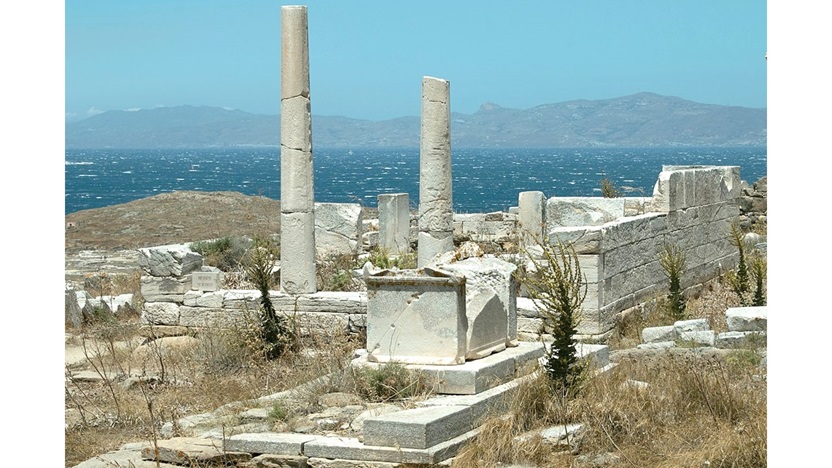
crumbling to dust beneath Aegean skies.
Uncanny myths have left their canny mark.

At first confusion reigns. We’re in the dark.
But soon the crux begins to crystallize.
The Juno anchors, docks. We disembark.

Those Greeks considered war a bloody lark;
sought quiddities in things, nursed philoi ties.
Uncanny myths have left their canny mark.

Slowly we piece together history’s arc.
Studying Hellene classics makes us wise.
The Juno anchors, docks. We disembark.
Uncanny myths have left their canny mark.

.

.

Mary Jane Myers resides in Springfield, Illinois. She is a retired JD/CPA tax specialist. Her debut short story collection Curious Affairs was published by Paul Dry Books in 2018.


ShareTweetPin
The Society of Classical Poets does not endorse any views expressed in individual poems or commentary.
Read Our Comments Policy Here

RandomPoems

‘Classical Camouflaged’ and Other Poems by James Ph. Kotsybar
Beauty

‘Classical Camouflaged’ and Other Poems by James Ph. Kotsybar

June 11, 2022

. Classical Camouflaged __It begins, like all prose poems today, with a bit of narrated diary, as though it were...

‘Dead Poet’ and Other Poetry by Joe Tessitore
Beauty

‘Dead Poet’ and Other Poetry by Joe Tessitore

June 29, 2019

Dead Poet Of what I was, not much remains, but that which does, indeed still strains to craft and pen...

Next Post
Four Sonnets on Shen Yun Performing Arts, by Evan Mantyk

Four Sonnets on Shen Yun Performing Arts, by Evan Mantyk

Sonnets for Shakespeare’s Birthday, by Margaret Coats

Sonnets for Shakespeare's Birthday, by Margaret Coats

‘From Heathrow to Houston’ by Susan Jarvis Bryant

'Sonnet 18': A Song Inspired by Shakespeare's Sonnet by Gunny Markefka

Comments 17

  1. Janice Canerdy says:
    1 year ago

    Mary Jane, I really enjoy expertly composed poems (in a challenging style/form) that are also informative~~like this one!

    Reply
    • Mary Jane Myers says:
      1 year ago

      Janice, thank you for your encouraging comments.
      Most sincerely, Mary Jane

      Reply
  2. Peter Venable says:
    1 year ago

    It’s fun constructing these 19 lined verses. Your last quatrain sums nicely,

    Reply
    • Mary Jane Myers says:
      1 year ago

      Peter–thank you for your kind comment. Fun, yes–but quite a bit of work!
      Most sincerely, Mary Jane

      Reply
  3. David Whippman says:
    1 year ago

    Thanks for this clever villanelle. Ancient history fascinates me, so I was hooked after the first line!

    Reply
    • Mary Jane Myers says:
      1 year ago

      David
      Thank you for your kind comments. I often joke with friends: on my vacations, I like to visit better ruins everywhere!
      Most sincerely,
      Mary Jane

      Reply
  4. Joseph S. Salemi says:
    1 year ago

    Very neatly done. I like villanelles that follow the prescribed pattern precisely, without “experimentation.”

    The line “Those Greeks considered war a bloody lark” jumped out at me, because it truly encapsulates the ancient Greek heroic attitude towards combat.

    Reply
    • Mary Jane Myers says:
      1 year ago

      Joseph

      Thank you for your kind comments. It’s a daunting exercise to write a “precise” villanelle. 8 out of 19 lines are repetitions, and repetition can easily bore a reader. Therefore, the two “a”-rhymed repeating lines (each repeated 4x) have to be memorable and epigrammatic. And somehow the remaining 11 rhymed lines have to be artful enough to keep the reader’s interest. The “a” rhyme (5 x) rhymes with the repeating lines. The “b” rhyme is used 6 times, and must be dissimilar in sound to the “a” rhyme. Like diving off a high cliff–the poet hopes to avoid landing on treacherous rocks, and to fall instead into sun-warmed water in a calm sea!

      As with all poetry writing, it’s a mysterious process, isn’t it?

      Sincerely Mary Jane

      Reply
  5. Cynthia Erlandson says:
    1 year ago

    “Odyssean surprise” and “uncanny myths” leaving their “canny”mark — this poem is extremely clever philosophically and poetically. Thanks, Mary Jane.

    Reply
    • Mary Jane Myers says:
      1 year ago

      Cynthia, thank you for your encouraging comments. “Uncanny” is one of my “go-to” words– I’m afraid I may sometimes overuse it!

      Most sincerely
      Mary Jane

      Reply
  6. Margaret Coats says:
    1 year ago

    Mary Jane, congratulations on a classic villanelle, which is yet as uncanny as wisdom itself can be. To begin near the end, these Hellene classics you study in the poem are places, with the landmarks crumbling to dust–though the skies remain unchangingly Aegean. “Disembark” as an important refrain word gives you multiple opportunities to begin anew. The one Greek word you include, philoi, literally means “friends,” and you speak of how Greeks “nursed philoi ties.” These were ties based on obligation, starting with family obligations, but including relationships of mutually expected benefit. This kind of thing may be strange to us, who often expect friends to act in an unselfish manner. “Myth” is another refrain word suggesting imperfect understanding of Greek culture. But from these classic scenes, you piece together “history’s arc.” And the “crux begins to crystallize,” which is my favorite expression symbolically indicating inexpressible things internalized by yourself and others as students of ancient Greece. This crux remains inexplicable to those who don’t study for themselves. Nicely done.

    Reply
    • Mary Jane Myers says:
      1 year ago

      Margaret

      Thank you for your close reading of my villanelle. I have had the privilege of visiting some of these Greek islands. It’s a challenge to describe the complex feelings that overwhelm a traveler. As Durrell so memorably states, these places indeed seem to be “miracle ground.”

      Most sincerely,
      Mary Jane

      Reply
  7. Paul A. Freeman says:
    1 year ago

    Am I reading too much into this, but did you choose ‘Juno’, perhaps a cruise ship loaded to the gunwales with twittering pensioners (presumably more ladies than gents), to contrast with Jason’s Argo, packed to the gunwales with ancient Greek macho men?

    The image had me guffawing the whole way through your villanelle, Mary.

    That aside, I think we’ve all felt the aura of treading where the ancients trod and you conveyed this feeling expertly.

    One small thing. How about removing ‘to dust’, leaving ‘crumbling beneath Aegean skies’? Although the line’s nine syllables, it reads well (Joseph will know why), and avoids the cliche ‘crumbling to dust’.

    You’ve more or less convinced me to take a trip to Turkey to look at some old ruins there. Let’s see how that pans out.

    Thanks for the read.

    Reply
    • Joseph S. Salemi says:
      1 year ago

      It depends on how you pronounce “crumbling.” To me it is disyllablic (CRUM-bling) and it may be the same for Mary Jane. If that’s the case, then her line scans perfectly.

      Many words with the same basic phonics (such a rumbling, stumbling, tumbling, fumbling) are mispronounced by persons who add an intrusive schwa vowel. They’ll say RUM-bel-ing, STUM-bel-ing, CRUM-bel-ing, etc.

      Reply
    • Mary Jane Myers says:
      1 year ago

      Paul

      What a gift you have given me! I agree, Juno is the wrong choice. First, the boat should have a Greek name, not a Roman. Second, Juno (or better, the Greek Hera) is all wrong!–you are correct, that goddess is a kind of comical middle-aged shrew. Boats are typically named after females, I believe. I will have a think about this. A better choice is possibly “Clio”–the muse of history. Clio is represented as a lithe and lovely librarian-scholar.

      I also agree: “crumbling to dust” is on the verge of cliche-dom. (Re: scanning. See Joseph’s comments–I would say it scans perfectly–but I agree, it’s possibly an over-used phrase). I’ll ponder a change to the wording.

      Ah, Turkey! Wonderful ruins in that country. Ionia, and even legendary Ilion!

      Most sincerely,
      Mary Jane

      Reply
  8. Edward Hayes says:
    1 year ago

    Ms. Myers, Your use of repetition shows the power of this device. There are no two disemrkatios with the same meaning or level of potency. Each verse brings greater appreciation of what you are experiencing, a goal which you reveal early with the word “crux”. Is this a sophisticated anti-war poem, the ancient Greeks attitude toward war the mark which has been left?

    Reply
    • Mary Jane Myers says:
      1 year ago

      Edward
      Thank you for your careful reading of my villanelle. I definitely was thinking about the nuances of the word “disembark.” But I didn’t consciously “layer in” an anti-war meaning. Fascinating what our subconscious minds bring to the blank page when we are composing poetic lines!

      Most sincerely,
      Mary Jane

      Reply

Leave a Reply Cancel reply

Your email address will not be published. Required fields are marked *

  1. Karen Rodgers on ‘The Gold Star Mother’: A Poem by Gerard MaritatoJuly 18, 2026

    Brilliant Gerard, brillant. I studied lietrature at University and made the mistake of choosing almost exclusively options from the 20th…

  2. Marguerite on ‘When the Phone Rings’ and Other Short Poems by Russel WinickJuly 18, 2026

    Amen on "Apologies!"

  3. Susan Jarvis Bryant on ‘My Pyjamas!’ and Other Poems by Susan Jarvis BryantJuly 18, 2026

    Jan, thank you very much for your encouraging comment. I'm so glad you enjoyed the poems and especially glad they…

  4. James Sale on ‘The 51st State’: A Poem by James SaleJuly 18, 2026

    Not quite a win, Theresa, but thank you for the thought, and congratulations yourself on your "Finalist' status for your…

  5. Susan Jarvis Bryant on National Poetry Month Limerick ChallengeJuly 18, 2026

    Beautifully written and hilarious, Jan! You have inspired me to have a go. Thank you!

Subscribe to Daily Poems

Enter your email address to subscribe to this blog and receive notifications of new posts by email.

Join 1,594 other subscribers

Recent Poems

  • Winners and Rankings of The Great American Poetry Competition
  • ‘The Gold Star Mother’: A Poem by Gerard Maritato
  • ‘An American Dash’: A Poem by Linda Ellis
  • ‘The Anonymous Soldier’: A Poem by Lucy Lind
  • ‘For Those We Never Meet’: A Poem by Aneesh Agarwal
  • ‘Ben Franklin’s Copper Fugio Cent’: A Poem by Geoffrey Smagacz
  • Three Brief Poems by Luxorius, Translated by Joseph S. Salemi
  • ‘The American Spirit’: A Poem by Dusty Grein
  • ‘The Ballad of Zebulon Pike’: A Poem by M.D. Skeen
  • ‘We Are the Ones’ and Other Poetry by Cheryl Corey
  • ‘My Pyjamas!’ and Other Poems by Susan Jarvis Bryant
  • ‘A Snowy Egret’: A Poem by Bruce Dale Wise
  • ‘The Swearing-in of Calvin Coolidge’: A Sonnet by Robert W. Crawford
  • ‘Ballad of the Sequoia’: A Poem by Lauren V. Leon
  • ‘The 51st State’: A Poem by James Sale
  • ‘La Uva’ (The Grape): A Poem by Michael Pietrack
  • ‘There’s Blood that Flows Within the Stripes’: A Poem by Lauren V. Leon
  • ‘Birdsong’: A Poem by Jeffrey Essmann
  • ‘The Melody That Lingers On’ and Other Poetry by John McPherson
  • ‘American Dreams’: A Poem by Adam Sedia
  • ‘An American Fabius’: A Poem by John Hernandez
  • ‘Vernal Clinic’ and Other Poetry by C.B. Anderson
  • ‘Omaha Beach’ and Other Poetry by Bradford Skow
  • ‘Music to Part the Veil’: A Poem by T.M. Moore
  • ‘A Gentleman’s Guide to Losing a War’ and Other Poetry by Arnon Peterson
  • ‘Black Shuck’: A Poem by Martin Briggs
  • ‘When the Last World War II Veteran Passes Away’: A Poem by N.S. Boone
  • ‘A Fallow Year at Worthy Farm’: A Poem by Paul A. Freeman
  • ‘Outstanding in Afghanistan’: A Poem by Jared S. Chang
  • ‘250 More’: A Poem by Miguel Moreno

Categories

  • Acrostic
  • Alexandroid
  • Alliterative
  • Art
  • Best Poems
  • Blank Verse
  • Chant Royal
  • Classical Poets Live
  • Clerihew
  • Covid-19
  • Deconstructing Communism
  • Educational
  • Epic
  • Epigrams and Proverbs
  • Essays
    • Interviews with Poets
    • Poetry Reviews
  • Featured
  • From the Society
  • Great Poets
    • Dante Alighieri
    • Edgar Allan Poe
    • Emily Dickinson
    • Geoffrey Chaucer
    • Henry Wadsworth Longfellow
    • Homer
    • John Keats
    • John Milton
    • Robert Frost
    • William Blake
    • William Shakespeare
    • William Wordsworth
  • Human Rights in China
  • Limerick
  • Love Poems
  • Music
  • Pantoum
  • Performing Arts
  • Poetry
    • Beauty
    • Children's Poems
    • Culture
    • Ekphrastic
    • Found Poems
    • High School Poets
    • Humor
    • Riddles
  • Poetry Challenge
  • Poetry Contests
  • Poetry Forms
    • Curtal Sonnet
    • Haiku
  • Poetry Readings
  • Rhupunt
  • Rondeau
  • Rondeau Redoublé
  • Rondel
  • Rubaiyat
  • Sapphic Verse
  • Satire
  • Science
  • Sestina
  • Shape Poems
  • Short Stories
  • Song Lyrics
  • Sonnet
  • Symposium
  • Terrorism
  • Terza Rima
  • The Environment
  • Translation
  • Triolet
  • Video
  • Villanelle

Quick Links

  • About Us
  • Submit Poetry
  • Become a Member
  • Members List
  • Support the Society
  • Advertisement Placement
  • Comments Policy
  • Terms of Use

Welcome Back!

Login to your account below

Forgotten Password?

Retrieve your password

Please enter your username or email address to reset your password.

Log In
No Result
View All Result
  • Poems
    • Beauty
    • Culture
    • Satire
    • Humor
    • Children’s
    • Art
    • Ekphrastic
    • Epic
    • Epigrams and Proverbs
    • Human Rights in China
    • Music
    • Performing Arts
    • Riddles
    • Science
    • Song Lyrics
    • The Environment
    • The Raven
    • Found Poems
    • High School Poets
    • Terrorism
    • Covid-19
  • Poetry Forms
    • Sonnet
    • Haiku
    • Limerick
    • Villanelle
    • Rondeau
    • Pantoum
    • Sestina
    • Triolet
    • Acrostic
    • Alexandroid
    • Alliterative
    • Blank Verse
    • Chant Royal
    • Clerihew
    • Rhupunt
    • Rondeau Redoublé
    • Rondel
    • Rubaiyat
    • Sapphic Verse
    • Shape Poems
    • Terza Rima
  • Great Poets
    • Geoffrey Chaucer
    • Emily Dickinson
    • Homer
    • Henry Wadsworth Longfellow
    • Dante Alighieri
    • John Keats
    • John Milton
    • Edgar Allan Poe
    • William Shakespeare
    • William Wordsworth
    • William Blake
    • Robert Frost
  • Love Poems
  • Contests
  • SCP Academy
    • Educational
    • Teaching Classical Poetry—A Guide for Educators
    • Poetry Forms
    • The SCP Journal
    • Books

© 2025 SCP. WebDesign by CODEC Prime.