• Submit Poetry
  • Support SCP
  • About Us
  • Members
  • Join
Tuesday, November 24, 2026
Society of Classical Poets
  • Poems
    • Beauty
    • Culture
    • Satire
    • Humor
    • Children’s
    • Art
    • Ekphrastic
    • Epic
    • Epigrams and Proverbs
    • Human Rights in China
    • Music
    • Performing Arts
    • Riddles
    • Science
    • Song Lyrics
    • The Environment
    • The Raven
    • Found Poems
    • High School Poets
    • Terrorism
    • Covid-19
  • Poetry Forms
    • Sonnet
    • Haiku
    • Limerick
    • Villanelle
    • Rondeau
    • Pantoum
    • Sestina
    • Triolet
    • Acrostic
    • Alexandroid
    • Alliterative
    • Blank Verse
    • Chant Royal
    • Clerihew
    • Rhupunt
    • Rondeau Redoublé
    • Rondel
    • Rubaiyat
    • Sapphic Verse
    • Shape Poems
    • Terza Rima
  • Great Poets
    • Geoffrey Chaucer
    • Emily Dickinson
    • Homer
    • Henry Wadsworth Longfellow
    • Dante Alighieri
    • John Keats
    • John Milton
    • Edgar Allan Poe
    • William Shakespeare
    • William Wordsworth
    • William Blake
    • Robert Frost
  • Love Poems
  • Contests
  • SCP Academy
    • Educational
    • Teaching Classical Poetry—A Guide for Educators
    • Poetry Forms
    • The SCP Journal
    • Books
No Result
View All Result
Society of Classical Poets
No Result
View All Result
Home Poetry

‘The Council of Infinite Opinions’: A Poem by David Lee

June 29, 2026
in Poetry, Satire, Sonnet
A A
13
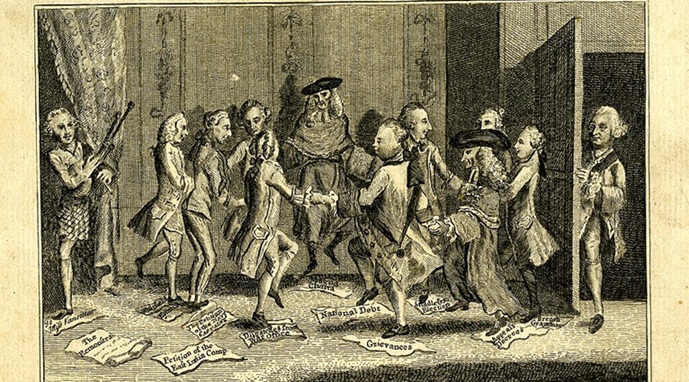
a cartoon depicting the state cotillon of 1773 (public domain)

a cartoon depicting the state cotillon of 1773 (public domain)


The Council of Infinite Opinions

A council met where certainty was banned,
And every truth was shaped by shifting hand.
“No fact may stand,” they spoke with measured breath,
“Unless it bends to every shade of depth.”

The wise withdrew; the louder filled the floor,
Each syllable a carefully staged war.
They voted on the nature of the sun,
And fractured light till no conclusion won.

At last they solved the problem they began:
By ruling judgment must elude all plan.
And so they governed—with procedural grace,
A system built to leave no lasting trace.

Yet somewhere still, beyond their polished room,
Reality persists against the gloom.


David Anson Lee is a physician, philosopher, and poet. Born on the Pine Ridge Indian Reservation in South Dakota, he currently lives in Texas. His poetry has appeared in numerous literary journals including Eunoia Review, Ink Sweat & Tears, The Orchards, and others.


Continue Reading
Tags: David LeePolitics
ShareTweetPin
The Society of Classical Poets does not endorse any views expressed in individual poems or commentary.
Read Our Comments Policy Here

RandomPoems

A Major Problem: An Essay by Joseph S. Salemi
Culture

A Major Problem: An Essay by Joseph S. Salemi

August 27, 2021

. "American pragmatism insists that words are for use, not enjoyment; American puritanism insists that expression is a duty, not...

poem/mantyk/science book
Culture

‘Dialogue on a First Grade Science Textbook’: A Poem by Evan Mantyk

March 23, 2023

. Dialogue on a First Grade Science Textbook Many spiritual traditions throughout history have perceived all things, animate and inanimate,...

Next Post
‘Archaic Torso of Apollo’ by Rainer Maria Rilke, Translated by Mary Jane Myers

'Archaic Torso of Apollo' by Rainer Maria Rilke, Translated by Mary Jane Myers

‘The Second Rain’: A Poem by Bhikkhu Nyanasobhano

'The Second Rain': A Poem by Bhikkhu Nyanasobhano

‘America: 250 Years’: A Poem by Cliff Miller

'America: 250 Years': A Poem by Cliff Miller

Comments 13

  1. James A. Tweedie says:
    5 months ago

    David, so much of our “ado” is about “nothing”—at least nothing that matters all that much. And how true that the wise withdraw from such nonsense. Reality outside rarely resembles the inside of a Seinfeld episode, which is, of course, about nothing. I wonder why they call it “shooting the bull?” Nice verse, by the way.

    Reply
  2. Theresa Werba says:
    5 months ago

    A very polished and well-constructed sonnet which has beautiful flow and excellent use of diction, very satisfying to the ear as well as the mind. I understand your sentiments all too well. Nicely done!!!

    Reply
  3. Roy Eugene Peterson says:
    5 months ago

    David, I cannot resist commenting on your bio. I was born in Winner, South Dakota, lived on a farm near Bonesteel, and also moved to Texas at a young age. The Council resembles so many political assemblies in terms of the arguments, disagreements and resolutions. Well written and great exposition in verse.

    Reply
  4. Norma Pain says:
    5 months ago

    The last line hit the nail right on the head. Great poem David.

    Reply
  5. Cynthia L Erlandson says:
    5 months ago

    This is just delightful! Thank you, David. Clearly you are indeed a philosopher, yet you’ve made your message clear to all of us.

    Reply
  6. Joseph S. Salemi says:
    5 months ago

    This poem reminds me of something that happened many years ago, when I was teaching in a New York City high school. An “urgent meeting” was called by the principal at the end of a day, for the purpose of discussing some “pressing issue” in city politics. I can’t even remember what the hell it was.

    So the faculty all gathered in the school auditorium, and for two hours argued and debated and orated, with great intensity and urgency, about what we should think on this “pressing issue,” and what sort of “resolution” we should compose and pass concerning it. I was only 25, and I was baffled at the deep, soulful, wrenchingly emotional atmosphere that filled this gathering of middle-aged and elderly liberal schoolteachers. Why would they think that anybody in the world outside that auditorium would give a swiving damn what they thought about this issue, or about what “resolution” they would pass? And where would they send the resolution? Who would give a rat’s ass what a gaggle of self-important teachers in some dipshit high school had to say?

    Nevertheless, they argued heatedly and in great detail, and finally cobbled together some kind of statement, which eventually with all due solemnity was typed up, and of course went nowhere but the wastepaper basket. I think that day I finally understood what the revolutionist Lenin said: “Bourgeois liberals love to talk and vent endlessly, to no purpose. But they are sometimes useful idiots.”

    David Lee’s poem is a satiric epitome of the tendency of liberals to exhale meaningless gas on a subject solely for the purpose of making themselves feel good.

    Reply
  7. Margaret Coats says:
    5 months ago

    “A system built to leave no lasting trace” sounds like structuralist literary criticism. Contrary to the entertaining Council you describe, David, there is a conclusion, but the means of arriving is deemed negligible. Both Council and structure, however, seem to be time wasters, which your brief and witty sonnet is not.

    Reply
  8. Jan Mennite says:
    5 months ago

    Maybe if the louder had withdrawn and the wise had filled the floor, we might have reasoned, patient-focused medicine instead of the current shit-show. In any case, I love your poem; it communicates with clarity and honesty.

    “In fractured light till no conclusion won” reminds me of how the elitists attack truth, wherever it debunks their lies, and those who dares to put it forth.

    “Reality persists against the gloom” stood out to me about how the truth is true, even if no one believes it; a lie is a lie even if everyone believes it.

    Thank you for the great read, David.

    Reply
  9. Paul Freeman says:
    5 months ago

    One of my favourite quotes is: “However much you deny the truth, the truth goes on existing.”

    Your poem explores this phenomenon very succinctly. I was reminded of all the climate change deniers waffling away while Europe bakes and the Greenland Ice Sheet melts, and their answer – more air-conditioning annexation.

    Reply
    • Joseph S. Salemi says:
      5 months ago

      And I am reminded of all the left-liberal dweebs who are refusing to admit that Europe is being invaded and degraded by alien scum.

      Reply
      • Mike Bryant says:
        5 months ago

        First, I love the poem, it has given rise to some important questions. Second, Doctor Salemi, I find it strange that no one ever mentions that the British are the indigenous peoples of the United Kingdom.

        Am I the only one who has had enough of this unholy, forced colonization of the hard-done-by natives???
        Forbid it, Almighty God! Free these indigenous peoples from the chains of their oppressors!!!

        Reply
        • Joseph S. Salemi says:
          5 months ago

          You won’t get any argument from me, Mike. Tell it to whatever jackass becomes the next British PM.

          Reply
  10. Zumwalt says:
    5 months ago

    David, so very nicely done! Love the relentless pace, the coda-like ending, and the smile it brought to my face.

    Reply

Leave a Reply Cancel reply

Your email address will not be published. Required fields are marked *


  1. C.B. Anderson on ‘From Geoffrey Chaucer’s Advice Column’: A Poem by Paul A. FreemanNovember 24, 2026

    You might be correct about lead, Paul, but I was under the impression that mercury was used in making felt…

  2. Paul Freeman on ‘From Geoffrey Chaucer’s Advice Column’: A Poem by Paul A. FreemanNovember 24, 2026

    Thank you, Margaret. The Spectator competition often requires the author or poet to channel another writer. If we have a…

  3. Margaret Coats on ‘From Geoffrey Chaucer’s Advice Column’: A Poem by Paul A. FreemanNovember 24, 2026

    Maybe your best Chaucerian imitation, Paul! Succinct and straightforward (as befits John's need), with confession in conclusion, just as Uncle…

  4. Paul Freeman on ‘From Geoffrey Chaucer’s Advice Column’: A Poem by Paul A. FreemanNovember 24, 2026

    Thank you, David. Chaucer is one of the authors I like to channel, especially when writing something humorous.

  5. Paul Freeman on ‘From Geoffrey Chaucer’s Advice Column’: A Poem by Paul A. FreemanNovember 24, 2026

    Mad as a hatter, I believe, comes from another metal, lead, which was used in the base of top hats…

Subscribe to Daily Poems

Enter your email address to subscribe to this blog and receive notifications of new posts by email.

Join 1,672 other subscribers
No Result
View All Result

Recent Poems

  • ‘Sennacherib’s Bad Day (Translated from Lord Byron)’: A Poem by Chris Hart
  • ‘From Geoffrey Chaucer’s Advice Column’: A Poem by Paul A. Freeman
  • ‘Interment’: A Poem by James A. Tweedie
  • ‘You Call It Death’: A Poem by Dr. Bhairab Barman
  • ‘Canzone in Winter’ by Dante Alighieri, Translated by Margaret Coats
  • ‘He Rides the Wind’: A Poem by Rodica Musgrave
  • ‘Seasons’: A Poem by T.M. Moore
  • ‘Victimhood of Biblical Proportions’: A Poem by Susan Jarvis Bryant
  • ‘Down the Narrow Ghetto Streets’ and Other Poetry by Janice Thompson
  • ‘All We Have to Decide’ and Other Tolkien-Inspired Poetry by Brian Yapko
  • ‘Our Toddler’: A Poem by Robert Thomas
  • ‘Poets to Saint Gregory, with Respect’: A Poem by Joseph S. Salemi
  • ‘The Wall of Separation’ and Other Poetry by Roy E. Peterson
  • SCP Poetry Symposium and Public Reading—June 2027
  • ‘A Villanelle from a Hill in Hell’ by C.B. Anderson
  • ‘Truce’: A Sonnet by Vernon Speed
  • ‘As You Leave’: A Poem by Michael Charles Maibach
  • ‘Poetry, Again?’: A Poem by Rachel Christensen 
  • ‘My Salute to Golden Era Thespians’: A Poem by Mark Stellinga
  • ‘After Dante’: Sonnets by James Edward Green
  • ‘Autumn Haunts’: A Poem by Cynthia Erlandson
  • ‘Praying for Patience’: A Poem by Briana Reavis
  • ‘Fractal’: A Poem on Suicidal Depression, by Golan Shahar
  • ‘Laughing’: A Poem by Jeffrey Essmann
  • ‘Childproof Caps’ and Other Poems by Russel Winick
  • ‘Daylight Savings Crime’ and Other Poetry by Jan Mennite
  • ‘Ambient Political Precarity’ and Other Poetry by Alec Ream
  • ‘To Actias Luna (The Luna Moth)’: A Poem by Jeff Kemper
  • ‘Portals’ and Other Poetry by Janice Thompson
  • ‘Purple Reign’: A Poem by Susan Jarvis Bryant

Categories

  • Acrostic
  • Alexandroid
  • Alliterative
  • Art
  • Best Poems
  • Blank Verse
  • Chant Royal
  • Classical Poets Live
  • Clerihew
  • Covid-19
  • Deconstructing Communism
  • Educational
  • Epic
  • Epigrams and Proverbs
  • Essays
    • Interviews with Poets
    • Poetry Reviews
  • Featured
  • From the Society
  • Great Poets
    • Dante Alighieri
    • Edgar Allan Poe
    • Emily Dickinson
    • Geoffrey Chaucer
    • Henry Wadsworth Longfellow
    • Homer
    • John Keats
    • John Milton
    • Robert Frost
    • William Blake
    • William Shakespeare
    • William Wordsworth
  • Human Rights in China
  • Limerick
  • Love Poems
  • Music
  • Pantoum
  • Performing Arts
  • Poetry
    • Beauty
    • Children's Poems
    • Culture
    • Ekphrastic
    • Found Poems
    • High School Poets
    • Humor
    • Riddles
  • Poetry Challenge
  • Poetry Contests
  • Poetry Forms
    • Curtal Sonnet
    • Haiku
  • Poetry Readings
  • Rhupunt
  • Rondeau
  • Rondeau Redoublé
  • Rondel
  • Rubaiyat
  • Sapphic Verse
  • Satire
  • Science
  • Sestina
  • Shape Poems
  • Short Stories
  • Song Lyrics
  • Sonnet
  • Symposium
  • Terrorism
  • Terza Rima
  • The Environment
  • Translation
  • Triolet
  • Video
  • Villanelle

Quick Links

  • About Us
  • Submit Poetry
  • Become a Member
  • Members List
  • Support the Society
  • Advertisement Placement
  • Comments Policy
  • Terms of Use

Welcome Back!

Login to your account below

Forgotten Password?

Retrieve your password

Please enter your username or email address to reset your password.

Log In
No Result
View All Result
  • Poems
    • Beauty
    • Culture
    • Satire
    • Humor
    • Children’s
    • Art
    • Ekphrastic
    • Epic
    • Epigrams and Proverbs
    • Human Rights in China
    • Music
    • Performing Arts
    • Riddles
    • Science
    • Song Lyrics
    • The Environment
    • The Raven
    • Found Poems
    • High School Poets
    • Terrorism
    • Covid-19
  • Poetry Forms
    • Sonnet
    • Haiku
    • Limerick
    • Villanelle
    • Rondeau
    • Pantoum
    • Sestina
    • Triolet
    • Acrostic
    • Alexandroid
    • Alliterative
    • Blank Verse
    • Chant Royal
    • Clerihew
    • Rhupunt
    • Rondeau Redoublé
    • Rondel
    • Rubaiyat
    • Sapphic Verse
    • Shape Poems
    • Terza Rima
  • Great Poets
    • Geoffrey Chaucer
    • Emily Dickinson
    • Homer
    • Henry Wadsworth Longfellow
    • Dante Alighieri
    • John Keats
    • John Milton
    • Edgar Allan Poe
    • William Shakespeare
    • William Wordsworth
    • William Blake
    • Robert Frost
  • Love Poems
  • Contests
  • SCP Academy
    • Educational
    • Teaching Classical Poetry—A Guide for Educators
    • Poetry Forms
    • The SCP Journal
    • Books

© 2025 SCP. WebDesign by CODEC Prime.