• Submit Poetry
  • Support SCP
  • About Us
  • Members
  • Join
Saturday, July 18, 2026
Society of Classical Poets
  • Poems
    • Beauty
    • Culture
    • Satire
    • Humor
    • Children’s
    • Art
    • Ekphrastic
    • Epic
    • Epigrams and Proverbs
    • Human Rights in China
    • Music
    • Performing Arts
    • Riddles
    • Science
    • Song Lyrics
    • The Environment
    • The Raven
    • Found Poems
    • High School Poets
    • Terrorism
    • Covid-19
  • Poetry Forms
    • Sonnet
    • Haiku
    • Limerick
    • Villanelle
    • Rondeau
    • Pantoum
    • Sestina
    • Triolet
    • Acrostic
    • Alexandroid
    • Alliterative
    • Blank Verse
    • Chant Royal
    • Clerihew
    • Rhupunt
    • Rondeau Redoublé
    • Rondel
    • Rubaiyat
    • Sapphic Verse
    • Shape Poems
    • Terza Rima
  • Great Poets
    • Geoffrey Chaucer
    • Emily Dickinson
    • Homer
    • Henry Wadsworth Longfellow
    • Dante Alighieri
    • John Keats
    • John Milton
    • Edgar Allan Poe
    • William Shakespeare
    • William Wordsworth
    • William Blake
    • Robert Frost
  • Love Poems
  • Contests
  • SCP Academy
    • Educational
    • Teaching Classical Poetry—A Guide for Educators
    • Poetry Forms
    • The SCP Journal
    • Books
No Result
View All Result
Society of Classical Poets
  • Poems
    • Beauty
    • Culture
    • Satire
    • Humor
    • Children’s
    • Art
    • Ekphrastic
    • Epic
    • Epigrams and Proverbs
    • Human Rights in China
    • Music
    • Performing Arts
    • Riddles
    • Science
    • Song Lyrics
    • The Environment
    • The Raven
    • Found Poems
    • High School Poets
    • Terrorism
    • Covid-19
  • Poetry Forms
    • Sonnet
    • Haiku
    • Limerick
    • Villanelle
    • Rondeau
    • Pantoum
    • Sestina
    • Triolet
    • Acrostic
    • Alexandroid
    • Alliterative
    • Blank Verse
    • Chant Royal
    • Clerihew
    • Rhupunt
    • Rondeau Redoublé
    • Rondel
    • Rubaiyat
    • Sapphic Verse
    • Shape Poems
    • Terza Rima
  • Great Poets
    • Geoffrey Chaucer
    • Emily Dickinson
    • Homer
    • Henry Wadsworth Longfellow
    • Dante Alighieri
    • John Keats
    • John Milton
    • Edgar Allan Poe
    • William Shakespeare
    • William Wordsworth
    • William Blake
    • Robert Frost
  • Love Poems
  • Contests
  • SCP Academy
    • Educational
    • Teaching Classical Poetry—A Guide for Educators
    • Poetry Forms
    • The SCP Journal
    • Books
No Result
View All Result
Society of Classical Poets
No Result
View All Result
Home Poetry Culture

Amidst Anti-Thanksgiving Fervor: November 2018

November 22, 2018
in Culture, Poetry
A A
11
poems Amidst Anti-Thanksgiving Fervor: November 2018

by Usa W. Celebride

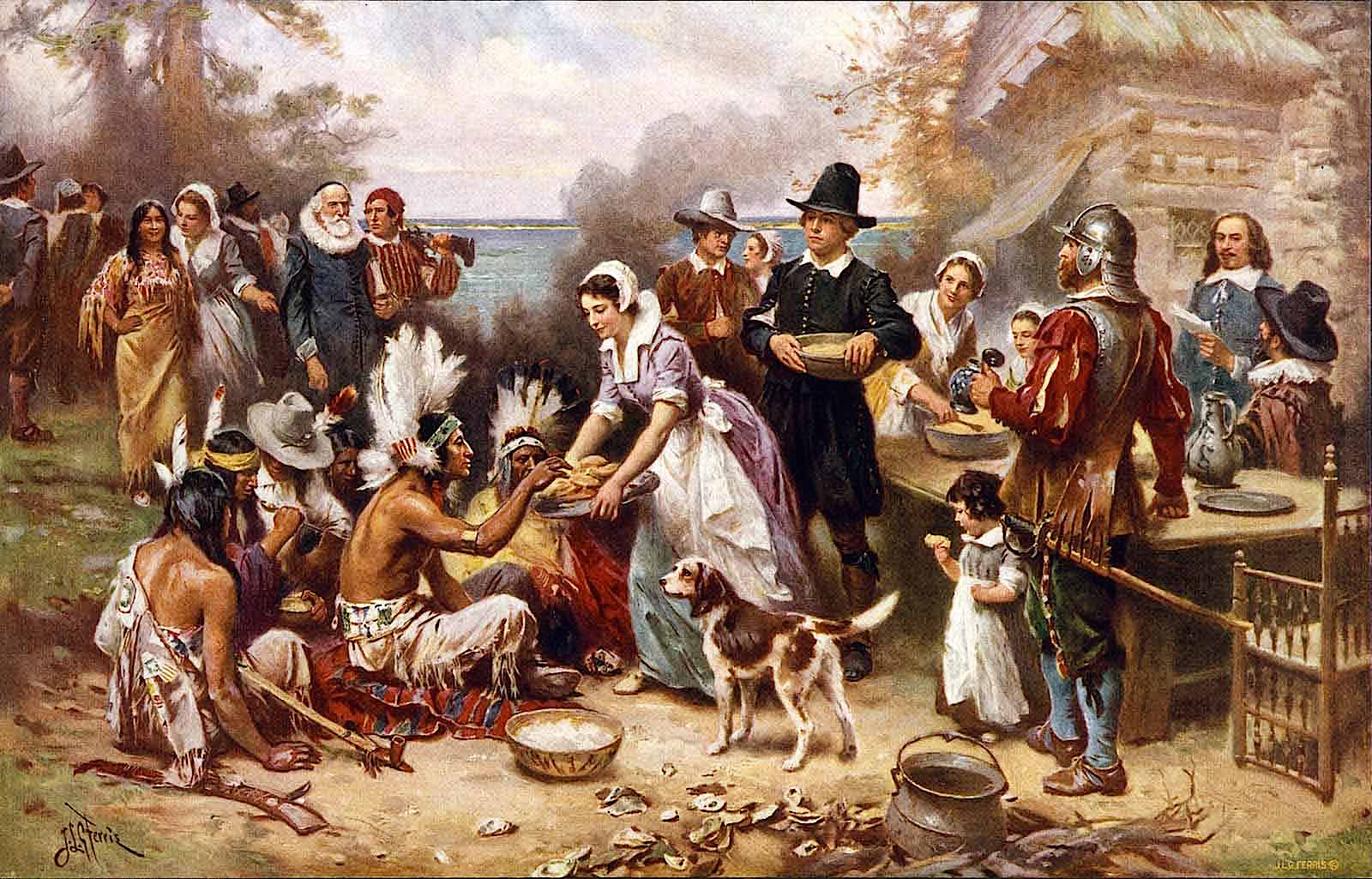
The pilgrims were a persecuted group—for their beliefs—
so they were willing for a chance, a hope for some relief.
They made the risky voyage to America by ship.
A crew that didn’t care for them, for money took the trip.
But when they got to Massachusetts in New England’s fall,
half died before they made next autumn’s cold and bitter pall.
But those who did—how could they not be thankful, and God bless?
Thanksgiving Day is a reminder of their gratefulness.
They managed to survive disease, the weather, lack of food—
among the many millions who got here—and found it good.



ShareTweetPin
The Society of Classical Poets does not endorse any views expressed in individual poems or commentary.
Read Our Comments Policy Here

RandomPoems

On the 200th Anniversary of John Keats’ Odes (A Video Essay by Daniel Leach)
John Keats

On the 200th Anniversary of John Keats’ Odes (A Video Essay by Daniel Leach)

May 2, 2019

https://www.youtube.com/watch?v=f9LEnZ9T4F0&feature=youtu.be&app=desktop When I Have Fears That I May Cease to Be  by John Keats When I have fears that I...

Lord Byron’s Darkest Secrets and Greatest Poetry
Beauty

‘How To Be Like Byron’ by Andrew Benson Brown

January 27, 2021

. How To Be Like Byron Bright butterfly, why do you fade Into that duller, browner shade That strays into...

Next Post
‘In Prison Cells: Rondeau for the Falun Gong’ by Bronwen Hudson

'Cell Block Twenty-Nine' and Other Poetry by David Watt

‘Beauty Is a Verb’ by Shari Jo LeKane-Yentumi

'Beauty Is a Verb' by Shari Jo LeKane-Yentumi

‘The Searchers of Beauty’ by Brice U. Lawseed

'The Poet's Soul with Artful Pen' and Other Poetry by Roy E. Peterson

Comments 11

  1. Joseph Charles MacKenzie says:
    8 years ago

    Since the alcoholic apostates at Plymouth denied, among other things, the divinely-instituted sacrament of Holy Eucharist—the very term “eucharist” meaning “thanksgiving” in the Greek—they could not have offered thanks according to God’s law.

    Today is actually the feast of St. Cecelia, Virgin and Martyr according to the Christian Calendar.

    Reply
    • Joe Tessitore says:
      8 years ago

      Couple this with your last outburst about Harvey Weinstein (that was very appropriately taken down) and I do not hesitate to urge you to pray to Saint Cecilia, the patron saint of poets, for help.

      Reply
  2. Charles Southerland says:
    8 years ago

    Thank God, who reigns above all, yet lives within our hearts, that those of us apostates who are Protestants are not otherwise.

    Reply
    • Amy Foreman says:
      8 years ago

      Well said, Mr. Southerland, and thank you, Bruce, for this poem for the day.

      Exhibit A displays a brand of anti-Thanksgiving fervor I have not seen before. Interesting.

      Reply
      • Joe Tessitore says:
        8 years ago

        Let it not be for me to disagree with you Amy, but “interesting” is the wrong word; “shocking” is far more appropriate,
        and on Thanksgiving Day “beyond belief” comes to mind.

        “Happy Thanksgiving!” To all ❣️

        Reply
    • Joe Tessitore says:
      8 years ago

      Exhibit A does not represent the Catholic Church that I know and love and is, in fact, very far from it.
      Theresa Benedicta, who died in a concentration camp, taught that we need everything at our disposal to reach Jesus, but that He needs nothing at all, including the Sacraments, to reach us.

      Reply
  3. E. V. says:
    8 years ago

    I think we’re missing something. Gratitude has a spiritual universality that was poetically expressed on that 1st Thanksgiving.

    On a separate note (and Evan please forgive me for taking this liberty), Society of Classical Poet’s homepage has a new tab, “Shop”. Just in time for the holiday season, SCP is offering a T-Shirt (2 different options) and a mug. The mug and the navy shirt feature the name, Society of Classical Poets, the logo, and the website. The light blue shirt features the name and logo, but not the website. Also, it’s possible that more items will be added in the future. Check it out.

    Reply
  4. Mark Stone says:
    8 years ago

    Bruce, Hello.

    1. In line 6, in sounds funny to me to say: “they made … [the]…pall.” I assume you mean “made it until the pall,” i.e., survived until the next year.

    2. In line 7, my question is: “But those who did… who did what?” Since the previous line talks about those who died, it sounds like you’re asking: How could those who died not be thankful?

    3. Regarding lines 9 & 10, it doesn’t sound right to me to say: “They managed to survive… among the many millions who got here…” The pilgrims were not “among” the millions. The millions arrived later. So I would say something like:

    They managed to survive disease, the weather, lack of food,
    and like the many millions who came later, found it good.

    4. To me, the poem seems just a little wordy. For example, to say “they got to Massachusetts in New England’s fall,” is a little redundant and unnecessary, since everyone knows that Massachusetts is in New England. I spent about 20 minutes turning the poem into iambic pentameter (with one substitution in line 9) to see if the poem would still have most of the content of the original. Here’s what I came up with:

    A persecuted group based on belief,
    the pilgrims fled in hope of some relief.
    They voyaged to America by ship.
    Their crew solely for money took the trip.
    They got to Massachusetts in the fall.
    Half died before next autumn’s bitter pall.
    How could they not be thankful and God bless?
    Thanksgiving Day, their day of gratefulness.
    They survived disease, the weather, lack of food,
    and like the mass who followed, found it good.

    It may be a bit sparse, but I bet that if you rewrote the poem in 12-syllable lines (vice 14), you wouldn’t lose any content at all.

    6. Notwithstanding these comments, I very much enjoyed the poem and fully agree with the sentiment of gratefulness that it expresses.

    Reply
  5. Usa W. Celebride says:
    8 years ago

    Although not from a literary point of view, I nonetheless thoroughly enjoy Mr. Stone’s comments, because he analyzes the writing of the various poems he chooses to discuss, instead of just reacting to their content.

    1. I agree with Mr. Stone’s assessment of L6 (for one brief instant I am more Mr. Stone than Mr. Stone himself!); however, there is no easy fix here; and I will continue to keep the text as is, with the ellipsis “made” for “made it to”, an idiom used in my part of the World.

    2. I had previously alerted Mr. Mantyk to this in an email, saying that no one would probably even care, but that I had replaced “did” with “lived”; and in the poem’s second publishing that has been amended. But, for SCP, this is proof again of Mr. Stone’s expertise; he caught it. I have also changed the title in the second publishing.

    3. As to L10, I agree with Mr. Stone; but my revision is not the same as his.

    “and like the millions coming afterwards—they found it good.”

    4. Here I disagree with Mr. Stone entirely; for my poem is not prolix; it is prosaic; and that is exactly what I am striving for. In addition, artistically (not stylistically!) I do not want to write iambic pentametres. What Mr. Stone would like to eliminate, though he perhaps is unaware of it, are the subtle poetic elements that dot its verbal landscape.

    5. The tennos is syllabically the exact length of the sonnet; but it does not divide into two, or emphasize a concluding sestet or couplet. That is one of the reasons I am avoiding the sonnet now (Besides I’ve already written hundreds of them.). As Robert Frost used to say, if you have something you would like to say for eight lines, and then want to take it back for six lines, you’re on the verge of writing a sonnet. I have something I would like to say in ten lines—period.

    Nor am I interested in writing heroic couplets, as the Neoclassicists did, like Dryden, Pope, or, in
    America, Wheatley, which make Mr. Stone’s worthy attempt seem futile indeed, and show Mr. MacKenzie’s brilliant attempt at heroic couplets in “Letter to England” lacking in refined, reasoned clarity. We lack that subtle clarity in though; it is one of the glaring losses of the literature of the last 200 years, from the Romantics on, including the so-called (here @ SCP) “classicist Keats”.

    6. The poem was a visceral response to all the “hate speech” against the tradition of Thanksgiving, but without the attending rancour. Truth be told, the poem pales in comparison to the vigourous prose of William Bradford’s “Of Plymouth Plantation”.

    Reply
    • Mark Stone says:
      8 years ago

      Bruce, After reading your response to my Comment #4, I went back and looked at the slimmed down version of your poem that I created. I acknowledge that it looks like a Christmas tree with no lights or decorations. It lacks the vivid and colorful details that bring a poem alive. It lacks the adjectives, adverbs and prepositional phrases where one can do the alliteration, assonance, consonance, double entendre and word play that makes writing fun. Just as Frost said that the road you choose to take in life makes all the difference, it is the vivid and colorful details in a poem that make all the difference. Although I have written and edited technical documents for a living for the last 30-plus years, I still have a lot to learn about reviewing and commenting on poems. Please allow me to withdraw my Comment #4.

      Reply
  6. Usa W. Celebride says:
    8 years ago

    Mr. Stone can certainly take back his comment; but I thought (mistyped above in my last comment) it was a very informative example for comparison. Mr. Stone’s clipped poem shows better than I can explain why I prefer a longer poetic line, which, if not as free as Whitman’s, nor as dynamic as Pound’s, nor as rhyme-free as Stevens’ intricate wordwork (my Anglo kenning for poetry), at least incorporates some of each of them, inter alia.

    Nevertheless, Mr. Stone brings up a very important point in his take-back (I’ve been reading Beowulf again). He brings up, if indirectly, the topic of What is poetry?

    He states that his poem looks “like a Christmas tree with no lights or decorations. It lacks the vivid and colorful details that bring a poem alive. It lacks the adjective, adverbs, and prepositional phrases where one can do the alliteration, assonance, consonance, double entendre and wordplay (English is kenning rich) is that makes writing fun.”

    1. I do not think poetry is decorative; that was the mistake of the Neoclassicist poets.

    2. Prose is superior to poetry in its dexterity; however, it too is informed by the elements of poetry; and its power does not come from its decorations.

    3. There are many shared qualities between good prose and good poetry.

    4. The Elizabethans were good at the “fun” of wordplay; and that is one indication of the power of a language at any point in time.

    5. For me a key power of any writing is in the beauty, the goodness, and the truths it conveys, as for example, Noether’s work in symmetrical structures, which is behind so many modern laws of physics.

    6. In short, what makes good writing is its integrity, that integral component for which its symbols stand. Within language there is enormous power, from Homeric hexametres to Schrödinger’s equation and beyond; and we are a part of that.

    Reply

Leave a Reply Cancel reply

Your email address will not be published. Required fields are marked *

  1. Susan Jarvis Bryant on ‘My Pyjamas!’ and Other Poems by Susan Jarvis BryantJuly 18, 2026

    Jan, thank you very much for your encouraging comment. I'm so glad you enjoyed the poems and especially glad they…

  2. James Sale on ‘The 51st State’: A Poem by James SaleJuly 18, 2026

    Not quite a win, Theresa, but thank you for the thought, and congratulations yourself on your "Finalist' status for your…

  3. Susan Jarvis Bryant on National Poetry Month Limerick ChallengeJuly 18, 2026

    A Slippery Victory There once was a prize for the best, Though merit was hardly the test. The winner was…

  4. Susan Jarvis Bryant on National Poetry Month Limerick ChallengeJuly 18, 2026

    Beautifully written and hilarious, Jan! You have inspired me to have a go. Thank you!

  5. Jan Mennite on ‘My Pyjamas!’ and Other Poems by Susan Jarvis BryantJuly 18, 2026

    Susan, I always feel that my poetic intelligence increases while I read your work. I laughed and learned and felt…

Subscribe to Daily Poems

Enter your email address to subscribe to this blog and receive notifications of new posts by email.

Join 1,594 other subscribers

Recent Poems

  • Winners and Rankings of The Great American Poetry Competition
  • ‘The Gold Star Mother’: A Poem by Gerard Maritato
  • ‘An American Dash’: A Poem by Linda Ellis
  • ‘The Anonymous Soldier’: A Poem by Lucy Lind
  • ‘For Those We Never Meet’: A Poem by Aneesh Agarwal
  • ‘Ben Franklin’s Copper Fugio Cent’: A Poem by Geoffrey Smagacz
  • Three Brief Poems by Luxorius, Translated by Joseph S. Salemi
  • ‘The American Spirit’: A Poem by Dusty Grein
  • ‘The Ballad of Zebulon Pike’: A Poem by M.D. Skeen
  • ‘We Are the Ones’ and Other Poetry by Cheryl Corey
  • ‘My Pyjamas!’ and Other Poems by Susan Jarvis Bryant
  • ‘A Snowy Egret’: A Poem by Bruce Dale Wise
  • ‘The Swearing-in of Calvin Coolidge’: A Sonnet by Robert W. Crawford
  • ‘Ballad of the Sequoia’: A Poem by Lauren V. Leon
  • ‘The 51st State’: A Poem by James Sale
  • ‘La Uva’ (The Grape): A Poem by Michael Pietrack
  • ‘There’s Blood that Flows Within the Stripes’: A Poem by Lauren V. Leon
  • ‘Birdsong’: A Poem by Jeffrey Essmann
  • ‘The Melody That Lingers On’ and Other Poetry by John McPherson
  • ‘American Dreams’: A Poem by Adam Sedia
  • ‘An American Fabius’: A Poem by John Hernandez
  • ‘Vernal Clinic’ and Other Poetry by C.B. Anderson
  • ‘Omaha Beach’ and Other Poetry by Bradford Skow
  • ‘Music to Part the Veil’: A Poem by T.M. Moore
  • ‘A Gentleman’s Guide to Losing a War’ and Other Poetry by Arnon Peterson
  • ‘Black Shuck’: A Poem by Martin Briggs
  • ‘When the Last World War II Veteran Passes Away’: A Poem by N.S. Boone
  • ‘A Fallow Year at Worthy Farm’: A Poem by Paul A. Freeman
  • ‘Outstanding in Afghanistan’: A Poem by Jared S. Chang
  • ‘250 More’: A Poem by Miguel Moreno

Categories

  • Acrostic
  • Alexandroid
  • Alliterative
  • Art
  • Best Poems
  • Blank Verse
  • Chant Royal
  • Classical Poets Live
  • Clerihew
  • Covid-19
  • Deconstructing Communism
  • Educational
  • Epic
  • Epigrams and Proverbs
  • Essays
    • Interviews with Poets
    • Poetry Reviews
  • Featured
  • From the Society
  • Great Poets
    • Dante Alighieri
    • Edgar Allan Poe
    • Emily Dickinson
    • Geoffrey Chaucer
    • Henry Wadsworth Longfellow
    • Homer
    • John Keats
    • John Milton
    • Robert Frost
    • William Blake
    • William Shakespeare
    • William Wordsworth
  • Human Rights in China
  • Limerick
  • Love Poems
  • Music
  • Pantoum
  • Performing Arts
  • Poetry
    • Beauty
    • Children's Poems
    • Culture
    • Ekphrastic
    • Found Poems
    • High School Poets
    • Humor
    • Riddles
  • Poetry Challenge
  • Poetry Contests
  • Poetry Forms
    • Curtal Sonnet
    • Haiku
  • Poetry Readings
  • Rhupunt
  • Rondeau
  • Rondeau Redoublé
  • Rondel
  • Rubaiyat
  • Sapphic Verse
  • Satire
  • Science
  • Sestina
  • Shape Poems
  • Short Stories
  • Song Lyrics
  • Sonnet
  • Symposium
  • Terrorism
  • Terza Rima
  • The Environment
  • Translation
  • Triolet
  • Video
  • Villanelle

Quick Links

  • About Us
  • Submit Poetry
  • Become a Member
  • Members List
  • Support the Society
  • Advertisement Placement
  • Comments Policy
  • Terms of Use

Welcome Back!

Login to your account below

Forgotten Password?

Retrieve your password

Please enter your username or email address to reset your password.

Log In
No Result
View All Result
  • Poems
    • Beauty
    • Culture
    • Satire
    • Humor
    • Children’s
    • Art
    • Ekphrastic
    • Epic
    • Epigrams and Proverbs
    • Human Rights in China
    • Music
    • Performing Arts
    • Riddles
    • Science
    • Song Lyrics
    • The Environment
    • The Raven
    • Found Poems
    • High School Poets
    • Terrorism
    • Covid-19
  • Poetry Forms
    • Sonnet
    • Haiku
    • Limerick
    • Villanelle
    • Rondeau
    • Pantoum
    • Sestina
    • Triolet
    • Acrostic
    • Alexandroid
    • Alliterative
    • Blank Verse
    • Chant Royal
    • Clerihew
    • Rhupunt
    • Rondeau Redoublé
    • Rondel
    • Rubaiyat
    • Sapphic Verse
    • Shape Poems
    • Terza Rima
  • Great Poets
    • Geoffrey Chaucer
    • Emily Dickinson
    • Homer
    • Henry Wadsworth Longfellow
    • Dante Alighieri
    • John Keats
    • John Milton
    • Edgar Allan Poe
    • William Shakespeare
    • William Wordsworth
    • William Blake
    • Robert Frost
  • Love Poems
  • Contests
  • SCP Academy
    • Educational
    • Teaching Classical Poetry—A Guide for Educators
    • Poetry Forms
    • The SCP Journal
    • Books

© 2025 SCP. WebDesign by CODEC Prime.