



Beauty Is a State of Mind
A young Masai tribe suitor who is wanting to get married,
Must offer to her father cows, but the number’s varied.
The more prestigious or more beautiful the woman is
The more the cows to offer for the prize he wants as his.
One day a young Masai man came and called upon a dad.
He offered him ten cows to wed the girl he wanted bad.
The father said “But she is just a two-cow value bride.”
The suitor said “If I pay ten cows, she’ll have ten-cow pride.”
The couple then got married and I’ll tell you, this story’s true,
She made of him a happy man in years that would ensue.
His gift was giving more cows than he had to pay for her,
For beauty is a state of mind that you can make occur.
Poet’s Note: This is a true story as told to me by a missionary to Tanzania.
Charging at Windmills
I love Don Quixote.
He never does back down.
Some thought he was foolish.
Some thought him a clown.
The “Man of La Mancha” writer
Had deeper thoughts in mind
Than a foolish quest
While losing one’s behind.
Some things in life are simple.
Some things are quite complex.
Some things you have to fight for
Based on your own context.
Sometimes I’ve charged at windmills
Like mirages in the sun.
Sometimes I beat the windmills;
Sometimes the windmills won.
If you don’t charge at windmills,
You haven’t any chance,
Whether it’s in business,
In life, or in romance.
LTC Roy E. Peterson, US Army Military Intelligence and Russian Foreign Area Officer (Retired) has published more than 6,200 poems in 88 of his 112 books. He has been an Army Attaché in Moscow, Commander of INF Portal Monitoring in Votkinsk, first US Foreign Commercial Officer in Vladivostok, Russia and Regional Manager in the Russian Far East for IBM. He holds a BA, Hardin-Simmons University (Political Science); MA, University of Arizona (Political Science); MA, University of Southern California (Int. Relations) and MBA University of Phoenix. He taught at the University of Arizona, Western New Mexico University, University of Maryland, Travel University and the University of Phoenix.

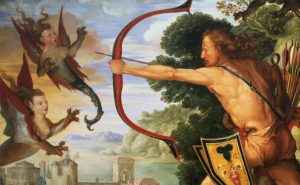
















A lovely story about the Masai tribe custom, Roy. And how true it is that “beauty is a state of mind that you can make occur.” What wealth we each have to spend on creating it! In your “Charging at Windmills,” it’s a little surprising to see a military man defend the tactics of the Man of La Mancha. So often “quixotic” is a synonym for “impractically crazy.” But sometimes a necessary and honorable fight is just that, even though the windmill may win. Thanks for posting these!
The Masai tribe story has stuck with me a long time and struck me as a beautiful reminder of how love is more than skin deep with value beyond earthly riches. The proof is in the happiness of two souls. I never regretted charging at windmills even though the quest may have been “quixotic.”. Like you said, they sometimes win. Thank you for the special comments.
The story of the Masai suitor is really a kind of parallel to “the Pearl of Great Price” parable, where a merchant sells all he has (or in this case, offers a very high sum) for the thing that he values above all else. His bride’s response is quintessentially feminine — intense gratitude not just for the man’s love, but for the fact that he makes her value known in a very public manner, with a huge bride-price. Women are very conscious of their social status in relation to other women.
The charging at windmills poem is perfectly in tune with the attitude of a professional military man. Sometimes soldiers must fight a desperate rearguard action to protect a retreat, or must make a hopeless last-ditch stand, or must attack a strong enemy position regardless of the massive casualties that will ensue. And frequently those “defeats” will have higher value in terms of history than anyone could expect — the 300 Spartans at Thermopylae, the death of Napoleon’s Old Guard at Waterloo, or Pickett’s charge at Gettysburg. This latter action is still a source of pride and honor in Southern hearts.
Dr. Salemi, I am so glad you brought up the “Pearl of Great Price” parable. That is such a fitting story for this poem. Also, the prestige the man accorded to the woman is a great societal thought of how she then could carry herself in public. Your great thoughts about quixotic military quests as also deeply felt and welcome. I always value your comments and perceptive comparisons.
I really have to add that women are also very conscious of how much their husbands love them.
Marguerite, thank you for the precious comment.
I enjoyed both of these poems tremendously, Roy! I love the story of the Masai and the insight that it reveals regarding making the people in one’s life feel valued and appreciated. And I’m a big fan of both Don Quixote and Man of La Mancha. We must tilt at windmills — we truly must. And we must expect a bruise or two but sometimes we can actually make a difference.
Brian, I have a great appreciation for your comments on both poems. Sometimes the more we give the more we get in return. For some reason I have also been a lifelong fan of Don Quixote. Even winning just one battle against the windmills has been enough for me to keep trying as I am sure it has you.
You’ve had a lot more experiences in life than most. Thanks for bringing that Masai story to life for all of us! I was exposed to Quixote through the musical Man of La Mancha. Musicals have always been very grating for me so I pretty much wrote off the Cervantes’ work. I much prefer your telling of the story to the musical. It’s a good reminder to give the novel a try.
Warren, bless you for your wonderful comments. There is a lot to be said for the Quixote story when one views it in the right context and thoughtful mind as I know you will.
What a lovely poem, Roy, from a true story with such a valuable lesson, the husband receiving back the high value that as a suitor he attributed to the bride of his choice. What potential has each of us, of rising even to something exponentially higher than we or others knew–if we’re blessed to have someone in our lives with the wisdom and means to inspire and support it?
Congratulations on collecting and working the facts of the story into such a beautiful form.
Bless you and thank you Jan for your thoughtful comments. I learned a lot from this Masai story and took it to heart.
I enjoyed both of your poems, Roy. The lines “Some things you have to fight for / Based on your own context.” The latter of the two lines reminds me that even if we have an alternate view to others, we owe it to ourselves to express that view, no matter the consequences.
As for the cows bride price, I went through that process more than a quarter century ago. Alas, globalisation and capitalism have caught up with the tribal tradition, with more and more extortionate bride prices being demanded, and relatives of the bride holding suitors (who are often working overseas to earn enough to marry) to ransom.
There is still a romantic aura to the process, but marriage everywhere from India to Indiana has gone ultra-commercial.
Thanks for the reads.
Paul, expressing our views has become more arduous these days and often is like tilting at windmills, as you point out. I am saddened by the thought of relatives of brides demanding more extortionate prices anywhere.
Thank you for two wise and memorable poems. Roy.
Thank you, Russel.
A memorable couplet:
The father said “But she is just a two-cow value bride.”
The suitor said “If I pay ten cows, she’ll have ten-cow pride.”
Thank you, Daniel for your kind comment!
Both of these lovely poems (poems that come with a beautiful message) have lifted my heart and made my day. Roy, thank you!
Bless you, Susan, and thank you.
The sentiments of both poems align perfectly with my thoughts. But the first is the one that really speaks. I read this story about fifty years ago in Reader’s Digest.
Because that woman, that wife, knew the value her husband held for her… she became the person that he had already seen. Thanks Roy.
That story is so meaningful as you say and must have gotten around way back when. When a husband exhibits his value for his wife, that marriage must be blissful. Thank you for the comments.