• Submit Poetry
  • Support SCP
  • About Us
  • Members
  • Join
Sunday, July 5, 2026
Society of Classical Poets
  • Poems
    • Beauty
    • Culture
    • Satire
    • Humor
    • Children’s
    • Art
    • Ekphrastic
    • Epic
    • Epigrams and Proverbs
    • Human Rights in China
    • Music
    • Performing Arts
    • Riddles
    • Science
    • Song Lyrics
    • The Environment
    • The Raven
    • Found Poems
    • High School Poets
    • Terrorism
    • Covid-19
  • Poetry Forms
    • Sonnet
    • Haiku
    • Limerick
    • Villanelle
    • Rondeau
    • Pantoum
    • Sestina
    • Triolet
    • Acrostic
    • Alexandroid
    • Alliterative
    • Blank Verse
    • Chant Royal
    • Clerihew
    • Rhupunt
    • Rondeau Redoublé
    • Rondel
    • Rubaiyat
    • Sapphic Verse
    • Shape Poems
    • Terza Rima
  • Great Poets
    • Geoffrey Chaucer
    • Emily Dickinson
    • Homer
    • Henry Wadsworth Longfellow
    • Dante Alighieri
    • John Keats
    • John Milton
    • Edgar Allan Poe
    • William Shakespeare
    • William Wordsworth
    • William Blake
    • Robert Frost
  • Love Poems
  • Contests
  • SCP Academy
    • Educational
    • Teaching Classical Poetry—A Guide for Educators
    • Poetry Forms
    • The SCP Journal
    • Books
No Result
View All Result
Society of Classical Poets
  • Poems
    • Beauty
    • Culture
    • Satire
    • Humor
    • Children’s
    • Art
    • Ekphrastic
    • Epic
    • Epigrams and Proverbs
    • Human Rights in China
    • Music
    • Performing Arts
    • Riddles
    • Science
    • Song Lyrics
    • The Environment
    • The Raven
    • Found Poems
    • High School Poets
    • Terrorism
    • Covid-19
  • Poetry Forms
    • Sonnet
    • Haiku
    • Limerick
    • Villanelle
    • Rondeau
    • Pantoum
    • Sestina
    • Triolet
    • Acrostic
    • Alexandroid
    • Alliterative
    • Blank Verse
    • Chant Royal
    • Clerihew
    • Rhupunt
    • Rondeau Redoublé
    • Rondel
    • Rubaiyat
    • Sapphic Verse
    • Shape Poems
    • Terza Rima
  • Great Poets
    • Geoffrey Chaucer
    • Emily Dickinson
    • Homer
    • Henry Wadsworth Longfellow
    • Dante Alighieri
    • John Keats
    • John Milton
    • Edgar Allan Poe
    • William Shakespeare
    • William Wordsworth
    • William Blake
    • Robert Frost
  • Love Poems
  • Contests
  • SCP Academy
    • Educational
    • Teaching Classical Poetry—A Guide for Educators
    • Poetry Forms
    • The SCP Journal
    • Books
No Result
View All Result
Society of Classical Poets
No Result
View All Result
Home Limerick

National Poetry Month Limerick Challenge

March 12, 2026
in Limerick, Poetry, Poetry Challenge
A A
109
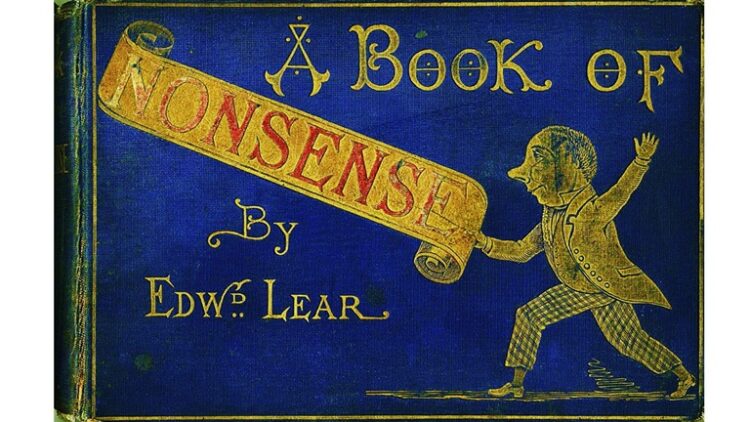
cover for A Book of Nonsense by limerick writer Edward Lear (public domain)

cover for A Book of Nonsense by limerick writer Edward Lear (public domain)


Limerick Poetry Challenge

Write a limerick (learn how to write one here) about a famous poet or about writing poetry and post it in the comments section below. This challenge is brought to you by poet Roy E. Peterson, who wrote the three below sample limericks.


Wordsworth Love Daffodils

William Wordsworth well loved daffodils,
And once saw a bunch dancing up hills.
_Perhaps he was glad,
_Or else he was mad.
I wonder what kind were his pills.


Making Ink

When the poet’s pen lost all its ink,
He went to make more in his sink.
_He got some charcoal
_He smashed in the bowl
With vinegar, quick as a wink.


Poet Agents

The poet deemed his poems were best,
And decided to give them a test.
_He hired an agent
_And made his prepayment.
But they languished along with the rest.



Post your National Poetry Month Limerick in the comments below.

ShareTweetPin
The Society of Classical Poets does not endorse any views expressed in individual poems or commentary.
Read Our Comments Policy Here

RandomPoems

poem/poetry/civil war/antietam
Culture

‘Antietam’ and Other Poetry by Vicki Roberts

January 10, 2023

. Antietam It was the bloodbath battle of the Civil War; Scores of men died, by musket, the gore; Was...

‘Sonnet for Elizabeth’ by Joseph Charles MacKenzie (with Audio)
Beauty

Two Lake Poems by Julian Woodruff

September 16, 2023

. Gloom at the Shore Down at the shore of Lake Ontario, Battleship gray under inclement sky, We vied for...

Next Post
‘At the Wine Bar’: A Poem by Paul Buchheit

'At the Wine Bar': A Poem by Paul Buchheit

The Society of Classical Poets Is Now a Freedom250 Partner

The Society of Classical Poets Is Now a Freedom250 Partner

Three Poems on Spring, by Martin Rizley

'It Must Be Spring Again' and Other Poetry by Roy E. Peterson

Comments 109

  1. Paul Freeman says:
    3 months ago

    A Limerick about Limericks

    A Limerick’s five lines of fun,
    and often it’s written to stun.
    But if it’s not clever,
    then strew your endeavour
    with words such as ‘titty’ and ‘bum’.

    Reply
    • Roy Eugene Peterson says:
      3 months ago

      Ha, Ha! Good contribution.

      Reply
  2. Paul Freeman says:
    3 months ago

    (Hot off the press)

    If Shakespeare Hadst Considered the Limerick, Limerick

    When iambs and couplets abounded,
    a limerick’s use was unfounded.
    Yet this poet sees,
    the rhyme schemes two Bs
    to Shakespeare’s ear would have resounded.

    Reply
  3. Roy Eugene Peterson says:
    3 months ago

    Shakespeare would have loved this one! A fun read.

    Reply
  4. THOMAS A HEMMINGER says:
    3 months ago

    “Frost-y Mugs”

    Robert Frost was a metricist’s dream,
    Unmatched in his rhythm and scheme.
    Whether fired or iced, his cider was nice.
    He and Elinor made quite a team!

    Reply
    • Roy Eugene Peterson says:
      3 months ago

      Good one, Thomas! Loved the “fired or ice.”

      Reply
      • THOMAS A HEMMINGER says:
        3 months ago

        Thanks, friend! I also thought of “apple picking” with the cider reference. Lol!

        Reply
  5. Rupali Mistry says:
    3 months ago

    Alas!

    There once was a witch on a broom.
    Who took off in search of a groom.
    She got lost in a blizzard.
    And was caught by a wizard,
    Who turned her into a mushroom!

    –©️ Rupali Mistry, India

    Reply
    • Roy Eugene Peterson says:
      3 months ago

      Rupali, that is very funny! A witch turned into a mushroom!

      Reply
      • Rupali Mistry says:
        3 months ago

        Thank you so much.

        Reply
    • Rohini Sunderam says:
      3 months ago

      I enjoyed that!

      Reply
      • Rupali Mistry says:
        3 months ago

        Thank you so much.

        Reply
  6. Roger Crane says:
    3 months ago

    Okay, so I decided to try my hand at a couple of limericks, below. Fun stuff, thanks.

    He Told All
    Have you read Dante’s poem about Hell?
    He told all, and he told it so well,
    You might think he led tours
    To the place one abjures,
    Did he end there himself? I can’t tell.

    A Cold Head
    My dear Washington Irving, so bold,
    Of a headless horseman he told,
    In the war, had he fought,
    And had known what he taught.
    His own head would be awfully cold!

    Reply
    • Roy Eugene Peterson says:
      3 months ago

      Two excellent ones, Roger! Now I too wonder where Dante wound up.

      Reply
      • Roger Crane says:
        3 months ago

        Thank you, Roy.

        Reply
  7. Joseph S. Salemi says:
    3 months ago

    A dynamo named Ezra Pound
    Thought metrical verse was unsound.
    With modernist fury
    He fought it, quite sure he
    Would smash it right into the ground.

    Reply
    • Roy Eugene Peterson says:
      3 months ago

      Joseph, I was aware and now others of Ezra Pounds being unsound.

      Reply
    • Cynthia L Erlandson says:
      3 months ago

      I love fury/sure he.

      Reply
  8. Joseph S. Salemi says:
    3 months ago

    Bob Browning hooked up with Liz Barrett
    And both of them lived in a garret.
    They had just one kid
    But besides that, they did
    Keep an mangy and flea-bitten parrot.

    Reply
    • Roy Eugene Peterson says:
      3 months ago

      Joseph, what a surprise. I wonder if the parrot recited their lines when Bob was drunk on his wines!

      Reply
  9. James A. Tweedie says:
    3 months ago

    A poetic rat named Old Wheezy,
    Wrote sonnets both formal and breezy
    The critics abhorred them
    But mice all adored them
    Because they all sounded so cheesy.

    When Shakespeare wrote, “Lend me your ears,”
    The Romans responded with cheers.
    But the interest charged
    On the loans grew enlarged
    To the point where he fell in arrears.

    Though as poet, Burns sang like a bird,
    “Tam o’ Shanter” near failed, so I’ve heard.
    When his publisher blanched
    When the Scottish bard chanced
    To demand he be paid by the word.

    Reply
  10. Roy Eugene Peterson says:
    3 months ago

    James, I am amazed at the concepts of all three poems! They are great from the wheezy and cheesy,, to the ears in arrears, and on to being paid by the word that Tam must have thought was absurd!

    Reply
  11. Mike Bryant says:
    3 months ago

    Ivan Pavlov was high on his grog
    And he couldn’t come out of his fog.
    As he suffered this hell
    He awoke to the bell
    And he yelled, “I must go feed the dog!”

    Reply
    • Roy Eugene Peterson says:
      3 months ago

      What a great thought about the Pavlovian principle of how dogs and other animals are trained to respond!

      Reply
  12. Mike Bryant says:
    3 months ago

    A sickly, reflecting old Nietzsche
    Had called in his tech-savvy Preacher.
    Freddy said, “God is dead.”
    Then the Preacher, he said,
    “You know, Death’s not a bug, it’s a feature!”

    Reply
    • Roy Eugene Peterson says:
      3 months ago

      Mike, that is really funny with a great ending!

      Reply
      • Mike Bryant says:
        3 months ago

        Roy, maybe it should be, “Death IS a bug, not a feature!” !

        Reply
  13. Joseph S. Salemi says:
    3 months ago

    E.A. Poe was obsessed with the tomb —
    He worried about its dark gloom.
    He pondered quite often
    About a tight coffin
    And how he’d be cramped in its room.

    Reply
    • Roy Eugene Peterson says:
      3 months ago

      What a great limerick about Edgar and so consonant with his dark writings!

      Reply
  14. Joseph Moorman says:
    3 months ago

    After Prufrock

    No argument, I will grow old,
    Perhaps even wear trousers rolled
    But hair parted behind?
    I think you will find
    I’d rather eat a peach, truth be told.

    Reply
    • Roy Eugene Peterson says:
      3 months ago

      Ah, great reference to Prufrock and funny encapsulation.

      Reply
  15. Rohini Sunderam says:
    3 months ago

    These are all brilliant… here’s one from me:

    I don’t care if you ‘just want to say’
    That you’ve eaten those plums up today
    They may have been sweet
    But they were my treat
    And is that a poem? Oh nay!

    Reply
  16. Roy Eugene Peterson says:
    3 months ago

    Ah, Rohini, you have my empathy and sympathy! Thank you for tasteful limerick.

    Reply
    • Rohini says:
      3 months ago

      Thank you, Roy!

      Reply
  17. Joseph S. Salemi says:
    3 months ago

    I just can’t help it! They are simply too easy to write! Here’s one on Percy:

    Shelley was young and inspired —
    He wrote florid verse, heaven-fired
    With wild heartfelt sighs
    And birds in the skies,
    But his readers at length became tired.

    Reply
    • Roy Eugene Peterson says:
      3 months ago

      Joseph, you certainly are in the groove! Wonderful stuff!

      Reply
  18. Roy Eugene Peterson says:
    3 months ago

    MUSES GOT INTO A FIGHT
    By Roy E. Peterson

    It was not long after midnight
    Two muses got into a fight.
    The poet said, quoth,
    “I still love you both
    But give me a rest for tonight.”

    ON EDGAR ALLAN POE
    By Roy E. Peterson

    Ed Poe was a poet unshaven.
    His poetry often was craven.
    Like his poetry;
    His death, mystery.
    “Nevermore,” quoted the Raven.

    TENNYSON AND “THE CHARGE OF THE LIGHT BRIGADE
    By Roy E. Peterson

    In “The Charge of the Light Brigade,”
    600 men charged unafraid.
    Those they left behind
    Said they did not mind.
    There was no victory parade.

    THE MOBY DICK LIMERICK
    By Roy E. Peterson

    They said that the whale was a Dick.
    He had green moss that hung on his prick.
    The Captain Ahab
    Had a gift of gab.
    Herm’s poetry also was slick.

    Poet Note
    Herman Melville, the author of “Moby Dick,” was also famous for his poetry and in the 1800’s was considered one of the best American poets along with Williams Wordsworth and Emily Dickinson.

    Reply
    • Roger Crane says:
      3 months ago

      Very funny, Roy, especially the one about Moby’s Dick. I wonder where old Ahab was stuck, hung on his own petard, so to speak. Melville didn’t tell, but in any case, the whale got the last laugh.

      Reply
      • Roy Eugene Peterson says:
        3 months ago

        Thank you, Roger. I usually do not write about such vulgarity but this thought was too good to pass up.

        Reply
  19. Paul Freeman says:
    3 months ago

    ChatGPT Limerick

    When homework’s assigned to me,
    I just go to ChatGPT.
    My GPA score,
    is sitting at 4,
    but my brain’s now the size of a pea.

    (The presenter at the AI workshop I was on last week, wasn’t impressed by the above)

    Reply
    • Roy Eugene Peterson says:
      3 months ago

      Paul, I am impressed, because that is my greatest fear about the intellectual establishment. I am thankful I stopped teaching for the University of Phoenix a few years ago, because I can foresee exactly what you foresaw! Are grades relevant anymore?

      Reply
  20. Roy Eugene Peterson says:
    3 months ago

    SHAKESPEARE’S DARK LADY
    By Roy E. Peterson

    Shakespeare wrote of his dark lady.
    A woman who must have been shady.
    As a paramour,
    She had lovers galore.
    Perhaps she was fashioned in Hades.

    It seems she had wires for hair.
    Her complexion was dark and not fair.
    With no rose on her cheeks,
    He said her breath reeks.
    No wonder he found his love rare.

    Reply
  21. Michael Pietrack says:
    3 months ago

    The Luckiest Man in Kentucky

    There once was a man from Kentucky,
    who counted himself as unlucky:
    his girlfriend, a cheater,
    his truck was a beater—
    his life had become downright sucky.

    He drove himself down to the Buckey’s
    to fuel up and jaw with the truckies.
    Though life was a villain,
    the lotto, a billion,
    don’t play and you’ll never get lucky.

    His trailer in Western Kentucky
    held laughs like a squeezed rubber ducky—
    despite all his blunders,
    he matched all the numbers,
    the luckiest man in Kentucky.

    Reply
    • Roy Eugene Peterson says:
      3 months ago

      Even though this is not a poet or poetry related parody as in the challenge, these are excellent limericks for us to enjoy.

      Reply
      • Michael Pietrack says:
        3 months ago

        Whooooops missed that completely. I’ll try again.

        Reply
      • Michael Pietrack says:
        3 months ago

        Better?

        Poetisserie Raven

        I reckon ole Edgar was toking
        to think that a bird he was quoting.
        Then he got a cravin’—
        rotisserie raven,
        and changed what it was he was smoking.

        Reply
        • Roy Eugene Peterson says:
          3 months ago

          Excellent and funny, Michael!

          Reply
  22. C.B Anderson says:
    3 months ago

    North Coast Suite

    Minnesota

    There’s a doctor who works in St. Paul
    Who can fix fractured necks with an awl
    Minneapolis folks
    Who’ve grown tired of their yokes
    Ought to give this great surgeon a call.

    Wisconsin

    A policeman patrolling Milwaukee
    Thought his uniform made him look gawky,
    So to keep himself svelte
    He just tightened his belt
    And got rid of that damned walkie-talkie.

    Illinois

    An importer of cheese in Chicago
    With an underdeveloped imago,
    Even though he knew better
    Blew a sneeze on some cheddar
    And re-labeled it fresh Asiago.

    Indiana

    A reporter assigned Terre Haute
    Came awake with a pen in her throat.
    Since her lover had fled
    And had left her for dead,
    On her pillowcase “Murder” she wrote.

    Michigan

    A procurer who lived in Detroit
    Had a bevy of babes to exploit.
    As a matter of fact
    It was clients he lacked,
    For his hookers were less than adroit.

    Reply
    • Joseph S. Salemi says:
      3 months ago

      These limericks by Kip Anderson are great, and they exemplify something that everyone attempting to write a limerick should know.

      Very frequently, the basic source of a limerick is NOT an idea, NOT a narrative, NOT an opinion, and NOT a statement that you want to make. The basic source is the rhymes themselves! If you decide from the start which three A rhymes you are going to use, and you pick them to be perfect, unexpected, and facetious, you can compose the entire limerick around them, twisting any narrative or idea into whatever shape or weird concatenation allows you to use those three rhymes.

      Look at Anderson’s “Wisconsin” — its force lies in the three words “Milwaukee,” “gawky,” and “walkie-talkie.” They rhyme perfectly, and yet are completely unrelated, and nevertheless it is around those perfect rhymes and their total disconnection that Kip builds an outstanding limerick.

      He does the same thing with “Chicago, imago, Asiago;” and with “Detroit, exploit, adroit.” The actual words come first, and whatever little story or whimsical jeu d’esprit emerges from those three words is just a wonderful and surprising development. And this is what makes a great limerick great — a strange, silly, comic, and humorous flippancy is born that delights the reader, with no logical consistency or plan other that the desire to be amusing! If on the other hand, you were to start with an “idea” for the limerick, you’d immediately be trapped into choosing proper rhymes that support your idea, and this would be limiting and constrictive. Or even worse, you’d be forced to use near or slant rhymes, which are utterly fatal in limericks.

      As for the two medial B rhymes, they simply provide a bit of connective stitching to give plausibility, and to prepare the reader for the final punchline.

      I’m bringing this up to show that limericks are almost always PURE fictive mimesis, with no didactic purpose or syllogistic coherence or “higher goal.” They are just pure wordplay. And this why people love them.

      Reply
    • Roy Eugene Peterson says:
      3 months ago

      C.B. even though these are not written about poetry or poets as presented in the challenge, I enjoyed these immensely. Dr. Salemi made some great points about writing limericks, and your out-of-nowhere ideas and great rhyme choices resound in his and my analysis. Thank you for sharing the fun.

      Reply
    • Cynthia L Erlandson says:
      3 months ago

      I love these, especially your rhymes for Chicago.

      Reply
  23. Roy Eugene Peterson says:
    3 months ago

    MUSES GOT INTO A FIGHT
    By Roy E. Peterson

    It was not long after midnight
    Two muses got into a fight.
    The poet said, quoth,
    “I still love you both
    But give me a rest for tonight.”

    PURPLE COW SHAKE
    By Roy E. Peterson

    Wit, Ogden Nash, reported how
    He never saw a purple cow.
    But grape milk shakes mixed
    In my town were fixed.
    So, I drank some I thus avow.

    ROBERT FROST STOPPED BY SNOWY WOODS
    By Roy E. Peterson

    Robert Frost stopped by snowy woods.
    His horse didn’t think it was good.
    The horse hated snow;
    They had miles to go.
    Let us not stay in this “neigh”-borhood.

    WHAT LURKS IN A POET’S HEART
    By Roy E. Peterson

    Some poets have a funny quirk
    That deep within their heart doth lurk.
    He wrote Jezebel
    Was a hound from hell.
    Bad words were not used in his work.

    WILLIAM BLAKE MET A TIGER
    By Roy E. Peterson

    Into jungle walked Sir William Blake.
    The bushes soon there started to shake.
    Much to his surprise
    He saw tiger eyes.
    The kind that was real and not fake.

    Reply
  24. Norma Pain says:
    3 months ago

    A limerick needs to be rude.
    At the very least it should be crude.
    If you can’t make it flirty,
    or nasty or dirty,
    At least make it loathsome or lewd.

    My apologies for this one. 🙂

    Reply
    • Roy Eugene Peterson says:
      3 months ago

      Apologies accepted but not needed. You were exactly correct about limericks, at least in the past being bawdy and suggestive. This is the perfect presentation of their original and primary purpose. Please do not apologize too much, for I have one about Moby Dick above that is about my only suggestive poem and/or limerick.

      Reply
  25. Joseph S. Salemi says:
    3 months ago

    The very best and funniest limericks are sexual, because they have a sauciness and spice to them that pops the balloon of high-toned pretentiousness and propriety. They say what we dare not say in public, lest repressed people get upset.

    Here are two of the best – not dirty or obscene, but highly sexed and provocative. One is about music, and the other is about painting.

    A young violinist in Rio
    Was seduced by a lady named Cleo.
    As she pulled down her panties
    She said “No andantes…
    I want this allegro con brio.”

    While Titian was mixing rose madder,
    His model reclined on a ladder.
    Her position to Titian
    Suggested coition,
    So he leapt up the ladder and had her.

    The first is a brilliant conception using musical phraseology to create two metaphors of sexual speed (a slow-moving andante or a quick and lively allegro con brio). The second makes masterly use of internal rhyme (position/Titian and ladder/had her).

    The crucial requirement in a limerick is that it be sharp, witty, insouciant, and as unexpected as a sudden firecracker. It can’t be soft and sweet and icky-poo.

    Reply
    • Roy Eugene Peterson says:
      3 months ago

      Understood and those are two amazingly titilating lyrics.

      Reply
  26. Iain Hunter says:
    3 months ago

    A sad old Venetian Jew
    Lent some gold to a merchant he knew
    But the merchant defaulted
    And the Jew was exalted
    By the thought of the payment in lieu

    Reply
    • Roy Eugene Peterson says:
      3 months ago

      Interesting selection.

      Reply
  27. Iain Hunter says:
    3 months ago

    From her balcony Juliet cried
    That her Romeo was cruelly despised.
    His Montague name
    Was the cause of the blame
    And the reason both tragically died

    Reply
    • Roy Eugene Peterson says:
      3 months ago

      This one fits the story perfectly!

      Reply
  28. Iain Hunter says:
    3 months ago

    Hamlet was known oft to boast
    That his father appeared as a ghost
    It drove him quite mad
    That his evil step-dad
    Was the one who stood to gain mast.

    Reply
  29. Roy Eugene Peterson says:
    3 months ago

    I really love this one Iain! I know the last word “mast” should be “most.”

    Reply
  30. Roy Eugene Peterson says:
    3 months ago

    LONGFELLOW WRITING HIAWATHA
    By Roy E. Peterson

    Longfellow wrote of Gitche Gumee
    While stuffing his mouth and his tummy.
    He laughed with mirth.
    His food fell to the turf.
    He hoped we wouldn’t think him a dummy.

    WRITING WITH ALLITERATION
    By Roy E. Peterson (January 6, 2026)

    The poet had a situation
    To be solved with alliteration.
    With first letter “k,”
    It took him all day.
    His poem received admiration.

    WRITING AND RYE DON’T MIX
    By Roy E. Peterson

    The poet loved his apple pie
    But then would drink glasses of rye.
    When he went to bed,
    He was out of his head.
    The next day he read his sci-fi.

    ROBERT BURNS FINDS THE MICE
    By Roy E. Peterson

    Robert Burns liked to plow up the earth.
    He found some mice under the turf.
    He said they could stay
    But they ran away
    They knew what his words might be worth.

    Reply
  31. Michael Pietrack says:
    3 months ago

    Poe-tisserie Raven

    I reckon ole Edgar was tokin’
    to think that some bird he was quotin’.
    Then he got the cravin’–
    rotisserie raven,
    and changed what it was he was smokin’.

    Reply
  32. Roy Eugene Peterson says:
    3 months ago

    Michael, I love the thought of roasting the raven and changing what he was “smokin.'” Very funny and beautifully done.

    Reply
    • Michael Pietrack says:
      3 months ago

      Sorry for the double entry. But heck, it’s worth a second read.

      Reply
      • Roy Eugene Peterson says:
        3 months ago

        No problem. Glad you did. I almost missed it the first time as a sub-sub post. Likely most missed it.

        Reply
  33. Michael Pietrack says:
    3 months ago

    Anna the Pest (Anapest)

    The beauty who wears those tight dresses
    is Anna the Pest of Lu Blessus.
    That feminine ending
    in rhythm–mind bending–
    is worth all those turbulent stresses.

    Reply
    • Roy Eugene Peterson says:
      3 months ago

      Great one, Michael! Super entendre and thank you for pointing it out at the beginning.

      Reply
  34. Rupali Mistry says:
    3 months ago

    The Silly Cat

    There once was a silly black cat
    Who thought he could fly like a bat.
    He jumped up so high
    To soar in the sky,
    But fell to the floor with a “splat!”

    –©️ Rupali Mistry, India

    Reply
    • Roy Eugene Peterson says:
      3 months ago

      Another funny one, Rupali!

      Reply
      • Rupali Mistry says:
        3 months ago

        Thank you so much

        Reply
  35. Morrison Handley-Schachler says:
    3 months ago

    I screamed as the lynch mob drew closer,
    “I’m Cinna the Poet! No! No, sir!
    I must have forgotten
    You think my songs rotten.
    I meant to say Cinna the Grocer.”

    (See Shakespeare, Julius Caesar, Act III, Scene 3, based on Plutarch)

    Reply
  36. Roy Eugene Peterson says:
    3 months ago

    Well done, Morrison, and thank you for the reference note to help us.

    Reply
  37. Roy Eugene Peterson says:
    3 months ago

    POETS ARE LIKE A GHOST
    By Roy E. Peterson

    Poets are writers like ghosts.
    What they mean may be lost on most.
    Double entendre
    May take men’s breath away.
    The perception depends on the host.

    POET’S BELIEVE WORDS ARE GOLD
    By Roy E. Peterson

    Poets believe words are gold,
    “How great you write is what they’re told.”
    They publish a book
    Into which few look.
    Many have their great works left unsold.

    THE THESPIAN
    By Roy E. Peterson

    The thespian loved poetry,
    Especially page fifty-three
    It wasn’t too hard
    To quote the great bard
    “That which cannot be, will not to be.”

    Reply
    • Janice Canerdy says:
      3 months ago

      These are all great. The second one especially resonates with me. I have had two books published. Each time I’ve sold
      75 or so copies. The first one was a bucket-list item!

      Reply
  38. Clive Boddy says:
    3 months ago

    In sharing a birthday with Nietzsche’s
    I balance my rational features,
    With the need to enjoy,
    My sexy tomboy,
    And her appetites lewd as a creature’s.

    Reply
  39. Clive Boddy says:
    3 months ago

    As Auden has previously sung,
    Death visits the beauteous young.
    The sweet as pure honey,
    The smiley and sunny,
    And those with a heavenly bum.

    Reply
    • Roy Eugene Peterson says:
      3 months ago

      Saucy and satirical but sad state of affairs. Nicely done. Note: You will find my comment about your Nietzsche poem a little later. The site did not show your other limericks when I wrote that one. I just returned to find two more.

      Reply
  40. Clive Boddy says:
    3 months ago

    A pretty young nun from Hong Kong,
    Said Auden’s blue verse was quite wrong;
    The bishop she knew
    Was short by a few,
    And finished her off with a song.

    Reply
    • Roy Eugene Peterson says:
      3 months ago

      You have made me scramble back to look at Auden’s blue verses. This is another good contribution.

      Reply
  41. Roy Eugene Peterson says:
    3 months ago

    Mercy, Clive! Interesting intersection of your birthday with Nietzsche’s along with your tomboy’s appetites!

    Reply
  42. Paul Freeman says:
    3 months ago

    ‘Jaws’ Filmerick

    The Mayor is a miserable toad;
    The Cop has an honourable code.
    The Expert gets beaten,
    The Captain gets eaten,
    The Shark? Well, it gets to explode.

    Reply
    • Roy Eugene Peterson says:
      3 months ago

      This one sent my mind “reeling.” (I hope the entendre comes through.)

      Reply
  43. Roy Eugene Peterson says:
    3 months ago

    JOHN BARLEYCORN
    By Roy E. Peterson

    Burns wrote about John Barleycorn
    Who grew knee high and then was shorn.
    The catcher of rye
    Drank the pitcher dry
    And then rued the day he was born.

    Poet Note
    RE: Robert Burns Poem “John Barleycorn” and the book,
    “Catcher in the Rye” by J.D. Salinger.

    POEMS OF e. e. cummings
    By Roy E. Peterson

    A poet who was e. e. cummings
    Flaunted rules of writing becomings.
    He thought he was slick
    With his crummy shtick
    But nothing he wrote is welcomings.

    VILLAGE BLACKSMITH
    By Roy E. Peterson

    “Under a spreading chestnut tree,”
    The blacksmith pounded angrily.
    Then he had to gasp
    When he lost his grasp,
    For he was sweating heavily.

    Reply
  44. Joseph Stuart says:
    3 months ago

    Emily met with her kind cousin Guy
    Who consoled her soul in its fear to die–
    When, she heard a buzz,
    Asking, “What’s that cuz?”–
    And he answered– “Why it’s only a fly.”

    Reply
    • Roy Eugene Peterson says:
      3 months ago

      “I Heard a Fly Buzz – When I Died” is one of Emily Dickinson’s best regarded poems. I love your limerick on this spoof.

      Reply
  45. Janice Canerdy says:
    3 months ago

    Not Again!

    Today I’ve no cause for elation.
    My inbox brings deep consternation.
    Three emails I see
    say, “Your poetry
    is not right for our publication.”

    Tell the Truth!

    Some poetry publishers say,
    “Send ALL types of poems our way,”
    but they print not ONE rhyme,
    just free verse all the time.
    The full TRUTH, their rules should convey!

    Coleridge

    Some drug addicts wallow in grime
    or fall into mayhem and crime,
    but some rise to fame
    as poets. One name
    stands out. This one wrote a great Rime.

    Reply
    • Roy Eugene Peterson says:
      3 months ago

      Janice, these are wonderful limericks. The first two ring so true. I used to send to poetry publishers some of my poems only to discover they only print poetry that doesn’t rhyme (or rime) as the case may be.

      Reply
  46. Roy Eugene Peterson says:
    3 months ago

    Janice, these are wonderful limericks. The first two ring so true. I used to send to poetry publishers some of my poems only to discover they only print poetry that doesn’t rhyme (or rime) as the case may be.

    Reply
    • Janice Canerdy says:
      3 months ago

      Roy, thank you so much for the positive feedback!

      Reply
  47. Roy Eugene Peterson says:
    3 months ago

    I CREMATED SAM McGEE (Robert Service)
    By Roy E. Peterson (April 6, 2026)

    The cremation of Sam McGee
    I did to him in Tennessee.
    He sought to keep warm
    From the cold and storm.
    He burned in the furnace happily.

    CROSSING THE BAR (By Alfred Lord Tennyson)
    By Roy E. Peterson (April 6, 2026)

    There was no moaning at the bar
    When patrons thought he had gone too far.
    He slurped his last foam
    Before going home.
    And then he was plastered in his car.

    Reply
  48. Roy Eugene Peterson says:
    3 months ago

    THE OWL AND PUSSYCAT
    (Mother Goose)
    By Roy E. Peterson

    The owl and pussycat went to sea.
    In a boat that was small as can be.
    The cat got hungry.
    The owl got owly.
    How scary was that nursery.

    TO KILL A MOCKINGBIRD
    (Harper Lee)
    By Roy E. Peterson

    Tom wanted to kill
    (Harper Lee) a mockingbird
    Outside his window; the noise absurd.
    Tom set out some ale
    In a small tin pale.
    The bird still sings songs but they’re slurred.

    WHERE THE SIDEWALK ENDS
    (Shel Silverstein)
    By Roy E. Peterson

    Where the sidewalk ends, the mud begins.
    The kids fall in it up to their chins.
    Skateboarders skin knees
    With ripped dungarees,
    They pay for sins and shenanigans.

    Reply
  49. Aaron Nydegger says:
    3 months ago

    Metre Maid
    To prepare your poetic bouquet,
    You need names that are easy to say,
    So if you feel a tactile,
    Need for an antidactyl,
    How ‘bout Edna St. Vincent Millay?

    Reply
  50. Roy Eugene Peterson says:
    3 months ago

    Aaron, that is a great one with a great title!

    Reply
  51. Aaron Nydegger says:
    3 months ago

    or

    METRE MAID
    To prepare your poetic bouquet,
    You need names that are easy to say,
    If you’re trying to wrest,
    Out a good anapest,
    Try out Edna St. Vincent Millay?

    Reply
  52. Aaron Nydegger says:
    3 months ago

    Or alternatively,

    METRE MAID
    To prepare your poetic bouquet,
    You need names that are easy to say,
    If you’re trying to wrest,
    Out a good anapest,
    Try out Edna St. Vincent Millay?

    Reply
    • Aaron Nydegger says:
      3 months ago

      Thanks, Roy. I hate it when I shoot from the hip and immediately think of a better phrasing. I can’t believe how poliferimeric you are.

      Reply
      • Roy Eugene Peterson says:
        3 months ago

        Aaron, you are not alone. Often, I have the same problem. After I have sent something, my mind suddenly finds better words or phrasing. Thank you for assessing my production from my short bio. As of today, I have written 6,856 poems.

        Reply
  53. Roy Eugene Peterson says:
    3 months ago

    NOISELESS PATIENT SPIDER (Walt Whitman)
    By Roy E. Peterson

    I spied a noiseless patient spider.
    He was hanging beside my cider.
    When I took a drink,
    He fell in sink.
    Then I pushed it in the grinder.

    Reply
  54. Roy Eugene Peterson says:
    3 months ago

    MESSAGE, RHYME, AND METER
    By Roy E. Peterson

    The message is what makes poems burn.
    Then its rhyme and meter in turn.
    The message brings light.
    Why else would we write.
    It’s the message that makes others yearn.

    WRITING FREE VERSE
    By Roy E. Peterson

    The poet thought he’d try free verse.
    In his words he soon would immerse.
    Like moderns do
    His words were pooh pooh.
    Nothing he’d written was worse.

    WRITING ONLY IN IAMBIC METER
    By Roy E. Peterson

    The poet wrote only iambic,
    Which made him depressively manic
    He wrote a trochee
    And then had to pee.
    The word had caused his mind to panic.

    Reply
    • Urszula Marciniak says:
      2 months ago

      If there’s no toilet nearby, we panic. Anyone who’s experienced this knows this. A powerful poem 🙂

      Reply
      • Roy Eugene Peterson says:
        2 months ago

        Agreed, Urszula! Thank you for commenting.

        Reply
  55. Urszula Marciniak says:
    2 months ago

    The Abyss of Love

    Without Amontillado, Edgar Allan Poe,
    standing by a well with a pendulum and a doe,
    quickly drank a pint of porter,
    then jumped into the water,
    searching for the still-unborn Marilyn Monroe.

    Reply
  56. Roy Eugene Peterson says:
    2 months ago

    Urszula, what an imaginative limerick! That is something Poe might have done! Sorry to be so late seeing this.

    Reply
    • Urszula Marciniak says:
      2 months ago

      I loved reading Poe. I think it’s time to get back into it 🙂 I noticed I wasn’t the only one who reached for this author. Thank you for such a kind comment. It’s been a while since I wrote limericks, and this is my first one in English 🙂

      Reply
  57. Ganga Unnikrishnan says:
    1 day ago

    A worthy wordsmith

    The words of William Wordsworth though old
    Are really worth their weight in gold.
    They’re widely recognized,
    Easily cognized,
    And at worst will bring us joy, untold!

    Reply
  58. Ganga Unnikrishnan says:
    1 day ago

    Insect instincts

    At times I have a bee in my bonnet
    to write a haiku, ode or sonnet,
    or something of that kind
    whatever comes to mind
    and just end up mad as a hornet!

    Reply
    • Urszula Marciniak says:
      1 minute ago

      Intriguing. It’s impossible to read it and not react 🙂
      And if we don’t write these words down right away, they’ll disappear forever.

      Reply

Leave a Reply Cancel reply

Your email address will not be published. Required fields are marked *

  1. Urszula Marciniak on National Poetry Month Limerick ChallengeJuly 5, 2026

    Intriguing. It's impossible to read it and not react :) And if we don't write these words down right away,…

  2. Brian Yapko on ‘Americans Cross the Rubicon’: A July 4th Poem by Brian YapkoJuly 5, 2026

    Thank you very much, Golan! I am so glad that you enjoyed this piece. I am especially grateful for your…

  3. Brian Yapko on ‘Americans Cross the Rubicon’: A July 4th Poem by Brian YapkoJuly 5, 2026

    Thank you so much, Roy. And on this 250th birthday of our nation, thank you for your service to our…

  4. Theresa Werba on ‘Americans Cross the Rubicon’: A July 4th Poem by Brian YapkoJuly 5, 2026

    Brian, this is just wonderful, you really outdid yourself, and that is saying something!!! I also am working on a…

  5. James A. Tweedie on ‘250 More’: A Poem by Miguel MorenoJuly 5, 2026

    Miguel, I would love to hear the story of the man behind this blank verse hymn of praise for America.…

Subscribe to Daily Poems

Enter your email address to subscribe to this blog and receive notifications of new posts by email.

Join 1,593 other subscribers

Recent Poems

  • ‘Outstanding in Afghanistan’: A Poem by Jared S. Chang
  • ‘250 More’: A Poem by Miguel Moreno
  • ‘Americans Cross the Rubicon’: A July 4th Poem by Brian Yapko
  • ‘Two Fateful American Coin Flips’: A Poem by James A. Tweedie
  • ‘Clarence Thomas, American Hero’: A Poem by Cynthia Erlandson
  • ‘What America Was Meant to Be’: A Poem by Mike Johansson
  • ‘America: 250 Years’: A Poem by Cliff Miller
  • ‘The Second Rain’: A Poem by Bhikkhu Nyanasobhano
  • ‘Archaic Torso of Apollo’ by Rainer Maria Rilke, Translated by Mary Jane Myers
  • ‘The Council of Infinite Opinions’: A Poem by David Lee
  • Odyssey Audiobook Serialization Begins: First Fully Dramatized Version
  • ‘Not Small At All’ and Other Short Poems by Russel Winick
  • ‘The Roommate’: A Poem by Jeffrey Essmann
  • ‘Pouting Polly’: A Poem by Robert Nachtegall
  • Two Satirical Sonnets by Joseph S. Salemi
  • ‘Then and Now’: A Sonnet by James Sale
  • ‘The Ministry of Twee’: A Poem by Susan Jarvis Bryant
  • ‘Breath of Night’: A Poem by Paulette Calasibetta
  • A Song Inspired by Edward Rowland Sill’s ‘Among the Redwoods’, by Gunny Markefka
  • ‘Kaddish for My Father’: A Poem by Brian Yapko
  • ‘Canceled’ and Other Limericks by Joseph Mason
  • ‘The Diamond’: A Marriage Proposal Poem by Adam Sedia
  • ‘The Dancer’ and Other Rondeaux by David Murphy
  • ‘Chastity’: A Sonnet Sequence by Justin Dasher
  • Horace Odes I.11 and III.30, Translated by Mary Jane Myers
  • ‘The Bird with the Ugly Voice’: A Poem by Scharlie Meeuws
  • ‘The Dryads’: A Poem by Patricia Rogers Crozier
  • ‘Stories of Saint Anthony’: Poems by Margaret Coats
  • ‘An Englishman to World Cups Past’: A Poem by Paul A. Freeman
  • ‘Faux Pas’ and Other Poetry by C.B. Anderson

Categories

  • Acrostic
  • Alexandroid
  • Alliterative
  • Art
  • Best Poems
  • Blank Verse
  • Chant Royal
  • Classical Poets Live
  • Clerihew
  • Covid-19
  • Deconstructing Communism
  • Educational
  • Epic
  • Epigrams and Proverbs
  • Essays
    • Interviews with Poets
    • Poetry Reviews
  • Featured
  • From the Society
  • Great Poets
    • Dante Alighieri
    • Edgar Allan Poe
    • Emily Dickinson
    • Geoffrey Chaucer
    • Henry Wadsworth Longfellow
    • Homer
    • John Keats
    • John Milton
    • Robert Frost
    • William Blake
    • William Shakespeare
    • William Wordsworth
  • Human Rights in China
  • Limerick
  • Love Poems
  • Music
  • Pantoum
  • Performing Arts
  • Poetry
    • Beauty
    • Children's Poems
    • Culture
    • Ekphrastic
    • Found Poems
    • High School Poets
    • Humor
    • Riddles
  • Poetry Challenge
  • Poetry Contests
  • Poetry Forms
    • Curtal Sonnet
    • Haiku
  • Poetry Readings
  • Rhupunt
  • Rondeau
  • Rondeau Redoublé
  • Rondel
  • Rubaiyat
  • Sapphic Verse
  • Satire
  • Science
  • Sestina
  • Shape Poems
  • Short Stories
  • Song Lyrics
  • Sonnet
  • Symposium
  • Terrorism
  • Terza Rima
  • The Environment
  • Translation
  • Triolet
  • Video
  • Villanelle

Quick Links

  • About Us
  • Submit Poetry
  • Become a Member
  • Members List
  • Support the Society
  • Advertisement Placement
  • Comments Policy
  • Terms of Use

Welcome Back!

Login to your account below

Forgotten Password?

Retrieve your password

Please enter your username or email address to reset your password.

Log In
No Result
View All Result
  • Poems
    • Beauty
    • Culture
    • Satire
    • Humor
    • Children’s
    • Art
    • Ekphrastic
    • Epic
    • Epigrams and Proverbs
    • Human Rights in China
    • Music
    • Performing Arts
    • Riddles
    • Science
    • Song Lyrics
    • The Environment
    • The Raven
    • Found Poems
    • High School Poets
    • Terrorism
    • Covid-19
  • Poetry Forms
    • Sonnet
    • Haiku
    • Limerick
    • Villanelle
    • Rondeau
    • Pantoum
    • Sestina
    • Triolet
    • Acrostic
    • Alexandroid
    • Alliterative
    • Blank Verse
    • Chant Royal
    • Clerihew
    • Rhupunt
    • Rondeau Redoublé
    • Rondel
    • Rubaiyat
    • Sapphic Verse
    • Shape Poems
    • Terza Rima
  • Great Poets
    • Geoffrey Chaucer
    • Emily Dickinson
    • Homer
    • Henry Wadsworth Longfellow
    • Dante Alighieri
    • John Keats
    • John Milton
    • Edgar Allan Poe
    • William Shakespeare
    • William Wordsworth
    • William Blake
    • Robert Frost
  • Love Poems
  • Contests
  • SCP Academy
    • Educational
    • Teaching Classical Poetry—A Guide for Educators
    • Poetry Forms
    • The SCP Journal
    • Books

© 2025 SCP. WebDesign by CODEC Prime.